Healthy pad thai is entirely possible to make at home, and with the right ingredient swaps and technique, it can deliver the same sweet-sour-savory satisfaction of restaurant pad thai for roughly half the calories and a third of the sugar. A standard restaurant serving of chicken pad thai contains 800 to 1,200 calories, 25 to 45 grams of fat, and 30 to 50 grams of added sugar. This recipe brings those numbers down to approximately 480 calories, 14 grams of fat, and 8 grams of added sugar, without sacrificing the tamarind tang or the signature chewy noodle texture.
The American Heart Association recommends limiting added sugar to 25 grams per day for women and 36 grams for men. A single restaurant pad thai can exceed that entire limit. The sugar comes from the palm sugar or refined sugar added to the sauce, and restaurants are generous with it because sweetness balances the sour tamarind and salty fish sauce. Learning to make the sauce at home puts you in control of that balance. You can hit the same flavor notes with less sugar by letting the tamarind’s natural fruitiness do more of the work.
This article gives you the recipe, explains why each swap works nutritionally, and covers every major dietary adaptation from gluten-free to low-carb to allergy-safe. You will get a full nutritional breakdown, a restaurant comparison, a meal prep guide, and the specific technique steps that separate good homemade pad thai from the soggy, clumped version most first-timers produce.
Is pad thai healthy
Restaurant pad thai is generally not a healthy meal by standard nutritional metrics because it combines refined rice noodles, added sugar, and generous amounts of oil into a dish that can exceed 1,000 calories per serving with more than a full day’s added sugar. The USDA FoodData Central database entry for restaurant chicken pad thai lists a single order at approximately 1,100 calories, 40 grams of fat, 110 grams of carbohydrates, and 1,800 milligrams of sodium. The sodium alone approaches the American Heart Association’s 2,300-milligram daily limit.
The nutritional problems with restaurant pad thai are structural, not inherent to the dish’s concept. Rice noodles are refined carbohydrates that digest quickly and spike blood glucose. The sauce is built on sugar, with palm sugar or brown sugar making up a large portion of the liquid volume. The protein portion, whether chicken, shrimp, or tofu, is often smaller than what you would get in a balanced meal. The vegetables, usually bean sprouts and garlic chives, are more garnish than substantive vegetable serving. The peanuts on top contribute healthy fat but in a small, calorie-dense sprinkle.
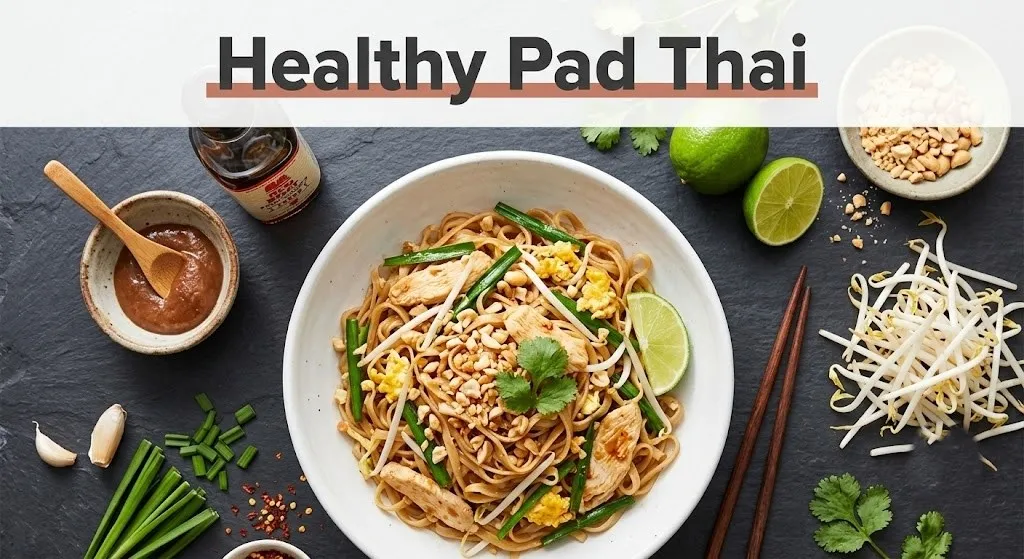
Pad thai is not nutritionally empty. It provides protein from the chicken, shrimp, or tofu. The eggs contribute additional protein and choline. The bean sprouts deliver vitamin C and a small amount of fiber. The peanuts provide monounsaturated fat and vitamin E. The lime wedge offers more vitamin C. The problem is not that pad thai lacks nutrients. The problem is that the nutrient density is diluted by refined carbohydrates, added sugar, and excess oil. The ratio of beneficial nutrients to empty calories is unfavorable in the restaurant version.
Key Takeaway: Restaurant pad thai is high in calories, sugar, and sodium. The dish has nutritional potential that homemade versions unlock by adjusting the sauce, noodles, and oil quantity.
Restaurant pad thai calories
Restaurant pad thai calories typically range from 800 to 1,200 for a single entree portion with chicken or shrimp, though the exact count depends on the restaurant’s recipe, oil quantity, and portion size. Fast-casual Thai chains often serve larger portions than traditional Thai restaurants, pushing the calorie count higher. A Pei Wei chicken pad thai entree contains approximately 1,100 calories. A Thai Express chicken pad thai lists at 840 calories. These numbers come from the restaurants’ published nutrition data and should be considered estimates, as actual preparation varies by location and cook.
The calorie density comes from three sources working together. The rice noodles provide approximately 400 to 500 calories of refined carbohydrate. The oil used in stir-frying adds 200 to 400 calories, more if the cook is heavy-handed with the oil bottle. The sauce contributes 150 to 300 calories, mostly from sugar. The protein, whether chicken, shrimp, or tofu, adds 150 to 250 calories. The egg adds 70 to 90 calories. The peanuts on top contribute 50 to 100 calories. These components add up quickly, and restaurant portions are rarely the single-serving size listed on the menu.
The calorie variability between restaurants makes generic advice difficult. A pad thai from a small, traditional Thai restaurant may come in at 700 to 900 calories with better ingredient quality and less sugar. A pad thai from a mall food court chain may exceed 1,200 calories with more oil and sugar in the sauce. Ordering pad thai with extra vegetables, light oil, and sauce on the side can reduce the calorie load, though not all restaurants accommodate these requests. The only reliable way to control pad thai calories is to make it at home.
Key Takeaway: Restaurant pad thai contains 800 to 1,200 calories per serving. Homemade versions typically cut that number in half by controlling oil, sugar, and portion size.
Pad thai nutrition facts
Pad thai nutrition facts for a standard restaurant serving reveal a dish that is high in carbohydrates and fat, moderate in protein, and low in fiber. A typical chicken pad thai order provides 30 to 40 grams of protein, which is adequate for a meal. The carbohydrate load of 90 to 120 grams is equivalent to 6 to 8 slices of bread. The fat content of 25 to 45 grams is mostly from stir-fry oil, with a small contribution from the egg and peanuts. The fiber content is low, typically 2 to 4 grams, because rice noodles are refined and the vegetable content is modest.
The micronutrient profile of pad thai includes vitamin C from bean sprouts and lime juice, vitamin A from garlic chives, iron from chicken and eggs, and potassium distributed across several ingredients. Bean sprouts are a meaningful source of vitamin C, providing roughly 10% to 15% of the Daily Value in a typical pad thai portion. The peanuts contribute vitamin E and magnesium. The egg provides choline and selenium. These micronutrients are present in useful amounts. They do not negate the high calorie and sugar content, but they mean pad thai is not nutritionally empty.
The sodium content of restaurant pad thai is high, typically 1,200 to 2,000 milligrams per serving. Fish sauce and soy sauce are both concentrated sodium sources, and restaurants use both. The American Heart Association’s ideal limit of 1,500 milligrams of sodium per day for people with hypertension means a single pad thai can exceed the entire daily recommendation. For healthy adults without blood pressure concerns, this sodium level at an occasional meal is not a health crisis, but it is a reason not to eat restaurant pad thai multiple times per week.
Key Takeaway: Pad thai provides protein and some micronutrients but is high in refined carbohydrates, added sugar, and sodium with minimal fiber.
Pad thai macros
Pad thai macros for a restaurant serving with chicken typically break down to 30 to 40 grams of protein, 90 to 120 grams of carbohydrates, and 25 to 45 grams of fat. The macronutrient ratio is roughly 20% protein, 50% carbohydrates, and 30% fat. This is a carbohydrate-dominant meal with adequate protein and moderately high fat. For someone following a standard 2,000-calorie diet, a single pad thai represents 40% to 60% of daily calories, 60% to 80% of daily carbohydrates, and potentially more than the daily added sugar limit.
The protein in chicken pad thai is complete and high quality. 30 to 40 grams of protein is sufficient for muscle maintenance and satiety for most adults at a single meal. Research from the Journal of Nutrition suggests that 25 to 35 grams of protein per meal maximizes muscle protein synthesis in adults, and restaurant pad thai falls within this range. The protein content is one of the dish’s strongest nutritional attributes, and it is the one macro that homemade healthy versions often increase by adding extra chicken, shrimp, or tofu.
The carbohydrate load is the macro most worth modifying for health. 90 to 120 grams of carbohydrates in a single meal is high for anyone, and it is particularly challenging for people with insulin resistance or diabetes. The American Diabetes Association recommends 45 to 60 grams of carbohydrates per meal as a starting point for many people with diabetes. Restaurant pad thai doubles that. Healthy homemade versions reduce the carbohydrate load by using more vegetables, less noodles, or noodle alternatives like brown rice noodles, zucchini noodles, or kelp noodles that add fiber and reduce net carbohydrates.
Key Takeaway: Restaurant pad thai macros skew heavily toward carbohydrates. Homemade versions rebalance the ratio by increasing protein, adding fiber, and reducing refined noodles and sugar.
Healthy pad thai sauce
A healthy pad thai sauce delivers the same tamarind-forward, sweet-sour-savory balance as the traditional version while cutting the sugar content by 50% to 70% and reducing the sodium by controlling the fish sauce and soy sauce quantities directly. Traditional pad thai sauce is built on tamarind paste, fish sauce, sugar, and often oyster sauce or soy sauce. The sugar component can be palm sugar, brown sugar, or white sugar. Restaurants use enough sugar to create a perceptible sweetness that balances the sour tamarind.
The healthy sauce starts with the same foundation. Tamarind paste is not negotiable. It provides the dish’s signature sourness and fruitiness, and it contains small amounts of potassium, magnesium, and thiamin. Fish sauce provides the savory umami depth and cannot be fully replaced without changing the dish’s character, though the quantity can be moderated. The sugar is reduced by using a smaller amount of a more flavorful sweetener like coconut sugar or maple syrup, which have a stronger sweetness-per-teaspoon profile than refined white sugar. Coconut sugar also contains inulin, a prebiotic fiber that slightly slows sugar absorption.
To make healthy pad thai sauce for four servings, combine the following in a small bowl: 3 tablespoons of tamarind paste, 2 tablespoons of fish sauce, 1 tablespoon of reduced-sodium soy sauce or tamari, 1.5 tablespoons of coconut sugar or maple syrup, and 1 teaspoon of rice vinegar. Whisk until the sugar dissolves. Taste and adjust. The sauce should be predominantly sour and savory, with sweetness in the background, not the foreground. This recipe yields approximately 8 grams of added sugar per serving, compared to 25 to 35 grams in restaurant pad thai.
Key Takeaway: A healthy pad thai sauce uses the same tamarind and fish sauce foundation but cuts sugar by two-thirds and controls sodium by measuring the salty ingredients precisely.
How to reduce sugar in pad thai
Reducing sugar in pad thai without sacrificing flavor requires letting the tamarind’s natural fruitiness carry more of the sweet-sour balance and using sugar alternatives that deliver more perceived sweetness per gram. Traditional pad thai recipes call for 3 to 5 tablespoons of sugar for a four-serving batch. This recipe uses 1.5 tablespoons. The difference is roughly 15 to 25 grams less sugar per serving. The technique is to increase the tamarind slightly and add a small amount of rice vinegar to sharpen the sourness so that less sugar is needed to achieve balance.
Coconut sugar and maple syrup are better choices than white sugar for pad thai because they are less refined and retain trace minerals, but they are still sugar. They raise blood glucose similarly to white sugar. The advantage is in flavor complexity, not metabolic health. A tablespoon of coconut sugar contains 45 calories and 12 grams of sugar, essentially the same as white sugar. The flavor depth of coconut sugar means you can use less of it and still taste sweetness, which is the practical benefit.
Another technique for reducing perceived sugar need is to increase the savory and umami elements. A small amount of miso paste or mushroom powder adds glutamate-driven savoriness that balances sourness without sugar. This approach works well if you are comfortable deviating from traditional pad thai flavor. The most authentic path is to lean harder on tamarind. High-quality tamarind paste from a Thai or Southeast Asian grocery has a natural sweetness that lower-quality pastes lack. Sourcing good tamarind is the single best thing you can do for a healthier pad thai.
Key Takeaway: Cut sugar in pad thai by increasing tamarind, adding a splash of rice vinegar, and choosing coconut sugar for its stronger flavor that lets you use less total sweetener.
Healthy chicken pad thai
Healthy chicken pad thai is a rebalanced version of the classic dish that increases protein, reduces refined carbohydrates, cuts added sugar, and adds vegetable volume while preserving the tamarind-driven flavor that defines the dish. This recipe serves four, takes approximately 35 minutes start to finish, and delivers 480 calories, 35 grams of protein, 8 grams of fiber, and 8 grams of added sugar per serving. It requires a wok or large skillet and all ingredients prepped and ready before cooking begins.
Ingredients for four servings:
- 8 ounces brown rice noodles or flat rice noodles
- 1 pound boneless skinless chicken breast, sliced thinly against the grain
- 2 large eggs
- 3 cups bean sprouts
- 1 cup garlic chives, cut into 1-inch lengths, or scallions
- 3 cloves garlic, minced
- 2 tablespoons avocado oil or peanut oil, divided
- Healthy pad thai sauce (recipe in previous section)
- For garnish: Crushed roasted peanuts, lime wedges, chili flakes, additional bean sprouts
To make healthy chicken pad thai:
- Soak the brown rice noodles in warm water for 20 to 25 minutes until pliable but still firm. Drain thoroughly. Do not boil them.
- Mix the healthy pad thai sauce in a small bowl and set it next to the stove along with all prepped ingredients in individual bowls within arm’s reach.
- Heat 1 tablespoon of oil in a wok over high heat until it shimmers. Add the sliced chicken in a single layer. Let it sear without moving for 45 seconds, then stir-fry until just cooked through, about 2 minutes total. Remove to a plate.
- Reduce heat to medium. Add the remaining oil. Crack the eggs into the wok and scramble quickly, breaking them into small pieces.
- Add the minced garlic and stir for 15 seconds. Add the drained noodles and the sauce. Toss constantly for 1 minute using tongs or a spatula to coat every noodle.
- Return the chicken to the wok. Add the bean sprouts and garlic chives. Toss for 30 seconds until the bean sprouts just begin to wilt but still have crunch.
- Plate immediately. Top with crushed peanuts, a lime wedge, and chili flakes.
Key Takeaway: This healthy chicken pad thai recipe delivers restaurant flavor for 480 calories per serving with more protein, more fiber, and a fraction of the added sugar.
Chicken pad thai healthy
Chicken pad thai becomes healthy when the chicken portion is increased, the noodle portion is decreased, the sugar in the sauce is cut substantially, and the vegetable content is doubled or tripled from the restaurant standard. The chicken provides lean protein that increases satiety and supports muscle maintenance. A 6-ounce cooked chicken breast per serving delivers approximately 45 grams of protein, which is roughly double the chicken in most restaurant pad thai orders. More protein per bite means more satisfaction from fewer total calories.
The chicken should be sliced thinly against the grain and cooked quickly at high heat to prevent drying out. Velveting, a Chinese technique of marinating sliced chicken in a mixture of egg white, cornstarch, and rice wine before cooking, creates a silky texture that mimics restaurant-quality stir-fry. This step adds a few minutes of prep and 30 to 40 calories per serving, mostly from the cornstarch. It is optional but recommended if you want the chicken texture to match what you get at a good Thai restaurant.
The chicken can be replaced with shrimp, tofu, or pork tenderloin without changing the nutritional profile dramatically. Shrimp is lower in calories and higher in cholesterol. Tofu is lower in protein but adds calcium and isoflavones if using firm tofu made with calcium sulfate. Pork tenderloin is nutritionally similar to chicken breast. The sauce and noodle modifications are the primary health drivers. The protein choice is secondary and can follow your preference or dietary pattern.
Key Takeaway: Doubling the chicken and reducing the noodles shifts pad thai’s macronutrient balance from carbohydrate-dominant to protein-forward without sacrificing the dish’s identity.
Healthy chicken pad thai recipe
The complete healthy chicken pad thai recipe combines the lighter sauce, increased chicken and vegetables, brown rice noodles, and proper stir-fry technique into a single workflow. Mise en place, the French term for having all ingredients prepped and arranged before cooking, is not optional for this recipe. The active cooking time is under five minutes. There is no time to measure, chop, or search the refrigerator once the wok is hot. Everything must be ready and within reach.
The ingredient order into the wok matters for texture. Protein goes in first, gets cooked, and comes out. The egg goes in next and gets scrambled. Then the aromatics, then the noodles and sauce, then the protein back in, then the vegetables last. Bean sprouts and garlic chives should retain some crunch. Overcooked bean sprouts are limp and watery and dilute the sauce. The final toss should be just long enough to warm the vegetables through and coat them with sauce, 30 to 45 seconds, no longer.
The brown rice noodles require different handling than white rice noodles. They are more delicate and can become gummy if over-soaked. Check them at 18 minutes. They should be pliable enough to wrap around a finger without breaking but still have a firm, slightly resistant bite. They will finish cooking in the wok with the sauce. If they are fully soft before hitting the wok, they will break apart during stir-frying. Err on the side of slightly under-soaked. The residual heat and sauce will finish them.
Key Takeaway: The complete recipe requires all ingredients prepped before cooking, protein cooked and reserved, and vegetables added last to preserve crunch.
Easy healthy pad thai
Easy healthy pad thai is achievable in 25 minutes if you accept strategic shortcuts that reduce prep time without compromising the nutritional goals. The key shortcuts are using pre-shredded carrots instead of julienning your own, buying bean sprouts pre-washed in a bag, and using garlic chives or scallions that require only a rough chop. The sauce can be mixed in advance and stored in the refrigerator for up to a week. The chicken can be sliced the night before and kept covered in the refrigerator.
A skillet works in place of a wok for easy pad thai. The high sides of a skillet make tossing noodles slightly harder, and the heat distribution is less intense than a carbon steel wok over a gas flame. These differences affect the final texture at the margins. A pad thai made in a skillet is still pad thai. The Academy of Nutrition and Dietetics notes that the nutritional difference between stir-frying in a wok and a skillet is negligible when the same oil quantity and cooking time are used. The wok’s advantage is in speed and even heat, which affects texture more than nutrition.
Frozen vegetables are an acceptable shortcut for easy pad thai. Frozen shelled edamame adds protein and fiber without prep work. Frozen stir-fry vegetable blends that include snap peas, carrots, and broccoli add color and nutrients with zero chopping. Add frozen vegetables to the wok after the noodles have been tossed with sauce, and give them an extra 60 seconds of cooking time. The water content of frozen vegetables can thin the sauce slightly, so reduce the sauce’s liquid by a tablespoon or increase the tamarind slightly to compensate.
Key Takeaway: Easy healthy pad thai uses pre-prepped vegetables, a skillet instead of a wok, and sauce made in advance to cut active cooking time to 25 minutes.
Healthy pad thai ingredients
The ingredients for healthy pad thai are chosen to maximize nutrient density while preserving the dish’s essential character. Each ingredient serves a nutritional purpose as well as a culinary one. Brown rice noodles replace white rice noodles to add 3 grams of fiber and 20% more magnesium per serving. Chicken breast provides lean, complete protein. Bean sprouts deliver vitamin C and a crisp texture that contrasts with the soft noodles. Garlic chives or scallions add vitamin A, vitamin K, and a mild onion flavor. Garlic provides allicin, a sulfur compound with documented antimicrobial properties.
Tamarind paste is the most important ingredient to source carefully. It provides the sour foundation of the dish and contains natural sugars, potassium, and thiamin. Low-quality tamarind paste is diluted with water and lacks the concentrated fruitiness that makes good pad thai taste right. Look for tamarind paste from Thailand or Vietnam with a single ingredient: tamarind. Avoid tamarind “concentrate” that lists water and sugar as the first ingredients. A good tamarind paste is thick, dark brown, and intensely sour with a fruity undertone.
Fish sauce is the second ingredient worth seeking out for quality. Premium fish sauce, made from anchovies and salt that have been fermented for a year or more, has a cleaner, more complex flavor than inexpensive fish sauce made with hydrolyzed wheat protein and added sugar. Red Boat and Megachef are widely available premium brands. The protein content on the nutrition label is a proxy for quality. Higher protein fish sauce, typically 2 to 3 grams per tablespoon, indicates a higher concentration of fish extract and less water and additives.
| Ingredient | Nutritional Role | Healthy Swap |
|---|---|---|
| White rice noodles | Refined carbohydrate | Brown rice noodles, zucchini noodles |
| Palm sugar | Added sugar | Coconut sugar (less quantity) |
| Peanut oil | Stir-fry fat | Avocado oil (higher smoke point) |
| Regular soy sauce | Sodium | Reduced-sodium tamari |
| White chicken meat | Lean protein | Shrimp, firm tofu |
Key Takeaway: Each ingredient in healthy pad thai has a nutritional job. Quality tamarind and fish sauce matter more for flavor than any health swap.
Pad thai noodle alternatives
Pad thai noodle alternatives allow the dish to fit gluten-free, low-carb, and higher-fiber eating patterns while maintaining the chewy noodle texture that defines the dish. Brown rice noodles are the simplest swap that adds fiber without changing the dish’s character. They contain 3 to 4 grams of fiber per serving compared to 1 gram in white rice noodles and have a slightly nuttier flavor that complements the tamarind sauce. The cooking method is identical to white rice noodles: soak in warm water, do not boil.
Zucchini noodles create a low-carb pad thai that cuts the carbohydrate content from 90 to 120 grams per serving to 15 to 20 grams. The net carbs drop from 100 grams to approximately 10 grams, making the dish compatible with ketogenic and very-low-carbohydrate diets. Zucchini noodles release water when heated, which thins the sauce. To compensate, salt the zucchini noodles and let them drain for 15 minutes before cooking, then pat them dry. Increase the tamarind in the sauce by 1 tablespoon to offset the residual water. The result is not identical to rice noodle pad thai, but it is a credible low-carb alternative.
Kelp noodles offer a zero-carb noodle option that stays firm when heated and does not release water. They are made from seaweed and have a neutral flavor and a crunchy-chewy texture that is closer to glass noodles than rice noodles. Rinse them thoroughly and soak in warm water with a squeeze of lemon juice for 10 minutes to soften them before stir-frying. Kelp noodles absorb sauce less than rice noodles, so the sauce should be slightly more concentrated. Shirataki noodles made from konjac are another zero-carb option, though their distinct chewiness is divisive. Rinse them well and dry-pan-fry them for 2 minutes before adding sauce to improve texture.
Key Takeaway: Brown rice noodles add fiber. Zucchini noodles cut carbohydrates for keto. Kelp and shirataki noodles are zero-carb alternatives.
Low carb pad thai
Low carb pad thai uses vegetable-based noodles, typically zucchini or kelp, and a sauce with zero-calorie sweetener instead of sugar to reduce the carbohydrate content from approximately 100 grams per serving to 10 to 20 grams. The protein and fat content can be increased to maintain satiety and total calories at a reasonable level. A low-carb chicken pad thai with zucchini noodles and a monk fruit-sweetened sauce contains approximately 350 calories, 35 grams of protein, 18 grams of fat, and 12 grams of net carbohydrates per serving.
The sauce for low-carb pad thai replaces sugar with a heat-stable non-nutritive sweetener. Monk fruit extract and allulose are the best options for this application because they dissolve cleanly and do not have the cooling aftertaste that stevia can produce. Erythritol works texturally but may crystallize when the sauce cools. Use 1 to 2 tablespoons of granular monk fruit sweetener or allulose in place of the coconut sugar. The sweetener provides sweetness to balance the tamarind without adding digestible carbohydrates.
The vegetable content should increase in a low-carb pad thai to fill the visual and physical volume that the noodles would occupy. In addition to the zucchini noodles, add shredded cabbage, sliced bell peppers, snap peas, and bean sprouts. These vegetables add fiber, micronutrients, and chewing satisfaction. A low-carb pad thai that is mostly chicken and zucchini with a little sauce is a protein bowl, not a noodle dish. The vegetables provide the bulk and variety that make the meal feel complete.
Key Takeaway: Low-carb pad thai replaces rice noodles with zucchini or kelp noodles and sugar with monk fruit, cutting net carbohydrates to 10 to 20 grams per serving.
Gluten free pad thai
Gluten-free pad thai requires swapping three ingredients that may contain gluten: the noodles, the soy sauce, and sometimes the fish sauce. Traditional pad thai uses rice noodles, which are naturally gluten free. The gluten risk comes from soy sauce, which is brewed from wheat and soybeans, and from some commercial fish sauces that use hydrolyzed wheat protein as a fermenting accelerant. Ensuring all three components are gluten free makes pad thai safe for people with celiac disease or non-celiac gluten sensitivity.
Tamari replaces soy sauce in gluten-free pad thai. Tamari is a Japanese soy sauce-style condiment traditionally brewed without wheat, though some modern brands include small amounts. Check the label for a gluten-free certification. Coconut aminos, made from fermented coconut sap, is a soy-free and gluten-free alternative with a sweeter, less salty profile. If using coconut aminos, reduce the sugar in the sauce by half to compensate for coconut aminos’ natural sweetness.
Rice noodles labeled as gluten free are widely available. The rice flour and water that make rice noodles do not contain gluten, but cross-contamination can occur in facilities that also process wheat noodles. A certified gluten-free label confirms the noodles were processed in a dedicated facility. Fish sauce is the variable most people miss. Premium fish sauce made from anchovies and salt is gluten free. Inexpensive fish sauce may contain hydrolyzed wheat protein. Red Boat fish sauce is certified gluten free and lists anchovies and salt as the only ingredients.
Key Takeaway: Gluten-free pad thai needs certified gluten-free rice noodles, tamari or coconut aminos instead of soy sauce, and fish sauce verified free of hydrolyzed wheat protein.
Vegetarian healthy pad thai
Vegetarian healthy pad thai replaces the chicken with tofu, omits the fish sauce in favor of a plant-based umami source, and optionally omits the egg for a fully vegan version. The tofu must be handled correctly to achieve a satisfactory texture in the stir-fry. Extra-firm tofu pressed for 30 minutes, cubed, and dry-pan-fried until golden on all sides develops a chewy exterior that holds up in the wok. Soft or silken tofu will disintegrate and turn the dish into a scramble.
The sauce for vegetarian pad thai replaces fish sauce with a combination of miso paste and rice vinegar or a commercial vegan fish sauce. Miso paste provides fermented savory depth that approximates fish sauce’s umami function. Use 1 tablespoon of white or chickpea miso whisked into the sauce in place of the 2 tablespoons of fish sauce. Add an extra teaspoon of rice vinegar to replace the acidity that fish sauce provides. Commercial vegan fish sauces made from fermented soybeans or seaweed are available and can be used as a direct substitute.
The protein content of vegetarian pad thai is lower than the chicken version unless tofu and egg portions are increased. A serving with 6 ounces of firm tofu, one egg, and the standard noodle portion provides approximately 25 grams of protein. Increasing the tofu to 8 ounces and adding edamame brings the protein to 32 grams. For a vegan version without egg, the tofu and edamame become the primary protein sources, and the total protein lands around 20 to 25 grams per serving, which is adequate for a meal.
Key Takeaway: Vegetarian pad thai replaces chicken with pressed tofu and fish sauce with miso paste or vegan fish sauce. Extra tofu and edamame boost protein.
Healthy pad thai peanut free
Healthy pad thai made peanut free is achievable with sunflower seeds, pepitas, or no nut replacement at all, depending on the allergy severity and the desired texture. Peanuts serve as a crunchy garnish in pad thai, not a sauce ingredient, so removing them does not alter the fundamental flavor of the dish. The crushed peanut garnish provides texture contrast and a small amount of healthy fat. Toasted sunflower seeds or toasted pumpkin seeds provide a similar crunch and nutritional profile without the peanut allergen.
The stir-fry oil must also be peanut free for a fully peanut-safe pad thai. Restaurants often use peanut oil for stir-frying because of its high smoke point and neutral flavor. At home, avocado oil replaces peanut oil with a higher smoke point and a fatty acid profile that is higher in monounsaturated fat and lower in omega-6 polyunsaturated fat. Refined coconut oil is another option, though the flavor changes slightly.
Peanut allergies are one of the most common food allergies, and cross-contamination is a serious concern for allergic individuals. If you are cooking pad thai for someone with a peanut allergy, verify that every packaged ingredient, including the tamarind paste, fish sauce, and noodles, is produced in a peanut-free facility. Shared equipment in Asian food manufacturing facilities is common. Ingredients with a “may contain peanuts” warning or produced in a facility that processes peanuts should be avoided entirely for someone with an IgE-mediated peanut allergy.
Key Takeaway: Peanut-free pad thai substitutes toasted sunflower or pumpkin seeds for the peanut garnish and uses avocado oil instead of peanut oil for stir-frying.
Pad thai meal prep
Pad thai meal prep works when the components are stored separately and combined just before eating. The noodles, sauce, and protein can be cooked in advance and refrigerated for up to four days. The fresh vegetables and garnishes must be prepped and stored raw, then added at the time of reheating or serving. Bean sprouts and garlic chives do not reheat well. They become limp and watery in the microwave. Package them separately and add them fresh.
To meal prep pad thai for four days, portion the cooked noodles and chicken into four containers. Store the sauce in a separate small container or jar. Prep the bean sprouts, garlic chives, and lime wedges into four small bags. At mealtime, reheat the noodles and chicken in a skillet with a tablespoon of water to recreate steam and revive the noodle texture. A microwave works in a pinch but tends to make the noodles gummy. Pour the sauce over the hot noodles, toss, and top with the fresh bean sprouts, chives, peanuts, and lime.
The sauce can be made in a larger batch and refrigerated for up to two weeks. The tamarind, fish sauce, and soy sauce are all shelf-stable in their raw forms, and the combined sauce is acidic enough to inhibit bacterial growth in the refrigerator. The sugar may settle over time, so shake or whisk the sauce before using. The chicken can be replaced with pre-cooked rotisserie chicken shredded into the noodles during reheating, which cuts the active cooking time during meal prep by half.
Key Takeaway: Pad thai meal prep requires storing noodles and sauce separately. Add fresh vegetables after reheating. Sauce keeps for two weeks in the refrigerator.
Frequently Asked Questions About Healthy Pad Thai
Is pad thai healthy from a restaurant?
Restaurant pad thai is generally not healthy, containing 800 to 1,200 calories, high added sugar, and up to 2,000 milligrams of sodium per serving.
The dish provides protein and some micronutrients but the refined noodles, excess oil, and sugar-heavy sauce outweigh the benefits.
Requesting light oil, extra vegetables, and sauce on the side improves the nutritional profile slightly.
Can I make pad thai without fish sauce?
You can make pad thai without fish sauce by substituting miso paste mixed with rice vinegar or using a commercial vegan fish sauce.
Miso provides the fermented savory depth that replaces fish sauce’s umami function.
The flavor will not be identical to traditional pad thai but can be balanced and satisfying.
What noodles are best for healthy pad thai?
Brown rice noodles are the best noodles for healthy pad thai because they add fiber and magnesium while maintaining the traditional chewy texture.
Zucchini noodles create a low-carb, keto-compatible version with 15 to 20 grams of carbohydrates per serving.
Kelp noodles and shirataki noodles are zero-carb alternatives for very-low-carbohydrate diets.
Is pad thai gluten free?
Traditional pad thai is not automatically gluten free because soy sauce contains wheat and some fish sauces use hydrolyzed wheat protein.
Using rice noodles, certified gluten-free tamari, and wheat-free fish sauce makes pad thai safe for celiac disease and gluten sensitivity.
Verify all packaged ingredient labels for gluten-free certification.
Can I meal prep healthy pad thai?
Pad thai can be meal prepped by storing cooked noodles and protein separately from the sauce and fresh vegetables.
Reheat the noodles and chicken in a skillet with water, add sauce, and top with fresh bean sprouts, chives, peanuts, and lime.
The fresh garnishes do not reheat well and should be prepped raw and added at serving time.
Making healthy pad thai at home is one of the better tradeoffs in the home cooking world. You give up the convenience of a takeout container and about 35 minutes of your evening. You get back a dish that tastes like the pad thai you crave, with the nutritional profile you actually want. The sauce is still tamarind-forward. The noodles are still chewy. The peanuts on top still crunch. It just does not come with a full day’s worth of sugar and sodium attached.
The most useful thing you can take from this article is the sauce recipe and the technique order. Get those two things right, and you can improvise everything else. Use whatever protein you have. Use whatever vegetables are in the crisper. Use rice noodles, zucchini noodles, or kelp noodles. The sauce and the stir-fry sequence are the pad thai. The rest is details.