Healthy gum to chew is gum made with a natural gum base instead of synthetic plastic, sweetened with xylitol, erythritol, or stevia instead of artificial sweeteners or sugar, and flavored with natural extracts instead of synthetic flavor compounds. The difference between a standard pack of gum from the checkout aisle and a healthy gum is visible on the ingredient list. One reads like a chemistry lab. The other reads like a pantry.
The American Dental Association (ADA) recognizes that chewing sugar-free gum for 20 minutes after meals stimulates salivary flow, which helps neutralize plaque acids and may reduce the risk of dental caries. The ADA Seal of Acceptance appears on gums that meet specific criteria for safety and efficacy. This seal is a useful shortcut but does not address the broader ingredient quality questions that health-conscious consumers are asking about gum base, sweeteners, and artificial additives.
This guide explains what makes a gum healthy, which sweeteners to look for and which to avoid, how much gum is safe to chew daily, and which brands are actually worth buying in 2026. You will learn to read a gum label in ten seconds and identify whether the product in your hand is a genuinely healthy choice or just a sugar-free version of the same synthetic product.
Is chewing gum healthy
Chewing gum can be healthy when it is sugar-free, sweetened with xylitol or erythritol, made with a natural gum base, and chewed in moderation. It can be unhealthy when it contains sugar that feeds cavity-causing bacteria, artificial sweeteners that some people prefer to avoid, or synthetic ingredients that raise environmental and health concerns. The health impact of gum depends on what is in it and how much you chew.
The dental benefits of sugar-free gum are the strongest evidence-based reason to chew. The ADA’s position, supported by multiple clinical trials, is that chewing sugar-free gum for 20 minutes after meals increases salivary flow, which raises the pH of the mouth and helps remineralize tooth enamel. A 2023 systematic review in the Journal of Dental Research confirmed that xylitol-sweetened gum reduced caries incidence in children and adults when chewed regularly.
The potential downsides of gum chewing include jaw strain for people with temporomandibular joint (TMJ) disorders and digestive discomfort from excessive sugar alcohol consumption. These are dose-dependent effects. A few pieces of gum a day are unlikely to cause problems for most people. Chewing gum constantly throughout the day, particularly gum sweetened with sorbitol or maltitol, can cause bloating, gas, and diarrhea.
Key Takeaway: Sugar-free gum with xylitol provides dental benefits. Excessive consumption can cause jaw pain and digestive issues from sugar alcohols.
Best healthy chewing gum
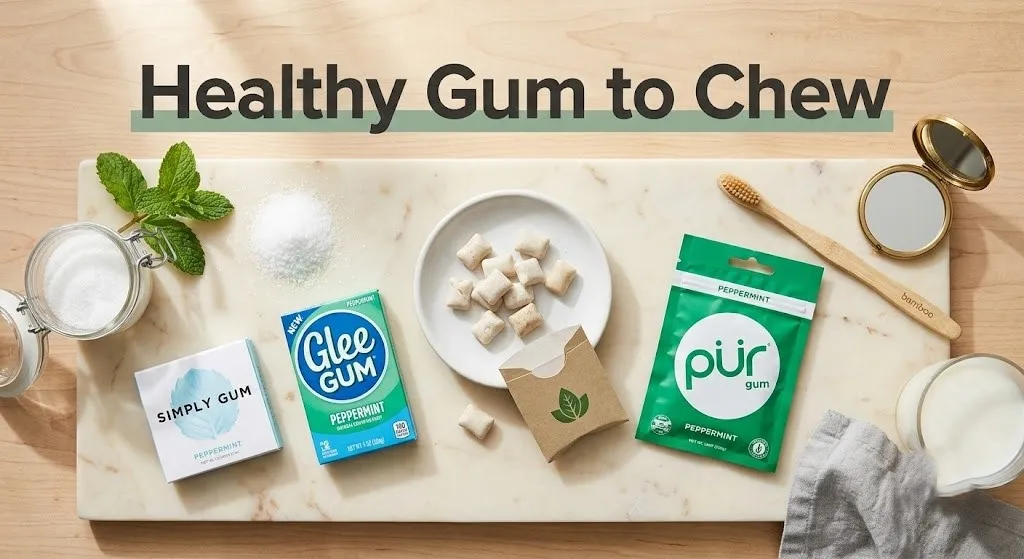
The best healthy chewing gum in 2026 is made with a natural chicle gum base, sweetened with xylitol or a stevia-erythritol blend, flavored with natural extracts, and free of artificial colors, preservatives, and synthetic antioxidants like BHT. The top brands meeting these criteria are Simply Gum, Glee Gum, PUR Gum, Spry, and Xylichew. Each has different strengths and tradeoffs.
Simply Gum uses a natural chicle base with no plastic, is sweetened with raw cane sugar (in its sweetened varieties) or xylitol, and flavored with natural extracts. The ingredient list is the shortest in the category. The brand also offers a xylitol-sweetened line for sugar-free needs. The gum base is biodegradable, unlike synthetic gum bases that persist in the environment.
Glee Gum uses a natural chicle base, is sweetened with non-GMO cane sugar or xylitol, and is free of artificial flavors, colors, and preservatives. It is one of the few natural gums available in bulk packaging with reduced waste.
PUR Gum uses a synthetic gum base but is aspartame-free, sweetened with xylitol, and widely available in grocery stores. It is a practical step up from conventional gum without the higher price and availability limitations of natural base gums.
Key Takeaway: Simply Gum, Glee Gum, and PUR Gum are the top healthy gum brands. Simply and Glee use natural chicle base. PUR is more widely available.
Healthy gum brands
Healthy gum brands in 2026 span a range from small natural brands using chicle base to larger brands that have reformulated to remove artificial sweeteners and controversial additives. The category is defined by what brands exclude as much as by what they include.
The healthiest gum brands exclude aspartame, acesulfame potassium (Ace-K) , sucralose, titanium dioxide, BHT, BHA, and synthetic gum base made from polyethylene and polyvinyl acetate. These ingredients are not necessarily dangerous at the levels found in gum. The FDA considers them safe. Consumers who want to minimize synthetic chemical exposure choose to avoid them.
The brands that meet the full healthy standard include Simply Gum (natural chicle base, natural flavors, xylitol or cane sugar), Glee Gum (natural chicle base, non-GMO ingredients), Chicza (organic, biodegradable, rainforest-sourced chicle), True Gum (plastic-free, biodegradable, European brand), and Spry (xylitol-focused, dental health emphasis).
The brands that offer a partial upgrade without the premium price include PUR Gum (aspartame-free, xylitol-sweetened, synthetic base), Xylichew (xylitol-sweetened, birch-derived xylitol, synthetic base), and Peelu (xylitol and peelu fiber, synthetic base).
Key Takeaway: Simply Gum, Glee Gum, Chicza, and True Gum are the top-tier healthy brands. PUR and Xylichew are more accessible upgrades from conventional gum.
Healthy chewing gum brands
Healthy chewing gum brands can be evaluated systematically by checking four criteria on the package: the sweetener type, the gum base material, the flavor source, and the presence of any controversial additives. This framework works for any brand, not just the ones recommended in this guide.
The sweetener check is the most important for health. A healthy gum uses xylitol, erythritol, or stevia. Xylitol and erythritol are sugar alcohols that do not feed cavity-causing bacteria and have a minimal glycemic impact. Stevia is a plant-derived, zero-calorie sweetener. Avoid gums sweetened with aspartame, sucralose, or Ace-K. These are FDA-approved but are avoided by consumers who prefer natural sweeteners.
The gum base check distinguishes natural from synthetic. Chicle, a natural latex from the sapodilla tree, is the traditional gum base used for centuries. Synthetic gum bases are made from petroleum-derived polymers similar to those used in plastic bags and car tires. “Gum base” on an ingredient list without further specification is typically synthetic.
The flavor and additive check identifies natural versus artificial. Natural flavors and colors are derived from plants and spices. Artificial flavors and synthetic colors like titanium dioxide are used in conventional gum for brightness and shelf stability.
Key Takeaway: Evaluate gum brands by checking the sweetener, gum base, flavor source, and additives. Xylitol, chicle, and natural flavors are the healthy standards.
Healthy chewing gums
Healthy chewing gums as a category include both the premium natural brands and the more accessible reformulated brands that have removed the most objectionable ingredients. The category has grown significantly since 2020, and the 2026 market offers options at multiple price points and availability levels.
The premium tier (natural base, natural sweeteners, natural flavors) includes Simply Gum ($5 to $7 per pack), Glee Gum ($3 to $5), Chicza ($4 to $6), and True Gum ($4 to $5). These gums are typically found in natural food stores, specialty shops, and online. They use chicle or other natural tree resins as the gum base and are biodegradable.
The accessible tier (synthetic base, better sweeteners, fewer additives) includes PUR Gum ($2 to $4), Spry ($2 to $4), Xylichew ($2 to $3), and Peelu ($2 to $3). These gums are found in mainstream grocery stores, pharmacies, and online. They use synthetic gum base but have eliminated artificial sweeteners and most controversial additives.
The functional tier includes gums with added benefits beyond oral health. Neuro Gum contains caffeine and nootropics. Mastic gum is a natural resin with traditional digestive health uses. These are specialty products with specific functional purposes.
Key Takeaway: Healthy gums range from premium natural brands like Simply Gum to accessible reformulated brands like PUR. Choose based on your ingredient priorities and budget.
Sugar free gum healthy
Sugar-free gum is healthy for your teeth because it does not feed the bacteria that cause cavities, and the act of chewing stimulates saliva that neutralizes plaque acids. The ADA Seal of Acceptance on a sugar-free gum package indicates that the product has met specific standards for safety and oral health efficacy.
The health of sugar-free gum beyond dental benefits depends on what replaces the sugar. Sugar alcohols like xylitol, erythritol, and sorbitol are the most common replacements. Xylitol is the best studied and has the strongest evidence for cavity prevention. Erythritol is well tolerated digestively and has a minimal glycemic impact. Sorbitol and maltitol are effective but more likely to cause digestive discomfort at lower doses.
Artificial sweeteners like aspartame, sucralose, and Ace-K are also used in sugar-free gums. The FDA considers these sweeteners safe at typical intake levels. The World Health Organization’s 2023 guidance on non-sugar sweeteners advised against using them for weight control, citing a lack of evidence for long-term benefit. This guidance is about weight management, not safety.
Key Takeaway: Sugar-free gum is healthy for teeth. The health of the sweetener depends on the specific type. Xylitol and erythritol are the best options.
Gum without artificial sweeteners
Gum without artificial sweeteners uses xylitol, erythritol, stevia, monk fruit, or small amounts of cane sugar to provide sweetness. The “no artificial sweeteners” claim on a gum package is a reliable indicator that the product has been formulated for health-conscious consumers, though it does not guarantee that the other ingredients meet the same standard.
The primary artificial sweeteners to avoid in gum are aspartame, sucralose, and acesulfame potassium (Ace-K) . These are the most common non-sugar sweeteners in conventional gum and are the ones that health-conscious consumers most frequently seek to avoid. Brands that are aspartame-free or free of all artificial sweeteners typically advertise this on the front of the package.
Gums sweetened with xylitol and erythritol provide sweetness and the oral health benefits of sugar alcohols without artificial sweeteners. Gums sweetened with stevia or monk fruit provide zero-calorie sweetness from plant sources. Gums sweetened with a small amount of cane sugar, typically 2 to 4 grams per serving, are not sugar-free but avoid both artificial sweeteners and sugar alcohols.
Key Takeaway: Look for gums sweetened with xylitol, erythritol, stevia, or monk fruit. “No artificial sweeteners” on the label is a helpful shortcut.
Gum with no aspartame
Gum with no aspartame is widely available because consumer demand has pushed brands to reformulate. Aspartame is one of the most studied food additives in history, and the FDA, the European Food Safety Authority, and other regulatory bodies have repeatedly confirmed its safety at typical intake levels. The decision to avoid aspartame is a consumer preference, not a safety requirement.
The brands that are aspartame-free include all of the healthy brands recommended in this guide: Simply Gum, Glee Gum, PUR Gum, Spry, and Xylichew. Mainstream brands have also responded to consumer demand. Trident offers aspartame-free varieties sweetened with xylitol and sorbitol. Orbit has aspartame-free options in some markets. Check the ingredient list because formulations vary by flavor and country.
Aspartame-free gum typically uses xylitol, sorbitol, maltitol, or a blend of sugar alcohols as the primary sweetener. Some brands use sucralose or Ace-K as aspartame replacements, which are different artificial sweeteners with similar health debates. A gum labeled “aspartame-free” that contains sucralose is not necessarily healthier by the standards of this guide.
Key Takeaway: Aspartame-free gum is widely available. PUR, Spry, and Simply Gum are aspartame-free. Check the full ingredient list to confirm what replaced it.
Gum ingredients to avoid
Gum ingredients to avoid, based on consumer preference for natural products and the precautionary principle regarding synthetic additives, include aspartame, acesulfame potassium, sucralose, titanium dioxide, BHT (butylated hydroxytoluene) , BHA (butylated hydroxyanisole) , and synthetic gum base. These ingredients are FDA-approved and considered safe at the levels found in food. They are on the “avoid” list because of consumer preference, not regulatory concern.
Titanium dioxide is a whitening agent that gives gum its bright white color. The European Union banned titanium dioxide as a food additive in 2022 based on a precautionary assessment of potential genotoxicity. The FDA continues to allow it. Many gum brands have voluntarily removed it in response to consumer concern.
BHT and BHA are synthetic antioxidants added to gum to prevent rancidity and extend shelf life. They are petroleum-derived preservatives that some animal studies have linked to potential health effects at high doses. The evidence at typical dietary exposure levels does not indicate harm. They are on the “avoid” list for consumers who prefer to minimize synthetic chemical exposure.
Key Takeaway: Aspartame, titanium dioxide, BHT, and synthetic gum base are the most common ingredients avoided by health-conscious gum consumers. Check the ingredient list.
Xylitol gum benefits
Xylitol gum benefits are primarily dental. Xylitol is a sugar alcohol that cavity-causing bacteria cannot ferment into acid. When you chew xylitol-sweetened gum, the bacteria in your mouth starve for usable carbohydrate energy and produce less of the acid that erodes tooth enamel. The chewing action simultaneously stimulates saliva, which buffers existing acid and provides minerals for enamel remineralization.
The clinical evidence for xylitol’s dental benefits is substantial. A 2023 Cochrane review of xylitol for preventing dental caries found that xylitol-containing products reduced caries incidence in children when used consistently. The effect was most pronounced for xylitol gum chewed multiple times daily. The ADA recognizes xylitol as a beneficial non-cariogenic sweetener.
Xylitol has a minimal glycemic impact compared to sugar. It is absorbed slowly and does not cause the blood glucose spike that sugar does. This makes xylitol-sweetened gum acceptable for people managing diabetes or insulin resistance. Xylitol is toxic to dogs, even in small amounts. If you have a dog, keep xylitol gum out of reach.
Key Takeaway: Xylitol gum prevents cavities by starving bacteria and stimulating saliva. It has minimal glycemic impact and is toxic to dogs.
Natural chewing gum
Natural chewing gum uses a gum base derived from tree resins, primarily chicle from the sapodilla tree, instead of the synthetic petroleum-derived polymers used in conventional gum. The natural base is biodegradable and compostable. Synthetic gum base is essentially plastic and persists in the environment indefinitely.
The natural gum brands in 2026 include Simply Gum, Glee Gum, Chicza, and True Gum. These gums pair a natural chicle base with natural flavors and either natural sweeteners or a small amount of cane sugar. The texture of natural gum is slightly different from conventional gum. It is firmer at first and softens more slowly. The flavor typically does not last as long because there are no synthetic flavor extenders.
The environmental case for natural gum is straightforward. Conventional gum is the second most common form of litter after cigarette butts. It sticks to sidewalks, is not biodegradable, and requires mechanical removal. Natural chicle gum biodegrades naturally over time.
Key Takeaway: Natural chewing gum uses biodegradable chicle base instead of synthetic plastic. Simply Gum and Glee Gum are the leading brands.
Best gum for teeth
The best gum for teeth is sugar-free and sweetened with xylitol, which provides active cavity prevention beyond the mechanical benefits of chewing. The ADA Seal of Acceptance on the package confirms that the gum has met specific standards for safety and oral health efficacy.
The ADA seal appears on gums from major brands including Orbit, Trident, Spry, and Xylichew. The seal requires that the gum be sugar-free, that the manufacturer provide data demonstrating that chewing the gum increases salivary flow and raises plaque pH, and that the product not contain ingredients that contribute to dental erosion.
Xylitol provides an additional mechanism beyond salivary stimulation. Streptococcus mutans, the primary cavity-causing bacteria, cannot metabolize xylitol. Regular xylitol exposure reduces the population of S. mutans in the mouth over time. This effect is independent of the salivary benefits of chewing.
Key Takeaway: The best gum for teeth is sugar-free, xylitol-sweetened, and carries the ADA Seal of Acceptance. Xylitol actively reduces cavity-causing bacteria.
Vegan chewing gum
Vegan chewing gum avoids animal-derived ingredients that can be present in some gum formulations. The most common non-vegan ingredient in gum is gelatin, which is used as a softener and texture modifier in some brands. Stearic acid, another potential softener, can be derived from animal or plant sources. Glycerol similarly can be animal or plant derived.
Most conventional sugar-free gums are incidentally vegan, though the synthetic ingredients raise different ethical questions. The gum base, whether synthetic or natural chicle, is plant-derived or synthetic, not animal-derived. The sweeteners and flavors are generally vegan.
Brands that explicitly market themselves as vegan include Simply Gum, PUR Gum, and Chicza. These brands have verified that all ingredients, including softeners and processing aids, are plant-derived or synthetic and contain no animal products.
Key Takeaway: Most gum is incidentally vegan. Gelatin, stearic acid, and glycerol are the ingredients to check for animal sourcing. Simply Gum and PUR are explicitly vegan.
Plastic free gum
Plastic-free gum uses a natural chicle or tree resin gum base instead of the synthetic petroleum-derived polymers, primarily polyethylene and polyvinyl acetate, that make up the base of conventional gum. Synthetic gum base is a plastic material. It does not biodegrade and contributes to plastic pollution.
The plastic-free gum brands include Simply Gum, Glee Gum, Chicza, and True Gum. These brands explicitly state that their gum base is natural and biodegradable. The tradeoff is a slightly different chewing texture and a shorter flavor duration compared to synthetic gum. The texture difference is noticeable but most people adjust within a few pieces.
The environmental impact of gum is significant. An estimated 374 billion pieces of chewing gum are produced globally each year, and a substantial portion ends up as litter. Conventional gum is not recyclable, not compostable, and not biodegradable. Plastic-free gum addresses this environmental concern at the source.
Key Takeaway: Plastic-free gum uses biodegradable chicle base instead of synthetic plastic. It is better for the environment with a slightly different chewing texture.
Biodegradable gum
Biodegradable gum is made with a natural chicle or tree resin base that breaks down naturally in the environment over time, unlike synthetic gum base which persists as plastic litter. The term “biodegradable” on a gum package refers specifically to the gum base, not the packaging.
The brands that use biodegradable gum base are the same as the natural and plastic-free brands: Simply Gum, Glee Gum, Chicza, and True Gum. These gums will biodegrade if disposed of in the environment, though proper disposal in a trash can is still the recommended practice.
The biodegradable claim is meaningful because conventional gum base is designed to be inert and resistant to breakdown. The same properties that make it a good gum base, stability, resistance to saliva, and resistance to temperature changes, make it a persistent environmental pollutant.
Key Takeaway: Biodegradable gum uses natural chicle base that breaks down in the environment. Simply Gum and Glee Gum are the leading biodegradable options.
How much gum is too much
How much gum is too much depends on the sweetener type and your individual digestive and jaw tolerance. For xylitol and erythritol-sweetened gums, the digestive tolerance limit is typically 5 to 10 pieces per day, depending on the sweetener concentration per piece and individual sensitivity. For sorbitol and maltitol-sweetened gums, the limit is lower, around 3 to 5 pieces per day, because these sugar alcohols are more likely to cause gas, bloating, and diarrhea.
The jaw health limit is less defined. Chewing gum for short periods, 15 to 20 minutes at a time, is unlikely to cause jaw problems in healthy individuals. Chewing gum constantly throughout the day puts continuous load on the temporomandibular joint and the muscles of mastication. If you experience jaw clicking, pain, or fatigue, reduce or eliminate gum chewing and consult a dentist if symptoms persist.
The sweetener accumulation across a day matters. If you chew multiple pieces of gum and also consume other sugar-alcohol-sweetened products like protein bars, candies, or ice cream, the total sugar alcohol load can exceed your digestive threshold even if the gum alone would not.
Key Takeaway: Limit xylitol gum to 5 to 10 pieces per day. Limit sorbitol gum to 3 to 5 pieces. Reduce or eliminate gum if you experience jaw pain or digestive discomfort.
Mastic gum benefits
Mastic gum is a natural resin harvested from the mastic tree (Pistacia lentiscus), native to the Greek island of Chios. It has been chewed for centuries in the Mediterranean region as a traditional remedy for digestive complaints and oral health. It is not a conventional chewing gum. It is a hardened resin that softens as you chew.
The research on mastic gum focuses on its potential digestive health benefits. A 2022 study in the journal Phytotherapy Research found that mastic gum reduced symptoms of functional dyspepsia, including stomach pain and heartburn, compared to placebo. The mechanism appears to involve mastic’s antibacterial activity against Helicobacter pylori, the bacteria associated with stomach ulcers.
Mastic gum also has oral health applications. It mechanically cleans teeth, stimulates saliva, and has been shown in some studies to reduce oral bacteria levels. The resin has a distinct pine-like flavor that is not sweet and takes adjustment for palates accustomed to sweetened gum.
Key Takeaway: Mastic gum is a natural resin with potential digestive and oral health benefits. It has a distinct, unsweetened pine flavor.
Frequently Asked Questions About Healthy Gum
Is chewing gum good for you?
Chewing sugar-free gum after meals stimulates saliva, which neutralizes plaque acids and may reduce cavity risk.
Xylitol-sweetened gum provides additional cavity prevention by starving harmful oral bacteria.
Excessive gum chewing can cause jaw pain and digestive discomfort from sugar alcohols.
What sweetener is healthiest in gum?
Xylitol is the healthiest gum sweetener because it actively prevents cavities in addition to being sugar-free.
Erythritol is well tolerated digestively and has a minimal glycemic impact.
Stevia and monk fruit are plant-derived zero-calorie sweeteners suitable for those who avoid sugar alcohols.
How much gum is safe to chew per day?
For xylitol gum, 5 to 10 pieces per day is generally well tolerated.
For sorbitol gum, limit to 3 to 5 pieces per day to avoid digestive discomfort.
Chew for 15 to 20 minutes at a time rather than constantly to protect jaw health.
Is gum without aspartame healthier?
Gum without aspartame replaces it with xylitol, erythritol, stevia, or other sweeteners that some consumers prefer.
The FDA considers aspartame safe. The choice to avoid it is a personal preference.
Check the ingredient list to see what replaced the aspartame. Sucralose or Ace-K are artificial sweetener replacements that carry similar debates.
Can chewing gum help with weight loss?
Chewing gum may help some people reduce snacking by occupying the mouth and providing a flavor experience without calories.
The effect on weight loss is small and not supported by strong clinical evidence. Gum is not a weight loss tool.
The World Health Organization’s 2023 guidance advises against relying on non-sugar sweeteners for weight control.
Healthy gum is a microcosm of the broader food industry shift toward cleaner ingredients. The gum you chewed in 2010 was a synthetic product in a plastic base with artificial sweeteners and preservatives. The gum available to you in 2026 includes options made from tree sap, sweetened with birch-derived xylitol, flavored with real peppermint oil, and packaged in recyclable materials.
The most practical thing you can do is check the ingredient list of the gum in your bag or pocket right now. If it has aspartame, Ace-K, BHT, or titanium dioxide, and those are ingredients you prefer to avoid, the brands in this guide offer easy upgrades. Simply Gum and Glee Gum are the full natural upgrade. PUR and Spry are the accessible step up. Pick one and try it. Your jaw, your teeth, and possibly the sidewalk will be better for it.