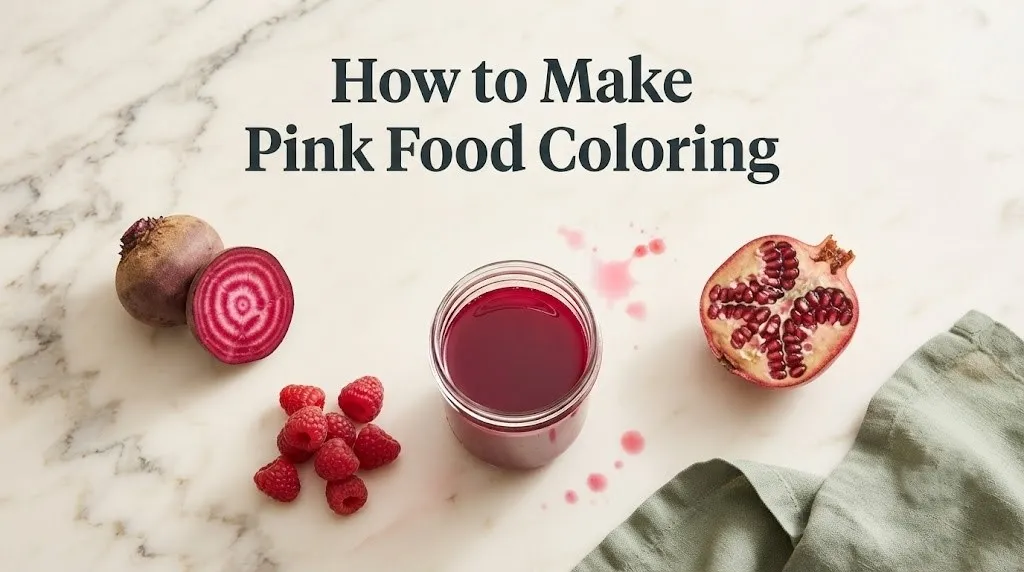
Natural pink food coloring is surprisingly easy to make at home using everyday ingredients you might already have in your kitchen. The most reliable method involves reducing the liquid from cooked beets, raspberries, or pomegranates into a concentrated dye that rivals commercial versions without synthetic additives.
Homemade food coloring matters now more than ever because the FDA continues to review certain synthetic dyes for potential behavioral effects in children, and consumer demand for transparent ingredient labels has reshaped how home bakers and parents approach colorful foods. A 2025 report from the Center for Science in the Public Interest noted that over 60 percent of consumers now actively seek products colored with plant-based alternatives, making homemade options a practical skill rather than a niche hobby.
This guide walks you through every tested method for creating pink food coloring from natural sources. You will learn which ingredients produce the most vibrant results, how to adjust shades from pale rose to deep magenta, which recipes each type works best in, and what mistakes to avoid when substituting natural dyes in your favorite frostings, batters, and drinks.
What Is Natural Pink Food Coloring?
Natural pink food coloring is a concentrated pigment extracted from fruits, vegetables, or other edible plants and reduced into a liquid or powder form suitable for tinting foods. Unlike synthetic dyes such as Red 40 or Red 3, natural versions derive their color from compounds like betalains in beets, anthocyanins in berries, and lycopene in certain fruits.
The science behind these plant pigments explains why some natural dyes hold their color during baking while others fade. Betalains, the compounds responsible for beet’s intense magenta hue, are water-soluble and heat-sensitive. Anthocyanins, found in raspberries and blueberries, shift color based on pH levels. Understanding this behavior helps you choose the right natural dye for your specific recipe. A frosting that stays refrigerator-cold preserves beet-based color beautifully. The same dye added to a cake batter baked at 350 degrees Fahrenheit may turn brownish.
What distinguishes commercial natural food coloring from homemade versions is concentration. Companies like ColorKitchen and Watkins use industrial evaporation and freeze-drying processes to create powders and gels far more potent than anything made in a home kitchen. The trade-off for homemade versions is gentler flavor impact and zero processing aids. You control every ingredient that goes into the final product.
Key Fact: McCormick and Whole Foods Market now carry plant-based food coloring lines made from spirulina, turmeric, and vegetable juices, reflecting the broader shift toward natural colorants in mainstream retail.
How Does Natural Pink Food Coloring Compare to Synthetic Dyes?
Natural pink dyes and synthetic dyes differ in color intensity, heat stability, shelf life, and regulatory status. Synthetic dyes like FD&C Red No. 3 and Red No. 40 produce consistent, vivid results across all applications because they are chemically designed for stability. Natural dyes made from beets, berries, and pomegranates vary in shade depending on the season, soil conditions, and cooking method.
| Characteristic | Synthetic Pink Dye (Red 40) | Natural Pink Dye (Beet-Based) | Natural Pink Dye (Berry-Based) |
|---|---|---|---|
| Color intensity | High, uniform | Medium, varies by batch | Medium, varies by fruit variety |
| Heat stability | Excellent | Poor, fades or browns | Moderate, pH-dependent |
| Shelf life | 2+ years | 1 to 2 weeks refrigerated | 1 to 2 weeks refrigerated |
| Flavor impact | None | Mild earthy taste | Slightly fruity |
| Common allergens | Rare, but reported | None common | Berry allergy risk |
| FDA status | Approved, under review | Generally recognized as safe | Generally recognized as safe |
The regulatory picture continues to shift. As of January 2025, California’s ban on Red No. 3 in foods went into effect, and several other states introduced similar legislation. The FDA has not issued a nationwide ban but continues to review safety data. This changing landscape makes understanding homemade alternatives relevant beyond the hobbyist baking community.
Quick Tip:
- Use beet-based dye in no-bake recipes like frostings, mousses, and chilled desserts where heat will not degrade the color.
- Reserve berry-based dyes for acidic recipes like lemon glazes or yogurt-based icings where the pH environment preserves the bright pink hue.
- Never expect a natural dye to perform identically to a synthetic one. Embrace the subtle, slightly varied shades as part of the appeal.
Why Choose Homemade Pink Food Coloring?
The strongest argument for homemade pink food coloring is ingredient transparency. You know exactly what tinted your buttercream because you cooked it yourself. No solvents, no preservatives, no carrier oils you cannot pronounce. For parents of children with sensitivities to synthetic additives, this clarity matters.
Cost plays a supporting role. A single organic beet costs roughly 50 cents and yields about two tablespoons of concentrated liquid dye. A 0.3-ounce bottle of commercial natural food coloring typically costs between 5 and 8 dollars. The homemade version requires 20 minutes of active cooking time, so the trade-off is convenience versus cost and control.
Flavor is the variable most first-time users do not anticipate. Beet-based dye carries an earthy undertone that works beautifully in chocolate frostings, where the cocoa masks any vegetal notes. The same dye in a vanilla buttercream requires a lighter hand or a slight increase in vanilla extract to balance the flavor. Raspberry and pomegranate dyes contribute a pleasant tartness that enhances citrus and berry-forward desserts naturally.
Dietary restriction compliance is cleaner with homemade dyes. Commercial natural food colorings sometimes use glycerin, maltodextrin, or other processing aids that may not suit every diet. Homemade versions are typically a single ingredient reduced in water, making them compatible with vegan, gluten-free, paleo, and allergen-restricted diets.
Research published in the journal Food Chemistry in 2024 noted that beet betalains degrade at temperatures above 122 degrees Fahrenheit, which explains why beet-colored cake batters often disappoint. The same study confirmed that combining beet juice with a small amount of citric acid improved color retention by slowing oxidation. Adding a teaspoon of lemon juice to your beet reduction is a simple, evidence-backed technique for better results.
Ingredients You Need to Make Pink Food Coloring
Beets deliver the most concentrated and predictable pink dye for home cooks. Their betalain pigment content ranges from 300 to 600 milligrams per 100 grams of fresh beetroot, producing shades from soft pink to deep magenta depending on concentration.
Raspberries and strawberries both yield pink dye, but their anthocyanin pigments behave differently. Raspberry dye skews toward a blue-toned pink, especially in neutral or alkaline mixtures. Strawberry dye is warmer and more orange-pink. Adding a tiny pinch of cream of tartar (tartaric acid) or a few drops of lemon juice shifts anthocyanin-based dyes toward a brighter red-pink.
Pomegranate juice produces a delicate rose pink with no earthy aftertaste. The trade-off is lower pigment concentration. You will need to reduce the juice by at least half to achieve noticeable color in a frosting or batter. Dragon fruit powder and hibiscus flowers (dried Hibiscus sabdariffa calyces) offer additional options, each with distinct color profiles.
| Ingredient | Color Result | Best Application | Flavor Notes | Heat Tolerance |
|---|---|---|---|---|
| Red beets (Beta vulgaris) | Deep magenta to soft pink | Frostings, doughs, pasta | Earthy, slightly sweet | Poor, best for no-bake |
| Raspberries (Rubus idaeus) | Blue-toned pink | Glazes, icings, whipped cream | Tart, fruity | Moderate, pH-dependent |
| Pomegranate (Punica granatum) | Pale rose pink | Beverages, sorbets, gelatins | Mild, slightly sweet | Moderate |
| Hibiscus flowers | Coral to hot pink | Teas, syrups, macarons | Tart, cranberry-like | Good in syrups |
| Dragon fruit powder | Bright magenta pink | Smoothies, frostings | Very mild | Good |
Dietary sensitivity note: Beet and pomegranate dyes are generally well-tolerated. Raspberry and strawberry dyes pose a risk for individuals with berry allergies or sensitivities to salicylates. Hibiscus can interact with certain blood pressure medications, so anyone on antihypertensive drugs should be aware of this potential interaction.
How to Make Pink Food Coloring from Beets
Beet-based pink food coloring is the most reliable natural option for home bakers. The process is straightforward, but several technique details separate vibrant results from muddy disappointments.
To make beet pink food coloring:
- Scrub one medium raw beet thoroughly under running water. No need to peel it at this stage.
- Chop the beet into rough half-inch cubes. Smaller pieces release pigment faster during cooking.
- Place the cubes in a small saucepan and add just enough water to cover them by half an inch.
- Bring the water to a boil, then reduce heat and simmer for 20 to 30 minutes until the beet pieces are fork-tender and the water is deeply colored.
- Strain the liquid through a fine-mesh sieve into a clean bowl. Discard the beet pieces or save them for another use.
- Return the strained liquid to the saucepan and simmer over low heat until reduced by half to two-thirds. This concentrates the pigment and deepens the color.
- Cool completely before using. Store in a sealed glass jar in the refrigerator.
The reduction step is where most home cooks lose patience. Simmering the liquid slowly, rather than boiling aggressively, preserves more pigment compounds. Expect the reduction to take 15 to 25 minutes depending on how much water you started with. The liquid should coat the back of a spoon when it reaches proper concentration.
Key Fact: The USDA classifies beet juice concentrate as a permitted color additive exempt from certification. It has been used commercially for decades and has no known adverse effects at the levels used in home cooking.
How to Make Pink Food Coloring from Raspberries and Other Berries
Berry-based pink dye produces a brighter, fruitier color than beet dye but requires attention to pH levels. The anthocyanin pigments in raspberries shift from red to blue as the pH rises. In a cream cheese frosting, which is naturally acidic, the color stays pink. In a baking soda-heavy batter, the same dye can turn an unappealing gray-purple.
To make raspberry pink food coloring:
- Place one cup of fresh or frozen raspberries in a fine-mesh sieve set over a bowl.
- Press the berries through the sieve using the back of a spoon, separating the juice from the seeds. You should yield about 3 to 4 tablespoons of pure juice.
- If the juice looks thin, simmer it in a small saucepan over low heat for 5 to 8 minutes to reduce and concentrate.
- Add 2 drops of fresh lemon juice per tablespoon of berry juice to stabilize the red-pink hue.
Frozen berries often produce more juice than fresh ones because freezing breaks down cell walls. If you have access to frozen organic raspberries, they are both more economical and functionally superior for dye-making. Strawberries follow the same method but produce a warmer, less intense pink. Blackberries yield a deeper purple-pink that works well for dramatic icings.
Dietary sensitivity note: Raspberry seeds can irritate individuals with diverticulitis or similar digestive conditions if not fully strained. Always press through a fine-mesh sieve, not a colander. For those with berry allergies, pomegranate or beet methods are safer alternatives.
How to Adjust Pink Dye Shade and Intensity
Controlling the final shade of natural pink dye requires manipulating three variables: concentration, pH, and the choice of base ingredient. None of this is guesswork once you understand the underlying chemistry.
Concentration is the simplest lever. A tablespoon of concentrated beet reduction in a cup of white frosting yields a soft ballet pink. Three tablespoons produce a vivid rose. Start with half the amount you think you need, mix thoroughly, and add more in small increments. Natural dyes cannot be removed once added, so restraint prevents over-tinted results.
pH adjustment changes color tone without adding more pigment. Adding an acidic ingredient like lemon juice, white vinegar, or cream of tartar shifts berry-based anthocyanins toward red and away from blue. Adding a tiny pinch of baking soda shifts the same pigments toward purple and blue, which can be useful for achieving mauve or lavender tones intentionally. Beet betalains are less pH-sensitive but still benefit from a small amount of acid to slow oxidation and browning.
Blending multiple natural dyes creates intermediate shades. Combining beet dye with a small amount of blue spirulina powder produces a cooler-toned pink closer to what commercial “rose pink” gels deliver. Mixing raspberry and pomegranate dyes yields a soft, warm pink with no earthy notes.
| Desired Shade | Primary Ingredient | Adjustment Method |
|---|---|---|
| Soft pastel pink | Beet juice, light concentration | Use 1 tsp dye per cup of frosting |
| Bright rose pink | Raspberry juice + lemon | Add acid until just red, not purple |
| Deep magenta | Beet juice, heavy concentration | Reduce liquid by two-thirds |
| Coral pink | Strawberry juice | Add tiny pinch of turmeric for warmth |
| Dusty mauve | Beet + blue spirulina | Add spirulina a speck at a time |
Key Fact: A 2023 study in Food Chemistry found that adding 0.1 percent citric acid by weight to beet juice concentrate significantly improved color retention during storage by slowing oxidative degradation of betalains.
How to Use Homemade Pink Food Coloring in Frosting and Icing
Buttercream frosting is the ideal canvas for natural pink dyes. The fat content of butter traps water-soluble pigments and distributes them evenly. Cream cheese frosting works equally well because its slight acidity stabilizes both anthocyanin and betalain colors.
The most common mistake when tinting frosting with natural dye is adding too much liquid, which can break the emulsion. Homemade dyes are water-based, unlike gel or oil-based commercial colorings. To avoid thinning your frosting, add the dye in half-teaspoon increments and beat thoroughly after each addition. If the frosting begins to look curdled or separated, the water content has exceeded what the fat can hold. Stop adding dye immediately and beat in an additional tablespoon of softened butter to restore the emulsion.
Swiss meringue and Italian meringue buttercrews handle natural dyes well because they contain less water than American buttercream. Ermine frosting, which uses a cooked flour base, absorbs liquid dyes without breaking and shows color beautifully.
Quick Tip:
- Chill your frosted cake briefly after applying a natural dye. Cold temperatures intensify the color of betalains and anthocyanins temporarily, which is useful for photos or presentation.
- Expect the color to soften slightly as the cake comes to room temperature.
- Do not use natural pink dyes in royal icing for cookies that will sit at room temperature for more than 24 hours. The color degrades noticeably in dry, warm conditions.
How to Use Natural Pink Dye in Batters and Baked Goods
Baking with natural pink dye is the hardest application to get right. Heat degrades betalains and anthocyanins, often leaving baked goods with a brownish or grayish tint that bears little resemblance to the vibrant batter you poured into the pan.
Cakes and muffins baked at 350 degrees Fahrenheit for 25 to 30 minutes will almost certainly lose some pink color if you rely on beet or berry dye alone. The workaround is choosing recipes with lower baking temperatures, shorter bake times, or natural acidity that protects the pigment. Lemon cakes, buttermilk pancakes, and yogurt-based quick breads all preserve pink tones better than neutral-flavored vanilla cakes.
Pink velvet cake, the natural alternative to red velvet, achieves its color through a combination of beet powder, buttermilk, and a small amount of cocoa powder. The cocoa masks any vegetal beet flavor while the acidic buttermilk keeps the pigment stable. Recipes that use natural (non-alkalized) cocoa powder work best because natural cocoa is acidic. Dutch-processed cocoa is alkaline and can shift the color toward brown.
For cookie doughs and shortbreads, beet powder rather than liquid dye produces better results. Powder adds no extra moisture to the dough and the color holds up better during baking. Simply replace 1 to 2 tablespoons of flour with beet powder in your recipe and proceed normally.
Pancake and waffle batters tinted with a small amount of beet or raspberry reduction turn out beautifully because the cooking time is short and the surface temperature stays relatively low compared to oven baking. Add the dye at the end of mixing, just before cooking.
Natural Pink Food Coloring for Drinks and Cocktails
Beverages are the most forgiving application for natural pink dyes. No heat is involved after the dye is made, so color degradation is minimal. The translucent quality of liquids also means you need far less dye to achieve visible color than you would in an opaque frosting.
Pomegranate reduction makes a particularly elegant pink dye for clear drinks because it contributes no sediment and no earthy flavor. Simmer pomegranate juice until it thickens slightly, then add a few drops to sparkling water, lemonade, or a gin-based cocktail. The result is a crystal-clear rosy hue.
Hibiscus syrup, made by steeping dried hibiscus flowers in hot simple syrup, doubles as both a sweetener and a pink colorant. Its tart, cranberry-like flavor complements citrus and tropical fruit drinks. The deep coral color holds indefinitely in refrigerated syrups.
For smoothies and protein shakes, a teaspoon of dragon fruit powder or a small amount of beet juice blends invisibly into the fruit-forward flavor profile. The color is stable as long as the drink remains cold. Avoid adding beet juice to green smoothies expecting a pink result. The combination of green (chlorophyll) and pink (betalains) pigments produces an unappealing brown.
Key Fact: According to the Academy of Nutrition and Dietetics, using whole-food colorants like beet juice in beverages can contribute small amounts of dietary nitrates and antioxidants, though the quantities in a few drops of dye are nutritionally negligible.
How to Store Homemade Pink Food Coloring
Homemade natural pink food coloring has a short shelf life compared to commercial products. Beet, berry, and pomegranate dyes contain no preservatives, which means they are susceptible to microbial growth and oxidation within days.
Refrigerate all liquid homemade dyes in sealed glass containers. Beet-based dye lasts up to 5 days refrigerated before the color fades noticeably. Berry-based dyes last 3 to 4 days. Pomegranate dye may last up to a week because its natural acidity offers slight protection against spoilage.
Freezing extends the lifespan to roughly 3 months. Pour the cooled dye into an ice cube tray and freeze individual portions. One standard ice cube equals about 2 tablespoons of liquid dye, which is a useful measurement for most frosting recipes. Transfer frozen cubes to a sealed freezer bag once solid.
Signs of spoilage include any off odor, visible mold growth, or a change in color from bright pink to brown or gray. Do not taste-test dye that looks questionable. The bacteria that can grow in room-temperature vegetable juice are not worth the risk.
For longer storage, dehydrating the dye into powder removes the water that supports microbial growth. Pour the liquid dye onto a silicone mat or parchment-lined dehydrator tray and dry at 135 degrees Fahrenheit for 6 to 8 hours until completely brittle. Grind the dried sheet into powder in a clean spice grinder. Stored in an airtight container in a cool dark cupboard, beet powder lasts up to 6 months.
Common Mistakes When Making Pink Food Coloring
The most frequent error is adding too much liquid dye to a recipe and destabilizing the texture. This happens because people accustomed to concentrated gel colors expect natural dyes to behave the same way. Natural dyes are much weaker and require more volume to achieve visible color. Switching to beet powder or an extra-reduced liquid prevents the problem.
Overcooking beet dye during reduction is a close second. High heat destroys betalains faster than low, slow simmering. The visual cue for over-reduction is a shift from bright magenta to a dull, brownish red. If this happens, the color is still usable but far less vibrant. Start over if you need a true pink.
Skipping the strain step with berry dyes leaves tiny seeds and pulp flecks in the final product. These look unappealing in a smooth buttercream or clear drink. A fine-mesh sieve is essential. For the smoothest possible dye, pass the juice through a layer of cheesecloth after the sieve.
Expecting natural pink dye to hold its color through long, hot bakes sets up disappointment. Adjust your expectations to the chemistry of plant pigments. Use natural dyes in frostings, glazes, fillings, cold desserts, and beverages where they perform best. Save synthetics for situations where only a heat-stable vivid color will do.
Key Takeaway: Match the dye to the application. Beet for frostings and pasta doughs. Berry for acidic glazes and cold desserts. Pomegranate for clear drinks. Hibiscus for syrups and macarons. Choose your method based on what you are making, not which dye seems easiest.
Is Homemade Pink Food Coloring Safe for Everyone?
Homemade pink food coloring made from common edible produce is safe for the vast majority of people. Beets, raspberries, pomegranates, and hibiscus flowers have long histories of culinary use and no demonstrated toxicity at the quantities used for food coloring.
The group most likely to need caution is parents introducing brightly colored foods to very young children. The American Academy of Pediatrics notes that while natural food colorings are generally well-tolerated, any new food can trigger an allergic reaction in susceptible infants. Introduce beet-dyed foods no differently than you would introduce beets themselves. Watch for the same signs of sensitivity you would with any new food.
People with a history of oxalate-containing kidney stones should be aware that beets are high in oxalates. The amount of beet juice in a slice of pink-frosted cake is small, but individuals on medically prescribed low-oxalate diets should factor it in.
Hibiscus flower dye interacts with certain medications. Research published in the Journal of Clinical Pharmacology indicates that hibiscus can potentiate the effects of antihypertensive drugs and may interact with acetaminophen metabolism. Anyone taking blood pressure medication or regular acetaminophen should discuss hibiscus consumption with their healthcare provider before using it regularly as a food colorant.
Berry-based dyes are generally safe. The primary risk is typical berry allergy, which affects a small percentage of the population. Symptoms include oral itching, hives, or gastrointestinal distress. Anyone with a known berry allergy should use beet or pomegranate alternatives.
Pink Food Coloring for Special Diets and Dietary Patterns
Homemade pink food coloring fits cleanly into most major dietary patterns because it is made from whole plant foods with no additives. Vegan, vegetarian, gluten-free, paleo, and Whole30 eating plans all accommodate beet, berry, and pomegranate dyes without modification.
Kosher certification is inherent for homemade dyes made from fresh produce, though there is no supervising agency. For those who require certified kosher products, the ingredients themselves (fresh beets, raspberries, etc.) carry kosher status, and the preparation process using clean equipment maintains that status. Halal dietary requirements are met identically.
Low-FODMAP followers should note that beets contain moderate amounts of fructans and are limited to a serving size of about two slices (roughly 75 grams) during the elimination phase. The amount of beet juice in a normal portion of pink frosting falls well below this threshold, but individuals who are highly sensitive may want to use raspberry or pomegranate dye instead.
Keto and low-carb diets can accommodate most homemade natural dyes. Beet juice contains roughly 2 grams of carbohydrate per tablespoon, which is minimal when distributed across an entire batch of frosting. Pomegranate juice is higher at about 4 grams per tablespoon. Berry juices fall somewhere in between.
People with diabetes do not need to avoid natural food dyes, but they should account for any added sugars in hibiscus syrup or other sweetened dye preparations. Straight beet reduction contains no added sugar and has negligible impact on blood glucose.
Pink Food Coloring Substitutions and Alternatives
When homemade pink dye is not practical, several commercial and semi-homemade alternatives exist. Freeze-dried fruit powders, particularly raspberry powder and strawberry powder, offer the closest match to homemade in terms of ingredient purity. These powders contain nothing but the fruit, freeze-dried and ground. They reconstitute with a few drops of water into a concentrated paste.
Pitaya powder (dragon fruit powder) produces a shocking pink that looks almost artificial in its intensity. The flavor is so mild it disappears in most recipes. The downside is cost. A 4-ounce bag of organic pitaya powder typically runs between 12 and 18 dollars.
Beet powder, sold in the supplement aisle or baking section, is more affordable at roughly 6 to 8 dollars for the same quantity. It carries the same earthy notes as fresh beet dye but requires no cooking or reduction. Mix the powder with a tiny amount of water to form a paste before adding to frostings to avoid grainy texture.
Commercial natural food colorings from brands like ColorKitchen, Watkins, and Whole Foods 365 use vegetable juice concentrates, spirulina, and turmeric. They come in liquid, gel, and powder forms. The gel versions, which use glycerin or corn syrup as a base, disperse more evenly than water-based liquids and introduce less extra moisture to recipes. Expect to pay between 5 and 10 dollars for a small bottle.
Quick Tip:
- For a zero-effort pink dye, reserve the liquid from a can of pickled beets. The vinegar in the pickling liquid stabilizes the color, and the result is a vivid, slightly tangy pink dye ready to use in savory applications like deviled egg filling or pink hummus.
- For sweet recipes, rinse the pickled beet juice through a coffee filter to reduce the vinegar flavor, though some tang will remain.
Key Takeaway: Homemade beet reduction and freeze-dried raspberry powder are the two best options for most home bakers. Beet reduction wins on cost and availability. Raspberry powder wins on flavor neutrality and convenience. Choose based on whether you are optimizing for budget or ease.
Frequently Asked Questions About Pink Food Coloring
Can you make pink food coloring without beets?
Yes, raspberries, strawberries, pomegranate juice, hibiscus flowers, and dragon fruit powder all produce natural pink food coloring.
Berries yield pink through their anthocyanin pigments and work especially well in acidic recipes like lemon glazes.
Pomegranate reduction creates a delicate rose color with almost no added flavor.
Does homemade pink food coloring change the taste of frosting?
Beet-based pink dye can add a subtle earthy flavor detectable in plain vanilla frostings.
Increasing the vanilla extract by half a teaspoon per cup of frosting usually masks this entirely.
Raspberry and pomegranate dyes contribute a pleasant, mild tartness that most people do not find objectionable.
Why did my pink cake turn brown in the oven?
The betalain pigments in beets and anthocyanins in berries degrade at baking temperatures above 300 degrees Fahrenheit.
Natural pink dyes work better in frostings, fillings, and no-bake desserts than in cakes and cookies that bake for extended periods.
If you want a naturally colored pink cake, use a recipe with acidic ingredients like buttermilk and lower the oven temperature slightly.
How long does homemade pink food coloring last?
Refrigerated liquid beet, berry, or pomegranate dye lasts 3 to 7 days in a sealed glass container.
Frozen portions last up to 3 months and can be thawed as needed.
Dehydrated beet powder stored in a cool dark cupboard remains viable for 6 months.
Is natural pink food coloring safe for babies and toddlers?
Beet and pomegranate dyes are safe for most infants over 6 months who have already been introduced to those foods individually.
The American Academy of Pediatrics advises introducing any new food, including naturally colored foods, one at a time to monitor for reactions.
Berry-based dyes should be introduced only after the specific berry has been safely eaten on its own.
Practical Takeaways for Making Pink Food Coloring
What separates reliable natural pink food coloring from a wasted afternoon is matching the right plant pigment to the right recipe. Beet reduction belongs in buttercream. Raspberry juice wants an acidic glaze. Pomegranate concentrate was made for clear drinks. Hibiscus syrup is the secret to coral macarons. Dragon fruit powder turns smoothies fuchsia without adding flavor.
Do not chase the intensity of synthetic dyes. Plant pigments are gentler, more variable, and subject to the whims of heat and pH. The reward is knowing every ingredient in your pink frosting came from something that grew in the ground. For many home bakers and parents in 2026, that trade-off is worth it.
Start with a single beet and a batch of vanilla buttercream. Reduce the liquid until it coats a spoon. Add it slowly and see what happens. The process is forgiving, the ingredients are cheap, and the results taste like real food because that is exactly what they are.