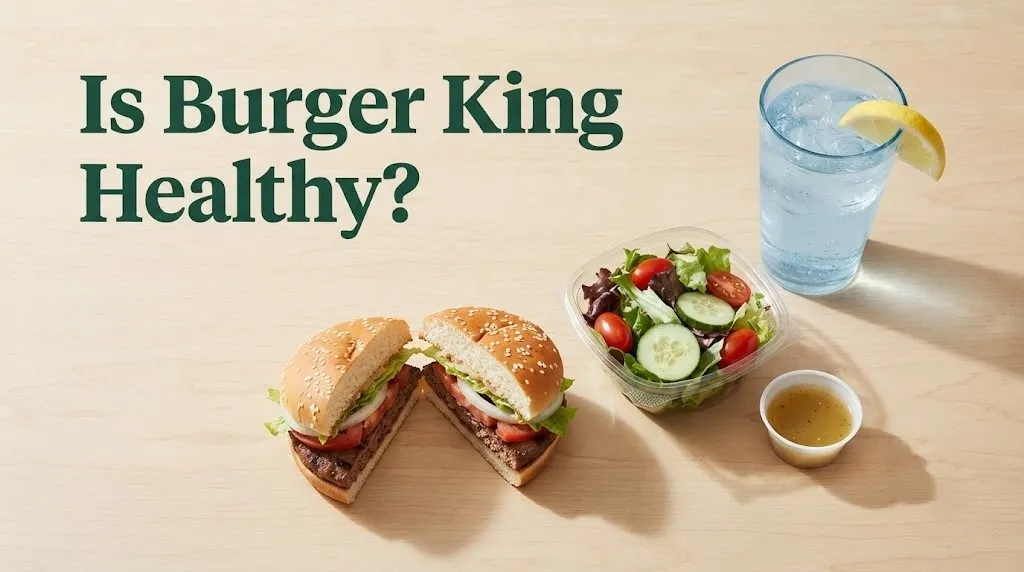
Burger King is not a healthy restaurant by any standard definition, but you can eat there occasionally without derailing an otherwise balanced diet if you choose carefully, skip the combo meals, and treat it as a once-in-a-while indulgence rather than a routine food source. The menu contains a few items under 500 calories with reasonable protein. It also contains single meals that exceed 1,500 calories.
Fast food consumption in the United States remains stubbornly high. The Centers for Disease Control and Prevention (CDC) reports that roughly 36 percent of American adults eat fast food on any given day. Burger King, as the third-largest burger chain in the world with over 18,000 locations, plays a meaningful role in that statistic. The question is not whether the Whopper is health food. It clearly is not. The question is whether there is a way to order at Burger King that does not completely sabotage a healthy eating pattern, and what the actual nutritional trade-offs look like when you walk in.
This guide breaks down every section of the Burger King menu with real calorie counts, macronutrient data, and sodium figures. You will see which items are the least damaging, which ones to avoid entirely, how the breakfast menu stacks up, what plant-based options actually deliver nutritionally, and how Burger King compares to its direct competitors. Menu items and nutritional data are based on publicly available information as of early 2026. Individual locations may vary, and Burger King updates its menu periodically. Check the restaurant’s posted nutrition information or website for the most current data on the items you order.
How Healthy Is Burger King Overall?
Burger King is a fast food restaurant whose menu is dominated by high-calorie, high-sodium, high-saturated-fat items built around fried proteins, refined carbohydrates, and sugar-sweetened beverages. The overall health profile is poor, and no amount of selective ordering changes the fact that this is not a health-oriented establishment.
The structural problem with Burger King from a nutrition perspective is the default meal configuration. The combo meal, which pairs a burger with fries and a soda, is the standard ordering format and the one the menu boards are designed to push. A Whopper combo with medium fries and a medium Coke delivers roughly 1,200 to 1,350 calories, 18 grams of saturated fat, and 1,500 milligrams of sodium in a single sitting. That represents 60 to 70 percent of the daily calorie needs for an average adult and essentially the entire daily sodium limit recommended by the American Heart Association.
The Dietary Guidelines for Americans recommend that adults limit saturated fat to less than 10 percent of total daily calories, roughly 22 grams for a 2,000-calorie diet. A single Burger King meal can deliver 80 percent of that limit. Sodium recommendations cap at 2,300 milligrams daily for healthy adults, with an ideal limit of 1,500 milligrams for those with hypertension or cardiovascular risk. Many Burger King items push past these targets with room to spare.
There is a pattern to the healthiest items on the menu. They are the simplest ones. Grilled chicken without sauce. A basic hamburger without cheese. A side salad with dressing on the side. The more a Burger King order resembles something you could make in your own kitchen, the more reasonable its nutrition profile tends to be. The more it involves layered sauces, bacon, multiple cheese types, and deep frying, the more it becomes a dietary event rather than a meal.
What Are the Healthiest Burger King Menu Items?
The healthiest items at Burger King are the Whopper Jr. without mayonnaise, the Grilled Chicken Sandwich without sauce, the 4-piece Chicken Nuggets, and the Garden Side Salad with light dressing. These items keep calories under 500 while providing enough protein to function as a meal.
The Whopper Jr. is the single best burger option for someone trying to eat reasonably at Burger King. At 310 calories, 13 grams of fat, and 12 grams of protein, it delivers the Whopper flavor profile in a portion size that does not overwhelm a day’s calorie budget. Removing the mayonnaise saves roughly 80 calories and drops the fat content by about 9 grams. Adding extra lettuce, tomato, and onion increases the volume and fiber without adding meaningful calories.
The Grilled Chicken Sandwich, when ordered without mayonnaise, comes in at roughly 430 calories with 28 grams of protein. The chicken breast provides a lean protein source without the breading and frying that add calories and oxidized fats to the crispy chicken options. This sandwich often gets overlooked in favor of the more heavily promoted beef items, but it is nutritionally superior to nearly everything else on the menu.
The 4-piece Chicken Nuggets serving is a surprisingly reasonable option at approximately 170 calories before sauce. The problem is that almost no one orders four nuggets. The standard order is 8 or 10 pieces, which doubles or triples the calorie count. The nuggets are still fried and processed, but as a small side or a child’s portion, they are manageable. The sauces add 40 to 140 calories per packet.
| Item | Calories | Fat (g) | Saturated Fat (g) | Sodium (mg) | Protein (g) |
|---|---|---|---|---|---|
| Whopper Jr. (no mayo) | 230 | 10 | 3.5 | 390 | 12 |
| Grilled Chicken Sandwich (no mayo) | 350 | 8 | 2 | 680 | 28 |
| 4-piece Chicken Nuggets | 170 | 10 | 1.5 | 310 | 9 |
| Garden Side Salad (no dressing) | 25 | 0 | 0 | 15 | 2 |
| Hamburger (plain) | 240 | 8 | 3 | 380 | 13 |
| Chicken Jr. | 410 | 21 | 4 | 730 | 15 |
Dietary sensitivity note: All burger buns and chicken items at Burger King contain gluten from wheat flour. The grilled chicken and beef patties themselves are gluten-free, but cross-contamination risk is high in the kitchen. Burger King does not maintain a dedicated gluten-free preparation area. Anyone with celiac disease should treat Burger King as a high-risk environment rather than relying on individual item ingredient lists.
What Are the Unhealthiest Items on the Burger King Menu?
The unhealthiest items at Burger King are the Triple Whopper with Cheese, the Bacon King, the large combo meals with fries and soda, and the milkshakes. These items deliver extreme calorie loads, saturated fat levels that exceed an entire day’s recommendation, and sodium counts that can surpass 2,000 milligrams in a single serving.
The Bacon King is the most calorie-dense burger on the standard menu. It contains two quarter-pound beef patties, thick-cut bacon, American cheese, ketchup, and mayonnaise on a sesame seed bun. The total damage: roughly 1,200 calories, 79 grams of fat (of which 30 grams are saturated), and 2,150 milligrams of sodium. That sodium figure is 93 percent of the daily upper limit in one sandwich, before fries or a drink. The saturated fat alone is 36 percent above the American Heart Association’s ideal daily maximum.
The Triple Whopper with Cheese follows a similar pattern. Three beef patties, cheese, and the standard Whopper toppings bring it to approximately 1,220 calories, 82 grams of fat, and 1,480 milligrams of sodium. Neither of these sandwiches is designed to be eaten regularly. They are marketed as indulgent, oversized options, and the nutritional profile matches the marketing.
Large milkshakes are calorie delivery systems disguised as beverages. A large Chocolate Shake contains roughly 750 calories, 18 grams of saturated fat, and 105 grams of sugar. The sugar content alone is more than four times the American Heart Association’s recommended daily limit for added sugar. Even the “small” shake at 12 ounces contains approximately 580 calories and 82 grams of sugar.
The large combo upgrades are where calories multiply silently. Adding a large fry instead of a medium adds roughly 160 calories. A large soda instead of a medium adds 80 to 100 calories. The large combo format can push a meal from heavy to extreme without the diner feeling meaningfully fuller.
Key Takeaway: Burger King is a high-calorie, high-sodium restaurant by design. The healthiest items are the simplest ones. The unhealthiest items combine multiple patties, cheese, bacon, and large-format sides into meals that exceed a full day’s calorie and sodium limits.
Burger King Breakfast: Is Anything Healthy?
The Burger King breakfast menu is nutritionally challenging, with most items delivering high sodium and saturated fat before 10 a.m., but the Egg and Cheese Croissan’wich and the French Toast Sticks in small portions are the least problematic options available. The breakfast menu is smaller than the lunch and dinner menu, which means fewer choices and fewer opportunities to find genuinely healthy items.
The Croissan’wich line is the core of Burger King breakfast. The basic Egg and Cheese Croissan’wich contains approximately 330 calories, 16 grams of fat, and 8 grams of protein. Adding sausage pushes it to roughly 500 calories and 32 grams of fat. Adding bacon brings it to 390 calories and 20 grams of fat. The croissant base is inherently high in butter and refined flour, which drives the fat and calorie content before any fillings are added.
The French Toast Sticks are a popular breakfast side. A 3-piece serving contains roughly 230 calories and 11 grams of fat. The 5-piece serving jumps to 380 calories and 18 grams of fat. The sticks come with syrup, which adds roughly 80 calories per packet. The French Toast Sticks are deep-fried, not griddled, which explains the fat content that surprises people who picture French toast as a pan-cooked food.
The breakfast menu does not include a bowl format, a yogurt parfait, or an oatmeal option at most locations as of 2026. This is a gap compared to competitors like McDonald’s and Chick-fil-A, both of which offer oatmeal and yogurt-based breakfast items. The absence of a whole-grain or fruit-based option makes it difficult to assemble a balanced breakfast at Burger King.
The Hash Browns are a small deep-fried potato cake. A single serving is roughly 150 calories, 10 grams of fat, and 280 milligrams of sodium. They are not nutritionally dense, but as a small side with the Egg and Cheese Croissan’wich, the calorie total stays under 500 before a beverage. Choosing black coffee or water instead of juice or soda keeps the meal from tipping into excessive territory.
Is the Impossible Whopper Actually Healthier?
The Impossible Whopper is slightly lower in saturated fat and cholesterol compared to the beef Whopper but is not meaningfully healthier overall due to similar calorie, sodium, and total fat content. The plant-based patty is an environmental and ethical choice, not a nutritional upgrade.
The nutritional comparison tells the story. A standard beef Whopper contains approximately 660 calories, 40 grams of fat (12 grams saturated), and 980 milligrams of sodium. The Impossible Whopper contains roughly 630 calories, 34 grams of fat (11 grams saturated), and 1,080 milligrams of sodium. The differences are small. The Impossible version saves 30 calories and 1 gram of saturated fat but adds 100 milligrams of sodium.
The protein content differs slightly. The beef Whopper provides 28 grams of protein. The Impossible Whopper provides 25 grams. Both are adequate protein amounts for a single meal. The Impossible patty derives its protein primarily from soy protein concentrate and potato protein, while the beef patty provides complete animal protein with higher bioavailability.
Where the Impossible Whopper stands apart is in dietary cholesterol and environmental impact. The beef Whopper contains roughly 80 milligrams of cholesterol. The Impossible Whopper contains zero cholesterol because plant proteins contain no dietary cholesterol. The World Health Organization has classified processed meat as a Group 1 carcinogen and red meat as a Group 2A probable carcinogen, classifications that apply to the beef Whopper but not to the plant-based alternative.
The caveat that many health-focused consumers miss is that the Impossible Whopper is still a fast food burger. It comes on a refined white bun. It is topped with the same ketchup and mayonnaise as the beef version. It is cooked on the same broiler as the beef patties unless the customer specifically requests a non-broiler preparation method, which not all locations accommodate. The plant-based patty does not transform a high-calorie burger into a health food.
What Is the Sodium Content at Burger King?
Sodium levels at Burger King are consistently high across the menu, with most single items delivering between 500 and 1,500 milligrams of sodium and combo meals easily exceeding 2,000 milligrams. The sodium content is arguably the most concerning nutritional attribute of the Burger King menu.
The American Heart Association recommends an ideal limit of 1,500 milligrams of sodium per day for optimal cardiovascular health, with an upper limit of 2,300 milligrams. A single Bacon King at 2,150 milligrams of sodium essentially hits the upper limit. A Whopper combo with medium fries reaches roughly 1,800 milligrams. Even the relatively moderate Whopper Jr. with a small side contains roughly 800 milligrams, or more than half the ideal daily limit.
Sodium in fast food serves multiple functions beyond flavor. It preserves the meat. It enhances the texture of processed ingredients. It drives thirst, which increases beverage sales. It masks the flavor degradation that occurs when food sits under heat lamps. Fast food menus are engineered around sodium’s functional properties, not just its taste.
The sources of sodium in a typical Burger King meal are distributed across every component. The beef patty is seasoned. The bun contains sodium. The cheese, pickles, ketchup, mustard, and mayonnaise all contribute. The fries are salted. The soda, while not high in sodium, often accompanies the meal. No single ingredient is responsible. Removing any one component helps, but the sodium reduction is modest.
Practical sodium reduction strategies at Burger King:
- Order burgers without cheese, which removes 200 to 400 milligrams of sodium.
- Skip the bacon on any burger, which removes 200 to 300 milligrams of sodium.
- Order fries without added salt. They will still contain sodium from processing, but surface salt is a significant contributor.
- Choose water or unsweetened iced tea instead of soda. Diet soda avoids sugar but does not reduce sodium.
Can You Eat Burger King on a Diet?
You can eat Burger King while following a weight loss diet if you plan for it by adjusting the rest of your day’s intake, choosing lower-calorie menu items, and avoiding the combo meal upsells. A single meal at Burger King does not cause weight gain. A pattern of unexamined Burger King consumption does.
A calorie deficit is the fundamental requirement for weight loss regardless of where the calories come from. A Whopper Jr. without mayonnaise (230 calories) and a small order of value fries (220 calories) totals 450 calories. For someone targeting 1,800 calories per day, that leaves 1,350 calories for the other two meals. The math works. The challenge is that this order is smaller than what most people would naturally select.
The psychological trap of fast food dieting is the “healthy ordering” compensation effect. Research published in the Journal of Consumer Research has documented that diners who order a perceived healthier item often reward themselves with a less healthy side or dessert, erasing the calorie savings. Ordering a Diet Coke with a Bacon King is not a health strategy. It is a permission structure.
The practical approach to incorporating Burger King into a weight loss plan includes ordering the smallest version of the item you want, skipping cheese and mayonnaise, choosing water or unsweetened iced tea, and not adding fries unless they fit your calorie budget. The Whopper Jr., the basic hamburger, the 4-piece nuggets, and the grilled chicken sandwich without sauce are the items that can fit into a calorie-restricted day.
Quick Tip for portion control at Burger King:
- Order from the value menu or kids’ menu rather than the main combo board.
- Eat half the bun from any burger to save 100 to 120 calories without losing the burger experience.
- Do not order fries as a default. Decide whether you actually want them before adding them to your order.
Key Takeaway: The Impossible Whopper is slightly better on saturated fat and cholesterol but similar on calories and sodium. Sodium is the most concerning nutrient across the entire Burger King menu. Dieters can fit Burger King into a calorie deficit if they order the smallest versions of items.
What Are the Best Burger King Sides for Health?
The Garden Side Salad, apple slices (available at some locations), and a small order of value fries are the least nutritionally damaging side options at Burger King. The fries are still fried and salted, but the small portion keeps the calorie and sodium impact manageable.
The Garden Side Salad is genuinely the healthiest item on the entire Burger King menu. It contains approximately 25 calories before dressing, zero grams of fat, and a small amount of fiber from the lettuce, tomato, and carrot mix. Adding a half packet of light dressing brings it to roughly 70 calories total. The salad does not transform a Whopper into a health meal, but it adds volume and a small amount of vegetable matter to a meal that would otherwise contain none.
French fries are the default side, and portion size is the primary lever for managing their impact. A small value fry contains approximately 220 calories, 10 grams of fat, and 210 milligrams of sodium. A medium fry jumps to 320 calories and 400 milligrams of sodium. A large fry hits 430 calories and 570 milligrams of sodium. The jump from small to large doubles the calorie and nearly triples the sodium. The difference in satiety between a small and large fry is negligible. The difference in nutritional impact is not.
Onion rings are nutritionally worse than fries in nearly every category. A small order contains roughly 320 calories, 16 grams of fat, and 760 milligrams of sodium. The batter absorbs more oil during frying than the potato surface of a french fry. The onion inside provides a negligible amount of vegetable matter.
| Side | Calories | Fat (g) | Sodium (mg) |
|---|---|---|---|
| Garden Side Salad | 25 | 0 | 15 |
| Apple Slices (where available) | 35 | 0 | 0 |
| Value Fries (small) | 220 | 10 | 210 |
| Medium Fries | 320 | 15 | 400 |
| Onion Rings (small) | 320 | 16 | 760 |
| 4-piece Chicken Nuggets | 170 | 10 | 310 |
What Are the Healthiest Burger King Sauces and Condiments?
The healthiest condiments at Burger King are mustard, ketchup (in moderation), and BBQ sauce (in moderation), while mayonnaise, ranch, and honey mustard add the most calories and fat. Sauce choices can add 40 to 200 calories to a meal without being noticeable as “food” to most diners.
Mustard is the nutritional winner. A standard packet contains roughly 5 calories, zero fat, and about 100 milligrams of sodium. The sodium is not trivial, but compared to every other condiment option, mustard delivers flavor with the lowest calorie and fat cost. Yellow mustard is also free of added sugar.
Ketchup is the second-best option. A packet contains roughly 20 calories and 4 grams of sugar. The calories are modest, and the sugar, while worth noting, is not at a level that should concern most people. The bigger issue with ketchup is that most people use more than one packet, and the sugar adds up across multiple servings.
Mayonnaise is the condiment to use sparingly or skip. A single tablespoon contains roughly 90 calories and 10 grams of fat. Burger King’s mayonnaise is applied with a generous hand on most sandwiches. Requesting a burger without mayonnaise is the single most effective customization for reducing the calorie and fat content of any Burger King order.
BBQ sauce and honey mustard occupy a middle ground. BBQ sauce contains roughly 40 calories and 8 grams of sugar per packet. Honey mustard contains roughly 90 calories and 4 grams of fat. Ranch is the worst dipping sauce option at approximately 140 calories and 15 grams of fat per packet. Two ranch packets with an order of chicken nuggets adds more calories than the nuggets themselves.
What Is the Healthiest Burger King Kids Meal?
The healthiest Burger King kids meal is the 4-piece Chicken Nuggets with apple slices or a value fry, served with water or low-fat milk. This combination keeps calories under 400 while providing a reasonable amount of protein for a child’s meal.
The Burger King kids meal program offers several protein options: a hamburger, a cheeseburger, 4-piece chicken nuggets, or 6-piece chicken nuggets. The 4-piece nuggets provide 170 calories and 9 grams of protein. The hamburger provides 240 calories and 13 grams of protein. Both are reasonable choices. The cheeseburger adds unnecessary saturated fat and sodium at 280 calories.
The side options for kids meals include apple slices where available, value fries, and onion rings. The apple slices are a clear win at 35 calories and zero added fat or sodium. The value fries add 220 calories. The difference between these two choices is roughly 185 calories per meal, which is significant in the context of a child’s daily energy needs.
Beverage choice is where kids meals often go off the rails nutritionally. A small soda adds roughly 150 calories and 40 grams of sugar. Low-fat milk adds roughly 100 calories, 2.5 grams of fat, and 12 grams of natural sugar with the benefit of protein and calcium. Water adds nothing. The American Academy of Pediatrics recommends milk or water as the primary beverages for children and advises against routine consumption of sugar-sweetened beverages.
Kids meal toys and marketing are designed to drive demand, but the parent controls the order. The nutritional composition of the meal depends on which side and drink the adult selects. The default configurations that include fries and soda are nutritionally poor. The customized configurations with apple slices and milk are reasonable. The difference is entirely within the parent’s control at the point of ordering.
Dietary sensitivity note: The chicken nuggets contain wheat and egg in the breading and are fried in shared oil that may contact other allergens. Parents of children with food allergies should ask for the current allergen guide at the specific location and confirm preparation practices before ordering.
How Does Burger King Compare to McDonald’s for Health?
Burger King and McDonald’s are nutritionally similar at the menu level, with comparable calorie ranges for equivalent items, but McDonald’s offers more lower-calorie options and a more extensive breakfast menu with oatmeal and yogurt-based items. Neither chain is healthy, but McDonald’s provides slightly more flexibility for a nutrition-conscious order.
The core burger comparisons are close. A McDonald’s Big Mac contains roughly 550 calories. A Burger King Whopper contains roughly 660 calories. The difference is the Whopper’s larger beef patty. The McDonald’s Quarter Pounder with Cheese at 520 calories is closer to the Whopper Jr. at 310 calories. Cross-chain burger comparisons require matching by patty size, not by marketing name.
Where McDonald’s pulls ahead is in menu breadth for lighter options. McDonald’s offers oatmeal at breakfast, a Fruit and Yogurt Parfait, and a side salad that is widely available. Burger King’s lighter options are fewer and less prominently featured. The grilled chicken sandwich is functionally similar at both chains, but McDonald’s has invested more in salads and produce-forward sides over the years.
Sodium comparisons are a draw. Both chains produce high-sodium food. A Big Mac contains roughly 1,010 milligrams of sodium. A Whopper contains roughly 980 milligrams. The difference is small. Both sandwiches deliver roughly half the daily sodium recommendation.
The plant-based burger comparison slightly favors Burger King. The Impossible Whopper has been a permanent menu item for years, and the chain has invested in promoting it. McDonald’s has tested plant-based burgers in various markets but has not committed to a permanent nationwide plant-based burger option as of 2026. For someone seeking a plant-based fast food option, Burger King is the more reliable choice among the two largest burger chains.
| Comparison Factor | Burger King Whopper | McDonald’s Big Mac |
|---|---|---|
| Calories | 660 | 550 |
| Protein | 28 g | 25 g |
| Saturated Fat | 12 g | 10 g |
| Sodium | 980 mg | 1,010 mg |
| Plant-Based Option | Impossible Whopper | Not nationally available |
| Breakfast Lighter Options | Limited | Oatmeal, parfait available |
Key Takeaway: Mustard and ketchup are the healthiest condiments. The kids meal can be reasonable if you choose apple slices and milk or water. Burger King and McDonald’s are similar nutritionally, but McDonald’s offers more lower-calorie options across dayparts.
How Often Can You Eat Burger King and Stay Healthy?
There is no specific safe frequency for eating Burger King because individual health status, activity level, and the rest of your diet determine the impact. For a healthy adult with no cardiovascular risk factors who otherwise eats a whole-food diet, once a week is a reasonable ceiling. For someone managing hypertension, diabetes, or elevated cholesterol, once a month or less is more appropriate.
The dose makes the poison. The nutritional problems with Burger King are cumulative. One high-sodium meal does not cause hypertension. A pattern of high-sodium meals over years contributes to it. The same logic applies to saturated fat and cardiovascular risk, refined carbohydrates and blood sugar management, and calorie density and weight gain. The risk is not in the single meal. It is in the pattern.
The American Heart Association emphasizes overall dietary pattern rather than individual meals. A person who eats Burger King once weekly but otherwise consumes a Mediterranean-style diet rich in vegetables, legumes, whole grains, and lean proteins is in a fundamentally different health position than someone who eats fast food four times weekly with a baseline diet of processed convenience foods. Context matters more than the single restaurant visit.
The blood pressure effect of a single high-sodium meal is measurable but temporary in people with healthy endothelial function. Blood pressure rises within hours of a high-salt meal and returns to baseline within 24 to 48 hours as the kidneys excrete the excess sodium. In people with impaired endothelial function, salt sensitivity, or established hypertension, the same meal produces a larger and more prolonged pressure elevation. The same meal affects different bodies differently.
People with diagnosed medical conditions need more conservative guidance than the general population. Someone with chronic kidney disease should be especially cautious about the sodium and phosphorus loads in fast food. Someone with diabetes needs to account for the refined carbohydrate content. Someone with heart failure needs to avoid the sodium content that could trigger fluid retention. Individual medical advice from a healthcare provider who knows your specific case overrides any general guideline.
What Are the Healthiest Burger King Drinks?
The healthiest drinks at Burger King are bottled water, unsweetened iced tea, black coffee, and diet soda (for those who tolerate artificial sweeteners). Regular soda, sweet tea, and milkshakes are the least healthy beverage options on the menu.
Water is the obvious first choice. It adds zero calories, zero sugar, and zero sodium to the meal. Burger King offers bottled water at most locations, and tap water is available upon request. The cost of bottled water at a fast food restaurant is high relative to grocery store prices, but ordering water instead of a soda saves roughly 150 to 300 calories per meal.
Unsweetened iced tea provides flavor without calories. Burger King’s iced tea is brewed and can be ordered without sugar. Adding a zero-calorie sweetener is an option for those who want sweetness. Tea also contains polyphenols with documented antioxidant properties, though the concentration in fast food iced tea is modest.
Black coffee is calorie-free and contains caffeine and polyphenols. The health problems with coffee at Burger King come from the additions, not the coffee itself. Cream, sugar, and flavored syrups add calories and saturated fat. A plain black coffee is a reasonable beverage choice.
Diet soda is a middle-ground option. It provides sweetness without calories or sugar, which addresses the immediate metabolic concerns of regular soda consumption. The long-term health effects of daily artificial sweetener consumption remain an active area of research, and the evidence is mixed. The FDA considers the sweeteners used in diet soda safe at current exposure levels. Some observational studies have found associations between diet soda consumption and metabolic disturbances, but causation has not been established. For someone using diet soda as a bridge away from regular soda, it is a net positive. For someone who does not drink soda at all, there is no reason to start.
How to Order Healthy at Burger King
To order as healthily as possible at Burger King, choose a Whopper Jr. or Grilled Chicken Sandwich without mayonnaise, add a Garden Side Salad with light dressing, and drink water or unsweetened iced tea. This combination provides a satisfying meal for under 500 calories with reasonable protein and the lowest sodium achievable on the menu.
The order strategy follows a predictable pattern across every fast food restaurant. Choose the smallest version of the protein you want. Remove the high-fat condiments. Add vegetables where possible. Skip the fries unless they genuinely fit your plan. Drink water. These choices are not magic, but they reliably produce the best nutritional outcome available in a restaurant that is not designed for health.
The customization options matter. Burger King allows customers to remove or add ingredients from most items. Removing cheese, bacon, and mayonnaise from any burger produces an immediate improvement in saturated fat and calorie content. Adding extra lettuce, tomato, and onion increases the vegetable content, which is otherwise nearly absent from most fast food meals.
The combo meal is the enemy of healthy ordering. The combo format bundles a high-calorie main item with a high-calorie side and a high-calorie drink at a price point that makes ordering a la carte feel financially irrational. The result is that consumers buy and consume more food than they would if they ordered each item individually. Ordering a la carte is almost always the healthier choice, even if it costs slightly more.
Strategy for building the healthiest possible Burger King meal:
- Select the smallest burger or grilled chicken sandwich available.
- Ask for no mayonnaise, no cheese, and no bacon.
- Add extra lettuce, tomato, and onion for volume and fiber.
- Choose a Garden Side Salad or apple slices instead of fries.
- Drink water, unsweetened iced tea, or black coffee.
- Use mustard or a small amount of ketchup as your condiment.
Key Takeaway: There is no universal safe frequency for eating Burger King. Context and individual health status determine the impact. The healthiest order combines the smallest protein option, vegetable sides, and water. Customization is the most powerful tool available to the fast food customer.
Frequently Asked Questions About Burger King Nutrition
Is Burger King healthier than McDonald’s?
Burger King and McDonald’s are nutritionally similar, with neither chain offering a meaningfully healthier menu overall.
McDonald’s provides slightly more lower-calorie options including oatmeal and a fruit and yogurt parfait at breakfast, while Burger King offers the Impossible Whopper as a permanent plant-based option.
The difference between equivalent items at both chains is typically less than 100 calories, which is not significant in the context of a full day’s eating.
Can I eat Burger King and still lose weight?
You can include Burger King in a weight loss diet by choosing lower-calorie items and accounting for the meal within your daily calorie target.
A Whopper Jr. without mayonnaise and a small side of fries totals roughly 450 calories, which can fit into most calorie-restricted eating plans.
The challenge is not the food itself but the tendency to order larger combo meals that exceed the calorie needs of a single meal.
What is the lowest calorie item at Burger King?
The Garden Side Salad at approximately 25 calories is the lowest calorie item on the Burger King menu.
Among protein-containing items, the 4-piece Chicken Nuggets at 170 calories and the Whopper Jr. without mayonnaise at 230 calories are the lowest calorie options that can function as a meal component.
A plain hamburger at 240 calories is also a reasonable low-calorie choice.
Is the Impossible Whopper good for you?
The Impossible Whopper is not a health food, but it is slightly lower in saturated fat and contains zero cholesterol compared to the beef Whopper.
The calorie and sodium content are similar to the beef version, and the sandwich is still a high-calorie fast food item on a refined white bun.
The plant-based patty is a meaningful choice for environmental or ethical reasons, not for dramatic nutritional improvement.
Does Burger King use real beef?
Burger King uses 100 percent beef patties with no fillers, preservatives, or additives according to the company’s published ingredient information.
The beef is sourced from conventionally raised cattle and is not organic, grass-fed, or antibiotic-free as a standard across the supply chain.
The patties are seasoned with salt and pepper during cooking and are not marinated or pre-seasoned before grilling.
Eating at Burger King Without Abandoning Your Health Goals
Burger King is not a restaurant designed around health, and pretending otherwise does you no favors. The menu is engineered to sell beef, cheese, bread, and sugar at scale. Accepting that reality is the first step to navigating it intelligently. The second step is using customization to build the least nutritionally damaging version of the meal you actually want.
The difference between a 1,500-calorie Burger King meal and a 500-calorie one is not a secret menu hack. It is smaller portions, fewer toppings, vegetable sides, and water. The pattern repeats across every fast food restaurant. There is always a reasonable order hidden in the menu. Finding it requires knowing what to look for and being willing to order it even when the combo meal looks like a better deal.
If you eat at Burger King occasionally, order consciously, and your baseline diet is built on whole foods, the restaurant is not a threat to your health. If you eat there multiple times weekly on top of a processed-food baseline, no amount of Whopper Jr. ordering will fix that. The context of your overall eating pattern matters more than any single drive-through visit.