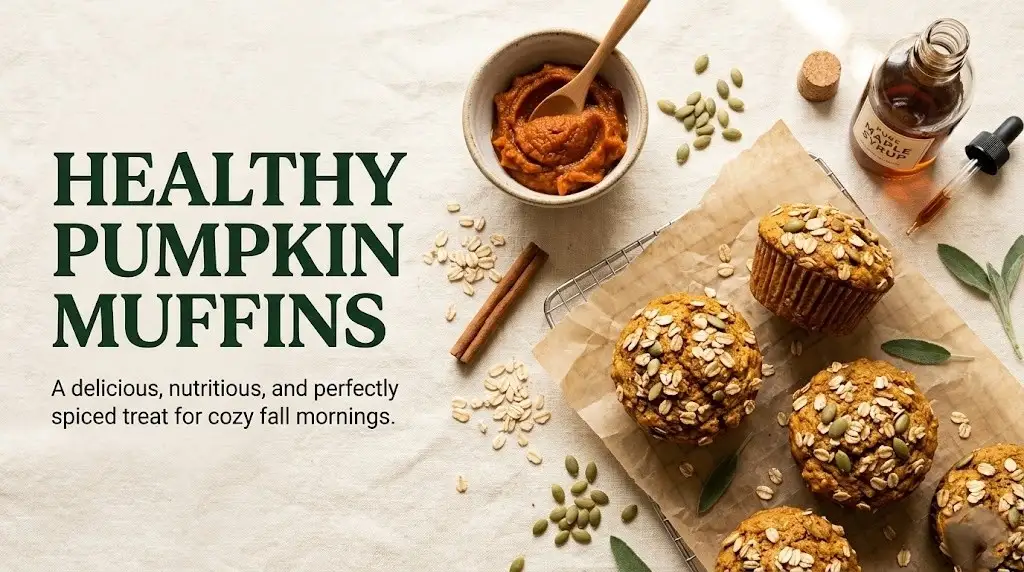
Healthy pumpkin muffins can genuinely be a nutritious snack when made with whole grain or nut-based flours, a controlled amount of natural sweetener, and 100% pumpkin puree. The ingredient choices you make determine whether you’re eating something worth repeating or just a cupcake in disguise.
Pumpkin puree is one of the most nutrient-dense bases you can put in a baked good. According to USDA FoodData Central, half a cup of canned pumpkin puree delivers more than 100% of the recommended daily intake for vitamin A, 3.5 grams of dietary fiber, and under 50 calories.
This guide covers the full nutritional picture, a tested step-by-step recipe, every major flour and sweetener option, and specific guidance for people managing blood sugar, eating gluten-free or dairy-free, and prepping ahead for the week.
Healthy Pumpkin Muffins: What They Are and Why They Matter
Healthy pumpkin muffins are baked muffins made with pumpkin puree (Cucurbita pepo) as the primary wet ingredient, combined with a nutrient-denser flour and a lower or natural sweetener rather than refined all-purpose flour and white sugar.
The phrase “healthy” in this context has a specific meaning. It refers to muffins that meaningfully differ from a standard bakery version in their macronutrient profile: more fiber, less added sugar, higher micronutrient content, and a more moderate calorie count per serving.
This is not about restriction. A well-made pumpkin muffin can provide lasting energy, meaningful fiber, and real micronutrients. That makes it a legitimate choice for breakfast, a school snack, or a post-workout bite rather than a treat to feel guilty about later.
Key distinctions in a genuinely healthy pumpkin muffin include:
- Made with 100% pumpkin puree, not pumpkin pie filling
- Flour is whole wheat, oat, or almond-based rather than refined white flour
- Sweetener is maple syrup, honey, or coconut sugar at a controlled amount
- Fat source is coconut oil, avocado oil, or unsweetened applesauce
- Added sugar does not exceed 6 to 8 grams per muffin
The Dietary Guidelines for Americans 2020-2025 recommend limiting added sugar to less than 10% of total daily calories. For a standard 2,000-calorie diet, that means no more than 50 grams of added sugar per day. One thoughtfully made healthy pumpkin muffin can deliver a satisfying baked good well within that range.
Are Pumpkin Muffins Healthy?
Pumpkin muffins made with whole-food ingredients and limited added sugar are a genuinely nutritious option. Whether a specific pumpkin muffin is healthy depends entirely on what’s in it.
A standard coffeehouse pumpkin muffin often contains between 400 and 550 calories, 50 to 65 grams of carbohydrates, 25 to 30 grams of added sugar, and minimal fiber. That profile is closer to a slice of cake than a health-supporting snack.
A homemade healthy version using oat flour, pumpkin puree, and maple syrup can deliver 150 to 200 calories, 8 to 12 grams of natural and added sugar combined, and 3 to 4 grams of dietary fiber per muffin. That’s a meaningful nutritional shift.
Pumpkin itself is the real star here. Harvard T.H. Chan School of Public Health identifies beta-carotene, the compound that gives pumpkin its orange color, as a powerful carotenoid antioxidant that the body converts to vitamin A. This conversion supports immune function, vision, and skin cell maintenance.
The short answer: yes, pumpkin muffins are healthy when made at home with the right ingredients. Bought from most coffee shops or bakeries, the answer is usually no.
| Feature | Standard Bakery Muffin | Healthy Homemade Version |
|---|---|---|
| Calories per muffin | 400 to 550 | 150 to 200 |
| Added sugar (grams) | 25 to 35 | 6 to 10 |
| Dietary fiber (grams) | 1 to 2 | 3 to 5 |
| Flour type | Refined white flour | Whole wheat, oat, or almond |
| Fat source | Vegetable oil or butter | Coconut oil or applesauce |
| Vitamin A contribution | Minimal | High (via pumpkin puree) |
What Makes Pumpkin Muffins Healthy
Three core ingredient categories determine whether a pumpkin muffin is nutritionally sound: the flour, the sweetener, and the fat.
Flour is the single most impactful variable. Refined all-purpose flour strips out the bran and germ, removing most of the fiber and B vitamins present in the original grain. The Academy of Nutrition and Dietetics recommends that at least half of daily grain consumption come from whole grain sources, noting that whole grains are associated with reduced risk of cardiovascular disease and better digestive health.
The sweetener matters next. Refined white sugar provides calories with no nutritional contribution. Maple syrup and honey contain trace minerals including manganese and zinc, and they tend to be used in smaller quantities because of their stronger flavor profile. That said, natural sweeteners still raise blood glucose, and the quantity used is what determines the final health impact.
Fat source shapes both texture and nutrition. Replacing butter or refined vegetable oil with extra-virgin coconut oil, avocado oil, or unsweetened applesauce reduces saturated fat intake and can add beneficial plant compounds depending on the source.
The pumpkin puree itself is the foundation of every claim about these muffins being nutritious. Without adequate pumpkin, a “pumpkin” muffin is mostly flour and sweetener with orange coloring.
Quick Tip:
- Use at least 3/4 cup of pumpkin puree per 12-muffin batch to ensure meaningful vitamin A and fiber content per serving.
- Check the can label carefully. “100% pure pumpkin” and “pumpkin pie filling” look nearly identical on store shelves.
- One tablespoon of ground flaxseed (Linum usitatissimum) stirred into the batter adds 1.9 grams of omega-3 fatty acids and extra fiber per batch.
Key Takeaway: The difference between a healthy pumpkin muffin and a bakery pumpkin muffin comes down to three choices: flour type, sweetener amount, and fat source. Getting all three right can cut calories in half and triple the fiber content.
Healthy Pumpkin Muffins Nutrition Facts
A standard homemade healthy pumpkin muffin made with oat flour, maple syrup, and coconut oil contains approximately 165 to 185 calories per muffin, with a nutritional profile worth understanding in detail.
According to USDA FoodData Central, one serving of 100% canned pumpkin puree (1/2 cup, 122 grams) contains approximately 953 micrograms of retinol activity equivalents (RAE) of vitamin A, which exceeds the entire recommended daily intake for most adults in a single half-cup. It also provides roughly 3.5 grams of dietary fiber, 253 milligrams of potassium, and only 42 calories.
| Nutrient | Per Muffin (Oat Flour Base) | % Daily Value (approx.) |
|---|---|---|
| Calories | 165 to 185 | 8 to 9% |
| Total carbohydrates | 22 to 26g | 8% |
| Dietary fiber | 3 to 4g | 11 to 14% |
| Total sugars (includes added) | 8 to 12g | N/A |
| Added sugar | 6 to 9g | 12 to 18% |
| Total fat | 6 to 8g | 8 to 10% |
| Protein | 4 to 5g | 8 to 10% |
| Vitamin A (from pumpkin) | 400 to 500mcg RAE | 44 to 55% DV |
| Potassium | 150 to 190mg | 4% |
Specific values depend on exact ingredient quantities and the flour type used. Almond flour versions run higher in fat and calories but lower in carbohydrates. Whole wheat flour versions run slightly higher in carbohydrates but with comparable fiber.
People monitoring sodium intake should note that baking powder contributes approximately 200 to 300 milligrams of sodium per batch. Spread across 12 muffins, that’s a manageable 17 to 25 milligrams per muffin, but it’s worth knowing if you’re following a low-sodium dietary pattern.
Pumpkin Muffins Calories Comparison
The calorie gap between a store-bought pumpkin muffin and a homemade healthy version is substantial. A standard Starbucks Pumpkin Cream Cheese Muffin contains approximately 370 calories per serving, while a large bakery pumpkin muffin can reach 500 to 600 calories depending on the size and recipe used.
Calorie density in muffins is largely driven by refined flour, butter, and added sugar. Each gram of fat contributes 9 calories, compared to 4 calories per gram for carbohydrates and protein. A recipe that replaces butter with applesauce and reduces sugar by half can eliminate 150 to 200 calories per batch without compromising moisture or flavor.
Portion size is a variable that often gets overlooked. Many standard bakery muffins are actually two or three servings packed into one paper cup. Baking at home in a standard 12-well muffin tin naturally controls portion size better than a coffee shop scoop.
| Pumpkin Muffin Type | Calories | Added Sugar | Fiber |
|---|---|---|---|
| Large bakery muffin (avg) | 480 to 550 | 28 to 36g | 1 to 2g |
| Major coffee chain version | 350 to 400 | 22 to 30g | 1g |
| Homemade with white flour/sugar | 240 to 280 | 18 to 22g | 1 to 2g |
| Homemade with oat flour/maple syrup | 160 to 185 | 6 to 9g | 3 to 4g |
| Homemade with almond flour/maple syrup | 175 to 210 | 6 to 9g | 2 to 3g |
Think of calorie reduction in baking the same way you’d think about traffic routing. You’re not removing the destination. You’re finding a more efficient road to get there. Swapping oil for applesauce and reducing sugar does not flatten the muffin. It reroutes the recipe to the same satisfying result with fewer caloric miles traveled.
Healthy Pumpkin Muffin Recipe
This tested recipe produces 12 muffins with real measurements, real technique notes, and a nutrition profile you can trust.
Ingredients:
- 1 cup (90g) rolled oats, blended into oat flour (or 1 cup pre-made oat flour)
- 1/2 cup (48g) almond flour
- 1 teaspoon baking powder
- 1/2 teaspoon baking soda
- 1/4 teaspoon fine sea salt
- 1 and 1/2 teaspoons ground cinnamon (Cinnamomum verum)
- 1/2 teaspoon ground nutmeg
- 1/4 teaspoon ground ginger
- 1 cup (244g) canned 100% pumpkin puree (not pumpkin pie filling)
- 2 large eggs
- 1/3 cup (80ml) pure maple syrup
- 1/4 cup (60ml) coconut oil, melted and cooled
- 1 teaspoon pure vanilla extract
To make the healthy pumpkin muffins:
- Preheat your oven to 350 degrees F (177 degrees C). Line a standard 12-well muffin tin with paper liners or lightly grease each well.
- In a large bowl, whisk together the oat flour, almond flour, baking powder, baking soda, salt, cinnamon, nutmeg, and ginger until fully combined.
- In a separate medium bowl, whisk together the pumpkin puree, eggs, maple syrup, melted coconut oil, and vanilla extract until smooth.
- Pour the wet ingredients into the dry ingredients. Fold gently with a silicone spatula until no dry streaks remain. Stop mixing at that point. Overmixing toughens the final muffin.
- Divide the batter evenly among the 12 muffin wells, filling each about two-thirds full.
- Bake for 20 to 22 minutes, until a toothpick inserted into the center of a muffin comes out clean or with a few moist crumbs.
- Let the muffins cool in the tin for 5 minutes, then transfer to a wire rack to cool completely before storing.
People with tree nut allergies should not use almond flour. Substitute an additional 1/2 cup of oat flour for the almond flour. The texture will be slightly denser but still fully acceptable.
Key Takeaway: Using a blend of oat flour and almond flour gives healthy pumpkin muffins better protein content and a more satisfying texture than either flour alone, while keeping each muffin under 200 calories.
Best Healthy Pumpkin Muffins Flour Options
Flour is the variable that most defines the nutritional character of your healthy pumpkin muffins. There is no single best choice, because the right flour depends on your dietary goals and what you’re willing to trade off in texture.
Oat flour (made from rolled oats, Avena sativa) is the most versatile option. It produces a slightly tender, moist crumb and adds beta-glucan, a soluble fiber type that a 2016 review in the British Journal of Nutrition linked to improved cholesterol levels and more stable post-meal blood glucose. One cup of oat flour contains approximately 6 grams of fiber.
Almond flour (ground blanched Prunus dulcis) is lower in carbohydrates than any grain-based flour. One cup contains about 24 grams of fat, 6 grams of carbohydrates, and 6 grams of protein. This makes it a popular choice for people following low-carbohydrate or grain-free eating patterns. The higher fat content means muffins made with 100% almond flour are richer and slightly denser.
Whole wheat flour is the most accessible option and the one most similar in behavior to all-purpose flour. It contains the entire wheat kernel, which means it retains the bran, germ, and endosperm. A 2021 analysis published in the journal Nutrients found that whole grain consumption was associated with a reduction in LDL cholesterol and fasting blood glucose in multiple controlled trials.
| Flour Type | Calories per Cup | Fiber per Cup | Carbs per Cup | Best For |
|---|---|---|---|---|
| All-purpose (refined) | 455 | 1.3g | 95g | Standard texture only |
| Whole wheat flour | 407 | 12g | 87g | Classic muffin texture |
| Oat flour | 400 | 6g | 72g | Light, tender crumb |
| Almond flour | 640 | 12g | 24g | Low-carb, grain-free |
| Coconut flour | 480 | 36g | 64g | Very high fiber; absorbs more liquid |
Coconut flour is extremely absorbent and requires significant recipe reformulation. Do not substitute it 1:1 for any other flour without adjusting liquid quantities substantially.
Healthy Pumpkin Muffins with Oat Flour
Oat flour produces the most reliably moist and crowd-friendly healthy pumpkin muffin. It behaves closer to all-purpose flour than almond or coconut flour does, making it the best starting point for bakers new to whole-food baking.
One cup of blended rolled oats yields roughly one cup of oat flour, which makes this one of the most cost-effective healthy flour options available. A standard 42-ounce container of rolled oats costs significantly less per batch than a bag of certified almond flour.
The beta-glucan content in oat flour is worth calling out specifically. According to the American Heart Association, consuming at least 3 grams of beta-glucan oat fiber daily can reduce total cholesterol by up to 5 to 10%. One muffin made with a full cup of oat flour contributes roughly 0.5 to 0.75 grams, meaning four muffins over the course of a day starts reaching that meaningful range.
People with diagnosed celiac disease should use certified gluten-free oat flour. Standard oats are often processed in facilities that handle wheat, introducing cross-contamination. A bag labeled “certified gluten-free oats” eliminates that concern.
Quick Tip:
- Blend rolled oats in a standard blender for 30 to 45 seconds to make oat flour. The texture should resemble fine sand.
- Let the batter rest for 5 minutes before baking. Oat flour absorbs liquid more slowly than wheat flour, and resting improves final moisture distribution.
- Oat flour muffins are slightly stickier when warm. Let them cool for at least 10 minutes before removing from the tin.
Healthy Pumpkin Muffins with Almond Flour
Almond flour versions of healthy pumpkin muffins are naturally grain-free, higher in protein, and lower in net carbohydrates than any grain-based flour alternative. They’re the right choice for people following grain-free or paleo-style eating patterns.
One cup of almond flour provides approximately 24 grams of fat, the majority of which is monounsaturated oleic acid, the same type found in olive oil. A 2019 study in the Journal of Nutrition found that replacing saturated fat with monounsaturated fat was associated with improved cardiovascular risk markers.
The practical challenge with almond flour is binding. Without gluten, the batter needs extra structure. Two eggs, rather than one, provide that structure. Adding 1 tablespoon of ground flaxseed meal mixed with 2.5 tablespoons of water (a “flax egg”) per egg you want to replace gives a workable dairy-free and egg-free version, though the texture will be slightly more delicate.
Pure almond flour muffins bake denser than oat flour muffins. A 50/50 blend of almond flour and oat flour gives the best combination of protein content, crumb texture, and nutritional value. That blend is what the tested recipe in this guide uses.
Tree nut allergies make almond flour completely off-limits. This is not a minor substitution. Almond flour contains the same allergenic proteins as whole almonds, and it should never be used in food prepared for anyone with a known tree nut allergy.
Key Takeaway: Oat flour gives you the most approachable texture and the heart-health benefit of beta-glucan, while almond flour gives you grain-free, higher-protein muffins. Blending both produces the best result for most home bakers.
Healthy Pumpkin Muffins No Sugar
A healthy pumpkin muffin made without any added sugar is possible, and the result is genuinely palatable because pumpkin puree contributes its own mild natural sweetness. The key is leaning on spice intensity and banana or date paste to provide perceived sweetness without refined or concentrated sweeteners.
Canned pumpkin puree contains approximately 3.5 grams of natural sugar per half cup, almost entirely from naturally occurring fructose and glucose bound within the fiber matrix of the vegetable. This is very different metabolically from added sugar. When sugar is embedded in fiber, as it is in whole foods like pumpkin, the rate of glucose absorption is slower and the overall glycemic impact is lower.
For a no-added-sugar recipe, combine 1 cup of pumpkin puree with 1 medium ripe banana (mashed) as the sweetening agents. The banana adds approximately 12 grams of natural sugar per medium fruit and contributes potassium and vitamin B6. Two medjool dates (Deglet Noor variety) blended into a paste can also substitute for maple syrup in equal volume, providing natural sugar alongside 1.6 grams of fiber per date.
Ripe fruit-based sweetening works because the flavor compounds in overripe banana and dates register as intensely sweet to taste receptors, even though the sugar is not concentrated the way refined sugar is.
People with fructose malabsorption should note that dates are high in fructose and may cause digestive discomfort. A registered dietitian can help determine the right sweetener approach for individual digestive sensitivities.
Healthy Pumpkin Muffins with Maple Syrup
Pure maple syrup is the most commonly recommended natural sweetener for healthy pumpkin muffins, and it earns that role for reasons beyond just flavor.
Unlike refined white sugar, which is essentially pure sucrose, pure maple syrup (Acer saccharum source) contains trace amounts of manganese, zinc, calcium, and potassium. According to USDA FoodData Central, one tablespoon of pure maple syrup provides approximately 0.3 milligrams of manganese, about 13% of the recommended daily intake for most adults. Manganese plays a role in bone formation and antioxidant enzyme function.
The glycemic index of pure maple syrup is approximately 54, compared to about 65 for refined white sugar. A lower glycemic index means a slightly less abrupt rise in blood glucose for the same amount of sugar, though this difference is modest in the context of a full baked recipe with fiber.
Use real pure maple syrup, not “pancake syrup” or “maple-flavored syrup,” which are typically high-fructose corn syrup with artificial flavoring. The label should read “100% pure maple syrup” with one ingredient listed.
| Sweetener | GI Score | Calories per Tbsp | Trace Minerals | Notes |
|---|---|---|---|---|
| Refined white sugar | 65 | 49 | None | No nutritional value beyond energy |
| Pure maple syrup | 54 | 52 | Manganese, zinc | Stronger flavor; use less |
| Raw honey | 58 | 64 | Trace antioxidants | Flavor-dependent; not vegan |
| Coconut sugar | 54 | 45 | Trace potassium | Similar to maple syrup; milder flavor |
| Medjool date paste | 42 | 66 | Potassium, fiber | Highest fiber contribution |
Maple syrup is safe for most adults and children over 12 months. Honey should not be given to children under 12 months due to the risk of infant botulism.
Healthy Pumpkin Muffins Gluten Free
Healthy pumpkin muffins are among the most naturally gluten-free-adaptable baked goods because pumpkin puree’s moisture and density reduce reliance on gluten for structure. Several flour options work well here.
Certified gluten-free oat flour is the most accessible option and produces muffins closest in texture to a wheat-based version. Almond flour and coconut flour are inherently gluten-free. A blend of certified gluten-free oat flour with a tablespoon of arrowroot starch or tapioca starch can improve the crumb structure of gluten-free muffins by mimicking some of gluten’s binding properties.
The word “gluten-free” on packaging does not automatically mean the product is safe for people with celiac disease. Shared processing lines can introduce cross-contamination. The Celiac Disease Foundation recommends looking specifically for certified gluten-free labels from organizations such as the Gluten-Free Certification Organization (GFCO) or the National Celiac Association’s certification program.
Baking powder is a frequently overlooked source of hidden gluten. Standard baking powder sometimes uses wheat starch as a filler. Certified gluten-free baking powder is widely available and should be used when baking for anyone with celiac disease or serious gluten intolerance.
Quick Tip:
- Add 1/4 teaspoon of xanthan gum per cup of gluten-free flour blend if your muffins are crumbling excessively. This acts as a binding agent in the absence of gluten.
- Do not substitute coconut flour 1:1. Use no more than 1/3 cup coconut flour to replace 1 cup of any other flour, and increase liquid by an equal amount.
- Always let gluten-free muffins cool completely before slicing. They firm up as they cool in a way that wheat-flour muffins do not.
Key Takeaway: Certified gluten-free oat flour is your best default for gluten-free pumpkin muffins, but check your baking powder label too. Hidden gluten in pantry staples is a common and overlooked issue.
Healthy Pumpkin Muffins Dairy Free
Healthy pumpkin muffins are already dairy-free in most versions when made with coconut oil or avocado oil rather than butter. The recipe in this guide contains no dairy ingredients as written.
The main dairy-containing ingredients that sometimes appear in pumpkin muffin recipes are butter, milk, and cream cheese frosting. Replacing butter with refined coconut oil or avocado oil maintains moisture and fat content. Replacing cow’s milk with unsweetened almond milk, oat milk, or canned coconut milk works at a 1:1 ratio in most muffin recipes.
Greek yogurt is an ingredient some healthy muffin recipes use to add protein and moisture. If you want that function in a dairy-free version, unsweetened coconut yogurt or a thick oat-based yogurt substitute works well. Plain dairy-free yogurt adds approximately 2 to 3 grams of protein per 1/4 cup serving.
People following a strictly vegan diet should also check vanilla extract labels. Pure vanilla extract is vegan. Some processed vanilla flavorings contain trace animal-derived additives. The label should list only vanilla beans (Vanilla planifolia), alcohol, and water.
Dairy allergies and lactose intolerance are different conditions. A dairy allergy involves an immune response to milk proteins (casein and whey) and requires complete elimination. Lactose intolerance is a digestive enzyme deficiency that causes gastrointestinal discomfort with lactose-containing foods. Both groups can use this dairy-free recipe safely.
Healthy Pumpkin Muffins for Diabetics
Healthy pumpkin muffins can fit into a diabetes-friendly eating plan when made with low-glycemic flour, minimal added sugar, and adequate fiber content per serving. The American Diabetes Association emphasizes that total carbohydrate content and fiber intake, rather than the source of sugar alone, are the primary dietary factors affecting post-meal blood glucose.
A muffin made with oat flour, 1/3 cup of maple syrup across 12 muffins, and one cup of pumpkin puree contains approximately 22 to 26 grams of total carbohydrates per muffin, including 3 to 4 grams of fiber. The net carbohydrate figure (total carbs minus fiber) is approximately 18 to 22 grams per muffin.
Pairing the muffin with a protein source, such as 2 tablespoons of natural almond butter or a hard-boiled egg, slows gastric emptying and further blunts the blood glucose response. This is a practical strategy consistent with current diabetes nutrition guidance.
The glycemic load of a food item, which accounts for both the glycemic index and the portion size, is a more practical measure than glycemic index alone for blood glucose management. A single muffin made with oat flour and maple syrup has a moderate glycemic load, substantially lower than a standard bakery pumpkin muffin.
People living with type 1 or type 2 diabetes who are counting carbohydrates for insulin dosing or medication management should calculate the exact nutritional content of any homemade recipe using a verified nutrition calculator, since homemade serving sizes vary. Working with a registered dietitian who specializes in diabetes management can help personalize portion guidance to individual glucose targets.
Key Takeaway: For people managing blood sugar, the combination of oat flour fiber, controlled maple syrup, and pairing the muffin with a protein source produces a meaningfully more stable blood glucose response than any coffeehouse version.
Healthy Pumpkin Muffins Meal Prep and Storage
Healthy pumpkin muffins are one of the best baked goods for meal prep because they hold moisture well for several days and freeze without losing texture. Making a double batch on Sunday and storing it properly gives you ready breakfasts or snacks through Friday without additional effort.
Room temperature storage: Store fully cooled muffins in an airtight container at room temperature for up to 3 days. Line the container with a paper towel on the bottom and one on top to absorb excess moisture and prevent sogginess.
Refrigerator storage: Muffins keep well in the refrigerator for up to 7 days in a sealed container. They do firm up when cold. Warm them at 300 degrees F (149 degrees C) for 5 minutes or microwave for 20 seconds to restore the original texture.
Freezer storage: Healthy pumpkin muffins freeze exceptionally well. Wrap each muffin individually in plastic wrap, then place all in a zip-top freezer bag. They keep for up to 3 months in the freezer without quality loss.
To freeze in advance for maximum convenience:
- Cool muffins completely on a wire rack after baking, at least 45 minutes.
- Wrap each muffin tightly in plastic wrap, removing as much air as possible.
- Place wrapped muffins in a labeled, dated freezer-safe bag.
- To thaw, remove from the freezer the night before and let sit at room temperature in the wrapper. Alternatively, microwave a frozen muffin unwrapped for 45 to 60 seconds.
Muffins made with almond flour have slightly more moisture than oat flour versions, which can make them softer at room temperature. Refrigerating almond flour muffins after day two is a reasonable precaution.
Frequently Asked Questions About Healthy Pumpkin Muffins
Are pumpkin muffins healthy for weight loss?
Homemade healthy pumpkin muffins can support a weight management eating plan when portioned thoughtfully. A single muffin made with oat flour and maple syrup contains 160 to 185 calories, which fits into most calorie-conscious eating approaches as a breakfast component or snack. The fiber content (3 to 4 grams per muffin) contributes to satiety, and pairing the muffin with a protein source further extends the feeling of fullness between meals.
What is the difference between pumpkin puree and pumpkin pie filling?
Pumpkin puree is 100% cooked, pureed pumpkin with no added sugar, spices, or other ingredients. Pumpkin pie filling is a pre-seasoned, pre-sweetened product that typically contains 14 to 18 grams of added sugar per half cup, along with spices and thickeners. Using pumpkin pie filling instead of pumpkin puree in a healthy muffin recipe will significantly increase the sugar content and alter the spice balance in ways the recipe is not designed for.
Can I make healthy pumpkin muffins without eggs?
Yes, you can substitute eggs in healthy pumpkin muffins using a flax egg or a chia egg. For each large egg, combine 1 tablespoon of ground flaxseed meal (or ground chia seeds, Salvia hispanica) with 2.5 tablespoons of water and let it sit for 5 minutes until gel-like. The texture will be slightly denser than with whole eggs, but the muffins will hold together well, particularly in oat flour recipes.
How many calories are in a healthy pumpkin muffin?
A standard homemade healthy pumpkin muffin made with oat flour, maple syrup, and coconut oil contains approximately 160 to 185 calories per muffin. This assumes a standard 12-muffin yield from the recipe described in this guide. Almond flour versions run slightly higher (175 to 210 calories) due to the higher fat content of almond flour.
Are healthy pumpkin muffins safe for people with diabetes?
Healthy pumpkin muffins made with oat flour and limited maple syrup are a more blood-glucose-friendly option than standard bakery muffins, but portion and pairing still matter. One muffin contains approximately 22 to 26 grams of total carbohydrates and 3 to 4 grams of fiber, making the net carbohydrate figure around 18 to 22 grams. People managing diabetes with medication or insulin who count carbohydrates for dosing should calculate exact values for their specific recipe and consult their care team to determine how these muffins fit within their individual carbohydrate targets.
Making Healthy Pumpkin Muffins Part of a Real Eating Pattern
Healthy pumpkin muffins work best when you understand exactly what they are: a well-constructed baked good with real nutritional value, not a health supplement and not a cupcake. The version in this guide delivers meaningful fiber, genuine vitamin A, and a controlled sugar load in a format that holds up to freezing and meal prep.
Start with the oat-almond flour blend and pure maple syrup. Master that version before modifying it. Once you know the texture, you can start testing further sugar reductions, egg substitutes, or flour variations with a reliable baseline to compare against.
The goal is a muffin you’ll actually make again.