
You are at a sports bar. The server places a basket of glistening wings in front of you. You wonder, for a split second, whether you just ordered something genuinely bad for you. The answer is not a simple yes or no. Chicken wings can be a reasonable source of protein and nutrients, but their health impact depends almost entirely on how they are cooked, what sauce coats them, and how many you eat.
The average American eats roughly 100 pounds of chicken per year, and wings make up a growing share of that total. According to the National Chicken Council, Americans consumed over 1.4 billion chicken wings during the 2025 Super Bowl weekend alone. That is a lot of poultry. The question of whether wings are healthy is not niche. It is a question about one of the most popular foods in the country.
This article covers the full nutritional profile of bone-in wings, the surprising differences between fried and baked versions, why restaurant wings can pack a full day’s sodium into one appetizer, and which cooking methods produce a wing you can feel genuinely good about eating. You will walk away with a clear, research-backed picture and practical strategies for making smarter wing choices whether you are cooking at home or ordering out.
Chicken wings can be part of a healthy diet, but they are not an unqualified health food. A single bone-in, skin-on wing contains roughly 90 to 100 calories, 6 to 7 grams of protein, and 7 to 8 grams of fat before sauce. The protein comes with a meaningful amount of saturated fat, and the final health profile depends heavily on cooking method and added sauces.
The nutritional value of a wing starts with the chicken itself. Chicken wings are dark meat with skin attached. Dark meat contains more myoglobin, an oxygen-storing protein, than white meat. Myoglobin gives dark meat its richer flavor. It also delivers more iron, zinc, and B vitamins than an equivalent portion of chicken breast. The skin is almost entirely fat, roughly half of it unsaturated and half saturated.
What makes wings nutritionally tricky is not the chicken. It is the standard preparation. Deep frying adds absorbed oil. Buffalo sauce adds sodium and butter. Blue cheese or ranch dressing adds more fat and calories. A single restaurant wing with sauce and a dip of dressing can contain 150 to 200 calories. Six wings lands between 900 and 1,200 calories before any sides.
The USDA FoodData Central database lists a plain, roasted chicken wing with skin at approximately 99 calories, 6.4 grams of fat, and 9 grams of protein per wing. That is a solid protein source. The problem is almost no one eats plain roasted wings without added fat and salt.
Key Takeaway: A plain chicken wing is moderate in calories and high in protein. The health risk comes from frying oil, sauce, and dipping dressing, not from the wing itself.
are wings healthy
Wings are moderately healthy when prepared simply. They deliver high-quality protein, several B vitamins, and important minerals like selenium and phosphorus. A serving of plain, baked wings contains roughly 35 to 42 grams of protein, which is comparable to a chicken breast. The nutritional tradeoff is the fat content, which is significantly higher than leaner poultry cuts.
Protein quality matters when evaluating any meat. Chicken protein is a complete protein, meaning it contains all nine essential amino acids your body cannot make on its own. The protein digestibility corrected amino acid score (PDCAAS) for chicken is close to 1.0, the highest possible rating. For muscle maintenance, satiety after meals, and overall metabolic health, chicken protein is among the best available.
The B vitamin content in wings deserves more attention than it usually gets. A six-wing serving provides roughly 40 percent of the daily recommended intake for niacin, which supports energy metabolism and skin health. It also supplies vitamin B6, which your body needs for hemoglobin production and neurotransmitter synthesis. These nutrients are concentrated in the meat itself, not the skin or sauce.
The selenium in chicken wings matters for thyroid function and antioxidant defense. A serving of wings provides about 25 to 30 micrograms of selenium, roughly half the daily recommended amount. Phosphorus content is high as well, supporting bone mineralization. These micronutrient benefits are real, but they compete with the saturated fat load for the final health verdict.
are chicken wings healthy for you
Whether chicken wings are healthy for you depends on your personal health profile, your overall dietary pattern, and how the wings are prepared. For an active adult with no cardiovascular concerns, baked wings eaten once a week as part of a diet rich in vegetables and whole foods are a reasonable choice. For someone managing hypertension or high cholesterol, restaurant fried wings with heavy sauce present a real problem.
Individual context determines whether wings help or hurt your health goals. A 2023 review published in the journal Nutrients examined poultry consumption and cardiovascular outcomes. The review found that unprocessed poultry consumption was not associated with increased cardiovascular risk, while processed poultry products showed a weaker but still neutral association. Wings fried in reused oil and drenched in butter-based sauce start edging toward the processed category.
Dietary patterns matter more than individual foods for long-term health. The Mediterranean diet, DASH diet, and other evidence-backed eating patterns emphasize lean proteins, unsaturated fats, and abundant vegetables. A baked wing with a dry rub, served alongside a large salad, fits reasonably well into these patterns. A basket of fried wings with fries and a sugary soda does not.
The Academy of Nutrition and Dietetics emphasizes that no single food determines health. The total diet, consumed over time, is what matters. Wings can be part of a nutrient-dense eating pattern if portion sizes are reasonable, preparation methods minimize added fats, and the rest of the day’s meals compensate with fiber, unsaturated fats, and fresh produce.
Quick Tip:
- Choose baked, grilled, or air-fried wings over deep-fried
- Use dry rubs instead of butter-heavy sauces
- Pair wings with vegetables rather than fries or bread
- Limit to 4 to 6 wings as a reasonable portion
- Skip or minimize blue cheese and ranch dipping sauces
are fried chicken wings healthy
Fried chicken wings are not healthy as a regular dietary staple. The frying process adds significant calories from absorbed oil, introduces oxidized lipids and potentially trans fats from degraded frying oil, and generates advanced glycation end products (AGEs) linked to inflammation and chronic disease. Occasional consumption is fine for most people. Frequent consumption carries measurable health risks.
The physics of frying explains why fried wings are nutritionally different from baked ones. When you submerge a chicken wing in oil heated to 350 to 375 degrees Fahrenheit, water inside the meat turns to steam and pushes outward. As the steam escapes, oil moves into the spaces it leaves behind. A fried wing can absorb 8 to 15 percent of its weight in frying oil. That oil adds roughly 80 to 150 calories per wing beyond what the chicken itself contains.
Oil quality at restaurants compounds the issue. A 2022 study published in the Journal of Agricultural and Food Chemistry examined frying oil degradation over repeated heating cycles. The study found that oils heated for extended periods, as occurs in restaurant fryers, form oxidized lipids and increase concentrations of polar compounds. These compounds are associated with inflammatory responses in human cell studies. The oil at a busy wing restaurant may be used for dozens of batches before being changed.
The AGEs produced during high-heat frying are another concern. Advanced glycation end products form when proteins or fats react with sugars under high temperatures. Frying produces more AGEs than baking, steaming, or boiling. The National Institutes of Health has funded research linking high dietary AGE intake to increased oxidative stress and inflammation, though the clinical significance for otherwise healthy people remains under investigation.
can chicken wings be healthy
Yes, chicken wings can be healthy when you choose the right cooking method, use minimal added fat, and control the sodium in your sauce. Baking, grilling, and air frying produce wings with significantly better nutritional profiles than deep frying. A baked wing with a vinegar-based hot sauce and no butter delivers high protein with moderate fat and controlled sodium.
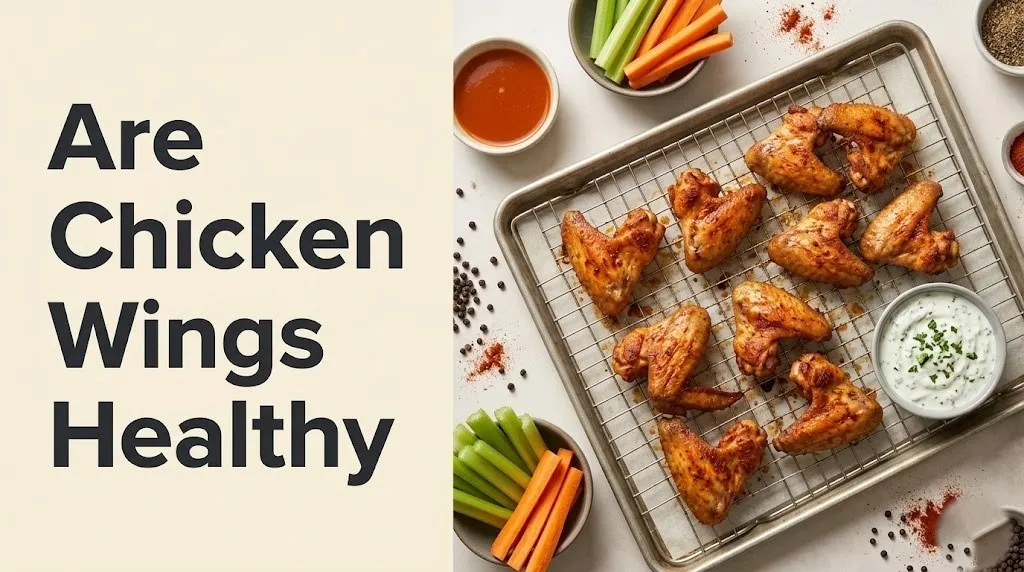
The cooking method is the single biggest lever you can pull to make wings healthier. Baking wings on a wire rack set over a sheet pan allows rendered fat to drip away from the skin. The result is a crisper wing with less retained fat than wings baked directly on a flat surface. Grilling achieves a similar effect with the added benefit of smoky flavor that reduces the need for heavy sauces.
Air frying has become the most popular healthy wing cooking method, and the data supports the enthusiasm. An air fryer uses convection to circulate hot air around the food. The process crisps the skin while allowing fat to drain into the bottom of the basket. A 2024 comparison study in the journal Foods found that air-fried chicken wings contained roughly 30 to 40 percent less fat than deep-fried wings while retaining similar crispness and moisture scores in sensory panels.
Sauce selection is the second lever. Traditional buffalo sauce contains hot sauce, melted butter, and sometimes Worcestershire sauce. The butter adds 5 to 7 grams of saturated fat per tablespoon. A vinegar-based hot sauce without butter contains negligible fat and roughly 200 milligrams of sodium per teaspoon. Dry rubs made from spices like smoked paprika, garlic powder, and cayenne pepper add flavor with zero added fat.
Key Takeaway: The wing itself is not the problem. Deep frying, butter-laden sauces, and creamy dips are the problems. Change those three things and the health equation shifts entirely.
is fried chicken wings healthy
Fried chicken wings are not healthy in any nutritional sense. They are a high-calorie, high-fat, high-sodium food that should be treated as an occasional indulgence. The combination of absorbed frying oil, sodium-heavy sauce, and high-fat dipping dressings creates a meal that can exceed daily saturated fat and sodium recommendations in a single sitting.
The sodium content of fried restaurant wings is the most overlooked health concern. The American Heart Association recommends a daily sodium limit of 2,300 milligrams, with an ideal limit of 1,500 milligrams for most adults. A single order of six traditional buffalo wings from a major chain restaurant contains between 1,800 and 3,200 milligrams of sodium. That is one appetizer exceeding an entire day’s recommended sodium intake.
To put that number in perspective, consider what 3,200 milligrams of sodium in one meal means for your cardiovascular system. Sodium causes the body to retain water, increasing blood volume and blood pressure. A high-sodium meal can measurably increase blood pressure within hours, according to research published by the NIH. For someone with hypertension, that spike is not trivial. For someone without hypertension, repeated spikes over years contribute to arterial stiffness.
The fat profile of fried wings adds to the concern. Deep-fried wings contain a mix of saturated fat from the chicken skin and the frying oil itself. If the restaurant uses partially hydrogenated oil or heavily reused oil, trans fats can be present in small amounts. The FDA banned partially hydrogenated oils in 2018, but the ban allows for incidental trans fats that still occur in degraded frying oils.
are homemade chicken wings healthy
Homemade chicken wings are significantly healthier than restaurant wings because you control the cooking method, the oil quality, and the sauce ingredients. A baked or air-fried wing made at home with fresh oil, a dry spice rub, and a light vinegar-based sauce contains roughly half the calories and one-third the sodium of a typical restaurant wing.
The oil quality at home is a major advantage. When you fry at home, you use fresh oil and discard it after one or two uses. The oil has not been heated for hours at high temperatures. Oxidized lipids and polar compounds are minimal. If you bake or air fry instead, you eliminate added frying oil almost entirely. The only fat in the finished wing comes from the chicken skin itself, which renders during cooking.
Sauce control is the other home-cooking superpower. Commercial buffalo sauces from wing chains often contain butter, added sugar, and sodium levels calibrated for maximum palatability, not health. At home, you can make a buffalo-style sauce from hot sauce, a small amount of olive oil, and spices. You control the salt shaker. You can skip the butter entirely and still get a satisfying heat and tang.
Making wings at home also lets you sidestep the dipping dressing trap. Restaurant wings come with generous portions of blue cheese or ranch dressing. A single two-ounce ramekin of ranch contains roughly 280 calories and 28 grams of fat. At home, you can serve wings with a Greek yogurt-based dip that provides creaminess and tang with a fraction of the fat and calories.
Quick Tip:
- Bake at 425 degrees Fahrenheit on a wire rack for 40 to 45 minutes
- Toss in a sauce made from hot sauce, a teaspoon of olive oil, and garlic
- Make a dip from plain Greek yogurt, lemon juice, and chopped herbs
- Season with smoked paprika, cumin, and black pepper before cooking
is wings healthy
Wings are a mixed nutritional profile. They provide high-quality protein, B vitamins, and minerals, but they also deliver saturated fat and, depending on preparation, significant sodium and added fats from frying. The healthiness of wings is not a fixed property. It changes based on cooking method, sauce, portion size, and the rest of your diet.
The protein-to-fat ratio is the key metric for evaluating any meat’s nutritional density. A skin-on, bone-in chicken wing has a protein-to-fat ratio of roughly 0.9 to 1, meaning nearly equal grams of protein and fat. A skinless chicken breast has a ratio closer to 5 to 1. This ratio matters because it determines how many calories you spend to get each gram of protein.
To get 40 grams of protein from chicken wings, you also consume roughly 35 to 40 grams of fat and about 500 calories. To get the same 40 grams of protein from chicken breast, you consume roughly 8 grams of fat and about 250 calories. The breast is the more efficient protein delivery system. The wing is the more indulgent one.
The culinary and social context of wings also affects their health impact. Wings are rarely eaten alone as a protein source. They are typically consumed as part of a larger spread that includes fries, pizza, chips, and alcohol. The meal context often contributes more to the overall health profile than the wings themselves. A few wings as part of a balanced meal are fine. A dozen wings as the centerpiece of a fried-food feast are not.
is hot wings healthy
Hot wings are not inherently unhealthy, but the standard restaurant preparation makes them a high-sodium, high-fat food. The hot sauce itself, made primarily from aged cayenne peppers and vinegar, is low in calories and contains capsaicin, a compound with documented metabolic effects. The health issue is the butter, frying oil, and sodium that accompany most hot wing preparations.
Capsaicin, the active compound that makes hot peppers hot, has been studied for its metabolic properties. A 2023 review in the journal Appetite summarized evidence that capsaicin consumption slightly increases energy expenditure and fat oxidation in the hours after eating. The effect is modest, roughly 50 extra calories burned over several hours, and it does not offset the calorie content of fried food. Still, the hot sauce itself is not the nutritional villain.
The butter in traditional hot wing sauce is the bigger concern. Classic buffalo sauce is a roughly 1-to-1 ratio of hot sauce to melted butter. That ratio adds significant saturated fat and calories. A tablespoon of butter contains 100 calories and 7 grams of saturated fat. A batch of wings tossed in butter-heavy sauce absorbs that fat into the skin and coating.
The capsaicin in hot wings may also influence satiety. Research suggests that spicy foods can slightly reduce subsequent calorie intake at the same meal. The mechanism involves capsaicin’s interaction with TRPV1 receptors, which influence appetite signaling. Again, the effect is small and does not override the calorie density of fried food. But it is worth noting that the hot sauce component is not the part of the hot wing that creates the health problem.
Key Takeaway: Hot sauce is fine. Capsaicin has minor metabolic benefits. The butter, frying oil, and sodium are what you need to watch.
is buffalo wings healthy
Buffalo wings, as served at most restaurants, are not a healthy food. They are deep-fried, tossed in a butter and hot sauce mixture, and served with high-fat dipping dressings. A standard order of six buffalo wings with blue cheese dressing contains 900 to 1,200 calories, 60 to 80 grams of fat, and 2,000 to 3,200 milligrams of sodium. These numbers make buffalo wings one of the most calorie-dense and sodium-heavy appetizers on any menu.
The buffalo wing origin story is well known: the Anchor Bar in Buffalo, New York, in 1964. The original preparation involved deep frying, which remains the standard method at most wing restaurants today. The deep frying step is what locks in the high calorie and fat content. Even before sauce touches the wing, a fried drumette carries more than double the fat calories of a baked drumette.
Dipping dressing magnifies the nutritional load. A typical restaurant serving of blue cheese dressing is two ounces, roughly 280 calories and 28 grams of fat. Ranch dressing is similar. Many wing eaters use an additional cup or more of dressing across a full order. The dressing alone can add 500 calories to a dozen-wing meal. Ordering wings without dressing or with dressing on the side and using it sparingly makes a meaningful difference.
The menu language at wing restaurants often obscures the health reality. Terms like “hand-tossed” and “made fresh” describe the preparation process but do not change the nutritional content. The word “traditional” for buffalo wings specifically means deep-fried. When you see “traditional buffalo wings” on a menu, you are looking at a deep-fried wing with butter-based sauce.
| Wing Style | Cooking Method | Sauce Base | Approx Calories (6 wings) | Sodium (mg) |
|---|---|---|---|---|
| Traditional Buffalo | Deep-fried | Butter + hot sauce | 900 to 1,100 | 2,200 to 3,200 |
| Naked Buffalo | Baked or grilled | Butter + hot sauce | 600 to 750 | 1,800 to 2,500 |
| Dry Rub | Varies | Spices, no butter | 500 to 650 | 800 to 1,400 |
| Plain | Baked or grilled | None | 400 to 500 | 200 to 400 |
are fried wings healthy
Fried wings are not a healthy food. The frying process introduces oxidized fats, increases calorie density, and, when combined with restaurant sauces, creates a meal that can exceed daily limits for saturated fat and sodium in a single serving. They should be eaten occasionally and in small portions.
The distinction between wings fried at home in fresh oil and wings fried at a restaurant in heavily used oil matters. Home-fried wings in fresh oil contain fewer oxidative byproducts. Restaurant wings fried in oil that has been heated for hours contain higher levels of polar compounds and lipid peroxides. The long-term health implications of regular consumption of these compounds are not fully understood, but the existing research points toward increased inflammatory markers.
A 2021 study in the journal Food Chemistry analyzed the formation of potentially harmful compounds in repeatedly heated frying oils. The study documented increasing concentrations of aldehydes and other carbonyl compounds with each heating cycle. These compounds are reactive in the body and have been linked to cellular oxidative stress in laboratory studies. The study noted that restaurants typically change oil less frequently than home cooks, suggesting a higher exposure risk from restaurant fried foods.
The breading on many fried wings adds another layer of nutritional concern. Boneless wings, which are not wings at all but pieces of breast meat, are typically breaded before frying. The breading absorbs oil like a sponge. A breaded, fried boneless wing can contain more calories from oil and breading than from chicken. The carbohydrate content also rises, making boneless wings closer to a fried chicken nugget than a traditional wing.
are chicken wings heart healthy
Chicken wings are not heart healthy when fried, heavily sauced, and eaten in large portions. The saturated fat content, high sodium, and the inflammatory potential of oxidized frying oils all work against cardiovascular health. Baked or grilled wings eaten in moderation, with low-sodium seasoning and no butter-based sauce, are a better choice for heart health.
The saturated fat in chicken wings is the primary cardiovascular concern. A single skin-on wing contains roughly 2 grams of saturated fat. Six wings deliver 10 to 12 grams, which is half to three-quarters of the American Heart Association’s recommended daily limit of 13 grams for a 2,000-calorie diet. Exceed that limit at one meal and you have little room for saturated fat from other sources for the rest of the day.
The AHA updated its dietary guidance in 2021 to emphasize replacing saturated fat with unsaturated fat, particularly polyunsaturated fat, for cardiovascular benefit. The guidance does not single out chicken skin as uniquely harmful. It recommends limiting all sources of saturated fat, including fatty meats, full-fat dairy, and tropical oils. In that framework, chicken wings are one of many foods to moderate rather than a uniquely dangerous product.
Sodium is the heart health variable most wing eaters ignore. High sodium intake is strongly associated with hypertension, a leading risk factor for heart attack and stroke. The CDC reports that roughly 47 percent of American adults have hypertension or are taking medication for it. For those individuals, a meal containing 3,000 milligrams of sodium is a direct cardiovascular stressor.
| Nutrient | AHA Daily Limit | 6 Traditional Buffalo Wings | % of Daily Limit |
|---|---|---|---|
| Saturated Fat | 13g | 10 to 12g | 77 to 92% |
| Sodium (Ideal) | 1,500mg | 2,200 to 3,200mg | 147 to 213% |
| Sodium (Upper Limit) | 2,300mg | 2,200 to 3,200mg | 96 to 139% |
| Calories (avg 2,000/day) | 2,000 | 900 to 1,200 | 45 to 60% |
Key Takeaway: If you have hypertension, heart disease, or a family history of either, traditional restaurant buffalo wings should be an infrequent choice. Baked wings with a dry rub and a vegetable-forward side dish are a heart-smart alternative.
Frequently Asked Questions About Chicken Wings
Are boneless wings healthier than bone-in wings?
No, boneless wings are generally less healthy than traditional bone-in wings.
Boneless wings are made from chicken breast meat that is typically breaded and deep-fried, adding refined carbohydrates and absorbed oil.
A bone-in wing contains more collagen and gelatin from the skin and connective tissue, and it absorbs less breading oil because there is no breading.
The protein-to-fat ratio of a baked bone-in wing is often better than that of a breaded, fried boneless wing.
Is it OK to eat chicken wings once a week?
Yes, eating chicken wings once a week is fine for most healthy adults.
The key variables are how the wings are prepared, what sauce is used, and what you eat with them.
Baked or air-fried wings with a low-sodium dry rub, paired with vegetables, are a reasonable weekly meal.
Fried restaurant wings with butter sauce and creamy dressing once a week may push sodium and saturated fat intake above recommended limits if the rest of your diet is not adjusted accordingly.
Does air frying chicken wings make them healthy?
Air frying makes chicken wings significantly healthier than deep frying but does not make them a health food.
The air fryer reduces absorbed oil by 30 to 40 percent compared to deep frying while producing a similar crispy texture.
The wings still contain saturated fat from the skin, so the overall fat content remains higher than lean poultry cuts.
Air frying eliminates the oxidized lipid concern associated with repeatedly heated fryer oil.
What is the healthiest sauce for chicken wings?
A vinegar-based hot sauce with no added butter is the healthiest wing sauce option.
Standard cayenne pepper hot sauce contains negligible calories and roughly 200 milligrams of sodium per teaspoon.
Dry spice rubs made from smoked paprika, garlic powder, black pepper, and cayenne add flavor with zero fat and minimal sodium.
Avoid butter-based sauces, sweet chili sauces with added sugar, and creamy sauces that add saturated fat.
How many calories are in 6 chicken wings?
Six traditional bone-in chicken wings with skin, before sauce, contain roughly 540 to 600 calories.
After deep frying, the same six wings can reach 700 to 800 calories before sauce.
Once tossed in buffalo sauce and served with two ounces of blue cheese dressing, the total climbs to 900 to 1,200 calories.
Baked or air-fried wings with a dry rub and no dipping dressing come in at approximately 450 to 550 calories for six wings.
The single most important thing to understand about chicken wings is that the chicken itself is not the health issue. The frying oil, the butter in the sauce, the sodium load, and the creamy dipping dressings are what turn wings from a reasonable protein source into a dietary problem. Change the cooking method and the sauce, and you change the health outcome entirely.
Next time you want wings, try baking or air frying them at home with a dry spice rub and a vinegar-based hot sauce. Serve them with celery, carrots, and a yogurt-based dip. If you are ordering out, ask for naked or grilled wings, get the sauce on the side, and skip the blue cheese. You will cut the calories nearly in half and reduce the sodium by more than two-thirds.
Wings are a food worth enjoying. They do not need to be a guilty pleasure. Know what is in them, control what you can, and eat the rest in moderation.