Humans can physically eat cat food without immediate harm in most cases, but cat food is not formulated, regulated, or safe for regular human consumption. A single piece of kibble or a spoonful of wet food swallowed by accident is not a medical emergency for a healthy adult. The real risks emerge with repeated consumption, large quantities, or consumption by vulnerable individuals: children, pregnant women, elderly adults, and immunocompromised people.
Cat food is designed for an obligate carnivore. Cats require high protein, high fat, and specific nutrients including taurine, preformed vitamin A, and arachidonic acid that humans either synthesize themselves or need in different amounts. The Association of American Feed Control Officials (AAFCO) sets nutrient profiles for cat food that are optimal for feline physiology. Those profiles do not match human dietary requirements. The vitamin A levels in cat food can exceed the NIH Office of Dietary Supplements upper tolerable limit of 3,000 micrograms of retinol activity equivalents (RAE) per day for adults. A single cup of dry cat food can contain more than three times that amount.
This guide explains exactly what happens when a human eats cat food, the differences between dry and wet food risks, the specific dangers of vitamin A toxicity, what to do if a child eats cat food, and the honest answer about whether cat food is a viable survival food. It also clarifies the regulatory differences between pet food and human food that matter for safety. No judgment. No dismissiveness. Just the facts you need whether you are worried about an accidental mouthful or in a situation where cat food is the only available option.
Can Humans Eat Cat Food
Humans can eat cat food in the sense that it is physically edible and not immediately poisonous. A single accidental ingestion of a small amount, a piece of kibble or a lick of wet food, is not dangerous for a healthy adult. The digestive system will process it. The body will handle the excess nutrients for one exposure. The primary risks are not from one-time accidental consumption. They are from regular consumption, large quantities, or consumption by vulnerable individuals.
The reason cat food is not safe as a regular human food comes down to three factors. First, the nutrient levels are calibrated for a 10-pound obligate carnivore, not a 150-pound omnivore. Vitamin A is the most concerning example. Cat food is fortified with preformed vitamin A because cats cannot convert beta-carotene from plants into vitamin A. Humans can. Cat food vitamin A levels are therefore far in excess of human needs. Second, the ingredient quality standards differ. Rendered animal parts including bone meal, blood meal, and organ by-products are acceptable in pet food under FDA regulations for animal feed. These same ingredients would not meet FDA standards for human food manufacturing. Third, the microbial safety thresholds are different. Pet food is allowed higher levels of certain bacteria because pets have shorter, more acidic digestive tracts that handle microbial loads differently than human digestive systems.
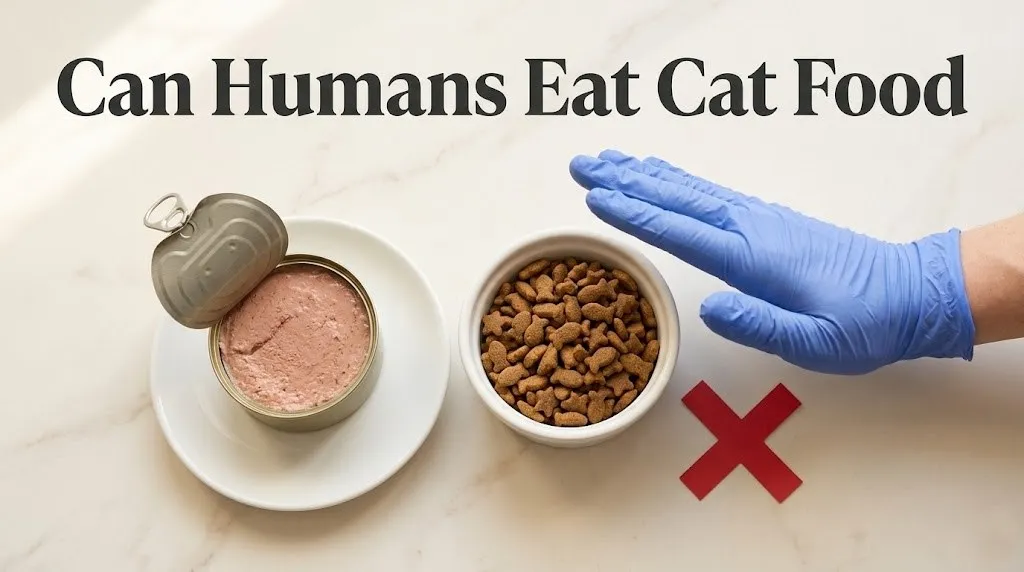
A healthy adult who accidentally eats a piece of dry cat food or a small amount of wet cat food does not need to seek medical attention. Drink water. The taste will be unpleasant, primarily from the rendered meat meals and the high concentration of animal fats. The digestive system may register the experience with mild nausea or a brief change in bowel habits due to the unfamiliar fat and protein density. Symptoms lasting more than a few hours or involving vomiting, diarrhea, or fever warrant a call to a healthcare provider, not because cat food is poisonous but because bacterial contamination is possible.
Key Takeaway: One accidental piece of cat food is not a medical emergency for a healthy adult. The dangers are from regular consumption, large amounts, or consumption by children, pregnant women, or immunocompromised individuals.
What Happens If You Eat Cat Food
What happens if you eat cat food depends on the amount, the type (dry or wet), and your health status. A small accidental taste produces an unpleasant flavor experience and likely nothing else. A full meal’s worth of cat food can cause digestive upset including nausea, vomiting, or diarrhea from the high fat and protein density and the unfamiliar rendered ingredients. Long-term consumption can lead to vitamin A toxicity, nutritional imbalances, and increased risk of foodborne illness.
The digestive response to cat food is the most immediate effect. Cat food is 30 to 40 percent protein and 15 to 20 percent fat in dry form, and similarly dense in wet form on a dry matter basis. The human digestive system is not accustomed to processing a meal with that macronutrient ratio delivered through rendered animal meals and animal fat. The pancreas releases a surge of lipase and protease enzymes. The gallbladder contracts to release bile for fat emulsification. The result can be cramping, loose stools, and nausea, especially in people with sensitive digestive systems or gallbladder issues. The symptoms typically resolve within 6 to 12 hours as the digestive system clears the meal.
The vitamin and mineral load is the longer-term concern. Cat food contains vitamin A at levels that can exceed 30,000 international units (IU) per cup of dry food, equivalent to roughly 9,000 micrograms of retinol activity equivalents. The NIH upper tolerable limit for adult humans is 3,000 micrograms per day. A human eating a cup of dry cat food daily would consume three times the safe upper limit of preformed vitamin A. Hypervitaminosis A causes liver damage, bone pain, skin changes, and in severe cases, increased intracranial pressure. The toxicity builds over weeks to months of excessive intake, not from a single exposure. The taurine in cat food is harmless to humans. Human kidneys excrete excess taurine efficiently. The amino acid is sometimes included in human energy drinks and supplements. It is not a health risk at the levels found in cat food.
| Amount Consumed | Immediate Effects | Long-Term Risk |
|---|---|---|
| One piece of kibble or lick of wet food | Unpleasant taste, no harm | None |
| Small handful (1 to 2 tbsp) | Possible mild nausea, no lasting harm | None from single exposure |
| Full meal portion (1/2 to 1 cup) | Likely digestive upset, nausea, diarrhea | Minimal from single exposure, do not repeat |
| Daily consumption (weeks to months) | Ongoing digestive issues | Vitamin A toxicity, nutritional imbalances, foodborne illness risk |
People with pancreatitis, gallbladder disease, or sensitive digestive systems should be particularly cautious. The high fat content of cat food can trigger a gallbladder attack or pancreatitis flare. A healthcare provider should be contacted if abdominal pain is severe or persists beyond a few hours.
Can a Person Eat Cat Food
A person can eat cat food in the strict sense that it is not acutely toxic, but it is not safe for regular human consumption. The phrasing “can a person eat cat food” often comes from a place of genuine need or deep curiosity. The answer requires distinguishing between one-time accidental exposure, which is not dangerous for most people, and ongoing consumption, which carries real health risks.
The nutritional profile of cat food is simultaneously excessive and deficient for humans. It is excessive in vitamin A, protein density, and animal fat. It is deficient in dietary fiber, complex carbohydrates, and many of the phytonutrients and antioxidants that human dietary guidelines recommend from fruits, vegetables, and whole grains. The USDA Dietary Guidelines for Americans recommend a dietary pattern rich in vegetables, fruits, whole grains, lean proteins, and healthy fats. Cat food contains essentially none of the first three categories. A person eating cat food as a meaningful portion of their diet would develop deficiencies in fiber, vitamin C, and the broad spectrum of plant-derived nutrients that support human health.
The ingredient quality is the less visible but equally important concern. Human food manufacturing follows Current Good Manufacturing Practices (CGMPs) under the FDA Food Safety Modernization Act. Pet food manufacturing follows separate feed regulations. Ingredients classified as “meat by-products” or “animal digest” in pet food include organ meats, bone, blood, and other slaughterhouse outputs that are nutritious for cats but are not processed, stored, or transported to the same microbial safety standards as human-grade meat. The preservatives permitted in pet food, including ethoxyquin in some fish meals, are restricted or prohibited in human food in many jurisdictions.
People with compromised immune systems, including those on immunosuppressive medications, undergoing chemotherapy, or living with HIV, face elevated risk from the microbial load in pet food. A healthy adult may tolerate incidental bacteria without symptoms. An immunocompromised person may develop a serious infection from the same exposure. The CDC has documented Salmonella outbreaks linked to dry pet food and pet treats. The risk to humans comes from handling the food and then eating without handwashing, or from direct consumption.
Key Takeaway: A person can physically eat cat food once without serious harm. Regular consumption exposes the person to vitamin A toxicity, nutritional deficiencies, and foodborne illness risk from ingredients and processing standards not designed for human safety.
Is Cat Food Safe for Humans
Cat food is not safe for humans as a regular food source. It is safe enough for a one-time accidental exposure in a healthy adult. The safety gap between cat food and human food is regulatory, nutritional, and microbial. Understanding all three dimensions explains why the answer is a firm no for ongoing consumption.
The regulatory gap is the foundation. The FDA regulates pet food under the Federal Food, Drug, and Cosmetic Act as it applies to animal feed. The standards for ingredient sourcing, processing facility inspection, and microbial contamination thresholds differ from the standards for human food. AAFCO establishes nutrient profiles and ingredient definitions for pet food, but compliance is enforced at the state level through feed control officials, not through the same mechanisms that inspect human food manufacturing plants. A pet food ingredient labeled as “meat meal” is produced through rendering, a high-heat process that converts animal tissues into a dry protein powder. Rendered meals are nutritious for cats. They are not produced, stored, or transported under human food CGMPs. The microbial risk is higher.
The nutritional gap is the mechanism. Cat food is formulated to meet AAFCO feline nutrient profiles. The vitamin A levels are appropriate for cats, which cannot convert beta-carotene, and excessive for humans, which can. The protein levels are appropriate for cats and far above human requirements, placing stress on human kidneys over time. The fiber content is minimal because cats have no dietary fiber requirement. A human eating cat food as a staple would develop constipation and the long-term health consequences of a zero-fiber diet. The Academy of Nutrition and Dietetics recommends 25 to 38 grams of fiber per day for adults. Cat food provides effectively zero.
The microbial gap is the immediate threat. Dry pet food is not sterile. It can harbor Salmonella, Listeria, and E. coli. The CDC has investigated multiple outbreaks of human salmonellosis linked to contaminated dry pet food. The affected humans were primarily children and elderly individuals who handled the pet food or touched surfaces contaminated by it and then ingested the bacteria. Direct consumption of the pet food multiplies the exposure. Wet cat food is commercially sterile when canned due to the retort sterilization process, but once opened, it supports bacterial growth at the same rate as any opened canned meat product.
| Safety Factor | Cat Food | Human Food | Risk Implication for Humans |
|---|---|---|---|
| Ingredient standards | AAFCO feed-grade | FDA human food CGMPs | Lower quality, rendered ingredients allowed |
| Microbial limits | Higher tolerance for Salmonella | Lower tolerance, FSMA standards | Higher foodborne illness risk |
| Vitamin A levels | Up to 30,000+ IU per cup | RDA 3,000 IU (adult male) | Hypervitaminosis A risk with regular intake |
| Fiber content | Negligible | 25 to 38g recommended daily | Constipation, long-term deficiency risk |
| Preservatives | Ethoxyquin permitted in some fish meals | Restricted or prohibited | Potential toxicity from long-term exposure |
People handling pet food should wash their hands with soap and water after feeding their pets. Children and immunocompromised individuals should not handle pet food or have access to areas where pet food is stored and served. These are standard CDC recommendations for pet owners. They apply doubly to anyone considering eating the pet food directly.
Cat Food vs Human Food Nutrition
The nutritional comparison between cat food and human food reveals the specific mismatches that make cat food unsuitable for regular human consumption. The table below compares one cup of dry cat food (approximately 40 grams of kibble delivering 350 to 400 calories) against the approximate daily nutritional requirements for an adult human consuming a 2,000-calorie diet. The comparison uses AAFCO minimum nutrient requirements for adult cat food and the USDA Dietary Guidelines for Americans human daily values.
| Nutrient | 1 Cup Dry Cat Food (approx.) | Human Daily Requirement (2,000 cal) | Excess/Deficit for Humans |
|---|---|---|---|
| Calories | 350 to 400 | 2,000 | Partial meal, not a concern |
| Protein | 35 to 40g | 50 to 60g | Adequate for one meal, high density |
| Total Fat | 15 to 20g | 44 to 78g (20 to 35% calories) | Within range for one meal |
| Saturated Fat | 5 to 8g | Less than 13g (AHA limit) | High for one meal |
| Carbohydrate | 25 to 35g | 225 to 325g | Deficient |
| Dietary Fiber | 0 to 1g | 25 to 38g | Severely deficient |
| Vitamin A | 3,000 to 10,000+ IU (900 to 3,000+ mcg RAE) | 900 mcg RAE (adult male RDA) | 3 to 10 times the RDA per cup |
| Vitamin C | 0mg (not required for cats) | 90mg | Deficient |
| Taurine | 100 to 200mg | No requirement (synthesized by humans) | Excess, harmlessly excreted |
| Iron | 2 to 4mg | 8 to 18mg | Within range |
| Calcium | 100 to 200mg | 1,000 to 1,200mg | Deficient |
| Sodium | 100 to 300mg | Less than 2,300mg | Within range |
The most alarming number is vitamin A. A single cup of dry cat food can contain more than triple the human recommended dietary allowance of preformed vitamin A. The human liver stores excess vitamin A. Unlike water-soluble vitamins that are excreted in urine, vitamin A accumulates. Chronic intake above the upper tolerable limit leads to hypervitaminosis A, characterized by liver damage, bone pain, skin peeling, and in severe cases, intracranial hypertension that mimics a brain tumor. The toxicity takes weeks to months to develop, which is why one-time exposure is not a concern and daily consumption is.
The fiber deficit is less dramatic but still significant. A human eating cat food as a substantial portion of their diet would develop constipation within days and the long-term health consequences of fiber deficiency, including elevated colon cancer risk and disrupted gut microbiome composition, over months to years. The absence of vitamin C is a problem for humans but not for cats. Cats synthesize their own vitamin C. Humans lost that ability evolutionarily and must consume vitamin C or develop scurvy. Cat food is not fortified with vitamin C because cats do not need it.
Key Takeaway: One cup of dry cat food contains 3 to 10 times the human RDA of vitamin A and essentially zero fiber or vitamin C. The nutritional profile is optimized for an obligate carnivore, not an omnivorous human.
Can Humans Eat Dry Cat Food
Dry cat food is the form most likely to be consumed accidentally or considered in an emergency because it is shelf-stable, easy to store, and resembles crunchy human snack foods in appearance. Dry cat food is nutritionally the form with the highest vitamin A concentration per weight because the nutrients are concentrated in the dehydrated kibble. The microbial risk is higher in dry food than in freshly opened wet food because dry food is not sterile and can harbor Salmonella and other bacteria.
The physical experience of eating dry cat food is unpleasant. The kibble is hard, designed to provide mechanical cleaning of feline teeth. The flavor is dominated by rendered animal meals, primarily chicken meal, fish meal, or meat by-product meal, with a coating of animal fat for palatability. The taste is intensely savory and slightly rancid to a human palate because the fat coating oxidizes over time. The aftertaste lingers. The high ash content, 5 to 8 percent, contributes a mineral bitterness. A person who eats a piece of dry cat food out of curiosity rarely repeats the experience.
The nutritional density of dry cat food means that a relatively small volume delivers a large nutrient load. A half cup, roughly 175 to 200 calories, contains approximately 17 to 20 grams of protein, 8 to 10 grams of fat, and 1,500 to 5,000 IU of vitamin A. For a 30-pound child who requires approximately 1,000 to 1,200 calories and 400 micrograms of vitamin A per day, that half cup is a significant nutritional event. The vitamin A alone exceeds the child’s daily requirement by a factor of 3 to 10, depending on the specific cat food brand.
| Dry Cat Food Consumption | Human Equivalent | Vitamin A Exposure |
|---|---|---|
| 1 piece of kibble (approx. 0.5g) | Negligible | Minimal |
| 1 tablespoon (approx. 5g) | Small taste | ~5 to 10% of adult UL |
| 1/4 cup (approx. 20g) | Small snack | ~50 to 150% of adult UL |
| 1/2 cup (approx. 40g) | Small meal | ~100 to 300% of adult UL |
| 1 cup (approx. 80g) | Full meal | ~200 to 600% of adult UL |
Quick Tip:
- Store dry cat food in a sealed container out of reach of children and vulnerable adults. The kibble’s resemblance to cereal or snack foods makes it a curiosity target for toddlers. A childproof latch on the pet food storage container is appropriate in households with young children.
Can Humans Eat Wet Cat Food
Wet cat food is the canned form with 78 to 82 percent moisture content. It is commercially sterile when the can is sealed, having undergone retort sterilization similar to human canned goods. This makes unopened wet cat food microbiologically safer than dry cat food, at least until the can is opened. Once opened, wet cat food supports bacterial growth at the same rate as any opened canned meat product. It must be refrigerated and used within 2 to 3 days, the same guidance that applies to human canned food.
The nutritional profile of wet cat food differs from dry primarily in water content and carbohydrate level. Wet food contains 1 to 3 percent carbohydrate on an as-fed basis compared to 25 to 35 percent for dry. The protein and fat content, when adjusted for moisture, is similar to dry food on a dry matter basis. The vitamin A concentration per can is lower than per cup of dry food simply because the can contains more water and fewer total calories. A 3-ounce can of wet cat food contains 70 to 100 calories and 500 to 2,000 IU of vitamin A. That is still excessive relative to a human meal but less alarming than the dry food numbers.
The sensory experience of wet cat food is more confronting than dry. The appearance, a gelatinous loaf or shredded meat in gravy, signals non-human food more clearly than kibble. The odor is stronger, dominated by the rendered meat and organ ingredients. The texture is soft and pate-like or stringy. A person who consumes wet cat food accidentally, perhaps mistaking it for a can of tuna or chicken spread, will likely recognize the mistake immediately from the smell and taste.
Wet cat food spoils visibly when it is no longer safe. Mold, off-odors, and separation of the gel and meat components indicate spoilage. A can that is bulging, leaking, or spurts liquid when opened should be discarded without tasting. These are signs of bacterial gas production and potential botulism risk, though commercial sterilization makes Clostridium botulinum contamination rare in properly processed cans.
Key Takeaway: Unopened wet cat food is commercially sterile and microbiologically safer than dry food. Once opened, it requires the same refrigeration and timing as human canned meat. The nutritional excesses are lower per serving than dry food due to the high water content.
What Happens When You Eat Cat Food
The phrase “what happens when you eat cat food” typically searches for the immediate physical experience and consequences. The answer breaks into the taste experience, the digestive response, and the timeline of effects. Most of this information comes from toxicology principles and case reports rather than controlled human trials for obvious ethical reasons.
The taste is the first thing that happens. Dry cat food tastes like concentrated, oxidized meat-flavored cereal with a mineral aftertaste. The fat coating on the kibble is the primary flavor carrier. It is usually sprayed-on animal fat preserved with tocopherols or, in some products, synthetic antioxidants. The fat oxidizes slowly after the bag is opened, producing stale, rancid notes. Wet cat food tastes like unsalted, gelatinous organ meat with a strong aroma of rendered poultry or fish. Neither product is formulated for human palatability. The absence of salt, sugar, and the complex flavorings used in human processed food is immediately apparent.
The digestive response begins within 30 minutes to 2 hours. The stomach encounters a meal with unusually high protein and fat density and low carbohydrate. Gastric emptying slows in response to the fat. The small intestine receives a concentrated amino acid and fatty acid load. The pancreas and gallbladder work harder than they would for a standard human meal. The result for most people is mild nausea and a sense of digestive effort. For people with pre-existing digestive conditions, the response can be more intense.
The timeline of effects:
- Immediate to 5 minutes: Unpleasant taste, possible gag reflex from flavor or texture
- 30 minutes to 2 hours: Digestive effort sensation, possible nausea, cramping
- 2 to 6 hours: Possible loose stool or diarrhea from fat malabsorption
- 6 to 12 hours: Digestive symptoms typically resolve
- 24 to 48 hours: No lasting effects from a single exposure
If vomiting, diarrhea, or abdominal pain persists beyond 12 hours, the cause may be bacterial contamination rather than the nutritional content. Salmonella and other foodborne pathogens have incubation periods of 6 to 72 hours. Symptoms including fever, chills, and bloody diarrhea warrant medical evaluation. A healthcare provider should be informed that cat food was consumed so they can consider the relevant pathogens.
Side Effects of Eating Cat Food
The side effects of eating cat food range from the immediate and mild to the long-term and serious. The side effect profile depends on the amount consumed, the frequency of consumption, and the individual’s health status. A single small exposure in a healthy adult produces side effects that are self-limiting. Regular consumption produces side effects that accumulate.
Mild, common side effects from a single exposure include nausea, a sense of digestive heaviness, loose stool, and an unpleasant taste that lingers. These resolve within hours. Moderate side effects from a larger single exposure include vomiting, diarrhea, abdominal cramping, and possibly headache from the high vitamin A load. These resolve within 24 hours in most cases. Severe side effects from regular consumption include hypervitaminosis A with liver enzyme elevation, dry skin, bone pain, and in extreme cases, intracranial hypertension with headache and vision changes. These require medical treatment and discontinuation of the source.
| Side Effect Category | Symptoms | Onset | Duration After Stopping |
|---|---|---|---|
| Immediate taste | Unpleasant flavor, gagging | Seconds | Minutes |
| Mild digestive | Nausea, fullness, loose stool | 30 min to 2 hours | 6 to 12 hours |
| Moderate digestive | Vomiting, diarrhea, cramping | 2 to 6 hours | 12 to 24 hours |
| Bacterial infection | Fever, chills, bloody diarrhea | 6 to 72 hours | Requires medical treatment |
| Chronic vitamin A toxicity | Liver damage, bone pain, skin changes, headache | Weeks to months | Requires medical treatment, may be irreversible |
People with pre-existing liver or kidney conditions should be particularly cautious about any amount of cat food consumption. The high protein load stresses kidneys that are already compromised. The vitamin A is metabolized in the liver. A liver that is already diseased has reduced capacity to handle a sudden vitamin A bolus. A healthcare provider should be contacted for any cat food consumption by a person with known liver or kidney disease, even if the amount was small.
Key Takeaway: Single exposure side effects are mild and self-limiting for healthy adults. Regular consumption causes accumulating vitamin A toxicity. Pre-existing liver or kidney disease makes any cat food consumption a reason to contact a healthcare provider.
Vitamin A Toxicity Cat Food
Vitamin A toxicity from cat food is the most serious documented health risk for humans who consume cat food regularly. The mechanism involves the liver’s storage capacity for retinol. When retinol intake exceeds the liver’s storage capacity, free retinol circulates in the blood and damages cell membranes. The damage is most pronounced in the liver itself, the bones, the skin, and the central nervous system.
The NIH Office of Dietary Supplements sets the tolerable upper intake level (UL) for preformed vitamin A at 3,000 micrograms of retinol activity equivalents (RAE) per day for adults. This is approximately 10,000 international units (IU). A single cup of dry cat food can contain 30,000 to 50,000 IU, which is 3 to 5 times the UL. A person eating a cup of dry cat food daily would be consuming a toxic dose of preformed vitamin A. The toxicity is not from a single exposure. Vitamin A is fat-soluble. The body stores it. The toxicity develops when the cumulative intake exceeds the liver’s storage and clearance capacity over weeks to months.
The symptoms of chronic hypervitaminosis A include liver enzyme elevation, hepatomegaly (enlarged liver), dry and peeling skin, bone pain particularly in the long bones, joint pain, and in severe cases, pseudotumor cerebri (idiopathic intracranial hypertension) characterized by headache, vision changes, and papilledema visible on eye examination. The bone effects occur because excess vitamin A stimulates osteoclast activity, breaking down bone. The skin effects occur because retinol affects keratinocyte differentiation. The neurological effects occur because elevated intracranial pressure compresses the optic nerve.
Acute vitamin A toxicity from a single massive dose is possible but unlikely from cat food. A person would need to consume multiple cups of dry food or multiple cans of wet food in a single sitting to approach the acute toxicity threshold. Acute toxicity presents with nausea, vomiting, headache, and dizziness within hours of ingestion and resolves when the intake stops. Chronic toxicity from regular consumption is the more realistic concern.
| Vitamin A Intake | Source | Human Safety |
|---|---|---|
| 900 mcg RAE (adult male RDA) | Human diet | Optimal |
| 3,000 mcg RAE (adult UL) | Human diet | Upper safe limit |
| ~5,000 to 15,000 mcg RAE (1 cup dry cat food) | Dry cat food | Exceeds UL, toxic with regular intake |
| ~1,500 to 3,000 mcg RAE (1 can wet cat food) | Wet cat food | At or near UL per can, toxic with multiple cans daily |
People taking retinoid medications (isotretinoin, acitretin) or high-dose vitamin A supplements should be especially careful to avoid any additional vitamin A exposure. These medications are themselves vitamin A derivatives and the combined intake with cat food could push levels into acute toxicity range. A healthcare provider should be contacted immediately if a person on retinoid medication consumes cat food.
Can You Get Sick From Eating Cat Food
You can get sick from eating cat food through two primary mechanisms: foodborne illness from bacterial contamination and nutritional toxicity from excessive vitamin A and other nutrients. The bacterial risk is the more immediate threat. The nutritional toxicity is the longer-term threat. Both are real and documented.
The bacterial pathogens of concern in cat food include Salmonella, Listeria monocytogenes, and Escherichia coli. The CDC has documented multiple Salmonella outbreaks linked to dry pet food and pet treats over the past two decades. In 2012, a multistate outbreak of Salmonella Infantis was linked to a specific brand of dry dog food, infecting 53 people across 20 states. The affected individuals were primarily people who handled the pet food, not people who ate it. Direct consumption would increase the exposure dose and the likelihood of symptomatic infection. Symptoms of Salmonella infection include diarrhea, fever, abdominal cramps, and vomiting beginning 6 to 72 hours after exposure. Most healthy adults recover without antibiotics within 4 to 7 days. Severe cases can cause bloodstream infection requiring hospitalization.
Listeria is a particular concern for pregnant women, newborns, elderly adults, and immunocompromised individuals. Listeriosis during pregnancy can cause miscarriage, stillbirth, or severe neonatal infection. The incubation period can be up to 70 days, making the source difficult to identify. Any pregnant woman who has consumed cat food, even a small amount, should inform her obstetrician so that the information is available if symptoms develop.
The symptoms that warrant immediate medical attention after eating cat food include fever above 101.5 degrees F, bloody diarrhea, vomiting that prevents keeping liquids down, diarrhea lasting more than 3 days, severe abdominal pain, or any neurological symptoms including severe headache, stiff neck, confusion, or vision changes. These symptoms suggest either a serious bacterial infection or, in the case of neurological symptoms, possibly elevated intracranial pressure from acute vitamin A toxicity.
| Pathogen | Incubation Period | Key Symptoms | Who Is Most at Risk |
|---|---|---|---|
| Salmonella | 6 to 72 hours | Diarrhea, fever, cramps | Children, elderly, immunocompromised |
| Listeria | 3 to 70 days | Fever, muscle aches, nausea | Pregnant women, elderly, immunocompromised |
| E. coli | 1 to 10 days | Bloody diarrhea, abdominal pain | Children, elderly |
Quick Tip:
- If you or someone in your household has consumed cat food, save the product packaging. The lot number, expiration date, and brand information are essential if a foodborne illness investigation becomes necessary. The local health department or the FDA can use this information to trace contamination.
My Child Ate Cat Food
If your child ate cat food, the response depends on the amount eaten and the child’s age. A toddler who grabs one or two pieces of kibble from the cat’s bowl is in a different situation than a child who ate a significant portion. In all cases, stay calm. Cat food is not acutely poisonous. The primary concerns are bacterial infection, vitamin A dose, and the physical safety of dry kibble in a young child’s airway.
For a small ingestion of one to three pieces of kibble or a lick of wet food, no medical intervention is needed. Remove the remaining pet food from the child’s reach. Give the child water to drink. Monitor for any signs of digestive upset over the next 6 to 12 hours. The child does not need to be induced to vomit. Do not attempt to induce vomiting unless specifically instructed by poison control or a healthcare provider. The taste alone is usually sufficient deterrent against future attempts.
For a larger ingestion, a handful or more of dry food or several mouthfuls of wet food, call poison control at 1-800-222-1222. This is the national Poison Help Line in the United States, available 24 hours a day. The poison control specialist will ask for the child’s age and approximate weight, the brand of cat food if known, the approximate amount eaten, and the time of ingestion. They will provide specific guidance based on that information. In most cases, the recommendation will be to monitor the child at home with increased fluids. Medical evaluation is recommended if the amount was large relative to the child’s body weight.
For a child who is choking on dry kibble, follow standard choking first aid: back blows and abdominal thrusts (Heimlich maneuver) if the child is over 1 year old, back blows and chest thrusts for infants under 1 year. Call 911 if the child cannot breathe, cannot cough, or turns blue. Dry kibble is a choking hazard for young children due to its size and hardness, independent of its nutritional content.
| Child’s Age | Small Ingestion (1 to 3 kibble) | Larger Ingestion (Handful or More) | When to Call 911 |
|---|---|---|---|
| Under 1 year | Remove food, give water, monitor | Call poison control | Choking, difficulty breathing, unresponsiveness |
| 1 to 5 years | Remove food, give water, monitor | Call poison control | Choking, severe abdominal pain, vomiting blood |
| 5 to 12 years | Remove food, give water, monitor | Call poison control or healthcare provider | Choking, fever over 102 degrees F |
The pet food bowl should be placed where young children cannot access it. Feeding cats on a counter, in a closed room, or at times when children are not present reduces accidental ingestion risk. Pet food storage containers should have childproof latches if young children live in or visit the home.
Key Takeaway: A few pieces of dry cat food are not a medical emergency for a child. A handful or more warrants a call to poison control at 1-800-222-1222. Choking on kibble is a separate emergency requiring immediate first aid and 911 if the airway is blocked.
Eating Cat Food Survival
Eating cat food in a survival situation is a documented human behavior during famines, sieges, and natural disasters. The question “can I survive on cat food” has a complex answer. In the short term, days to a week, cat food will sustain a human life. It provides calories, protein, and fat. It will prevent starvation. In the medium term, weeks to a month, nutritional deficiencies and vitamin A toxicity begin to develop. In the long term, months or more, cat food as a primary food source will cause serious illness.
The survival calculation depends on what other food is available. If the choice is between cat food and nothing, cat food is the rational survival choice for the short term. The immediate threat of starvation outweighs the longer-term risks of vitamin A toxicity and nutritional deficiency. A person in a genuine survival situation who has access to cat food should consume it to prevent death from starvation while seeking rescue or other food sources. The historical record includes cases of people surviving on pet food during extreme situations, including Hurricane Katrina in 2005 and various wartime sieges.
The practical survival guidance for cat food consumption is to minimize the amount and duration. Eat the minimum needed to sustain energy and prevent debilitating hunger. Dilute dry cat food with water if possible to create a porridge that is easier to digest and spreads the nutrient load across more volume. Prioritize wet cat food over dry if both are available because the vitamin A concentration is lower per serving and the moisture content helps with hydration. Do not consume cat food that shows signs of spoilage: mold, off-odors, bulging cans, or insect infestation. The risk of foodborne illness is elevated in a survival situation where medical care may be inaccessible.
The nutritional deficiencies that develop from cat food reliance include vitamin C deficiency leading to scurvy, fiber deficiency leading to severe constipation, and carbohydrate deficiency leading to ketosis. Scurvy can develop within 1 to 3 months of zero vitamin C intake. The symptoms include bleeding gums, poor wound healing, joint pain, and eventually death. Anyone relying on cat food for more than a week should attempt to supplement with any available plant food, even foraged greens, to provide vitamin C and fiber.
| Survival Duration | Cat Food Viability | Primary Risk | Mitigation Strategy |
|---|---|---|---|
| 1 to 7 days | Yes, will sustain life | Digestive upset, unfamiliar food | Minimize amount, drink water |
| 1 to 4 weeks | Marginal | Vitamin A accumulation, constipation | Supplement with any plant food available |
| 1 to 3 months | Dangerous | Scurvy, vitamin A toxicity, deficiencies | Seek alternative food source urgently |
| 3+ months | Life-threatening | Severe nutritional disease | Not viable as primary food source |
The mental health aspect of eating cat food in survival deserves acknowledgment. People in food-insecure situations who are considering eating pet food should know that food pantries, community food banks, and government assistance programs exist to provide human food. Eating pet food out of economic necessity is a sign of severe food insecurity that warrants immediate connection to food assistance resources. In the United States, calling 211 connects to community services including emergency food assistance.
AAFCO Cat Food Standards Human Consumption
AAFCO, the Association of American Feed Control Officials, establishes the nutrient profiles that cat food manufacturers follow. These profiles define the minimum and in some cases maximum levels of nutrients required for a complete and balanced feline diet. The profiles are species-specific. They are not designed, reviewed, or approved for human consumption. Understanding what AAFCO does and does not do clarifies why cat food is safe for cats but not for humans.
AAFCO is not a regulatory agency. It is a voluntary membership association of local, state, and federal feed control officials. It publishes model regulations that individual states adopt into their feed laws. AAFCO defines ingredient definitions, sets nutrient profiles for cat and dog food, and establishes labeling standards. The nutrient profiles are based on the National Research Council nutrient requirements for cats, which are derived from controlled feeding studies using cats. The vitamin A requirement for cats, for example, is based on the minimum amount that prevents deficiency in felines. The maximum tolerable level is based on the amount that causes toxicity in felines. Neither number is relevant to human nutritional requirements.
The ingredient definitions are where the human safety gap is widest. AAFCO defines “meat meal” as the rendered product from mammal tissues exclusive of blood, hair, hoof, horn, hide trimmings, manure, and stomach contents. This definition permits the use of slaughterhouse outputs that are nutritious for carnivores but would not meet the FDA standards for human food ingredients. The rendering process uses high heat to kill pathogens and separate fat from protein. It produces a shelf-stable protein powder that is the foundation of dry cat food. The rendering process is effective at pathogen reduction but does not produce a product that meets human food CGMPs for ingredient handling, storage, and transport.
| Regulatory Body | Scope | Applies to Cat Food? | Applies to Human Food? |
|---|---|---|---|
| AAFCO | Model feed regulations, nutrient profiles | Yes | No |
| FDA (feed division) | Animal feed safety, ingredient approvals | Yes | No |
| FDA (human food division) | Human food safety, CGMPs, FSMA | No | Yes |
| USDA FSIS | Meat, poultry, egg product inspection | No (unless human-grade claim) | Yes |
Some pet food brands market their products as made with “human-grade” ingredients. This is a marketing claim, not a regulatory designation. The FDA does not have a formal “human-grade” certification process for pet food. A pet food manufacturer can claim human-grade if the ingredients were sourced from human food supply chains and the product was manufactured in a human food facility. This claim is not independently verified by a regulatory agency. Even human-grade pet food is formulated to AAFCO feline nutrient profiles, meaning the vitamin A levels and other nutrient specifications are still designed for cats, not humans.
Key Takeaway: AAFCO standards ensure cat food is nutritionally complete for cats. They do not ensure cat food is safe or appropriate for human consumption. The ingredient definitions and nutrient levels are species-specific and do not align with human dietary requirements or food safety standards.
How Long Can a Human Survive on Cat Food
A human can survive on cat food for a period of weeks to possibly a few months before developing serious nutritional disease. The exact timeline depends on the individual’s baseline nutritional status, the specific cat food formulation, whether other foods are available to supplement, and the person’s overall health. This is a survival question, not a dietary experimentation question. No human should test this outside of a genuine life-or-death emergency.
The first month on a cat food diet is primarily a digestive challenge. The human gut adapts somewhat to the high-protein, high-fat, low-fiber intake. Constipation develops within the first week. Vitamin A begins accumulating in the liver. No acute toxicity occurs during this period in a healthy adult. The person survives and maintains energy balance if they consume enough calories.
The second and third months introduce deficiency diseases. Vitamin C deficiency develops because cat food contains no vitamin C and humans cannot synthesize it. The body’s existing vitamin C stores deplete over 1 to 3 months. Early scurvy symptoms include fatigue, gum inflammation, and joint pain. Late scurvy includes bleeding gums, poor wound healing, anemia, and death if untreated. Fiber deficiency continues. The gut microbiome shifts in response to the absence of plant-derived prebiotic fibers. The long-term health consequences of this shift are not fully understood but are associated with increased inflammation and disease risk in population studies.
Beyond three months, the combination of vitamin A toxicity and vitamin C deficiency becomes potentially fatal. The liver damage from hypervitaminosis A compromises the body’s ability to process nutrients and medications. The scurvy compromises tissue integrity. The absence of phytonutrients, fiber, and the full spectrum of vitamins and minerals that humans require from a varied diet creates a state of multisystem nutritional deficiency. A human could die from this combination, though the exact timeline would vary by individual and the specific cat food consumed.
| Timeframe | Health Status | Key Threat |
|---|---|---|
| 1 to 7 days | Survivable, digestive discomfort | Constipation, nausea |
| 1 to 4 weeks | Survivable, nutritional imbalances developing | Vitamin A accumulation, fiber deficiency |
| 1 to 3 months | Serious deficiency disease onset | Scurvy, worsening vitamin A toxicity |
| 3 to 6 months | Life-threatening | Multisystem nutritional failure, possible death |
| 6+ months | Unlikely to survive without supplementation | Death from deficiency disease or toxicity |
A veterinarian is the right person to consult about the nutritional needs of a specific cat. For a human who has been consuming cat food and is experiencing health symptoms, a physician or an emergency department is the appropriate contact. The information in this article is educational. It is not a survival manual, a dietary recommendation, or a substitute for medical advice from a provider who can examine the individual and order relevant lab tests.
Frequently Asked Questions About Eating Cat Food
Is it dangerous if a human eats one piece of cat food?
No, one piece of dry cat food or a small lick of wet food is not dangerous for a healthy adult or older child.
The taste will be unpleasant.
No medical attention is needed. Drink water and move on.
What should I do if my toddler ate cat food?
Remove the remaining pet food from reach and give the child water.
For one or two pieces, monitor for digestive upset over the next 6 to 12 hours. No intervention is needed.
For a handful or more, call poison control at 1-800-222-1222 for guidance specific to the child’s age and the amount eaten.
Can you live on cat food in an emergency?
You can survive on cat food for days to a few weeks in a genuine life-or-death emergency where no other food is available.
Beyond a few weeks, vitamin C deficiency (scurvy) and vitamin A toxicity become serious threats.
Cat food is a short-term survival food, not a viable long-term food source for humans.
Is cat food more nutritious than human food?
No, cat food is not more nutritious than human food. It is formulated for an obligate carnivore with different nutritional requirements.
It contains excessive vitamin A, no vitamin C, no fiber, and ingredients processed to feed-grade rather than human food standards.
It meets feline nutritional needs, not human nutritional needs.
What are the symptoms of getting sick from cat food?
Symptoms of foodborne illness from cat food include nausea, vomiting, diarrhea, abdominal cramps, and fever beginning 6 to 72 hours after consumption.
Symptoms of vitamin A toxicity from regular consumption include liver enzyme elevation, bone pain, dry skin, and headache developing over weeks to months.
Severe symptoms including bloody diarrhea, fever above 101.5 degrees F, or neurological symptoms require medical evaluation.
Cat food is for cats. It is formulated for their biology, regulated for their safety, and optimized for their palates. A human can accidentally eat a piece and walk away with nothing more than a bad taste and a good story. The real danger is not the one-time curiosity or the toddler’s grabbed handful. It is the person who, for reasons of food insecurity, dementia, or severe mental illness, consumes cat food regularly.
If you are reading this because you accidentally ate cat food, you are fine. Drink some water. If you are reading this because someone you care about is eating cat food regularly, that is a sign of a problem that needs attention, whether it is food insecurity, cognitive decline, or a behavioral health condition. Address the underlying need. The cat food itself is a symptom, not the root cause. For everyone else, store the cat food where your cat can reach it and your toddler cannot, wash your hands after feeding, and let cats be the only ones eating cat food.