A healthy breakfast for a pregnant woman is a morning meal built around at least 20 to 30 grams of protein, a serving of complex carbohydrates, healthy fats, and specific micronutrients that directly support fetal development: folate for the neural tube, iron for the expanded blood volume, and choline for brain development. This is not the time for a quick, carb-heavy pastry that spikes your blood sugar and leaves you shaking two hours later. The pregnancy breakfast is a nutritional anchor that sets the metabolic tone for the rest of the day.
The physiological demands of pregnancy fundamentally change what your body needs in the morning. During the first trimester, the placenta is forming, and the neural tube is closing before many women even know they are pregnant. By the third trimester, blood volume has increased by 50 percent, and the fetus is building brain tissue at a rate that demands a steady supply of docosahexaenoic acid (DHA) and glucose. The same breakfast that worked at eight weeks may not be sufficient at thirty-two weeks.
This guide walks you through the exact nutritional targets for each trimester, the foods that deliver them, and the strategies for managing nausea, heartburn, and food aversions that can make eating feel like a chore. We will cover quick on-the-go options, high-protein builds for gestational diabetes, and completely plant-based pregnancy breakfasts. Every recommendation aligns with the 2025-2030 USDA Dietary Guidelines and the American College of Obstetricians and Gynecologists (ACOG) guidance.
healthy breakfast for pregnant women
A healthy breakfast for pregnant women is a meal that delivers approximately 300 to 400 calories, 20 to 30 grams of protein, complex carbohydrates for sustained energy, and targeted micronutrients that meet the elevated pregnancy Recommended Dietary Allowances (RDAs). The specific nutrients that must appear in the morning meal are folate, iron, calcium, choline, and DHA. These five nutrients are non-negotiable because they directly support the structural and cognitive development of the fetus.
Folate is the most time-sensitive nutrient in pregnancy. The neural tube, which becomes the brain and spinal cord, closes within the first 28 days of gestation, often before a woman knows she is pregnant. The RDA for pregnancy is 600 micrograms of dietary folate equivalents. A breakfast that includes a cup of cooked lentils and a glass of fortified orange juice can deliver more than half of this requirement before 9 a.m. Synthetic folic acid from supplements and fortified foods is absorbed more efficiently than food folate, but the food sources provide the fiber and companion nutrients that the supplement alone lacks.
Choline is the nutrient that many prenatal vitamins shortchange. The RDA for pregnancy is 450 milligrams per day, and a single large egg contains 147 milligrams in the yolk. Two eggs for breakfast provide nearly two-thirds of the daily choline requirement. Choline is critical for fetal brain development, specifically for the hippocampus, the memory center. It also plays a role in closing the neural tube alongside folate.
| Nutrient | Pregnancy RDA | Top Breakfast Source | Amount per Serving |
|---|---|---|---|
| Folate | 600 mcg DFE | Fortified cereal + lentils | 200 to 400 mcg |
| Iron | 27 mg | Cream of wheat (fortified) | 12 mg per cup |
| Choline | 450 mg | 2 large eggs | 294 mg |
| DHA | 300 mg | 3 oz cooked salmon | 1,500 mg |
| Calcium | 1,000 mg | Greek yogurt (1 cup) | 250 mg |
healthy pregnancy breakfast
A healthy pregnancy breakfast is one that you can consistently tolerate and that stabilizes your blood sugar for the next three to four hours. The definition of “healthy” during pregnancy is fluid. During weeks when food aversions make eggs smell like sulfur and the thought of spinach triggers a gag reflex, a healthy pregnancy breakfast is whatever combination of safe, nourishing foods you can keep down. The perfect is the enemy of the adequate.
The structural components of an ideal pregnancy breakfast are protein, fiber, and fat in roughly equal caloric contributions. Protein from eggs, Greek yogurt, or a clean protein powder slows gastric emptying. Fiber from whole grains, fruit, and vegetables blunts the blood sugar response. Fat from avocado, nuts, or olive oil provides the slowest-burning energy source and is required for the absorption of fat-soluble vitamins A, D, E, and K. A bowl of oatmeal with a scoop of almond butter and a side of turkey sausage fits this template. A smoothie with Greek yogurt, frozen berries, spinach, and flaxseed oil also fits.
Food safety is a consideration that non-pregnant breakfast guides ignore. The pregnancy breakfast must exclude raw or undercooked eggs due to salmonella risk. Runny yolks are out. Eggs must be cooked until both the white and yolk are firm. Unpasteurized dairy, unpasteurized juice, and cold-smoked salmon or lox carry a listeria risk and must be avoided. Listeria monocytogenes causes listeriosis, a foodborne illness that can cross the placenta and cause miscarriage, stillbirth, or severe neonatal infection.
- Ensure eggs are cooked firm, no runny yolks.
- Use pasteurized dairy and juice only.
- Avoid cold-smoked fish; use hot-smoked or canned.
- Heat deli meats to steaming before adding to breakfast sandwiches.
Key Takeaway: A healthy pregnancy breakfast is built around protein, fiber, and fat, with strict adherence to food safety rules that protect the fetus from listeria and salmonella.
healthy breakfast during pregnancy
Eating a healthy breakfast during pregnancy reduces the risk of excessive fasting blood sugar spikes, provides the glucose required for the fetal brain, and replenishes the glycogen stores depleted overnight by the increased metabolic rate of gestation. Skipping breakfast during pregnancy is not the same as skipping breakfast in a non-pregnant state. The fetus draws glucose continuously across the placenta, and morning is when maternal stores are at their lowest.
The overnight fast during pregnancy is metabolically stressful. By morning, the mother’s body has been supplying glucose to the fetus for eight to ten hours without intake. If the morning meal is skipped or is composed entirely of refined carbohydrates, the resulting blood sugar crash triggers a cortisol and adrenaline response that can cause nausea, shakiness, and intense hunger. This is the physiological basis for the “morning sickness” that is often worse on an empty stomach. Eating something small, even a handful of almonds, within 30 minutes of waking can blunt this response.
The breakfast carbohydrate question is the most important nutritional decision of the morning. Refined carbohydrates like white toast, sugary cereal, and pastries digest rapidly, spiking blood glucose and insulin. During pregnancy, particularly by the second trimester, the body becomes naturally insulin resistant to shunt glucose to the fetus. A high-refined-carb breakfast amplifies this effect, leading to blood sugar peaks and crashes that leave the mother exhausted and hungry. Complex carbohydrates like steel-cut oats, quinoa, and sprouted grain bread combined with protein and fat produce a slow, sustained glucose release.
- Skipping breakfast worsens morning sickness by triggering a cortisol spike.
- Refined carbs spike blood sugar and worsen pregnancy fatigue.
- Complex carbs with protein and fat provide steady, fetus-supporting energy.
healthy breakfast foods for pregnancy
The healthiest breakfast foods for pregnancy are eggs, full-fat Greek yogurt, steel-cut oats, fortified whole-grain bread, avocado, berries, nuts and seeds, cooked salmon, lentils, spinach, and fortified orange juice. These foods are prioritized because they deliver the specific micronutrients that are difficult to obtain in sufficient quantities from a standard breakfast.
Eggs are the single most complete pregnancy breakfast food. Two large eggs provide 12 grams of protein, 294 milligrams of choline, and significant amounts of vitamin B12, selenium, and vitamin D. The yolk contains the choline and the fat-soluble vitamins, and it should be consumed fully cooked, not runny. For women who cannot tolerate eggs during pregnancy due to aversions, Greek yogurt with chia seeds and berries is the closest substitute, providing protein, calcium, and omega-3 fatty acids from the chia.
Salmon deserves a specific mention because it is one of the few food sources that naturally contains both DHA and vitamin D. A 3-ounce serving of fully cooked wild salmon provides roughly 1,500 milligrams of combined EPA and DHA, far exceeding the daily 300-milligram DHA recommendation. Salmon can be incorporated into breakfast as a filet alongside eggs, flaked into a grain bowl, or used in a breakfast salad with arugula and a soft-boiled, fully cooked egg.
- Eggs: Choline and complete protein.
- Greek yogurt: Calcium, protein, probiotics.
- Oats: Soluble fiber, complex carbohydrates, iron.
- Salmon: DHA, vitamin D, protein.
- Berries: Vitamin C, fiber, phytonutrients.
healthy pregnancy breakfast ideas
Healthy pregnancy breakfast ideas include a vegetable scramble with two eggs and whole-grain toast, a Greek yogurt parfait with berries, nuts, and chia seeds, overnight oats with protein powder and almond butter, and a smoked salmon and avocado toast on sprouted grain bread. Each of these meals hits the protein, fiber, fat, and micronutrient targets in a format that takes fewer than 15 minutes to prepare.
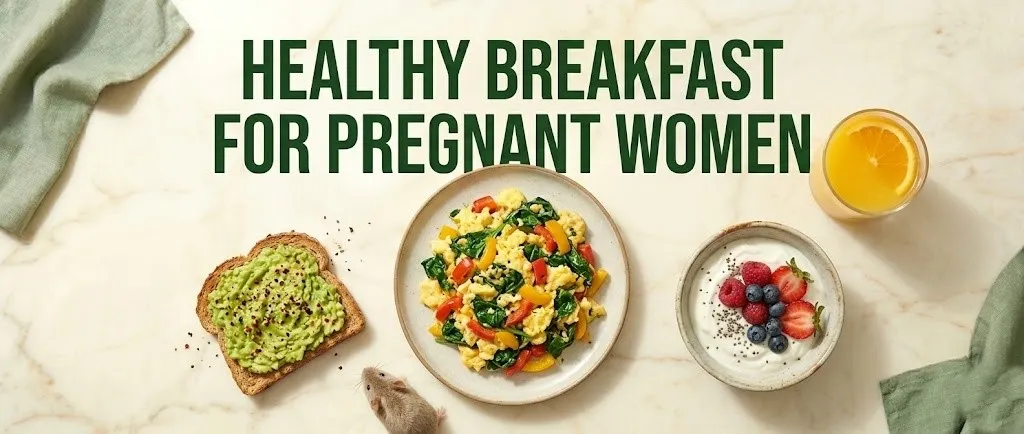
The vegetable scramble is the most nutrient-dense option. Scramble two eggs with a handful of spinach, diced bell pepper, and mushrooms. Cook the vegetables first in a teaspoon of olive oil to release their water content, then add the beaten eggs and cook until firm. The spinach provides folate and iron. The bell pepper provides vitamin C, which enhances the absorption of the non-heme iron in the spinach. Serve with a slice of whole-grain toast and a small glass of fortified orange juice.
The Greek yogurt parfait is the quickest option for mornings when cooking is not happening. Layer 1 cup of full-fat plain Greek yogurt with half a cup of mixed berries, 1 tablespoon of chia seeds, and 2 tablespoons of chopped walnuts. The yogurt provides protein and calcium. The berries provide fiber and antioxidants. The chia seeds provide omega-3 ALA and additional fiber. The walnuts provide crunch and more omega-3s. This meal assembles in two minutes and requires no heat.
- Scramble with vegetables: Protein, folate, iron, vitamin C.
- Yogurt parfait: No-cook, high protein, fiber.
- Overnight oats: Prepped the night before, customizable.
- Salmon avocado toast: DHA, healthy fats, complex carbs.
Key Takeaway: The best pregnancy breakfast ideas are those you can execute in the morning fog of fatigue. Build a rotation of three to four recipes that you can make on autopilot.
healthy breakfast for a pregnant woman
A healthy breakfast for a pregnant woman is personalized to her trimester, her specific nutrient needs, and the food aversions she is experiencing on that particular day. There is no single correct breakfast. The correct breakfast is the one that delivers the nutrients without triggering nausea or heartburn.
The first-trimester pregnant woman may only be able to tolerate a smoothie made with frozen banana, Greek yogurt, almond butter, and a handful of spinach. The cold temperature soothes nausea. The straw delivers the nutrients without requiring chewing, which can be aversive. The protein and fat stabilize her blood sugar even if the volume is small. This smoothie, consumed in six small sips over 20 minutes, is a nutritionally complete breakfast for someone whose body is actively rejecting the smell of cooking eggs.
The third-trimester pregnant woman has a different set of constraints. Her stomach is compressed by the growing uterus, reducing capacity. Heartburn is common, triggered by fatty, spicy, or acidic foods. She needs smaller, more frequent meals. Her breakfast might be half a whole-wheat English muffin with almond butter and a hard-boiled egg, followed two hours later by a small bowl of cottage cheese and berries. The split-meal approach delivers the same total nutrients as a single large breakfast without the reflux.
- First trimester: Focus on what you can tolerate. Cold, blended, or bland foods.
- Second trimester: Energy returns. Increase protein and fiber. Focus on iron.
- Third trimester: Smaller portions, frequent meals, avoid heartburn triggers.
healthy breakfast for pregnancy first trimester
The healthiest breakfast for the first trimester is a smoothie with protein, frozen fruit, and spinach or a bowl of cold overnight oats with chia seeds and nut butter, because cold, bland, and nutrient-dense foods bypass the nausea and strong food aversions that characterize the first thirteen weeks of pregnancy. The first trimester is about survival. The goal is to get folate, protein, and calories into your body in whatever form your body will accept.
The physiology of first-trimester nausea makes specific food recommendations necessary. The rapid rise in human chorionic gonadotropin (hCG) and estrogen triggers the vomiting center in the brainstem. The smell of hot food, particularly frying eggs or sizzling meat, is a common trigger. Cold food produces less aroma and is often better tolerated. The smoothie or the overnight oats are prepared the night before or assembled in seconds from frozen ingredients, bypassing the hot cooking smells entirely.
The timing of the first-trimester breakfast also matters. Eating a small, dry carbohydrate like two whole-grain crackers or a handful of dry cereal immediately upon waking, before even getting out of bed, can settle the stomach enough to make a full breakfast possible 30 minutes later. This pre-breakfast snack blunts the cortisol spike and the stomach acid that accumulate overnight.
- Cold smoothie: Frozen berries, banana, spinach, Greek yogurt, milk.
- Overnight oats: Rolled oats, chia seeds, almond butter, fortified milk.
- Pre-breakfast cracker: Whole-grain cracker eaten before standing up.
healthy breakfast for pregnancy second trimester
The healthiest breakfast for the second trimester is a high-protein, iron-rich meal like a vegetable scramble with lean turkey sausage and whole-grain toast, because the second trimester brings a return of appetite and energy, and the fetal demand for iron and protein accelerates rapidly. The second trimester is the golden period for nutrition. For many women, nausea subsides, and the body can again tolerate the hot, savory breakfasts that were impossible in the first trimester.
Iron becomes the priority nutrient in the second trimester. Maternal blood volume expands by approximately 50 percent, and the fetus begins building its own iron stores for use in the first six months of life outside the womb. The RDA for iron during pregnancy is 27 milligrams per day, nearly double the non-pregnant RDA of 18 milligrams. A breakfast that includes fortified whole-grain toast, spinach, and lean red meat or a heme iron source can deliver 10 to 15 milligrams of iron in a single meal.
Calcium intake must also increase in the second trimester as the fetal skeleton begins to calcify. If maternal calcium intake is inadequate, the fetus draws calcium from the mother’s bones. Greek yogurt, fortified orange juice, and cheese provide concentrated calcium sources. Pairing calcium-rich foods with vitamin D sources like eggs and salmon is important because vitamin D is required for calcium absorption.
- Iron focus: Fortified grains, spinach, lean red meat, turkey sausage.
- Calcium focus: Greek yogurt, fortified juice, cheese.
- Protein target: 25 to 30 grams per breakfast to support fetal tissue growth.
Key Takeaway: The second trimester is your nutritional window. Use it to frontload iron, calcium, and protein while your appetite is strong and your stomach capacity is not yet compressed.
healthy breakfast for pregnancy third trimester
The healthiest breakfast for the third trimester is a smaller, more frequent meal pattern that combines complex carbohydrates with protein and fat to stabilize blood sugar and prevent heartburn, such as half a whole-wheat bagel with avocado and a hard-boiled egg followed by a small bowl of berries and cottage cheese two hours later. The third trimester is defined by limited stomach capacity, heartburn, and the risk of gestational hypertension.
Heartburn in the third trimester affects roughly 45 percent of pregnant women, caused by the upward pressure of the growing uterus on the stomach and the relaxing effect of progesterone on the lower esophageal sphincter. Large meals, fatty meals, spicy meals, and acidic foods are common triggers. The split-breakfast approach keeps portions small and manageable. The food is nutrient-dense so that even a small volume delivers the required nutrition.
The third trimester is also when insulin resistance peaks. The placenta produces human placental lactogen, a hormone that blocks the action of insulin to ensure glucose is available for the fetus. A breakfast heavy in refined carbohydrates will produce a significant blood sugar spike that the mother’s sluggish insulin response cannot efficiently clear. Complex carbohydrates paired with protein and fat, like the avocado and egg on the bagel, produce a slower, flatter glucose curve.
- Split breakfast: Small meal at 7 a.m., second small meal at 9:30 a.m.
- Avoid heartburn triggers: Citrus, spicy peppers, fried foods, large volumes of liquid with meals.
- Complex carbs only: Steel-cut oats, sprouted grain bread, beans, lentils.
healthy pregnancy breakfast on the go
A healthy pregnancy breakfast on the go is a pre-assembled meal that can be eaten with one hand in the car or at a desk, such as a breakfast burrito made with scrambled eggs, black beans, cheese, and salsa in a whole-wheat tortilla or a pre-portioned bag of trail mix with nuts, seeds, and dried fruit paired with a Greek yogurt drink. The on-the-go requirement demands portability, minimal mess, and temperature stability.
The breakfast burrito is the most effective on-the-go format because it packages all the required macronutrients into a handheld, freezable, microwavable parcel. Make a batch of six on Sunday. Fill whole-wheat tortillas with scrambled eggs, canned black beans, shredded cheese, and a spoonful of salsa. Wrap each in parchment paper, then foil. Freeze. In the morning, remove the foil, microwave for 90 seconds, and eat in the car if necessary. The beans and eggs provide protein and iron. The whole-wheat tortilla provides complex carbohydrates and fiber.
A shelf-stable emergency kit is a backup plan for mornings when even the two minutes of microwaving is not possible. Keep a bag in your desk or car containing a single-serve pouch of almond butter, whole-grain crackers, a shelf-stable carton of ultra-pasteurized milk or a plant-based milk alternative, and a small box of raisins. This combination provides protein, fat, complex carbohydrates, and enough calories to function as a full breakfast.
- Prep-ahead burritos: Make on Sunday, freeze, microwave in 90 seconds.
- Overnight oats in a jar: Grab from fridge, eat with a spoon anywhere.
- Emergency desk kit: Almond butter packet, crackers, shelf-stable milk, raisins.
high protein pregnancy breakfast
A high-protein pregnancy breakfast delivers 30 grams of protein or more and is designed to maximize satiety, stabilize blood glucose, and provide the amino acids required for fetal tissue synthesis and maternal blood volume expansion. The standard American breakfast of cereal and milk provides roughly 8 to 10 grams of protein, which is insufficient for the demands of pregnancy.
The protein target of 30 grams at breakfast is achievable through specific food combinations. Three scrambled eggs provide 18 grams of protein. Adding a quarter-cup of shredded cheese adds 7 grams. A side of turkey sausage adds another 6 grams. The total is 31 grams. A plant-based version combines a tofu scramble, a slice of whole-grain toast with almond butter, and a glass of fortified soy milk, totaling approximately 28 to 32 grams.
The metabolic advantage of a high-protein breakfast during pregnancy is its effect on glycemic control. A randomized controlled trial published in the American Journal of Clinical Nutrition found that a high-protein breakfast reduced post-prandial blood glucose by 40 percent compared to a high-carbohydrate breakfast in pregnant women with gestational diabetes. The protein slows gastric emptying and stimulates a modest insulin release, both of which stabilize blood sugar.
- Three scrambled eggs + cheese + turkey sausage: 31g protein.
- Greek yogurt (1.5 cups) + chia seeds + almonds: 32g protein.
- Tofu scramble + soy milk + almond butter toast: 30g protein.
Key Takeaway: A high-protein breakfast is the most effective nutritional strategy for managing pregnancy-related insulin resistance and maintaining steady energy through the morning.
best breakfast for pregnancy nausea
The best breakfast for pregnancy nausea is a small, cold, bland, high-protein snack eaten immediately upon waking, such as a handful of almonds and a cheese stick or a pre-made cold smoothie with protein powder, because an empty stomach amplifies the hormonal cascade that triggers morning sickness. The key is speed. Nausea compounds with every minute the stomach stays empty after waking.
The physiological connection between an empty stomach and nausea is mediated by cortisol and stomach acid. Overnight fasting increases cortisol levels, which stimulates stomach acid production. An empty stomach with high acid levels is a nausea trigger even in non-pregnant people. In pregnancy, the added sensitivity of the vomiting center to hCG and estrogen means that this empty-stomach state rapidly escalates into full-blown nausea and vomiting.
The pre-breakfast strategy addresses this directly. Keep a small container of almonds, a cheese stick, or a clean protein bar on your nightstand. The moment you wake, eat it, even before sitting up. Lie still for 10 to 15 minutes while the food settles. The protein and fat suppress stomach acid and provide a slow release of calories that stabilizes blood sugar. After this small pre-breakfast, you will likely be able to tolerate a more substantial breakfast 30 to 60 minutes later.
- Nightstand snack: Almonds, cheese stick, protein bar. Eat before standing.
- Cold smoothie: Frozen fruit, yogurt, protein powder. No cooking smell.
- Ginger addition: Fresh grated ginger or ginger tea with breakfast.
healthy breakfast for gestational diabetes
A healthy breakfast for gestational diabetes is a controlled-carbohydrate meal containing 15 to 30 grams of total carbohydrate, at least 20 grams of protein, and minimal added sugar, designed to keep the one-hour post-prandial blood glucose below 140 milligrams per deciliter. The breakfast meal is the most challenging for gestational diabetes management because morning insulin resistance is at its peak.
The carbohydrate counting is non-negotiable. A typical breakfast plate might include two scrambled eggs with cheese and vegetables (5 grams of carbohydrate), one slice of whole-grain toast (15 grams of carbohydrate), and a small serving of berries (10 grams of carbohydrate). The total is 30 grams of carbohydrate. The protein and fat in the eggs and cheese moderate the blood sugar response.
The gestational diabetes breakfast must also avoid hidden sugars. Many commercial yogurts, granolas, and smoothies marketed as healthy are high in added sugar. A single cup of flavored yogurt can contain 30 grams of sugar, nearly all of it added. The plain, full-fat Greek yogurt with a handful of fresh berries is the safer choice. Condiments like ketchup and barbecue sauce contain added sugars. Coffee drinks, including lattes and flavored creamers, contribute significant liquid sugar that spikes blood glucose quickly.
- Carb target: 15 to 30 grams at breakfast.
- Protein target: Minimum 20 grams.
- Avoid: Flavored yogurt, granola, sugary coffee drinks, fruit juice alone.
- Monitor: Test blood glucose one hour after breakfast to learn your individual response.
vegan pregnancy breakfast ideas
A vegan pregnancy breakfast meets the same protein, iron, folate, choline, and DHA targets as an omnivorous pregnancy breakfast using entirely plant-based sources, requiring careful planning to avoid deficiencies in the nutrients that are most concentrated in animal products. A healthy vegan pregnancy breakfast centers on tofu scramble, fortified plant milk, nuts and seeds, and whole grains.
The nutrient most at risk in a vegan pregnancy breakfast is choline. Eggs are the primary dietary source, and most plant foods contain minimal choline. The best vegan sources are shiitake mushrooms, soy products, quinoa, and broccoli. A vegan breakfast that combines a tofu scramble with shiitake mushrooms, a slice of whole-grain toast, and a glass of fortified soy milk can approach 200 milligrams of choline, roughly 45 percent of the pregnancy RDA. The remaining requirement should be met through other meals and a choline supplement if recommended by your prenatal care provider.
DHA is the other nutrient requiring deliberate attention. Plant sources of omega-3s, like chia seeds, flaxseeds, and walnuts, provide alpha-linolenic acid (ALA). The conversion rate of ALA to DHA in the human body is low, roughly 2 to 5 percent. Pregnant vegans should include a daily tablespoon of ground flaxseed or chia seeds in their breakfast for the ALA and discuss an algae-based DHA supplement with their prenatal care provider.
- Tofu scramble with shiitake mushrooms, spinach, nutritional yeast.
- Smoothie with fortified soy milk, chia seeds, frozen berries, and vegan protein powder.
- Overnight oats with fortified oat milk, hemp seeds, walnuts, and berries.
Key Takeaway: A vegan pregnancy breakfast must include a choline source like shiitake mushrooms or soy, an ALA source like flax or chia seeds, and fortified plant milk for calcium and B12.
Frequently Asked Questions About Healthy Pregnancy Breakfasts
What is the most important nutrient in a pregnancy breakfast?
Protein, choline, and iron are the three most important nutrients in a pregnancy breakfast.
Protein stabilizes blood sugar and provides the amino acids for fetal tissue development.
Choline supports fetal brain development and is difficult to obtain from typical prenatal supplements.
Is it safe to skip breakfast while pregnant?
Skipping breakfast during pregnancy is not recommended because the overnight fast already depletes maternal glucose stores.
An empty stomach amplifies the hormonal nausea response and can trigger vomiting.
A small, quick breakfast or even a protein-rich snack is better than nothing.
Can I drink coffee with my pregnancy breakfast?
You can drink coffee with your pregnancy breakfast, but the American College of Obstetricians and Gynecologists recommends limiting caffeine to 200 milligrams per day.
A standard 8-ounce cup of brewed coffee contains approximately 95 milligrams of caffeine.
Pairing coffee with food reduces the stomach irritation and the jittery blood sugar response.
What breakfast should I eat before a prenatal appointment?
Eat a breakfast that avoids a blood sugar spike if you have a glucose tolerance test scheduled.
If you are not fasting for a specific test, a balanced breakfast with protein and complex carbs prevents dizziness and nausea during the appointment.
Ask your provider if you need to fast before any scheduled blood work.
How many eggs can I eat while pregnant?
You can eat two to three eggs per day as part of a balanced pregnancy diet.
Eggs are an excellent source of choline, protein, and vitamin D.
Eggs must be cooked until both the white and yolk are firm to eliminate salmonella risk.
Your pregnancy breakfast is the single most controllable variable in a process that often feels entirely uncontrollable. You cannot decide when the nausea hits or how much your stomach capacity shrinks in the third trimester. You can decide what you put on your plate every morning.
Build your breakfast around protein first, then complex carbohydrates, then healthy fat. Cook your eggs until they are firm. Skip the unpasteurized juice and the cold-smoked salmon. If you can only tolerate a smoothie, make it a good one with Greek yogurt, frozen berries, and a handful of spinach.
The specific food matters less than the pattern. A consistent, nutrient-dense breakfast, tailored to your trimester and the symptoms you are actually experiencing, supports the fetal brain, stabilizes your blood sugar, and makes the next eight hours more functional. You are building a human. Feed the project accordingly.