A healthy burrito bowl is a composed meal with lean protein, high-fiber beans, slow-digesting whole grains, and a measured amount of unsaturated fat from avocado or olive oil. It leaves out the 300-calorie flour tortilla and the heavy cream-based sauces that turn a nutritious plate into a calorie bomb.
The American Heart Association recommends adults consume at least 25 to 30 grams of dietary fiber daily. A properly built burrito bowl can deliver 12 to 15 grams of fiber in a single meal, nearly half of that target. Fiber intake at this level is linked to lower LDL cholesterol and improved glycemic control.
We will walk you through the exact ingredient ratios, the single best homemade recipe, a direct Chipotle ordering strategy, and the meal prep safety rules most recipe blogs ignore. You will finish knowing how to build a bowl that actually supports your energy and body composition goals.
Healthy Burrito Bowl
A healthy burrito bowl balances macronutrients in a roughly 40 percent carbohydrate, 30 percent protein, and 30 percent fat ratio without exceeding 600 calories. The foundation is a whole grain or vegetable base. The toppings add flavor without adding the sour cream and cheese layers that bury a restaurant bowl in saturated fat.
The standard restaurant burrito bowl with tortilla on the side, white rice, black beans, carnitas, queso, sour cream, cheese, and guacamole can cross 1,300 calories and 2,500 milligrams of sodium. That is nearly an entire day’s energy intake in one sitting. The healthy version maintains the same flavor experience while cutting the calorie load by more than half.
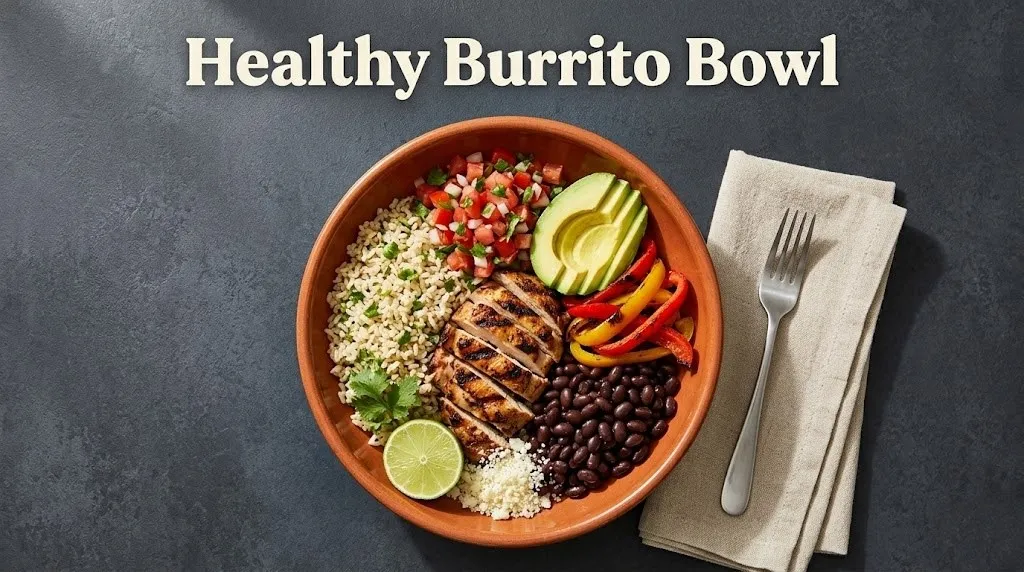
Portion control is the mechanism. The bowl format tricks the eye into thinking a smaller portion looks generous because the ingredients are spread across a wide surface area. A tight, deep bowl makes 500 calories look sparse. A wide, shallow bowl makes the same 500 calories feel like a feast. Use wide bowls for salads and burrito bowls at home.
| Bowl Type | Calories | Protein (g) | Fiber (g) | Sodium (mg) |
|---|---|---|---|---|
| Healthy Homemade Bowl | 520 | 42 | 13 | 550 |
| Optimized Chipotle Bowl | 560 | 45 | 12 | 1,200 |
| Standard Loaded Bowl | 1,280 | 50 | 14 | 2,600 |
Burrito Bowl Recipe Healthy
A healthy burrito bowl recipe relies on the quality of the seasoning blend and the cooking technique for the protein, not on masking flavors with heavy sauces. A dry spice rub on chicken thighs, a proper high-heat sear, and a resting period produce juicy meat that does not need a cheese blanket.
The carbohydrate base matters more than anything. Cilantro lime brown rice is the classic. A less common but nutritionally stronger option is quinoa, which delivers complete plant protein and a slightly nutty texture that holds up well against warm toppings. A 2020 study in the journal Nutrients found that quinoa consumption improves post-meal satiety scores compared to white rice.
Dairy is optional, not foundational. A small amount of crumbled cotija cheese gives a salty, savory punch with less saturated fat than shredded cheddar. A drizzle of plain Greek yogurt replaces sour cream with double the protein per spoonful. The bowl works without these items for a dairy-free eater. The avocado and lime juice carry enough richness and acid to make every bite satisfying.
Key Takeaway: The flavor architecture of a healthy burrito bowl stands on seasoning and cooking technique, not on the crutch of melted cheese and sour cream.
Healthy Burrito Bowls
Burrito bowls are one of the few meal formats that naturally guide you toward the USDA MyPlate proportions. The plate model recommends half the plate as vegetables and fruit, one quarter as lean protein, and one quarter as whole grains. A burrito bowl with a lettuce and fajita vegetable base, a palm-sized protein portion, and a cupped handful of rice mirrors this exactly.
The customization is unmatched. One base recipe yields four different bowls for four different family members with varying dietary needs. A teenager adding extra rice and chicken gets more energy. A parent reducing carbs skips the rice entirely and doubles the greens. A spice-sensitive child skips the jalapenos. Everyone eats the same meal, adjusted.
The term “bowl” has been co-opted by marketing. A fast-casual “superfood bowl” often has more sugar and calories than a burger. The burrito bowl you build at home with whole ingredients is a genuinely different nutritional product. You control the sodium. You control the fat source. You control the portion.
Healthy Burrito Bowl Recipes
There are endless healthy burrito bowl recipes because the template is adaptable across global flavor profiles. A Mediterranean version swaps the black beans for chickpeas, the corn for diced cucumber and tomato, and the chipotle spice for za’atar and a lemon-tahini dressing. The macronutrient structure stays the same.
A breakfast burrito bowl uses scrambled eggs or scrambled tofu as the protein, roasted sweet potato cubes as the carbohydrate, black beans, and pico de gallo. The bowl format works for any meal of the day. The same formula, protein, fiber, healthy fat, applies at 7 a.m. or 7 p.m.
Written recipes matter less than learning the template. The template is four parts: a seasoned protein, a fiber-rich legume, a slow-digesting carbohydrate or extra vegetable base, and a source of unsaturated fat with acid for brightness. Once you internalize the template, you stop searching for recipes and start improvising from your refrigerator on a Tuesday night.
- Seasoned Protein: Chicken, steak, tofu, shrimp, or ground turkey.
- Fiber-Rich Legume: Black beans, pinto beans, or lentils.
- Carbohydrate Base: Brown rice, quinoa, cauliflower rice, or roasted sweet potato.
- Fat and Brightness: Avocado, olive oil, lime juice, or Greek yogurt.
Healthy Burrito Bowl Ingredients
Lean protein forms the center of the bowl. Chicken breast, chicken thigh, flank steak, shrimp, or sofritas all work. Thighs have slightly more fat and far more forgiveness against overcooking. A 4-ounce cooked portion of skinless chicken thigh provides 26 grams of protein and 9 grams of fat.
Beans are the fiber engine. One half-cup of black beans contains 7.5 grams of fiber and 8 grams of protein. The fiber is a mix of soluble and insoluble types. Soluble fiber forms a gel that slows digestion. Insoluble fiber adds bulk and speeds transit. Both are present in beans, and both contribute to the 13-gram total fiber goal for this meal.
The healthy fat comes from avocado. One third of a medium Hass avocado delivers 80 calories of mostly monounsaturated fat, 3 grams of fiber, and potassium, a mineral the National Institutes of Health identifies as under-consumed in the standard American diet. Potassium helps blunt the blood pressure effect of sodium, which is abundant in any burrito bowl, homemade or restaurant-purchased.
How to Make a Healthy Burrito Bowl
You make a healthy burrito bowl by cooking each component separately, seasoning each one adequately, and assembling in a specific order that preserves texture. The rice goes down first as a warm, absorbent bed. The beans go next to anchor to the rice. The protein and vegetables are placed on top to stay visible and appetizing.
To build a perfect bowl step by step:
- Spread 3/4 cup of warm cilantro lime brown rice across the bottom of a wide, shallow bowl.
- Spoon 1/2 cup of seasoned black beans slightly off-center next to the rice.
- Slice 4 ounces of rested, cooked chicken thigh against the grain and fan the slices across the center.
- Arrange 1/2 cup of fajita-style sauteed bell peppers and onions on one side.
- Top with 1/3 sliced avocado, 2 tablespoons of pico de gallo, and a lime wedge.
The final lime wedge is not a garnish. The acid from the lime juice brightens the entire bowl and makes the richness of the avocado feel lighter. Squeeze it over the top immediately before eating. Acid is the difference between a bowl that tastes like a home kitchen and one that tastes like a professional one.
Best Healthy Burrito Bowl Recipe
The best version uses a specific marinade for the chicken that combines smoked paprika, cumin, chipotle chili powder, garlic powder, and a small amount of brown sugar for caramelization. The sugar content is negligible per serving, less than 2 grams, but the char it creates on a hot cast iron surface is essential for the flavor profile.
To prepare the best healthy chicken burrito bowl at home:
- Combine 1 teaspoon each of smoked paprika, ground cumin, chipotle chili powder, and garlic powder with 1/2 teaspoon of kosher salt and 1 teaspoon of brown sugar.
- Coat 1.5 pounds of boneless, skinless chicken thighs with the spice rub and 1 tablespoon of olive oil. Let sit for 15 minutes.
- Heat a cast iron skillet over medium-high heat until lightly smoking. Sear the thighs for 5 minutes per side without moving them.
- Transfer to a cutting board and rest for 8 minutes before slicing against the grain.
- Assemble the bowl components and finish with fresh lime juice and chopped cilantro.
Resting the chicken is non-negotiable. Slicing immediately after cooking dumps the retained juices onto the cutting board and leaves the protein dry. Eight minutes of rest allows the muscle fibers to reabsorb those juices. The bowl stays moist without needing extra sauce or dressing.
Healthy Chipotle Burrito Bowl
A healthy Chipotle burrito bowl in 2026 is a Chicken or Sofritas bowl with brown rice, black beans, fajita veggies, fresh tomato salsa, and lettuce. Requesting a light portion of rice and heavy fajita vegetables reduces the calorie-dense refined carbohydrate and increases the nutrient-dense vegetable volume.
Skip the queso, sour cream, and cheese. These three items collectively add 320 calories and 800 milligrams of sodium. A standard Chipotle employee scoop of guacamole adds 230 calories of heart-healthy fat. The guacamole is the better fat choice. The queso is processed cheese product, not food.
The sodium is still high. A fully optimized bowl still contains roughly 1,200 milligrams of sodium. The American Heart Association recommends an ideal limit of 1,500 milligrams per day for adults. The Chipotle bowl, even ordered perfectly, occupies most of that budget. If you eat this for lunch, dinner must be a very low-sodium home-cooked meal.
| Chipotle Component | Calories | Sodium (mg) | Healthy Choice? |
|---|---|---|---|
| Chicken | 180 | 310 | Yes |
| Sofritas (Tofu) | 150 | 560 | Moderate (higher sodium) |
| Brown Rice (light scoop) | 165 | 175 | Yes |
| Fajita Veggies | 20 | 170 | Yes |
| Guacamole | 230 | 370 | Yes (healthy fat) |
| Queso | 120 | 330 | Skip |
Key Takeaway: Chipotle can be a healthy burrito bowl source if you treat sodium as the main constraint and choose guacamole over queso for your fat.
High Protein Burrito Bowl
A high protein burrito bowl contains at least 40 grams of protein. You achieve this by increasing the chicken portion to 6 ounces, using a quinoa base instead of rice, and adding a high-protein dairy element like Greek yogurt or a sprinkle of hemp seeds.
The chicken is the primary driver. Six ounces of cooked chicken thigh provides 39 grams of protein alone. The black beans contribute another 8 grams. The quinoa base adds 4 grams. The total without any dairy reaches 51 grams, which is sufficient to maximize muscle protein synthesis after a workout according to research published in the Journal of the International Society of Sports Nutrition.
This protein load matters for satiety. A high-protein meal stimulates the release of peptide YY and GLP-1, hormones that signal fullness to the brain. A burrito bowl with 50 grams of protein keeps hunger suppressed for four to five hours. A lower-protein version with 25 grams might leave you snacking by 3 p.m.
Low Carb Burrito Bowl
A low carb burrito bowl replaces the rice and beans with non-starchy vegetables. The base becomes cauliflower rice, shredded romaine lettuce, or a combination of both. The beans are reduced or omitted entirely, dropping the total carbohydrate count from 55 grams to under 20 grams.
Cauliflower rice is the most convincing rice substitute. Sauté it in a dry, hot pan until the moisture steams off and the edges lightly brown. Season it with salt, cumin, and lime zest. It absorbs flavors well but will never have the chew of real rice. Accept this textural difference going in.
The protein and fat become more important in a low carb bowl. You need the volume and the energy from additional chicken, steak, avocado, or olive oil to compensate for the missing calories from the carbohydrate sources. A low carb bowl with 4 ounces of chicken and no beans leaves a 300-calorie hole. Fill it with an extra ounce of protein, half an avocado, and a generous drizzle of olive oil.
Vegan Burrito Bowl
A vegan burrito bowl substitutes all animal products with plant equivalents. The protein center becomes sofritas made from braised and shredded extra-firm tofu, or simply well-seasoned black and pinto beans. The creaminess comes from avocado and a cashew-based lime crema.
A complete protein concern is manageable. Black beans are slightly low in the amino acid methionine. Brown rice or quinoa is slightly low in lysine. Combining beans and grains in the same bowl creates a complementary amino acid profile. The Academy of Nutrition and Dietetics confirms that plant protein sources consumed over the course of a day meet amino acid needs without meticulous combining at every meal.
The vegan bowl requires extra attention to seasoning. Meat carries salt and fat that distribute flavor across the palate. A plant bowl needs more lime juice, more salt, more cumin, and a hit of heat from fresh jalapeno or serrano pepper to achieve the same depth. Tasting and adjusting seasoning before serving is not optional for a vegan version.
Key Takeaway: Vegan burrito bowls work beautifully when you layer acid, heat, and salt aggressively enough to compensate for the missing animal fat.
Healthy Burrito Bowl Meal Prep
Meal prep burrito bowls are built by storing components separately and assembling them the morning you eat them or at mealtime. Wet components packed with dry components turn everything into a soggy, unappealing mass by day three.
The protein and rice are cooked, cooled rapidly, and portioned into one container. The beans go into a separate small container. The fresh components like pico de gallo, lettuce, and avocado are cut the day of eating. Avocado cannot be pre-cut for the week. It oxidizes and turns brown and mushy.
The food safety rule is strict. The FDA advises that cooked rice must be cooled from 135 degrees Fahrenheit to 70 degrees Fahrenheit within two hours, and to 41 degrees Fahrenheit within an additional four hours. Spread the rice on a sheet pan to cool it quickly. Store it in the refrigerator for a maximum of four days. The pathogen Bacillus cereus forms spores that survive cooking and can multiply in improperly cooled rice, causing foodborne illness.
- Cool cooked rice on a sheet pan within 1 hour of cooking.
- Store rice and proteins in separate containers from wet toppings.
- Slice avocado, lettuce, and salsa fresh on the day of eating.
- Consume all prepped components within 4 days.
Healthy Burrito Bowl Macros
The macronutrient breakdown of a standard healthy chicken burrito bowl is 40 grams of protein, 52 grams of carbohydrate, and 15 grams of fat. This distribution provides approximately 500 to 550 calories. The fiber count sits at 12 to 14 grams.
The macros shift with ingredient choices. Swapping chicken thigh for chicken breast drops the fat by 5 grams and the calories by 45. Adding guacamole or avocado adds roughly 80 calories and 7 grams of heart-healthy monounsaturated fat. Doubling the rice adds 35 grams of carbohydrates and 150 calories.
The protein-to-energy ratio is what makes this meal effective for body composition. The bowl delivers roughly 1 gram of protein per 13 calories. Foods with a ratio of 1 gram of protein per 10 to 15 calories are highly satiating and support muscle retention during a calorie deficit. Compare this to a standard bagel with cream cheese, which delivers 1 gram of protein per 25 calories.
| Macro Adjustment | Protein (g) | Carbs (g) | Fat (g) | Calories |
|---|---|---|---|---|
| Standard Chicken Bowl | 40 | 52 | 15 | 520 |
| Add Guacamole (+2 oz) | 41 | 54 | 22 | 600 |
| Double Chicken (8 oz) | 65 | 52 | 20 | 670 |
| Cauliflower Rice, No Beans | 40 | 18 | 20 | 410 |
Burrito Bowl for Weight Loss
A burrito bowl supports weight loss by providing high volume and high protein for a moderate calorie cost. A 500-calorie bowl is a satisfying lunch that prevents the 3 p.m. energy crash and subsequent snacking that sabotages a deficit.
The volume-to-calorie ratio is the hidden advantage. A bowl with fajita vegetables, lettuce, pico de gallo, and a modest amount of rice and chicken fills a large bowl for 500 calories. The same 500 calories as a fast food cheeseburger occupies a fraction of the physical space in the stomach. Gastric stretch contributes to satiety signals. A larger, lower-calorie volume of food keeps you fuller than a small, dense portion of equal energy.
Tracking is still necessary. The healthy burrito bowl is a tool, not a magic fat loss pill. Eating a 500-calorie bowl for lunch while snacking on 400 calories of trail mix in the afternoon and drinking 300 calories of a sweetened coffee beverage erases the deficit. The bowl works within a day of intentional eating. It does not override the energy balance equation.
Frequently Asked Questions About Healthy Burrito Bowls
Are burrito bowls healthy for you?
A burrito bowl is healthy when it includes lean protein, high-fiber beans, whole grains, and a moderate amount of healthy fat.
It avoids the flour tortilla and excessive cheese, sour cream, and queso that add empty saturated fat calories.
The homemade version gives you full control over sodium, fat type, and portion size.
What is the healthiest meat for a burrito bowl?
Grilled chicken breast or thigh is the healthiest meat option for its high protein and low saturated fat content.
Shrimp is another excellent choice that cooks quickly and provides lean protein with omega-3 fatty acids.
Flank steak or barbacoa can fit into a healthy bowl when portioned to 4 ounces and trimmed of visible fat.
How many calories are in a healthy chicken burrito bowl?
A homemade healthy chicken burrito bowl contains between 500 and 550 calories.
This includes 4 ounces of chicken, half a cup of black beans, three-quarters of a cup of brown rice, fajita vegetables, and a third of an avocado.
The same bowl ordered at Chipotle without queso or sour cream comes in around 560 calories.
Can I eat a burrito bowl every day for weight loss?
You can eat a burrito bowl every day if it fits within your total daily calorie and sodium budget.
The risk of a daily bowl is sodium accumulation, especially from restaurant versions that can exceed 1,200 milligrams per serving.
Rotating the protein source and reducing the rice portion throughout the week prevents dietary monotony and nutrient gaps.
How do I keep my meal prep burrito bowl from getting soggy?
Store wet and cold ingredients like salsa, guacamole, and lettuce in separate containers from the warm rice and protein.
Assemble the bowl the morning of or immediately before eating.
Cool the rice completely on a sheet pan before refrigerating to prevent condensation from creating excess moisture in the container.
A healthy burrito bowl is a system, not a single recipe. Master the template of lean protein, fiber-rich beans, a controlled grain portion, and a measured amount of avocado, and you have a meal strategy that works for weight loss, muscle building, and busy Tuesday nights.
The container that holds your prepped rice and the speed at which you cool it are as important as the spice blend. Food safety is part of healthy eating. Bacillus cereus does not care about your macros.
Build the bowl, eat it fresh when you can, and squeeze that lime wedge over the top right before the first bite. That final hit of acid is the smallest step that makes the biggest difference between a chore meal and a genuinely good lunch.