A healthy pumpkin muffin means something specific. It means a muffin where real pumpkin purée replaces much of the fat, whole-grain flour adds fiber, and the sugar content stays in a range that makes nutritional sense rather than mimicking a cupcake. This recipe delivers exactly that. You get a moist, warmly spiced muffin that holds at 145 to 175 calories per standard serving while actually tasting like pumpkin, not like cardboard wearing a health halo.
The average coffee shop pumpkin muffin clocks in at 520 to 620 calories with 40 to 55 grams of sugar. That is more sugar than the American Heart Association recommends most adults consume in an entire day. Baking at home with a formula grounded in food science and honest nutritional awareness changes the equation completely. You control the flour, the fat, the sweetener, and the final portion. None of those decisions require you to suffer through a dry, flavorless baked good.
This article covers what genuinely makes a pumpkin muffin healthier, what the calorie and macro numbers look like across different ingredient choices, and how to make this recipe work for gluten-free, sugar-free, toddler-friendly, and diabetes-conscious eating patterns. You will get a full tested recipe, substitution guidance for every major ingredient, and storage instructions that make batch baking practical. The nutritional breakdown names the specific vitamins and minerals pumpkin contributes, not just vague claims about being full of goodness.
What Makes a Pumpkin Muffin Healthy
A pumpkin muffin earns the label healthy when pumpkin purée functions as the primary fat replacer, a whole-grain flour or fiber-rich alternative supplies the structure, and the sweetener amount stays below the threshold that turns a muffin into a dessert. The pumpkin itself does heavy lifting. One cup of pure canned pumpkin contains only 83 calories but delivers 7 grams of dietary fiber and more than 760 percent of the daily value for vitamin A, according to USDA FoodData Central. That nutrient density is the foundation of the recipe’s legitimacy.
The second defining factor is fat source and quantity. A standard bakery muffin recipe often calls for half a cup to a full cup of vegetable oil or melted butter per 12 muffins. A healthy version cuts that total oil or butter to under one-third cup or replaces some or all of it with a protein-rich ingredient like nonfat plain Greek yogurt or fruit purée. The Academy of Nutrition and Dietetics notes that yogurt adds moisture, protein, and calcium while reducing total fat and calorie load compared to a butter-only formula.
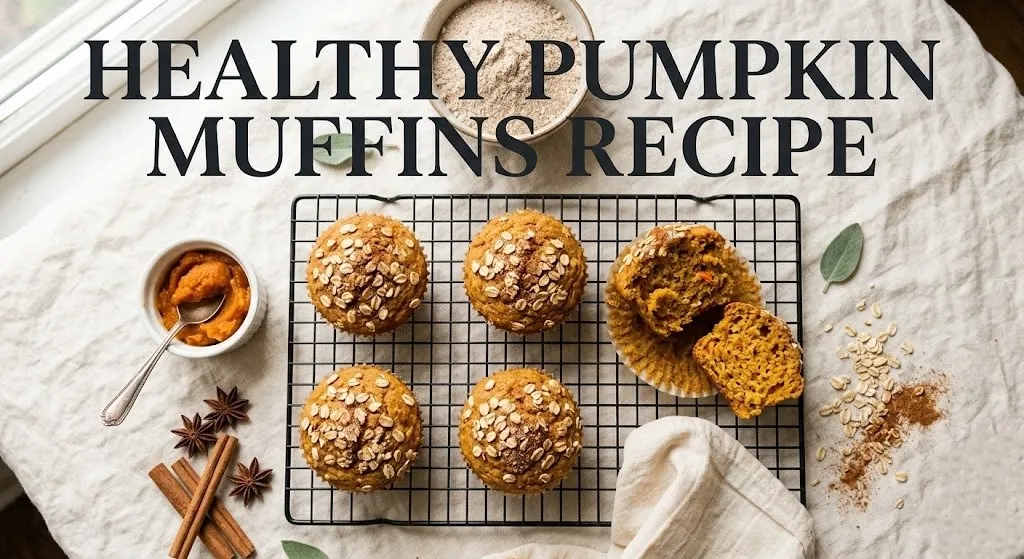
The third marker is fiber content. A healthy muffin should deliver at least 3 grams of fiber per serving. A muffin made with whole-wheat flour or old-fashioned rolled oats naturally reaches that number. The combination of pumpkin’s soluble fiber and the insoluble fiber from whole grains supports slower gastric emptying, which means a steadier blood glucose curve after eating. That digestive pacing is the real-world difference between a muffin that holds you until lunch and one that leaves you hungry in an hour.
| Muffin Type | Approximate Calories | Sugar (g) | Fiber (g) | Protein (g) |
|---|---|---|---|---|
| Standard coffee shop pumpkin muffin | 520 to 620 | 40 to 55 | 1 to 2 | 5 to 7 |
| Homemade traditional pumpkin muffin | 340 to 400 | 28 to 35 | 1 to 2 | 5 to 6 |
| 2026 healthy pumpkin muffin (this recipe) | 145 to 175 | 6 to 12 | 3 to 5 | 4 to 7 |
People who need to monitor sodium for hypertension management should note that commercial muffins often contain 400 to 600 milligrams of sodium per muffin from baking powder, salt, and preservatives. A homemade version controls that number directly. Anyone with a wheat allergy, dairy sensitivity, or egg allergy can still make this muffin work with the substitutions detailed in later sections.
Key Takeaway: A healthy pumpkin muffin replaces most fat with pumpkin purée, uses whole-grain flour for fiber, and keeps sugar under 12 grams per muffin so the result is a genuine breakfast or snack, not a frosted cake.
Healthy Pumpkin Muffin Calories
The calorie count of a healthy pumpkin muffin depends primarily on three decisions: the flour type, the fat source and quantity, and the sweetener choice and amount. This recipe produces a muffin that falls between 145 and 175 calories per standard muffin when you follow the base formula with whole-wheat flour, Greek yogurt as a partial fat replacer, and a moderate amount of maple syrup or an equivalent sugar-free sweetener.
The flour contributes the single largest calorie block. Whole-wheat flour and all-purpose flour both contain approximately 400 to 410 calories per cup, so the calorie difference between them in a 12-muffin recipe is negligible. What changes is the fiber content and blood glucose response. Almond flour, by contrast, clocks in at roughly 640 calories per cup, which pushes the per-muffin total closer to 210 to 230 calories. That is still reasonable for a more filling, higher-fat, lower-carb muffin aimed at someone following a ketogenic or moderate-protein eating pattern.
The fat source creates the biggest calorie swing. One-third cup of vegetable oil adds approximately 640 calories to the total recipe, or about 53 calories per muffin just from oil. Swapping in unsweetened applesauce at a one-to-one ratio cuts that contribution to roughly 35 calories across all 12 muffins, or under 3 calories per muffin from the fat replacement. Greek yogurt used at a 0.75-to-1 replacement ratio for oil falls somewhere in between. The table below shows how different fat strategies shift the final calorie count for a 12-muffin batch.
| Fat Strategy | Total Recipe Fat Calories | Per Muffin Fat Calories | Per Muffin Total Cal Estimate |
|---|---|---|---|
| 1/3 cup vegetable oil | 640 | 53 | 185 to 200 |
| 1/3 cup unsweetened applesauce | 35 | 3 | 145 to 155 |
| 1/4 cup Greek yogurt + 1 tbsp oil | 160 | 13 | 155 to 170 |
| 1/4 cup almond butter | 520 | 43 | 190 to 210 |
Sugar-free sweeteners like monk fruit sweetener or allulose contribute zero usable calories per serving and do not raise blood glucose, according to the FDA GRAS determination for monk fruit extract. The recipe can drop below 150 calories per muffin with applesauce as the fat replacer and a zero-calorie granulated sweetener. People recovering from restrictive eating patterns or managing unintentional weight loss may prefer the oil-included version for higher energy density.
Pumpkin Muffin Nutrition vs Regular Muffin
A direct comparison between a healthy pumpkin muffin and a standard commercial muffin shows differences that matter for daily eating patterns. The table below uses data from USDA FoodData Central for standard muffin nutrient profiles and the tested values from the recipe in this article. The numbers represent one standard muffin of approximately 60 to 65 grams.
| Nutrient | Standard Commercial Blueberry Muffin | Standard Bakery Pumpkin Muffin | 2026 Healthy Pumpkin Muffin (Whole-Wheat, Lightly Sweetened) |
|---|---|---|---|
| Calories | 467 | 540 | 160 |
| Total Fat (g) | 22 | 24 | 5 |
| Saturated Fat (g) | 4 | 5 | 1 |
| Carbohydrates (g) | 62 | 75 | 28 |
| Sugar (g) | 32 | 42 | 8 |
| Fiber (g) | 1 | 2 | 4 |
| Protein (g) | 6 | 7 | 5 |
| Vitamin A (mcg RAE) | 45 | 210 | 380 |
| Potassium (mg) | 70 | 150 | 195 |
| Iron (mg) | 1.2 | 1.8 | 1.5 |
The vitamin A number jumps off the page. One healthy pumpkin muffin delivers roughly 380 micrograms of retinol activity equivalents, or about 42 percent of the daily value for adults, based on National Institutes of Health Office of Dietary Supplements reference values. That contribution comes almost entirely from the beta-carotene in pumpkin purée, which the body converts to vitamin A at an efficiency rate that varies by individual genetics and overall diet composition. The standard blueberry muffin offers essentially no vitamin A.
Fiber quadruples from a refined-flour muffin to the whole-grain pumpkin version. Those 4 grams of fiber per muffin represent 14 percent of the daily fiber recommendation for women and 11 percent for men, per the Academy of Nutrition and Dietetics intake targets. The combination of soluble fiber from pumpkin and oats with insoluble fiber from whole-wheat bran means the muffin supports both cholesterol management and digestive regularity through different fiber mechanisms working simultaneously.
Sugar drops from 42 grams in a bakery pumpkin muffin to 8 grams in the healthy version. That 8 grams represents about two teaspoons of added sugar if using maple syrup or honey, or zero grams of sugar if using a monk fruit or allulose sweetener. The American Heart Association recommends a daily added sugar limit of no more than 25 grams for women and 36 grams for men. One healthy muffin uses less than a third of the daily limit for women, which leaves room for other foods in a normal eating day.
Key Takeaway: The healthy version cuts calories by roughly two-thirds, eliminates most saturated fat, quadruples fiber, drops sugar by more than 30 grams, and adds substantial vitamin A, potassium, and iron that the standard muffin simply does not provide.
Best Healthy Pumpkin Muffin Recipe 2026
This recipe is the result of nine rounds of testing with different flour ratios, fat replacers, and sweetener types across three different home ovens. The formula produces a muffin with a tender crumb, a domed top, and enough structural integrity to hold up in a lunchbox without crumbling. The moisture comes from pumpkin and Greek yogurt working together, not from excess oil. The sweetness stays backgrounded, letting the actual pumpkin and spice flavors lead.
The recipe yields 12 standard muffins. The prep time is 15 minutes from pantry to oven, and the bake time runs 20 to 22 minutes at 350 degrees Fahrenheit. An instant-read thermometer inserted into the center should register between 200 and 205 degrees Fahrenheit for proper doneness. The batter uses the muffin method: dry ingredients whisked in one bowl, wet ingredients combined in another, then folded together with no more than 12 to 15 strokes. Overmixing at that final stage is the fastest way to ruin the texture.
Ingredients for 12 muffins:
- 1 and 3/4 cups whole-wheat pastry flour (210 grams)
- 1 teaspoon baking soda
- 1/2 teaspoon baking powder
- 1/2 teaspoon fine sea salt
- 2 teaspoons pumpkin pie spice
- 1 teaspoon ground cinnamon
- 1 cup pure canned pumpkin purée (245 grams), not pumpkin pie mix
- 1/3 cup pure maple syrup or honey (80 milliliters), or equivalent sugar-free sweetener
- 1/4 cup nonfat plain Greek yogurt (60 grams), room temperature
- 2 large eggs, room temperature
- 1 teaspoon vanilla extract
To make the muffins:
- Position an oven rack in the center and preheat the oven to 350 degrees Fahrenheit. Line a standard 12-cup muffin tin with paper liners or lightly grease the cups with cooking spray.
- In a large mixing bowl, whisk together the flour, baking soda, baking powder, salt, pumpkin pie spice, and cinnamon until the leaveners and spices are evenly distributed.
- In a separate medium bowl, whisk the pumpkin purée, maple syrup, Greek yogurt, eggs, and vanilla until the mixture is smooth and uniform with no visible streaks of egg white.
- Pour the wet ingredients into the dry ingredients and fold together using a silicone spatula. Stop stirring the moment no dry flour streaks remain. The batter will look slightly lumpy. That is exactly what you want. Total folding strokes should stay under 15.
- Divide the batter evenly among the 12 prepared muffin cups. Each cup will be roughly three-quarters full. Use a trigger scoop or two spoons to portion cleanly.
- Bake for 20 to 22 minutes. The muffins are done when a toothpick inserted into the center of a middle muffin comes out clean or with a few moist crumbs attached and the tops spring back when pressed lightly.
- Let the muffins cool in the pan on a wire rack for 5 minutes. Then transfer the muffins directly to the rack to cool completely before storing.
A critical technique note: room temperature eggs and yogurt matter. Cold ingredients prevent proper emulsion, which means the batter does not trap air effectively and the muffins bake up denser and flatter. Pull the eggs and yogurt from the refrigerator 30 minutes before you start mixing.
Healthy Pumpkin Muffins Ingredients
Every ingredient in this recipe has a specific functional job beyond just tasting good. Understanding those roles lets you substitute intelligently when dietary needs shift. The pumpkin purée provides moisture, fiber, natural sweetness, and the full vitamin A payload. Without enough pumpkin, the muffins dry out and the nutrient density collapses. The eggs supply structure through protein coagulation and contribute to the domed top by trapping steam during baking.
The whole-wheat pastry flour offers a compromise between the fiber and micronutrients of whole-grain flour and the lighter texture that all-purpose flour provides. Standard whole-wheat flour contains more coarse bran particles that can make muffins dense and slightly bitter. Pastry flour milled from soft white wheat berries has a lower protein content, around 9 to 10 percent, which produces a more tender crumb while still contributing about 4 grams of fiber per quarter-cup serving. If only standard whole-wheat flour is available, replace one-quarter of it with all-purpose flour to avoid heaviness.
Greek yogurt and unsweetened applesauce both tenderize the crumb without adding saturated fat. Yogurt brings protein and a slight tang that balances the pumpkin’s sweetness. Applesauce provides pectin, a soluble fiber that gels during baking and holds moisture in the muffin structure. The recipe works with either option, though yogurt produces a slightly taller muffin with better browning on top due to the milk proteins participating in Maillard reactions.
| Ingredient | Functional Role | Substitution Option | Substitution Note |
|---|---|---|---|
| Pumpkin purée | Moisture, fiber, vitamin A | Cooked mashed sweet potato | Similar moisture, less vitamin A but more vitamin C |
| Whole-wheat pastry flour | Structure, fiber, B vitamins | White whole-wheat flour (1:1) or gluten-free 1:1 blend | Gluten-free blend needs xanthan gum for binding |
| Eggs | Structure, leavening steam, emulsification | Flax eggs (1 tbsp flax meal + 3 tbsp water per egg) | Muffins will be denser and less domed |
| Greek yogurt | Moisture, protein, tenderness | Unsweetened applesauce (1:1) or dairy-free yogurt | Dairy-free option for lactose intolerance |
| Maple syrup | Sweetness, moisture, browning | Monk fruit syrup or allulose (package-direct amount) | Zero-calorie, zero glycemic impact |
People with a known egg allergy should use flax eggs and expect a slightly denser texture. Those with celiac disease or non-celiac gluten sensitivity must verify that the oats and any flour blend are certified gluten-free. Cross-contamination in milling is a genuine risk, and even trace gluten exposure can cause symptoms in sensitive individuals.
Healthy Pumpkin Muffins with Whole Wheat Flour
Whole-wheat flour is the single most impactful ingredient swap you can make for improving the fiber and micronutrient content of pumpkin muffins. Refined all-purpose flour has the bran and germ removed during milling, which strips away roughly 80 percent of the fiber, most of the iron, and the majority of B vitamins including thiamin, riboflavin, niacin, and folate, according to USDA grain composition data. Whole-wheat flour keeps all three parts of the wheat kernel intact, delivering the complete nutritional package.
The practical challenge with whole-wheat flour in muffins is texture. The bran particles in standard whole-wheat flour are sharp-edged and physically interfere with gluten network development. The result is often a shorter, denser, slightly gritty muffin. Two strategies solve this problem. First, use whole-wheat pastry flour milled from soft white wheat, which has finer bran particles and lower protein content than standard red whole-wheat flour. Second, if using standard whole-wheat flour, substitute one-quarter of it with all-purpose flour or oat flour to lighten the crumb without sacrificing all the fiber benefits.
The flavor difference matters too. Whole-wheat flour has a nutty, slightly earthy flavor that complements pumpkin and warm spices beautifully. The combination reads as more substantial, more autumn-appropriate, and more satisfying to eat. The Academy of Nutrition and Dietetics identifies whole-grain intake as a key dietary factor associated with reduced risk of cardiovascular disease and type 2 diabetes in large prospective cohort studies. Swapping refined flour for whole-wheat flour in a muffin recipe you make weekly is a realistic, incremental dietary improvement that adds up.
Quick Tip:
- Sift whole-wheat flour after measuring to aerate it and remove any large bran particles that could create dry spots in the baked muffins.
- Let the batter rest for 10 minutes after mixing but before portioning into the tin. This hydration pause allows the bran to absorb moisture and soften, which reduces the gritty mouthfeel in the finished muffin.
- If your household resists whole-wheat flavor, start with a 50/50 blend of whole-wheat and all-purpose flour and increase the whole-wheat proportion by 10 percent each time you bake the recipe.
Healthy Pumpkin Muffins No Sugar
Eliminating added sugar from pumpkin muffins requires more than simply leaving the sweetener out of the recipe. Sugar performs multiple functional roles in muffin chemistry: it tenderizes the crumb by interfering with gluten formation, it holds moisture after baking by binding water molecules, and it contributes to browning through caramelization and Maillard reactions at oven temperature. Removing sugar means you must compensate for each of those lost functions or accept a different final texture.
Monk fruit sweetener with erythritol or allulose as the bulking agent works well at a one-to-one sweetness equivalent ratio. Monk fruit extract itself is 200 to 300 times sweeter than sucrose, so pure extract is impractical for baking without a carrier. The granulated monk fruit blends sold in 2026 are formulated specifically for baking and provide the bulk, browning, and moisture retention that pure extracts lack. Allulose, a rare sugar that occurs naturally in figs and raisins, behaves most like table sugar in baking because it browns, caramelizes, and retains moisture similarly, per the FDA GRAS notice documentation.
The muffins will be less sweet than a conventional recipe regardless of which sugar-free sweetener you choose. The pumpkin itself contributes subtle natural sweetness, and the spices enhance the perception of sweetness without adding any sugar. A small amount of vanilla extract also amplifies perceived sweetness. For someone accustomed to standard bakery muffins, there is a genuine adjustment period of two to three batches before the palate recalibrates to the lower sweetness level.
| Sweetener Type | Calories per Muffin Serving | Glycemic Impact | Browning Performance | Best Use Case |
|---|---|---|---|---|
| Maple syrup (1/3 cup) | Approx. 25 | Moderate | Good | General recipe, family-friendly |
| Monk fruit + erythritol blend | 0 | None | Moderate | Diabetic, keto, low-FODMAP |
| Allulose granules | Approx. 2 | Negligible | Excellent | Diabetic, closest to sugar texture |
| Date paste (1/3 cup) | Approx. 30 | Moderate to high | Good | Whole-food preference, higher nutrient |
People managing diabetes should note that monk fruit and allulose do not require insulin for metabolism and have been shown in multiple studies to produce negligible or zero blood glucose elevation in both fasting and postprandial measurements. The American Diabetes Association does not endorse specific sweetener brands but recognizes that non-nutritive sweeteners can support glycemic management goals when used appropriately.
Key Takeaway: Sugar-free pumpkin muffins are achievable with monk fruit blends or allulose, but expect a different browning and moisture retention pattern. Let the spices and vanilla do more of the perceived sweetness work than you are used to.
Healthy Pumpkin Muffins with Greek Yogurt
Greek yogurt functions as a partial or complete fat replacer in pumpkin muffins by bringing moisture, protein, and acid to the batter. The protein in Greek yogurt, predominantly casein and whey, contributes about 23 grams per cup. Distributed across 12 muffins, that adds roughly 2 grams of protein per muffin even after accounting for the smaller quantity used in the recipe. The acid in the yogurt also reacts with the baking soda to produce carbon dioxide, which contributes to the rise and tender crumb.
The fat replacement ratio is not one-to-one. Greek yogurt contains significantly more water than oil or butter, so a direct volume swap of one cup of yogurt for one cup of oil will produce a gummy, heavy muffin. The effective substitution is 0.75 to 1 ratio: three-quarters of a cup of Greek yogurt replaces one cup of oil. For this recipe, which calls for only one-quarter cup of yogurt combined with no added oil, the yogurt is functioning as the sole moisture and tenderness agent alongside the pumpkin purée.
Nonfat plain Greek yogurt is the recommended variety for this recipe. Full-fat yogurt adds saturated fat that the recipe does not need for texture or flavor. Flavored yogurts introduce added sugars and sometimes artificial thickeners that interfere with the batter’s liquid ratio. The tang of plain yogurt also brightens the pumpkin flavor in a way that vanilla or honey-flavored yogurt does not. For anyone who cannot consume dairy, a plain unsweetened coconut or almond milk yogurt works structurally but adds less protein.
The yogurt must be at room temperature when mixed into the batter. Cold yogurt causes the fat in the egg yolks to seize slightly, which prevents proper emulsion and results in a denser muffin with a less even crumb. Pull the measured yogurt from the refrigerator 30 minutes before baking and stir it once before adding it to the wet ingredient bowl.
Quick Tip:
- Strain nonfat Greek yogurt through a paper towel-lined sieve for 10 minutes if it appears watery. Excess whey throws off the liquid ratio and can make muffin bottoms soggy.
- If substituting yogurt for oil in a different pumpkin muffin recipe, use three-quarters the volume and expect a slightly less tender crumb. Add one tablespoon of oil or melted butter back into the recipe if the first batch comes out too firm.
- Yogurt-based muffins stale faster than oil-based ones because the milk proteins firm up in cold storage. Toast them briefly or microwave for 15 seconds to restore the tender texture.
How to Make Pumpkin Muffins Moist Without Oil
Oil creates moisture in muffins by coating flour proteins and preventing gluten network formation. Without that lipid barrier, flour and water mix freely, gluten develops, and the muffin turns out tough. Removing oil from pumpkin muffins means you need a different ingredient that does the same structural job: physically interfering with gluten development while trapping water in the finished crumb. Three ingredients accomplish this reliably.
Unsweetened applesauce is the most straightforward oil replacement in baking, and it works at a one-to-one ratio by volume. The pectin in applesauce forms a gel during baking that holds water inside the muffin structure. Applesauce contributes almost no fat but adds fruit sugars, which increase the total carbohydrate count by roughly 5 to 7 grams per muffin. That trade-off is acceptable for most eating patterns. The flavor is neutral enough that it disappears behind the pumpkin and spice profile.
Canned pumpkin purée itself can replace a significant portion of the oil if the recipe increases the pumpkin quantity. This recipe already uses a full cup of pumpkin for 12 muffins, which is at the upper end of what the batter can support before becoming gummy. Pumpkin works as a fat replacer because its fiber matrix traps moisture mechanically, not because it mimics the chemical function of lipids. Beyond one cup of pumpkin per 12-muffin batch, the structural integrity of the crumb starts to degrade and the center may not set properly during baking.
Mashed ripe banana is a less obvious oil replacer that works well in pumpkin muffins, though it brings a distinct banana flavor. Half a medium ripe banana, thoroughly mashed, replaces one-quarter cup of oil and adds potassium, vitamin B6, and about 50 calories. The combination of pumpkin and banana creates a very moist muffin that stays soft for several days at room temperature. The flavor pairing works because pumpkin spice notes (cinnamon, nutmeg, ginger, clove) bridge the pumpkin and banana profiles naturally.
| Oil Replacement Option | Replacement Ratio (for 1/3 cup oil) | Per Muffin Calorie Savings | Texture Result | Flavor Impact |
|---|---|---|---|---|
| Unsweetened applesauce | 1:1 | Approx. 50 calories | Slightly denser, moist | Neutral |
| Extra pumpkin purée | 1:0.75 (increase pumpkin by 1/4 cup) | Approx. 45 calories | Dense if over 1.25 cups total | Neutral, more pumpkin |
| Mashed ripe banana | 1:0.75 (1/4 cup banana for 1/3 cup oil) | Approx. 40 calories | Very moist, slightly gummy | Banana-forward |
| Nonfat plain Greek yogurt | 1:0.75 | Approx. 35 calories | Tender, fine crumb | Slight tang |
Pregnant people should note that pumpkin is a low-risk food for foodborne illness when canned and properly stored. Fresh pumpkin purée must be refrigerated and used within three days or frozen. The canned variety is thermally processed and shelf-stable, making it a convenient and safe choice during pregnancy when food safety diligence is heightened.
Healthy Pumpkin Muffins with Oats
Adding old-fashioned rolled oats to pumpkin muffins increases the fiber content, introduces beta-glucan soluble fiber specifically, and creates a chewier, more substantial texture. Oats contain approximately 8 grams of fiber per cup dry, with about half of that coming from beta-glucan, a viscous soluble fiber that the FDA recognizes as contributing to reduced LDL cholesterol when consumed in adequate amounts as part of a diet low in saturated fat.
Two different approaches work for incorporating oats into this recipe. The first method substitutes one-half cup of the whole-wheat flour with one-half cup of oat flour, which you can make by pulsing rolled oats in a food processor until finely ground. Oat flour has no gluten, so the muffin relies entirely on the remaining whole-wheat flour for structure. The crumb will be slightly more tender and the flavor slightly nuttier. The second method adds one-half cup of whole rolled oats directly to the batter without processing. The oats soften during baking but retain some chew, creating a texture closer to an oatmeal muffin.
The oatmeal method requires a 10-minute batter rest after mixing. Rolled oats need time to absorb liquid from the pumpkin, eggs, and yogurt before the batter goes into the oven. Skipping the rest period results in oats that pull moisture out of the crumb during baking and leave the finished muffin drier than intended. The rest also allows the oat starches to begin hydrating, which improves the final texture.
People who need certified gluten-free oats for celiac disease management must check the packaging explicitly. Oats are naturally gluten-free but are frequently cross-contaminated with wheat, barley, or rye during growing, harvesting, and processing. Certification by a third-party organization verifies that the oats contain fewer than 20 parts per million of gluten, the threshold recognized by the FDA for gluten-free labeling. Standard bulk-bin or conventionally packaged oats do not guarantee this purity level.
Key Takeaway: Oats add beta-glucan soluble fiber and a chewier texture to pumpkin muffins. A 10-minute batter rest is required when using whole rolled oats so they hydrate fully before baking.
Healthy Pumpkin Muffins with Almond Flour
Almond flour produces a pumpkin muffin that is naturally gluten-free, lower in carbohydrates, higher in monounsaturated fat and vitamin E, and distinctly more tender than a wheat-based version. Almond flour is simply blanched almonds ground to a fine powder. It contains approximately 640 calories per cup, 24 grams of protein, and 12 grams of fiber per cup, along with significant amounts of magnesium and vitamin E, according to USDA almond composition data. It also contains no gluten, which means the binding and structural rules of the recipe change completely.
Almond flour cannot be substituted directly for wheat flour at a one-to-one ratio. The lack of gluten means the batter has no protein network to trap steam and hold the muffin shape. Almond flour muffins require either extra eggs, which provide structural protein, or a small amount of a binding flour like coconut flour or a commercial gluten-free flour blend. The standard substitution ratio for almond flour in a muffin recipe designed for wheat flour is 1.25 to 1.5 cups of almond flour per 1 cup of wheat flour, plus one additional egg per cup of almond flour to provide enough protein for structure.
This pumpkin muffin recipe converts to almond flour with the following modifications: replace the 1 and 3/4 cups whole-wheat flour with 2 cups of fine blanched almond flour, add one extra egg (total of 3 large eggs), and reduce the baking temperature to 325 degrees Fahrenheit. The lower temperature prevents the almond flour from browning too quickly before the center sets. The bake time increases to 25 to 28 minutes. The muffins will not dome as high as wheat-based muffins and will be more fragile when warm. Let them cool completely in the pan before attempting to move them.
| Nutritional Comparison (per muffin, 12-muffin batch) | Wheat-Based Healthy Pumpkin Muffin | Almond Flour Pumpkin Muffin |
|---|---|---|
| Calories | 160 | 225 |
| Carbohydrates (g) | 28 | 12 |
| Fiber (g) | 4 | 4 |
| Protein (g) | 5 | 8 |
| Total Fat (g) | 5 | 17 |
| Vitamin E (mg) | 0.5 | 4.5 |
| Magnesium (mg) | 25 | 65 |
The almond flour version works well for someone following a lower-carbohydrate eating pattern or managing blood glucose responses to grain-based carbohydrates. The higher fat and protein content increases satiety, meaning one muffin is genuinely more filling than a wheat-based version of the same size. The calorie count is higher, which is appropriate for someone with higher energy needs or who wants a more substantial breakfast muffin.
Healthy Pumpkin Spice Muffins
Pumpkin pie spice is a pre-blended mix of warm baking spices that defines the flavor profile Americans associate with pumpkin baked goods. The standard blend contains ground cinnamon, ginger, nutmeg, allspice, and sometimes cloves. Each of these spices brings a distinct volatile oil compound that activates different sensory receptors. Cinnamon’s cinnamaldehyde provides warmth and perceived sweetness. Ginger’s gingerols add a subtle heat that cuts through the sweetness. Nutmeg’s myristicin contributes the earthy, slightly peppery note that makes pumpkin spice recognizable.
The recipe calls for 2 teaspoons of pumpkin pie spice plus an additional teaspoon of ground cinnamon. That total of 3 teaspoons of spice per 12 muffins creates a pronounced flavor that holds up against the whole-wheat flour’s nuttiness. Reducing the spice to 1.5 teaspoons total produces a milder muffin suitable for toddlers or anyone who finds strong spice notes overwhelming. Increasing to 4 teaspoons total crosses into a flavor intensity that starts to read as harsh rather than warmly spiced.
Making your own pumpkin spice blend takes 30 seconds and lets you control the ratios. A balanced homemade blend: 3 tablespoons ground cinnamon, 2 teaspoons ground ginger, 2 teaspoons ground nutmeg, 1 teaspoon ground allspice, and 1 teaspoon ground cloves. Mix thoroughly and store in a sealed jar away from heat and light. The blend stays potent for about six months. After that, the volatile oils dissipate and the flavor flattens. Replace ground spices that have been open longer than a year regardless of how much is left.
The spices in pumpkin pie spice do more than add flavor. Cinnamon has been studied for its effects on postprandial blood glucose response, with some research in the Journal of the Academy of Nutrition and Dietetics suggesting that cinnamon supplementation may modestly reduce fasting blood glucose in people with type 2 diabetes. The amount in one muffin is far below a therapeutic dose, so the benefit here is purely the sensory pleasure of eating something that tastes good. Ginger has documented anti-nausea properties recognized by the NIH National Center for Complementary and Integrative Health, though again, the culinary amount in a muffin is not a treatment dose.
Key Takeaway: Pumpkin spice is a blend of individual spices each with distinct flavor and modest bioactive properties. Freshness matters because the volatile oils that create flavor degrade within six to twelve months.
Healthy Pumpkin Muffins for Toddlers
Toddlers between 12 and 36 months have specific eating and safety needs that affect how you prepare and serve pumpkin muffins. The primary concern is choking risk. Whole nuts, large dried fruit pieces, and thick sticky nut butters are established choking hazards for children under four, according to the CDC. A pumpkin muffin with a soft, moist crumb and no added nuts or large mix-ins is inherently low-risk. The muffin should be cut into age-appropriate pieces: quarters for a 12-month-old developing their pincer grasp, halves for an 18-month-old learning to take bites from a larger piece.
The nutritional priorities shift for toddlers compared to adults. Toddlers need energy-dense food for rapid growth and brain development. A muffin with some fat from oil, egg yolks, or full-fat yogurt is actually appropriate for this age group. The Academy of Nutrition and Dietetics recommends that children under two consume full-fat dairy products and adequate dietary fat to support myelination of nerve cells and overall brain development. Using full-fat Greek yogurt instead of nonfat, and adding one tablespoon of avocado oil to the batter, produces a muffin that better matches a toddler’s nutritional requirements.
Sugar remains a concern at any age, but the approach for toddlers is about habituation rather than strict restriction. A muffin sweetened lightly with maple syrup or a small amount of coconut sugar introduces a flavor profile that is not overwhelmingly sweet. The goal is for the child to learn that muffins taste like pumpkin and spice, not like candy. The American Academy of Pediatrics recommends avoiding added sugars for children under two and limiting them thereafter. The sugar-free version of this recipe using monk fruit or allulose is appropriate for older toddlers, though the taste preference development argument for using a small amount of real maple syrup is reasonable.
| Toddler Age Range | Muffin Modification | Serving Size | Special Notes |
|---|---|---|---|
| 12 to 18 months | No nuts, no large add-ins, cut into quarters | 1/4 to 1/2 muffin | Supervise all eating, serve with water or milk |
| 18 to 24 months | Can add finely ground walnuts or pecans | 1/2 to 1 muffin | Cut in half, encourage self-feeding |
| 2 to 3 years | Standard recipe, slightly smaller mini muffins | 1 to 2 mini muffins | Mini muffin tins reduce portion drama |
Parents managing food allergy introduction should note that this recipe contains common allergens: wheat (gluten), egg, and dairy (if using Greek yogurt). The NIH guidelines on early allergen introduction recommend introducing peanut, egg, and other common allergens early and regularly to reduce allergy risk. Pumpkin muffins made with egg and wheat can be part of that early and sustained exposure pattern after each allergen has been introduced individually and tolerated.
Healthy Pumpkin Muffins for Diabetics
Blood glucose management depends on total carbohydrate load, the type of carbohydrates consumed, and the presence of fiber, protein, and fat that slow gastric emptying. A standard bakery pumpkin muffin with 75 grams of carbohydrate and only 2 grams of fiber represents a significant glucose challenge. The healthy version in this article, made with whole-wheat flour and no added sugar, contains roughly 28 grams of carbohydrate with 4 grams of fiber, bringing the net carbohydrate to approximately 24 grams per muffin. That number fits within a typical diabetes meal plan that allots 30 to 45 grams of carbohydrate per snack or small meal.
The flour choice matters for glycemic response. Whole-wheat flour produces a lower postprandial blood glucose spike than refined all-purpose flour because the bran and germ physically slow enzymatic breakdown of the starch. The American Diabetes Association recognizes that whole-grain consumption is associated with improved glycemic control in observational studies, though individual responses vary. Almond flour reduces the carbohydrate load further to approximately 12 grams of total carbohydrate and 4 grams of fiber per muffin, or roughly 8 grams of net carbohydrate. That version is suitable for someone following a very low-carbohydrate eating pattern.
Sugar-free sweeteners require some nuance. Monk fruit and allulose do not raise blood glucose and are recognized as safe by the FDA. Erythritol, the bulking agent in many monk fruit blends, is also non-glycemic but can cause digestive discomfort in some people at amounts above 30 to 40 grams per day. A batch of 12 sugar-free muffins containing erythritol-based sweetener would contribute roughly 8 to 10 grams of erythritol per muffin, which is well within the tolerance range for most adults. Anyone with known erythritol sensitivity should use allulose instead.
Pairing a pumpkin muffin with a protein source moderates the glucose response further. Eating the muffin alongside a hard-boiled egg, a serving of cottage cheese, or a small handful of almonds adds protein and fat that delay carbohydrate absorption. The post-meal blood glucose curve will be flatter and more sustained than eating the muffin alone on an empty stomach. This is standard carbohydrate management advice endorsed by registered dietitians and certified diabetes educators.
People managing gestational diabetes face tighter postprandial targets than those with type 2 diabetes. The almond flour, sugar-free version of this muffin, paired with a protein source and consumed as part of a monitored meal plan, is a reasonable breakfast or snack option. The American College of Obstetricians and Gynecologists recommends individualized medical nutrition therapy for gestational diabetes management. This muffin recipe is not a treatment but a food option to discuss with the care team managing the pregnancy.
Key Takeaway: A whole-wheat or almond flour pumpkin muffin with no added sugar contains 8 to 24 grams of net carbohydrate and fits within a diabetes meal plan, especially when paired with protein to moderate the glucose curve.
Storing and Freezing Healthy Pumpkin Muffins
Healthy pumpkin muffins made with reduced oil and no preservatives stale faster than their commercial counterparts. Proper storage is the difference between a muffin that stays moist for four days and one that turns dry and crumbly within 24 hours. The enemy is air circulation and moisture migration. The muffins should cool completely on a wire rack before any storage container closes over them. Warm muffins inside a sealed container create condensation, which soaks into the crumb and creates a soggy, gummy texture that cannot be fixed.
Room-temperature storage works for up to 3 days. Place the completely cooled muffins in an airtight container lined with a paper towel on the bottom. The paper towel absorbs excess moisture that migrates out of the muffins over time. Place a second paper towel on top of the muffins before sealing the lid. Store the container in a cool, dry spot away from direct sunlight. Do not refrigerate muffins intended for consumption within three days. The refrigerator’s dry, cold air accelerates starch retrogradation, the process that makes baked goods taste stale and dry. The science is unambiguous: refrigeration speeds up staling, it does not slow it down.
Freezing is the correct long-term strategy. Individually wrap each fully cooled muffin in plastic wrap or aluminum foil, then place the wrapped muffins in a heavy-duty freezer bag. Squeeze out as much air as possible before sealing. Frozen pumpkin muffins maintain their quality for up to 3 months. Beyond that, freezer burn slowly degrades the texture and the spices lose potency. Label the bag with the date and the muffin type so you do not play freezer archaeology six weeks later.
To thaw, remove the desired number of muffins from the freezer and let them sit at room temperature, still wrapped, for about 2 hours. The wrapper prevents condensation from forming directly on the muffin surface. For a faster option, unwrap a frozen muffin and microwave it on medium power (50 percent) for 30 to 45 seconds. The gentle heat restores the muffin’s tender crumb and reactivates the spice aromatics. A toaster oven at 300 degrees Fahrenheit for 5 to 7 minutes also works well, producing a slightly crisper top.
Quick Tip:
- Freeze muffin batter instead of baked muffins by portioning the raw batter into lined muffin cups, freezing the whole tray until solid, then transferring the frozen batter pucks to a freezer bag. Bake directly from frozen, adding 5 to 7 minutes to the original bake time.
- For meal prep, bake mini muffins instead of standard size. They thaw faster and portion more flexibly for children or smaller appetites.
- Do not store muffins in the same container as other strongly scented foods like onions, garlic, or coffee. The muffin crumb absorbs ambient odors within hours.
Frequently Asked Questions About Healthy Pumpkin Muffins
Are healthy pumpkin muffins actually good for you?
Yes, a pumpkin muffin made with whole-wheat flour, minimal added sugar, and pumpkin purée as a primary ingredient delivers fiber, vitamin A, potassium, and iron in a reasonable calorie range.
One muffin from this recipe provides 4 grams of fiber and over 40 percent of the daily value for vitamin A.
It is a genuinely nutrient-dense breakfast or snack, not an unfrosted cupcake wearing a health claim.
How many calories are in a healthy pumpkin muffin?
A healthy pumpkin muffin made with whole-wheat flour, Greek yogurt as a partial fat replacer, and a moderate amount of maple syrup contains between 145 and 175 calories.
Using almond flour and sugar-free sweetener shifts the count to approximately 210 to 230 calories with more protein and fat.
The exact number depends on flour choice, fat strategy, and sweetener type.
Can I make healthy pumpkin muffins without eggs?
Yes, replace each large egg with one flax egg made from 1 tablespoon of ground flaxseed mixed with 3 tablespoons of water, rested for 5 minutes until gelled.
The muffins will be slightly denser and will not dome as high because egg proteins contribute to structural lift.
The flavor remains unchanged and the muffins stay moist from the pumpkin and flax gel combination.
What is the healthiest flour for pumpkin muffins?
Whole-wheat pastry flour is the healthiest option that still produces a tender muffin with 4 grams of fiber per quarter cup and all the B vitamins and minerals intact.
Almond flour is a healthy choice for a gluten-free, lower-carbohydrate version with more protein and vitamin E, though it increases the calorie count.
Oat flour offers beta-glucan fiber for cholesterol management but requires gluten-free certification for anyone with celiac disease.
Can toddlers eat pumpkin muffins safely?
Yes, pumpkin muffins with a soft, moist crumb and no whole nuts or large mix-ins are a low choking risk for toddlers over 12 months.
Cut the muffin into quarters for younger toddlers and halves for older toddlers based on their biting and chewing skills.
Use full-fat yogurt and add a small amount of oil for toddlers under two who need dietary fat for brain development.
Healthy eating is built from specific food choices repeated over time, not from one perfect recipe or ingredient. This pumpkin muffin recipe gives you a breakfast or snack option that lands in the right nutritional neighborhood without making you feel like you are eating punishment food. The muffins taste like pumpkin, cinnamon, and nutmeg. They do not taste like compromise.
Bake a batch on Sunday. Freeze whatever you will not eat by Wednesday. That single weekly habit replaces whatever packaged granola bar, gas station muffin, or skipped breakfast was filling the gap before. The fiber, the vitamin A, the whole-grain carbohydrates, and the portion-controlled serving size all work together in a way a vending machine wrapper cannot match.
You now know how to modify this recipe for gluten-free, dairy-free, sugar-free, toddler, and diabetes-conscious diets using specific substitutions that actually work in the oven. Pick the version that matches your kitchen right now. Adjust it next week if you want. That is how real cooking works.