Plantains are healthy when prepared correctly and eaten in appropriate portions. They deliver a strong nutritional package: meaningful amounts of potassium, vitamin B6 (pyridoxine), vitamin C (ascorbic acid), dietary fiber, and resistant starch, particularly when eaten green.
That nutritional profile matters. According to the USDA FoodData Central database, one medium raw plantain (approximately 179 grams) provides roughly 930mg of potassium, which represents around 20% of the daily value for most adults. That’s a level most people associate with bananas but rarely with plantains, which actually outperform bananas on several key nutrients.
This article covers the full nutrition picture for plantains: what they contain, how ripeness changes their nutritional composition, how different cooking methods affect their calorie count, and which groups of people should pay attention to portion size. Whether you’re eating them fried, boiled, or baked, the answers are more specific than most food guides let on.
Are Plantains Healthy
Plantains (Musa x paradisiaca) are a nutritious whole food that fits well into a balanced diet, particularly as a source of complex carbohydrates, potassium, and vitamin B6.
They’re not a low-calorie food. A medium plantain contains approximately 218 calories, which is more than most vegetables and slightly more than a comparable serving of white rice. But calories alone don’t tell the full story. Plantains come packaged with fiber, vitamins, and minerals that plain rice and most refined carbohydrates don’t offer.
The Academy of Nutrition and Dietetics classifies whole, minimally processed starchy fruits and vegetables as part of a healthy dietary pattern. Plantains fall clearly into that category when boiled, baked, or roasted without excessive added fat.
Preparation method is where the “healthy or not” question gets genuinely complicated. A boiled green plantain and a deep-fried sweet plantain are nutritionally different enough that treating them as the same food is a mistake. The sections below break that distinction down specifically.
| Nutrient | Amount per Medium Raw Plantain (179g) | % Daily Value |
|---|---|---|
| Calories | 218 kcal | N/A |
| Total Carbohydrates | 57g | 21% |
| Dietary Fiber | 2.3g | 8% |
| Total Sugars | 27g | N/A |
| Protein | 2.3g | 5% |
| Total Fat | 0.7g | 1% |
| Potassium | 930mg | 20% |
| Vitamin B6 (pyridoxine) | 0.44mg | 26% |
| Vitamin C (ascorbic acid) | 27mg | 30% |
| Magnesium | 57mg | 14% |
| Folate (vitamin B9) | 40mcg | 10% |
Source: USDA FoodData Central. Values are for raw ripe plantain; green plantain figures vary, particularly for sugar content.
For most healthy adults eating a varied diet, plantains are a genuinely nutritious carbohydrate source. People managing specific conditions, including diabetes or chronic kidney disease, benefit from closer attention to serving size and ripeness.
Plantain Nutrition Facts and Calories
One medium ripe plantain provides approximately 218 calories, 57 grams of carbohydrates, 2.3 grams of fiber, and 0.7 grams of fat, according to USDA FoodData Central.
That caloric density is worth putting in context. Compared to a medium white potato (approximately 150 calories per 150g serving) or a cup of cooked white rice (approximately 206 calories), a plantain sits in a similar range. The key nutritional advantage is what comes with those calories: a substantially higher potassium content and meaningful amounts of vitamins B6 and C that starchy staples like white rice don’t provide.
Potassium in plantains deserves specific attention. At 930mg per medium fruit, plantains outpace bananas (approximately 422mg for a medium banana of comparable size) by more than double. The NIH Office of Dietary Supplements lists the adequate intake for potassium at 2,600mg per day for adult women and 3,400mg per day for adult men. A single plantain covers a meaningful portion of that without any supplementation.
Vitamin B6 (pyridoxine) at 0.44mg per medium plantain supports neurotransmitter synthesis, including serotonin and dopamine production, and plays a role in red blood cell formation, per the NIH Office of Dietary Supplements.
Quick Tip:
- A medium plantain is approximately 7 to 8 inches long and weighs roughly 179g. That’s the standard serving size for most nutritional references.
- Half a plantain (approximately 90g) is a more typical single serving when plantains are served alongside other foods.
- Smaller plantain portions used as a side dish contain roughly 109 calories and 28g of carbohydrates.
People following a low-carbohydrate or ketogenic dietary plan should note that even a half-portion of plantain (28g of carbohydrates) may exceed their single-meal carbohydrate target and should factor that into their overall daily intake.
Are Plantains High in Carbs and Sugar
Yes, plantains are high in carbohydrates, providing approximately 57 grams per medium fruit, but the type and behavior of those carbohydrates differ significantly depending on ripeness.
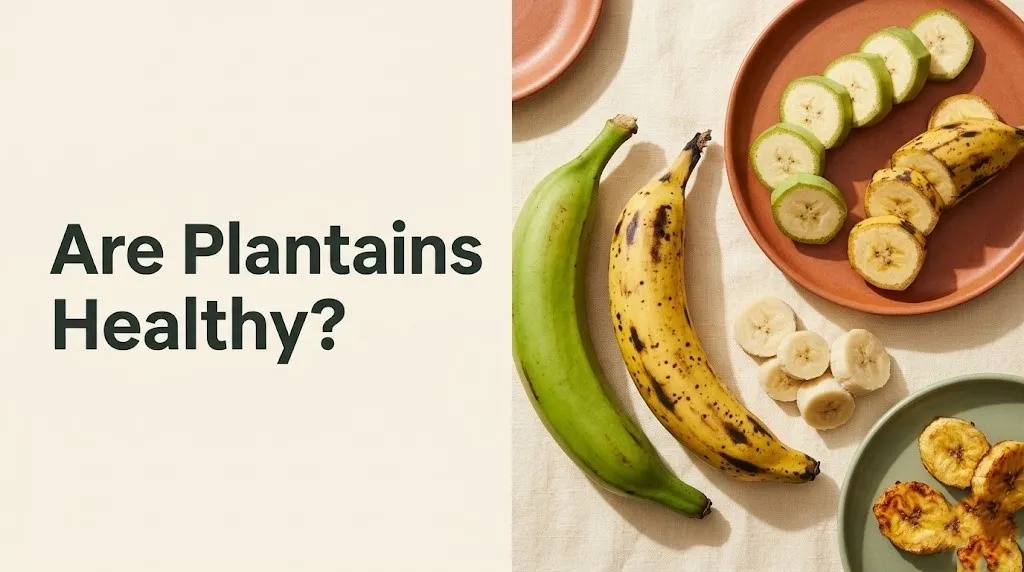
Green (unripe) plantains are dominated by starch, specifically resistant starch, which the human digestive system cannot fully break down. Ripe (yellow to black) plantains have undergone enzymatic conversion of that starch into simple sugars, primarily sucrose, glucose, and fructose. This is why a ripe plantain tastes sweet and a green one does not.
The practical implication: ripe plantains raise blood glucose more rapidly than green ones, even though both contain roughly the same total carbohydrate count. The American Diabetes Association notes that the type of carbohydrate, not just the total grams, affects the rate of glucose absorption and the resulting blood sugar response.
Think of the starch-to-sugar conversion in ripening plantains like changing the burn rate of wood. Green plantains are slow-burning logs: the carbohydrate releases gradually. Ripe plantains are kindling: the sugar hits the bloodstream faster, producing a sharper glycemic response.
| Ripeness Stage | Dominant Carbohydrate Type | Glycemic Response | Sugar Content |
|---|---|---|---|
| Green (unripe) | Resistant starch and complex starch | Lower and slower | Minimal (3-5g) |
| Yellow (partially ripe) | Mix of starch and sugar | Moderate | Moderate (15-20g) |
| Yellow-black (ripe) | Predominantly simple sugars | Higher and faster | High (25-30g) |
| Black (very ripe) | Almost entirely simple sugars | Highest | Highest (30g+) |
For people without blood sugar concerns, the sugar content of ripe plantains is not inherently problematic within a balanced meal. Context and total dietary pattern matter more than any single food’s sugar content in isolation.
Key Takeaway: Plantains are nutritionally dense but carbohydrate-rich. The ripeness stage fundamentally changes whether those carbs behave like slow-burning complex starch or fast-acting simple sugars, which matters a great deal for anyone monitoring blood glucose.
Green Plantain vs Ripe Plantain: How Ripeness Changes Nutrition
Green and ripe plantains are nutritionally distinct foods: green plantains are high in resistant starch and have minimal sugar, while ripe plantains are higher in simple sugars and have a softer texture with more available quick-release energy.
This transformation happens through a natural enzymatic process during ripening. As the plantain matures, amylase enzymes within the fruit break down the complex starch chains into smaller sugar molecules. The total carbohydrate count stays roughly similar, but the character of those carbohydrates changes completely.
From a practical standpoint, green plantains are better suited for savory preparations: boiling, frying as tostones, or adding to soups and stews. Their firm, starchy texture holds up to extended cooking. Ripe plantains caramelize when cooked and work well in sweet preparations like maduros or baked desserts.
From a nutritional standpoint, the green stage offers a fiber and resistant starch advantage. The black stage offers a higher carotenoid content, since the pigment compounds associated with ripeness include beta-carotene and other carotenoids that function as precursors to vitamin A (retinol activity equivalents). Neither stage is categorically superior. They serve different nutritional and culinary purposes.
Key differences between green and ripe plantains:
- Resistant starch content: Higher in green; decreases significantly as ripening progresses
- Simple sugar content: Minimal in green; rises substantially in ripe and very ripe stages
- Carotenoid content: Higher in yellow-to-black ripe plantains
- Glycemic impact: Lower in green; higher in ripe
- Digestibility: Green plantains require cooking; ripe can be eaten raw
- Flavor profile: Starchy and neutral (green) vs. sweet and soft (ripe)
People who are managing carbohydrate quality rather than just total carbohydrate quantity will generally find green plantains the more favorable choice for blood sugar management.
Resistant Starch in Plantains and Digestive Health
Green plantains are one of the better whole-food sources of resistant starch, a type of carbohydrate that passes through the small intestine largely undigested and ferments in the large intestine, feeding beneficial bacteria and producing short-chain fatty acids (SCFAs).
Resistant starch behaves less like a digestible carbohydrate and more like dietary fiber in terms of its gut behavior. The fermentation of resistant starch in the colon produces SCFAs, particularly butyrate, which is the primary fuel source for colonocyte cells lining the colon wall. Research published in the British Journal of Nutrition has documented that adequate butyrate production from fermented resistant starch is associated with maintained colon barrier function and reduced markers of colonic inflammation.
This mechanism is distinct from the benefits of soluble or insoluble fiber, though all three share the characteristic of resisting complete digestion in the small intestine. Resistant starch specifically has been studied for its role in improving insulin sensitivity and moderating post-meal blood glucose rises, with research reviewed in the Journal of Nutrition indicating that regular resistant starch consumption may support glycemic control in adults at risk for type 2 diabetes.
The resistant starch content of plantains drops as they ripen. If you want the maximum resistant starch benefit, choose firm, green plantains and prepare them by boiling or baking rather than frying, which does not affect the starch type but adds calories from fat.
The Harvard T.H. Chan School of Public Health identifies resistant starch as one of the beneficial components of a high-fiber dietary pattern, noting that most adults in the United States consume far less than the recommended 25 to 38 grams of total fiber per day from the USDA Dietary Guidelines for Americans, 2020-2025.
People with irritable bowel syndrome (IBS) or small intestinal bacterial overgrowth (SIBO) should introduce green plantains gradually, since the fermentation of resistant starch can temporarily increase gas and bloating in sensitive individuals.
Plantain Health Benefits Backed by Research
Plantains offer documented nutritional benefits tied to specific compounds, including potassium for blood pressure regulation, vitamin B6 for neurological function, vitamin C for immune support, and resistant starch for colonic health.
Each benefit is linked to a specific nutrient with a clear, research-supported mechanism, not a vague wellness claim.
Potassium and blood pressure: The American Heart Association (AHA) identifies potassium as a mineral that helps counteract the blood pressure-raising effect of sodium by promoting vasodilation and improving kidney filtration efficiency. At 930mg per medium plantain, the potassium content is genuinely meaningful relative to daily needs.
Vitamin B6 and neurological support: Pyridoxine participates in the synthesis of neurotransmitters including serotonin, dopamine, and gamma-aminobutyric acid (GABA). The NIH Office of Dietary Supplements sets the recommended dietary allowance (RDA) for vitamin B6 at 1.3mg per day for adults aged 19 to 50. One medium plantain provides approximately 34% of that RDA.
Vitamin C and immune function: Ascorbic acid at 27mg per medium plantain supports immune cell function, wound healing, and collagen synthesis. The NIH Office of Dietary Supplements lists the RDA for vitamin C at 75mg per day for adult women and 90mg per day for adult men.
Additional documented benefits include:
- Magnesium at 57mg per serving supports muscle and nerve function and contributes to bone density maintenance
- Folate (vitamin B9) at 40mcg per serving is particularly relevant for pregnant women, as adequate folate intake supports neural tube development in early pregnancy
- Carotenoids in ripe plantains function as precursors to vitamin A, supporting vision and immune response
Plantains are a whole food, not a fortified product. These nutrients occur naturally at meaningful levels without supplementation or processing.
Key Takeaway: Plantains are not just a carbohydrate source. Their potassium, vitamin B6, vitamin C, and resistant starch content each carry specific, research-backed functions that make them a genuinely nutritious addition to a balanced diet.
Are Plantains Good for Weight Loss
Plantains can be part of a weight management eating plan, but portion size and preparation method determine whether they support or work against that goal.
At approximately 218 calories per medium fruit before cooking, plantains are calorie-dense relative to most vegetables. They’re not a food you can eat freely in large quantities without accounting for their contribution to total daily intake. That said, their fiber content, particularly the resistant starch in green plantains, has a satiety effect that can reduce overall food intake after a meal.
Research reviewed by the Academy of Nutrition and Dietetics supports the role of high-fiber foods in promoting satiety by slowing gastric emptying and reducing the speed at which glucose enters the bloodstream. Both of those mechanisms help people feel full for longer after a meal, which may reduce the likelihood of overeating at subsequent meals.
The critical variable is preparation. A half-portion of baked plantain (approximately 109 calories) is a very different weight management food than a serving of fried tostones cooked in palm or vegetable oil (which can reach 300 to 400 calories per cup depending on oil absorption and portion size).
Quick Tip:
- For weight management purposes, choose boiled or baked plantains over fried.
- Keep portions to a half-medium plantain (approximately 90g) as a side dish alongside a protein and vegetable source.
- Green plantains boiled and served with a lean protein (grilled chicken, fish, or legumes) make a filling, balanced meal without excessive caloric load.
- Avoid premade plantain chips marketed as healthy snacks: many are fried and contain 150 to 180 calories per ounce with limited fiber.
Plantains are not a weight loss food in isolation. No single food is. Within a well-structured eating pattern with appropriate caloric targets, boiled or baked plantains contribute fiber, potassium, and lasting satiety without a disproportionate caloric cost.
Are Plantains Good for Diabetics
Plantains can be eaten by people with type 2 diabetes, but ripeness and portion size are the two most important factors to manage.
The American Diabetes Association uses the concept of carbohydrate quality alongside carbohydrate quantity in its dietary guidance. Whole foods with fiber, resistant starch, and naturally occurring nutrients are viewed more favorably than refined carbohydrates of equivalent calorie content, even when the total gram counts are similar.
Green plantains score better than ripe plantains for blood glucose management. Their high resistant starch content slows the rate of glucose absorption, producing a more gradual post-meal blood glucose rise compared to ripe plantains, which are predominantly simple sugars and digest quickly.
The glycemic index (GI) of boiled green plantain is estimated at approximately 40 to 55 (low to medium range) in research published in the Nutrients journal, compared to ripe fried plantain which has been measured at approximately 65 to 70 (medium-high range). GI values vary with cooking method, ripeness, and individual metabolic response, so these figures represent general guidance rather than precise thresholds.
Practical guidance for people with diabetes who want to include plantains:
- Choose green or minimally ripe (yellow with no black spots) plantains for lower glycemic impact
- Boil rather than fry to avoid added fat calories that complicate insulin response
- Limit portion to half a medium plantain (approximately 90g, 28g of carbohydrates) per meal
- Pair with a protein source and a non-starchy vegetable to further moderate glucose response
- Monitor individual blood glucose response, as glycemic reactions vary person to person
Anyone using insulin or blood glucose-lowering medications should discuss carbohydrate targets with their registered dietitian or endocrinologist before making changes to their regular plantain consumption.
Are Plantains Good for Your Heart
Plantains support cardiovascular health primarily through their potassium content, which the American Heart Association (AHA) identifies as a mineral associated with healthy blood pressure maintenance.
Potassium works in the kidneys to promote sodium excretion in urine, which reduces fluid volume and eases pressure on arterial walls. The AHA recommends adults aim for approximately 3,500 to 5,000mg of potassium per day from food sources as part of a heart-healthy dietary pattern, particularly in individuals managing elevated blood pressure. A medium plantain’s 930mg contributes meaningfully toward that target.
The fiber in plantains also plays a role in cardiovascular support. Dietary fiber, particularly soluble fiber, has been associated with modest reductions in low-density lipoprotein (LDL) cholesterol levels in studies reviewed by the Harvard T.H. Chan School of Public Health. While plantains are not a high-soluble-fiber food compared to oats or legumes, their fiber contribution in the context of a varied diet still counts.
A study published in the Journal of Nutrition examining potassium-rich food patterns found that populations consuming higher amounts of potassium from whole food sources, rather than supplements, showed lower rates of hypertension-related cardiovascular events. Plantains, as a whole food source of potassium alongside fiber and vitamins, fit that dietary pattern.
One important note for heart health: the preparation method matters as much as the plantain itself. Fried plantains prepared in palm oil, a saturated fat source, add a category of dietary fat that the AHA recommends limiting. Boiled or baked plantains retain the cardiovascular benefits of the fruit without the saturated fat addition.
Key Takeaway: Plantains earn their place in a heart-supportive diet largely through their potassium content and fiber, but that benefit is substantially undercut when they’re fried in saturated fat. The food and the cooking method are inseparable parts of the nutritional equation.
Are Fried Plantains Healthy
Fried plantains are not inherently unhealthy, but frying substantially increases their calorie and fat content compared to other preparation methods, and the type of oil used matters for cardiovascular health.
Tostones (twice-fried green plantains) and maduros (pan-fried ripe sweet plantains) are two of the most commonly eaten forms of plantain across Caribbean and Latin American cuisines. Both involve cooking in oil, which means fat absorption. The caloric increase depends on the type of oil, the temperature, the time in the oil, and whether the plantain is pressed and re-fried (as with tostones).
A USDA FoodData Central estimate for fried plantains puts a 100g serving (roughly half a medium plantain fried) at approximately 175 to 240 calories depending on oil type and amount, compared to approximately 116 calories for the same weight boiled.
| Cooking Method | Calories per 100g | Added Fat (approx.) | Glycemic Impact |
|---|---|---|---|
| Raw (ripe) | 122 kcal | 0g | Moderate-high |
| Boiled (green) | 116 kcal | 0g | Low-moderate |
| Baked (ripe, no oil) | 118 kcal | 0g | Moderate |
| Baked (ripe, light oil spray) | 130 kcal | 1-2g | Moderate |
| Pan-fried (maduros) | 175-200 kcal | 5-8g | Moderate-high |
| Deep-fried (tostones) | 200-240 kcal | 8-12g | Low-moderate (green) |
Frying in coconut oil or palm oil adds saturated fat, which the American Heart Association recommends limiting to less than 6% of total daily calories. Frying in avocado oil or light olive oil adds primarily monounsaturated fat, which the AHA considers more favorable for cardiovascular health.
Fried plantains enjoyed occasionally as part of an otherwise balanced diet are not a nutritional problem. Eating them daily as a primary carbohydrate source with high-fat proteins is a different calculation.
Are Boiled or Baked Plantains Healthier Than Fried
Boiled and baked plantains are nutritionally superior to fried plantains because they add no oil-derived fat calories and preserve the fruit’s natural fiber and resistant starch content without the caloric addition of absorbed cooking fat.
Boiling is the most common traditional preparation for green plantains across West African, Caribbean, and Latin American cuisines. It adds no calories, requires no fat, and results in a starchy, filling side dish that retains the full resistant starch content of the green plantain. Boiled green plantain is one of the most nutritionally intact forms in which you can eat this food.
Baking works best with ripe (yellow-to-black) plantains. The dry heat of an oven caramelizes the natural sugars on the surface, producing a texture and flavor close to fried maduros without the added fat. At 400 degrees Fahrenheit (205 degrees Celsius), ripe plantain slices baked for 20 to 25 minutes develop golden edges and a soft, sweet interior with approximately 115 to 130 calories per half-plantain serving.
To prepare baked plantain slices:
- Preheat oven to 400 degrees Fahrenheit (205 degrees Celsius).
- Select a ripe plantain with a yellow skin and black spots. Avoid fully green plantains for this method.
- Peel and slice the plantain diagonally into pieces approximately 1/2 inch thick.
- Arrange slices in a single layer on a parchment-lined baking sheet. Apply a light spray of avocado or olive oil if desired. This step is optional and adds fewer than 15 calories per serving.
- Bake for 15 minutes, then flip each slice.
- Continue baking for an additional 8 to 10 minutes, until the edges are golden and the slices feel tender when pressed.
- Remove from oven and serve immediately. These do not hold well as leftovers since they soften further as they cool.
This preparation is suitable for people following gluten-free, vegan, and plant-based diets. Omitting the oil spray makes it appropriate for very low-fat dietary plans as well.
Plantains vs Bananas: Which Is More Nutritious
Plantains and bananas are related but nutritionally distinct fruits, with plantains generally higher in starch, potassium, and vitamins B6 and C per serving, while bananas are lower in calories and higher in simple sugars when ripe.
Both belong to the Musa genus. Plantains are primarily Musa x paradisiaca; common dessert bananas are predominantly Musa acuminata cultivars. The two are often confused in markets, but they differ meaningfully in texture, flavor, culinary use, and nutritional composition.
A straightforward comparison using USDA FoodData Central data:
| Nutrient | Medium Plantain (179g, raw ripe) | Medium Banana (118g, raw ripe) |
|---|---|---|
| Calories | 218 kcal | 105 kcal |
| Total Carbohydrates | 57g | 27g |
| Dietary Fiber | 2.3g | 3.1g |
| Sugars | 27g | 14g |
| Potassium | 930mg | 422mg |
| Vitamin B6 (pyridoxine) | 0.44mg | 0.43mg |
| Vitamin C (ascorbic acid) | 27mg | 10mg |
| Magnesium | 57mg | 32mg |
Plantains are larger fruits, which accounts for part of the caloric and potassium difference. But even on a gram-for-gram basis, plantains tend to outperform bananas in potassium, vitamin C, and magnesium. Bananas have a slight edge in fiber per gram and are lower in total sugar when consumed at the same weight.
The key practical distinction: bananas are eaten raw as a snack food; plantains typically require cooking. This means the cooking method applied to the plantain, not the raw fruit itself, ultimately determines its final nutritional profile relative to a banana.
Key Takeaway: Plantains pack more potassium, vitamin C, and magnesium per fruit than bananas, but they’re also larger and higher in calories. If you’re comparing them as part of a meal plan, factor in serving size and how you’re cooking the plantain before drawing conclusions.
Are Plantains Gluten-Free and Vegan
Yes, plantains are naturally gluten-free and fully plant-based, making them appropriate for people following gluten-free, vegan, vegetarian, kosher, and halal dietary patterns without any modification.
Plantains contain no gluten-forming proteins (gliadin or glutenin). They are a whole fruit, not a grain, and carry no cross-contamination risk in their natural state. People with celiac disease or non-celiac gluten sensitivity can eat plantains without concern about the plantain itself, though they should verify that any packaged plantain products (chips, flour, or frozen prepared items) are produced in a gluten-free facility if cross-contamination is a concern.
As a whole fruit, plantains are inherently vegan and contain no animal-derived ingredients. They’re also tree-nut-free, peanut-free, soy-free, and dairy-free in their natural state, making them one of the more allergen-friendly staple carbohydrates available.
One allergen caveat worth knowing: latex-fruit syndrome is a documented cross-reactivity pattern in which people with latex (natural rubber) allergies may experience allergic reactions to certain fruits including plantains, bananas, avocados, and kiwis. This affects a subset of latex-allergic individuals and is not a widespread food allergy, but anyone with a known latex allergy who has not yet eaten plantains should introduce them cautiously and be aware of this potential cross-reactivity, as documented in research published in the Journal of Allergy and Clinical Immunology.
For those following a DASH diet (Dietary Approaches to Stop Hypertension), plantains are a compatible high-potassium food source that aligns with the dietary pattern’s emphasis on potassium, magnesium, and fiber from whole plant foods.
How to Cook Plantains in the Healthiest Way
The healthiest way to cook plantains is boiling (for green plantains) or baking without oil (for ripe plantains), as both methods preserve nutrients and add no fat calories.
Boiling green plantains preserves their resistant starch content and results in a filling, starchy side dish that pairs well with protein-rich foods. Baking ripe plantains at high heat caramelizes their natural sugars and creates a satisfying texture without requiring the oil that frying demands.
Here are the three healthiest cooking approaches ranked by caloric impact:
1. Boiling (green plantains):
- Peel the green plantain by scoring the skin lengthwise and removing it in sections. The skin of a green plantain does not peel like a banana; a knife is required.
- Cut the peeled plantain into 2-inch rounds or leave in halves.
- Place in a pot of unsalted cold water and bring to a boil.
- Reduce heat and simmer for 20 to 25 minutes, until a fork slides through without resistance.
- Drain and serve immediately. Season with a small pinch of salt or herbs if desired.
2. Baking (ripe plantains, as detailed in the previous section): 400 degrees Fahrenheit, 23 to 25 minutes total, with or without a light oil spray.
3. Air frying (ripe plantains, moderate method):
- Peel and slice a ripe plantain into 1/2-inch diagonal pieces.
- Lightly spray slices with avocado oil spray.
- Arrange in a single layer in the air fryer basket.
- Cook at 375 degrees Fahrenheit (190 degrees Celsius) for 10 to 12 minutes, flipping at the halfway mark.
- Remove when golden and slightly caramelized.
Air-frying reduces fat absorption compared to deep or pan frying while achieving a similar exterior texture. A half-plantain prepared this way contains approximately 130 to 145 calories, compared to 200 to 240 calories when deep-fried.
For people following low-sodium diets, plantains prepared without added salt contribute only a negligible natural sodium content (approximately 4mg per medium fruit), making them a naturally low-sodium carbohydrate option.
Who Should Be Cautious About Eating Plantains
Most healthy adults can eat plantains without concern, but three specific groups should pay closer attention to portion size, ripeness, and preparation method.
People with chronic kidney disease (CKD): The kidneys are responsible for filtering excess potassium from the blood. In people with impaired kidney function, high-potassium foods can cause hyperkalemia (elevated blood potassium), a condition that can affect heart rhythm. At 930mg of potassium per medium plantain, this is a high-potassium food that individuals with CKD on potassium-restricted diets should discuss with their nephrologist or registered dietitian before eating regularly. Potassium restriction levels in CKD vary by disease stage and individual kidney function.
People managing type 2 diabetes: As covered in the diabetes section, ripe plantains have a moderate-to-high glycemic response due to their high simple sugar content. Green plantains are a better choice, paired with protein and prepared by boiling rather than frying.
People following a low-carbohydrate or ketogenic dietary plan: Even a half-medium plantain provides approximately 28 to 29 grams of carbohydrates, which may exceed a single-meal carbohydrate target for people strictly managing carbohydrate intake. Plantains are not a ketogenic food and are unlikely to fit within the typical 20 to 50 grams of total daily carbohydrates that characterizes a ketogenic approach.
| Group | Key Concern | Recommended Approach |
|---|---|---|
| Chronic kidney disease | High potassium content (930mg per fruit) | Consult nephrologist; assess potassium budget |
| Type 2 diabetes | Glycemic response, especially ripe plantains | Choose green; boil; limit to half-portion per meal |
| Low-carb or keto diet | High carbohydrate content (57g per fruit) | Avoid or limit to very small portions |
| Latex allergy | Cross-reactivity (latex-fruit syndrome) | Introduce cautiously; monitor for reaction |
| Healthy adults, no restrictions | None specific | Enjoy in varied portions; choose non-fried prep when possible |
One group that benefits from plantains without particular caution: pregnant women. The folate (vitamin B9) content at 40mcg per medium plantain contributes toward the 600mcg daily folate requirement recommended during pregnancy by the NIH Office of Dietary Supplements to support neural tube development. Plantains are not a standalone folate source at that level, but they contribute as part of a folate-rich dietary pattern.
Frequently Asked Questions About Plantains
Are plantains healthier than bananas?
Plantains and bananas offer different nutritional strengths, so neither is categorically healthier.
Plantains are higher in potassium, vitamin C, and magnesium per fruit, while bananas are lower in total calories and have a slightly higher fiber density per gram.
The biggest practical difference is that plantains are almost always cooked, and the cooking method you choose ultimately determines whether they’re more or less nutritious than a raw banana.
Can diabetics eat plantains?
Yes, people with type 2 diabetes can eat plantains, but green plantains prepared by boiling are a better choice than ripe fried plantains.
Green plantains have a significantly lower glycemic response due to their higher resistant starch content, while ripe plantains digest more quickly and raise blood glucose more sharply.
The American Diabetes Association’s guidance on carbohydrate quality supports choosing less processed, higher-fiber starchy foods, which aligns better with green boiled plantains than sweet fried ones.
How many calories are in fried plantains?
Fried plantains contain approximately 175 to 240 calories per 100 grams depending on the oil used, the cooking time, and whether they are pan-fried or deep-fried.
A typical side serving of tostones or maduros at a restaurant is often 150 to 200 grams, which means a portion can contain 260 to 480 calories before accounting for any dipping sauces or condiments.
Baking or boiling the same quantity of plantain reduces the caloric count to approximately 116 to 130 calories per 100 grams with no added fat.
Are green plantains or ripe plantains better for you?
Green and ripe plantains offer different nutritional benefits rather than one being universally superior.
Green plantains are higher in resistant starch, produce a lower glycemic response, and are better suited for blood sugar management and colon health.
Ripe plantains are higher in carotenoids, vitamin C availability, and natural simple sugars, making them better as an energy-dense sweet food rather than a neutral starchy staple.
Are plantains good for weight loss?
Plantains can fit into a weight management eating plan when portion-controlled and prepared by boiling or baking rather than frying.
Their resistant starch and fiber content promotes satiety, which can reduce total food intake over a meal, but their caloric density (approximately 218 calories per medium fruit) means large portions work against a caloric deficit.
A half-medium boiled or baked plantain alongside a protein source and non-starchy vegetables is a filling, balanced meal component that doesn’t carry an excessive caloric load.
The Bottom Line on Plantains
Plantains are a genuinely nutritious whole food. They deliver real amounts of potassium, vitamin B6, vitamin C, and resistant starch at levels that matter, not trace amounts. The question of whether they’re healthy almost always comes down to two variables: how ripe they are and how you cook them.
If you’re eating them regularly, choose green or partially ripe plantains when you want the resistant starch and lower glycemic benefit. Choose baking or boiling over frying when you want to preserve that nutritional advantage. Save the fried maduros for an occasional enjoyment, not a daily default.
Kidney disease patients and anyone on tight carbohydrate limits should review serving sizes carefully with their care team. For everyone else, plantains are a food worth eating more of, not less.