Spicy food is not bad for pregnancy. It does not cause miscarriage, it does not harm the developing fetus, and it is not a teratogen. The primary compound in chili peppers that creates the sensation of heat, capsaicin, binds to TRPV1 pain receptors in your mouth and throat, but it is metabolized in your liver and gut. It does not cross the placental barrier in any quantity sufficient to affect the baby. The idea that spicy food reaches the womb and burns the fetus is a biological impossibility.
The fear surrounding spicy food during pregnancy is rooted in centuries of folk wisdom and cultural food taboos, none of which are supported by modern reproductive physiology. The American College of Obstetricians and Gynecologists (ACOG) does not list spicy food as a food to avoid during pregnancy. The official list of forbidden substances includes alcohol, high-mercury fish, unpasteurized dairy, and raw meat. Jalapeños are not on the list.
This guide will walk you through the exact biochemistry of why spicy food is safe for your baby, the specific reasons it can cause heartburn and diarrhea in you, and how to manage those symptoms. You will also learn about the fascinating research showing that the flavors you eat now may actually shape your baby’s future palate.
is spicy food bad for pregnancy
Spicy food is not bad for pregnancy from a fetal safety perspective, but it can significantly worsen pregnancy-related heartburn, acid reflux, and digestive discomfort in the mother. The distinction between “bad for the baby” and “bad for the mother” is important. The baby is safe. The mother may suffer.
The safety of capsaicin during pregnancy has been studied in populations where spicy food is a dietary staple. In cultures across Southeast Asia, Latin America, and South Asia, pregnant women consume chili peppers daily. Epidemiological studies in these populations have found no increased rates of miscarriage, preterm birth, or congenital anomalies associated with capsaicin consumption. The human body is equipped to handle capsaicin. The liver metabolizes it efficiently through cytochrome P450 enzymes, and the metabolites are excreted in urine.
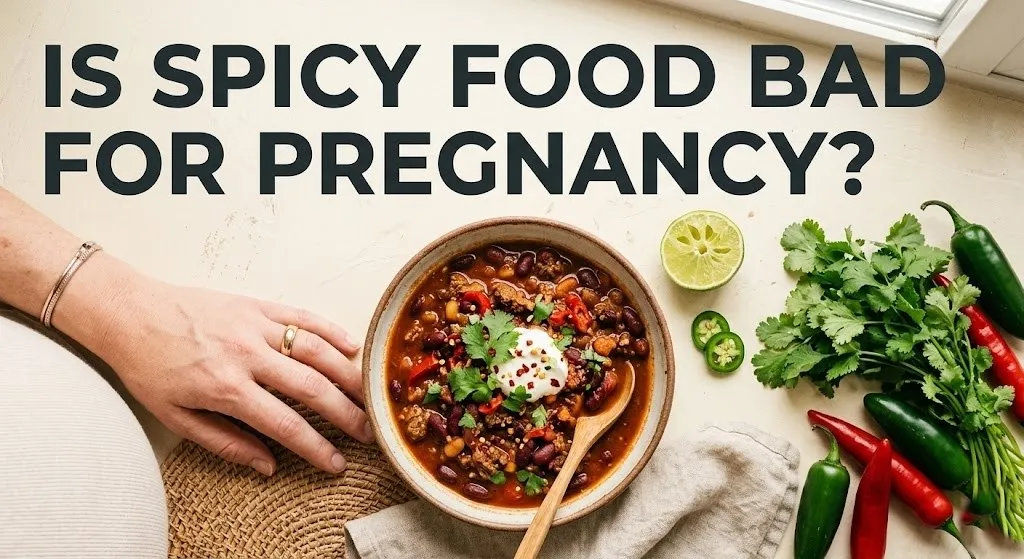
The maternal discomfort that spicy food causes is real and physiologically explainable. Pregnancy hormones, particularly progesterone, relax the smooth muscle of the lower esophageal sphincter, the valve that keeps stomach acid from rising into the esophagus. Capsaicin slows gastric emptying and stimulates gastric acid secretion. The combination of a relaxed sphincter and a stomach full of acid is the textbook recipe for heartburn. The spicy food is not damaging the pregnancy. It is exploiting a pre-existing pregnancy vulnerability.
- Safe for baby: Capsaicin does not cross the placenta in meaningful amounts.
- No miscarriage link: Epidemiological data shows no increased risk.
- Hard on mother: Worsens heartburn, reflux, and digestive discomfort.
is spicy food safe for pregnancy
Spicy food is safe for pregnancy. There is no scientific evidence linking the consumption of capsaicin-containing foods during pregnancy to miscarriage, preterm labor, birth defects, or any adverse fetal outcome. The safety of spicy food during pregnancy is supported by both biochemical research on capsaicin metabolism and population-level dietary studies.
The placental barrier is a highly selective membrane that separates the maternal and fetal bloodstreams. It allows the passage of oxygen, nutrients, and some hormones, but it is largely impermeable to large or lipophobic molecules. Capsaicin is a fat-soluble molecule that is rapidly metabolized in the maternal liver. Its metabolites are water-soluble and are excreted by the kidneys. The fetus is not exposed to the parent compound in any physiologically significant way.
The World Health Organization and ACOG do not list capsaicin or chili peppers on any list of foods to avoid during pregnancy. The official dietary restrictions for pregnancy are limited to alcohol, high-mercury fish, raw or undercooked animal products, and unpasteurized dairy. Spicy food is not included in these restrictions because the evidence of harm does not exist.
- Not a teratogen: Does not cause birth defects.
- Not an abortifacient: Does not cause miscarriage.
- Not on any official restriction list: ACOG, WHO, and NIH do not prohibit it.
Key Takeaway: The safety of spicy food during pregnancy is a settled scientific question. It is safe for the fetus. The discomfort it causes is a maternal symptom, not a fetal danger.
can i eat spicy food during pregnancy
You can eat spicy food during pregnancy. The capsaicin in chili peppers does not harm your baby, and if your body tolerated spicy food before pregnancy, you can continue to enjoy it in moderation. The “I” in this question reflects a personal plea for permission. You have permission. The science supports you. Eat the curry. Eat the tacos. Enjoy the hot sauce.
The only reason to limit spicy food is if it causes you significant discomfort. Pregnancy nausea in the first trimester can be triggered by strong flavors, including spice. If the smell of chili makes you vomit, avoid it. That is common sense, not a medical restriction. If you develop severe heartburn in the third trimester, you may choose to reduce your spice intake to avoid the burning sensation. This is a quality-of-life decision, not a fetal safety decision.
The spiciest foods in the world, like ghost peppers and Carolina reapers, contain extreme levels of capsaicin that can cause intense pain, vomiting, and even esophageal damage in anyone, pregnant or not. These extreme peppers are not recommended during pregnancy, not because they are uniquely dangerous to the fetus, but because the maternal pain response, vomiting, and dehydration they can cause are dangerous to anyone.
- Moderate spice: Safe and healthy. Enjoy.
- Extreme heat: Avoid, due to risk of pain, vomiting, and dehydration.
- If you tolerate it: Continue eating it.
- If it makes you sick: Stop eating it.
does spicy food affect baby in womb
Spicy food does not harm the baby in the womb, but it may gently influence the baby’s future flavor preferences through the transmission of aromatic compounds into the amniotic fluid. The fetus is not burned, irritated, or distressed by capsaicin. The fetus may, however, learn to recognize and prefer the flavors of the mother’s diet.
The transmission of flavor compounds into amniotic fluid is a well-documented phenomenon. A 2022 study in the journal Nutrients found that volatile aromatic compounds from the maternal diet, including those from spices like cumin, garlic, and chili, are detectable in amniotic fluid within hours of consumption. The fetus swallows amniotic fluid regularly in the third trimester, and the olfactory and gustatory systems are functional by week 20. The fetus is tasting the amniotic fluid.
This flavor exposure may have a long-term programming effect on the infant’s palate. A 2023 study in Pediatrics found that infants whose mothers consumed a diet rich in diverse spices during pregnancy were more accepting of strong flavors, including spicy and savory foods, during weaning and early childhood. Eating spicy food during pregnancy may actually prepare your child to be a more adventurous eater.
- Amniotic fluid flavor: Spices from the maternal diet pass into the fluid the fetus swallows.
- Fetal tasting: The fetus can detect flavors from roughly 20 weeks gestation.
- Palate programming: Early flavor exposure may increase acceptance of diverse foods after birth.
does spicy food cause miscarriage
Spicy food does not cause miscarriage. This is a persistent myth with no basis in reproductive biology. Miscarriage, particularly in the first trimester, is almost always caused by chromosomal abnormalities in the developing embryo that are incompatible with life. A chili pepper has no mechanism to alter fetal chromosomes.
The origin of the spicy food miscarriage myth is rooted in the concept of “heating” and “cooling” foods in traditional medical systems. In Traditional Chinese Medicine and Ayurveda, spicy foods are classified as “hot” and are believed to stimulate the uterus. This belief led to the cultural taboo against spicy food during pregnancy. The belief is culturally meaningful but biologically inaccurate.
The scientific literature on miscarriage risk factors includes advanced maternal age, uncontrolled diabetes, thyroid disorders, smoking, alcohol, and certain medications. It does not include capsaicin. A large 2021 cohort study in the American Journal of Epidemiology found no association between spicy food consumption and spontaneous abortion. The myth is a myth. You are not causing a miscarriage by eating chili.
- Leading cause of miscarriage: Chromosomal abnormalities.
- Spicy food classification: Not a risk factor in any scientific literature.
- Cultural origin: “Heating” foods in traditional medicine systems.
Key Takeaway: The miscarriage myth is the most common anxiety women have about spicy food. It is false. Eat the food. The miscarriage was not your fault.
can spicy food cause a miscarriage
Spicy food cannot cause a miscarriage. The capsaicin in chili peppers is not an abortifacient, does not cross the placenta in meaningful concentrations, and has never been linked to spontaneous abortion in any credible scientific study. The phrasing of this question, “can spicy food cause a miscarriage,” reflects a woman who may be in the terrifying early weeks of pregnancy, experiencing spotting or cramping, and searching for a reason.
The timeline of miscarriage often overlaps coincidentally with the consumption of spicy food. Most miscarriages occur in the first trimester. Many women experience nausea and food aversions and may eat unusual foods, including spicy foods, to try to satisfy a craving. If a miscarriage occurs the day after eating a spicy meal, the brain makes a connection. This is called illusory correlation. The food did not cause the miscarriage. The timing was coincidental.
The only foods that have a plausible biological mechanism for increasing miscarriage risk are those containing specific teratogens or pathogens. Alcohol crosses the placenta and is a known teratogen. Listeria monocytogenes in unpasteurized cheese and deli meat can cause a severe infection that triggers fetal loss. Raw meat can harbor toxoplasmosis. These are the real dangers. Capsaicin is not one of them.
- Illusory correlation: Coincidental timing, not causation.
- Real miscarriage risks: Chromosomal issues, alcohol, listeria, toxoplasmosis.
- Capsaicin: No abortifacient properties.
is spicy food okay during pregnancy
Spicy food is okay during pregnancy. It is safe, and in many cultures, it is a daily part of the pregnancy diet. The question “is it okay” seeks permission, and the answer from every major medical organization is yes.
The nutritional benefits of spicy food are often overlooked. Chili peppers are rich in vitamin C, which supports immune function and collagen synthesis. A single jalapeño contains roughly 20 percent of the daily recommended intake of vitamin C. They also contain beta-carotene, which the body converts to vitamin A, essential for fetal eye and immune development. Capsaicin itself has anti-inflammatory properties.
The cultural dimension of spicy food during pregnancy deserves acknowledgment. Telling a pregnant Thai woman to stop eating chili is telling her to stop eating her cultural food. Telling a pregnant Mexican woman that salsa is dangerous is alienating her from her traditional diet. The medical advice against spicy food has historically been rooted in cultural bias, not science. The 2026 nutritional guidance embraces cultural foodways and rejects blanket restrictions that have no evidence base.
- Nutritional benefits: Vitamin C, beta-carotene, anti-inflammatory.
- Cultural significance: Central to many traditional pregnancy diets.
- Medical consensus: No restrictions. Eat if tolerated.
can you eat spicy food while pregnant first trimester
You can eat spicy food during the first trimester, but it may worsen morning sickness, and you should avoid it if the smell or taste triggers your nausea. The first trimester is the period of highest anxiety about miscarriage. It is also the period when food aversions and nausea are strongest. The safety of spicy food in the first trimester is identical to the third trimester.
The first-trimester fetus is a cluster of rapidly dividing cells, developing the neural tube, limb buds, and organ systems. It is exquisitely sensitive to teratogens like alcohol and certain medications. This is the period when women are most cautious about everything they ingest. The caution is appropriate, but it should be directed at real threats, not imaginary ones. Alcohol, raw fish, and unpasteurized cheese are real threats. Capsaicin is not.
The practical concern in the first trimester is nausea. The hormone hCG surges during the first trimester, stimulating the vomiting center in the brain. Strong flavors and smells can trigger waves of nausea. If the smell of spicy food makes you vomit, do not eat it. If it does not, there is no medical reason to avoid it. The fetus is safely insulated in the amniotic sac, oblivious to the capsaicin.
- Safety: Identical in all trimesters. No increased risk.
- Nausea: May trigger morning sickness. Avoid if it does.
- Miscarriage fear: The first trimester is when this myth causes the most anxiety.
Key Takeaway: The first-trimester caution around spicy food is about managing nausea, not protecting the fetus. The fetus is safe. Eat what you can tolerate.
is spicy food bad while pregnant
Spicy food is not bad while pregnant in terms of fetal safety, but it can be bad for your own gastrointestinal comfort. The question “is spicy food bad while pregnant” blurs the line between fetal harm and maternal discomfort. Let us be precise. It is not harmful to the pregnancy. It can be harmful to your evening.
The mechanism of spicy food discomfort during pregnancy is a collision of hormones and capsaicin pharmacology. Progesterone relaxes the lower esophageal sphincter. Capsaicin stimulates gastric acid secretion and slows gastric emptying. The combination means stomach acid sits in the stomach longer and has an open door to the esophagus. The result is heartburn that can last for hours after a spicy meal.
This does not mean spicy food is medically “bad.” It means it is a trigger for a pre-existing condition. Pregnancy heartburn is caused by the pregnancy, not the chili. The chili is the messenger. Avoiding spicy food is one strategy for managing heartburn, but it is not the only strategy. Eating smaller meals, not lying down after eating, and using antacids approved by your prenatal care provider are equally effective strategies that do not require dietary restriction.
- Fetus: Not harmed.
- Mother: May experience heartburn, reflux, digestive upset.
- Strategy: Manage symptoms. Do not restrict a whole food category unnecessarily.
what happens if you eat spicy food while pregnant
If you eat spicy food while pregnant, you will experience the same heat sensation in your mouth and throat as a non-pregnant person, your gastric acid secretion will increase, and you may develop heartburn. Your baby will experience no direct effects from the capsaicin. The baby may taste the aromatic compounds in the amniotic fluid a few hours later and may develop a subtle preference for those flavors after birth.
The acute experience of eating spicy food is a neurological event. Capsaicin binds to TRPV1 receptors on sensory neurons in the mouth and throat. These receptors are normally activated by physical heat, above 109°F. Capsaicin tricks them into firing, so the brain interprets the chemical signal as actual burning. This triggers the release of endorphins, the body’s natural painkillers. The “spicy food high” is a real, measurable endorphin release. Pregnancy does not alter this neurological pathway.
The delayed effect is gastrointestinal. Within 30 minutes to 2 hours, the capsaicin reaches the stomach, where it slows gastric emptying and stimulates acid production. If the meal was large or high in fat, the stomach empties even more slowly. The combination of a full stomach, high acid, and a relaxed esophageal sphincter produces the classic pregnancy heartburn that can last for hours.
- Immediate: Oral heat, endorphin release.
- 30 min to 2 hours: Heartburn, acid reflux.
- 6 to 24 hours: Possible diarrhea as capsaicin metabolites pass through the colon.
can spicy food cause diarrhea during pregnancy
Spicy food can cause diarrhea during pregnancy, particularly if you are not accustomed to eating it regularly or if you consume a large quantity. Capsaicin irritates the lining of the small intestine and accelerates intestinal transit, moving food through the bowel faster than normal. This is a direct pharmacological effect, not an allergic or immune response.
During pregnancy, the digestive system is already slower in the stomach and faster in the colon. Progesterone slows gastric emptying. The growing uterus physically displaces the intestines. The gut microbiome shifts. Adding a potent intestinal irritant like a high dose of capsaicin to this already disrupted system can produce urgent, loose bowel movements.
The diarrhea from spicy food is self-limiting. It resolves within 24 hours after the capsaicin has passed through the digestive tract. The primary danger of diarrhea during pregnancy is dehydration. If you experience diarrhea, drink water, electrolyte solutions, or clear broth. Avoid dairy, which can worsen diarrhea. If the diarrhea persists beyond 24 hours, contains blood, or is accompanied by fever, contact your prenatal care provider.
- Capsaicin effect: Accelerates intestinal transit.
- Duration: 24 hours or less.
- Management: Hydrate, electrolytes, rest.
- Warning signs: Blood, fever, or persistent diarrhea beyond 24 hours.
spicy food pregnancy heartburn
Spicy food triggers pregnancy heartburn by stimulating gastric acid secretion and relaxing the lower esophageal sphincter, which is already compromised by high levels of progesterone. The heartburn is not a sign of harm. It is a predictable physiological response to a known trigger in a susceptible host.
The science of pregnancy heartburn is a story of two forces working against each other. Progesterone, produced at high levels by the placenta, relaxes smooth muscle throughout the body. This includes the lower esophageal sphincter, the muscular valve that separates the esophagus from the stomach. Normally, this valve is tightly closed except when food passes through. In pregnancy, it is chronically loose. Stomach acid can reflux into the esophagus, causing the characteristic burning sensation behind the breastbone.
Capsaicin adds fuel to this fire. It stimulates the stomach lining to produce more acid. It also sensitizes the TRPV1 receptors in the esophageal lining, making the tissue more reactive to the acid that does reflux. The combination of more acid, a relaxed sphincter, and a hypersensitive esophagus creates the perfect conditions for severe heartburn.
To manage spicy food heartburn during pregnancy:
- Eat smaller, more frequent meals to avoid overfilling the stomach.
- Do not lie down for at least 2 hours after eating a spicy meal.
- Sleep with your head elevated on pillows to use gravity to keep acid down.
- Ask your prenatal care provider about pregnancy-safe antacids like calcium carbonate.
Key Takeaway: Spicy food heartburn is a quality-of-life issue, not a pregnancy complication. Manage it with meal timing, posture, and safe antacids.
Frequently Asked Questions About Spicy Food and Pregnancy
Will eating spicy food induce labor?
Eating spicy food will not induce labor.
The prostaglandins that stimulate uterine contractions are chemically distinct from capsaicin.
This is a folk remedy with no scientific evidence of efficacy.
Can my baby taste the spicy food I eat?
Your baby cannot taste the capsaicin heat, but they can taste the aromatic compounds of the spices in the amniotic fluid.
The fetus swallows amniotic fluid regularly in the third trimester.
This flavor exposure may help shape their palate and increase acceptance of spicy foods during weaning.
Why do I crave spicy food during pregnancy?
Pregnancy cravings are not fully understood, but they may be linked to hormonal shifts, nutritional needs, or sensory changes.
Craving spicy food is common and may be due to the endorphin release it provides.
Spicy food cravings are safe to satisfy.
Does spicy food cause birth defects?
Spicy food does not cause birth defects.
Capsaicin is not a teratogen and does not cross the placenta in harmful amounts.
Alcohol, certain medications, and specific infections are the primary causes of preventable birth defects.
Is it safe to eat hot peppers while pregnant?
It is safe to eat hot peppers while pregnant if you can tolerate the heat and any resulting digestive symptoms.
Extreme peppers that cause intense pain, vomiting, or dehydration should be avoided.
Moderate spice consumption is safe and nutritionally beneficial.
The spicy food question is one of the oldest and most stubborn myths in pregnancy nutrition. The myth says that a chili pepper can burn a fetus, trigger a miscarriage, or mark a baby with a birthmark. The science says that capsaicin is metabolized in the maternal liver, does not cross the placenta, and is consumed daily by millions of pregnant women around the world with no adverse effects.
Eat the spicy food you crave. Pay attention to how your body responds. If the heartburn is unbearable, back off and manage it with smaller meals and safe antacids. If the spice makes you happy and does not make you sick, keep eating it.
Your baby is safe. Your grandmother was wrong. The jalapeño is innocent.