Iams is a good dog food in the sense that it meets the nutritional standards set by the Association of American Feed Control Officials (AAFCO), is backed by decades of feeding trials and veterinary nutrition research, and employs full-time board-certified veterinary nutritionists on staff. It is not a premium or boutique brand. It is a science-backed, mid-tier dog food that delivers complete nutrition at a grocery store price point. For a healthy adult dog with no special dietary needs, Iams is a perfectly reasonable choice.
The brand has been owned by Mars Petcare since 2014, placing it under the same corporate umbrella as Royal Canin, Pedigree, Greenies, and Eukanuba. Mars Petcare is one of the largest pet food manufacturers in the world and maintains a global network of research facilities including the Waltham Petcare Science Institute in the United Kingdom, where Iams formulas are developed and tested. This institutional research backing is a genuine differentiator between Iams and most other grocery store brands.
This review analyzes the ingredient panel across the Iams ProActive Health and Advanced Health lines, compares the nutritional profile to competitors, addresses the grain-inclusive and grain-free options, evaluates the wet food, and identifies which dogs are the best candidates for Iams and which ones should eat something else. A veterinarian is the right person to guide your individual dog’s diet, especially if your dog has kidney disease, pancreatitis, diabetes, food allergies, or any chronic health condition. Breed, age, and activity level all influence whether a specific food is good for a specific dog.
Who Makes Iams Dog Food and Where Is It Produced?
Iams is manufactured by Mars Petcare, a division of the privately held Mars, Incorporated, which acquired the brand from Procter and Gamble in 2014 for $2.9 billion. Mars produces Iams at company-owned facilities in the United States, with primary manufacturing locations in Ohio and North Carolina. The brand was originally founded in 1946 by Paul Iams, an animal nutritionist who pioneered the use of animal-based protein as the primary ingredient in commercial dog food.
Mars Petcare operates the Waltham Petcare Science Institute in Leicestershire, England, a research center that has published peer-reviewed studies on canine and feline nutrition, dental health, and the human-animal bond. Waltham’s research directly informs Iams formulations. This is not marketing copy. It is a documented research pipeline. Waltham scientists have contributed to studies on the role of omega-3 fatty acids in canine cognitive function, the effect of dietary fiber on satiety in dogs, and the bioavailability of different protein sources. Iams is one of the few grocery store brands that can claim this level of institutional research backing.
The brand also employs board-certified veterinary nutritionists on its product development team. This is a World Small Animal Veterinary Association (WSAVA) guideline for pet food manufacturers, and it is a standard that many premium boutique brands do not meet. Iams meets it. This does not automatically make Iams a better food than brands that do not meet WSAVA guidelines, but it does mean the brand operates with a level of nutritional oversight that is rare at its price point.
The acquisition by Mars placed Iams in a corporate portfolio alongside Royal Canin, a veterinary therapeutic diet brand, and Eukanuba, a premium performance brand. The nutritional expertise from those higher-priced brands filters into Iams formulations. You can see this in the Iams Advanced Health line, which includes ingredients like glucosamine and omega-3 fatty acids at meaningful levels that reflect the research done for Eukanuba’s performance formulas. The ingredients are different, but the nutritional principles are shared.
Iams Dog Food Ingredient Analysis: ProActive Health
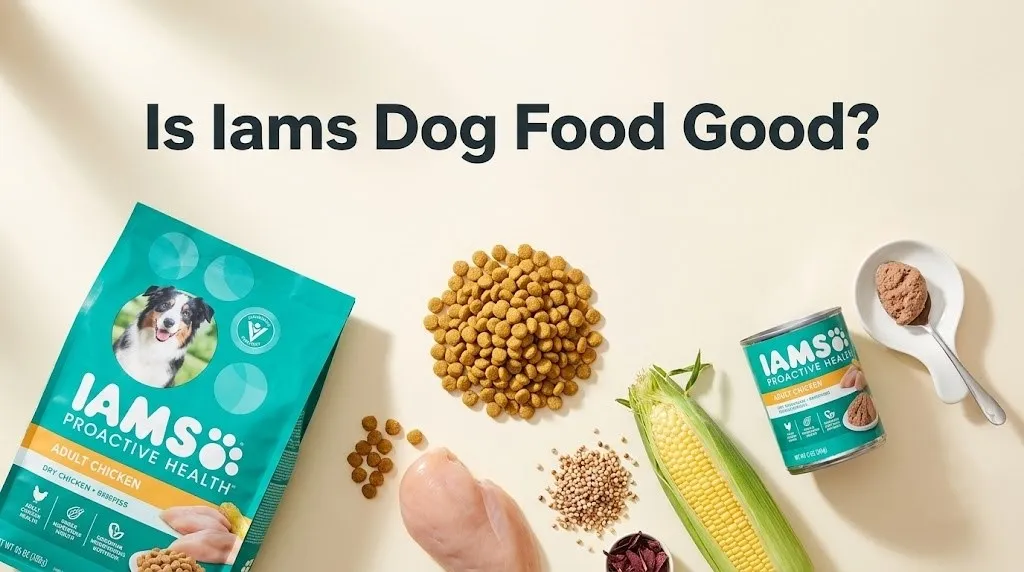
The first ingredient in Iams ProActive Health Adult Chicken is chicken, followed by chicken by-product meal, ground whole grain corn, ground whole grain sorghum, and dried plain beet pulp. This ingredient deck is a straightforward, no-frills formula that prioritizes animal protein first, uses grains as carbohydrate sources, and includes a functional fiber ingredient for digestive health.
Chicken by-product meal is the ingredient that separates Iams from brands that market “no by-product meals” as a quality claim. By-product meal is a rendered and dried product made from clean chicken parts including necks, feet, viscera, and some organ meat. It is a concentrated source of protein and minerals, roughly 65 percent protein by weight, and it is nutritionally appropriate for dogs. The term “by-product” sounds unappealing to human ears. To a dog’s digestive system, chicken feet and chicken livers are more biologically appropriate than the pea protein and potato starch used in many grain-free boutique foods. The American Veterinary Medical Association (AVMA) and the American College of Veterinary Nutrition do not consider by-product meals to be a marker of low-quality pet food.
Ground whole grain corn and ground whole grain sorghum are the primary carbohydrate sources. Corn is a controversial ingredient in consumer pet food marketing but not in veterinary nutrition science. Whole grain corn provides linoleic acid, fiber, and digestible carbohydrates. It is not a filler in the pejorative sense. It is a cost-effective, nutritionally functional grain that dogs digest well when it is ground and cooked during extrusion. The Tufts University Cummings School of Veterinary Medicine notes that corn is not a common allergen in dogs. The most common canine food allergens are beef, dairy, chicken, and wheat, in that order.
Dried plain beet pulp is the fiber source. It is a by-product of sugar beet processing and provides a mix of soluble and insoluble fiber that supports colonic health by producing short-chain fatty acids during bacterial fermentation. Beet pulp has been studied extensively in canine nutrition and is recognized as a safe, effective fiber source. It is not a filler. It is a functional ingredient.
| Iams ProActive Health Adult Chicken Ingredients | Category | Nutritional Role |
|---|---|---|
| Chicken | Fresh protein | Animal protein, amino acids |
| Chicken by-product meal | Concentrated protein | High protein, minerals, glucosamine precursors |
| Ground whole grain corn | Whole grain carbohydrate | Energy, linoleic acid, fiber |
| Ground whole grain sorghum | Whole grain carbohydrate | Energy, fiber, B vitamins |
| Dried plain beet pulp | Fiber | Soluble and insoluble fiber, prebiotic |
| Chicken fat (preserved with mixed tocopherols) | Fat | Energy, omega-6 fatty acids, palatability |
| Dried egg product | Protein | Highly digestible protein, amino acids |
Key Takeaway: Iams ProActive Health uses animal protein first, whole grains, and functional fiber. The ingredient deck is not flashy, but it is nutritionally sound and backed by research.
Iams Advanced Health vs. ProActive Health: What Is the Difference?
Iams Advanced Health is a line of formulations that target specific health concerns including digestive health, skin and coat, and immune support. The ingredient lists are upgrades over the ProActive Health line, with additions like probiotics, prebiotic fibers, omega-3 fatty acids from fish oil, and higher levels of glucosamine and chondroitin. The price is slightly higher, roughly $1.50 to $2.00 per pound compared to $1.00 to $1.25 per pound for ProActive Health.
The Iams Advanced Health Digestive Health formula adds inulin from chicory root as a prebiotic fiber and Lactobacillus acidophilus as a post-extrusion probiotic. The probiotic is applied after the kibble is cooked to ensure the live bacteria survive. The guaranteed analysis specifies 100 million CFU per pound, which is a measurable standard. This is the same probiotic technology that premium brands market heavily, and it appears in a grocery store brand for a fraction of the price.
The Iams Advanced Health Skin and Coat formula increases the omega-6 to omega-3 fatty acid ratio by adding fish oil and flaxseed as fat sources. Omega-3 fatty acids, specifically eicosapentaenoic acid (EPA) and docosahexaenoic acid (DHA) from fish oil, have anti-inflammatory properties that support skin barrier function and reduce pruritus (itching) in dogs with environmental allergies. The American College of Veterinary Dermatology recognizes omega-3 supplementation as an adjunct therapy for canine atopic dermatitis. A grocery store food that includes fish oil at a meaningful level is a legitimate nutritional advantage.
The Iams Advanced Health Immune Support formula adds a vitamin E and antioxidant blend at higher levels than the ProActive Health line. Vitamin E is a fat-soluble antioxidant that protects cell membranes from oxidative damage. The research supporting antioxidant supplementation in otherwise healthy dogs eating a complete diet is mixed, but the theoretical benefit for immune function in aging dogs or dogs under physiological stress has some support in the veterinary literature.
| Formula Line | Protein (min) | Fat (min) | Special Additions | Price per lb (approx) |
|---|---|---|---|---|
| ProActive Health Adult Chicken | 25% | 14% | Beet pulp, chicken fat | $1.00 to $1.25 |
| Advanced Health Digestive Health | 25% | 14% | Probiotics, prebiotic fiber, beet pulp | $1.50 to $1.75 |
| Advanced Health Skin and Coat | 25% | 15% | Fish oil, flaxseed, vitamin E | $1.50 to $1.75 |
| Advanced Health Immune Support | 26% | 15% | Antioxidant blend, vitamin E, fish oil | $1.50 to $2.00 |
Is Iams Dog Food Healthy? Nutritional Profile and AAFCO Standards
Iams dog food is nutritionally complete and balanced according to AAFCO Dog Food Nutrient Profiles for adult maintenance. The macronutrient spread, moderate protein, moderate fat, and moderate fiber, is appropriate for the average adult dog with a normal activity level. Iams is healthy in the same way that a balanced, unremarkable, evidence-backed diet is healthy for a person. It does not need to be exotic to be good.
The guaranteed analysis for Iams ProActive Health Adult Chicken lists 25 percent crude protein (minimum), 14 percent crude fat (minimum), and 4 percent crude fiber (maximum). These numbers place Iams in the middle of the nutritional spectrum. The protein level is adequate for maintenance but not high enough for a working dog, a pregnant or lactating female, or a growing large-breed puppy. The fat level supports coat health and palatability without pushing caloric density into the range that promotes weight gain.
Iams conducts AAFCO feeding trials on its core formulas, which is a more rigorous standard of nutritional adequacy than simply formulating to meet AAFCO nutrient profiles on paper. Feeding trials require that the food be fed to a colony of dogs for a specified period, typically 26 weeks for adult maintenance, and that the dogs maintain body weight, coat condition, and blood parameters within normal ranges. The label statement “Animal feeding tests using AAFCO procedures substantiate that [Product Name] provides complete and balanced nutrition” is a higher standard than “formulated to meet AAFCO nutrient profiles.” Iams uses the feeding trial statement on its ProActive Health line.
The caloric density is approximately 350 to 380 kilocalories per cup depending on the formula. For a 50-pound moderately active adult dog requiring roughly 1,000 to 1,200 calories per day, the feeding guidelines would recommend approximately 2.5 to 3 cups of Iams daily. Individual metabolic rate, activity, and body condition score should guide the actual portion, not the bag’s chart alone. A veterinarian can help calibrate this during an annual wellness visit.
Iams Grain-Free Options and the DCM Discussion
Iams offers grain-free options in its Grain Free Naturals line, which uses chickpeas, peas, lentils, and potatoes as carbohydrate sources instead of corn and sorghum. These ingredients are the same legume-heavy carbohydrate sources that the FDA has investigated in connection with canine dilated cardiomyopathy (DCM). The FDA investigation has not established a causal link between grain-free diets and DCM, but the association is strong enough that veterinary cardiologists and nutritionists recommend caution with legume-heavy diets.
Mars Petcare, through the Waltham Petcare Science Institute, has invested in DCM research and has publicly stated its commitment to understanding the nutritional mechanisms involved. The company’s position, reflected in Iams product development, is that grain-inclusive diets remain the default recommendation for healthy dogs and that grain-free diets should be reserved for dogs with a veterinarian-confirmed grain allergy. This is the same position held by Tufts University and the American College of Veterinary Internal Medicine (ACVIM).
The Iams grain-inclusive formulas, ProActive Health and Advanced Health with grains, have not been part of the DCM conversation. They use corn, sorghum, and other whole grains that are not associated with the FDA’s DCM case reports. For a dog owner choosing Iams, the safest nutritional decision is to select a grain-inclusive formula unless a veterinarian has specifically diagnosed a grain allergy and recommended a grain-free diet.
The taurine status of Iams formulas is another relevant data point. Some legume-heavy grain-free diets have been associated with lower taurine levels in dogs, possibly due to altered amino acid metabolism or taurine excretion. Iams grain-inclusive formulas contain animal protein sources that supply the taurine precursors methionine and cysteine. The brand also adds synthetic DL-methionine to some formulas to ensure adequate sulfur amino acid intake. This is not a taurine guarantee, but it is a formulation practice that addresses one of the hypothesized mechanisms behind diet-associated DCM.
Iams vs. Competitors: Purina ONE, Pedigree, and Hill’s Science Diet
Iams competes in the mid-tier grocery store category against Purina ONE, Pedigree, and Hill’s Science Diet. It is better than Pedigree on ingredient quality and veterinary nutrition research backing. It is comparable to Purina ONE in nutritional profile and price. It is less expensive than Hill’s Science Diet and lacks the prescription diet infrastructure that Hill’s offers through veterinary clinics.
| Comparison Category | Iams ProActive Health | Purina ONE | Pedigree | Hill’s Science Diet |
|---|---|---|---|---|
| First Ingredient | Chicken | Chicken | Ground whole grain corn | Chicken |
| By-Product Meal | Yes | Yes (poultry by-product meal) | Yes (meat and bone meal) | Yes (in some formulas) |
| Board-Certified Vet Nutritionist | Yes (Mars Petcare) | Yes (Nestle Purina) | No | Yes |
| WSAVA Compliant | Yes | Yes | No | Yes |
| AAFCO Feeding Trials | Yes | Yes | No | Yes |
| Price per lb (approx) | $1.00 to $1.50 | $1.20 to $1.60 | $0.60 to $0.90 | $2.00 to $3.00 |
Purina ONE is the closest direct competitor. Both brands offer chicken as the first ingredient, both use by-product meals, both are owned by major pet food corporations with internal research capabilities, and both are WSAVA compliant. The choice between Iams and Purina ONE comes down to which one your dog prefers, which one is on sale, and whether you have a preference between Nestle Purina and Mars Petcare as corporate parents. From a nutritional standpoint, they are functionally equivalent.
Pedigree is a step down. Its first ingredient is ground whole grain corn rather than an animal protein, and it does not meet WSAVA guidelines for employing a board-certified veterinary nutritionist. Pedigree is a survivable food for a healthy dog on a budget. Iams is an upgrade at a modest price increase.
Hill’s Science Diet is a step up in price and veterinary integration. Hill’s conducts extensive clinical research, operates through veterinary distribution channels, and produces prescription diets for specific medical conditions. Iams does not compete at this level. Iams is the grocery store brand for people who want something better than the cheapest bag but do not want to spend premium prices. For a healthy adult dog, Iams is nutritionally comparable to Hill’s at a lower cost.
Key Takeaway: Iams is the nutritional equivalent of Purina ONE and a meaningful upgrade over Pedigree. It does not match the premium research infrastructure or prescription diet availability of Hill’s Science Diet, but it costs a fraction as much.
Iams for Puppies, Seniors, and Specific Breeds
Iams offers life stage and size-specific formulas that adjust protein, fat, calcium, and phosphorus to match the nutritional demands of growth, maintenance, and aging. The brand covers the essential categories: puppy, large breed puppy, senior, small breed, and large breed adult. It does not offer breed-specific formulas beyond size categories.
Iams ProActive Health Puppy provides 27 percent protein and 15 percent fat, meeting AAFCO nutrient profiles for growth and reproduction. The formula includes DHA from fish oil for brain and eye development. A puppy can grow well on this food. The Iams ProActive Health Large Breed Puppy formula adjusts the calcium and phosphorus levels to support controlled skeletal growth, reducing the risk of developmental orthopedic diseases like hip dysplasia. The American College of Veterinary Nutrition recommends that large breed puppy foods maintain a calcium-to-phosphorus ratio close to 1.2:1, and Iams formulates its large breed puppy food with these constraints.
Iams ProActive Health Mature Adult drops protein slightly to 23 percent and fat to 11 percent, reducing caloric density to help prevent weight gain as metabolism slows with age. Glucosamine and chondroitin are added for joint support, though the levels in over-the-counter foods are typically below therapeutic doses used in veterinary medicine. Senior dogs with kidney disease need controlled phosphorus, and Iams does not publish phosphorus content on the guaranteed analysis. A veterinarian managing a senior dog with reduced kidney function may recommend a prescription renal diet instead.
Iams ProActive Health Small Breed offers a smaller kibble size and higher caloric density, 27 percent protein and 17 percent fat, to match the faster metabolism of small dogs. Small dogs burn more calories per pound than large dogs, and a more energy-dense food supports that demand. The kibble size matters for small mouths. A Chihuahua cannot physically chew a kibble piece designed for a Labrador. The small breed formula solves that mechanical problem.
Iams Wet Dog Food: Is It Better Than the Dry?
Iams wet dog food contains higher animal protein, higher moisture, and fewer carbohydrates than the dry kibble, making it a better nutritional choice for dogs with urinary, kidney, or hydration concerns. The wet food line includes Iams ProActive Health Classic Ground, Iams ProActive Health Hearty Cuts in Gravy, and Iams ProActive Health Puppy.
The wet food’s ingredient list for Iams ProActive Health Classic Ground with Chicken and Whole Grains opens with chicken, water, chicken by-products, brewers rice, and dried plain beet pulp. This is a pate-style food with a protein-first ingredient list and no corn, wheat, or soy in the top ingredients. The moisture content is approximately 78 percent, which is standard for wet dog food and significantly higher than the 10 to 12 percent moisture in dry kibble.
The hydration benefit is the strongest reason to add wet food to a dog’s diet. Dogs evolved to get water from their food, and many dogs on a dry food diet live in a state of chronic low-grade dehydration that stresses the kidneys over time. A wet food meal delivers water passively. For a dog with a history of urinary crystals or a senior dog whose thirst drive has diminished, this is a meaningful health intervention.
Iams wet food is more expensive per calorie than the dry kibble. Feeding a 50-pound dog exclusively on Iams wet food would cost approximately $5 to $7 per day, compared to roughly $0.75 to $1.00 per day for the dry kibble. A mixed feeding strategy, half dry and half wet, splits the difference on both cost and nutrition. It provides the hydration benefit of wet food and the cost and convenience benefit of dry.
Iams Recall History and Safety Record
Iams has experienced several recalls over its decades-long history, including a significant recall in March 2013 when the brand voluntarily recalled multiple dry dog and cat food products due to potential Salmonella contamination at a manufacturing facility. The recall affected Iams ProActive Health, Iams Veterinary Formulas, and several Eukanuba products, all produced at the same facility during a specific production window.
Salmonella in dry pet food poses a risk to both the animal eating the food and the human handling it. The FDA classifies Salmonella contamination as a hazard to animal and public health. The 2013 recall was conducted voluntarily through the FDA’s recall process, and Mars Petcare implemented enhanced pathogen testing protocols at its facilities following the incident. A smaller recall in August 2013 involved select lots of Iams dry cat food due to the same Salmonella concern at the same facility.
The 2013 recalls are the most recent significant safety events in the Iams brand history as of 2026. The brand has maintained a clean recall record for the 13 years since, which suggests that the corrective actions taken after 2013 were effective. Mars Petcare’s manufacturing facilities operate under FDA Food Safety Modernization Act (FSMA) requirements, which mandate preventive controls, hazard analysis, and current good manufacturing practices.
A recall history spanning multiple decades is not unusual for a brand that has been in continuous production since 1946. Every major pet food manufacturer has experienced recalls. The relevant questions are whether the recalls were handled transparently, whether the root causes were addressed, and whether the patterns repeated. On those measures, Iams’ record is unremarkable. The 2013 recalls were a significant event. They have not been repeated.
Frequently Asked Questions About Iams Dog Food
Is Iams dog food recommended by veterinarians?
Iams is recommended by many veterinarians as a solid mid-tier dog food that meets AAFCO standards and is backed by feeding trials and veterinary nutrition research.
The brand employs board-certified veterinary nutritionists, which is a WSAVA-recommended practice that many premium brands do not follow.
A veterinarian may recommend Iams for a healthy adult dog on a budget and may recommend a prescription diet for a dog with a specific medical condition.
Is Iams better than Blue Buffalo?
Iams and Blue Buffalo are different types of dog food with different philosophies.
Iams uses by-product meals, whole grains like corn, and a research-driven formulation approach backed by the Waltham Petcare Science Institute.
Blue Buffalo markets “no by-product meals” and uses deboned meat as the first ingredient but does not employ board-certified veterinary nutritionists or conduct AAFCO feeding trials.
Does Iams dog food cause allergies?
Iams does not cause food allergies, but dogs with existing allergies to specific ingredients like chicken or corn may react to Iams formulas that contain those ingredients.
The most common canine food allergens are beef, dairy, chicken, and wheat, not corn.
A dog with a confirmed food allergy should eat a diet that avoids the specific allergen, guided by a veterinarian or veterinary dermatologist.
Is Iams grain-free safe for dogs?
Iams grain-free formulas use peas, chickpeas, and lentils, which are ingredients associated with the FDA’s investigation into canine DCM.
The grain-inclusive Iams formulas have not been part of the DCM conversation and are the safer choice for dogs without a confirmed grain allergy.
Consult your veterinarian before feeding a grain-free diet long-term.
Can I feed Iams to my puppy?
Yes, Iams offers puppy formulas that meet AAFCO nutrient profiles for growth and reproduction.
The large breed puppy formula adjusts calcium and phosphorus for controlled skeletal development.
A growing puppy can thrive on Iams. The food is nutritionally complete for growth.
Iams is a good dog food in the most practical sense of the word. It provides complete and balanced nutrition backed by real feeding trials and institutional research. The ingredient list is not designed to appeal to human food aesthetics. It is designed to meet a dog’s nutritional needs at a price that a working family can afford. For a healthy adult dog with no special dietary requirements, Iams does the job.
The brand’s strengths are its research backing, its WSAVA compliance, and its price-to-nutrition ratio. Its weaknesses are the consumer perception of by-product meals and corn, which are emotionally unappealing but nutritionally sound. If you can get past the ingredient panel’s lack of glamour, Iams delivers value that few grocery store brands can match.
The best food for your dog is the food your dog thrives on that you can afford consistently and that your veterinarian supports. Bring the bag to your next visit. Your vet knows your dog’s specific health profile, breed predispositions, and blood work trends. Iams might be the answer. A prescription diet might be the answer. The only wrong answer is not asking the question.