Yes, caviar is healthy when eaten in small, appropriate portions, delivering a dense package of protein, omega-3 fatty acids, vitamin B12, and selenium that few other foods match gram for gram. It is not a daily health food. It is a nutrient-concentrated luxury item whose health benefits are real but easily overshadowed by its sodium content if consumed without restraint.
The nutritional density of caviar is objectively impressive. A single 28-gram serving, roughly a heaping tablespoon, supplies more vitamin B12 than most adults need in an entire day and a meaningful dose of long-chain omega-3 fatty acids in their most bioavailable phospholipid-bound form. According to USDA FoodData Central, sturgeon caviar contains approximately 7 grams of protein and 5 grams of fat in that small serving, with zero carbohydrates. These numbers place caviar firmly in the category of nutrient-dense whole foods, nutritionally closer to an organ meat or a fatty fish than to the butter and blini it is often served with.
This article separates the nutritional reality of caviar from the luxury marketing. You will learn exactly which vitamins and minerals are present in meaningful amounts, how the omega-3 fatty acids in caviar differ from those in a fish oil capsule, what the sodium numbers actually look like against the American Heart Association’s daily targets, and why food safety considerations matter as much as nutritional ones when deciding whether caviar belongs on your plate.
Is Caviar Healthy
Caviar is a healthy food in moderation, defined as a 15- to 30-gram serving consumed occasionally, because it provides highly bioavailable protein, long-chain omega-3 fatty acids, vitamin B12, selenium, and iron in a compact, whole-food format with no added sugars or refined carbohydrates. The qualifier “in moderation” is not a footnote here. It is the entire equation.
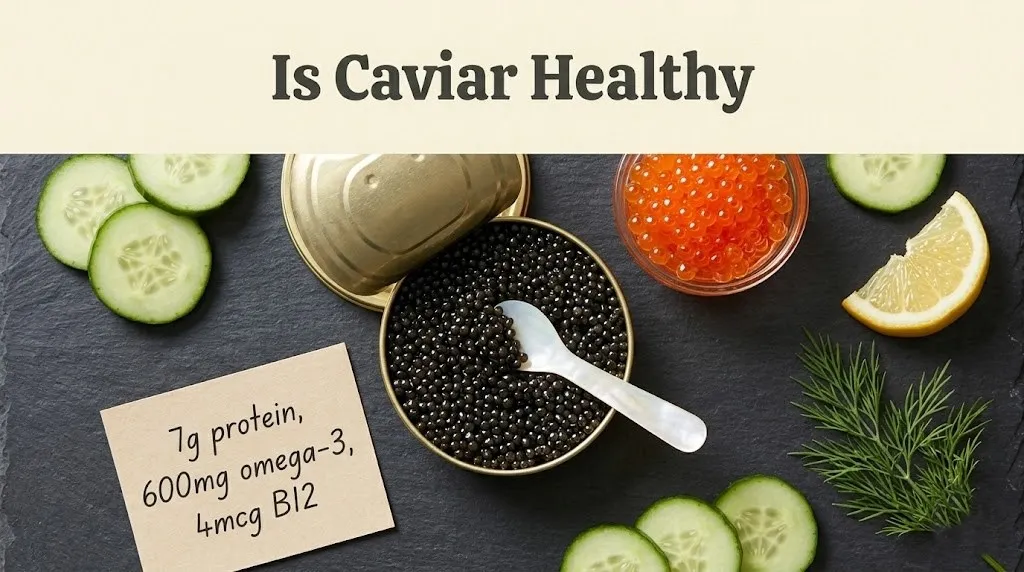
Think of caviar the way you would think of a very concentrated multivitamin. You need it. The micronutrients inside it are real and your body uses them. But you do not take the whole bottle at once because the dose makes the remedy or the risk. Caviar’s sodium content, roughly 300 to 400 milligrams per tablespoon, means that eating it by the bowl would push you past healthy sodium limits before you finished the appetizer course. The nutrient density is genuinely exceptional. The sodium density is genuinely something to track.
The Academy of Nutrition and Dietetics classifies fatty fish and their roe as nutrient-dense protein sources that contribute positively to dietary patterns when they replace less nutrient-rich animal proteins. Caviar fits this framework but with a caveat. The price, the small serving size, and the sodium level mean it functions best as an occasional garnish that adds a nutritional punch to a vegetable or whole-grain base, not as a main protein source at a meal. A scoop of caviar on a cucumber slice or a piece of rye toast is nutritionally sound. A bowl of caviar eaten with a spoon is a sodium overdose dressed in luxury packaging.
| Nutrient | Caviar per 28g Serving | Adult Daily Value | Percentage of DV |
|---|---|---|---|
| Calories | 70 to 75 | 2,000 | 3.7 percent |
| Protein | 7 grams | 50 grams | 14 percent |
| Total Fat | 5 grams | 65 grams | 7.7 percent |
| Vitamin B12 | 4 to 5 mcg | 2.4 mcg | ~170 percent |
| Selenium | 18 to 20 mcg | 55 mcg | ~34 percent |
| Iron | 1.5 mg | 18 mg | 8 percent |
| Sodium | 320 to 420 mg | 2,300 mg | 14 to 18 percent |
Key Takeaway: Caviar is a micronutrient powerhouse in a tiny package, but the sodium per serving is high enough that you must measure it by the tablespoon, not the bowl.
Is Caviar Healthy for You
Whether caviar is healthy for you depends on your individual sodium sensitivity, cardiovascular status, allergy profile, and pregnancy status, because the same nutrient density that makes caviar beneficial for one person can make it a poor choice for another. Personal health context determines the answer.
For a healthy adult with normal blood pressure and no seafood allergies, caviar is a net positive addition to a balanced diet when eaten in tablespoon-sized portions once or twice a week. The omega-3 fatty acids support cell membrane fluidity and help modulate inflammatory responses. The vitamin B12 is essential for neurological function and red blood cell formation, and caviar provides it in a form the body does not need to convert. The protein is complete, meaning it contains all nine essential amino acids in proportions the human body can use efficiently. For this person, caviar is a luxurious functional food.
For someone with hypertension, congestive heart failure, or chronic kidney disease requiring sodium restriction, caviar is a food to approach with extreme caution or avoid entirely. A single tablespoon can deliver 15 to 20 percent of a 2,000-milligram daily sodium budget. For a person on a stricter 1,500-milligram sodium limit, recommended by the American Heart Association for those with hypertension, that same tablespoon consumes over 25 percent of the daily allowance. The nutritional benefits do not disappear, but the sodium cost may exceed what that individual’s health parameters can accommodate. If you manage a sodium-sensitive condition, discuss specific serving sizes of high-salt luxury foods with the healthcare provider who knows your lab values and medication regimen.
Caviar Nutrition Facts
Caviar provides approximately 70 to 75 calories, 7 grams of protein, 5 grams of fat, and less than 1 gram of carbohydrate per 28-gram serving, with the fat profile skewing heavily toward unsaturated fatty acids and the micronutrient profile dominated by vitamin B12, selenium, and iron. These numbers are based on USDA FoodData Central values for sturgeon caviar.
The fat composition deserves a closer look. Of the 5 grams of total fat, roughly 1 gram is saturated, 2 grams are monounsaturated, and 2 grams are polyunsaturated. The polyunsaturated fraction contains the long-chain omega-3 fatty acids eicosapentaenoic acid (EPA) and docosahexaenoic acid (DHA). A 28-gram serving of sturgeon caviar delivers roughly 600 to 800 milligrams of combined EPA and DHA. The American Heart Association recommends 250 to 500 milligrams of combined EPA and DHA per day for general cardiovascular health in healthy adults, so a single serving of caviar surpasses the minimum daily target. This is the nutritional highlight that most health claims about caviar rest upon.
The micronutrient profile is where caviar separates itself from most other animal foods. Vitamin B12, also called cobalamin, is present at roughly 4 to 5 micrograms per serving, which is approximately 170 percent of the 2.4-microgram daily value. B12 is critical for DNA synthesis, red blood cell maturation, and the maintenance of the myelin sheath that insulates nerve cells. Selenium, at roughly 18 to 20 micrograms per serving, provides about 34 percent of the daily value and functions as a cofactor for antioxidant selenoproteins including glutathione peroxidase. Iron is present in the heme form, the most absorbable type for humans, at roughly 1.5 milligrams per serving.
- Caviar contains zero grams of carbohydrate and zero grams of sugar, making it compatible with ketogenic and other low-carbohydrate dietary patterns.
- The protein in caviar includes all nine essential amino acids, including lysine and methionine, which can be lower in plant-based protein sources.
- Caviar provides small but measurable amounts of vitamin A in the form of preformed retinyl palmitate, vitamin D as cholecalciferol, and vitamin E.
Key Takeaway: A single heaping tablespoon of caviar outperforms most multivitamin tablets on B12 and selenium while delivering a meaningful dose of anti-inflammatory omega-3 fats, all inside 75 calories.
Caviar Omega 3 Fatty Acids
The omega-3 fatty acids in caviar are predominantly EPA and DHA bound to phospholipids rather than triglycerides, a structural difference that research suggests enhances their incorporation into brain and retinal cell membranes compared to the triglyceride-bound omega-3s found in most fish oil supplements. This phospholipid advantage is the most underappreciated nutritional feature of fish roe.
Most dietary omega-3s, whether from salmon fillets, sardines, or fish oil capsules, are stored in the fish’s flesh as triglycerides. Roe, however, packages its omega-3s as phospholipids, particularly phosphatidylcholine and phosphatidylethanolamine. A 2019 study published in Nutrients journal reported that phospholipid-bound DHA is transported across the blood-brain barrier more efficiently than triglyceride-bound DHA in animal models. This does not mean fish oil is worthless or that caviar is a nootropic drug. It means the structural format of the omega-3s in caviar may offer superior delivery to the tissues that need them most, specifically the brain and the retina.
The total EPA and DHA per serving, roughly 600 to 800 milligrams, is nutritionally relevant on its own. The Academy of Nutrition and Dietetics identifies fatty fish and their roe as the most efficient dietary sources of preformed EPA and DHA, bypassing the inefficient conversion of alpha-linolenic acid from plant sources. A tablespoon of caviar on a piece of rye toast with a squeeze of lemon delivers more usable omega-3s than a handful of walnuts or a tablespoon of flaxseed oil, though the plant sources provide other benefits like fiber and lignans that caviar lacks. The goal is not to replace one with the other. It is to understand what each food actually contributes.
Caviar Vitamin B12 and Selenium Content
Caviar is an exceptionally concentrated source of vitamin B12, providing roughly 170 percent of the daily value in a single 28-gram serving, and a rich source of selenium, supplying about 34 percent of the daily value in that same portion. These two micronutrients are the primary reasons a nutrition researcher would call caviar healthy, independent of its omega-3 content.
Vitamin B12 deficiency is not rare. The National Institutes of Health Office of Dietary Supplements estimates that between 3 and 6 percent of adults in the United States have a borderline or deficient B12 status, with higher rates among older adults, people taking proton pump inhibitors or metformin, and those following strict vegetarian or vegan diets. Caviar is essentially a pharmaceutical-grade B12 delivery system wrapped in a food matrix. The B12 in caviar is bound to animal protein and requires stomach acid and intrinsic factor for absorption, the standard pathway for dietary B12. There is no synthetic chemistry or fortification involved. It is the naturally occurring cobalamin that human digestive systems evolved to process.
Selenium works in concert with iodine to support thyroid hormone production and as a structural component of selenoproteins that regulate oxidative stress. The selenium content of caviar varies by the species of sturgeon and the waters in which it lived, with wild sturgeon from selenium-rich marine environments typically testing higher than farmed sturgeon raised in controlled freshwater systems. Regardless of the source, caviar consistently ranks among the top dietary sources of selenium on a per-calorie basis. Only Brazil nuts, certain organ meats, and specific yellowfin tuna cuts compete with caviar for selenium density per gram, and caviar delivers it with a fraction of the calories of those alternatives.
Quick Tip:
- Vitamin B12 is water-soluble, so any excess beyond what your body can use is excreted in urine.
- Selenium has a narrower safety margin, with the tolerable upper intake level set at 400 micrograms per day for adults.
- You cannot overdo B12 with caviar, but you could theoretically overdo selenium if you ate caviar by the tin daily.
Is Black Caviar Healthy
Black caviar, the salt-cured roe of sturgeon species including Beluga, Osetra, and Sevruga, is nutritionally similar to other fish roe but often carries a higher price tag and a more tightly regulated supply chain due to CITES restrictions on wild sturgeon, not a measurably superior nutritional profile. The color is a species marker, not a health indicator.
The nutritional content of black caviar from sturgeon and red-orange caviar from salmon are not identical, but they are close enough that no credible health claim should rest on the black versus red distinction. Sturgeon caviar tends to be slightly lower in the carotenoid astaxanthin, the pigment that makes salmon roe red, because sturgeon are not salmonids and do not concentrate astaxanthin in their eggs to the same degree. Astaxanthin is a potent antioxidant, and salmon roe delivers more of it. Black caviar, by contrast, often has a marginally higher fat content and a subtly different fatty acid distribution, but the broad nutritional strokes, high protein, high B12, high selenium, meaningful omega-3s, apply to both.
The real difference between black caviar and other roe is not nutritional. It is regulatory and economic. Wild sturgeon populations collapsed in the late 20th century, leading to CITES Appendix II listings that severely restrict or ban the international trade of wild sturgeon caviar. Almost all black caviar sold legally today is farmed. This means black caviar is the most sustainability-regulated fish roe on the market, which is an ethical and ecological consideration, not a nutritional one. If you are choosing between black sturgeon caviar and salmon roe based purely on health, pick whichever one you can afford to eat more often, because the omega-3 and micronutrient benefits correlate with frequency of consumption within safe sodium limits.
Key Takeaway: The “black” in black caviar is a species and market distinction, not a nutritional grade. Salmon roe, trout roe, and paddlefish roe offer comparable health benefits for a fraction of the cost.
Caviar Protein Content
Caviar delivers approximately 7 grams of complete, high-biological-value protein per 28-gram serving, a protein density of roughly 25 percent by weight that places it among the most protein-concentrated animal foods available. This protein arrives with a full complement of essential amino acids and without accompanying connective tissue, making it highly digestible.
The biological value of a protein measures how efficiently the human body can absorb and use the amino acids it contains. Egg protein, with a biological value of 100, is the benchmark. Fish proteins generally score in the 90s. Roe proteins have not been studied as extensively as muscle proteins from fish fillets, but the amino acid composition of sturgeon roe has been analyzed and found to contain all nine essential amino acids in proportions that align closely with human requirements. The protein in caviar is water-soluble and requires minimal mechanical or enzymatic breakdown compared to the fibrous muscle proteins in a steak or a chicken breast. This makes caviar an unusually easy-to-digest protein source.
For people recovering from illness or surgery, or for older adults with reduced stomach acid production, easily digestible protein sources matter. Caviar, in very small amounts, can contribute to protein status without the digestive burden of denser meats. The serving size limitation, driven by sodium, means it can never be a primary protein source, but as an addition to a scrambled egg or a baked potato, it lifts the protein quality of the entire meal.
- The protein in caviar includes roughly 1 gram of branched-chain amino acids (leucine, isoleucine, valine) per serving.
- Caviar protein is virtually free of the purine-lowering effect of dairy, making it a poor choice for gout patients despite its protein quality.
- Cooking caviar denatures its proteins and alters its texture, which is why it is almost always served raw or gently warmed.
Caviar Brain Health Benefits
The brain health benefits of caviar are linked to its phospholipid-bound DHA, which is preferentially incorporated into neuronal cell membranes and the synaptic terminals where neurotransmission occurs. This is the nutritional mechanism behind the centuries-old folk association between fish roe and cognitive function, and modern research is beginning to support it.
DHA is the most abundant omega-3 fatty acid in the human brain, constituting roughly 30 percent of the fatty acid content of the cerebral cortex. The brain cannot synthesize DHA efficiently from precursor fats. It must import it from the bloodstream, and the transporter at the blood-brain barrier, a protein called Mfsd2a, specifically recognizes DHA in the phospholipid form. This is the molecular basis for the phospholipid advantage mentioned earlier. Caviar delivers DHA in precisely the form the brain’s own import machinery is designed to accept.
A 2022 review in the journal Nutrients examined the role of dietary DHA in cognitive maintenance across the lifespan and noted that populations with higher habitual DHA intake from marine sources show lower rates of age-related cognitive decline in epidemiological studies. These are associative findings, not proof that eating caviar prevents dementia. What the data supports is the recommendation that regular intake of preformed DHA, from fatty fish or roe, is a reasonable nutritional strategy for supporting long-term brain health. A weekly serving of caviar contributes to that cumulative DHA intake without requiring a daily fish filet. People with a family history of Alzheimer’s disease or other neurodegenerative conditions often ask about dietary DHA specifically, and caviar provides a concentrated, bioavailable source.
Caviar Heart Health Omega 3
The EPA and DHA in caviar support cardiovascular health by reducing serum triglycerides, modestly lowering blood pressure in hypertensive individuals, and providing the fatty acid substrates for anti-inflammatory eicosanoid production. These effects are well-documented for marine omega-3s in general and apply to the omega-3s in caviar as well.
The American Heart Association has reviewed the evidence on marine omega-3s and cardiovascular outcomes for decades. Their position, most recently updated in a 2018 advisory, is that 1 gram of combined EPA and DHA per day is recommended for patients with documented coronary heart disease, and 2 to 4 grams per day under medical supervision for those with elevated triglycerides. A tablespoon of caviar provides roughly 600 to 800 milligrams, which is a meaningful contribution toward these targets but is not a therapeutic dose on its own. Think of caviar as a tasty contributor to a broader omega-3 intake strategy that includes fatty fish like salmon, mackerel, and sardines.
The sodium in caviar complicates the heart health picture. A food that delivers anti-inflammatory omega-3s and pro-inflammatory sodium simultaneously requires a net assessment. For a person with normal blood pressure eating a generally low-sodium diet, the omega-3 benefit of caviar likely outweighs the sodium cost. For a person with heart failure or uncontrolled hypertension, the sodium load may negate or exceed the omega-3 benefit. This is the kind of individual cardiovascular risk calculation that a registered dietitian or cardiologist can make with access to a patient’s full health data. The general answer is that caviar’s heart health properties are real but must be weighed against its salt content.
Key Takeaway: Caviar’s omega-3 fats are genuinely heart-healthy, but the sodium on the same spoon means you cannot treat caviar like a fish oil supplement. It is a food with a nutritional double edge that requires individual cardiovascular context.
Caviar High Sodium
Caviar is a high-sodium food, with a single 28-gram serving containing between 320 and 420 milligrams of sodium, which represents 14 to 18 percent of the American Heart Association’s ideal daily limit of 2,300 milligrams and over 25 percent of the stricter 1,500-milligram limit for those with hypertension. The sodium is not incidental. It is functional.
Salt is what transforms perishable raw fish eggs into shelf-stable caviar. The traditional malossol method, from the Russian for “little salt,” uses between 3 and 5 percent salt by weight, which is the minimum required to inhibit pathogenic bacterial growth while preserving the egg’s texture and flavor. Caviar labeled malossol is the lowest-salt version commercially available, and it still contains roughly 300 milligrams of sodium per serving. Caviar that is not malossol, including some lower-cost jarred products, can contain 6 to 10 percent salt by weight, pushing the sodium per serving above 500 milligrams. Reading the label and checking the milligrams of sodium per serving is the only way to know what you are actually eating.
The sodium conversation around caviar requires portion realism. Caviar is almost never eaten in the 28-gram serving size used in nutritional databases. A typical blini with a small dollop of creme fraiche and caviar might contain 5 to 8 grams of caviar, translating to 60 to 100 milligrams of sodium. At this garnish-level portion, the sodium is nutritionally trivial. The risk comes when caviar is consumed by the spoonful or when an entire tin is eaten by one person in a single sitting. A 2-ounce tin, roughly 56 grams, delivers 640 to 840 milligrams of sodium, a substantial fraction of the daily sodium budget for even a healthy adult.
- Always check the label for sodium per serving in milligrams, not just the “malossol” designation.
- If caviar is part of a meal, reduce added salt elsewhere in the same meal.
- Pair caviar with unsalted cucumber slices or unsalted crackers instead of salted blini or chips.
Caviar Cholesterol Content
Caviar contains roughly 95 to 100 milligrams of cholesterol per 28-gram serving, which is about 30 percent of the previously recommended daily limit of 300 milligrams that was removed from the 2015 to 2020 Dietary Guidelines for Americans when the evidence review concluded that dietary cholesterol is not a primary driver of blood cholesterol for most people. The cholesterol in caviar is real but is no longer considered a nutrient of public health concern.
The relationship between dietary cholesterol and serum cholesterol is more complicated than the old advice suggested. For roughly two-thirds of the population, the liver downregulates its own cholesterol production in response to dietary intake, a homeostatic mechanism that keeps blood levels stable. For the remaining one-third, sometimes called hyper-responders, dietary cholesterol does cause a measurable increase in LDL cholesterol. There is no practical way to know if you are a hyper-responder without bloodwork, which is why individuals with diagnosed hypercholesterolemia or a family history of early cardiovascular disease should discuss dietary cholesterol intake with their healthcare provider.
The saturated fat content of caviar is the more relevant cardiovascular concern than its cholesterol content. With roughly 1 gram of saturated fat per serving, caviar is not a significant source of the dietary fat most strongly linked to elevated LDL cholesterol. The majority of its fat is unsaturated, which actually supports a favorable lipid profile. The old advice to avoid caviar because of its cholesterol content was based on an incomplete understanding of lipid metabolism that has been revised by the Dietary Guidelines Advisory Committee based on decades of metabolic ward studies and epidemiological data.
Wild vs Farmed Caviar Nutrition
Farmed sturgeon caviar and wild sturgeon caviar are nutritionally comparable in their macronutrient and major micronutrient profiles, with the primary differences arising from the fish’s diet rather than its wild or captive status. A farmed sturgeon fed a high-quality marine diet will produce roe very similar to wild roe. A farmed sturgeon fed a terrestrial protein diet will produce roe with a different fatty acid signature.
Wild sturgeon eat a diverse diet of crustaceans, mollusks, and small fish, accumulating a fatty acid profile that reflects the marine food web. Farmed sturgeon eat a formulated feed that determines the fatty acid profile of their eggs. Responsible aquaculture operations include fish meal and fish oil in their sturgeon feed specifically to maintain the omega-3 content of the resulting caviar. A 2020 study in the Journal of Food Science compared fatty acid profiles of wild and farmed Osetra caviar and found that high-quality farmed samples were statistically indistinguishable from wild samples in EPA and DHA content when the fish were fed a marine-enriched diet.
The sustainability distinction is more clear-cut than the nutritional one. All legal commercial caviar from beluga, osetra, and sevruga sturgeon is farmed because wild harvest is either banned or under strict CITES prohibition. Caviar labeled as wild is almost certainly from non-sturgeon species like salmon, trout, or paddlefish, all of which have sustainable wild fisheries. If you are buying sturgeon caviar, you are buying farmed caviar, and the farm’s feed quality determines the nutritional outcome. Asking your supplier about the farm’s feed practices is a legitimate consumer question, not an intrusion.
| Factor | Wild Sturgeon Caviar | Farmed Sturgeon Caviar |
|---|---|---|
| Legality | Largely illegal for commercial sale due to CITES | Only legal source of commercial sturgeon caviar |
| EPA/DHA Content | Variable, diet-driven | Comparable when marine-enriched feed is used |
| Sodium | Typically malossol (3 to 5 percent) | Can be malossol or higher-salt depending on processor |
| Contaminant Risk | Potential bioaccumulation of mercury, PCBs | Controlled water quality, lower contaminant risk |
| Price | Black market only, extremely high | High but legally accessible |
Key Takeaway: The wild versus farmed question for sturgeon caviar is largely resolved by CITES. You are eating farmed caviar, and the nutritional quality depends on the farm’s feed, which you can ask about.
Caviar vs Salmon Roe Nutrition
Salmon roe, often labeled as ikura, and sturgeon caviar share a similar core nutritional profile of high protein, omega-3 fatty acids, B12, and selenium, but salmon roe contains significantly more astaxanthin, the carotenoid antioxidant that gives it its red-orange color, and typically has a slightly lower sodium content per gram. The nutritional differences are smaller than the price difference.
Salmon roe eggs are larger, with a more dramatic “pop” when bitten, and they are typically processed with a lighter salt touch than sturgeon caviar because they are sold fresh or frozen rather than cured for extended shelf stability. A 28-gram serving of salmon roe provides roughly 65 to 70 calories, 6 grams of protein, 4 grams of fat, and approximately 250 to 350 milligrams of sodium. The EPA and DHA content is comparable, around 500 to 700 milligrams per serving. The standout nutrient in salmon roe that sturgeon caviar lacks is astaxanthin, a carotenoid with documented antioxidant and anti-inflammatory properties that research suggests may protect skin from UV-induced damage when consumed regularly.
From a purely nutritional perspective, salmon roe offers equivalent or superior value to sturgeon caviar at a fraction of the retail price. It is not “inferior caviar.” It is a different product from a different fish with a different flavor and texture profile that happens to be priced accessibly enough to eat more often. For the health-conscious consumer who wants the documented omega-3, B12, and selenium benefits of fish roe without the luxury markup, salmon roe is the nutritionally rational choice. Sturgeon caviar is a luxury experience that happens to also be nutritious. Salmon roe is a nutritious food that happens to also feel celebratory.
- Salmon roe provides astaxanthin, which sturgeon caviar does not contain in meaningful amounts.
- Salmon roe typically has 20 to 30 percent less sodium per serving than sturgeon caviar.
- Sturgeon caviar has a slightly higher protein density and a more delicate, less “fishy” flavor that some people prefer.
How Much Caviar to Eat per Serving
A nutritionally appropriate serving of caviar is 15 to 30 grams, roughly one to two tablespoons, which delivers the micronutrient benefits without overloading sodium intake for a healthy adult. This is the amount that provides meaningful B12, selenium, and omega-3s while keeping sodium under 20 percent of the daily value.
This serving size is substantially smaller than what many people envision when they picture “eating caviar.” Restaurant presentations that feature a generous quenelle on a blini often contain 15 to 20 grams of caviar per piece, meaning two or three canapes can easily deliver a full serving. If you are eating caviar at a party or event, treat the canapes as your caviar portion for the day and be mindful of other salty foods on the table. At home, measuring caviar with a small kitchen scale or a measured spoon ensures you are eating the amount you think you are eating.
The frequency question matters as much as the portion question. For a healthy adult with no sodium restrictions, caviar once or twice a week at a 20-gram portion is a reasonable frequency that contributes to omega-3 and B12 status without displacing other nutritious foods. Caviar is not a replacement for fatty fish fillets, leafy greens, or whole grains. It is a concentrated garnish that adds nutritional value to a meal that is already built on a foundation of vegetables, whole grains, and lean proteins. Eating caviar daily is not recommended, not because caviar is toxic, but because the sodium will accumulate and the cost will become prohibitive long before any theoretical health benefit ceiling is reached.
Caviar Food Safety Risks
Raw, unpasteurized caviar carries a documented risk of Listeria monocytogenes contamination, making it a food that pregnant women, adults over 65, and immunocompromised individuals should either avoid entirely or consume only in pasteurized form. This is the most serious health consideration related to caviar consumption.
Listeria is a bacterium that can grow at refrigeration temperatures, meaning that simple cold storage does not eliminate the risk. The FDA classifies unpasteurized fish roe as a ready-to-eat food with a listeria risk profile similar to soft cheeses and deli meats. Pasteurized caviar has been heat-treated to a temperature sufficient to kill listeria and other vegetative pathogens, usually around 140 to 145 degrees Fahrenheit for a specific hold time, which slightly firms the egg texture and extends the refrigerated shelf life. The pasteurization process does not significantly alter the nutritional content. The protein, fat, omega-3s, B12, and selenium all survive pasteurization with negligible losses.
Clostridium botulinum type E is a secondary concern specific to vacuum-packed, unpasteurized fish products stored at improper temperatures. This pathogen produces a neurotoxin under anaerobic conditions and can be fatal. Commercially produced caviar uses salt and refrigeration as a hurdle technology to prevent spore germination, but temperature abuse during transport or storage can create a botulinum risk. The FDA requires that all commercially sold caviar in the United States meets a water-phase salt level or a combination of salt and preservatives that inhibits clostridium growth, but enforcement at retail is imperfect.
- Pregnant women should only eat pasteurized caviar, and only after confirming with their obstetric provider.
- Do not eat caviar from a tin that is bulging, leaking, or that hisses when opened.
- Unpasteurized caviar must be kept at 32 to 38 degrees Fahrenheit at all times and consumed within 2 to 3 days of opening.
Caviar Skin Health Benefits
The combination of DHA, astaxanthin, vitamin A, and selenium in caviar has led to its incorporation into high-end skincare products, but the evidence for topical application is preliminary, and the dietary skin benefits of these nutrients are better documented through oral consumption of fatty fish and their roe. Eating caviar supports skin health more credibly than rubbing it on your face.
DHA is a structural component of skin cell membranes and contributes to the barrier function of the epidermis. A 2019 study in the journal Nutrients reviewed the role of marine omega-3s in dermatological health and reported that supplemental DHA increased skin hydration and reduced markers of UV-induced inflammation in controlled trials. The DHA in caviar, consumed orally, is absorbed and incorporated into skin phospholipids through the same metabolic pathways that deliver it to the brain and retina. The amount of DHA in a 20-gram caviar serving is not pharmacological, but it contributes to cumulative skin DHA status.
The selenium in caviar supports the activity of glutathione peroxidase in skin cells, protecting against oxidative damage from UV radiation and environmental pollutants. Vitamin A, present as preformed retinyl palmitate, is the same compound used in prescription retinoid creams, though the amount in caviar is far below a therapeutic topical dose. Eating caviar will not give you a retinoid effect. It will provide a modest amount of dietary vitamin A that contributes to the maintenance of epithelial tissue, including the skin. The skin health story for caviar is nutritionally sound but modest, and it should not be overstated.
Key Takeaway: Eating caviar supports skin health through the same DHA and selenium mechanisms that benefit your brain and heart. The skin benefits are real but incremental, not transformative, and they come from eating it, not applying it.
Caviar Allergy
Fish roe allergy is a distinct IgE-mediated food allergy that is separate from fish muscle allergy, and individuals allergic to fin fish may or may not react to caviar because the allergenic proteins in roe differ from the parvalbumins that dominate fish flesh allergy. This distinction is critical and frequently misunderstood.
A person with a diagnosed salmon allergy may react to salmon flesh due to the muscle protein parvalbumin but tolerate salmon roe without symptoms. Conversely, a person who has eaten salmon fillets without issue their entire life can have a first-time anaphylactic reaction to salmon roe because they are sensitized to vitellogenin, a yolk precursor protein found in fish eggs that is absent from fish muscle. This pattern of isolated roe allergy without fin fish allergy is well-documented in the allergy literature. The American College of Allergy, Asthma, and Immunology recognizes fish roe as a specific allergen category that warrants separate testing.
Cross-reactivity between the roe of different fish species is common. A person allergic to salmon roe is at elevated risk for reacting to sturgeon caviar, trout roe, and lumpfish roe because the vitellogenin proteins are evolutionarily conserved across fish species. If you have any known roe allergy, you should avoid all fish roe products unless specific oral challenge testing under allergist supervision has cleared a particular species. Restaurants that serve caviar or roe as a garnish on dishes that do not list it on the menu create a risk for roe-allergic diners, who should always inform the kitchen of their specific allergen.
- Fish roe allergy can present as oral itching, urticaria, angioedema, respiratory distress, or anaphylaxis.
- It is possible to be allergic to roe and not to fin fish, and vice versa.
- Caviar is not a priority allergen under FALCPA labeling laws, so pre-packaged foods containing roe may not highlight it in a separate allergen statement.
How to Store Caviar Safely
Unopened caviar must be stored at 28 to 32 degrees Fahrenheit, ideally nestled in crushed ice in the coldest part of the refrigerator, and consumed by the “best before” date on the tin, while opened caviar must be eaten within 2 to 3 days and never left at room temperature for more than 2 hours. Temperature control is the primary food safety variable.
Home refrigerators are almost never as cold as 28 degrees. The standard refrigerator operates at 35 to 40 degrees, which is safe for most foods but not ideal for raw, unpasteurized caviar. The conventional solution is to place the sealed caviar tin inside a bowl of crushed ice, set that bowl in the back of the refrigerator where the temperature is coldest, and refresh the ice daily. This makeshift method approximates the professional storage temperature. Do not freeze caviar unless it is specifically a frozen product labeled as such, because freezing ruptures the delicate egg membranes, turning the caviar into a mushy paste upon thawing.
Once opened, the clock starts. Exposure to air introduces environmental bacteria and accelerates lipid oxidation, which degrades both flavor and nutritional quality. The omega-3 fatty acids in caviar are polyunsaturated and vulnerable to rancidity when exposed to oxygen. Press a piece of plastic wrap directly onto the surface of the remaining caviar before closing the tin to minimize air contact. If the caviar develops a sharp, metallic, or overtly fishy odor, it has begun to oxidize and should be discarded. Caviar that smells clean and faintly of the sea is safe. Caviar that smells unpleasant is not, regardless of the date on the tin.
- Store caviar in the back of the refrigerator, not the door, where temperature fluctuates with every opening.
- Use a non-metallic spoon, mother-of-pearl, horn, or plastic, because reactive metals can impart off-flavors even if they do not create a food safety hazard.
- Do not return unused caviar that has been sitting out on a buffet to the refrigerator. Discard it.
Frequently Asked Questions About Caviar Health
How much caviar should I eat in one sitting?
A healthy portion of caviar is 15 to 30 grams, or one to two tablespoons, which provides substantial B12, selenium, and omega-3 benefits.
This amount keeps sodium under 20 percent of the daily value, leaving room for sodium from other foods in the same day.
Eating more than this occasionally is not harmful for a healthy adult, but the sodium adds up quickly and caviar is best treated as a concentrated garnish.
Is caviar good for weight loss?
Caviar can support a weight loss plan because it provides satiating protein and healthy fats in a compact, low-calorie serving that feels indulgent.
The 70 to 75 calories and 7 grams of protein in a tablespoon make it a nutrient-dense topping for vegetables or whole-grain crackers that adds satisfaction without caloric overload.
The sodium may cause temporary water retention that masks fat loss on the scale, which is a cosmetic effect, not a metabolic one.
Can pregnant women eat caviar?
Pregnant women should only eat pasteurized caviar and only after confirming with their obstetric provider, because unpasteurized roe carries a documented risk of Listeria monocytogenes infection.
Listeriosis during pregnancy can cause miscarriage, stillbirth, and severe neonatal illness, making the risk of unpasteurized caviar unacceptable during gestation.
Pasteurized caviar eliminates the listeria risk and retains its full nutritional value, including the DHA that supports fetal brain development.
Does caviar raise cholesterol?
Dietary cholesterol in caviar does not significantly raise serum cholesterol in most people because the liver compensates by reducing its own cholesterol production.
The saturated fat content of caviar is low at roughly 1 gram per serving, and saturated fat is a stronger dietary driver of elevated LDL cholesterol than dietary cholesterol itself.
Individuals with diagnosed hypercholesterolemia should discuss any dietary cholesterol source with their healthcare provider.
What is the healthiest type of caviar?
Salmon roe is arguably the healthiest accessible fish roe because it delivers equivalent omega-3s, protein, B12, and selenium to sturgeon caviar while adding astaxanthin and containing less sodium per serving.
Farmed sturgeon caviar from a reputable aquaculture operation using marine-enriched feed is nutritionally comparable and is the legally available form of traditional black caviar.
Paddlefish roe, an American alternative, offers a similar nutritional profile at a lower price point than imported sturgeon caviar.
Caviar sits at a strange intersection of food, supplement, and symbol. It is nutrient-dense enough to rival a multivitamin on some measures and salty enough to give a dietitian pause on others. The answer to “is caviar healthy” is a qualified yes that depends almost entirely on portion size and personal health status. A heaping tablespoon once a week on an unsalted cucumber slice is a nutritional win for a healthy adult. A daily habit of eating whole tins is a sodium problem dressed up as a luxury habit.
What you are really buying with sturgeon caviar is not better nutrition. Salmon roe and trout roe deliver the same omega-3s, the same B12, and the same protein for a much lower cost. The price difference between salmon roe and osetra caviar reflects rarity and craftsmanship, not a nutritional multiplier. If your goal is the documented health benefits of fish roe, buy salmon roe and eat it a little more often. If your goal is the sensory experience of one of the world’s great luxury foods, buy the best sturgeon caviar you can responsibly afford and savor it in a measured portion.
Treat caviar as what it is. A salt-cured, nutrient-dense seafood concentrate that happens to be delicious and historically precious. Use a non-metal spoon, keep it cold, respect the sodium numbers on the label, and if you are pregnant, immunosuppressed, or managing a sodium-sensitive condition, talk to your provider before the canape course.