Thai food is the national cuisine of Thailand, a Southeast Asian country formerly known as Siam, where it evolved over centuries at the crossroads of ancient trade routes, royal court traditions, and diverse regional ecosystems. The food you recognize as “Thai” today was shaped by Chinese, Indian, and Portuguese influences colliding with indigenous ingredients like galangal, lemongrass, and fish sauce.
What makes this origin story genuinely important is that Thai food did not develop in isolation. The chili pepper, now so central to Thai cooking that it defines the cuisine’s heat identity, did not exist in Thailand until Portuguese traders brought it from the Americas in the 16th century. According to the Thai Ministry of Culture’s 2024 submission to UNESCO for intangible cultural heritage status, Thai cuisine is defined by a balance of five flavors: sweet, sour, salty, bitter, and spicy. That balance is a direct reflection of a geography where fresh water, salt sea, tropical sun, and monsoon rains all coexist.
This article maps out exactly where Thai food comes from geographically and culturally. You will learn how ancient trade routes delivered the wok, the chili, and coconut milk to Thai kitchens. You will understand the stark differences between the food of the mountainous North, the arid Northeast plateau, the fertile Central plains, and the Muslim-majority South. You will also see how the fresh herbs and cooking techniques that make Thai food so fragrant also contribute to its well-researched nutritional profile.
Where Is Thai Food From
Thai food is from Thailand, a nation in the heart of mainland Southeast Asia bordered by Myanmar, Laos, Cambodia, and Malaysia, with coastlines along the Gulf of Thailand and the Andaman Sea. This specific geography provides the essential ingredients that define the cuisine: rice from the Chao Phraya River basin, seafood from two different oceans, and aromatic herbs from tropical growing conditions.
The physical map of Thailand explains more about the food than any cookbook can alone. The country stretches from the foothills of the Himalayas in the north down through a long peninsula in the south, creating multiple distinct climate zones. The north has a cooler dry season and grows sticky rice. The central plains flood annually, creating perfect conditions for jasmine rice paddies. The south receives monsoon rains and grows coconut palms and pepper vines. The northeast, a high plateau called Isan, is arid and suited to hardy crops like cassava and free-range cattle. Each region eats what the land provides, creating not one monolithic “Thai food” but four major regional cuisines that share an underlying flavor philosophy.
Thailand is the only Southeast Asian nation never colonized by a European power. This historical fact matters for the food. While neighboring cuisines absorbed direct French, British, or Dutch culinary structures, Thai kitchens adapted foreign influences on their own terms. The result is a cuisine that absorbed Chinese stir-frying, Indian curry spicing, and Portuguese chili peppers without being defined or dominated by any of them. The Thai palace kitchens of the Rattanakosin period then systematized these influences into a codified royal cuisine that set the standard for balance and presentation.
| Geographical Feature | Culinary Contribution |
|---|---|
| Chao Phraya River Basin | Alluvial soil for jasmine rice, freshwater fish, river prawns |
| Gulf of Thailand Coastline | Saltwater fish, squid, blue crab, shrimp |
| Andaman Sea Coastline | Lobster, mantis shrimp, shellfish, seaweed |
| Northern Highlands | Sticky rice cultivation, cool-weather vegetables, free-range pork |
| Northeastern Isan Plateau | Salt flats for mineral salt, free-range cattle, drought-tolerant herbs |
Key Takeaway: Thai food is a direct product of Thai geography. The country’s north-to-south stretch across multiple climate zones created four distinct regional pantries, all unified by a shared philosophy of balancing five fundamental flavors in every meal.
Where Does Thai Food Come From
Thai food comes from the convergence of an indigenous Austro-Asiatic and Tai-Kadai culinary tradition with external influences introduced through centuries of trade, migration, and diplomacy across the South China Sea and the Indian Ocean. The food you eat at a modern Thai restaurant in Chicago or London is the descendant of a cuisine that has been absorbing and adapting foreign elements for over 700 years.
The earliest written records of a distinct “Thai” culinary practice come from the Sukhothai Kingdom in the 13th century. A stone inscription from King Ramkhamhaeng’s reign describes a land where “fish are in the water and rice is in the fields,” and where the people eat “rice and fish, the staple food of all.” This was not yet the aromatic, chili-spiked cuisine we know. Early Thai food was likely based on grilled and steamed freshwater fish, wild herbs, foraged vegetables, sticky or steamed rice, and fermented fish pastes for salt and umami. Fermentation was the primary preservation technology, and it remains the backbone of Thai flavor today in the form of fish sauce, shrimp paste, and pickled garlic.
The cuisine began its major transformation during the Ayutthaya period from 1351 to 1767, when the capital city became one of the most cosmopolitan trading ports in Asia. Persian, Arab, Indian, Chinese, Japanese, and eventually European merchants all lived in designated quarters of Ayutthaya. They built their own kitchens, imported their own ingredients, and over generations, their cooking techniques and spices bled into the local food culture. The Thai royal court, observing these foreign cuisines, selectively incorporated elements that enhanced the central philosophy of flavor balance without displacing the indigenous base of rice, fish, and herbs.
What Country Is Thai Food From
Thai food is from the country of Thailand, which was officially known as Siam until 1939 and remains the sole geographic and cultural origin of the cuisine. When someone asks what country Thai food is from, the answer is unambiguous: it is the national cuisine of Thailand, developed within its modern borders over more than seven centuries.
The renaming of Siam to Thailand in 1939 was part of a modernization campaign under Prime Minister Phibun Songkhram, and it had a tangible effect on how the cuisine was marketed globally. The Thai government actively promoted its national cuisine abroad as part of a “gastrodiplomacy” strategy launched in the early 2000s. The Global Thai Program, initiated in 2002, funded Thai restaurant openings worldwide and established the Thai Select certification system to standardize the quality and authenticity of Thai food served internationally. This government-backed push is why you can find pad thai in Reykjavik and green curry in Buenos Aires.
This state-level promotion does not mean that all Thai food served globally is authentic or identical to what is eaten in Thailand. The Thai Select certification applies to a relatively small percentage of the estimated 15,000 to 20,000 Thai restaurants operating outside Thailand. Most overseas Thai restaurants adapt their menus to local palates, reducing chili heat for European diners, adding more sugar for American preferences, or incorporating local vegetables when imported Thai ingredients are unavailable. However, the structural core of the cuisine, the balance of sweet, sour, salty, bitter, and spicy, remains recognizable because it is so fundamental to the Thai approach to cooking that even a toned-down version still carries its origin signature.
Quick Tip:
- Look for the Thai Select emblem issued by the Thai Ministry of Commerce on restaurant windows or menus.
- An absence of this emblem does not mean the food is inauthentic, but its presence confirms government-recognized standards.
- In Thailand, eat where the line of local office workers queues at lunchtime for the most accurate representation of everyday Thai food.
What Culture Is Thai Food
Thai food is the culinary expression of Thai culture, which is built on Theravada Buddhist principles, a rice-farming agrarian society, a monarchy that historically supported royal cuisine development, and a social culture that prioritizes communal eating and flavor balance as a metaphor for harmony. The culture behind the food is as important as the ingredients on the plate.
Thai culture views food as medicine and pleasure simultaneously. The concept of “gin yaa” links eating to health maintenance. A Thai grandmother making a soup will add galangal specifically because she knows it soothes the stomach, not just because it tastes good. This is not “alternative medicine” in the Thai context. It is mainstream, household-level knowledge passed down orally for generations. The same person who makes you a fiery som tam will also make you a gentle rice congee if you are sick, adjusting the flavor balance and ingredient intensity to match your physical state.
Communal eating is the standard Thai table format. Individual plates of rice are surrounded by several shared dishes in the center of the table. A proper Thai meal follows a specific structural logic: a soup, a curry, a steamed or fried protein, a vegetable dish, and a dipping sauce or relish, all eaten with rice. This is not a restaurant tasting menu. It is a typical family dinner. The communal format reflects a collectivist culture where food is the medium of social connection. Ordering a single pad thai and eating it alone from a takeout container is a Western adaptation. In Thailand, eating is a shared event, and the variety on the table is the point.
- The concept of “sanuk” means food should bring joy and pleasure, not just fuel.
- “Nam jai” refers to the generosity of spirit expressed by offering food to others, a core Thai cultural value.
- Thai Buddhist merit-making often involves offering food to monks, which has shaped the country’s vibrant dawn market street food culture.
Key Takeaway: Thai food culture is a complete system that links agriculture, Buddhism, family structure, medicine, and hospitality. You cannot separate the flavor principles from the cultural principles that created them.
History of Thai Cuisine Origin
The history of Thai cuisine origin traces back to the 13th-century Sukhothai Kingdom, where rice agriculture and freshwater fishing formed the nutritional foundation of a cuisine that would then absorb Chinese, Indian, Persian, and Portuguese influences over the next 700 years to become the complex food system recognized today. The cuisine did not appear suddenly. It accumulated layers.
The Sukhothai period, roughly 1238 to 1438, established the rice-and-fish baseline. The kingdom’s location on the fertile upper plains of the Chao Phraya River meant abundant water for rice paddies. Archaeological evidence from kilns and market sites in Sukhothai Historical Park shows the production of ceramic fish paste jars, indicating that fermented fish products were already a dietary staple. The stone inscriptions describe a market where people traded freely, suggesting that even in the earliest Thai kingdom, commerce and food diversity went hand in hand.
The Ayutthaya period starting in 1351 marked the cuisine’s first major inflection point. Ayutthaya was a river-island city with direct access to the Gulf of Thailand via the Chao Phraya, making it an ideal port for international trade. Chinese merchants arrived in large numbers, bringing the carbon steel wok, stir-frying technique, noodle-making, and soybean products. Indian and Persian traders brought dry spice blends, especially cumin, coriander, and cardamom, which the Thai kitchen used more sparingly than Indian cooks, incorporating them into curry pastes rather than dry-roasting whole spices. By the time Ayutthaya fell to the Burmese in 1767, the culinary DNA of Thai food already contained its core foreign chromosomes.
The Rattanakosin period, beginning in 1782 with the founding of Bangkok, produced the royal cuisine that would eventually define “classic” Thai food. The Grand Palace employed dedicated culinary teams who developed intricate fruit and vegetable carving, multi-layered curries, and the artistic presentation of food that remains associated with high-end Thai dining. The first Thai cookbook was written in the early 1900s, codifying recipes that had previously been transmitted orally. This textual record locked in a standard that allowed the cuisine to be taught, replicated, and eventually exported.
| Historical Period | Dates | Culinary Development |
|---|---|---|
| Sukhothai Kingdom | 1238 to 1438 | Rice and freshwater fish foundation, fermentation of fish paste, early market food culture |
| Ayutthaya Kingdom | 1351 to 1767 | Chinese wok and noodle techniques, Indian and Persian spice introduction, first curries |
| Rattanakosin Period | 1782 to present | Royal Thai cuisine codification, first cookbooks, standardized flavor balance system |
| Modern Era | 1932 to present | Global Thai Restaurant Program, UNESCO recognition pursuit, international gastrodiplomacy |
Thai Food Cultural Background
The cultural background of Thai food rests on four pillars: Theravada Buddhist dietary practices, a monsoon-driven rice agricultural cycle, the historical institution of the royal court as culinary innovator, and a deeply ingrained cultural belief that food maintains health and social bonds. These four pillars explain why Thai food is eaten the way it is.
Theravada Buddhism shapes Thai food culture in practical ways. Monks eat only in the morning, collecting alms from the lay community, which created Thailand’s dawn street food tradition. The Buddhist precept against killing does not translate to widespread vegetarianism, but it does inform a cultural preference for cutting meat into small pieces so that it is not visually prominent on the plate. The protein is treated as one component among many, not the star. Thai dishes also tend to minimize food waste, a practice with spiritual roots in Buddhist mindfulness. Nose-to-tail eating of fish, poultry, and pork is standard, and leftover rice is repurposed into congee or fried rice the next morning.
The rice cycle is the calendar around which Thai food culture is organized. The monsoon rains determine when fields are flooded, when rice is planted, when it is harvested, and when the land lies fallow. Festival foods correspond to these agricultural milestones. Songkran, the Thai New Year in April, falls at the height of the hot, dry season, and the foods served emphasize cooling properties and moisture, including floral-infused waters and fresh coconut desserts. Loi Krathong in November, after the harvest, features glutinous rice cakes and coconut sweets, celebrating the end of the farming year and the abundance of newly milled rice. You cannot understand Thai food timing without understanding the rice calendar.
Quick Tip:
- Visiting Thailand during the cool season from November to February rewards you with the widest variety of seasonal produce and festival foods.
- The hot season from March to May shifts street food toward lighter, spicier, and more liquid-based dishes to stimulate appetite and replace fluids.
- Most Thai Buddhist festivals have specific foods associated with them, and asking a local vendor about the “special food” for an upcoming holiday will always yield a delicious lead.
Chinese Influence on Thai Food
Chinese influence on Thai food is arguably the most pervasive and foundational external culinary influence, introducing the wok, stir-frying as a primary cooking technique, noodles, soy sauce, and tofu, as well as establishing the street food vendor culture that defines modern Thai eating. Thai food without Chinese influence would be unrecognizable today.
Chinese migration to Siam began in earnest during the Ayutthaya period and accelerated through the 19th and early 20th centuries. These were primarily Hokkien, Teochew, and Cantonese people from southern China, and they brought their regional cooking traditions with them. The most visible legacy is the noodle. Pad thai, pad see ew, and rad na are all direct descendants of Chinese noodle dishes, adapted with Thai ingredients and flavor balances. The thin rice noodle, or sen lek, is a Chinese import. The wide rice noodle used in pad see ew, called sen yai, is essentially a fresh version of the Cantonese ho fun. Thai stir-fried noodle dishes use the Chinese wok, Chinese soy sauce, and Chinese technique, but the flavor profile is distinctly Thai because of the addition of fish sauce, tamarind, palm sugar, and fresh chili.
The Chinese also brought the commercial street food model. In China, street-side food stalls serving workers were an established urban feature. Chinese immigrants replicated this model in Bangkok, selling noodle soups and simple stir-fries to dockworkers, laborers, and shop clerks. Over time, these stalls absorbed Thai flavors and ingredients, creating a hybrid street food culture that is now globally iconic. The classic Thai boat noodle, or kuay teow reua, is a direct evolution of this Chinese-to-Thai pipeline. Originally sold from small boats navigating Bangkok’s canals, boat noodles were a Teochew-style noodle soup that was progressively Thaified with the addition of pig blood, star anise, cinnamon, and fresh Thai basil.
- Stir-frying was not a traditional Thai cooking method before Chinese contact.
- The round-bottomed carbon steel wok is a Chinese tool adopted wholesale into Thai kitchens.
- Soy sauce is used in Thai cooking as a salt and umami source, sitting alongside fish sauce, not replacing it.
- Kuay teow, the Thai word for noodle soup, is derived from the Teochew Chinese term for flat rice noodles.
Key Takeaway: Chinese culinary DNA is so deeply integrated into Thai food that many dishes considered quintessentially Thai, like pad thai and boat noodles, are the result of Chinese techniques and ingredients being re-engineered with Thai flavor principles.
Indian Influence on Thai Cuisine
Indian influence on Thai cuisine arrived primarily through trade and Brahmanical religious tradition, introducing dry spice blends, the concept of curry, and coconut milk as a cooking medium, all of which the Thai kitchen absorbed and transformed into its own distinct curry paste tradition. Thai curries do not taste like Indian curries because Thailand adapted the concept, not the recipe.
Indian merchants had been trading across the Bay of Bengal with Southeast Asian ports since at least the 1st century CE, but the most concentrated culinary influence came during the Ayutthaya period when Persian and Indian Muslim traders were prominent in the court. These traders brought cumin, coriander seed, cardamom, cinnamon, cloves, nutmeg, and turmeric. The Thai kitchen did something specific with these spices that distinguishes Thai cooking from Indian cooking. Instead of dry-roasting whole spices and adding them to hot oil, Thai cooks pounded fresh rhizomes and herbs together with the dry spices to create a wet curry paste. This crucial adaptation meant that Thai curries would always taste brighter, greener, and more herbaceous than their Indian ancestors.
Massaman curry is the most obvious surviving document of this Indian influence. The name itself likely derives from “Mussulman,” an archaic term for Muslims, and the dish includes cardamom, cinnamon, cloves, and star anise in proportions that echo Persian and Indian Muslim spice combinations. It is a southern Thai dish, which aligns with the geography of the spice trade arriving via the Andaman Sea and the Malacca Strait. Yet even massaman curry, the most “Indian-tasting” Thai curry, is fundamentally Thai. The spice mix goes into a wet paste with lemongrass, galangal, and shrimp paste, and the curry is finished with tamarind and palm sugar, creating the sweet-sour-spicy balance that is absent from Indian curries.
Portuguese Influence on Thai Food
Portuguese influence on Thai food is concentrated in a single, era-defining introduction: the chili pepper. Portuguese traders and mercenaries brought chilies from the Americas to Ayutthaya in the 16th century, and within a few generations, the chili had become so central to Thai cooking that it is now impossible to imagine the cuisine without it. This is the single most impactful ingredient transplant in Thai culinary history.
The Portuguese arrived in Ayutthaya in 1511, shortly after conquering Malacca, and established a trading post and a community of mercenaries who served the Ayutthaya king. They brought New World crops that had been absorbed into the Portuguese diet during their colonization of Brazil and their trading presence in the Caribbean. Chili peppers, tomatoes, papayas, and cashews all entered Thailand through this Portuguese conduit. The chili pepper was a culinary explosion. Before its arrival, Thais used fresh green peppercorns and the long pepper for heat and pungency, but the chili’s specific type of capsaicin-driven heat, combined with its ability to grow in Thailand’s tropical climate, made it an instant and permanent replacement.
The papaya, another Portuguese-introduced crop, became the foundation of som tam, or green papaya salad, now one of the most famous Thai dishes globally. The dish itself is a Lao and Isan creation, but the raw material is a New World import. Tomatoes, also Portuguese-introduced, found their way into Thai salads and soups, adding a sour-sweet dimension. The Portuguese brought sweet baking traditions as well. The golden threads dessert, foi thong, and various egg-based Thai sweets served at auspicious ceremonies are directly adapted from Portuguese convent sweets, which used egg yolks left over after egg whites were used for starching clerical robes and clarifying wine.
- Chilies were unknown in Asia before the Columbian Exchange.
- The specific chilies used in Thai cooking, including bird’s eye chili, are cultivars of Capsicum annuum and Capsicum frutescens, both native to the Americas.
- Papaya, a native Central American fruit, became the base of Thailand’s most famous salad through Portuguese introduction.
- Thai egg-based desserts served at weddings and ceremonies are a direct legacy of Portuguese conventual sweet-making traditions.
Key Takeaway: The chili pepper is the ghost in the machine of Thai cooking. It is so embedded that it feels indigenous, but it arrived on a Portuguese ship 500 years ago and completely rewrote the Thai flavor code.
Regional Thai Food Differences North South Isan Central
Thai food is not one cuisine but four distinct regional food traditions, each shaped by the geography, climate, history, and ethnic makeup of its area. The four regions, Northern, Northeastern (Isan), Central, and Southern, share a flavor-balance philosophy but express it through completely different ingredients and dishes.
Northern Thai food is the cuisine of the former Lanna Kingdom, and it is characterized by sticky rice, herbal soups, and a marked restraint with chili heat and coconut milk. The signature dish is khao soi, a wheat-and-egg noodle in a spiced coconut curry broth topped with crispy fried noodles, which reflects Burmese and Chinese Muslim caravan trade influence along the ancient tea-horse routes. Northern food uses a spice mix of makhwaen, a relative of Sichuan pepper, and dill, an herb rare in other Thai regions. The gaeng hang lay, a pork curry with ginger and tamarind, shows Burmese roots and contains no coconut milk.
Isan food is the cuisine of the arid northeastern plateau, and it is the hottest and most pungent of the four regional styles. Glutinous sticky rice is the staple, eaten by hand from a bamboo basket. Fermented fish, or pla ra, provides the deep umami funk that defines Isan flavor. Som tam, larb, and grilled meats with a smoky dipping sauce called nam jim jaew are the global ambassadors of this region. Isan food shares deep roots with Lao cuisine, and the border between northeastern Thailand and Laos is a cultural continuum, not a culinary divide.
Central Thai food is what most of the world thinks of as “Thai food.” The Central plains, with Bangkok at their heart, produce jasmine rice, and the region’s cuisine is defined by coconut milk-based curries, the balance of sweet, sour, salty, and spicy in every dish, and the influence of royal palace cooking. Green curry, red curry, tom yum, tom kha gai, and pad thai are Central Thai dishes. This region absorbed the most Chinese influence and developed the most elaborate royal cuisine.
Southern Thai food is the hottest of all, powered by fresh bird’s eye chilies and black pepper, with coconut milk used lavishly to temper the heat. The south’s Muslim-majority population means pork is far less common, replaced by beef and seafood. Turmeric is a signature spice, coloring curries a deep yellow. Massaman curry, gaeng som sour curry, and kua kling dry-fried minced meat are classic southern dishes. The Andaman coastline provides an extraordinary variety of seafood that other regions cannot access with the same freshness.
| Region | Staple Carb | Signature Flavor | Classic Dishes | Key Ingredient |
|---|---|---|---|---|
| Northern | Sticky rice | Mild, herbal, bitter | Khao soi, gaeng hang lay, nam prik ong | Makhwaen, dill |
| Northeastern (Isan) | Sticky rice | Fermented, fiery, smoky | Som tam, larb, nam tok | Pla ra, roasted rice powder |
| Central | Jasmine rice | Balanced, coconut-rich, sweet-savory | Green curry, tom yum, pad thai | Coconut milk, palm sugar |
| Southern | Jasmine rice | Intensely spicy, turmeric, seafood-forward | Massaman, gaeng som, kua kling | Bird’s eye chili, turmeric |
Traditional Thai Ingredients Origin
Traditional Thai ingredients originate from a mix of indigenous Southeast Asian plants, Chinese-introduced crops, and New World foods brought by Portuguese traders, creating a pantry that is globally sourced but locally integrated over centuries of selective adaptation. The ingredient list tells the history of Thai trade and agriculture.
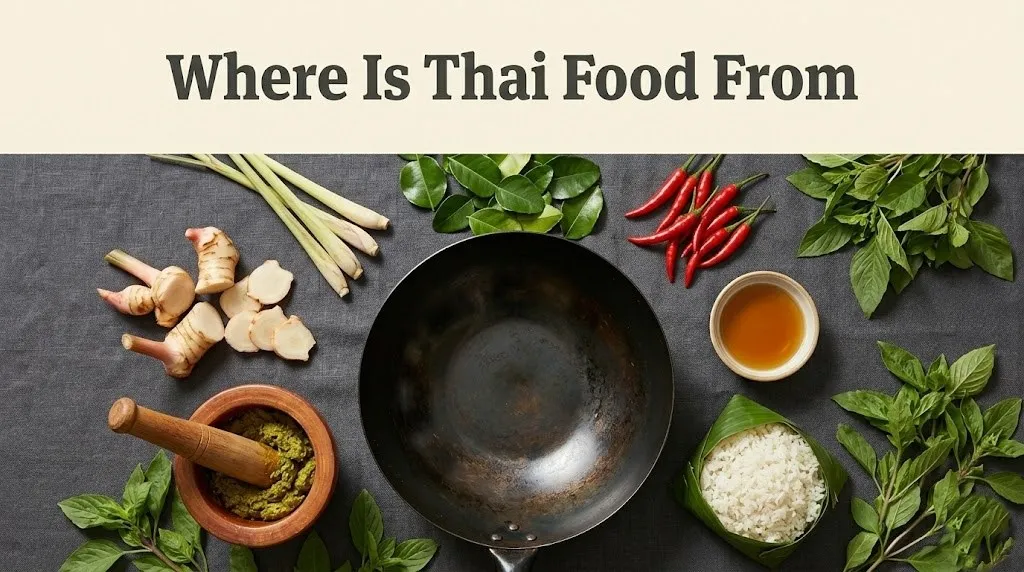
Galangal, or Alpinia galanga, is indigenous to Southeast Asia and is one of the few core Thai ingredients with no foreign origin story. It is a rhizome related to ginger but with a sharper, more citrus-pine aroma, and it contains the bioactive compound galangin, which research published in the Journal of Ethnopharmacology has identified as having anti-inflammatory and antimicrobial properties. Lemongrass, or Cymbopogon citratus, is also native to tropical Asia. Its citral content gives it a lemon-like flavor without the acidity, and it serves as both a flavoring agent and a medicinal herb in Thai traditional medicine, used to reduce bloating and digestive discomfort.
Fish sauce, or nam pla, is the indigenous umami engine of Thai cooking. The process of fermenting small fish with salt for months to produce a clear, amber, intensely savory liquid is an ancient Southeast Asian technology, not an import. Archaeological evidence from Vietnam and Thailand suggests fish fermentation for sauce production dates back at least 2,000 years. The specific fish used in Thai fish sauce are typically anchovies, which are layered with sea salt in concrete vats and left to ferment under the tropical sun for 12 to 18 months. The first press, the highest grade, is what is bottled for table use. Lower grades are cooked and used in commercial food production.
- Galangal, lemongrass, kaffir lime leaves, and holy basil are all indigenous or naturalized in Southeast Asia.
- Fish sauce and shrimp paste are indigenous Southeast Asian fermentation technologies.
- Jasmine rice was selectively bred from wild rice varieties native to the Chao Phraya basin.
- Coconut palms are naturalized across coastal Southeast Asia and were not introduced by any single trade event.
Thai Chili Pepper History
The chili pepper arrived in Thailand with Portuguese traders in the 16th century, transforming a cuisine that had previously used peppercorns and ginger-family rhizomes for heat into the chili-forward flavor system recognized globally today. No ingredient has had a more profound impact on Thai food in a shorter period of time.
The chili species that dominate Thai cooking are Capsicum annuum and Capsicum frutescens, both domesticated in the Americas at least 6,000 years ago and entirely unknown in Asia before the Columbian Exchange. The Portuguese established a maritime route that carried Brazilian and Caribbean crops to their trading posts in Goa, Malacca, and eventually Ayutthaya. The chili’s rapid adoption in Thai cooking makes sense biologically and culturally. The plant grows vigorously in tropical conditions with minimal care, produces fruit year-round, and dries easily for storage. Its capsaicin content, the compound that creates the sensation of heat, triggers the release of endorphins, creating a mild, natural euphoria that complements the communal, pleasure-oriented Thai approach to eating.
Before the chili, Thai cooks used fresh green peppercorns, also called prik thai on, for pungent heat, along with the intense heat of galangal and the slow burn of the long pepper. These older sources of heat are still present in Thai cooking, but they now play supporting roles. The chili, with its scalable, controllable burn and its ability to be used fresh, dried, pounded into paste, or infused into oil, was simply a better tool for the five-flavor balance that Thai cooks were pursuing. The bird’s eye chili, or prik kee noo, which translates memorably to “mouse dropping chili,” is now the default heat source in Thai kitchens, a New World immigrant that became the Old World standard.
Key Takeaway: The chili pepper rewired the Thai palate in less than 200 years. It is the most dramatic example of how a single introduced ingredient can redefine an entire national cuisine when it aligns perfectly with that cuisine’s underlying philosophy.
Is Thai Food Healthy
Thai food, in its traditional form, is built on a nutritional framework that emphasizes fresh herbs, lean proteins, vegetables, and broth-based cooking, making it one of the healthier national cuisines when dishes are consumed in a balanced, multi-dish meal format. The health profile of Thai food is not accidental. It emerges from the ingredient choices and cooking methods.
The standard Thai meal structure automatically enforces portion control and variety. A plate of rice is surrounded by small shared dishes that include a clear soup, a vegetable preparation, and a protein dish. This means a diner naturally eats less meat and more vegetables than they would in a single-plate Western meal. The soup, often a clear broth with herbs, fills the stomach with liquid and aromatic compounds before and during the meal, contributing to early satiety. The Thai preference for cutting meat into small pieces means the protein is distributed across bites rather than concentrated in a large, center-of-plate portion. Researchers at the Thai Ministry of Public Health have documented that traditional Thai meal patterns result in a lower glycemic load and a more diverse phytonutrient intake than Western meal patterns of equal calorie content.
Cooking techniques further support the health profile. Stir-frying, the most common Thai cooking method, uses high heat and brief cooking times, which preserves the vitamin C and volatile aromatic compounds in fresh herbs. Boiling and steaming are used for soups and fish dishes, adding no cooking fat. Deep frying exists in Thai food, think tod mun fish cakes or tod kratiem prik thai garlic-fried meat, but it is a minority technique, not the default. The Thai approach to fat is also notable. The primary cooking fats are vegetable oil for stir-frying and coconut milk for curries. Coconut milk is high in saturated fat, specifically medium-chain triglycerides, but it is used as a curry base ingredient, not a deep-frying medium. A Thai curry contains coconut milk, but it also contains water, herbs, vegetables, and protein, diluting the fat density per serving.
- Traditional Thai meals are multi-dish and shared, enforcing variety and preventing single-dish overconsumption.
- Stir-frying, steaming, and broth-making are the core Thai cooking techniques, none of which add significant cooking fat.
- Fresh herbs are added at the end of cooking, preserving their heat-sensitive vitamins and bioactive compounds.
- Processed foods are a modern introduction to the Thai diet and are not part of the traditional culinary heritage being discussed here.
Thai Food Nutritional Benefits
The nutritional benefits of Thai food are tied directly to the bioactive compounds in its fresh herb and spice pantry, with galangal, lemongrass, chili, turmeric, holy basil, and kaffir lime each contributing specific, research-documented health properties that go beyond basic macronutrient provision. Thai food is not just pleasant to eat. Its ingredients have measurable physiological effects.
Capsaicin from chili peppers is the most extensively researched compound in Thai food. Studies published in the American Journal of Clinical Nutrition have documented that capsaicin increases thermogenesis, the body’s heat production, by activating brown adipose tissue and transient receptor potential vanilloid 1 channels. This means eating spicy Thai food temporarily raises your metabolic rate. Capsaicin also has documented analgesic properties when applied topically, but in dietary form, it stimulates the release of endorphins, which explains why people who regularly eat spicy food report a sense of well-being after a chili-heavy meal.
Curcumin, the active compound in turmeric, which is central to southern Thai curries including massaman and gaeng som, has been studied for its anti-inflammatory effects. The bioavailability of curcumin is limited on its own, but black pepper, which contains piperine, enhances curcumin absorption significantly. Southern Thai curries that include both turmeric and black pepper are, intentionally or not, a highly bioavailable curcumin delivery system. Galangin from galangal and citral from lemongrass have both shown antimicrobial activity in laboratory studies. Adding fresh galangal and lemongrass to a soup is simultaneously a flavoring step and a traditional food safety measure, particularly in a tropical climate where foodborne pathogens proliferate rapidly.
| Ingredient | Bioactive Compound | Documented Health Property |
|---|---|---|
| Chili (Capsicum annuum) | Capsaicin | Thermogenesis, analgesic, appetite modulation |
| Turmeric (Curcuma longa) | Curcumin | Anti-inflammatory, antioxidant |
| Galangal (Alpinia galanga) | Galangin | Antimicrobial, anti-inflammatory |
| Lemongrass (Cymbopogon citratus) | Citral | Antimicrobial, digestive aid, anxiolytic |
| Holy Basil (Ocimum tenuiflorum) | Eugenol, ursolic acid | Adaptogenic, anti-anxiety, blood glucose modulation |
| Kaffir Lime (Citrus hystrix) | Citronellal, limonene | Antimicrobial, antioxidant |
Herbs in Thai Cooking Health Properties
The herbs used in Thai cooking are not interchangeable garnishes. Each one carries specific volatile oils and bioactive compounds that contribute to the overall health profile of the cuisine while simultaneously performing a flavor function. Understanding what each herb does explains the logic of why Thai recipes pair specific herbs with specific proteins and cooking methods.
Holy basil, or Ocimum tenuiflorum, known as kaphrao in Thai, is the defining herb of the iconic street food dish pad kaphrao. It is not the same as sweet Italian basil or Thai sweet basil, which is bai horapa. Holy basil has a peppery, clove-like intensity and contains eugenol, the same active compound found in cloves, and ursolic acid, which preliminary research has linked to blood glucose regulation and anti-anxiety effects. When a Thai cook fries holy basil with ground pork and chili, the brief, high-heat cooking releases the volatile oils without destroying them, and the fat from the pork acts as a carrier for fat-soluble phytochemicals. This is not just cooking. It is practical food pharmacology.
Kaffir lime leaves, from Citrus hystrix, contain citronellal and limonene, compounds with documented antimicrobial and antioxidant properties. The leaves are not eaten directly. They are torn or sliced and infused into the curry or soup, releasing their oils into the liquid. Tom yum goong, the famous hot and sour shrimp soup, contains kaffir lime leaves, lemongrass, and galangal, three herbs with overlapping antimicrobial properties, all simmered together. A 2015 study in the journal Food Control found that the essential oils of lemongrass and kaffir lime were effective against multiple foodborne pathogens, including Escherichia coli and Salmonella enterica. This herb trinity acts as a functional food safety net in a cuisine that developed before refrigeration.
- Holy basil is used specifically with stir-fried meats because the high heat releases its eugenol without burning it.
- Kaffir lime leaves are infused, not eaten, because their fibrous texture is unpalatable but their oil is easily extracted by liquid.
- Lemongrass stalks are bruised and simmered, releasing citral into the broth; they are typically removed before serving.
- Galangal is sliced thin and simmered or pounded into paste raw, and its galangin is heat-stable.
Key Takeaway: The herb profile of a Thai dish is not random. Each herb is selected for its compatibility with a cooking method and a protein, and the health properties of the herbs function whether or not the cook consciously intended them as medicine.
Galangal and Lemongrass Origin
Galangal is indigenous to Southeast Asia, specifically the region spanning modern Thailand, Malaysia, and Indonesia, while lemongrass is native to tropical Asia with its center of domestication in the Malay Archipelago, making both ingredients true natives of the Thai culinary zone. Unlike the chili or the wok, these flavors belong to the land itself.
Galangal, Alpinia galanga, is a rhizome in the ginger family, Zingiberaceae, but it is not interchangeable with ginger. It has a sharper, more medicinal, pine-citrus aroma and a denser, woodier texture. Fresh galangal cannot be easily grated. It must be sliced thin or pounded in a mortar. This texture difference explains why galangal is typically infused in soups and curries and removed before eating, while ginger is often minced and eaten as part of the dish. The compound galangin, which gives galangal its bite, is a flavonoid that laboratory research published in Phytotherapy Research has identified as having anti-inflammatory and potential anti-cancer properties, though human clinical trial data remains limited.
Lemongrass, Cymbopogon citratus, is a grass that grows in dense clumps across tropical Asia. Its citrus-like aroma comes from citral, a terpenoid that constitutes 65 to 85 percent of its essential oil content. Citral is the same compound that gives lemon peel its characteristic scent, but lemongrass produces it without the citric acid that makes lemon sour. This is a crucial culinary distinction. Lemongrass adds a lemon fragrance to a soup or curry without adding acidity, which would interfere with the dish’s pH balance and alter the function of other ingredients. A Thai cook uses lemongrass for lemon aroma and lime juice for sourness. They are two separate tools. The citral in lemongrass also acts as a smooth muscle relaxant, which is why lemongrass tea is used as a digestive aid and mild sedative across Southeast Asia.
Fish Sauce Origin Southeast Asia
Fish sauce is an indigenous Southeast Asian invention, not a borrowed condiment, with archaeological and historical evidence pointing to a continuous tradition of fermented fish liquid production in the region stretching back at least 2,000 years, predating any external culinary influence. It is the purest expression of the indigenous Thai pantry.
The process is deceptively simple but requires precise environmental conditions. Small fish, typically anchovies or similar small pelagic species, are layered with sea salt in a ratio of roughly 3 parts fish to 1 part salt. This mixture is packed into large concrete vats or earthenware jars and left to ferment in the tropical sun for 12 to 18 months. The salt draws moisture out of the fish through osmosis, and naturally occurring halophilic bacteria and the fish’s own gut enzymes break the protein down into amino acids and peptides. The resulting liquid is pressed and filtered. The first press, a clear, amber-gold liquid, is the highest grade and is sold as a table condiment. Subsequent presses, darker and saltier, are used for cooking.
Thailand’s coastal geography, with the Gulf of Thailand on one side and the Andaman Sea on the other, provides the raw material for a massive fish sauce industry. The provinces of Rayong, Chonburi, and Samut Songkhram are traditional fish sauce production centers. The product is known as nam pla in Thai, and it is not a background ingredient. It provides the salty backbone and the umami depth of nearly every savory Thai dish. When a recipe calls for fish sauce, it is asking for this specific fermented fish product, and substitutions like soy sauce or salt brine will produce a different flavor, though in a home kitchen, coconut aminos can approximate the umami function for those avoiding fish.
- The Roman garum was a parallel invention, not a predecessor, and Southeast Asian fish sauce developed independently.
- Modern fish sauce production in Thailand is a major industry, with brands like Tiparos and Megachef exported globally.
- Fish sauce contains naturally occurring glutamates, which give it its umami character, and it is a source of bioavailable protein and B vitamins in a liquid form.
Key Takeaway: Fish sauce is the indigenous, ancient soul of Thai savory cooking. It was here before the chili, before the wok, and before the curry. It is the flavor of Southeast Asian protein preservation, and it remains non-negotiable in authentic Thai cuisine.
Thai Food Is From What Country
Thai food is from Thailand, a country in Southeast Asia with a population of roughly 71 million people, whose cuisine was developed through a unique combination of indigenous agricultural abundance, royal culinary patronage, and strategic absorption of foreign influences over a 700-year history. The answer is straightforward, but the story behind it is not.
Thailand’s cuisine is now globally distributed, and many people encounter Thai food for the first time in a restaurant located thousands of miles from Bangkok. This global presence sometimes creates confusion about the food’s origin, especially when dishes are adapted for local tastes. A green curry served in London might contain broccoli, an ingredient never used in traditional Thai cooking, or a pad thai in Los Angeles might be sweeter and saucier than any version served in a Bangkok street stall. These adaptations are valid as local interpretations, but they do not change the cuisine’s origin. Thai food remains definitively, historically, and culturally Thai.
The Thai government, through the Department of International Trade Promotion and the Ministry of Culture, continues to actively protect and promote the national origin of Thai cuisine. The Thai Select program certifies restaurants abroad that adhere to authenticity standards. Traditional recipes are documented and archived. The pursuit of UNESCO intangible cultural heritage status for Thai food is ongoing as of 2026. This official cultural protection is a response to the cuisine’s very success. The more popular Thai food becomes globally, the more important it is to clearly anchor it to its country of origin and to ensure that the cultural context is not lost in translation.
Frequently Asked Questions About Thai Food Origins
What are the main influences on Thai cuisine?
The four main external influences on Thai cuisine are Chinese, Indian, Persian, and Portuguese.
Chinese migration brought the wok, stir-frying, noodles, and soy sauce, which were then adapted with Thai flavors.
Indian and Persian trade introduced dry spices, curry concepts, and coconut milk, while the Portuguese brought chili peppers from the Americas.
Why is Thai food so spicy?
Thai food is spicy primarily because of the chili pepper, which arrived with Portuguese traders in the 16th century and was rapidly adopted across all regions of Thailand.
Before the chili, Thai cooks used fresh peppercorns and galangal for heat, but the chili’s scalable burn and tropical growing ease made it the default heat source.
The preference for spicy food also aligns with the Thai flavor philosophy of balancing five tastes, where heat is one essential element.
What is the most famous Thai dish?
Tom yum goong, the hot and sour shrimp soup, is widely considered Thailand’s national dish and its most famous culinary export.
Pad thai, while globally popular, is a relatively modern dish, created or popularized in the 1930s as part of a national identity campaign.
Green curry, som tam, and massaman curry are also globally recognized and appear on virtually every international Thai restaurant menu.
Is Thai food gluten free?
Much traditional Thai food is naturally gluten free because the core cuisine relies on rice noodles and rice flour rather than wheat, and fish sauce serves as the primary seasoning rather than soy sauce.
However, soy sauce, oyster sauce, and fermented soybean paste are used in many dishes and contain wheat.
Anyone with celiac disease or gluten sensitivity should specifically ask about soy sauce and oyster sauce when ordering Thai food at a restaurant.
What makes Thai food different from other Asian cuisines?
Thai food is distinguished by its explicit commitment to balancing five core flavors, sweet, sour, salty, bitter, and spicy, in a single meal or even a single dish.
The use of fresh, uncooked herbs added at the end of cooking preserves volatile aromatic compounds that other cuisines often lose through extended cooking.
The combination of indigenous ingredients like galangal and fish sauce with introduced elements like chili and the wok created a flavor profile that is lighter, brighter, and more herbaceous than many neighboring cuisines.
The question of where Thai food is from has a one-word answer on a map and a much longer answer in the kitchen. Thailand is the geographic origin, but the cuisine itself is a document of trade, migration, and agricultural adaptation that spans centuries. The chili that makes your tom yum burn came from the Americas. The wok that sears your pad see ew came from China. The fish sauce that salts everything is a native Southeast Asian technology. The philosophy that balances all these elements into a harmonious five-flavor meal is Thai.
Next time you eat Thai food, you can taste the history. The galangal in your soup is the indigenous rhizome that has flavored this region for millennia. The coconut milk in your curry is a gift of the tropical coast. The noodle you are twirling is a Chinese technique made Thai by the addition of tamarind and fish sauce. And the chili heat that lingers on your lips is a Portuguese import that a Thai cook 400 years ago decided belonged in this cuisine forever.
Cooking Thai food at home means respecting these origins. Buy fish sauce. Find fresh lemongrass and galangal. Pound your own paste if you can. The food rewards you for using the real ingredients, because every ingredient in a Thai recipe is doing specific, intentional work, adding flavor, providing a health benefit, and telling a story about where it came from.