Corn nuts are not exactly a health food, but they’re not nutritional junk either. The honest answer is that they occupy a middle ground, and where you land on that spectrum depends on how much you eat, which variety you choose, and what the rest of your diet looks like.
Snack choices matter more than most people realize. The USDA Dietary Guidelines for Americans (2020-2025) identify sodium and saturated fat as two of the most overconsumed nutrients in the American diet, and many commercial corn nut varieties are high in both.
This article covers the full nutritional picture, from calories and macros to sodium risk and glycemic impact. It also addresses who benefits from corn nuts, who should genuinely moderate them, and how different preparation methods change what you’re actually eating.
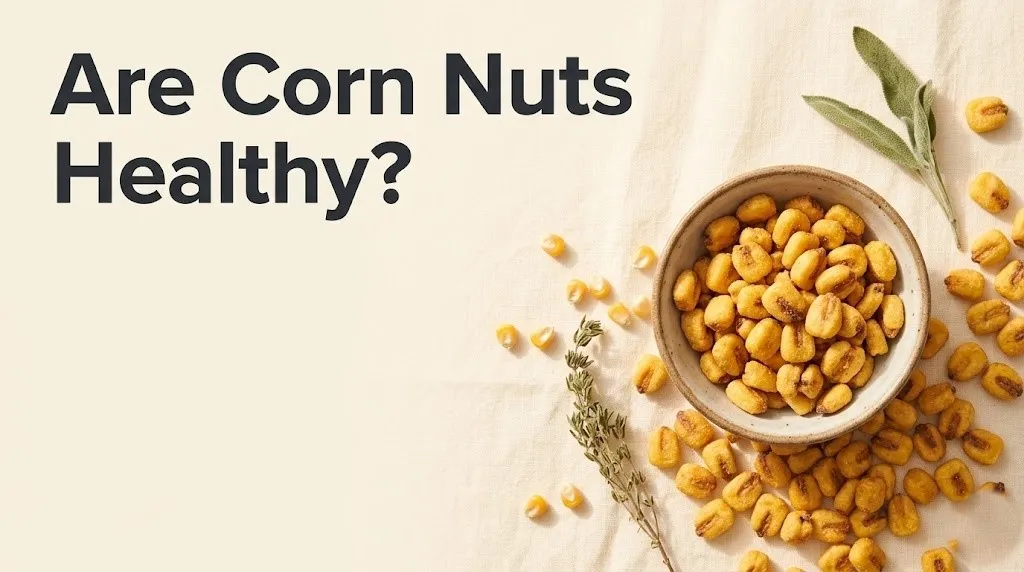
Are Corn Nuts Healthy?
Corn nuts are a moderately nutritious snack that offers real fiber, protein, and micronutrients, but their high sodium content and calorie density make portion control essential.
They’re not the same as chips or candy. One ounce (28 grams) of corn nuts delivers around 130 calories, 2 grams of protein, 2 grams of fiber, and meaningful amounts of phosphorus and magnesium. That’s a better nutritional profile than many popular processed snacks.
The problem isn’t one nutrient in isolation. It’s the combination of high sodium (often 170 to 280 milligrams per ounce), moderate fat, and calorie density in a snack most people eat mindlessly by the handful. Eating two or three ounces in a sitting, which is easy to do, triples those numbers fast.
Corn nuts can fit into a balanced diet when eaten in controlled portions. They’re better suited as an occasional snack than a daily staple, particularly for anyone managing blood pressure or sodium intake.
| Factor | Corn Nuts (1 oz / 28g) | Air-Popped Popcorn (1 oz) | Potato Chips (1 oz) |
|---|---|---|---|
| Calories | ~130 | ~110 | ~155 |
| Sodium | 170-280 mg | ~1 mg (unsalted) | ~150 mg |
| Fiber | 2g | 3.6g | 1g |
| Protein | 2g | 3g | 2g |
| Fat | 4-5g | 1g | 10g |
Quick Tip:
- Read the label on your specific brand. Sodium content varies widely between corn nut brands and flavors.
- Stick to the labeled serving size (typically 1 oz or about 30 pieces) rather than eating from the bag.
- Flavored varieties like ranch, BBQ, or chili cheese almost always carry higher sodium and artificial additive loads than plain or lightly salted options.
What Are Corn Nuts Made Of?
Corn nuts are made from large-kernel field corn (Zea mays), soaked in water, then either deep-fried or roasted at high heat until they puff and crisp into a dense, crunchy snack.
The corn used is not the same as the sweet corn you’d eat off the cob. Manufacturers use a specific large-kernel corn variety bred for its starchy, thick interior, which is what creates that distinctive dense crunch. The kernels are hydrated over several hours or overnight before cooking.
After cooking, they’re typically coated with salt and seasoning blends. Commercial brands add various flavoring agents, vegetable oils, and sometimes sugar or maltodextrin. The ingredient list on a basic plain corn nut is short: corn, oil, salt. Flavored varieties can have 15 or more ingredients.
Understanding the base ingredient matters for dietary decisions. Corn nuts are a corn-derived product, which makes them naturally gluten-free in their base form. Preparation and flavoring, however, can introduce cross-contamination risks or gluten-containing additives depending on the manufacturer.
Key ingredients to check on the label:
- Vegetable oil type (sunflower and canola oils are preferable to palm oil)
- Sodium level per serving
- Added sugars in flavored varieties
- Presence of artificial colors or preservatives
- Allergen warnings for shared equipment
Corn Nuts Nutrition Facts Per Serving
One ounce of corn nuts contains approximately 130 calories, 4 to 5 grams of fat, 20 grams of carbohydrates, 2 grams of dietary fiber, 2 grams of protein, and 170 to 280 milligrams of sodium, depending on the brand.
Those numbers shift meaningfully across brands and flavors. A plain, lightly salted variety sits at the lower end of the sodium range. A ranch or nacho-flavored version can push past 300 milligrams of sodium per ounce, which approaches 13% of the American Heart Association’s recommended daily sodium limit of 2,300 milligrams, with their ideal target being 1,500 milligrams for most adults.
The micronutrient profile is where corn nuts earn some genuine credit. Per serving, they provide:
- Phosphorus: supports bone health and energy metabolism
- Magnesium: involved in muscle function, nerve signaling, and blood glucose regulation
- Iron: contributes to red blood cell production
- Zinc: supports immune function and wound healing
- Thiamine (vitamin B1): essential for carbohydrate metabolism
- Niacin (vitamin B3): supports energy production and DNA repair
- Folate: important for cell division and DNA synthesis
These aren’t present in massive quantities per serving, but they’re real and measurable contributions to daily micronutrient intake, particularly thiamine and phosphorus.
Key Takeaway: Corn nuts deliver real nutrients per ounce, but their sodium content is the number to watch. One serving of a flavored variety can contribute 10 to 13% of the daily sodium limit in a single snack.
Corn Nuts Calories and Macros
At 130 calories per ounce, corn nuts are calorie-dense relative to their volume, which means satiety requires eating enough of them to push the calorie count up quickly.
Calorie density is the key concept here. Think of it like this: a cup of air-popped popcorn weighs about 8 grams and delivers around 30 calories. An ounce of corn nuts (28 grams) delivers 130 calories in roughly 30 small pieces. You eat more calories in fewer bites, which is why mindless snacking can add up quickly.
The macro breakdown per 1 oz serving looks like this:
| Macronutrient | Amount per 1 oz | % of 2,000 cal diet |
|---|---|---|
| Calories | ~130 | 6.5% |
| Total Fat | 4-5g | 6-8% |
| Saturated Fat | 0.5-1g | 3-5% |
| Carbohydrates | 20g | 7% |
| Dietary Fiber | 2g | 7% |
| Protein | 2g | 4% |
The fat in corn nuts is primarily from the cooking oil used, which in most mainstream brands is a polyunsaturated or monounsaturated vegetable oil (sunflower, canola). Saturated fat content is relatively low at under 1 gram per ounce in plain varieties, which is a meaningful difference from potato chips fried in palm oil.
The 2 grams of fiber per serving is modest but real. Dietary fiber slows digestion and contributes to a feeling of fullness. Compared to rice cakes or plain pretzels, which contain virtually no fiber, corn nuts do better on that metric.
People watching their carbohydrate intake should note that corn nuts are a starchy food. Twenty grams of carbohydrates per ounce, with only 2 grams of fiber, means the net carbohydrate load is high by low-carb or ketogenic diet standards.
Corn Nuts Sodium Content and Heart Health
The biggest nutritional concern with corn nuts is sodium, and it’s a concern worth taking seriously. Most commercial corn nut varieties deliver 170 to 300 milligrams of sodium per ounce, before you add a second handful.
The American Heart Association recommends that most adults consume no more than 2,300 milligrams of sodium per day, and for people with high blood pressure, the target is closer to 1,500 milligrams. A two-ounce portion of a heavily salted corn nut variety can account for 25 to 40% of that daily target in one sitting.
High sodium intake is linked to elevated blood pressure, and sustained high blood pressure increases the risk of cardiovascular disease and stroke, according to the AHA. This doesn’t mean one bag of corn nuts will damage your heart, but it does mean they add to a cumulative daily sodium load that many Americans are already exceeding.
People following the DASH (Dietary Approaches to Stop Hypertension) diet, which specifically targets sodium reduction for blood pressure management, should treat corn nuts as an occasional food rather than a regular snack. The same applies to anyone with chronic kidney disease, where sodium restriction is often medically directed.
Sodium context by serving:
| Corn Nuts Variety | Sodium per 1 oz | % of AHA 2,300mg limit |
|---|---|---|
| Plain/Lightly Salted | ~170 mg | 7% |
| Ranch Flavor | ~240 mg | 10% |
| BBQ Flavor | ~270 mg | 12% |
| Chili Cheese | ~300 mg | 13% |
| Nacho | ~290 mg | 13% |
Key Takeaway: Sodium is the most practical reason to moderate corn nuts intake. Flavored varieties can push daily sodium contributions into a range that matters if you’re already eating a processed food-heavy diet.
Corn Nuts Health Benefits
Corn nuts do offer measurable health benefits when eaten in appropriate portions, primarily from their fiber content, micronutrient profile, and the presence of beneficial antioxidant compounds.
The carotenoids lutein and zeaxanthin, which occur naturally in corn, are retained in corn nuts to varying degrees depending on the processing method. Both carotenoids are associated with eye health. Research published in the journal Nutrients has linked higher lutein and zeaxanthin intake to reduced risk of age-related macular degeneration, a common cause of vision loss in older adults.
Phosphorus deserves specific attention. Corn provides a meaningful amount of phosphorus, a mineral that works alongside calcium in bone formation and plays a role in how your body stores and releases energy. Most adults don’t think about phosphorus as a dietary priority, but it’s genuinely useful when it comes from a whole or minimally processed food source.
The fiber content, modest at 2 grams per ounce, contributes to digestive regularity and helps slow the absorption of sugars from the digestive tract. Think of fiber in a starchy snack like a governor on an engine: it slows how fast the starchy carbohydrates hit your bloodstream, which matters more for some people than others.
Documented nutritional benefits per 1 oz serving:
- Provides 7% of daily dietary fiber needs based on a 2,000-calorie reference diet
- Contributes to phosphorus intake, with corn being a notable dietary source of this mineral
- Delivers B vitamins (thiamine, niacin, folate) that support energy metabolism
- Contains lutein and zeaxanthin, carotenoids linked to eye health maintenance
- Offers moderate protein that contributes to satiety alongside fiber
Roasted vs Fried Corn Nuts: Which Is Healthier?
Roasted corn nuts are generally a better choice than deep-fried varieties because they contain less total fat and fewer calories, though the difference is smaller than many people expect.
Standard corn nuts sold commercially are most often deep-fried in vegetable oil. Deep-frying adds fat and calories that roasting does not. A deep-fried corn nut can deliver 4 to 5 grams of fat per ounce, while an oven-roasted or air-roasted version may come in closer to 2 to 3 grams.
That said, the base ingredient is the same either way. Both versions start with the same large-kernel field corn. The primary differences are:
| Factor | Roasted Corn Nuts | Deep-Fried Corn Nuts |
|---|---|---|
| Total Fat per oz | ~2-3g | ~4-5g |
| Calories per oz | ~115-120 | ~130-140 |
| Acrylamide risk | Present (high heat) | Present (high heat) |
| Texture | Slightly less dense | Denser, crunchier |
| Availability | Less common | Most common in stores |
The sodium content is not determined by cooking method. It’s determined by the seasoning applied afterward. Both roasted and fried versions can be low or high in sodium depending on the brand.
One important nuance: both methods use high heat on a starchy food, which means acrylamide can form in either process. The cooking method alone doesn’t eliminate that consideration.
For people trying to reduce fat intake, seeking out baked or dry-roasted varieties is a practical step. Reading the ingredient list to confirm whether oil was used and what type, matters more than the general label of “roasted.”
Key Takeaway: Roasted beats fried on fat and calories, but the sodium content is the same regardless of cooking method. Check both the cooking oil type and the sodium figure on the label, not just the roasted vs. fried label.
Corn Nuts Acrylamide Risk
Acrylamide is a chemical compound that forms naturally when starchy foods are cooked at high temperatures, above 248°F (120°C), through a reaction between the amino acid asparagine and naturally occurring sugars. Corn nuts, cooked at high heat from a starchy base, do contain acrylamide.
This is not a concern unique to corn nuts. The FDA notes that acrylamide forms in many common foods including potato chips, french fries, breakfast cereals, crackers, and bread. It’s a widespread byproduct of high-heat cooking of starchy foods, not a corn-specific problem.
The FDA has been studying acrylamide in food since the early 2000s. Based on animal studies, acrylamide is classified as a probable human carcinogen by the International Agency for Research on Cancer (IARC). However, the FDA’s current position is that the evidence from human epidemiological studies has not conclusively established that dietary acrylamide exposure at typical food consumption levels causes cancer in humans.
What this means practically: eating corn nuts occasionally as part of a varied diet is not the same risk profile as eating acrylamide-rich foods in large quantities daily. The dose matters. Eating a one-ounce serving of corn nuts a few times a week is a different exposure level than eating a large bag every day.
Key facts about acrylamide and starchy snacks:
- Forms in virtually all high-heat-processed starchy foods, not just corn nuts
- Higher cooking temperatures and longer cooking times increase acrylamide levels
- Roasting and frying both produce acrylamide; neither method eliminates it
- The FDA recommends a balanced diet with variety to minimize overexposure to any single food compound
- Current evidence does not support avoiding acrylamide-containing foods entirely based on human health data
Corn Nuts Glycemic Index and Blood Sugar
Corn nuts have a moderate-to-high glycemic index, estimated in the range of 52 to 74 depending on preparation method, meaning they can raise blood glucose levels meaningfully, though more slowly than refined grain snacks like white rice crackers.
The glycemic index (GI) measures how quickly a food raises blood glucose relative to pure glucose (scored at 100). Corn-based products generally fall in the moderate GI range. The 2 grams of fiber per ounce in corn nuts helps slow glucose absorption compared to a zero-fiber snack, but the net carbohydrate load of approximately 18 grams per ounce still represents a real glucose input.
Glycemic load (GL), which accounts for both the GI and the actual carbohydrate amount per serving, gives a more practical picture than GI alone. For a one-ounce serving of corn nuts, the GL is estimated at around 10 to 13, placing it in the moderate range.
A study published in the American Journal of Clinical Nutrition found that dietary fiber intake is associated with improved postprandial (after-meal) blood glucose responses. The fiber in corn nuts provides some of this benefit, but it doesn’t fully offset the starch load for people with significant insulin resistance or type 2 diabetes.
Blood sugar impact by snack comparison (estimated, 1 oz serving):
| Snack | Estimated GI | Net Carbs (1 oz) | Fiber (1 oz) |
|---|---|---|---|
| Corn Nuts | 52-74 | ~18g | 2g |
| Air-Popped Popcorn | ~55 | ~18g | 3.6g |
| Potato Chips | ~54 | ~15g | 1g |
| Pretzels | ~83 | ~23g | 1g |
| Walnuts | ~15 | ~2g | 2g |
People managing blood glucose should treat corn nuts as a moderate-GI carbohydrate food and factor them into their total carbohydrate budget for the day, rather than treating them as a “free snack.”
Key Takeaway: Corn nuts have a moderate glycemic impact. The 2 grams of fiber per serving provides modest blood sugar buffering, but the net carb load means they need to count in any carbohydrate management plan.
Corn Nuts vs Popcorn vs Pretzels vs Chips
Compared to other common grab-and-go snacks, corn nuts sit in the middle of the nutritional pack: higher in sodium than plain popcorn, lower in fat than potato chips, and a better fiber source than pretzels.
No single snack wins across every category. The right comparison depends on which nutrient you’re prioritizing or limiting.
Full comparison per 1 oz serving:
| Snack | Calories | Fat | Sodium | Fiber | Protein |
|---|---|---|---|---|---|
| Corn Nuts (plain) | ~130 | 4-5g | ~170mg | 2g | 2g |
| Air-Popped Popcorn | ~110 | 1g | ~1mg | 3.6g | 3g |
| Pretzels | ~110 | 1g | ~340mg | 1g | 3g |
| Potato Chips | ~155 | 10g | ~150mg | 1g | 2g |
| Tortilla Chips | ~140 | 7g | ~115mg | 1.5g | 2g |
Air-popped popcorn is the standout winner if you’re prioritizing low calories, low fat, and high fiber. Corn nuts beat pretzels on sodium and beat chips on fat. Pretzels beat chips on fat but have significantly higher sodium than either corn nuts or chips.
If your primary concern is fat intake, popcorn and pretzels are preferable to corn nuts. If your concern is sodium, unsalted popcorn or lightly salted tortilla chips are better choices. If you want the most fiber per ounce, popcorn leads clearly.
The real-world implication is that corn nuts are a reasonable occasional snack choice when compared honestly to alternatives. They’re not the best option in any single category, but they’re not the worst either.
Are Corn Nuts Good for Weight Loss?
Corn nuts can be part of a weight management eating pattern, but their calorie density means portion discipline matters more with corn nuts than with lower-calorie snack alternatives.
At 130 calories per ounce, corn nuts are not a low-calorie snack. But the combination of protein and fiber contributes to satiety better than pure starch snacks like pretzels or rice cakes. A one-ounce serving, eaten intentionally, can serve as a filling snack between meals without generating intense hunger shortly after.
The challenge is portion control. Corn nuts are extremely crunchy and moderately salty, two sensory qualities that make mindless overconsumption easy. Research from the Academy of Nutrition and Dietetics has documented that eating from large packages or while distracted significantly increases overall calorie consumption per snacking occasion.
A practical weight management strategy: portion corn nuts into a small bowl or container before eating. Eating directly from a bag removes the visual cue of how much you’ve consumed.
Weight loss considerations:
- One ounce (approximately 30 pieces) keeps calories manageable at ~130
- Protein and fiber content support satiety better than chips or crackers of similar calories
- High sodium may cause temporary water retention, which can affect scale weight
- People with a history of binge eating or difficulty with portion control may find corn nuts a challenging snack to moderate
- Pairing with a protein-rich food (cheese, Greek yogurt) can further slow absorption and extend satiety
Are Corn Nuts Gluten Free and Allergen Safe?
Plain corn nuts are naturally gluten-free in their base form, since they’re made from field corn (Zea mays), which contains no gluten proteins. However, cross-contamination and flavoring agents are real concerns for people with celiac disease or wheat allergies.
Gluten is found in wheat, barley, and rye. Corn does not contain gluten. This makes plain, unflavored corn nuts a theoretically gluten-free food. The practical issue is manufacturing. Many corn nut products are produced in facilities that also process wheat-containing foods. Without a certified gluten-free label, there’s a cross-contamination risk that matters for anyone with celiac disease.
Flavored corn nuts introduce additional risks. Some ranch, BBQ, and cheese flavors use maltodextrin, natural flavors, or dairy derivatives that may contain gluten-adjacent ingredients or trigger other food sensitivities.
On the allergen front, corn is not classified as one of the FDA’s nine major food allergens (milk, eggs, fish, shellfish, tree nuts, peanuts, wheat, soy, sesame). However, corn allergy does exist, though it’s less common. People with known corn sensitivity should avoid corn nuts entirely.
Allergen and dietary restriction summary:
| Dietary Need | Corn Nuts Status | Notes |
|---|---|---|
| Gluten-Free | Generally yes (plain) | Seek certified GF label for celiac |
| Vegan | Generally yes (plain) | Flavored varieties may contain dairy |
| Halal | Brand-dependent | Check for halal certification |
| Kosher | Brand-dependent | Check for kosher certification |
| Corn Allergy | Avoid entirely | Corn is the primary ingredient |
| Nut Allergy | Generally safe | Confirm no shared equipment |
| Dairy-Free | Yes (plain only) | Cheese flavors contain dairy |
Key Takeaway: Plain corn nuts are a naturally gluten-free, vegan-friendly snack in their base form. Anyone with celiac disease should confirm certified gluten-free status, and flavored varieties require a full ingredient label review before eating.
Corn Nuts for Diabetics
People with type 2 diabetes or prediabetes can eat corn nuts in moderation, but the moderate-to-high glycemic index and significant net carbohydrate content mean they need to be counted carefully within a daily carbohydrate budget.
The net carbohydrate content of corn nuts (approximately 18 grams per ounce after subtracting fiber) is a meaningful glucose input for someone monitoring blood sugar. Eating more than one ounce at a sitting compounds the effect quickly.
Pairing corn nuts with a fat or protein source can meaningfully reduce the glycemic response. Eating an ounce of corn nuts alongside a small portion of cheese, a hard-boiled egg, or a handful of nuts slows gastric emptying and lowers the rate at which glucose enters the bloodstream. This is the same principle behind why a meal of mixed macronutrients produces a lower blood sugar spike than a pure carbohydrate snack eaten alone.
The Academy of Nutrition and Dietetics recommends that people with diabetes work with a registered dietitian to establish individual carbohydrate targets based on their specific medications, activity level, and metabolic goals. Corn nuts fit differently into a 150-gram-per-day carbohydrate budget than into a 250-gram-per-day budget.
Practical guidance for people managing blood sugar:
- Treat corn nuts as a moderate-carbohydrate snack, not a free food
- Count the full net carb load: approximately 18g per 1 oz serving
- Pair with protein or fat to blunt the glycemic response
- Avoid flavored varieties with added sugars
- Monitor your personal blood glucose response, as individual variation is real and significant
Who Should Avoid Corn Nuts?
Several groups should either avoid corn nuts entirely or consume them only rarely and in strictly controlled portions.
This isn’t about corn nuts being dangerous. It’s about specific nutritional mismatches between what corn nuts deliver and what certain health conditions or dietary needs require.
Who should avoid or strictly limit corn nuts:
| Group | Reason | Alternative |
|---|---|---|
| People with hypertension | High sodium per serving | Unsalted popcorn, cucumber slices |
| People with chronic kidney disease | Phosphorus and sodium load | Low-potassium, low-phosphorus alternatives; confirm with renal dietitian |
| People with corn allergy | Corn is the primary ingredient | Rice crackers, seed-based snacks |
| People with celiac disease | Cross-contamination risk in most facilities | Certified GF snack brands |
| People on ketogenic diet | High net carbs (~18g per oz) | Cheese crisps, pork rinds |
| Pregnant individuals | Acrylamide exposure and high sodium | Air-popped popcorn, plain rice cakes |
| Children under 4 | Choking hazard from dense texture | Age-appropriate soft snacks |
| People managing heart failure | Sodium causes fluid retention | Any very-low-sodium snack alternative |
Pregnancy warrants a specific note. While no single food is likely to cause harm in one serving, the FDA recommends that pregnant individuals minimize exposure to acrylamide-containing foods where practical, and the high sodium content can contribute to pregnancy-related fluid retention and blood pressure elevation.
Children under 4 should not eat corn nuts due to the choking risk posed by the hard, dense texture.
Healthiest Corn Nuts Brands and Serving Tips
The healthiest corn nuts are those with the shortest ingredient list, lowest sodium, no artificial colors or flavors, and cooking oil that’s not high in saturated fat. Reading the label is the single most useful step you can take.
Most mainstream corn nut brands (including CornNuts and Planters) offer plain or lightly salted varieties alongside their flavored lines. The plain versions consistently have lower sodium and fewer additives than flavored options.
When comparing brands, prioritize these label-reading criteria:
What to look for on the label:
- Sodium under 200 mg per ounce (lower is better)
- Oil listed as sunflower, canola, or avocado (preferable to palm or partially hydrogenated oils)
- Fiber at 2 grams or higher per serving
- No artificial colors (Red 40, Yellow 5, Blue 1)
- No high-fructose corn syrup or added sugars
- Short total ingredient list (5 or fewer ingredients is a good benchmark for plain varieties)
Practical serving tips:
- Pre-portion into a small bowl before eating. Never eat from the bag.
- One ounce (roughly 30 pieces by count, or check the label for exact weight) is a standard single serving.
- Pair with water or a non-caloric beverage. Salty snacks increase thirst, which can help you slow down and eat less.
- Store in a sealed container after opening. Exposure to air makes corn nuts go stale quickly, which reduces satisfaction and may lead to eating more to get the same crunchy experience.
According to the USDA Dietary Guidelines for Americans, snacks that contribute meaningfully to fiber or protein without excessive sodium or added sugars are a practical fit within healthy eating patterns. Plain corn nuts, eaten in a one-ounce portion, can meet that standard.
Frequently Asked Questions About Corn Nuts
Are corn nuts healthier than chips?
Corn nuts are lower in fat than most potato chips, but often higher in sodium per ounce.
The fiber content in corn nuts (about 2g per oz) is slightly better than potato chips (about 1g per oz).
If you’re prioritizing fat reduction, corn nuts are a reasonable choice over chips. If you’re watching sodium, the gap is smaller.
Can you eat corn nuts on a diet?
Yes, corn nuts can fit into a calorie-controlled diet when portioned to one ounce per serving.
The combination of fiber and protein contributes to satiety, which may help prevent overeating at the next meal.
Pre-portioning into a bowl rather than eating from the bag is the most practical strategy for keeping calories in check.
Are corn nuts bad for your heart?
Corn nuts are not inherently harmful to heart health, but their sodium content is a relevant concern for people with cardiovascular disease or hypertension.
The American Heart Association recommends keeping sodium below 2,300 mg per day for most adults, and flavored corn nut varieties can contribute 10 to 13% of that limit in a single serving.
People with existing heart conditions should choose the lowest-sodium variety available and keep portions to one ounce.
Do corn nuts raise blood sugar?
Corn nuts have a moderate-to-high glycemic index and contain approximately 18 grams of net carbohydrates per ounce, which does raise blood glucose.
The 2 grams of fiber per serving provides modest buffering, but corn nuts should still be counted within the daily carbohydrate budget for anyone managing diabetes or prediabetes.
Pairing them with a protein or fat source slows the glucose response meaningfully.
Are corn nuts a good source of protein?
Corn nuts provide about 2 grams of protein per ounce, which is a modest but real contribution.
For context, a hard-boiled egg delivers 6 grams of protein and no sodium. Corn nuts are not a primary protein source.
If increasing protein intake is a dietary goal, corn nuts serve better as a fiber and micronutrient contributor than as a protein strategy.
The Bottom Line on Corn Nuts
Corn nuts earn their place in a snack drawer when you treat them the way any crunchy, salty, calorie-dense food deserves to be treated: with a measured serving and an honest look at the label.
One ounce, plain or lightly salted, delivers real fiber, phosphorus, magnesium, and B vitamins alongside a manageable calorie load. That’s a better nutritional result than most people expect from a snack they associate with gas stations and convenience stores.
The practical rule is straightforward. Buy the lowest-sodium variety you can find. Pour one ounce into a bowl. Enjoy them fully. Then stop.