Many common human foods are completely safe for dogs, while others are genuinely toxic and can cause organ failure or death. Knowing which is which before you reach for that table scrap is the single most important thing you can do for your dog’s safety.
The stakes are real. The ASPCA Animal Poison Control Center (APCC) receives hundreds of thousands of calls per year regarding pet exposures to potentially toxic substances, with food-related calls among the most frequent. A peer-reviewed study published in Frontiers in Veterinary Science documented food-associated poisoning cases involving chocolate, allium plants, macadamia nuts, grapes and raisins, xylitol-sweetened products, and alcohol occurring worldwide, primarily because owners did not know those foods were dangerous.
This guide covers safe proteins, fruits, vegetables, grains, and dairy options your dog can actually benefit from. It also covers the complete toxic food list with the specific reason each item is dangerous, portion guidance by body weight, special guidance for puppies and senior dogs, and a step-by-step approach to introducing human food correctly.
What Human Food Can Dogs Eat?
Dogs can safely eat many human foods including plain cooked meats, certain fruits and vegetables, cooked eggs, plain cooked grains, and limited amounts of specific dairy products, provided each item is prepared correctly and given in appropriate amounts.
The phrase “human food” covers an enormous range. Plain boiled chicken is human food. So is a garlic-seasoned rotisserie chicken. The first is safe and nutritious for dogs. The second can be toxic. The safety of almost every item on this list depends on preparation method, ingredients added, and the individual dog’s size, age, and health status.
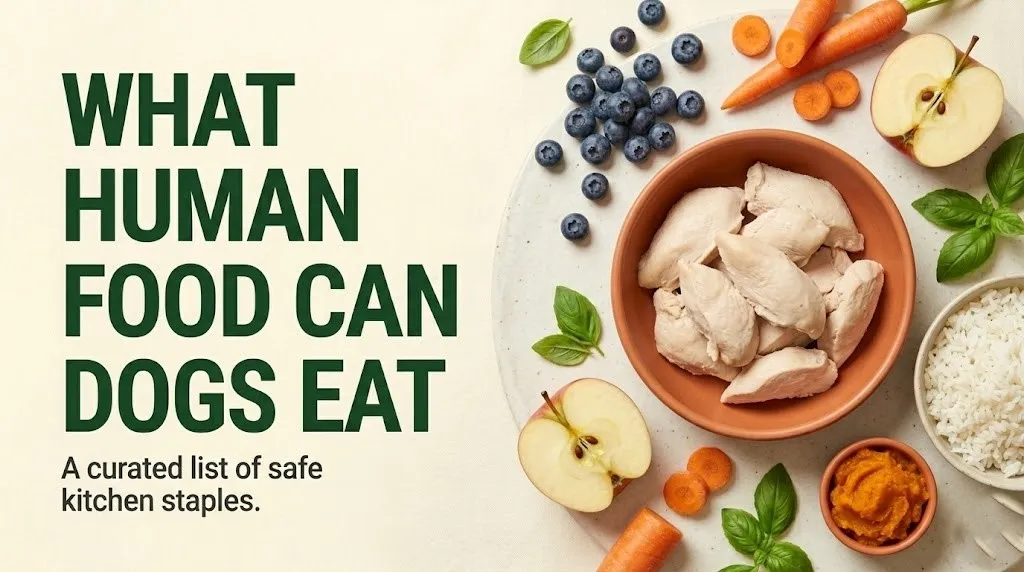
According to the ASPCA Animal Poison Control Center, human food treats should account for no more than 5% to 10% of a dog’s daily caloric intake. The remaining 90% to 95% should come from an AAFCO-compliant commercial diet appropriate for the dog’s life stage. That keeps the nutritional foundation stable while leaving room for safe shared foods.
Individual dogs vary considerably. A food that causes no reaction in one dog may trigger gastrointestinal distress in another due to individual sensitivities, age-related digestive changes, or underlying health conditions. If your dog has been diagnosed with pancreatitis, kidney disease, diabetes, or a documented food allergy, confirming any dietary additions with your veterinarian before making changes is the appropriate step, not a formality.
Quick reference: human food categories and general safety status for dogs:
| Category | Generally Safe | Use Caution | Never Give |
|---|---|---|---|
| Meats | Plain cooked chicken, turkey, beef, pork, fish | High-fat cuts, processed meats | Seasoned meats, raw pork, bones |
| Fruits | Apples, blueberries, bananas, watermelon | High-sugar fruits in large amounts | Grapes, raisins, cherries (pits) |
| Vegetables | Carrots, green beans, pumpkin, sweet potato | Broccoli (large amounts) | Onions, garlic, leeks, chives |
| Grains | Plain white rice, plain oatmeal, plain pasta | White bread (no nutritional value) | Bread dough (raw yeast), anything with raisins |
| Dairy | Plain yogurt, cottage cheese (small amounts) | Cheese (high fat) | Ice cream, sugar-sweetened dairy |
| Other | Cooked eggs, plain peanut butter (no xylitol) | Coconut (remove outer shell) | Chocolate, xylitol, macadamia nuts, alcohol |
Can Dogs Eat Human Food Safely?
Dogs can eat human food safely when the food is plain, appropriately prepared, given in correct amounts, and free from toxic seasonings, additives, and compounds. The safety of any human food depends entirely on what the food is, how it was prepared, and how much was given.
Dogs process food differently from humans at a fundamental biochemical level. According to the AKC, many foods that humans digest just fine can cause severe health problems in dogs. The key differences include: dogs metabolize certain compounds like theobromine and the allium compound N-propyl disulfide far more slowly than humans do, allowing these substances to accumulate to toxic concentrations in the body.
Think of it the way you’d think about caffeine tolerance across individuals. One cup of coffee that barely affects an adult can make a small child intensely unwell. The same logic applies across species: the same compound that a human processes in hours can linger in a dog’s system for many times longer, reaching organ-damaging levels from what looks like a small amount.
The other practical concern is body weight. A 10-pound Chihuahua and an 80-pound Labrador are not remotely interchangeable when it comes to food quantities. An 80-pound dog can often process a small piece of garlic-containing food with mild digestive upset. The same piece in a 10-pound dog can cross the threshold into toxicity. Every portion discussion in this article should be read with your dog’s actual body weight in mind.
Key safety principles for giving dogs human food:
- All meat and eggs must be fully cooked before giving to a dog
- No added salt, sugar, garlic, onion, butter, or artificial sweeteners on anything
- Remove all bones from meat, including cooked bones, which can splinter
- Check all peanut butter labels for xylitol before every use
- Introduce any new food in a small test amount first and observe for 24 hours
- Match portion size to your dog’s body weight, not to what looks small to you
What Proteins and Meats Can Dogs Eat?
Plain, fully cooked, unseasoned lean meats are among the safest and most nutritionally beneficial human foods for dogs, providing high-quality protein and complete amino acid profiles that support muscle maintenance, immune function, and coat health.
Chicken (Gallus domesticus), specifically plain boiled or baked chicken breast with no skin and no seasoning, is widely regarded by veterinarians as the most suitable protein source to give dogs from a human kitchen. It delivers approximately 31 grams of protein per 100 grams of cooked meat and is low in fat, making it appropriate for most dogs including those recovering from gastrointestinal illness. Always remove the bone before serving. According to Sploot Vets’ Medical Director, even cooked bones can splinter in a dog’s gastrointestinal tract and cause perforations.
Salmon (Salmo salar) and other fish are safe when fully cooked and boneless. Salmon provides omega-3 fatty acids, specifically docosahexaenoic acid (DHA) and eicosapentaenoic acid (EPA), which support coat quality and joint health in dogs. Raw salmon should never be given to dogs because it can carry Neorickettsia helminthoeca, the bacterium responsible for “salmon poisoning disease,” which is frequently fatal if untreated.
Lean beef and turkey follow similar rules: plain, cooked, boneless, and unseasoned. Processed meats including hot dogs, sausage, ham, and deli meats are not appropriate; the ASPCA notes these are high in sodium and often contain garlic and onion powders, which are toxic to dogs in all forms.
Safe cooked meats and protein sources for dogs:
| Protein | Safe Form | Key Nutritional Benefit | Key Caution |
|---|---|---|---|
| Chicken breast | Boiled or baked, no skin, no bone | High protein (31g/100g), low fat | Remove all bones; no seasoning |
| Turkey | Plain cooked, no skin, no bone | Lean protein, B vitamins | Avoid processed turkey with additives |
| Lean beef | Cooked, no added fat or seasoning | Complete amino acid profile, iron | Avoid fatty cuts to prevent pancreatitis |
| Salmon / fish | Fully cooked, boneless | Omega-3 DHA and EPA | Never raw; remove all bones |
| Plain pork | Cooked, lean, no seasoning | Highly digestible protein | High calories; limit in overweight dogs |
What Fruits Can Dogs Eat?
Dogs can eat several fruits safely, including apples, blueberries, bananas, watermelon, and strawberries, provided seeds, pits, and cores are removed and serving sizes are kept small due to the natural sugar content of fruit.
Apples (Malus domestica) are a useful low-calorie treat that provide vitamin A (retinol), vitamin C (ascorbic acid), and dietary fiber. Always remove the core and seeds before serving, as apple seeds contain amygdalin, a compound that can release hydrogen cyanide when metabolized. A few slices are appropriate; an entire apple at once is excessive for most dogs.
Blueberries (Vaccinium corymbosum) are low in calories and provide antioxidant compounds including anthocyanins and pterostilbene, which research has associated with anti-inflammatory effects in animals. Healthline’s veterinarian-reviewed resource notes blueberries are small, low-calorie, and rich in fiber, vitamins, and minerals, making them a practical treat. A small handful (around 5 to 10 berries per day for a medium-sized dog) is a reasonable portion.
Bananas (Musa spp.) provide potassium, vitamin B6 (pyridoxine), and vitamin C, but they are also higher in sugar than most other fruits appropriate for dogs. A few slices as an occasional treat is reasonable; daily banana feeding in large amounts adds unnecessary sugar to the diet.
Watermelon is safe once the seeds and rind are removed. The AKC notes that the high water content can help keep dogs hydrated. It provides vitamins A, C, and B-6 per serving.
Fruits dogs can eat (with serving guidance):
- Apples: Remove seeds and core; slice into pieces; good source of vitamins A and C
- Blueberries: 5 to 10 berries for medium dogs; antioxidant-rich
- Bananas: A few slices only; high in potassium but also natural sugar
- Watermelon: Remove seeds and rind; hydrating; vitamins A, C, and B-6
- Strawberries: 1 to 3 berries as an occasional treat; vitamin C source
- Cantaloupe: Remove rind and seeds; moderate sugar; vitamins A and B-6
Fruits dogs must never eat:
- Grapes and raisins (Vitis vinifera): Can cause sudden kidney failure; no safe amount established
- Cherries: Pits, stems, and leaves contain cyanogenic compounds; even the flesh carries risk
- Avocado: Contains persin, a fungicidal toxin harmful to dogs
Key Takeaway: Stick to seedless, pitless, plain fruit in small amounts; grapes and raisins are the one category where any amount at all should be treated as a potential emergency.
What Vegetables Can Dogs Eat?
Dogs can eat many plain vegetables, including carrots, green beans, pumpkin, sweet potato, peas, and broccoli, when served plain, cooked or raw depending on the specific vegetable, and free from butter, oil, salt, or seasoning.
Carrots (Daucus carota) are one of the most consistently recommended vegetables for dogs across veterinary sources. According to Medical News Today’s veterinarian-reviewed coverage, chewing on carrots can help remove plaque from teeth and support dental health. Carrots provide vitamin A (retinol), which supports immune function, skin health, and vision in dogs. They are low in calories, high in crunch, and safe raw or cooked.
Pumpkin (specifically plain cooked pumpkin, not pumpkin pie filling, which contains added sugar and spices) is an excellent source of dietary fiber and beta-carotene, a precursor to vitamin A. Sploot Vets notes pumpkin is particularly useful for dogs who are overweight since it is low in calories and fat while providing meaningful satiety from fiber. Plain canned pumpkin, not seasoned pie filling, is the appropriate product to use.
Sweet potato (Ipomoea batatas) provides vitamin A, vitamin B6 (pyridoxine), potassium, and dietary fiber. It should be cooked and served plain, not with butter, brown sugar, or marshmallows as commonly prepared for human meals.
Broccoli is safe in small amounts. The AKC notes broccoli florets contain isothiocyanates, compounds that can cause mild to moderate gastric irritation in some dogs when consumed in large amounts. Cooked broccoli reduces this risk somewhat. Keep portions small; broccoli should be an occasional small addition, not a regular large serving.
Vegetable safety overview:
| Vegetable | Safe for Dogs | Best Preparation | Key Benefit | Key Caution |
|---|---|---|---|---|
| Carrots (Daucus carota) | Yes | Raw or cooked, plain | Vitamin A, dental health | Cut into small pieces; choking risk whole |
| Green beans | Yes | Plain cooked or raw | Fiber, vitamin C, low calorie | No salt or seasoning |
| Pumpkin (plain cooked) | Yes | Plain cooked or canned (plain) | Fiber, beta-carotene | Never use pie filling |
| Sweet potato | Yes | Cooked plain | Vitamin A, potassium, fiber | Never seasoned or with added sugar |
| Peas | Yes | Plain cooked or frozen | Protein, vitamins B1 and K | Avoid canned with added sodium |
| Broccoli | In small amounts | Cooked preferred | Fiber, vitamin C | Large amounts cause gastric irritation |
| Onions / garlic / leeks | Never | Any form is toxic | None | Destroys red blood cells; causes anemia |
| Mushrooms (wild) | Never | N/A | None | Wild species may be highly toxic |
What Grains and Starches Are Safe for Dogs?
Plain cooked grains including white rice, oatmeal, plain pasta, and plain cooked quinoa are safe for most dogs in moderate amounts, provided they are served without salt, butter, oil, sauces, or seasonings.
Plain white rice (Oryza sativa) is one of the most broadly applicable human foods for dogs. It is easy to digest, low in fat, and gentle on the gastrointestinal system. According to Medical News Today’s veterinarian-reviewed guidance, plain cooked white rice can help a dog with an upset stomach because it digests easily and helps bind stool. It provides carbohydrates for quick energy but minimal protein or micronutrients, so it works best as a short-term supplement rather than a daily staple.
Plain oatmeal is also safe, providing soluble dietary fiber that supports digestive regularity. Cook it in water only, not milk, as many dogs have difficulty digesting lactose. Serve plain with no added sugar, syrup, or flavoring.
Bread is where the picture gets complicated. The AKC notes that plain bread in small amounts will not harm a dog, but it provides no nutritional benefit. It adds carbohydrates and calories for essentially no return. Raw bread dough is a separate and serious concern: the yeast in dough continues to expand inside a dog’s stomach, causing bloating and potentially dangerous gastric distension, and the yeast fermentation process produces ethanol, which can cause alcohol poisoning even in small amounts from dough consumption.
People managing their dog’s weight should know that even plain rice and oatmeal add caloric density. A cup of cooked white rice contains approximately 206 calories. For a small breed dog with a daily caloric need of 400 calories, that single cup represents more than half the day’s calories.
Safe grains for dogs (quick reference):
- Plain white rice: Cooked in water; no salt; excellent for digestive recovery
- Plain oatmeal: Cooked in water only; no sweetener; use rolled oats
- Plain pasta: Small amount, cooked, no sauce; minimal nutritional value
- Plain cooked quinoa: An acceptable grain with a complete amino acid profile; small amounts only
- Plain air-popped popcorn: No butter, no salt; provides small amounts of riboflavin (vitamin B2) and thiamine (vitamin B1)
Can Dogs Eat Eggs, Peanut Butter, and Dairy?
Cooked eggs and plain peanut butter without xylitol are safe for most dogs in moderate amounts; dairy products depend entirely on the individual dog’s ability to digest lactose, which decreases with age in many dogs.
Eggs are among the most nutrient-dense human foods dogs can receive. According to Healthline’s veterinarian-reviewed guidance, one medium cooked egg provides some of almost every vitamin and mineral, plus meaningful protein. Each large egg (approximately 50g cooked) delivers roughly 6 grams of protein, 5 grams of fat, and micronutrients including vitamin D, vitamin B12 (cobalamin), choline, and selenium. Raw eggs are a different matter: they carry Salmonella risk for both the dog and any human in the household. The AKC notes that Salmonella organisms from pets can be transmitted to their human owners.
Peanut butter (made from Arachis hypogaea) provides protein and fat, and most dogs find it intensely palatable. The critical safety point: always check the label for xylitol before every use. The Pet Poison Helpline reported that between 2019 and 2024, xylitol ranked as the third most reported toxicity, behind only chocolate and grapes and raisins. Many “natural,” “reduced sugar,” and “sugar-free” peanut butter products contain xylitol. A small amount of xylitol-free, unsalted, unsweetened peanut butter is safe; it should not be a daily large-quantity treat because the fat content is high enough to contribute to pancreatitis risk in susceptible dogs.
Dairy is the most variable category. The ASPCA notes that many dogs are lactose intolerant to varying degrees; adults produce less lactase enzyme than puppies. Plain Greek yogurt and plain cottage cheese are lower in lactose than liquid milk and are generally tolerated in small amounts. Cheese can be used as an occasional high-value reward but is high in saturated fat and sodium; low-fat options like plain mozzarella or cottage cheese are preferable to aged cheddar or processed cheese products.
Key Takeaway: Eggs are among the best human foods you can give a dog; peanut butter requires a label check every single time because xylitol-containing products are genuinely lethal; and dairy tolerance is individual, so start with small amounts and watch for loose stools or gas.
What Human Food Is Bad for Dogs?
The human foods that are bad for dogs fall into two categories: foods that are genuinely toxic and cause organ damage or death, and foods that are not toxic but are harmful in terms of calorie density, fat content, or sodium load that can contribute to obesity and pancreatitis over time.
The first category includes foods where even small amounts are dangerous. Chocolate, grapes, raisins, onions, garlic, xylitol, macadamia nuts, avocado, alcohol, and raw bread dough belong on this list. These are not about portion size; they are about specific compounds that dogs cannot safely metabolize.
The second category is subtler. Processed meats including sausage, bacon, deli ham, and hot dogs are not acutely toxic in the way chocolate is, but they are high in sodium, often contain garlic and onion powder, and deliver substantial saturated fat. Feeding these regularly contributes to weight gain and puts dogs with any predisposition to pancreatitis at real risk.
The ASPCA notes that “people food tends to be high in fat and sugar, and too much fat or sugar can lead to inflammation of the pancreas (pancreatitis) that can land your pet in the hospital.” Pancreatitis is painful, requires veterinary care, and can be life-threatening in severe cases. It is not rare in dogs; it frequently follows an episode of getting into fatty table scraps.
Human foods that are harmful but not acutely toxic (avoid regularly):
- Bacon and cured pork products: high sodium, high saturated fat
- Fried foods: any preparation involving deep frying adds excessive fat
- Flavored chips and crackers: high sodium, often contain onion or garlic powder
- Ice cream and dairy desserts: high sugar; many dogs are lactose intolerant
- White bread and plain pasta in large amounts: high calorie, low nutrient return
- Heavily salted anything: excess sodium causes increased thirst and urination; at high doses, abnormal electrolyte levels
Toxic Foods for Dogs: The Complete List
The most dangerous human foods for dogs are those that cause acute organ damage, and the top ones are: chocolate and cocoa products, grapes and raisins, xylitol-containing foods, the allium family (onions, garlic, leeks, chives), macadamia nuts, avocado, alcohol, and raw yeast dough.
Chocolate and cocoa: Every type of chocolate is toxic to dogs. The toxin is theobromine, a methylxanthine compound. According to a 2016 study published in Frontiers in Veterinary Science by Cortinovis and Caloni, chocolate and cocoa-based products were the most commonly reported food-related poisoning in dogs worldwide. Dogs metabolize theobromine extremely slowly, allowing it to accumulate to levels that affect the central nervous system, cardiovascular system, and respiratory system. Dark chocolate and baker’s chocolate contain the highest theobromine concentrations. Symptoms include vomiting, diarrhea, rapid heart rate, tremors, and seizures.
Grapes and raisins (Vitis vinifera): The ASPCA speculates tartaric acid as the likely toxic component, though full identification remains under research. What is clearly established is that even a single grape can cause acute kidney failure in some dogs. Because the dose-response relationship is unpredictable, there is no known safe amount. Treat any grape or raisin ingestion as an emergency.
Xylitol: This sugar substitute, found in sugar-free gum, “natural” peanut butter, baked goods, toothpaste, and many diet products, causes rapid hypoglycemia (dangerously low blood sugar) in dogs because it triggers insulin release that does not occur in humans. The ASPCA reports that liver damage can occur within 12 to 24 hours of ingestion, and secondary bleeding disorders may develop. The American Veterinary Medical Association (AVMA) supports labeling requirements to disclose xylitol in consumer products; the proposed Paws Off Act of 2025 would mandate such disclosure but has not yet been enacted into law.
Onions, garlic, leeks, and chives (Allium spp.): The compound N-propyl disulfide in allium plants damages red blood cells in dogs, causing hemolytic anemia. All forms are toxic: raw, cooked, dried, and powdered. Powdered garlic and onion are especially dangerous because they are more concentrated than fresh forms and are hidden in many prepared human foods and leftover dishes.
Complete toxic foods reference:
| Toxic Food | Toxic Compound | Primary Risk | Emergency Action |
|---|---|---|---|
| Chocolate / cocoa | Theobromine | Cardiac and neurological toxicity | Call vet or ASPCA APCC immediately |
| Grapes and raisins | Likely tartaric acid | Acute kidney failure | Call vet immediately; no safe amount |
| Xylitol | Xylitol itself | Hypoglycemia, liver failure | Immediate emergency; call vet now |
| Onion, garlic, leeks, chives | N-propyl disulfide | Hemolytic anemia | Call vet; symptoms may be delayed 2 to 5 days |
| Macadamia nuts | Unknown compound | Weakness, tremors, hyperthermia | Call vet; do not induce vomiting without instruction |
| Avocado | Persin | Vomiting, diarrhea, fluid accumulation | Call vet if large amount consumed |
| Raw yeast bread dough | Ethanol from yeast fermentation | Bloating, alcohol poisoning | Emergency vet; dough expands in stomach |
| Alcohol (any form) | Ethanol | CNS depression, respiratory failure | Emergency vet; even small amounts dangerous |
| Caffeine / coffee | Caffeine (methylxanthine) | Similar toxicity to chocolate | Call vet |
| Macadamia nuts | Unidentified | Vomiting, weakness, tremors | Call vet |
| Nutmeg | Myristicin | Tremors, seizures (large amounts) | Call vet |
| Green or raw potatoes | Solanine | Digestive and neurological effects | Call vet if significant amount consumed |
If your dog has consumed any of these foods, contact your veterinarian or the ASPCA Animal Poison Control Center (APCC) immediately. Do not wait for symptoms to appear before calling.
How Much Human Food Can I Give My Dog?
The ASPCA Animal Poison Control Center recommends that human food snacks and treats should not exceed 5% to 10% of a dog’s daily caloric intake, with the majority of nutrition coming from an AAFCO-compliant commercial diet appropriate for the dog’s life stage.
Translating that percentage into real quantities requires knowing your dog’s approximate daily caloric need. Body weight and activity level are the primary variables. A rough guide from veterinary practice is:
Estimated daily caloric needs by dog size:
| Dog Size | Approximate Weight | Estimated Daily Calories | Max Human Food Treat Calories (10%) |
|---|---|---|---|
| Toy / small breed | 5 to 15 lbs | 200 to 400 cal | 20 to 40 cal |
| Medium breed | 15 to 50 lbs | 400 to 900 cal | 40 to 90 cal |
| Large breed | 50 to 90 lbs | 900 to 1,500 cal | 90 to 150 cal |
| Giant breed | 90+ lbs | 1,500 to 2,500 cal | 150 to 250 cal |
These are general estimates. Actual caloric needs vary based on age, activity level, reproductive status, and health conditions. Your veterinarian can calculate a precise daily caloric target for your individual dog.
What does 40 calories of human food actually look like for a small dog? It’s approximately 2 to 3 baby carrot sticks, or one small cube of plain cooked chicken, or 5 blueberries, or half a teaspoon of plain peanut butter. The AKC notes that even healthy foods fed in excess can lead to weight gain. For a 10-pound dog, even seemingly small additions add up quickly.
The 10% principle also helps explain why high-fat table scraps cause problems disproportionate to their size. A piece of bacon contains approximately 40 to 60 calories and roughly 4 grams of fat. For a small dog, that single piece uses the entire day’s human-food calorie allowance in one bite and delivers a fat hit significant enough to stress the pancreas.
Human Food for Dogs With an Upset Stomach
The best human foods for dogs with an upset stomach are plain boiled white rice, plain boiled chicken breast, plain canned pumpkin (not pie filling), and plain boiled sweet potato, served in small amounts at room temperature.
This combination is widely used in veterinary practice as a bland diet protocol for managing acute gastrointestinal distress in dogs. The rationale is digestibility: white rice is low in fiber and very easy to process, while plain chicken provides lean protein without the fat that can worsen inflammation. Plain pumpkin adds soluble fiber, which helps normalize stool consistency in both diarrhea and constipation directions.
A typical bland diet ratio is two parts plain cooked white rice to one part plain boiled chicken. Feed smaller amounts than usual, divided into 3 to 4 small meals across the day rather than one or two large ones. This approach gives the gastrointestinal tract time to settle without going empty, which can worsen nausea and acid buildup.
Pumpkin deserves a specific note here. The fiber in plain cooked pumpkin (specifically soluble fiber in the form of pectin) acts like a sponge in the digestive tract, absorbing excess water in cases of loose stools while softening contents in cases of constipation. Give 1 teaspoon for small dogs and 2 to 4 teaspoons for medium and large dogs, mixed into the rice and chicken.
If a dog’s gastrointestinal symptoms include blood in stool, vomiting that does not stop after 12 to 24 hours, lethargy, or abdominal pain, those signs warrant a veterinary appointment rather than a home bland diet. Persistent symptoms may indicate an underlying condition requiring diagnosis and treatment beyond dietary management.
Bland diet protocol for dogs with mild gastrointestinal upset:
- Plain white rice: 2 parts; cooked in water only, no salt, cooled to room temperature
- Plain boiled chicken breast: 1 part; boneless, skinless, no seasoning, shredded
- Plain canned pumpkin (optional): 1 to 4 teaspoons depending on dog size; not pie filling
- Serving size: Slightly less than usual meal size; divided into 3 to 4 small meals per day
- Duration: Continue bland diet for 2 to 3 days; transition back to regular food gradually over 3 to 5 days
- When to stop and call a vet: Blood in vomit or stool, persistent vomiting beyond 24 hours, lethargy, or signs of abdominal pain
Key Takeaway: Plain boiled chicken and white rice in a 1:2 ratio is the gold standard bland diet for dogs with mild stomach upset; plain pumpkin (not pie filling) is the best single add-on for normalizing stool consistency.
What Human Food Can Puppies Eat?
Puppies can eat many of the same safe human foods as adult dogs, but portion sizes must be significantly smaller, all foods must be soft or cut very small to prevent choking, and high-fat foods must be avoided entirely because puppies have immature digestive systems that are particularly susceptible to fat-induced gastrointestinal distress and pancreatitis.
A puppy’s primary diet should be an AAFCO-compliant food formulated specifically for “growth and reproduction” or “all life stages.” According to the FDA, AAFCO nutrient profiles for growth and reproduction account for the higher calcium, phosphorus, and protein needs of developing dogs. Large-breed puppies (those expected to weigh over 70 lbs as adults) have specific calcium and phosphorus requirements; excess calcium from unsupplemented human food additions can interfere with normal bone development in these breeds.
The ASPCA Animal Poison Control Center’s treat limit of 5% of daily caloric intake is even more pertinent for puppies because their daily caloric needs are smaller and their tolerance for dietary disruption is lower. A small puppy eating 300 calories per day should receive no more than 15 calories from human food treats, which amounts to about 2 baby carrots or 2 to 3 blueberries.
Safe human food options for puppies, prepared in small, soft, plain pieces:
- Plain boiled chicken: Small shredded pieces; no bone; no seasoning
- Plain cooked rice: Very small amounts mixed into regular food
- Carrots (cooked, soft): Cut into very small pieces; raw carrot sticks are a choking risk in young puppies
- Blueberries: Whole berries as an occasional treat; easy to swallow and low calorie
- Plain canned pumpkin: 1/4 to 1/2 teaspoon at most for a small puppy; useful for mild digestive irregularity
The same toxic food list applies fully to puppies, and the risk is proportionally greater because of their smaller body weight. Keep grapes, raisins, chocolate, xylitol, allium plants, and macadamia nuts completely out of reach. A puppy does not need to consume much of any toxic food for the amount to become dangerous relative to body weight.
Human Food for Senior Dogs: What Changes
Senior dogs (generally those over 7 years old, or over 5 years old for large and giant breeds) have different nutritional vulnerabilities than adult dogs, and human food choices should be adjusted accordingly: lower fat content to reduce pancreatitis risk, lower sodium for dogs with cardiac or kidney concerns, and softer textures for dogs with dental disease.
Older dogs are significantly more prone to pancreatitis than younger dogs. Sudden fatty meals, such as getting into holiday table scraps high in roasted meat fat, gravies, and processed foods, are a leading trigger. A senior dog with any history of pancreatitis should not receive high-fat human foods at all. Even bacon fat poured over food as a palatability enhancer, which is sometimes recommended online, is not appropriate for this group.
Senior dogs with kidney disease require specific dietary management that should be directed by a veterinarian who has assessed the dog’s kidney function through blood and urine testing. High-protein additions like extra chicken or eggs may be appropriate for a healthy senior but inappropriate for a dog with declining renal function, where dietary protein restriction is often part of clinical management. Confirming any regular dietary additions with a veterinarian is a reasonable step for any senior dog with a known health condition.
Texture matters more in this life stage. Older dogs frequently develop dental disease, tooth loss, or jaw soreness. Hard raw carrots that a young dog crunches easily may be painful for a senior. Cooked, soft vegetables and small tender pieces of plain protein are more appropriate than hard raw foods for older dogs with dental changes.
Human food adjustments for senior dogs:
| Consideration | Young/Adult Dog | Senior Dog |
|---|---|---|
| Fat content | Moderate amounts okay | Keep low; pancreatitis risk increases with age |
| Sodium | Moderate amounts tolerable | Reduce for dogs with cardiac or kidney disease |
| Texture | Raw vegetables generally fine | Prefer cooked, soft; dental disease is common |
| Protein additions | Generally beneficial | Confirm with vet if kidney disease is present |
| Treat portion | Up to 10% of daily calories | Stay at 5% lower threshold |
Homemade Dog Treats Using Human Food
Homemade dog treats made from safe human food ingredients can be a cost-effective and genuinely nutritious alternative to commercial treats when prepared with plain, unseasoned, dog-safe ingredients and no additives, sweeteners, or salt.
The three most practical homemade treat approaches that require minimal equipment are: (1) frozen fruit pieces, (2) baked vegetable chips, and (3) simple protein bites. Each uses ingredients already covered in this article, so you know they’re safe before you start.
To make frozen blueberry and banana treats:
- Mash 2 ripe bananas (Musa spp.) in a bowl until smooth
- Stir in 1 cup of whole blueberries (Vaccinium corymbosum)
- Spoon mixture into a silicone ice cube mold or small muffin tin lined with parchment
- Freeze for at least 4 hours at 0°F (minus 18°C)
- Pop out frozen pieces and store in a sealed freezer bag for up to 2 weeks
- Serve 1 small cube per day for a medium dog; adjust down for small breeds
To make plain sweet potato chews:
- Preheat oven to 250°F (121°C)
- Peel and slice 1 large sweet potato (Ipomoea batatas) into 1/4-inch rounds or strips
- Place on a baking sheet lined with parchment; no oil, no seasoning
- Bake for 2.5 to 3 hours, flipping halfway, until dried and chewy but not hard
- Cool completely at room temperature before serving
- Store in an airtight container in the refrigerator for up to 5 days
Avoid any recipe that calls for raisins, currants, onion powder, garlic, nutmeg, or xylitol-containing sweeteners. Many online homemade dog treat recipes unfortunately include one or more of these toxic ingredients. Read every ingredient before combining anything.
Dogs with documented food allergies may react to ingredients safe for other dogs. If your dog has a known allergy to chicken, beef, or a grain, build treats around proteins and produce that avoid those allergens. A board-certified veterinary nutritionist can provide individualized guidance for dogs with complex dietary needs.
How to Safely Feed Your Dog Human Food
The safest approach to feeding your dog human food is to start with a small test amount of any new food, observe for 24 hours, confirm the food is on the safe list and was properly prepared, match the quantity to your dog’s body weight, and count it against the daily treat allowance.
The preparation step is the one most commonly skipped. “Plain” means nothing added: no salt, no butter, no garlic, no onion, no cooking spray, no sauce, no marinade, and no broth unless it is a sodium-free, allium-free homemade broth. A piece of chicken boiled in plain water is categorically different from a piece from a roasted bird seasoned with garlic and herb butter. Both are “cooked chicken.” Only one is safe.
Step-by-step guide to safely introducing any new human food to a dog:
- Confirm the food is on the verified safe list for dogs; when in doubt, do not give it
- Prepare it plain: boiled, baked, or raw where appropriate; no seasoning, salt, oil, or additives
- Remove any seeds, pits, bones, skin, or rinds that pose choking or toxicity risks
- Start with a very small test portion: approximately one teaspoon for small dogs, one tablespoon for medium dogs, two tablespoons for large dogs
- Wait 24 hours and observe for loose stools, vomiting, unusual lethargy, itching, or facial swelling
- If no reaction occurs, the food can become an occasional treat within the 5% to 10% daily calorie rule
- Never substitute human food for a complete AAFCO-compliant meal without veterinary direction
- Store all toxic human foods (chocolate, grapes, xylitol products, onions, garlic) in secured containers out of the dog’s reach
The ASPCA recommends keeping the APCC’s phone number accessible: any suspected toxic ingestion warrants an immediate call rather than a wait-and-see approach. Early treatment significantly improves outcomes in cases of xylitol, grape, or chocolate ingestion.
Key Takeaway: “Cooked chicken is safe” is only true if it was boiled plain with nothing added; preparation method is the difference between a healthy treat and a toxic one, and checking it every single time matters as much as knowing the food is on the safe list.
Frequently Asked Questions About What Human Food Dogs Can Eat
What is the healthiest human food I can give my dog?
Plain boiled chicken breast is widely regarded as the single most nutritionally beneficial human food for dogs.
It provides approximately 31 grams of protein per 100 grams of cooked meat, is low in fat, and is gentle enough for dogs recovering from illness.
Blueberries, plain cooked pumpkin, and carrots are close runners-up for antioxidant, fiber, and vitamin content.
Can dogs eat human food every day?
Dogs can have small amounts of certain human foods daily, as long as those foods are safe, plain, and do not exceed 5% to 10% of the dog’s total daily caloric intake.
Daily additions should never replace any portion of a complete, AAFCO-compliant commercial meal without veterinary direction.
Consistent daily extras that push the dog’s caloric intake above maintenance needs will contribute to weight gain over time.
What happens if a dog eats something toxic like grapes or chocolate?
Toxic ingestion requires immediate action: contact your veterinarian or the ASPCA Animal Poison Control Center (APCC) right away, before symptoms appear.
For grape and raisin ingestion, even a single piece warrants a call because kidney failure can begin before any visible symptoms emerge.
For chocolate, the severity depends on the type of chocolate, the amount consumed, and the dog’s body weight; dark and baker’s chocolate are the most dangerous per gram.
Is it okay to give my dog table scraps?
Plain, unseasoned, non-toxic table scraps in very small amounts are generally not harmful for most healthy adult dogs.
The problem is that most table food is seasoned with onion, garlic, butter, salt, and sauces that are harmful to dogs, making “table scraps” as a category unreliable.
A safer approach is setting aside a plain piece of protein or vegetable before adding any seasoning during your own meal preparation.
What human foods are safe for dogs with sensitive stomachs?
Plain boiled white rice and plain boiled chicken in a 2:1 ratio are the standard veterinary recommendation for dogs with sensitive stomachs or acute gastrointestinal upset.
Plain canned pumpkin (not pie filling) at 1 to 4 teaspoons per day depending on dog size helps normalize stool consistency.
Avoid high-fat foods, dairy products, and any raw produce until gastrointestinal symptoms have fully resolved for at least 48 hours.
Closing
The safest rule for feeding dogs human food is simpler than it sounds: if the food is plain, properly prepared, on the verified safe list, and given in a portion matched to your dog’s body weight, it’s most likely fine as an occasional addition to a complete diet.
Keep the toxic list visible. Grapes, raisins, chocolate, xylitol, garlic, and onion are the items that cause the most preventable harm, and they appear in everyday foods in hidden forms. Read labels. Prepare everything plain. Check the portion against the 5% to 10% daily calorie rule before giving anything.
When your dog has a specific health condition, including pancreatitis, kidney disease, or food allergies, bringing your vet into that conversation before making dietary changes is the right call, not because dietary additions are inherently dangerous, but because individual health conditions change what’s appropriate.