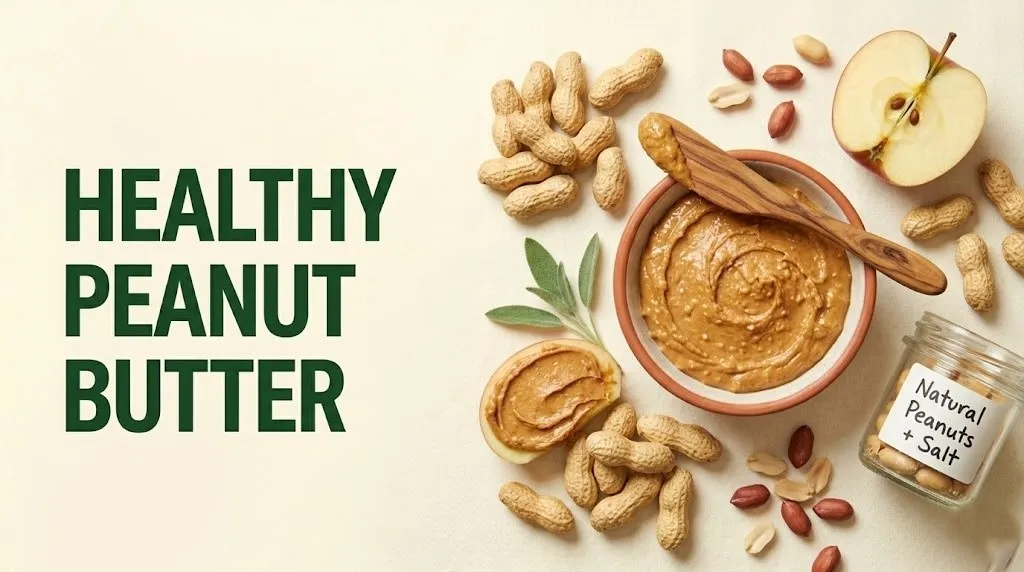
Healthy peanut butter exists, and choosing it comes down to one simple principle: fewer ingredients always means a better product. The best options contain nothing but peanuts (Arachis hypogaea), or peanuts and a pinch of salt, and that single distinction separates genuinely nutritious jars from the processed spreads lined up next to them on the same shelf.
This matters more than most people realize. About 94% of American households have peanut butter somewhere in the house. With that level of daily consumption, the difference between a jar with one ingredient and a jar with six, used every morning on toast or every afternoon with apples, adds up across hundreds of meals. The American Heart Association includes unsaturated fats from peanuts as part of a heart-healthy dietary pattern, and research published in the American Journal of Clinical Nutrition found that diets higher in monounsaturated fat from peanuts reduced cardiovascular disease risk by 21% compared to the average American diet.
This guide covers what healthy peanut butter actually is, the full nutritional profile you should know before buying, how to read a label and spot problematic ingredients, a breakdown of natural versus regular versus powdered options, the best brands available in 2026, and specific guidance for people managing weight, blood sugar, cardiovascular concerns, and children’s diets.
What Is Healthy Peanut Butter?
Healthy peanut butter is a product made from ground peanuts (Arachis hypogaea) with no added sugars, no partially hydrogenated oils, no artificial stabilizers, and minimal or no added sodium. The shorter the ingredient list, the closer the product is to its natural nutritional state.
The healthiest peanut butters contain just one ingredient: peanuts. The second healthiest contain two: peanuts and salt. That hierarchy comes from the reality that everything added after peanuts and salt serves one of two purposes: extending shelf life or improving sweetness and spreadability. Neither of those additions benefits you nutritionally.
The FDA has a legal definition for peanut butter worth knowing. In order for a product to be labeled “peanut butter,” it needs to be 90% peanuts. Otherwise, it’s called “peanut butter spread.” Spreads can contain significantly more additives, sweeteners, and stabilizers. That label distinction is your first line of defense at the store.
Peanut butter is classified as a minimally processed food when it contains only peanuts. When it contains added hydrogenated oils, stabilizers, artificial flavors, or multiple sweeteners, it shifts into the processed food category. These are distinct classifications with real nutritional consequences, not marketing labels.
Quick reference: ingredient list tiers by health quality:
- Tier 1 (best): Peanuts only
- Tier 2 (excellent): Peanuts, salt
- Tier 3 (acceptable): Peanuts, salt, palm oil (for no-stir only, no trans fat; see note below)
- Tier 4 (use with caution): Peanuts, sugar, palm oil, salt
- Tier 5 (avoid): Peanuts, sugar, partially hydrogenated vegetable oil, salt, mono- and diglycerides, corn syrup solids
Peanut Butter Nutrition Facts Per Serving
A standard serving of natural peanut butter is 2 tablespoons (approximately 32 grams), which delivers roughly 190 to 200 calories, 16 grams of total fat, 8 grams of protein, 6 to 7 grams of carbohydrates, and 2 to 3 grams of dietary fiber.
The fat breakdown in natural peanut butter matters more than the total fat number. Per 2-tablespoon serving: approximately 8 grams monounsaturated fat (primarily oleic acid), 5 grams polyunsaturated fat (primarily linoleic acid, an omega-6 fatty acid), and 2.5 to 3 grams saturated fat. The USDA Dietary Guidelines for Americans recommend limiting saturated fat to less than 10% of daily calories, which equals approximately 22 grams for a 2,000-calorie daily intake. A single serving of peanut butter uses approximately 11% to 14% of that ceiling, making portion awareness relevant.
The micronutrient profile is where peanut butter distinguishes itself from most other nut butters. Peanut butter is rich in plant-based protein, healthy fats, fiber, and key nutrients like vitamin E, magnesium, potassium, and antioxidants. More specifically: each 2-tablespoon serving provides approximately 4mg of niacin (vitamin B3), which is about 25% of the daily value; 1.9mg of vitamin E (alpha-tocopherol); 49mg of magnesium; and 200mg of potassium.
Complete nutritional profile per 2-tablespoon (32g) serving of natural, unsalted peanut butter:
| Nutrient | Amount | % Daily Value |
|---|---|---|
| Calories | 190 to 200 | ~9-10% |
| Total fat | 16g | 20% |
| Saturated fat | 2.5 to 3g | 13-15% |
| Monounsaturated fat | ~8g | N/A |
| Polyunsaturated fat | ~5g | N/A |
| Protein | 8g | 16% |
| Total carbohydrate | 6 to 7g | 2% |
| Dietary fiber | 2 to 3g | 9-11% |
| Sugars (natural, no added) | ~1 to 2g | 0% added sugar |
| Sodium (unsalted) | 0mg | 0% |
| Niacin (vitamin B3) | ~4mg | 25% |
| Vitamin E (alpha-tocopherol) | ~1.9mg | 13% |
| Magnesium | ~49mg | 12% |
| Potassium | ~200mg | 4% |
| Phosphorus | ~107mg | 9% |
Values are approximate and vary by brand, peanut variety, and roasting method. Always verify against the specific product’s nutrition facts panel.
Health Benefits of Peanut Butter Backed by Research
Peanut butter, when chosen with minimal ingredients and eaten in appropriate portions, provides documented benefits for cardiovascular markers, blood sugar management, satiety, and micronutrient intake. The research base is more solid than for many foods claimed to be beneficial.
Research suggests that including 46 grams per day of peanuts or peanut butter into an American Diabetes Association (ADA) diet plan for 6 months could benefit the heart, improve blood lipid profiles, and control weight for people with diabetes. That is a meaningful finding for people managing both diabetes and cardiovascular risk simultaneously.
The monounsaturated fat in peanut butter, specifically oleic acid, is the primary mechanism behind much of the cardiovascular research. A study published in the American Journal of Clinical Nutrition by Kris-Etherton and colleagues found that diets higher in monounsaturated fat from peanuts, peanut butter, peanut oil, and olive oil reduced the risk of cardiovascular disease by 21% compared to the average American diet, whereas a low-fat diet reduced the risk by only 12%. That comparison is particularly useful context; cutting fat entirely is not the more effective strategy.
Peanut butter also contains two notable bioactive compounds: resveratrol, a polyphenol associated with anti-inflammatory effects in dietary research, and p-coumaric acid, a phenolic acid antioxidant. These compounds are present in relatively small amounts in peanut butter, but they contribute to the broader antioxidant profile of a diet that regularly includes peanuts and peanut-based foods.
For satiety, the combination of protein, dietary fiber, and fat in peanut butter means it produces a sustained feeling of fullness. Think of peanut butter the way you’d think of a well-insulated travel mug: it keeps the contents stable for longer. A breakfast that includes peanut butter releases energy more slowly than one built on refined carbohydrates alone, which keeps hunger from returning as quickly.
Documented health associations for peanut butter (per named sources):
- Cardiovascular health: AHA endorses unsaturated fats from peanuts; research in AJCN shows 21% reduced CVD risk with peanut-high monounsaturated fat diet
- Blood lipid management: Penn State research found 11-14% reduction in total and LDL cholesterol with 2-3 daily peanut/peanut butter servings
- Blood sugar: ADA-referenced research supports peanut butter inclusion in diabetes diet plans for blood lipid and weight management benefits
- Satiety: Protein (8g), fiber (2-3g), and fat (16g) per serving contribute to delayed gastric emptying and prolonged fullness signals
- Micronutrient contribution: Niacin, magnesium, potassium, vitamin E, and phosphorus per serving all contribute to daily targets
Key Takeaway: Peanut butter’s health case rests on its monounsaturated fat profile and micronutrient density, not on any single nutrient; the research supporting its cardiovascular and blood sugar benefits is sourced to named peer-reviewed journals, not marketing claims.
Peanut Butter and Heart Health
Peanut butter supports heart health primarily through its monounsaturated fat content, specifically oleic acid, which the American Heart Association classifies as a heart-healthy unsaturated fat that can help lower LDL (low-density lipoprotein) cholesterol when it replaces saturated fat in the diet.
Peanuts are among the list of foods certified by the American Heart Association’s Heart-Check program. The American Heart Association recommends a heart-healthy dietary pattern that includes a variety of nuts, fruits, vegetables, whole grains, and other healthy foods. That certification is not a brand endorsement; it applies to peanuts as a food category.
The saturated fat figure per serving remains the relevant caveat. At 2.5 to 3 grams of saturated fat per 2 tablespoons, peanut butter is not low in saturated fat by absolute number. Each serving contains 3.05 grams of saturated fat, which is approximately 23.5% of the American Heart Association’s maximum recommended daily intake of saturated fat for those consuming 2,000 calories a day. That means two servings per day uses nearly half the AHA’s saturated fat daily limit from a single food. Portion size genuinely matters here for anyone managing cardiovascular risk.
The key distinction for heart health is what peanut butter replaces in the diet. Eating peanut butter instead of butter, cream cheese, or ultra-processed spreads on toast is a net positive for saturated fat intake. Eating peanut butter on top of a diet already high in saturated fat from red meat and full-fat dairy does not provide the same benefit. Dietary context determines the effect.
People who have been advised by a cardiologist or physician to follow a low-saturated-fat diet should track their total daily saturated fat intake, including contributions from peanut butter, to stay within their specific target range.
Heart health comparison: peanut butter vs. common spreads (per 2 tablespoons):
| Spread | Calories | Saturated Fat | Monounsaturated Fat | Sodium |
|---|---|---|---|---|
| Natural peanut butter (peanuts only) | 190 cal | 2.5g | 8g | 0mg |
| Butter (salted) | 204 cal | 12g | 5.9g | 162mg |
| Cream cheese (regular) | 99 cal | 6g | 2.7g | 90mg |
| Regular peanut butter (with added sugar and oil) | 200 cal | 3g | 8g | 140mg |
| Almond butter (natural) | 196 cal | 2g | 9.5g | 0mg |
How to Read a Peanut Butter Label
Reading a peanut butter label effectively means checking three distinct sections in a specific order: the ingredient list first, then the Nutrition Facts panel, then the front-of-package claims.
Start with the ingredient list because it tells you what you’re actually eating. The ingredients are listed in descending order by weight. Peanuts should be first, and ideally nearly everything else listed. If sugar appears second, that means the product contains more sugar than anything else except peanuts. If you see more than four ingredients, examine each one before buying.
The Nutrition Facts panel is where you apply specific targets. As a rule of thumb, look for at least 2 grams of dietary fiber, 8 grams of protein, 16 or fewer grams of fat (with 3 or fewer coming from saturated fat), and about 190 calories in a two-tablespoon serving. Those benchmarks, from a registered dietitian-reviewed nutritional framework, translate well to a label-reading checklist.
Sodium is the third variable to evaluate. Zero grams of added sugar and less than 75 milligrams of sodium per serving on the nutrition facts panel can confirm a healthier choice. Products with salt added typically land between 110 and 150mg sodium per 2 tablespoons. Unsalted varieties provide 0mg, which is preferable for anyone already managing sodium intake from other parts of the diet.
Front-of-package claims require skepticism. “Natural,” “no artificial ingredients,” and “made with real peanuts” are not regulated in the same way as “organic” (which requires USDA certification) or “non-GMO” (which requires Non-GMO Project verification). “Natural” on a peanut butter label does not guarantee absence of added sugar, palm oil, or excess sodium.
Label-reading checklist for healthy peanut butter:
- Ingredient 1: Peanuts (must be listed first by law if it is peanut butter, not a spread)
- Added sugar: Zero grams; check both the ingredient list and Nutrition Facts “Added Sugars” line
- Sodium: Under 75mg per serving preferred; 0mg for low-sodium diets
- Saturated fat: No more than 3g per 2-tablespoon serving
- Protein: At least 7 to 8g per serving
- Fiber: At least 2g per serving
- Partially hydrogenated oils: Must not appear anywhere in the ingredient list
- “Peanut butter spread” label: Flag for lower peanut content; read ingredient list carefully
Peanut Butter Ingredients to Avoid
The ingredients to avoid in peanut butter are: partially hydrogenated vegetable oil (trans fat source), added sugars (including cane sugar, corn syrup, molasses, and dextrose), excess sodium above 150mg per serving, artificial flavors, artificial sweeteners, and mono- and diglycerides as stabilizers. Each of these serves a commercial purpose that does not benefit the person eating the product.
Partially hydrogenated oil is the most concerning of these additions. The FDA determined in 2015 that partially hydrogenated oils are no longer generally recognized as safe, and manufacturers have been required to remove them from their products. Most major brands have complied, but the phrase “partially hydrogenated” can still appear on older stock or in certain imported products. Manufacturers can show 0 grams of trans fat on the label if there are less than 0.5 grams per serving; a small serving size may show 0 grams of trans fat, but it may still be present. Always check the ingredient list, not just the trans fat line on the Nutrition Facts panel.
Added sugars are the second most common problematic addition. The pro-inflammatory nature of added sugar, combined with the one-two punch hydrogenated oil has on heart health, lowering HDL (high-density lipoprotein) cholesterol and increasing LDL (low-density lipoprotein) cholesterol, are the key reasons to avoid these ingredients. For people managing blood sugar or following a carbohydrate-controlled eating pattern, even 3 to 5 grams of added sugar per serving across multiple daily uses accumulates meaningfully.
Palm oil deserves a separate note. Fully hydrogenated palm oil and palm oil do not contain trans fats. Partially hydrogenated oil is very different from fully hydrogenated oil and palm oils. Partially hydrogenated oil contains trans fat. Fully hydrogenated oil and palm oils do not contain trans fat. Palm oil is added to no-stir peanut butters to prevent oil separation. It is not ideal from a saturated fat perspective (palm oil contains approximately 50% saturated fat), but it is not the health emergency that partially hydrogenated oil represents.
Ingredients to avoid in peanut butter and why:
| Ingredient | Why to Avoid | Risk Level |
|---|---|---|
| Partially hydrogenated vegetable oil | Contains trans fat; raises LDL, lowers HDL | High |
| Added cane sugar or corn syrup | Adds empty calories; promotes inflammation; blood sugar spikes | Moderate to High |
| High-fructose corn syrup | Highly processed form of added sugar; linked to metabolic issues | High |
| Mono- and diglycerides | Emulsifiers; may contain trace trans fat; unnecessary additive | Low to Moderate |
| Artificial flavors | No nutritional function; present to mask poor ingredient quality | Low |
| Excess sodium (over 150mg/serving) | Contributes to daily sodium budget without nutritional benefit | Moderate |
| Xylitol (sugar-free varieties) | Toxic to dogs; some people are sensitive; primarily a pet safety issue | Moderate (pet safety) |
Key Takeaway: Checking the ingredient list for the words “partially hydrogenated” and “added sugars” takes under 10 seconds at the store and is the single most effective action you can take to avoid the two worst peanut butter ingredients.
Natural Peanut Butter vs Regular Peanut Butter
Natural peanut butter contains only peanuts and sometimes salt, while regular peanut butter typically contains added sugar, added oil (often palm oil or fully hydrogenated vegetable oil), and salt, producing a product that is sweeter, more shelf-stable, and more resistant to oil separation.
The nutritional difference between these two categories is real but not dramatic per single serving. The calorie count is similar. The protein and fiber content is comparable. The meaningful differences are in added sugar (regular peanut butter typically contains 2 to 3g of added sugar per serving; natural contains 0g) and in fat quality (regular versions using fully hydrogenated oils add saturated fat that natural versions do not contain).
Over a year of daily use, those differences compound. At 2 tablespoons per day, regular peanut butter with 3g added sugar contributes over 1 kilogram of added sugar annually from that single food alone. That figure helps illustrate why “a little sugar” in one food isn’t always as minor as it sounds when the food is eaten every day.
The practical complaint against natural peanut butter is oil separation. When a product contains only peanuts, the natural oils from the peanut (primarily oleic acid and linoleic acid) separate from the solids during storage. Stirring the jar before use resolves this. Storing the jar upside down in the refrigerator slows separation significantly. This is not a quality defect; it is the expected behavior of an unadulterated food.
Natural vs regular peanut butter: side-by-side comparison:
| Feature | Natural (peanuts + salt) | Regular (with added oils and sugar) |
|---|---|---|
| Calories (2 tbsp) | 190 cal | 190 to 200 cal |
| Added sugar | 0g | 2 to 4g |
| Saturated fat | 2.5 to 3g | 2.5 to 3.5g |
| Sodium (salted) | 110 to 130mg | 130 to 150mg |
| Ingredients | 2 | 4 to 7+ |
| Oil separation | Yes; requires stirring | No; stabilizers prevent separation |
| Shelf stability (unopened) | 6 to 12 months | 12 to 24 months |
| Flavor | Nutty, slightly bitter, roasted | Sweeter, more uniform |
Powdered Peanut Butter vs Regular: Which Is Healthier?
Powdered peanut butter is made by pressing most of the natural oil out of roasted peanuts and grinding the defatted peanut solids into a fine powder, producing a product that is significantly lower in calories and fat than regular or natural peanut butter. It is a nutritionally distinct product, not simply a lighter version of the same food.
Per 2-tablespoon serving of powdered peanut butter (reconstituted with water): approximately 50 to 70 calories, 1.5g of fat, 4 to 5g of protein, and 4 to 5g of carbohydrates. Compare that to natural peanut butter’s 190 calories and 16g of fat per equivalent serving. The calorie reduction is roughly 65% and the fat reduction is approximately 90%. That is a substantial difference for calorie-controlled eating plans.
The trade-off is nutritional. Removing the oil also removes the fat-soluble vitamins, the beneficial oleic acid, and the linoleic acid content that contribute to peanut butter’s cardiovascular and satiety benefits. Peanuts and peanut butter contain naturally-occurring fat, which regulates blood sugar and keeps you full. However, powdered peanut butter is lower in calories, which can be a good option for those on strict diets.
Powdered peanut butter works well in specific applications: blended into smoothies for flavor and protein without significantly increasing fat content, stirred into oatmeal, or used in baking where reducing fat without sacrificing taste is the goal. It does not function well as a spread in the same way full-fat peanut butter does, because reconstituted powder lacks the textural smoothness that the natural oils provide.
Check labels on powdered peanut butter products carefully. Some brands add sugar and salt in substantial amounts to improve flavor after the oil is removed. The ideal powdered option contains only peanuts or peanuts and salt.
Powdered vs regular peanut butter at a glance:
| Metric | Natural Peanut Butter (2 tbsp) | Powdered Peanut Butter (2 tbsp dry) |
|---|---|---|
| Calories | 190 cal | 50 to 70 cal |
| Total fat | 16g | 1.5g |
| Protein | 8g | 4 to 5g |
| Fiber | 2 to 3g | 1 to 2g |
| Best use | Spreading, dipping, snacking | Smoothies, baking, oatmeal mix-ins |
| Satiety per serving | High (fat+protein+fiber) | Lower (reduced fat) |
| Micronutrient retention | Full | Reduced (fat-soluble vitamins lost with oil removal) |
Healthiest Peanut Butter Brands in 2026
The healthiest peanut butter brands in 2026 are those with the shortest ingredient lists, the highest peanut content, no added sugars, and no partially hydrogenated oils. Multiple brands meet this standard across a range of price points and availability.
Once Again Organic Peanut Butter is the top RD-recommended brand by several registered dietitians. It uses only organic roasted peanuts, contains no additives, is ethically sourced, and comes in reusable glass jars. Its sodium content is essentially zero, making it one of the lowest-sodium options available.
Teddie All Natural Smooth Peanut Butter contains just peanuts and a pinch of salt. Per 2 tablespoons: 190 calories, 16g fat, 2.5g saturated fat, 8g protein, 3g fiber, 125mg sodium. It is a widely available, affordable option without organic certification, which makes it accessible for shoppers who prioritize ingredient quality over organic labeling.
Santa Cruz Organic Dark Roasted earns specific mention for flavor. It delivers 180 calories, 16g fat, 2g saturated fat, 9g protein, 3g fiber, and 50mg sodium per 2-tablespoon serving, and is made from certified USDA Organic dark roasted peanuts and just a dash of salt. The dark roast produces a noticeably richer, less bitter flavor compared to standard roast natural peanut butters, which addresses the common objection that natural peanut butter “doesn’t taste as good.”
Menus and product formulations change; always verify current ingredient lists and nutrition data on the product label before purchasing, as brands occasionally update their formulations.
Top healthy peanut butter brand comparison (2026):
| Brand | Ingredients | Calories (2 tbsp) | Protein | Sodium | Organic |
|---|---|---|---|---|---|
| Once Again Organic | Organic peanuts | 190 cal | 8g | 0mg | Yes |
| Santa Cruz Organic Dark Roasted | Organic peanuts, sea salt | 180 cal | 9g | 50mg | Yes |
| Teddie All Natural | Peanuts, salt | 190 cal | 8g | 125mg | No |
| Smucker’s Natural Creamy | Peanuts, salt | 190 cal | 8g | 110mg | No |
| Adams 100% Natural | Organic peanuts (non-GMO) | 190 cal | 8g | 50mg | Yes |
| Justin’s Classic | Dry-roasted peanuts, palm oil, salt | 190 cal | 7g | 95mg | No |
Verify current formulations on product labels, as ingredients and nutrition data can change between production runs.
Key Takeaway: Once Again Organic and Santa Cruz Organic Dark Roasted are the two standout choices for ingredient purity and flavor; Smucker’s Natural and Teddie are the best widely-available non-organic options with minimal ingredient lists and no added sugar.
How Much Peanut Butter Per Day Is Healthy?
The generally recommended daily amount of peanut butter for healthy adults is 1 to 2 tablespoons (16 to 32 grams) per day, which provides a meaningful contribution of protein, dietary fiber, and beneficial fats without pushing saturated fat or caloric intake beyond practical limits.
Two tablespoons of natural peanut butter contributes approximately 190 calories to the day. For a person eating 2,000 calories daily, that represents about 9.5% of total caloric intake from a single food. That is reasonable for a calorie-dense food with solid nutritional returns. Three or more tablespoons per day begins to affect the overall balance of the diet more meaningfully, particularly for people managing weight or saturated fat intake.
The USDA Dietary Guidelines for Americans classify nuts and nut butters as part of the protein foods group. A 2-tablespoon serving of peanut butter is equivalent to approximately 2 ounces of protein food within the recommended daily protein foods intake. For an adult eating 2,000 calories per day, the target is approximately 5.5 ounce-equivalents of protein foods per day, so a 2-tablespoon peanut butter serving counts for a meaningful portion of that target without dominating it.
People who are physically active, in muscle-building phases, or have higher caloric needs can reasonably consume 2 to 3 tablespoons daily. Athletes who use peanut butter as a pre- or post-workout food should account for it within their total caloric and macronutrient targets rather than treating it as a “free” addition.
Daily peanut butter amounts by goal:
| Goal | Daily Amount | Rationale |
|---|---|---|
| Weight management | 1 tablespoon (100 cal) | Keeps calorie addition minimal while providing satiety |
| General health maintenance | 1 to 2 tablespoons (100 to 190 cal) | Protein, fiber, and fat contribution within normal dietary balance |
| Athletic performance / muscle building | 2 to 3 tablespoons (190 to 285 cal) | Higher caloric and protein needs support larger portions |
| Cardiovascular health concern | 1 tablespoon or 2 tbsp max | Saturated fat tracking makes smaller portions more manageable |
| Diabetes management | 1 to 2 tablespoons | Monitor total carbohydrate and calorie contribution |
Healthy Peanut Butter for Weight Management
Peanut butter supports weight management when eaten in controlled portions because its combination of protein (8g), dietary fiber (2 to 3g), and fat (16g) per serving produces satiety that delays hunger more effectively than low-protein, low-fat snacks.
The calorie density of peanut butter is the variable that requires attention. At approximately 190 calories per 2 tablespoons, it delivers those nutrients efficiently but compactly. A tablespoon is a small physical amount of food; without measuring, most people eat more than one serving at a time without realizing it. That is not a reason to avoid peanut butter for weight management; it is a reason to measure portions rather than estimate them.
Research published in Frontiers in Nutrition (Parilli-Moser et al., 2022) examined the effect of peanut consumption on cardiovascular risk factors in a meta-analysis and found improvements in blood lipid profiles and no adverse effect on body weight in participants who added peanuts or peanut butter to their diet within controlled caloric parameters. Weight management outcomes in nutritional research are consistently linked to total caloric context, not to individual foods in isolation.
For people using peanut butter specifically for satiety management between meals, 1 tablespoon paired with a fiber-rich food (an apple, celery sticks, or a slice of whole grain bread) combines the protein and fat of peanut butter with additional fiber from the pairing food, extending fullness even further without adding a full 190-calorie serving.
People following a ketogenic or very low-carbohydrate diet can include peanut butter in measured amounts. Natural peanut butter contains 6 to 7g of total carbohydrates per serving with 2 to 3g dietary fiber, yielding approximately 4g of net carbohydrates per serving. That fits within most daily carbohydrate budgets for low-carbohydrate eating patterns.
Healthy peanut butter weight management strategies:
- Always measure with a measuring spoon; do not estimate by spooning directly from the jar
- Choose natural (peanuts only or peanuts and salt) to avoid added sugar calories
- Pair with a high-fiber food to extend satiety duration
- Count peanut butter calories within your daily total; it does not offset other calorie sources
- Powdered peanut butter is a lower-calorie alternative for smoothies and baking where full fat is not needed for satiety
Peanut Butter for Diabetics: What to Know
Peanut butter can be included in a diet plan for people with type 2 diabetes, but portion size, ingredient quality, and pairing choices all affect how it influences blood sugar levels. The ADA-referenced research supports its inclusion as part of a structured diet plan.
Research suggests that including 46 grams per day of peanuts or peanut butter into an ADA diet plan for 6 months could benefit the heart, improve blood lipid profiles, and control weight for people with diabetes. Forty-six grams is approximately 3 tablespoons of peanut butter, which is at the higher end of a daily portion but within range for someone with higher caloric needs.
The primary blood sugar consideration is not peanut butter itself but what it is eaten with. Natural peanut butter on its own has a low glycemic index because the fat and protein content slows glucose absorption. Peanut butter eaten on white bread with jam turns that equation around entirely. The bread and jam drive the blood sugar response; the peanut butter moderates it somewhat but does not eliminate it.
People using insulin or oral diabetes medications should track carbohydrates from all foods, including peanut butter. Each 2-tablespoon serving contributes approximately 6 to 7 grams of total carbohydrates. For someone following a carbohydrate-counting approach as directed by their endocrinologist or diabetes care team, confirming how peanut butter fits within their individual daily carbohydrate target is the appropriate step.
Avoid peanut butter products with added sugar for diabetes management. Added sugar in regular peanut butter directly increases the carbohydrate content per serving and removes the blood sugar advantage that natural peanut butter provides. Products labeled “reduced fat” peanut butter often compensate for fat reduction by adding more sugar, making them a worse choice for blood sugar management despite sounding healthier.
Peanut butter for diabetics: at a glance:
- Choose natural (peanuts only or peanuts and salt); zero added sugar
- Avoid “reduced fat” versions, which typically add sugar to compensate for removed fat
- Pair with vegetables, low-glycemic fruits, or whole grain foods rather than white bread
- Portion to 1 to 2 tablespoons and track carbohydrates within your individual daily plan
- Confirm daily portion targets with your diabetes care team based on your specific medication and blood sugar management approach
Key Takeaway: Natural peanut butter with no added sugar is the only version appropriate for diabetes management; “reduced fat” versions are a worse choice because manufacturers typically replace the fat with added sugar.
Healthy Peanut Butter for Kids
Peanut butter is a practical, protein-dense food for children, provided it is natural (no added sugar), served in age-appropriate portions, and introduced in a way that accounts for the risk of peanut allergy, which affects approximately 1% to 2% of children in the United States according to the American Academy of Allergy, Asthma and Immunology.
For infants 6 months and older, the USDA Dietary Guidelines for Americans (2020-2025) and the American Academy of Pediatrics note that early introduction of peanut-containing foods (in age-appropriate forms) may reduce the risk of peanut allergy development for most infants. This is a significant shift from earlier guidance that recommended avoiding peanuts in early childhood. For infants with severe eczema or existing food allergies, which represent a higher-risk group, introduction should be guided by a pediatric allergist.
Whole peanut butter is a choking risk for children under 4 years old when served in large globs. The appropriate preparation for young children is thinly spread on toast or a cracker, or mixed into other foods like oatmeal or yogurt. Sticky, thick spoonfuls of peanut butter are a documented choking hazard for toddlers.
Portion sizes for children should be scaled to their body size and caloric needs. A 1-tablespoon serving (approximately 95 to 100 calories) is appropriate for toddlers and young children as a snack component. A school-age child (6 to 12 years) can reasonably have 1 to 2 tablespoons as part of a meal or snack, contributing meaningful protein (7 to 8g per 2 tablespoons) and fiber.
Natural peanut butter without added sugar is the best choice for children’s diets. Regular peanut butters with added sugar normalize sweetness expectations and contribute unnecessary added sugars to diets where the American Heart Association already recommends no more than 25 grams of added sugar per day for children aged 2 to 18.
Age-appropriate peanut butter guidance for children:
| Age Group | Appropriate Form | Portion Size | Key Notes |
|---|---|---|---|
| Under 6 months | Do not introduce peanut protein | N/A | Exclusive breastfeeding or formula recommended |
| 6 to 12 months | Thinned smooth peanut butter or peanut powder in purees | 1 to 2 teaspoons | Consult pediatric allergist first if high-risk infant |
| 1 to 3 years | Thinly spread on toast/cracker; mixed into foods | 1 tablespoon | Never in spoonfuls; choking risk |
| 4 to 12 years | Normal serving, spread or dip | 1 to 2 tablespoons | Choose natural with no added sugar |
| Teens | Normal serving | 1 to 2 tablespoons | Watch total calorie contribution in daily diet |
Who Should Be Cautious With Peanut Butter
Several groups need to be thoughtful about peanut butter consumption: people with peanut allergies, those managing cardiovascular disease with strict saturated fat targets, people with tree nut allergies who may not realize peanuts are a different botanical category, and people following kidney disease-specific diets where potassium and phosphorus management is part of clinical care.
Peanut allergy is the most serious consideration. Peanuts (Arachis hypogaea) are a legume, not a tree nut, which means having a tree nut allergy does not automatically mean peanut allergy, and vice versa. However, cross-reactivity exists in some individuals. Peanut allergy involves IgE-mediated immune responses that can cause anaphylaxis, a severe and potentially fatal allergic reaction. People with a confirmed peanut allergy must avoid peanut butter entirely; cross-contact in shared manufacturing facilities is also a concern, which is why manufacturers are required to label peanut-containing products under the FDA Food Allergen Labeling and Consumer Protection Act.
People managing chronic kidney disease (CKD) at stages 3 through 5 may be advised to limit potassium and phosphorus intake as part of clinical dietary management. Peanut butter contains approximately 200mg of potassium and 107mg of phosphorus per 2-tablespoon serving. Whether this is appropriate within an individual’s daily targets depends on their specific kidney function measurements. Confirming peanut butter inclusion with a renal dietitian or nephrologist is the appropriate step for people with diagnosed CKD.
People with aflatoxin sensitivity or concerns should know that the FDA sets an action level of 20 micrograms per kilogram (mcg/kg) for aflatoxins in peanut products, and commercial U.S. peanut butter production includes aflatoxin testing. The risk from commercially produced peanut butter is very low under normal storage conditions. Risk is higher in improperly stored peanuts or homemade peanut butters made without testing.
Who should be cautious and why:
- Peanut allergy: Strict avoidance; risk of anaphylaxis; check all labels for cross-contact warnings
- Cardiovascular disease (medically directed): Track saturated fat (2.5 to 3g per serving) within physician-specified limits
- Chronic kidney disease: Confirm potassium (200mg/serving) and phosphorus (107mg/serving) within renal diet targets
- Weight management with restricted calorie intake: Measure carefully; calorie density requires portion control
- Infants under 6 months: Do not introduce peanut protein in any form before appropriate age
Healthy Ways to Eat Peanut Butter Every Day
Peanut butter works across an extraordinary range of meals and preparations, from breakfast to savory dinner sauces, and the key to eating it every day in a health-supporting way is using natural varieties in measured portions within varied, balanced meals.
The most direct and nutritious pairings exploit the protein and fat in peanut butter alongside fiber-rich foods: apple slices, celery sticks, whole grain toast, or plain oatmeal. These pairings slow the release of energy from the meal and increase the total fiber content of the snack or meal, which the American Heart Association links to improved satiety and heart health outcomes.
For savory applications, natural peanut butter makes an excellent base for Southeast Asian-inspired dipping sauces when blended with lime juice, low-sodium soy sauce, fresh ginger, and a small amount of rice vinegar. That preparation uses peanut butter’s fat and protein as a sauce base without adding the sugar typical of commercial peanut sauces.
To make a basic healthy peanut butter sauce (4 servings):
- Measure 4 tablespoons of natural peanut butter (peanuts and salt only) into a medium bowl
- Add 2 tablespoons of low-sodium soy sauce or tamari and stir to combine
- Add 1 tablespoon of fresh lime juice (approximately half a lime)
- Grate in 1 teaspoon of fresh ginger root and stir again
- Add 2 tablespoons of warm water to thin to a pourable consistency; adjust as needed
- Taste and add a small amount of rice vinegar for brightness if desired
- Serve immediately as a dip for vegetables, rice paper rolls, or cooked chicken; refrigerate leftovers for up to 3 days
Per serving (approximately 1.5 tablespoons): roughly 110 calories, 9g fat, 4g protein, 3g carbs, and approximately 220mg sodium from the soy sauce.
Additional everyday healthy uses for peanut butter:
- Blended into a smoothie with banana (Musa spp.), plain yogurt, and unsweetened almond milk for a protein-rich breakfast
- Stirred into plain oatmeal with sliced apple and a pinch of cinnamon for a high-satiety morning meal
- Spread on whole grain rice cakes with cucumber slices for a low-calorie afternoon snack
- Used as a dip for raw vegetables including carrots (Daucus carota), celery, and bell pepper strips
- Mixed into overnight oats for added protein and fat alongside chia seeds and rolled oats
For people with nut allergies in the household: store peanut butter separately, clearly labeled, and use separate utensils to avoid cross-contact with other nut butters or spreads. People with a peanut allergy should use sunflower seed butter (from Helianthus annuus), which has a similar caloric and fat profile with no peanut protein.
Key Takeaway: The best everyday peanut butter habit is natural peanut butter measured by the tablespoon, paired with a high-fiber whole food; that pairing maximizes satiety and nutritional value from what is already one of the more nutrient-dense foods available at any grocery store.
Frequently Asked Questions About Healthy Peanut Butter
What is the healthiest peanut butter to buy?
The healthiest peanut butter contains only peanuts (Arachis hypogaea), or peanuts and salt, with no added sugar, no partially hydrogenated oils, and no stabilizers.
Top options recommended by registered dietitians in 2026 include Once Again Organic, Santa Cruz Organic Dark Roasted, Adams 100% Natural, Smucker’s Natural Creamy, and Teddie All Natural.
Check the ingredient list at the store; the ideal list reads “roasted peanuts” or “roasted peanuts, salt” and nothing more.
Is peanut butter good for weight loss?
Peanut butter can support weight management when eaten in measured portions of 1 to 2 tablespoons per day because its protein and fat content increases satiety.
At approximately 190 calories per 2-tablespoon serving, it is calorie-dense and must be counted within daily caloric targets rather than treated as a “free” food.
Choosing natural peanut butter over regular eliminates added sugar calories; measuring servings rather than estimating prevents consistent overconsumption.
How much peanut butter should I eat per day?
For most healthy adults, 1 to 2 tablespoons (16 to 32 grams) per day is the practical daily range for peanut butter.
That amount contributes 95 to 190 calories, 4 to 8g protein, and 1.5 to 3g dietary fiber without pushing saturated fat or total caloric intake beyond reasonable limits.
Athletes or people with higher caloric needs can reasonably consume up to 3 tablespoons, accounting for the contribution within their total daily macro targets.
What ingredients should I avoid in peanut butter?
Avoid peanut butter containing partially hydrogenated vegetable oil (a source of trans fat), added sugars (including cane sugar, molasses, corn syrup, and dextrose), high-fructose corn syrup, and artificial flavors.
The FDA removed partially hydrogenated oils from the GRAS list in 2015, but always check the ingredient list because a label can show “0g trans fat” if the amount per serving is under 0.5g; the phrase “partially hydrogenated” in the ingredient list tells you what the number on the label cannot.
For sodium, aim for products with under 75mg per serving; for added sugar, the target is zero grams.
Is natural peanut butter better than regular peanut butter?
Natural peanut butter is nutritionally superior to regular peanut butter for most dietary goals because it contains no added sugar, no stabilizers, and no unnecessary ingredients.
The key practical difference is oil separation: natural peanut butter requires stirring, while regular peanut butter uses additives to maintain a stable texture.
For flavor adjustment, choose dark roast natural varieties such as Santa Cruz Organic Dark Roasted, which deliver a richer, less bitter taste that most people find comparable to sweetened regular versions.
Closing
The most important thing to take from this guide is also the most practical one: read the ingredient list before the nutrition label, and if it says anything beyond peanuts and salt, decide whether each additional ingredient is worth the trade-off for you.
For most people, the move is straightforward: choose natural peanut butter with one or two ingredients, measure your serving with a tablespoon rather than estimating, and pair it with a fiber-rich food to get the most from what is already a well-rounded, research-backed addition to a daily diet.
If you manage diabetes, heart disease, kidney disease, or a peanut allergy, bring those specific health variables into the conversation with your treating clinician before making peanut butter a regular daily staple. For everyone else: one to two tablespoons of natural peanut butter, measured, is a genuinely sound food choice.