Whole grain pasta is a genuinely healthy staple food that delivers more fiber, more micronutrients, and a lower glycemic impact than refined white pasta. It is not a low-calorie or low-carbohydrate food, but it is a nutritionally superior choice for most people who eat pasta regularly. The health difference between whole grain and white pasta is not subtle marketing. It is measurable, well-researched, and worth paying attention to if you eat pasta more than once a week.
The USDA Dietary Guidelines for Americans have recommended for years that at least half of all grain servings come from whole grains. The average American still falls far short of that target, getting only about 15 percent of grains from whole sources. A single serving of whole grain pasta delivers 5 to 7 grams of dietary fiber, roughly 20 percent of the daily recommended intake. Refined white pasta delivers 2 to 3 grams. That gap, repeated across weeks and months of pasta dinners, is the difference between a diet that supports digestive health, stable blood sugar, and long-term cardiovascular protection, and one that does not.
This guide walks you through exactly what makes whole grain pasta healthier, how it compares to white pasta and legume alternatives across every nutritional variable that matters, who benefits most from the swap, and the practical cooking techniques that make whole grain pasta taste nutty, satisfying, and genuinely good rather than gritty and disappointing.
Whole Grain Pasta Healthy
Whole grain pasta is healthy because it retains the bran and germ of the durum wheat kernel, which are removed during the refining process that produces white pasta. The bran contains most of the fiber, the germ contains most of the vitamins, minerals, and healthy fats, and the endosperm, which is the only part that remains in white pasta, is mostly starch and protein. When you eat whole grain pasta, you are eating the entire seed.
This matters in concrete nutritional terms. A two-ounce dry serving of 100% whole wheat pasta contains roughly 6 grams of fiber compared to 2.5 grams in the same serving of white pasta. It contains more magnesium, approximately 60 to 70 milligrams versus 25 to 30 milligrams, a mineral involved in over 300 enzymatic reactions in the body including muscle and nerve function, blood glucose control, and blood pressure regulation. The selenium content is higher. The zinc content is higher. The B vitamin complex is more intact, though many refined pastas are enriched with B vitamins and iron to partially compensate for the losses from processing.
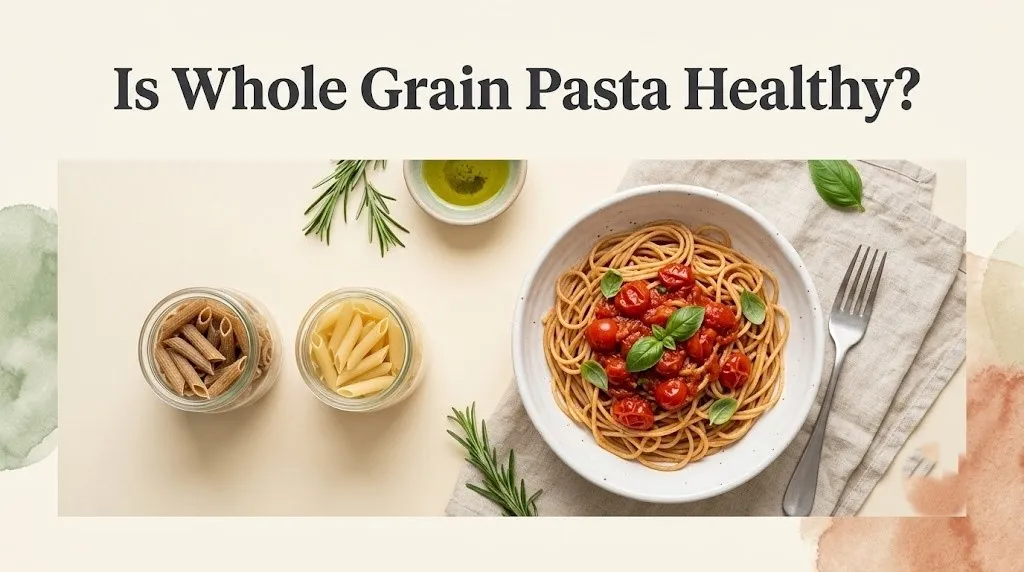
The whole grain also delivers phytonutrients, compounds like lignans, phenolic acids, and phytosterols, that are stripped away when the bran and germ are removed. These compounds have antioxidant and anti-inflammatory properties, though they are less studied than the fiber and mineral content. The point is that whole grain pasta is not just white pasta with a little extra fiber sprinkled in. It is an entirely different nutritional package because it starts from a different raw material.
Is Whole Grain Spaghetti Healthy?
Whole grain spaghetti is healthy for the same reasons all whole grain pasta is healthy. It provides more fiber, more minerals, and a slower, steadier blood glucose response than regular spaghetti made from refined semolina flour. The long, thin shape does not change the nutritional math. The ingredients do.
A plate of whole grain spaghetti with tomato sauce and vegetables is a nutritionally complete meal. The pasta provides complex carbohydrates and fiber. The tomato sauce provides lycopene, vitamin C, and potassium. A drizzle of olive oil adds monounsaturated fat that helps absorb fat-soluble vitamins from the vegetables. This is a classic Mediterranean diet pattern, and it is the opposite of the “pasta is bad” narrative that low-carb diet culture has promoted for years.
The key variable with whole grain spaghetti is the sauce. A cream-based Alfredo sauce adds 300 to 400 calories and 20 to 30 grams of saturated fat to a plate of pasta, overwhelming the health benefits of the whole grain base. A tomato-based marinara with vegetables adds roughly 70 to 100 calories and minimal fat while contributing additional fiber and antioxidants. The pasta itself is healthy. The final dish is healthy or not depending on what you put on it.
Are Whole Grain Noodles Healthy?
Whole grain noodles, whether they are Italian-style spaghetti, Asian-style noodles, or egg noodles made with whole grain flour, are healthy in the same way whole grain pasta is healthy. The defining feature is the use of whole grain flour instead of refined flour, which preserves the fiber, mineral, and phytonutrient content of the original grain.
The noodle category is broader than the pasta category. Soba noodles made from buckwheat flour are whole grain noodles, and buckwheat is naturally gluten-free despite its name. Whole grain udon noodles made from whole wheat flour are chewy, satisfying, and deliver the same fiber and mineral benefits as whole wheat spaghetti. Brown rice noodles, while technically a whole grain, tend to be lower in protein and fiber than whole wheat noodles and have a softer, more fragile texture. They are a good option for people with celiac disease or wheat allergy, but they are not necessarily healthier than whole wheat noodles for someone who tolerates gluten.
The cooking method matters for noodle nutrition. Overcooking any noodle, whole grain or not, breaks down the starch structure and increases the glycemic response. Cooking noodles al dente, until they are tender but still have a slight bite, preserves more of the intact starch granules and results in a lower post-meal blood glucose spike. This is true for pasta and for noodles. The texture you are aiming for is not just a preference. It has a measurable metabolic effect.
Key Takeaway: Whole grain pasta, spaghetti, and noodles all deliver the same core benefit: more fiber and minerals than their refined counterparts. The shape does not matter. The flour does.
Whole Grain Pasta vs White Pasta Nutrition
Whole grain pasta and white pasta contain roughly the same number of calories, about 180 to 200 per two-ounce dry serving, but whole grain pasta delivers significantly more fiber, more minerals, and a lower glycemic load. The calorie similarity surprises many people, but it makes sense. The bran and germ add nutrients without adding many calories.
The protein difference is small but real. Whole grain pasta contains about 6 to 7 grams of protein per serving. White pasta contains about 7 to 8 grams, slightly more because the endosperm is more concentrated with gluten-forming proteins when the bran and germ are removed. The protein difference is negligible in the context of a full meal. Both are moderate-protein foods that pair well with a higher-protein topping like meatballs, chicken, legumes, or cheese.
The carbohydrate story is where the two pastas genuinely diverge. Both contain roughly 39 to 42 grams of total carbohydrates per serving. But the fiber in whole grain pasta, roughly 6 grams versus 2 to 3 grams, changes the net carbohydrate calculation and the glycemic response. Fiber is a carbohydrate that the body does not digest into glucose. It slows the absorption of the digestible carbohydrates, resulting in a slower, lower blood sugar rise after eating. A 2018 study in the Journal of Nutrition found that replacing refined grains with whole grains improved both fasting glucose and insulin sensitivity in adults with prediabetes over a six-week period.
Nutritional Comparison Table (2 oz dry serving):
| Nutrient | White Pasta | Whole Grain Pasta | Legume Pasta (Chickpea) |
|---|---|---|---|
| Calories | 200 | 190 | 190 |
| Protein (g) | 7 | 6 | 13 |
| Fiber (g) | 2.5 | 6 | 7 |
| Iron (mg) | 1.8 (enriched) | 1.5 | 3.5 |
| Magnesium (mg) | 25 | 65 | 60 |
| Glycemic Index | 50-55 | 37-42 | 28-32 |
| Gluten | Yes | Yes | No |
Whole Grain Pasta Fiber Content and Protein
A two-ounce dry serving of whole grain pasta provides roughly 5 to 7 grams of dietary fiber and 6 to 7 grams of protein. The fiber is a mix of insoluble and soluble types, both of which contribute distinct health benefits. The protein is primarily gluten, the same protein complex found in white pasta, and it is incomplete but useful in the context of a varied diet.
The insoluble fiber in whole grain pasta adds bulk to the stool, speeds intestinal transit time, and helps prevent constipation. This is the “roughage” function of fiber, and it is the reason why people who switch from white to whole grain pasta sometimes notice improved digestive regularity within a few days. The soluble fiber, a smaller portion of the total, forms a gel in the digestive tract that binds to cholesterol and slows glucose absorption. This is the fiber fraction most responsible for the cholesterol-lowering and blood-sugar-moderating effects attributed to whole grains.
The protein in whole grain pasta is valuable but should not be counted on as a primary protein source. Six grams of protein per serving is roughly the amount in one egg or half a cup of milk. It contributes to the total daily protein intake but requires a complementary protein source, like legumes, meat, fish, or dairy, to round out a meal. The protein in legume-based pastas like chickpea or red lentil pasta is significantly higher, around 11 to 14 grams per serving, and contains more lysine, the amino acid that wheat protein is low in.
Is Whole Grain Pasta Good for Weight Loss?
Whole grain pasta supports weight loss better than white pasta because its higher fiber content increases satiety, meaning you feel fuller after eating and are less likely to overeat or snack between meals. It is not a magic weight loss food. It is a carbohydrate source that works with your appetite rather than against it.
A 2019 randomized controlled trial published in the American Journal of Clinical Nutrition compared weight loss outcomes in adults who ate whole grains versus refined grains over eight weeks. The whole grain group lost more body fat, not just total weight, and showed a greater increase in resting metabolic rate. The researchers attributed the difference partly to the fiber’s effect on satiety and partly to the increased thermic effect of digesting more complex food. Whole grains cost the body more energy to process than refined grains.
The practical weight loss application is straightforward. A bowl of white pasta with butter or cream sauce is a calorie-dense, low-fiber meal that digests quickly and leaves you hungry again within a few hours. A bowl of whole grain pasta with vegetables, lean protein, and olive oil is a high-fiber, moderate-calorie meal that digests slowly and keeps you satisfied through the afternoon. The calorie difference between the two bowls might be 300 to 400 calories. The satiety difference is even larger.
Key Takeaway: Whole grain pasta does not magically cause weight loss. It supports it by making you feel fuller on fewer calories, which is the fundamental mechanism behind every effective weight management strategy.
Whole Grain Pasta and Blood Sugar Response
Whole grain pasta produces a lower and slower blood glucose response than white pasta because the intact bran and fiber physically slow the digestion of starch into glucose. The glycemic index of whole grain spaghetti is roughly 37 to 42, compared to 50 to 55 for white spaghetti. This difference is clinically meaningful for people with diabetes, prediabetes, or insulin resistance.
The mechanism is partly structural and partly chemical. The bran particles in whole grain pasta create a physical barrier that digestive enzymes must work around to access the starch granules inside the endosperm. This slows the rate of starch breakdown. The soluble fiber forms a viscous gel in the small intestine that further delays glucose absorption into the bloodstream. The result is a more gradual rise in blood sugar, a lower peak, and a less dramatic insulin response to bring glucose back down.
This matters for long-term metabolic health. Repeated large insulin spikes from high-glycemic meals contribute to insulin resistance over time. Swapping refined grains for whole grains is one of the few dietary changes with a large and consistent body of evidence behind it for type 2 diabetes prevention. A 2020 meta-analysis in the British Medical Journal that pooled data from over 30 cohort studies found that each additional serving of whole grains per day was associated with a 19 percent lower risk of developing type 2 diabetes. Pasta is just one vehicle for whole grains, but it is a popular one.
Whole Grain Pasta Heart Health Benefits
Whole grain pasta supports cardiovascular health primarily through its fiber content, which lowers LDL cholesterol, and its magnesium and potassium content, which help regulate blood pressure. The American Heart Association specifically recommends whole grains as part of a heart-healthy dietary pattern.
The cholesterol-lowering effect comes from soluble fiber. Soluble fiber binds to bile acids in the intestine, preventing their reabsorption. The liver must then pull cholesterol out of the bloodstream to manufacture replacement bile acids, which lowers circulating LDL cholesterol levels. The effect is modest but real. A diet that includes 5 to 10 grams of soluble fiber per day, roughly the amount in three to four servings of whole grains including pasta, oatmeal, and barley, can lower LDL cholesterol by 5 to 10 points.
The blood pressure effect comes from the mineral content. Whole grains are a good source of magnesium, and higher magnesium intake is associated with lower blood pressure in observational studies. A 2016 analysis in the journal Hypertension found that each 100-milligram increase in daily magnesium intake was associated with a 5 percent lower risk of hypertension. Whole grain pasta is not a substitute for blood pressure medication, but it contributes to the overall dietary pattern that keeps blood vessels flexible and responsive.
Best Whole Grain Pasta Brands 2026
The best whole grain pasta brands in 2026 combine 100% whole grain durum wheat flour, a good texture that holds up to al dente cooking, and a clean, nutty flavor without bitterness. The top tier of brands has improved significantly from the gritty, mushy whole wheat pasta that gave the category a bad reputation in the 1990s.
Barilla Whole Grain pasta is the most widely available option and a reliable daily choice. It uses 100 percent whole wheat durum flour and a bronze die extrusion process that creates a slightly rough surface for sauce adhesion. The flavor is mild and nutty, with no bitterness. The texture holds al dente well if not overcooked. Barilla also offers a Protein Plus line that blends whole grain semolina with lentil and chickpea flour, which is not a 100 percent whole grain product but offers higher protein for those seeking that specific nutritional profile.
De Cecco Integrale is a premium Italian option made with 100 percent whole wheat semolina. The texture is noticeably better than most American brands, with a satisfying chew and a nutty, toasted flavor that complements robust sauces. De Cecco dries their pasta slowly at low temperatures, which preserves the wheat flavor and creates a better final texture.
Jovial and Bionaturae are organic options made with einkorn or 100 percent organic whole durum wheat. These are more expensive but appeal to people seeking organic certification and minimal processing. Rummo, an Italian brand, offers a whole wheat pasta that holds its shape exceptionally well, with a firm bite even after a minute or two of extra cooking.
Best Whole Grain Pasta Brands 2026 Summary:
| Brand | Grain Type | Organic | Texture Score (1-5) | Flavor Notes |
|---|---|---|---|---|
| Barilla Whole Grain | 100% whole wheat | No | 4 | Mild, nutty, versatile |
| De Cecco Integrale | 100% whole wheat semolina | No | 5 | Toasted, complex, firm |
| Jovial Einkorn | 100% einkorn | Yes | 4 | Earthy, ancient grain flavor |
| Bionaturae | 100% organic durum | Yes | 4 | Clean, nutty, firm |
| Rummo Integrale | 100% whole wheat | No | 5 | Chewy, holds shape well |
| Barilla Protein Plus | Whole grain + legume blend | No | 3 | Higher protein, milder taste |
How to Cook Whole Grain Pasta Properly
Cooking whole grain pasta properly requires more water, more salt, and a careful watch on the timer to hit the al dente window. Overcooked whole grain pasta turns mushy and develops a gritty, unpleasant texture. Perfectly cooked whole grain pasta is chewy, nutty, and firm.
Use at least 5 quarts of water per pound of pasta and salt the water generously, about 1.5 tablespoons of kosher salt. The salt seasons the pasta from the inside and also helps the starches gelatinize properly. Whole grain pasta releases more starch into the cooking water than white pasta, so the extra water volume prevents the water from turning into a thick, gluey sludge that coats the pasta.
Start checking for doneness 2 to 3 minutes before the package instructions suggest. Whole grain pasta can go from al dente to overcooked very quickly. The pasta should be tender all the way through with a slight firmness at the very center. It should not be hard or chalky. Reserve a cup of the starchy cooking water before draining. The pasta water is the best way to thin and bind the sauce to the pasta. The starch in the water helps the sauce cling rather than sliding off the smooth, firm noodle surface.
Cooking Steps:
- Bring 5 quarts of water to a rolling boil with 1.5 tablespoons of kosher salt.
- Add the whole grain pasta and stir immediately to prevent sticking.
- Cook, stirring occasionally, and begin checking for doneness 3 minutes before the package time.
- Test by biting into a piece. Look for tender with a small white dot of firmness at the center.
- Reserve 1 cup of pasta water, then drain. Do not rinse.
- Toss immediately with sauce, adding pasta water as needed to loosen and bind.
Whole Grain Pasta Taste Improvement Tips
Whole grain pasta tastes better when it is paired with bold, textured sauces that complement its nutty flavor rather than light, delicate sauces that get overwhelmed. The flavor of whole grain pasta is deeper, earthier, and more assertive than white pasta, and the best sauce pairings lean into that rather than fighting it.
A simple butter and Parmesan sauce that works beautifully on white pasta can taste flat and greasy on whole grain. The same sauce with the addition of toasted walnuts, sauteed garlic, and a generous amount of black pepper suddenly matches the pasta’s intensity. Roasted vegetables, caramelized onions, browned sausage, and robust tomato sauces are all better pairings for whole grain pasta than cream or butter alone.
The texture of the pasta also changes the sauce calculus. Whole grain pasta has a rougher surface, thanks to the bran particles, which means chunky sauces with chopped vegetables or ground meat cling effectively. This is an advantage if you use it. A chunky lentil Bolognese or a roasted eggplant and tomato sauce will coat and grip whole grain pasta in a way that a thin broth or a simple aglio e olio will not.
Quick Tips:
- Toast the dry pasta in a dry skillet for 2 to 3 minutes before boiling to intensify the nutty flavor.
- Finish the pasta in the sauce for the last 1 to 2 minutes of cooking, adding pasta water to bind.
- Use strong flavors like anchovy, garlic, chile flakes, and pecorino that can stand up to the grain.
- Avoid cream-heavy sauces. Use olive oil and starchy pasta water for a lighter, clingier finish.
Is Whole Grain Pasta Safe for Gluten Sensitivity?
Whole grain wheat pasta contains gluten and is not safe for anyone with celiac disease, wheat allergy, or non-celiac gluten sensitivity. The bran and germ do not remove the gluten proteins. Whole grain pasta made from wheat, including durum, spelt, einkorn, and farro, all contain gluten.
There is a persistent misconception that whole grain or ancient grain wheat is somehow lower in gluten or tolerable for people with mild gluten sensitivity. This is not supported by evidence. Einkorn wheat, the oldest cultivated wheat variety, does have a slightly different gluten protein structure than modern bread wheat, but it still contains gluten and is not safe for people with celiac disease. Some people with mild non-celiac gluten sensitivity report fewer symptoms with einkorn or spelt, but this is anecdotal and inconsistent.
For those who must avoid gluten entirely, whole grain options include brown rice pasta, quinoa pasta, and 100 percent buckwheat soba noodles. Legume-based pastas made from chickpeas, lentils, or red lentils are also gluten-free and offer higher protein and fiber than grain-based pastas. These are not technically whole grain in the strict sense, but they deliver a similar nutritional profile in terms of fiber and micronutrient density.
Key Takeaway: Whole grain wheat pasta is gluten-containing. The health benefits of whole grains do not override a gluten-related medical need. Legume and brown rice pastas are the appropriate alternatives.
Phytic Acid in Whole Grain Pasta Explained
Phytic acid is a naturally occurring compound in whole grains that can bind to minerals like iron, zinc, and calcium and reduce their absorption. It is present in whole grain pasta at higher levels than white pasta because the bran, where phytic acid is concentrated, is retained. This sounds alarming in isolation but is not a practical health concern for most people.
The concern about phytic acid comes from studies of populations in developing countries who eat very high-grain, low-meat, low-variety diets. In those contexts, phytic acid can contribute to mineral deficiencies over time. In the context of a varied Western or Mediterranean diet that includes animal protein, vegetables, and fruit, the mineral-binding effect of phytic acid is negligible. The body adapts to moderate phytic acid intake, and the minerals in the overall diet are sufficient to overcome any reduction in absorption.
Cooking pasta also reduces the phytic acid content. The heat and hydration break down some of the phytic acid, and the cooking water leaches out a portion of it. Soaking whole grains before cooking is a more effective phytate-reduction strategy used in traditional food cultures, but it is not practical for dried pasta. The takeaway is that phytic acid is a real compound with real mineral-binding effects in laboratory settings, but it does not make whole grain pasta a poor nutritional choice for anyone eating a balanced diet.
Who Should Avoid Whole Grain Pasta?
Whole grain pasta should be avoided or eaten with caution by people with celiac disease, wheat allergy, certain active digestive conditions, and those in the immediate post-surgical or acute flare period of inflammatory bowel diseases. The fiber and bran that make whole grain pasta healthy for most people can be physically irritating to a digestive tract that is already inflamed or healing.
People with celiac disease or wheat allergy must avoid all wheat-based whole grain pasta. The gluten and wheat proteins are present regardless of whether the grain is whole or refined. Legume pastas and brown rice pastas are the safe alternatives. People with active diverticulitis, a condition where small pouches in the colon become inflamed or infected, are often advised to follow a low-fiber or liquid diet during acute flares until the inflammation subsides. Whole grain pasta, with its bran particles and high fiber content, can physically irritate the inflamed tissue during a flare. Once the flare resolves, high-fiber foods including whole grains are actually protective against future diverticulitis episodes.
Anyone recovering from gastrointestinal surgery or experiencing an acute Crohn’s disease or ulcerative colitis flare should follow their gastroenterologist’s specific dietary guidance, which often starts with a low-residue diet that excludes whole grains. This is temporary, not permanent. In the long term, whole grains are beneficial for digestive health in most people with stable inflammatory bowel disease, but the reintroduction must be guided by tolerance and professional advice.
Who Should Modify or Limit Intake:
| Condition | Recommendation | Alternative |
|---|---|---|
| Celiac disease | Avoid all wheat pasta | Brown rice, quinoa, legume pasta |
| Wheat allergy | Avoid all wheat pasta | Gluten-free grain or legume pasta |
| Active diverticulitis | Avoid high-fiber foods temporarily | White pasta during flare only |
| Acute IBD flare | Low-residue diet as prescribed | Refined pasta until remission |
| IBS with bran sensitivity | Test tolerance individually | Legume pasta, brown rice pasta |
Frequently Asked Questions About Whole Grain Pasta
Is whole grain pasta better for you than white pasta?
Yes, whole grain pasta is nutritionally better than white pasta due to its higher fiber, magnesium, selenium, and zinc content.
It has a lower glycemic index, which means it raises blood sugar more slowly.
The calorie difference is negligible, but the satiety and health impact differences are meaningful.
Can I eat whole grain pasta every day?
Yes, whole grain pasta can be eaten daily as part of a balanced diet that also includes vegetables, lean protein, and healthy fats.
The USDA Dietary Guidelines recommend making at least half of all grains whole.
The primary concern with daily pasta is not the grain type but the portion size and the sauce you choose.
Is whole grain pasta good for losing belly fat?
Whole grain pasta supports fat loss by increasing satiety and helping control overall calorie intake.
It does not target belly fat specifically because no food can spot-reduce fat.
Replacing refined grains with whole grains as part of a calorie-controlled diet has been shown to increase body fat loss in clinical studies.
Does whole grain pasta cause inflammation?
No, whole grain pasta does not cause inflammation in most people.
In fact, whole grain consumption is associated with lower markers of systemic inflammation like C-reactive protein in large observational studies.
People with specific wheat allergies or celiac disease experience inflammation from the gluten, not the whole grain status.
What is the healthiest pasta to eat?
The healthiest pasta for most people is 100 percent whole grain durum wheat pasta, which balances fiber, protein, and micronutrients with good taste and texture.
Legume-based pastas like chickpea or lentil pasta are healthier for those avoiding gluten or seeking higher protein.
The healthiest pasta is the one that fits your dietary needs and is served with vegetables and a moderate portion of sauce rather than heavy cream or cheese.
Whole grain pasta is not a compromise. It is the original version of pasta, the way wheat was eaten before industrial roller mills stripped away the bran and germ to create the shelf-stable white flour that dominated the 20th century. The fiber, the minerals, the nutty flavor, and the lower blood sugar response are not added features. They are the natural package that refining removes. Choosing whole grain pasta is choosing to eat the food in its more complete form.
The next time you boil a pot of water, use more salt than you think you need. Watch the timer closely. Pair the pasta with a robust sauce that matches its personality. And know that the slightly chewier, nuttier noodles on your plate are doing more than filling you up. They are delivering fiber to your gut bacteria, magnesium to your blood vessels, and a slower, steadier energy release to your brain. That is not a health food marketing claim. That is just what happens when you eat the whole seed.