Panera Bread does offer genuinely healthy options, but you have to know which ones to choose and which ones to skip. The menu spans everything from fiber-rich vegetable soups to salads that quietly clock in at over 700 calories once the dressing is counted.
That gap matters. According to the USDA Dietary Guidelines for Americans (2020-2025), most adults should aim for meals in the 500 to 700 calorie range for lunch, with at least 25 to 38 grams of dietary fiber daily and sodium intake below 2,300 milligrams per day. Panera’s menu can either support or undermine all three of those targets depending on what you order.
This guide covers every major category on the Panera menu, from soups and salads to breakfast and sandwiches. You’ll get specific item names, real nutrition numbers, dietary-need guidance, and practical ordering strategies that actually change the outcome of your meal.
Panera Healthy Options: What You Can Actually Count On
Panera Bread’s healthiest options fall into three reliable categories: broth-based soups, greens-forward salads with lighter dressings, and half-portion combinations through the You Pick Two program.
These categories consistently deliver better calorie-to-nutrient ratios than Panera’s bread bowls, mac and cheese, or pastry items. That doesn’t mean every salad or soup is a sound choice. Cream-based soups like the Broccoli Cheddar Soup carry between 360 and 470 calories and over 1,000 milligrams of sodium per standard serving. That’s the majority of most people’s daily sodium budget in one bowl.
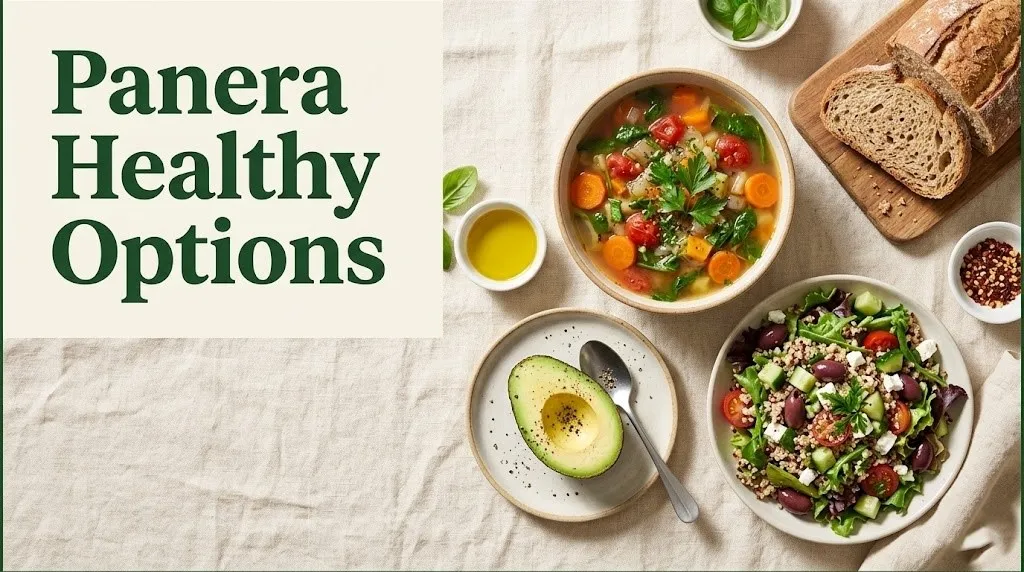
The most nutritionally reliable Panera items share a few traits. They’re built around vegetables, lean protein, or legumes. They use vinaigrette-style dressings rather than cream-based ones. And they appear in portions that don’t require a half-day of walking to offset.
| Panera Menu Category | Generally Reliable | Approach Carefully |
|---|---|---|
| Soups | Broth-based, vegetable-forward | Cream-based, cheese-topped |
| Salads | Vinaigrette-dressed, greens-based | Heavy creamy dressings, full portions |
| Sandwiches | Whole grain bread, lean protein | Chipotle or creamy sauce, full portions |
| Breakfast | Egg-based, no pastry | Pastries, bagels, flavored drinks |
| Sides | Apple, kettle chips | Baguette, cookies |
Note that Panera’s menu rotates seasonally and varies by location. Nutrition figures should be verified on Panera’s official website or app before ordering, as formulations can change.
Is Panera Food Healthy?
Panera food can be part of a healthy diet, but it is not automatically healthy by virtue of its fast-casual positioning or marketing. The nutritional quality varies enormously by item.
Panera has made meaningful investments in ingredient transparency. The chain removed artificial colors, flavors, sweeteners, and preservatives from its menu in 2017, a standard it has largely maintained. That commitment to cleaner ingredients is real. What it doesn’t address is sodium content, portion size, or caloric density, which are the three factors that matter most for day-to-day dietary health.
The American Heart Association recommends no more than 2,300 milligrams of sodium per day for most adults, with an ideal target of 1,500 milligrams for those with elevated cardiovascular risk. Many single Panera entrees, including the Broccoli Cheddar Soup in a bread bowl and several full-portion sandwiches, exceed 1,000 milligrams of sodium on their own. That context is critical.
Think of Panera’s menu like a grocery store. The store stocks both spinach and cookie dough. The brand name on the building doesn’t determine whether you leave with something nutritious. Your choices inside do.
People with celiac disease should be aware that Panera kitchens are not gluten-free environments. Cross-contact with gluten-containing ingredients is possible even when ordering items that don’t list wheat.
What Is the Healthiest Thing to Eat at Panera Bread?
The single most nutritionally balanced item at Panera Bread is the Ten Vegetable Soup, which delivers a wide array of plant-based nutrients in a low-calorie, moderate-sodium broth format.
A standard cup of Ten Vegetable Soup contains approximately 100 calories, 5 grams of protein, 4 grams of dietary fiber, and around 570 milligrams of sodium. For a single menu item at a fast-casual chain, that profile is genuinely strong. The fiber content supports digestive regularity. The vegetable variety delivers a range of micronutrients including vitamin A (from beta-carotene in carrots and tomatoes), vitamin C (ascorbic acid), and potassium.
Closely behind it are the Modern Greek Salad with Quinoa and the Strawberry Poppyseed Salad with Chicken (with dressing on the side). Both provide meaningful protein, fiber, and micronutrient density without the caloric weight of cream sauces or refined-carbohydrate-heavy sides.
The ranking below reflects overall nutritional balance, not just lowest calories:
| Item | Est. Calories | Protein | Fiber | Sodium |
|---|---|---|---|---|
| Ten Vegetable Soup (cup) | ~100 | 5g | 4g | ~570mg |
| Modern Greek Salad with Quinoa | ~300-340 | 14g | 6g | ~530mg |
| Strawberry Poppyseed Salad + Chicken (half) | ~250-290 | 20g | 4g | ~390mg |
| Turkey Chili (cup) | ~180-210 | 14g | 7g | ~690mg |
| Chicken Noodle Soup (cup) | ~90-110 | 7g | 1g | ~820mg |
Nutrition figures are approximate. Panera’s posted nutrition data reflects standard preparation; customization changes these numbers. Always confirm current figures via Panera’s official nutrition page.
Key Takeaway: The Ten Vegetable Soup and greens-forward salads with vinaigrette on the side consistently outperform other Panera categories on calorie-to-nutrient value, but sodium is still a real factor even in the better options.
Panera Low Calorie Options Worth Ordering
Panera’s lowest-calorie options are concentrated in the soup and half-salad categories, most landing between 90 and 350 calories depending on portion and preparation.
The distinction between a cup and a bowl matters here more than at most restaurants. Panera’s bowl-size soups run roughly double the calories and sodium of their cup counterparts. A cup of Chicken Noodle Soup delivers around 100 calories. The full bowl version doubles that. For anyone aiming to keep a meal under 500 calories, ordering cups rather than bowls is one of the most effective adjustments available.
On the salad side, the Green Goddess Cobb Salad with Chicken is a solid low-calorie option when ordered with the dressing on the side. With the dressing tossed in by default, it climbs to around 570 calories. With dressing served separately and used sparingly, it drops to approximately 400 to 430 calories while maintaining over 30 grams of protein.
The Academy of Nutrition and Dietetics notes that meals with 20 or more grams of protein tend to produce greater satiety than lower-protein meals of equal calories. That’s worth keeping in mind when comparing a 300-calorie broth soup to a 350-calorie protein-forward salad. The salad will likely keep you fuller longer.
Vegetarians have strong low-calorie options here. The Modern Greek Salad with Quinoa at approximately 300 to 340 calories provides complete plant-based protein from the combination of quinoa (a grain that contains all nine essential amino acids) and feta cheese.
Panera High Protein Menu Items
Panera Bread’s highest-protein options come from its chicken-based salads, egg-based breakfast items, and the Turkey Chili, which consistently delivers over 20 grams of protein per full serving.
Protein matters at Panera because many of the chain’s core items are carbohydrate-forward. Bread, pasta, and grain-based sides dominate. Finding a high-protein anchor for your meal is the key strategy to making Panera work for fitness-focused or satiety-driven eating.
According to research published in the American Journal of Clinical Nutrition, higher dietary protein intake at lunch is associated with reduced caloric intake later in the day. The mechanism involves longer-lasting satiety signals from protein’s effect on appetite-regulating hormones including ghrelin and peptide YY.
| Panera Item | Est. Protein | Est. Calories | Notes |
|---|---|---|---|
| Green Goddess Cobb Salad + Chicken (full) | ~36g | ~570 | Dressing on side reduces cals |
| Turkey Chili (bowl) | ~26g | ~360 | High fiber too |
| Strawberry Poppyseed Salad + Chicken (full) | ~30g | ~480 | Lower sodium option |
| Egg and Cheese Sandwich on Whole Grain | ~18g | ~400 | Good breakfast protein |
| Modern Greek Salad with Quinoa | ~14g | ~300-340 | Plant-based protein combo |
People managing kidney disease should be aware that high-protein diets may require medical guidance specific to their condition. A registered dietitian can help set appropriate daily protein targets based on individual kidney function.
Panera Healthy Salads
Panera’s healthiest salads are those built on mixed greens or romaine, topped with a lean protein, and dressed with a vinaigrette rather than a cream or cheese-heavy sauce.
The Strawberry Poppyseed Salad with Chicken is one of the most nutritionally complete items on the entire menu when ordered as a half-portion with dressing on the side. It delivers chicken breast protein, fresh strawberries (a source of vitamin C and dietary fiber), blueberries, mandarin oranges, and pecans. The poppyseed dressing is lower in calories than most Panera dressings, but it contains added sugars, so moderation applies.
The Modern Greek Salad with Quinoa stands out specifically for plant-based eaters. Quinoa provides all nine essential amino acids, making it one of the few plant-based complete proteins available on Panera’s menu. Combined with feta cheese, kalamata olives, cucumbers, and pepperoncini, this salad covers a wide micronutrient range including calcium, iron, and potassium.
One consistent issue with Panera salads: the full-portion versions with dressings tossed in can reach 600 to 800 calories, rivaling or exceeding sandwiches that are generally perceived as heavier meals. Tree nut allergies are relevant for salads like the Strawberry Poppyseed, which contains pecans. Always verify allergen details with the restaurant directly for your specific location.
Quick Tip:
- Order your dressing on the side and use roughly half the provided amount
- Ask for half portions through You Pick Two to control calories without sacrificing variety
- Avoid crouton toppings if you’re watching refined carbohydrate intake
Panera Healthy Soups
Panera’s healthiest soups are its broth-based and bean-forward options, particularly the Ten Vegetable Soup, Black Bean Soup, and Turkey Chili, all of which provide meaningful fiber and protein at a relatively low caloric cost.
The broad rule with Panera soups is straightforward. If it’s made with cream or cheese as a primary ingredient, the sodium and saturated fat counts rise steeply. If it’s built on broth, vegetables, or legumes, the nutritional picture looks considerably better. The Black Bean Soup is a particularly strong example. A full bowl delivers approximately 18 to 22 grams of dietary fiber from the black beans (Phaseolus vulgaris), which puts a meaningful dent in the 38 grams recommended daily for adult men and 25 grams for adult women by the USDA Dietary Guidelines for Americans.
Dietary fiber acts the way good traffic management does for your digestive system. Slow it down in the right places, keep things moving steadily, and you avoid the kind of blood sugar spikes that follow low-fiber, high-carbohydrate meals.
| Soup (Cup Serving) | Est. Calories | Protein | Fiber | Sodium |
|---|---|---|---|---|
| Ten Vegetable Soup | ~100 | 5g | 4g | ~570mg |
| Black Bean Soup | ~160 | 9g | 8g | ~870mg |
| Turkey Chili | ~190 | 14g | 7g | ~700mg |
| Chicken Noodle Soup | ~100 | 7g | 1g | ~820mg |
| Broccoli Cheddar Soup | ~290 | 11g | 3g | ~1,030mg |
People following low-sodium diets, including those managing hypertension, should approach even the lighter soups with awareness. A cup of Ten Vegetable Soup at 570mg sodium is manageable within a low-sodium eating plan; a bowl of Broccoli Cheddar at over 1,000mg is not.
Key Takeaway: Broth-based and bean-forward Panera soups deliver genuinely solid nutrition, but sodium is elevated across all options. Cup portions are a practical way to enjoy the nutrition without overloading on salt.
Panera Healthy Sandwiches and Flatbreads
Panera’s healthiest sandwiches are those built on whole grain bread with lean protein, light sauces, and vegetable additions, such as the Toasted Steak and White Cheddar on whole grain or a customized Turkey sandwich with mustard instead of mayo.
The structural challenge with Panera sandwiches is that the full-portion versions are large. Most full sandwiches run between 600 and 900 calories, with sodium figures regularly exceeding 1,200 milligrams. The half-sandwich portions available through You Pick Two bring these numbers into a significantly more workable range.
Bread choice matters more than most people realize. Panera’s whole grain bread provides measurably more dietary fiber, magnesium, and B vitamins than its white sourdough, ciabatta, or classic baguette options. Whole grain bread’s fiber slows carbohydrate digestion, producing a more gradual rise in blood glucose compared to refined-grain versions.
For people watching saturated fat intake, the American Heart Association recommends keeping saturated fat below 13 grams per day on a 2,000-calorie diet. Several Panera sandwiches with full portions of cheese and sauce exceed that limit in a single item.
People with dairy allergies or lactose intolerance should confirm which bread options are dairy-free before ordering, as some Panera breads contain milk-derived ingredients. The restaurant staff can point you to the current allergen guide for your location.
Panera Healthy Breakfast Options
Panera’s healthiest breakfast options are its egg-based items on whole grain bread, which provide a protein-forward start with moderate calorie counts compared to the chain’s pastries and bagels.
The Avocado, Egg White & Spinach Sandwich on a whole grain English muffin is among the most nutritionally balanced breakfast items Panera offers. Egg whites provide high-quality protein without the saturated fat content of whole eggs. Avocado contributes heart-healthy monounsaturated fat and potassium. Spinach adds dietary nitrates, folate, and vitamin K. Together, these three ingredients create a breakfast with sustained energy rather than a rapid blood sugar spike.
Panera’s pastries and baked goods, by contrast, are high in refined carbohydrates and added sugars. A Chocolate Chip Muffie or a standard Cinnamon Crunch Bagel can range from 400 to 570 calories with minimal protein or fiber to support satiety. They’re not problematic as an occasional treat, but as a daily breakfast pattern, they won’t serve anyone’s health goals particularly well.
The CDC reports that high-added-sugar diets are linked to increased risk of cardiovascular disease, independent of overall caloric intake. Panera’s flavored drinks, including the lemonade options, can add 40 to 80 grams of added sugar to a meal if ordered in large sizes.
Quick Tip:
- Pair any egg-based sandwich with a cup of black coffee or unsweetened tea
- Request egg whites only to reduce saturated fat without changing protein content
- Skip the side baguette included with some breakfast items to reduce unnecessary refined carbohydrates
Panera You Pick Two Healthy Combinations
The You Pick Two option at Panera Bread is the most reliable strategy for building a nutritionally balanced meal, because it lets you pair a half-portion of a high-protein item with a half-portion of a fiber-rich soup or salad.
The math is favorable. A half-portion Turkey Chili plus a half-portion Modern Greek Salad with Quinoa delivers roughly 280 to 320 calories, approximately 18 to 22 grams of protein, 6 to 8 grams of dietary fiber, and a meaningful variety of vitamins and minerals. That’s a lunch that covers multiple nutritional bases without the caloric weight of a full entree.
The combinations to build toward share three traits. They include one protein-forward item, one vegetable-forward item, and they avoid cream sauces or high-calorie dressings by default.
| You Pick Two Combination | Est. Combined Calories | Est. Protein | Est. Fiber |
|---|---|---|---|
| Half Turkey Chili + Half Modern Greek Salad | ~280-320 | 18-22g | 6-8g |
| Half Ten Vegetable Soup + Half Green Goddess Cobb | ~300-340 | 22-26g | 5-7g |
| Half Black Bean Soup + Half Strawberry Poppyseed Salad + Chicken | ~320-360 | 20-24g | 9-11g |
| Half Chicken Noodle Soup + Half Greek Salad | ~220-260 | 14-18g | 3-5g |
People with tree nut allergies should verify the dressings and toppings on any salad portion ordered in the combination. Pecans appear in several Panera salads without obvious prominence in the item name.
Key Takeaway: You Pick Two is not just a budget strategy at Panera. When used deliberately with one protein-anchor and one vegetable-forward item, it becomes the most efficient way to get a balanced, moderate-calorie meal from the menu.
Panera Low Sodium Options
Panera’s lowest-sodium options are the Modern Greek Salad with Quinoa (without added dressing), the Strawberry Poppyseed Salad with dressing on the side, and the Ten Vegetable Soup in a cup serving.
Sodium is the single most underappreciated nutritional issue at Panera. The CDC reports that approximately 70 percent of Americans’ sodium intake comes from restaurant and processed foods rather than home cooking. Even items that appear light, like the Chicken Noodle Soup, contain sodium levels that require careful accounting against the rest of the day’s intake.
The American Heart Association’s recommended daily sodium limit of 2,300 milligrams for most adults can be approached or exceeded with just one standard Panera entree if the wrong item is selected. People managing high blood pressure, heart disease, or kidney disease should be especially attentive, as their providers may have set lower individual targets around 1,500 milligrams per day.
| Item | Est. Sodium (Standard Serving) |
|---|---|
| Strawberry Poppyseed Salad, no dressing (full) | ~350-400mg |
| Modern Greek Salad with Quinoa | ~530mg |
| Ten Vegetable Soup (cup) | ~570mg |
| Turkey Chili (cup) | ~700mg |
| Chicken Noodle Soup (cup) | ~820mg |
| Black Bean Soup (cup) | ~870mg |
| Broccoli Cheddar Soup (bowl) | ~1,030mg+ |
These figures are approximate and reflect standard preparation. Adding a baguette side, dressings, or any bread item increases sodium further. People on medically prescribed sodium-restricted diets should verify exact figures with Panera’s full nutrition disclosure, available on their website, and confirm whether a given location’s formulation matches the published data.
Panera Vegetarian and Vegan Options
Panera Bread’s vegetarian options are fairly broad, spanning soups, salads, and some flatbreads, though fully vegan choices are more limited and require careful checking of ingredient details.
The strongest vegetarian option on the menu is the Modern Greek Salad with Quinoa, which provides a complete protein profile through the combination of quinoa’s full amino acid spectrum and feta cheese’s additional protein content. Black Bean Soup is another reliable vegetarian pick, providing plant-based protein from black beans (Phaseolus vulgaris) along with substantial dietary fiber.
For vegans, the landscape narrows. The Ten Vegetable Soup is often cited as vegan-friendly, but it should be verified at the specific location because formulations can vary and soups may be prepared with shared equipment or broth that includes animal-derived ingredients. Panera’s allergen and ingredient information, accessible through their app or website, is the best resource for confirming current vegan status of any item.
Vegans should be aware that plant-based meals at Panera generally provide less protein per sitting than meat-inclusive options. Pairing the Ten Vegetable Soup with the Modern Greek Salad (hold the feta for a vegan version) provides a more nutritionally complete plant-forward meal.
Key vegan-compatible items to investigate for your location:
- Ten Vegetable Soup (verify at your location)
- Classic salad bases without cheese or meat
- Steel Cut Oatmeal without dairy toppings (varies by location)
- Avocado spread as a bread topping (verify ingredients)
Panera Diabetic-Friendly Options
Panera’s most diabetes-appropriate options are those with the lowest glycemic load, meaning they combine high fiber, moderate protein, and low refined carbohydrate content, such as the Black Bean Soup, Turkey Chili, and greens-based salads with vinaigrette dressing.
Blood glucose management depends heavily on the combination of fiber and protein in a meal. Dietary fiber slows the digestion and absorption of carbohydrates, reducing the rate at which glucose enters the bloodstream. Protein further moderates the insulin response after eating. Items that combine both, like the Black Bean Soup and Turkey Chili, are structurally better suited to stable blood sugar management than high-carbohydrate items like bread bowls, bagels, or large pasta portions.
Research published in the Journal of Nutrition has found that high-fiber, legume-based meals produce meaningfully lower postprandial blood glucose responses compared to refined carbohydrate meals of similar caloric content. Black beans specifically have a well-documented low glycemic index due to their resistant starch and high soluble fiber content.
Panera’s bread items represent the main glycemic challenge on the menu. White sourdough, ciabatta baguettes, and most of Panera’s pastries are made from refined wheat flour, which digests rapidly and produces faster glucose spikes.
People managing type 2 diabetes or prediabetes should work with a registered dietitian to set individualized carbohydrate targets. The items noted above fit common lower-carbohydrate eating patterns, but portion size and total daily carbohydrate intake remain individual variables that require personalized guidance.
Key Takeaway: Legume-based soups like Black Bean Soup and Turkey Chili are among the most diabetes-appropriate items at Panera because they combine high fiber, moderate protein, and a significantly lower glycemic load than the chain’s bread-forward options.
Panera Bread for Weight Loss
Panera Bread can support a weight loss eating plan when orders are structured around high-protein, high-fiber items in half-portions, keeping total meal calories between 400 and 600 depending on individual daily targets.
The core principle at play is caloric density alongside satiety. Foods high in protein and fiber produce stronger fullness signals per calorie than foods high in refined carbohydrates and fat. At Panera, that means prioritizing the protein and vegetable categories over the bread and pastry categories, not because bread is inherently problematic, but because high-fiber, protein-rich meals simply keep you fuller longer at equivalent calorie levels.
According to research compiled by Harvard T.H. Chan School of Public Health, dietary patterns higher in fruits, vegetables, legumes, and lean proteins are consistently associated with better long-term weight maintenance than low-fat or low-carbohydrate approaches alone. Panera’s menu provides sufficient coverage of those categories if you order deliberately.
The practical strategy: build your Panera meal around a You Pick Two combination. Choose one soup or chili as your fiber-and-volume anchor. Choose one salad with lean protein as your protein anchor. Keep the dressing on the side. Skip the bread side or replace it with an apple. That approach keeps most Panera meals in the 350 to 500 calorie range with strong satiety value.
Weight loss is affected by total daily intake, sleep, activity level, and individual metabolic factors. No single restaurant meal or menu choice produces weight loss on its own. Panera can fit within a weight-loss plan; it does not guarantee one.
How to Customize Your Panera Order for Better Nutrition
Customizing your Panera order is the most impactful nutritional lever available to you, because several standard preparations include high-sodium, high-calorie dressings and sides that can be modified or removed with a simple request.
Most Panera locations allow you to request modifications at the counter or through the Panera app. The following changes consistently improve the nutritional profile of a standard order:
- Request dressing on the side for all salads. Use approximately half the provided amount.
- Swap white sourdough or baguette bread for whole grain wherever available.
- Ask for a half-portion of cheese on sandwiches to reduce saturated fat without eliminating flavor.
- Replace the included baguette side with a piece of whole fruit (apple is typically available).
- Order soups in cup rather than bowl size to halve sodium and calorie intake from that component.
- Request sauces on the side for sandwiches. Chipotle mayo and similar sauces add 100 to 200 calories per standard serving.
- Choose egg whites over whole eggs at breakfast if saturated fat is a concern.
- Use the Panera app to preview nutrition before arrival. The app displays calorie counts and lets you adjust components before ordering.
These customizations are not about restriction for its own sake. They’re about getting better nutritional value from the same visit. A salad with dressing on the side still tastes like itself. It just no longer adds an extra 200 to 300 calories you didn’t plan for.
People with food allergies should always confirm customization requests directly with staff, as ingredient information can vary by location, and kitchen cross-contact cannot be eliminated through order modifications alone.
Is Panera Healthier Than Other Fast Casual Chains?
Panera Bread is generally more nutritionally transparent than many fast casual competitors, but whether it’s “healthier” depends on what items are compared and what dietary criteria are prioritized.
On the transparency dimension, Panera displays calorie counts prominently, publishes a full nutrition disclosure online, and removed artificial additives from its menu years before most competitors considered it. That infrastructure makes it easier to make informed choices at Panera than at chains that obscure or minimize nutritional information.
On the actual food quality dimension, the comparison is more nuanced. A broth-based Panera soup with vegetables and legumes compares favorably to most fast casual alternatives. A Panera full-portion mac and cheese or pastry-loaded breakfast order does not differ meaningfully from comparable items at other fast casual chains in caloric and sodium profile.
The USDA Dietary Guidelines recommend that restaurant meals, regardless of chain or brand, be evaluated by the same criteria as home-cooked meals: caloric appropriateness for the individual, adequate protein and fiber, limited added sugars, and sodium within daily targets. No fast casual chain produces food that automatically meets those criteria. The customer’s ordering decisions are what determine the outcome.
Think of it this way: a building labeled “natural foods store” still sells candy. The Panera label doesn’t determine the nutrition on your tray. Your order does.
People comparing chains for specific needs, such as very low sodium or strict calorie targets, should use each chain’s official nutrition data for direct comparison rather than relying on brand positioning or general reputation.
Key Takeaway: Panera’s ingredient transparency gives you better tools to make healthy choices there, but the gap between its best and worst menu items is wide. The brand’s positioning matters far less than what you actually order.
Frequently Asked Questions About Panera Healthy Options
What is the healthiest thing to eat at Panera?
The Ten Vegetable Soup in a cup is one of the most nutritionally efficient items on the Panera menu, offering around 100 calories with 4 to 5 grams of fiber and a wide range of plant-derived vitamins.
The Modern Greek Salad with Quinoa and the Strawberry Poppyseed Salad with Chicken (dressing on the side) are strong full-meal alternatives with solid protein and micronutrient density.
Verify current nutrition data on Panera’s website or app before ordering, as menu items and formulations can change.
Is Panera good for weight loss?
Panera can fit into a weight loss eating plan when you order strategically, focusing on high-protein, high-fiber combinations in half-portions through You Pick Two.
A Turkey Chili and a half salad with dressing on the side can keep your meal in the 350 to 500 calorie range with strong satiety value.
Actual weight loss results depend on your total daily intake, activity level, and individual metabolic factors, not any single restaurant meal.
What has the most protein at Panera Bread?
The Green Goddess Cobb Salad with Chicken in a full portion provides approximately 36 grams of protein, making it the highest-protein salad option on the standard menu.
The Turkey Chili in a full bowl delivers approximately 26 grams of protein alongside high fiber content.
Both figures are based on standard preparation and should be confirmed via Panera’s current nutrition data, as recipes can vary.
Does Panera have low-carb options?
Panera does not have a dedicated low-carbohydrate menu, but several items are naturally lower in refined carbohydrates, including the broth-based soups, protein-topped salads with vinaigrette, and egg-based breakfast items without bread.
The bread-bowl and baguette options are high in refined carbohydrates and are best avoided on a strict low-carb approach.
Customization through the Panera app allows you to omit sides or swap components, which gives some flexibility for low-carbohydrate ordering.
How much sodium is in Panera soup?
Sodium in Panera soups ranges from approximately 570 milligrams per cup for the Ten Vegetable Soup to over 1,030 milligrams per bowl for the Broccoli Cheddar Soup.
The American Heart Association recommends no more than 2,300 milligrams of sodium per day for most adults, so even lighter Panera soups represent a substantial portion of that daily target.
Ordering cup rather than bowl portions and pairing soup with a low-sodium salad is a practical way to manage overall sodium intake at Panera.
Making Panera Work for Your Diet
Panera Bread’s menu gives you the ingredients for a genuinely nutritious meal, or a high-sodium, high-calorie one. The difference comes down to which items you choose and how you customize them.
Start with a broth-based soup or a greens-forward salad as your foundation. Add a lean protein. Keep dressings and sauces on the side. Use You Pick Two to control portion size without losing variety. Verify the current nutrition numbers on Panera’s app before you go, because menus change and posted figures reflect standard preparation.
That’s not a complicated system. It’s just knowing the menu well enough to use it.