Supporting healthy breasts starts with what you put on your plate every day. Research consistently links specific dietary patterns, foods, and nutrients to measurable differences in breast tissue health and hormonal balance.
The American Institute for Cancer Research (AICR), in its ongoing review of global dietary research, identifies diet as one of the most modifiable factors in long-term breast health. A well-documented body of evidence connects plant-rich eating patterns, specific bioactive food compounds, and reduced intake of alcohol and ultra-processed foods to favorable outcomes for breast tissue.
This guide covers the 15 most research-supported foods and nutrients for breast health, what the science actually says about each, how cooking and preparation affect their benefits, who needs to be especially attentive, and what a practical daily eating plan looks like. Nothing vague. Nothing unattributed.
What “Healthy Breasts” Means from a Nutrition Perspective
Healthy breasts, from a nutritional standpoint, refers to maintaining well-functioning breast tissue through dietary choices that minimize oxidative stress, support hormonal balance, and reduce chronic inflammation.
Breast tissue contains a significant proportion of adipose (fat) tissue, glandular tissue, and connective tissue. Each of these responds to the quality of the fats, phytochemicals, fiber, and micronutrients in your diet over time. This isn’t a short-term equation. The dietary patterns that matter most for breast health are built over months and years, not days.
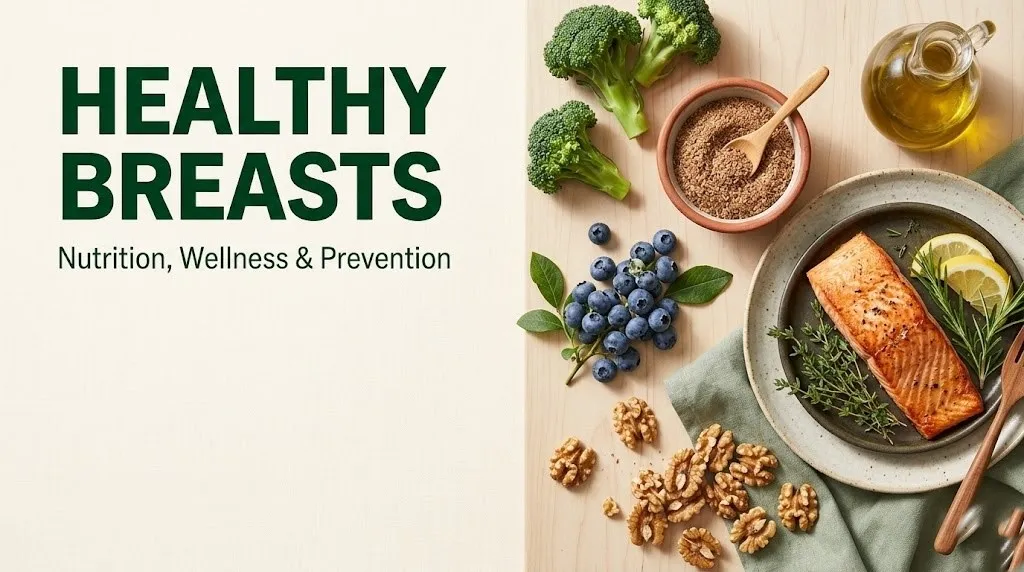
The USDA Dietary Guidelines for Americans 2020-2025 recommend a diet centered on vegetables, fruits, whole grains, lean proteins, and healthy fats as the foundation for reducing chronic disease risk. Breast health researchers work within this same dietary framework while zeroing in on specific compounds with documented effects on breast tissue biology.
| Dietary Factor | What It Affects in Breast Tissue | Key Food Sources |
|---|---|---|
| Dietary fiber | Estrogen metabolism, hormone clearance | Whole grains, legumes, vegetables |
| Omega-3 fatty acids | Inflammatory pathways, cell membrane integrity | Fatty fish, walnuts, flaxseed |
| Antioxidants | Oxidative stress reduction, DNA protection | Berries, leafy greens, green tea |
| Phytoestrogens | Estrogen receptor activity modulation | Soy, flaxseed, legumes |
| Carotenoids | Antioxidant defense in mammary tissue | Carrots, sweet potato, tomatoes |
Foods for Breast Health: The Research Foundation
Foods for breast health are those with documented evidence linking their regular consumption to reduced oxidative stress, favorable estrogen metabolism, or anti-inflammatory activity in breast tissue.
This is not the same as saying any single food prevents or treats disease. The research base, including the World Cancer Research Fund’s (WCRF) Cancer Prevention Recommendations, consistently emphasizes dietary patterns rather than individual foods. The foods in this guide work best when eaten together as part of a varied, plant-forward diet.
The strongest evidence supports eating a wide range of vegetables, fruits rich in specific antioxidant compounds, fatty fish and plant-based omega-3 sources, fiber-rich whole foods, and limiting or avoiding alcohol and ultra-processed foods.
Key dietary principles supported by the WCRF and AICR joint report include:
- Eat at least five servings of non-starchy vegetables and fruits daily
- Make whole grains and legumes the foundation of carbohydrate intake
- Limit red meat to no more than three portions per week (roughly 350 to 500 grams cooked weight total)
- Avoid processed meat entirely where possible
- Minimize alcohol consumption; no safe level is established for breast health
Best Foods for Breast Health: A Ranked Overview
The best foods for breast health are those with the most direct, well-replicated research support for their effects on breast tissue through specific bioactive compounds, fiber, or healthy fat composition.
No single food does everything. The following are the most research-supported options across multiple categories, each earning its place through documented mechanisms rather than general “antioxidant” claims.
| Food | Key Active Compound(s) | Serving Size | Research Support Level |
|---|---|---|---|
| Broccoli (Brassica oleracea var. italica) | Indole-3-carbinol (I3C), sulforaphane | 1 cup cooked (91g) | Strong |
| Flaxseed (Linum usitatissimum) | Lignans, alpha-linolenic acid (ALA) | 2 tbsp ground (14g) | Strong |
| Salmon (Salmo salar) | DHA, EPA (omega-3s) | 3 oz cooked (85g) | Strong |
| Blueberries (Vaccinium corymbosum) | Anthocyanins, ellagic acid | 1 cup (148g) | Moderate-Strong |
| Green tea (Camellia sinensis) | Epigallocatechin gallate (EGCG) | 1 to 3 cups brewed | Moderate |
| Walnuts (Juglans regia) | ALA, polyphenols | 1 oz (28g) | Moderate |
| Extra-virgin olive oil | Oleic acid, polyphenols | 1 to 2 tbsp (14 to 28g) | Moderate |
| Edamame / tofu (soy) | Isoflavones (genistein, daidzein) | 1/2 cup edamame (78g) | Moderate (context-dependent) |
Quick Tip:
- Aim for variety across categories. Rotate between fatty fish, plant-based omega-3 sources, and different colored vegetables weekly.
- Don’t rely on one food. The protective effects in research come from overall dietary patterns.
- Women with hormone-sensitive conditions should review significant dietary shifts with their healthcare provider before making major changes.
Cruciferous Vegetables and Breast Health
Cruciferous vegetables support breast health through two specific compounds: indole-3-carbinol (I3C) and sulforaphane, both of which influence how the body metabolizes estrogen.
I3C, found in broccoli (Brassica oleracea var. italica), cauliflower (Brassica oleracea var. botrytis), Brussels sprouts, kale (Brassica oleracea var. sabellica), and cabbage, is converted in the stomach to diindolylmethane (DIM). Research published in the journal Nutrients indicates that DIM promotes the production of a less potent form of estrogen (2-hydroxyestrone) over more estrogenic forms, which is relevant to estrogen-sensitive breast tissue function.
Sulforaphane, most concentrated in broccoli sprouts, has been studied for its role in supporting cellular detoxification pathways. A 2022 review in the American Journal of Clinical Nutrition noted that higher cruciferous vegetable intake was associated with favorable markers in several large epidemiological studies, though the authors emphasized that cooking method matters significantly.
How cooking method affects I3C content:
Boiling cruciferous vegetables for more than five minutes degrades myrosinase, the enzyme needed to convert glucosinolates into I3C and sulforaphane. Light steaming for 3 to 5 minutes or consuming raw cruciferous vegetables preserves these compounds far more effectively. Roasting at 400°F (200°C) for under 20 minutes retains reasonable amounts.
- Serving goal: At least 1 cup of cruciferous vegetables daily, lightly steamed or raw
- Best sources: Broccoli sprouts (highest sulforaphane per gram), broccoli, kale, cauliflower, bok choy, Brussels sprouts
- Caution: People taking thyroid medication (particularly levothyroxine) should be aware that very large amounts of raw cruciferous vegetables may affect iodine absorption. Cooked portions are generally fine at normal dietary servings.
Key Takeaway: Diet shapes breast health through specific bioactive compounds, hormonal metabolism, and anti-inflammatory pathways, not through any single food acting alone. Cruciferous vegetables, eaten regularly and prepared correctly, deliver two of the most studied compounds in breast-relevant nutrition research.
Omega-3 Fatty Acids and Breast Health
Omega-3 fatty acids support breast health primarily by modulating inflammatory pathways that affect how breast tissue responds to cellular stress over time.
The two most active omega-3s in this context are docosahexaenoic acid (DHA) and eicosapentaenoic acid (EPA), both found in fatty fish. A meta-analysis published in the British Journal of Nutrition found that higher dietary intake of marine omega-3s was associated with lower markers of systemic inflammation across multiple study populations. Chronic low-grade inflammation is a well-established factor in how breast tissue health changes over decades.
Plant-based sources provide alpha-linolenic acid (ALA), found in flaxseed, chia seeds (Salvia hispanica), and walnuts (Juglans regia). The body converts ALA to DHA and EPA at a limited rate (roughly 5 to 15% conversion efficiency, according to NIH data), making direct marine sources more efficient for those who eat fish.
| Omega-3 Source | Type | Per Standard Serving | Practical Note |
|---|---|---|---|
| Salmon (Salmo salar), cooked | DHA + EPA | ~1,800 mg per 3 oz (85g) | Wild-caught generally higher in omega-3s |
| Sardines (Sardina pilchardus), canned | DHA + EPA | ~1,400 mg per 3 oz (85g) | Also high in calcium |
| Walnuts (Juglans regia) | ALA | ~2,570 mg per 1 oz (28g) | Good plant-based option |
| Ground flaxseed | ALA | ~2,350 mg per 2 tbsp (14g) | Must be ground for bioavailability |
| Chia seeds (Salvia hispanica) | ALA | ~5,060 mg per 1 oz (28g) | Can be added to yogurt or smoothies |
The Academy of Nutrition and Dietetics recommends that adults consume at least two servings of fatty fish per week for general cardiovascular and anti-inflammatory benefit. Women who are pregnant or breastfeeding should verify their specific fish intake levels with their obstetric provider, given considerations around mercury exposure.
Soy Foods and Breast Health
Soy foods contain isoflavones (primarily genistein and daidzein), plant compounds that bind weakly to estrogen receptors. Their role in breast health has been debated, and the current evidence is clearer than the controversy suggests.
The concern historically was that phytoestrogens might mimic estrogen and stimulate hormone-sensitive tissue. However, research published in the Journal of the National Cancer Institute and reviewed by the American Cancer Society (ACS) indicates that whole soy foods consumed at normal dietary amounts do not appear to negatively affect breast tissue in healthy women. The ACS states that one to two servings of soy foods daily is considered safe based on current evidence.
The distinction between whole soy foods and highly processed soy isolates or supplements is important. Edamame, tofu, tempeh, and miso are the research-supported forms. Concentrated soy isoflavone supplements are a separate category with a different, less certain evidence base.
- Safe at normal dietary intake: edamame (Glycine max), tofu, tempeh, miso, unsweetened soy milk
- Use with more caution or discuss with a provider: concentrated soy isoflavone supplements
- Who should discuss with their oncologist before significantly increasing soy intake: Women currently being treated for hormone-receptor-positive breast conditions or taking tamoxifen or aromatase inhibitors
Soy is also a top-9 allergen in the United States. Anyone with a documented soy allergy should avoid all soy-derived foods regardless of the health context.
Berries and Antioxidants for Breast Health
Berries deliver a dense concentration of anthocyanins and ellagic acid, two antioxidant classes with well-documented activity against oxidative stress in breast tissue.
Oxidative stress occurs when free radicals outpace the body’s antioxidant defenses. Think of antioxidants in food like a maintenance crew that continually repairs cellular wear before it compounds. In breast tissue, which contains a relatively high proportion of fat-storing cells, oxidative damage accumulates over years rather than days.
Blueberries (Vaccinium corymbosum) contain some of the highest anthocyanin concentrations of any commonly eaten fruit. Raspberries (Rubus idaeus) and strawberries (Fragaria x ananassa) are among the best sources of ellagic acid. Pomegranate (Punica granatum) provides punicalagins, another antioxidant compound with preliminary research support for breast tissue health, though larger clinical studies are still ongoing.
| Berry | Key Compound | Amount per 1 Cup Serving | Practical Use |
|---|---|---|---|
| Blueberries | Anthocyanins | ~148g, ~84 calories | Fresh, frozen, or added to oats |
| Raspberries | Ellagic acid, anthocyanins | ~123g, ~64 calories | Pairs well with Greek yogurt |
| Strawberries | Ellagic acid, vitamin C | ~152g, ~49 calories | Best eaten fresh; freezing retains most antioxidants |
| Pomegranate seeds | Punicalagins, anthocyanins | ~87g arils, ~72 calories | Add to salads or eat as a snack |
| Blackberries | Anthocyanins, vitamin C | ~144g, ~62 calories | High fiber content also relevant |
Frozen berries retain antioxidant content well, making them a practical year-round option. People on blood-thinning medications should note that large quantities of certain berry-derived supplements may interact with anticoagulant therapy. Whole berry consumption at normal dietary portions is generally well-tolerated.
Key Takeaway: Omega-3-rich foods, whole soy at normal dietary amounts, and antioxidant-dense berries each address a different mechanism relevant to breast tissue health, which is why variety across food groups consistently outperforms any single-food approach in the research record.
Fiber and Breast Health
Dietary fiber supports breast health by regulating the body’s handling of circulating estrogen, specifically by binding to estrogen in the digestive tract and promoting its excretion before it can be reabsorbed.
Estrogen circulates through the body and is processed by the liver, then excreted in bile into the intestine. Without adequate fiber, a significant portion of that estrogen can be reabsorbed back into circulation through a process called enterohepatic recirculation. Higher dietary fiber intake, particularly from whole grains, legumes, and vegetables, is associated with lower circulating estrogen levels in premenopausal women, according to research reviewed by the Harvard T.H. Chan School of Public Health.
The USDA Dietary Guidelines recommend 25 grams of fiber per day for adult women under 50, and 21 grams per day for women 51 and older. Most American women consume roughly 10 to 15 grams daily, well below the target.
High-fiber foods that also provide other breast-health-relevant nutrients:
- Oats (Avena sativa): Soluble fiber (beta-glucan), folate, selenium
- Lentils (Lens culinaris): Insoluble and soluble fiber, folate, plant protein
- Black beans (Phaseolus vulgaris): Fiber, antioxidants, folate
- Chia seeds (Salvia hispanica): Fiber, ALA omega-3s, calcium
- Barley (Hordeum vulgare): Beta-glucan soluble fiber, selenium
- Broccoli (Brassica oleracea var. italica): Fiber, I3C, vitamin C, folate
- Raspberries: Fiber, ellagic acid, vitamin C
People with irritable bowel syndrome (IBS) or other digestive conditions should increase fiber intake gradually and with adequate hydration to avoid gastrointestinal discomfort.
Olive Oil and Healthy Fats for Breast Tissue
Extra-virgin olive oil supports breast tissue health primarily through oleic acid, a monounsaturated fatty acid, and its naturally occurring polyphenols, which have measurable anti-inflammatory activity.
The PREDIMED study, a large randomized clinical trial conducted in Spain and published in the New England Journal of Medicine, found that a Mediterranean diet supplemented with extra-virgin olive oil was associated with a statistically notable difference in certain breast-related health outcomes compared to a low-fat control diet. The quality of dietary fat, not just the total amount, was a key factor in those findings.
Trans fats (partially hydrogenated oils) and high amounts of industrially processed vegetable oils high in omega-6 fatty acids (such as corn oil and soybean oil used in processed foods) are associated with pro-inflammatory dietary patterns in multiple epidemiological studies. The difference between these fats and the monounsaturated fat in extra-virgin olive oil is not trivial in terms of how they affect inflammatory markers over time.
Practical fat choices for breast health:
- Best options: Extra-virgin olive oil, avocado (Persea americana), walnuts (Juglans regia), almonds (Prunus dulcis)
- Use in moderation: Coconut oil (high in saturated fat; limited research for breast-specific benefit)
- Limit or avoid: Processed foods made with hydrogenated oils, deep-fried foods, commercially packaged baked goods
Women monitoring total caloric intake should note that all fats are calorie-dense at roughly 9 calories per gram. A standard 1 tablespoon (14g) of extra-virgin olive oil provides approximately 120 calories. The quality benefit is real, but serving size context matters.
Key Takeaway: Dietary fiber works as a natural estrogen regulator by accelerating excretion before reabsorption, and the type of fat you eat matters far more than total fat intake for breast tissue health.
Vitamin D and Folate for Breast Health
Vitamin D3 (cholecalciferol) and folate (vitamin B9) are two micronutrients with specific, well-researched roles in breast tissue cell regulation and DNA maintenance.
Vitamin D receptors are present in breast tissue. Research published in the journal Nutrients and reviewed by the National Cancer Institute indicates that adequate vitamin D status is associated with normal cell differentiation in mammary tissue. The NIH Office of Dietary Supplements notes that many women in the United States have vitamin D levels below the recommended 20 nanograms per milliliter (ng/mL) threshold, particularly those with limited sun exposure or darker skin tones.
Folate (not to be confused with folic acid, the synthetic supplemental form) supports DNA replication and repair. The USDA recommends 400 micrograms of dietary folate equivalents (DFE) daily for non-pregnant adult women, rising to 600 micrograms DFE during pregnancy.
| Nutrient | Food Source | Amount per Serving | Daily Target |
|---|---|---|---|
| Vitamin D3 | Salmon, 3 oz cooked | ~570 IU | 600 IU (adults under 70) |
| Vitamin D3 | Fortified milk, 1 cup | ~120 IU | 600 IU |
| Vitamin D3 | Egg yolk, 1 large | ~37 IU | 600 IU |
| Folate | Lentils, 1/2 cup cooked | ~179 mcg DFE | 400 mcg DFE |
| Folate | Spinach, 1/2 cup cooked | ~131 mcg DFE | 400 mcg DFE |
| Folate | Asparagus, 4 spears cooked | ~89 mcg DFE | 400 mcg DFE |
Women who avoid dairy products, live in northern latitudes, or spend limited time outdoors may benefit from having their vitamin D blood levels tested, since food sources alone rarely reach optimal levels. Any supplementation decisions should be based on actual measured blood levels rather than generalized assumptions.
Flaxseed Lignans and Breast Health
Flaxseed (Linum usitatissimum) is the richest dietary source of plant lignans, specifically secoisolariciresinol diglucoside (SDG), which the gut microbiome converts into enterolactone and enterodiol, both of which interact with estrogen receptors at a much weaker level than endogenous estrogen.
Research published in the American Journal of Clinical Nutrition found that higher lignan intake was associated with favorable estrogen metabolite ratios in postmenopausal women. The data for premenopausal women is also positive but somewhat less consistent across studies, partly because endogenous estrogen levels are higher and more variable in that group.
The bioavailability difference between whole and ground flaxseed is not a minor detail. Whole flaxseeds pass through the gastrointestinal tract largely intact, which means the lignans inside are not absorbed. Ground flaxseed or flaxseed meal provides full lignan bioavailability. Store ground flaxseed in an airtight container in the refrigerator to prevent oxidation of its ALA omega-3 content.
How to incorporate flaxseed effectively:
- Add 2 tablespoons (14g) of ground flaxseed to oatmeal, yogurt, or smoothies daily.
- Stir into pancake batter or muffin mix as a partial flour replacement.
- Mix into salad dressings with olive oil and lemon juice.
- Use as an egg substitute in baking: 1 tablespoon ground flaxseed plus 3 tablespoons water equals one egg (in terms of binding, not nutritional equivalence).
- Sprinkle over grain bowls or roasted vegetables at the end of cooking. Avoid cooking flaxseed at high temperatures for extended periods.
Note: Flaxseed is a documented allergen in some individuals. People with a sensitivity to flaxseed can substitute chia seeds (Salvia hispanica) for a comparable ALA and fiber profile, though chia is significantly lower in lignans.
Key Takeaway: Vitamin D3 and folate support normal cell behavior in breast tissue at the micronutrient level, while flaxseed lignans provide one of the best-studied phytoestrogen sources with a practical evidence base for regular dietary inclusion.
Green Tea and Turmeric for Breast Health
Green tea (Camellia sinensis) and turmeric (Curcuma longa) are two of the most studied plant-based sources of bioactive anti-inflammatory and antioxidant compounds relevant to breast tissue health.
Epigallocatechin gallate (EGCG), the primary polyphenol in green tea, has been studied in laboratory and epidemiological settings for its effects on oxidative stress and cellular signaling pathways. A 2020 review in the journal Nutrients noted that population-level studies from Japan and China, where green tea consumption is habitual and high, suggested associations between green tea intake and certain favorable breast health markers. These are epidemiological associations, not controlled clinical proof of cause and effect, which is an important distinction.
Curcumin, the active polyphenol in turmeric (Curcuma longa), has demonstrated anti-inflammatory activity in laboratory studies. Its primary limitation is poor bioavailability when consumed in food form. The addition of black pepper (Piper nigrum), which contains piperine, increases curcumin absorption by up to 2,000%, according to research published in the journal Planta Medica. This means a pinch of black pepper with turmeric isn’t a culinary accident; it’s the most evidence-backed way to use it.
Practical incorporation:
- Green tea: Brew 2 to 3 cups daily at 160 to 175°F (70 to 80°C). Boiling water degrades EGCG. Avoid sweetening with added sugars.
- Turmeric: Use 1/2 to 1 teaspoon in cooking with a pinch of black pepper. Works well in soups, roasted vegetable dishes, lentil preparations, and scrambled eggs.
- Caffeine note: Green tea contains roughly 25 to 50mg of caffeine per cup, less than coffee but relevant for women sensitive to caffeine or managing sleep disruption.
Foods to Avoid for Breast Health
Several food categories are associated with dietary patterns that work against the cellular and hormonal environment that supports healthy breasts.
The World Cancer Research Fund’s Cancer Prevention Recommendations explicitly advise limiting or avoiding: ultra-processed foods, processed meats, high-sugar beverages, and excessive alcohol. These aren’t fringe positions. They reflect the combined weight of several decades of nutritional epidemiology.
Ultra-processed foods (defined by the NOVA food classification system as industrial formulations with five or more ingredients including additives, preservatives, and flavor enhancers) are associated with higher systemic inflammation markers in multiple large cohort studies. A study in JAMA Internal Medicine found that higher ultra-processed food consumption correlated with unfavorable health markers across several body systems.
Processed meats (hot dogs, deli meats, bacon, sausage) are classified as Group 1 carcinogens by the World Health Organization’s International Agency for Research on Cancer (IARC). Their effect on breast health specifically involves the nitrosamines and heterocyclic amines formed during processing and high-heat cooking.
Foods to limit or avoid for breast health:
- Processed and packaged deli meats, bacon, hot dogs
- Sugary beverages: sodas, fruit drinks, sweetened teas with added sugars
- Commercially fried foods high in omega-6 fatty acids and trans fats
- Packaged baked goods, crackers, and cookies made with hydrogenated oils
- High-sodium processed snack foods (excess sodium is not directly a breast-health issue, but high sodium intake often signals a diet heavy in ultra-processed food)
No food listed here needs to be treated as permanently forbidden in a single serving context. The evidence relates to habitual consumption patterns rather than occasional exposure.
Key Takeaway: Green tea and turmeric offer measurable anti-inflammatory activity that is best captured through consistent daily use in food form, while avoiding ultra-processed foods, processed meats, and alcohol consistently reduces the most well-documented dietary risk factors for breast tissue health.
Alcohol and Breast Health Risk
Alcohol is the most clearly documented dietary risk factor for breast health, with a dose-dependent relationship established across a large body of epidemiological research.
The American Cancer Society states that even one alcoholic drink per day is associated with a modest but measurable increase in breast health risk compared to non-drinkers. The WCRF’s continuous update project found that 10 grams of alcohol per day (roughly equivalent to one standard drink in the US) was associated with a 5 to 9% relative increase in risk across the studies they reviewed. This is not a hypothetical concern based on lab data. It is one of the most consistently replicated findings in breast health nutrition research across multiple continents and study designs.
The biological mechanism involves alcohol’s conversion to acetaldehyde, a compound that can damage DNA, and alcohol’s role in raising circulating estrogen levels. For women, higher estrogen exposure over time is a well-established factor in hormone-sensitive breast tissue biology.
| Alcohol Amount | Standard US Drink Equivalent | Estimated Estrogen Effect | Research Confidence |
|---|---|---|---|
| 0g/day | 0 drinks | No alcohol-related elevation | N/A |
| ~10g/day | 1 drink | Measurable estrogen increase | High (multiple large studies) |
| ~20g/day | 2 drinks | Dose-dependent further increase | High |
| ~30g+/day | 3+ drinks | Well-documented elevation | High |
Women who choose to drink alcohol should understand that there is no established “safe” level in the context of breast health specifically. This does not mean one drink on a special occasion carries catastrophic consequences, but it does mean that reducing alcohol is one of the highest-impact dietary choices for breast health that the current evidence supports.
Breast Health Diet Plan for Women
A practical breast health diet plan centers on three core principles: maximize plant diversity, prioritize anti-inflammatory fats and proteins, and minimize ultra-processed food and alcohol.
You don’t need a rigid meal schedule. What matters is the consistent presence of certain food categories in your weekly eating pattern. Think of it less like a prescription and more like a standard for what fills your grocery cart most weeks.
Daily eating pattern framework for breast health:
| Meal | Breast-Health Focus | Example |
|---|---|---|
| Breakfast | Fiber + omega-3 + antioxidants | Oatmeal with 2 tbsp ground flaxseed, blueberries, walnuts |
| Lunch | Cruciferous vegetables + lean protein | Kale salad with grilled salmon, olive oil, lemon |
| Dinner | Plant protein + healthy fat + vegetables | Lentil soup, roasted broccoli with olive oil and black pepper |
| Snack | Antioxidants + fiber | Plain Greek yogurt, raspberries, 1 oz walnuts |
| Beverage | Anti-inflammatory | Green tea (2 to 3 cups), water with lemon |
The Mediterranean dietary pattern, which prioritizes the foods above, is the most studied overall eating framework with documented relevance to breast health. The PREDIMED trial found measurable differences in breast-related health outcomes between a Mediterranean diet group and a low-fat control group over multiple years of follow-up.
Women who are postmenopausal, have a family history of breast conditions, or are managing hormone-sensitive health issues should work with a registered dietitian to build a plan that reflects their individual medical and dietary history. A generalized framework is a starting point, not a substitute for individualized guidance.
Weekly goals for breast health:
- At least 5 servings of vegetables daily, including 1 serving of cruciferous vegetables
- 2 to 3 servings of fatty fish weekly (salmon, sardines, mackerel)
- Daily flaxseed: 2 tablespoons ground
- Daily berries: at least 1 cup of mixed fresh or frozen berries
- Daily olive oil: 1 to 2 tablespoons as primary cooking fat
- Green tea: 2 to 3 cups daily
- Limit alcohol to as little as possible, ideally none for breast health purposes
- Avoid processed meats entirely where feasible
Frequently Asked Questions About Healthy Breasts
What foods are best for breast health?
The best foods for breast health are cruciferous vegetables (especially broccoli and kale), fatty fish rich in omega-3 fatty acids, ground flaxseed, berries, and extra-virgin olive oil.
These foods provide the most well-researched combination of anti-inflammatory compounds, fiber for estrogen metabolism, and antioxidants specific to breast tissue.
Eating them regularly as part of a varied, plant-forward diet provides stronger overall benefit than focusing on any single item.
Is soy safe to eat for breast health?
Whole soy foods like edamame, tofu, and tempeh are considered safe at normal dietary amounts (one to two servings daily) based on the current evidence reviewed by the American Cancer Society.
The concern about phytoestrogens comes largely from older animal studies that used soy concentrations far beyond normal dietary intake.
Women undergoing treatment for hormone-receptor-positive breast conditions should discuss their soy intake with their oncologist before making major dietary changes.
Does alcohol increase breast health risks?
Yes. Alcohol is the most consistently documented dietary risk factor for breast health, with even one drink per day associated with a measurable increase in risk according to the World Cancer Research Fund’s research review.
Alcohol raises circulating estrogen levels and produces acetaldehyde, a compound that can damage DNA.
There is no established safe amount of alcohol in the context of breast health.
What vitamins support healthy breasts?
Vitamin D3 (cholecalciferol) and folate (vitamin B9) are the two micronutrients with the strongest evidence base for supporting normal cell function in breast tissue.
The NIH recommends 600 IU of vitamin D daily for most adult women, and 400 micrograms of dietary folate equivalents per day for non-pregnant adults.
Good food sources include salmon and fortified dairy for vitamin D, and leafy greens, lentils, and asparagus for folate.
What is the best diet plan for breast health?
The Mediterranean dietary pattern is the most well-researched overall eating framework with documented relevance to breast health, based on the PREDIMED trial and multiple large observational studies.
It emphasizes vegetables, fruits, whole grains, legumes, fatty fish, and extra-virgin olive oil while minimizing ultra-processed foods, red meat, and alcohol.
Building your weekly meals around those priorities, rather than following a rigid plan, is the most practical and sustainable approach for most women.
Building a Diet That Works for Your Breast Health
The clearest takeaway from the research on diet and healthy breasts is this: no single food is the answer, and no single food is a catastrophe. What matters is the overall pattern built week after week.
Start where it’s realistic. Add a serving of cruciferous vegetables to dinner three times a week. Swap your morning routine for oatmeal with ground flaxseed and frozen blueberries. Make fatty fish a twice-weekly habit. Let olive oil be your primary cooking fat.
Every one of those choices is backed by real evidence. Every one of them is also, genuinely, a meal worth eating.