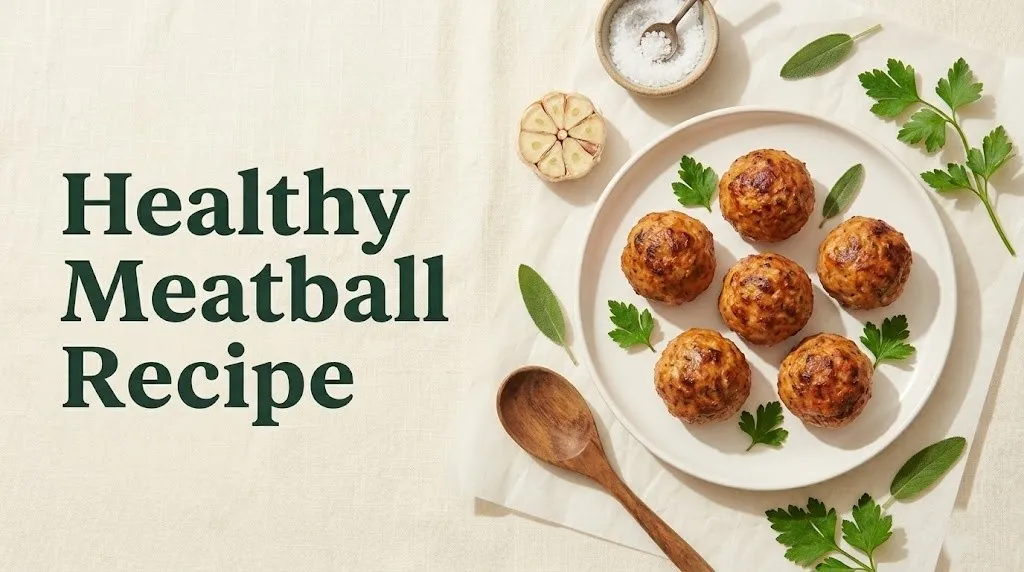
A healthy meatball recipe starts with lean ground meat, a smart binder, and one key cooking decision: baking instead of frying. Get those three things right and you have a high-protein, genuinely satisfying meal that works for weeknight dinners, weekly meal prep, and almost every dietary pattern.
The protein case for meatballs is real. According to the Academy of Nutrition and Dietetics, most adults benefit from spreading 25 to 35 grams of protein across each main meal to support muscle maintenance and satiety. A well-built serving of six homemade meatballs can deliver that range entirely from whole-food ingredients.
This guide covers every decision in the process: which meat to choose and why the fat percentage matters, which binders keep meatballs tender without adding empty carbohydrates, how to cook them for the best outcome, and how to store and freeze them properly. You’ll also get a complete step-by-step recipe, a full nutritional breakdown, and a substitution guide for gluten-free, dairy-free, egg-free, and low-carb variations.
What Makes Meatballs Healthy?
A meatball qualifies as health-supporting when its ingredient list prioritizes lean protein, uses a binder with some nutritional value, and is cooked using a method that doesn’t add significant amounts of saturated fat.
The traditional Italian-American meatball contains ground beef (often a higher-fat blend), white bread soaked in milk, eggs, and Parmesan, then fried in olive oil. That version is not inherently bad. It’s calorie-dense and higher in saturated fat, which matters for people managing cardiovascular risk. The difference in a health-focused version is choosing leaner meat, a fiber-containing or lower-glycemic binder, and a cooking method that doesn’t require submerging the meatball in fat.
What doesn’t change is the nutritional value of the meat itself. Ground beef and ground turkey are both complete protein sources, meaning they supply all nine essential amino acids. Beef in particular provides significant amounts of heme iron, which the body absorbs at a rate two to three times higher than the non-heme iron found in plant foods, according to the National Institutes of Health.
Key factors that determine whether your meatball recipe is genuinely health-supporting:
- Meat fat percentage (90/10 or leaner for beef; 93/7 for turkey)
- Binder type (whole grain, oat-based, or grain-free options)
- Cooking method (baked, air-fried, or pan-seared with minimal oil)
- Sauce sodium content (a common hidden source of excess sodium)
- Portion size (six meatballs at roughly 90g total weight is a standard serving)
Healthy Meatball Ingredients: What to Use and Why
The quality of your ingredients determines both the nutritional profile and the flavor of the final meatball. Choosing well here is not about restriction. It’s about understanding what each component contributes.
Ground meat is the foundation. A 90/10 blend of ground beef (90% lean, 10% fat) gives you a meatball with approximately 22 to 24 grams of protein per 3-ounce portion, according to USDA FoodData Central data. That fat content keeps the meatball moist without tipping into excess saturated fat territory.
The binder holds everything together and affects texture, calories, and carbohydrate content. Whole wheat breadcrumbs add a small amount of fiber. Certified gluten-free rolled oats (Avena sativa) work surprisingly well and add beta-glucan fiber. Almond flour is a lower-carbohydrate option that adds healthy monounsaturated fat. The egg binds proteins together during cooking. One large egg adds about 6 grams of protein and negligible carbohydrates.
Aromatics do real flavor work without adding significant calories. Minced garlic, finely grated onion or onion powder, fresh flat-leaf parsley, dried Italian seasoning, and a small amount of Worcestershire sauce build depth. A tablespoon of grated Parmesan cheese (Parmigiano-Reggiano) adds umami and a modest amount of calcium without significantly increasing saturated fat if kept to one tablespoon per pound of meat.
| Ingredient | Primary Function | Nutritional Contribution |
|---|---|---|
| 90/10 ground beef | Protein base | 22-24g protein, heme iron, zinc, B12 per 3oz |
| Whole wheat breadcrumbs | Binder, moisture | 2-3g fiber per 2 tbsp |
| Rolled oats | Binder alternative | Beta-glucan fiber, lower glycemic |
| Almond flour | Low-carb binder | Monounsaturated fat, vitamin E |
| Egg (large) | Structural binder | 6g complete protein |
| Parmesan (1 tbsp per lb) | Flavor, moisture | Calcium, sodium (use sparingly) |
| Fresh garlic | Flavor | Allicin compound (organo-sulfur) |
| Fresh parsley | Flavor, color | Vitamin K, vitamin C |
People with celiac disease or gluten sensitivity should use certified gluten-free oats or almond flour as a binder. Those with an egg allergy can use a flaxseed egg: one tablespoon of ground flaxseed (Linum usitatissimum) combined with three tablespoons of water, rested for five minutes until gel-like. Texture will be slightly denser but the meatball will hold together through baking.
Best Meat for Healthy Meatballs: A Protein-by-Protein Breakdown
The meat you choose is the single biggest variable in the nutritional outcome of your meatball. Fat percentage, iron content, and flavor intensity all shift significantly depending on the animal source.
Ground beef at 90/10 is the classic choice and remains nutritionally competitive. It provides heme iron at roughly 2.2 milligrams per 3-ounce cooked serving, zinc at approximately 5.3 milligrams per serving, and vitamin B12 (cobalamin) at 2.4 micrograms, which covers 100% of the recommended daily intake for most adults. According to the USDA Dietary Guidelines for Americans 2020-2025, lean cuts of beef fit within a health-supporting dietary pattern when total saturated fat intake stays below 10% of daily calories.
Ground turkey at 93/7 lean-to-fat ratio reduces saturated fat by roughly 30% compared to 90/10 beef, while keeping protein content comparable at 21 to 23 grams per 3-ounce serving. It has a milder flavor that absorbs seasoning readily. The trade-off: turkey meatballs dry out faster if overbaked, so precise timing matters more.
Ground chicken (Gallus gallus domesticus) at 93/7 is the leanest widely available option, with roughly 7 grams of total fat per 3-ounce serving. It produces a lighter meatball but can feel rubbery if the mixture is overworked.
Ground pork, used partially in a 50/50 blend with beef, adds juiciness and a slightly sweet flavor profile. It’s higher in total fat but provides significant amounts of thiamine (vitamin B1), which is less abundant in beef.
| Meat Type | Protein (per 3oz cooked) | Total Fat | Saturated Fat | Heme Iron | Best For |
|---|---|---|---|---|---|
| 90/10 ground beef | 22-24g | 10g | 4g | 2.2mg | Classic flavor, iron content |
| 93/7 ground turkey | 21-23g | 7g | 2g | 1.1mg | Lower saturated fat |
| 93/7 ground chicken | 20-22g | 7g | 1.5g | 0.9mg | Leanest option |
| Ground pork (80/20) | 18-20g | 18g | 6g | 0.9mg | Juicy blend component |
| 50/50 beef-pork blend | 20-22g | 14g | 5g | 1.6mg | Traditional Italian style |
All figures sourced from USDA FoodData Central. Cooked weights used.
Individuals managing cardiovascular risk factors should discuss red meat frequency with a registered dietitian, since the American Heart Association recommends limiting saturated fat to no more than 5 to 6% of total daily calories for those with elevated LDL cholesterol.
Key Takeaway: The three things that determine whether your meatball is actually health-supporting are meat fat percentage, binder type, and cooking method. Get those right and everything else follows.
Healthy Ground Beef Meatballs: The Case for Going Lean
Choosing 90/10 or leaner ground beef for your meatball is the most direct way to keep saturated fat in check without sacrificing the iron and zinc that make beef worth eating.
Fat percentage in ground beef refers to the ratio of lean meat to fat by weight before cooking. An 80/20 blend contains 20% fat by weight, while a 90/10 blend contains 10%. That difference translates meaningfully at the plate: a 3-ounce portion of cooked 80/20 ground beef contains approximately 15 grams of total fat and 6 grams of saturated fat, while the same portion of 90/10 contains approximately 10 grams of total fat and 4 grams of saturated fat, according to USDA FoodData Central.
The practical issue with very lean beef (96/4 or leaner) in meatballs is texture. Fat carries flavor and contributes to the moist, cohesive texture that makes a meatball satisfying. Going too lean without compensating elsewhere produces a dry, crumbly result. The 90/10 range is the sweet spot: enough fat for texture and flavor, low enough to stay within reasonable saturated fat targets.
One practical trick for 90/10 beef meatballs: add one tablespoon of olive oil (Olea europaea) to the meat mixture. Olive oil’s monounsaturated fat (oleic acid) contributes to moisture without the saturated fat load of additional ground meat fat. Think of it like adding a small amount of an entirely different type of fat to pick up the slack the lean meat left behind.
Quick Tip:
- Buy 90/10 ground beef rather than trying to drain fat from 80/20 after cooking. Post-cook draining removes some fat but not proportionally, and nutrition labels reflect pre-cooking fat content.
- Look for “90% lean” on the label. “Extra lean” ground beef by USDA definition is 95/5 or leaner, which is too dry for meatballs without modification.
- For individuals monitoring iron intake due to hemochromatosis (iron overload disorder), ground turkey or chicken are better alternatives to beef.
Healthy Meatballs With Turkey: Lower Saturated Fat, Same Protein Punch
Ground turkey at 93/7 produces a genuinely healthy meatball with roughly 30% less saturated fat than an equivalent 90/10 beef version, without a meaningful reduction in protein.
The challenge with turkey meatballs is moisture retention. Turkey is leaner, which means less inherent fat to keep the interior soft during cooking. Two techniques solve this. First, adding one tablespoon of plain Greek yogurt per pound of turkey introduces fat and protein without significantly changing the flavor. Second, soaking your breadcrumbs or oats in two to three tablespoons of low-sodium chicken broth before mixing creates a panade, a technique from classical French cookery where moistened starch holds water inside the meat mixture during cooking.
Turkey also absorbs aromatics more readily than beef, which is a genuine advantage. Garlic, fennel seed, fresh parsley, and red pepper flakes come through clearly in a turkey meatball where they might be more subtle in a beef version with a stronger background flavor.
For people reducing red meat consumption for cardiovascular reasons, the American Heart Association’s guidance on dietary patterns supports replacing some red meat meals with poultry, which has a more favorable saturated fat profile. A week of two dinners featuring turkey meatballs instead of beef represents a meaningful, manageable dietary shift for most households.
People following halal dietary guidelines should confirm that the ground turkey is certified halal, as preparation methods and certification vary by brand and market.
How to Make Healthy Meatballs: Step-by-Step Recipe
This recipe produces 24 meatballs (six per serving, four total servings) using 90/10 ground beef as the base. Substituting 93/7 ground turkey produces a lower saturated fat version with nearly identical protein content.
Ingredients (makes 24 meatballs):
- 1 pound (450g) 90/10 lean ground beef
- 1/3 cup (35g) whole wheat breadcrumbs (or certified gluten-free rolled oats, pulsed twice)
- 1 large egg
- 2 tablespoons whole milk (or unsweetened almond milk for dairy-free)
- 2 cloves garlic, minced finely
- 1/4 cup (15g) fresh flat-leaf parsley, chopped
- 1 tablespoon grated Parmesan cheese (Parmigiano-Reggiano), optional
- 1 teaspoon dried Italian seasoning
- 1/2 teaspoon onion powder
- 1/2 teaspoon fine sea salt
- 1/4 teaspoon black pepper
- 1 tablespoon extra-virgin olive oil
Instructions:
- Preheat your oven to 400 degrees Fahrenheit (205 degrees Celsius). Place a wire rack on a rimmed baking sheet and lightly coat it with non-stick spray or a thin brush of olive oil.
- In a small bowl, combine the breadcrumbs and milk. Stir and let the mixture rest for two minutes. This short soak softens the breadcrumbs and prevents them from absorbing moisture directly from the meat, which would dry the meatball out during cooking.
- In a large mixing bowl, combine the ground beef, soaked breadcrumb mixture, egg, minced garlic, parsley, Parmesan (if using), Italian seasoning, onion powder, salt, and pepper. Mix with your hands or a fork until the ingredients are just combined. Stop as soon as no streaks of egg remain. Overmixing develops the meat proteins and produces a tough meatball.
- Portion the mixture using a 1.5-inch cookie scoop or two spoons. Each meatball should weigh approximately 30 to 35 grams raw, yielding a finished meatball about the size of a golf ball. Roll briefly between your palms to smooth the surface.
- Place the meatballs on the wire rack, spaced at least half an inch apart to allow heat circulation.
- Bake at 400 degrees Fahrenheit for 18 to 20 minutes. At the 18-minute mark, check the internal temperature with an instant-read thermometer. The USDA recommends ground beef reach an internal temperature of 160 degrees Fahrenheit (71 degrees Celsius) to ensure food safety.
- Remove from the oven and rest for three minutes before serving. The internal temperature will continue to rise slightly during resting.
Key Takeaway: The wire rack is not optional equipment: it’s the difference between a meatball that tastes baked and one that tastes steamed in its own fat. If you don’t have one, a broiler pan works the same way.
Baked vs. Fried Meatballs: Which Is Actually Healthier?
Baked meatballs consistently produce a lower total fat content than pan-fried versions because fat drips away during cooking rather than being absorbed.
When you fry a meatball in oil, the exterior sears and the fat from both the oil and the meat stays largely within or on the meatball. A pan-fried meatball made with 90/10 beef in two tablespoons of olive oil adds approximately 30 to 50 additional calories per serving compared to a baked version of the same recipe, based on standard oil absorption estimates from cooking science literature.
Baking on a wire rack is nutritionally superior and practically easier for batch cooking. You can fit 24 meatballs on one baking sheet, walk away for 18 minutes, and return to evenly cooked meatballs without standing at a stove rotating them through hot oil.
Air-frying is a third option that achieves results close to baking. Air-fryer meatballs cook at 380 degrees Fahrenheit for 10 to 12 minutes and develop a firmer exterior than oven-baked versions due to the direct forced-air circulation. Nutritionally, the profiles are nearly identical.
| Cooking Method | Added Fat | Approximate Added Calories | Texture Outcome | Hands-On Time |
|---|---|---|---|---|
| Baked (wire rack, 400F) | None | 0 | Slightly firm exterior, moist interior | Minimal |
| Pan-fried (2 tbsp olive oil) | 2 tbsp olive oil | +30 to 50 cal/serving | Golden crust, rich flavor | High |
| Air-fried (380F) | Light spray only | +5 cal/serving | Firm exterior, comparable interior | Low |
| Simmered in sauce | None | 0 | Soft exterior, very moist | Minimal |
Simmering raw meatballs directly in tomato sauce is a traditional technique that produces a very soft, deeply flavored meatball. It’s not less healthy than baking, but it doesn’t allow fat to drain away. If you use 90/10 or leaner meat, simmering is a perfectly sound choice.
Meatball Calories and Nutrition Per Serving: Full Breakdown
A serving of six baked meatballs (approximately 90g cooked weight) made with 90/10 ground beef, whole wheat breadcrumbs, one egg, and minimal Parmesan contains approximately 215 to 235 calories, according to nutritional calculations aligned with USDA FoodData Central data.
That calorie range positions a six-meatball serving as a protein-dense, moderate-calorie component that works within a broad range of daily calorie targets. Paired with a vegetable and a starchy side, the total meal reaches 450 to 600 calories, which is within the range that many dietary planning frameworks allocate for a main dinner.
| Nutrient | Per 6 Meatballs (90g, baked, 90/10 beef) | % Daily Value (based on 2,000 cal diet) |
|---|---|---|
| Calories | 215-235 kcal | 11% |
| Protein | 22-25g | 44-50% |
| Total Fat | 9-12g | 12-15% |
| Saturated Fat | 3.5-4.5g | 18-23% |
| Carbohydrate | 6-8g | 2-3% |
| Dietary Fiber | 0.8-1.2g | 3-4% |
| Sodium | 290-340mg | 13-15% |
| Iron (heme) | 2.0-2.4mg | 11-13% |
| Zinc | 4.8-5.5mg | 44-50% |
| Vitamin B12 | 2.2-2.6mcg | 92-108% |
Figures derived from USDA FoodData Central data for individual ingredients at stated quantities. Values are estimates and will vary with exact ingredient brands and portion weights.
People following a low-sodium diet should note that the sodium in this recipe comes primarily from the salt added during mixing and the Parmesan. Reducing added salt to 1/4 teaspoon and omitting Parmesan drops the sodium estimate to approximately 180 to 210 milligrams per serving. Individuals managing hypertension should also factor in sauce sodium, which can add 300 to 500 milligrams per half-cup serving in many commercial marinara options.
Key Takeaway: Six baked meatballs made with lean ground beef deliver roughly half the recommended daily protein for most adults at around 220 calories. That ratio is hard to match with most other dinner proteins at the same calorie cost.
High Protein Meatball Recipe: Maximizing Protein Per Serving
Maximizing the protein content of your meatball recipe means choosing the right meat blend, using an egg, and being selective about how much binder you add.
The egg is the most underappreciated protein contributor in a meatball recipe. One large egg adds approximately 6 grams of complete protein. Two eggs per pound of meat, rather than one, raises the protein content meaningfully without a major change in texture or calorie count. The trade-off is a slightly firmer meatball, which some people prefer.
Replacing all of the breadcrumbs with a protein-forward ingredient is another approach. A quarter cup of cooked quinoa (Chenopodium quinoa) per pound of meat adds 2 to 3 grams of additional protein while functioning as a binder. Cooked quinoa also provides all nine essential amino acids, making it one of the few plant-based complete protein sources available.
For people following a high-protein dietary pattern, such as those in strength training phases or recovering from illness where muscle tissue repair is a priority, the Academy of Nutrition and Dietetics cites a general protein target of 1.2 to 2.0 grams per kilogram of body weight per day for active adults. A dinner built around six to eight high-protein meatballs contributes meaningfully toward that target.
High-protein modifications:
- Use 2 eggs per pound of meat instead of 1
- Replace 2 tablespoons of breadcrumbs with 2 tablespoons of cottage cheese (adds protein and moisture)
- Choose 93/7 turkey or 90/10 beef over fattier blends to keep calories lower relative to protein
- Add 1/4 cup cooked quinoa as a partial binder replacement
Healthy Meatballs Without Breadcrumbs: Grain-Free Binder Options
Meatballs made without breadcrumbs hold together well when you use the right replacement binder. This is not a myth or a diet-blog claim. It reflects straightforward food science.
The binder’s job is to absorb moisture and physically link the meat proteins during cooking so the meatball doesn’t crumble. Breadcrumbs do this by absorbing liquid and swelling. Almond flour does the same thing with a different texture profile. Rolled oats pulsed briefly in a blender create small particles that mimic fine breadcrumbs and absorb liquid effectively while adding beta-glucan fiber.
A 2021 review in the journal Nutrients found that beta-glucan, the soluble fiber in oats, is associated with modest reductions in LDL cholesterol at intakes of at least 3 grams per day. The amount in two tablespoons of oats per pound of meat is small on its own, but combined with other dietary fiber sources across the day, it adds up.
| Binder Replacement | Amount per 1 lb meat | Texture Impact | Carbs per Serving | Special Note |
|---|---|---|---|---|
| Almond flour | 3 tablespoons | Tender, slightly dense | 1-2g | Paleo, keto-compatible |
| Rolled oats (pulsed) | 3 tablespoons | Very close to breadcrumbs | 4-5g | Contains gluten unless certified GF |
| Cooked quinoa | 1/4 cup | Slightly textured | 5-6g | Adds complete protein |
| Flaxseed meal | 2 tablespoons | Denser, earthier | 1g | Acts as binder + egg replacer with water |
| Grated zucchini (squeezed) | 2 tablespoons | Softer, more fragile | 0.5g | Adds moisture, reduces need for milk |
People following a ketogenic diet should use almond flour or flaxseed meal and omit any starch-based binder entirely. Each six-meatball serving without breadcrumbs typically contains 2 to 3 grams of net carbohydrate, fitting comfortably within a standard ketogenic daily carbohydrate limit.
Gluten-Free and Dairy-Free Meatball Options
Making meatballs that are gluten-free, dairy-free, or both requires specific substitutions at the binder and flavoring stages, not wholesale recipe reinvention.
For gluten-free meatballs, the substitution is straightforward: replace standard breadcrumbs with certified gluten-free rolled oats or almond flour at equal volume. The critical word is “certified.” Oats are naturally gluten-free, but they are frequently processed in facilities that also handle wheat, barley, or rye. For people with celiac disease, cross-contamination at non-certified facilities is a genuine health concern, not a matter of preference.
For dairy-free meatballs, omit the Parmesan and replace whole milk in the panade with unsweetened almond milk, oat milk, or low-sodium chicken broth. The flavor depth from Parmesan can be partially replaced with a teaspoon of nutritional yeast, which adds a savory, slightly cheesy flavor without any dairy content.
For a recipe that is both gluten-free and dairy-free, use almond flour as the binder and chicken broth as the panade liquid. Add a teaspoon of nutritional yeast for umami depth. The resulting meatball is indistinguishable in texture from the standard version if mixed carefully.
Dairy-free modifications for those with lactose intolerance differ from those with a true milk protein allergy. Lactose intolerance affects the ability to digest lactose sugar, so aged cheeses like Parmesan, which have negligible lactose, are often tolerated. A true dairy allergy involves an immune response to milk proteins and requires complete dairy elimination.
Quick Tip:
- For egg-free meatballs: mix 1 tablespoon ground flaxseed with 3 tablespoons water per egg replaced. Rest for 5 minutes before adding to the meat mixture.
- For nut-free and gluten-free: certified GF rolled oats are the best binder option.
- Always verify that Worcestershire sauce is gluten-free if needed; some brands use malt vinegar derived from barley.
Key Takeaway: Gluten-free and dairy-free meatballs are entirely achievable without sacrificing texture, and the key is using certified GF oats or almond flour. The rest of the recipe stays the same.
Healthy Sauce for Meatballs: What to Use and What to Watch
The sauce you put on a meatball contributes significantly to the meal’s overall sodium, sugar, and calorie content, and it’s the most frequently overlooked variable in otherwise well-constructed healthy meatball recipes.
A standard half-cup serving of commercial marinara sauce contains anywhere from 400 to 600 milligrams of sodium, depending on the brand, and frequently includes 4 to 8 grams of added sugar. Across a full meal, that sodium contribution can represent 20 to 30% of the daily target that the USDA Dietary Guidelines for Americans recommends (2,300 milligrams per day for most adults, and 1,500 milligrams for those managing hypertension).
Making a simple tomato sauce from whole crushed tomatoes, garlic, olive oil, and dried oregano takes about 20 minutes and produces a sauce with roughly half the sodium of most jar options. Using no-salt-added crushed tomatoes drops the sodium further without sacrificing flavor when you season with herbs instead.
Non-tomato options worth knowing:
- Greek yogurt and herb sauce: Combine plain 2% Greek yogurt with minced garlic, fresh dill, and lemon juice for a protein-forward sauce that pairs well with turkey meatballs. Approximately 35 calories and 4 grams of protein per two tablespoons.
- Light broth-based gravy: Low-sodium chicken or beef broth thickened with one teaspoon of arrowroot starch per cup produces a savory, low-calorie sauce suitable for diabetic-friendly meal planning.
- Simple pesto (in small amounts): Traditional pesto is calorie-dense due to pine nuts and olive oil, but one tablespoon per serving adds healthy fat and intense flavor with roughly 80 calories.
Meal Prep and Freezer Meatballs: Storage, Safety, and Timing
Meatballs are among the most practical foods for weekly meal preparation because they reheat without significant texture loss and freeze exceptionally well.
Cooked meatballs stored in an airtight container in the refrigerator remain safe to eat for three to four days, following USDA food safety guidelines for cooked ground meat products. Do not leave cooked meatballs at room temperature for more than two hours. Ground meat has a high surface area relative to its mass, which creates more entry points for bacterial growth than whole cuts of meat.
For freezer storage, the USDA recommends consuming frozen cooked meatballs within three to four months for best quality, though they remain safe beyond that point if kept at a consistent 0 degrees Fahrenheit (-18 degrees Celsius). Quality, specifically texture and flavor, degrades gradually after four months.
The most practical freezing method: arrange cooked, cooled meatballs in a single layer on a baking sheet and freeze for one to two hours until solid. Transfer to a zip-seal freezer bag or airtight container, removing as much air as possible. This prevents the meatballs from freezing together in a block, so you can pull out exactly how many you need.
Reheating guidance:
- From refrigerator: microwave at 50% power for 90 seconds, then full power for 30 seconds. Or reheat in sauce over medium-low heat for eight to ten minutes.
- From frozen: thaw overnight in the refrigerator, then reheat as above. Alternatively, place frozen meatballs directly into simmering sauce over medium-low heat for 15 to 18 minutes, turning once.
- Always confirm the internal temperature reaches 165 degrees Fahrenheit (74 degrees Celsius) when reheating, per USDA guidance for reheated cooked meat.
Healthy Meatballs for Weight Management: Protein, Satiety, and Portion Strategy
Meatballs built with lean protein are a genuinely useful tool for weight management because protein is the most satiating macronutrient per calorie.
A study published in the American Journal of Clinical Nutrition found that increasing dietary protein to 25 to 30% of total daily calorie intake reduced late-night snacking and overall caloric intake in study participants compared to moderate-protein diets. A six-meatball serving provides approximately 22 to 25 grams of protein, which represents 25 to 30% of the protein target for a 150-pound person consuming 1,800 calories daily with a moderate-protein goal.
The practical application: eating a protein-centered dinner built around lean meatballs tends to reduce the likelihood of high-calorie snacking within two to three hours afterward. Think of dietary protein like a slow-burning log versus the quick burn of simple carbohydrates. It generates a longer-lasting signal of fullness because it takes more time to digest and triggers a more sustained release of satiety hormones, including peptide YY and glucagon-like peptide-1.
Portion strategy matters here. Six meatballs at around 220 calories is the moderate serving. Pairing them with two cups of zucchini noodles (roughly 40 calories) instead of one cup of cooked pasta (roughly 200 calories) saves approximately 160 calories while maintaining a satisfying meal volume. For people managing body weight, that kind of substitution adds up meaningfully over weeks without requiring calorie counting or portion restriction in a way that feels depriving.
People with type 2 diabetes or pre-diabetes should note that the low-carbohydrate version of this recipe (using almond flour binder, no breadcrumbs, and served over vegetables rather than pasta) produces a meal with a substantially lower glycemic load, which may support post-meal blood glucose management. A registered dietitian can provide individualized guidance on specific carbohydrate targets.
Key Takeaway: Lean meatballs are one of the most calorie-efficient high-protein meals you can make at home. The pairing choice, pasta versus vegetables, does more for the overall calorie count than almost any adjustment within the meatball recipe itself.
Frequently Asked Questions About Healthy Meatball Recipes
Are homemade meatballs healthier than store-bought?
Homemade meatballs are generally healthier than most commercial frozen or pre-made options because you control the fat percentage of the meat, the type of binder, the sodium level, and the absence of preservatives.
Most store-bought frozen meatballs use higher-fat meat blends, fillers like soy protein concentrate, and sodium levels ranging from 400 to 700 milligrams per serving before sauce is added.
Making your own with 90/10 ground beef or 93/7 turkey and a whole-grain binder produces a nutritionally superior product in terms of protein density, fat quality, and sodium content.
What is the healthiest meat to use for meatballs?
The healthiest meat choice depends on your specific dietary priorities. For highest complete protein and iron content, 90/10 ground beef leads. For lowest saturated fat, 93/7 ground turkey is the better option.
Both provide all nine essential amino acids and substantial amounts of zinc and vitamin B12.
If you are managing LDL cholesterol specifically, the American Heart Association’s guidance favors poultry over red meat as a more frequent protein source.
How many calories are in a healthy homemade meatball?
A single baked meatball made with 90/10 lean ground beef, whole wheat breadcrumbs, and egg weighs approximately 30 to 35 grams and contains roughly 35 to 40 calories.
A standard serving of six meatballs (approximately 90g cooked weight) provides 215 to 235 calories and 22 to 25 grams of protein.
These figures are based on USDA FoodData Central data for the specific ingredients used and will vary with portion size and ingredient choices.
Can I make meatballs without breadcrumbs and still have them hold together?
Yes, meatballs bind well without breadcrumbs when you use a moisture-absorbing alternative such as almond flour, pulsed certified gluten-free rolled oats, or cooked quinoa.
The critical factor is resting the mixture for five minutes after combining so the binder absorbs the liquid from the egg and any added milk or broth before you form the balls.
Meatballs made with almond flour at three tablespoons per pound of meat hold their shape through baking at 400 degrees Fahrenheit with no issues.
How long do healthy homemade meatballs last in the freezer?
Cooked homemade meatballs stored correctly at 0 degrees Fahrenheit remain safe indefinitely but are best in quality within three to four months, according to USDA food safety guidelines.
Freeze them first in a single layer on a baking sheet until solid, then transfer to an airtight freezer bag to prevent clumping.
Reheat from frozen in simmering sauce over medium-low heat for 15 to 18 minutes, confirming an internal temperature of 165 degrees Fahrenheit (74 degrees Celsius) before serving.
Closing
Building a healthy meatball recipe is less about finding the “perfect” formula and more about understanding four decisions: meat fat percentage, binder choice, cooking method, and sauce selection. Make those four decisions deliberately and the result is a high-protein, genuinely satisfying meal that holds up in the freezer, works for multiple dietary needs at the same table, and tastes like dinner rather than a dietary compromise.
Start with 90/10 ground beef or 93/7 turkey. Use whole wheat breadcrumbs or certified gluten-free oats. Bake on a wire rack at 400 degrees Fahrenheit. Check the internal temperature. Everything else is seasoning.