Cats can safely eat certain human foods every day, including plain cooked chicken, scrambled eggs, and small amounts of cooked fish, as long as these foods stay within roughly 10% of their daily caloric intake. Human food given correctly adds variety and real nutritional value to your cat’s diet without replacing the complete nutrition of a proper cat food.
The stakes are real. The ASPCA Animal Poison Control Center handles tens of thousands of pet poisoning calls annually, and many involve common human foods that owners considered harmless. Getting this right is not about being overly cautious; it’s about knowing exactly which foods are safe, in what form, and in what quantity.
This guide covers every major human food category your cat might encounter: the ones that work daily, the ones that are fine occasionally, the ones that need specific preparation to be safe, and the ones you should never offer under any circumstances. Life stage differences for kittens and senior cats are covered too.
What Human Food Can Cats Eat Every Day
Several human foods are genuinely safe for cats to eat on a daily basis, provided they are plain, cooked, and served in appropriate quantities.
The reliable daily options are lean cooked proteins. Plain cooked chicken breast, plain cooked turkey, and plain scrambled eggs are the three human foods most consistently recommended by veterinary nutritionists for daily supplemental feeding. They are digestible, protein-dense, and free of ingredients that create toxicity risks.
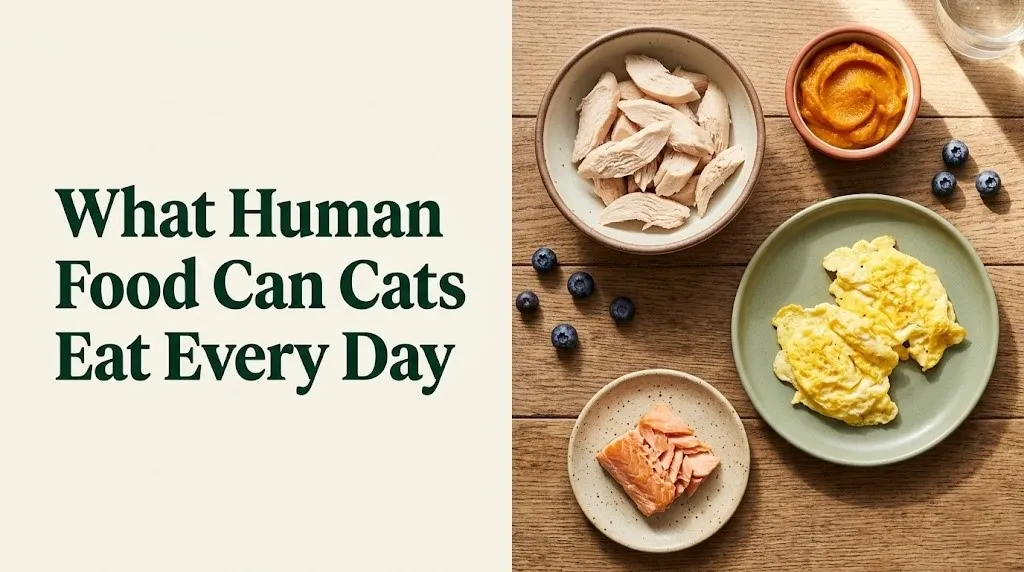
Beyond proteins, a small daily addition of plain cooked pumpkin (about one teaspoon per day) supports digestive health through its soluble fiber content. Plain cooked salmon in small amounts several times per week (not daily, due to mercury considerations) is also broadly accepted. The key word across every one of these is plain: no salt, no onion powder, no garlic, no butter, no oil, no seasonings of any kind.
Think of your cat’s diet like a well-balanced plate where the main dish is non-negotiable. Commercial cat food is the entree. Human food additions are the garnish at most. A garnish improves the meal; it does not replace it.
| Human Food | Safe Frequency | Preparation Required | Max Daily Amount (Adult Cat) |
|---|---|---|---|
| Cooked chicken breast | Daily | Boiled or baked, plain, no skin | 1 to 2 tablespoons |
| Cooked turkey | Daily | Plain, no seasoning, no skin | 1 to 2 tablespoons |
| Scrambled eggs | Daily | Plain, fully cooked, no butter | 1 tablespoon |
| Plain pumpkin puree | Daily | Cooked, unsweetened, no pie spices | 1 teaspoon |
| Cooked salmon | 2 to 3x per week | Plain, fully cooked, no bones | 1 tablespoon |
| Cooked shrimp | 2 to 3x per week | Fully cooked, plain, shelled | 1 to 2 small shrimp |
Cats with known allergies to any protein source should have that protein eliminated from their supplemental diet. Your veterinarian is the right person to guide dietary adjustments for any cat with a diagnosed food sensitivity.
Why Cats Are Obligate Carnivores and What That Means for Their Diet
Cats are obligate carnivores, which means their bodies require specific nutrients found only in animal tissue to survive and function normally.
Unlike dogs or humans, cats cannot synthesize taurine (an amino acid essential for cardiac function, vision, and reproduction) from plant-based precursors. They must consume it preformed from animal tissue. Arachidonic acid, a fatty acid cats cannot produce from linoleic acid the way humans can, must also come from animal fat. The same applies to preformed vitamin A (retinol): cats cannot convert beta-carotene from plants into usable vitamin A, so they depend on liver and animal fat as sources.
These biological limitations mean that human foods from plant sources, no matter how nutrient-dense they appear on paper, cannot meet a cat’s core nutritional needs on their own. Carrots, spinach, and lentils are not harmful to cats, but they provide essentially no essential nutrition a cat cannot get more efficiently from a single piece of chicken.
The Association of American Feed Control Officials (AAFCO) publishes specific nutrient profiles for cats at different life stages. Any commercial cat food labeled “complete and balanced” has been formulated to meet these profiles. Human food additions should be viewed as supplements within that framework, not replacements for it.
Key Fact: According to the Cornell Feline Health Center, protein should constitute the majority of a cat’s diet, and the protein must come from animal sources. Plant proteins are not adequate substitutes for feline obligate carnivore requirements.
Cats with hyperthyroidism, chronic kidney disease, or hepatic lipidosis have modified nutritional needs that affect which animal proteins are appropriate. A veterinarian familiar with the individual cat’s bloodwork and condition should guide any dietary adjustments for these animals.
Cooked Chicken and Turkey for Cats: The Safest Daily Protein
Plain cooked chicken and turkey are the safest human foods for cats to eat every day, providing high-quality protein, B vitamins, and the amino acids cats require without meaningful toxicity risk.
Chicken breast cooked without skin, bones, seasoning, salt, or oil is the gold standard. It’s lean, it’s digestible, and it closely mirrors the macronutrient profile of the prey cats evolved to eat. The skin should always be removed: the high fat content in poultry skin can contribute to pancreatitis and weight gain in cats fed it regularly. Bones from cooked poultry must always be removed before serving because they can splinter and cause intestinal perforations.
Turkey breast follows the same rules. The plain breast meat from a holiday bird (provided it was not stuffed with onions, garlic, or seasoned rubs) is genuinely safe for cats in reasonable amounts. The giblets (heart, liver, gizzard) are also safe in small amounts occasionally, and the liver provides preformed vitamin A and iron. Liver should be offered no more than once or twice a week because of its high vitamin A content; overconsumption over time can lead to hypervitaminosis A, a documented toxicity condition in cats.
To prepare chicken or turkey safely for your cat:
- Use boneless, skinless breast meat.
- Boil or bake at 165°F (74°C) until fully cooked through.
- Remove all bones and connective tissue carefully.
- Allow to cool completely before serving.
- Shred or chop into small, cat-appropriate pieces.
- Serve plain with no added salt, oil, garlic powder, or herbs.
- Store any leftovers refrigerated and use within 48 hours.
Cats on a prescription low-protein diet for renal disease should not receive supplemental chicken or turkey without veterinary guidance, as increased protein intake can accelerate kidney damage in cats with diagnosed kidney insufficiency.
Key Takeaway: Plain cooked chicken is the safest and most nutritionally appropriate human food for daily cat feeding because it mirrors the animal-based protein profile cats evolved to eat, provided it is boneless, skinless, and completely free of seasoning.
Can Cats Eat Eggs Every Day
Cats can eat plain, fully cooked eggs every day in small amounts, making eggs one of the few human foods that deliver genuine nutritional value to a cat’s diet on a regular basis.
A single large egg contains roughly 6 grams of protein, B vitamins including riboflavin (B2) and cobalamin (B12), selenium, and choline. For cats, eggs are a complete protein source: they contain all essential amino acids, including the ones cats cannot synthesize themselves. Cooked egg white provides clean protein. The yolk adds fat-soluble vitamins.
The preparation method matters. Raw egg whites contain avidin, a glycoprotein that binds biotin (vitamin B7) and prevents absorption. Cats fed raw egg whites regularly can develop biotin deficiency, which affects skin, coat, and metabolic function. Cooking destroys avidin, making cooked eggs entirely safe. Scrambled eggs without butter, poached eggs, or hard-boiled eggs all work. The one tablespoon per day serving size keeps caloric addition modest, since a full egg represents roughly 70 to 78 calories and is caloric enough to displace appetite for complete cat food if overfed.
According to the American Journal of Veterinary Research, eggs are among the most digestible protein sources for domestic cats, with protein digestibility ratings above 90%.
Cats with a diagnosed protein intolerance or cats on a novel-protein elimination diet should avoid egg additions until their veterinarian confirms eggs are not the implicated allergen. Egg allergies in cats exist, though they are less common than fish or chicken sensitivities.
Can Cats Eat Fish and Is Canned Tuna Safe
Cats can eat plain cooked fish, but canned tuna marketed for human consumption is not an appropriate daily food for cats despite their well-known preference for it.
The problem with canned tuna is not a single ingredient but a combination of concerns. Tuna intended for human sale often contains added salt at levels cats should not consume regularly. More importantly, tuna is a high-mercury fish. According to the FDA, larger, longer-lived predatory fish like tuna accumulate methylmercury through the food chain. In cats, regular tuna consumption has been linked to mercury accumulation and, separately, to thiamine (vitamin B1) deficiency when tuna displaces a nutritionally complete diet. Thiamine deficiency in cats causes neurological symptoms including seizures.
Canned tuna in water with no added salt offered as an occasional flavor enhancer (once or twice a week at most, one tablespoon per serving) is generally accepted by veterinary nutritionists. Daily tuna feeding is not recommended regardless of the “in water” formulation.
Plain cooked white fish such as cod, tilapia, and pollock are lower-mercury options that can be offered more frequently. They should always be fully cooked, deboned, and served without any seasoning, butter, or oil.
| Fish Type | Mercury Level | Safe Frequency for Cats | Preparation Required |
|---|---|---|---|
| Canned tuna (water-packed, no salt) | High | Once or twice weekly max | Ready to serve; limit portion |
| Salmon (cooked) | Moderate | 2 to 3x per week | Fully cooked, deboned, plain |
| Cod (cooked) | Low | 2 to 3x per week | Fully cooked, deboned, plain |
| Tilapia (cooked) | Low | 2 to 3x per week | Fully cooked, deboned, plain |
| Pollock (cooked) | Low | 2 to 3x per week | Fully cooked, deboned, plain |
Cats with known iodine sensitivities or diagnosed hyperthyroidism should have fish intake reviewed by a veterinarian, as some research has explored associations between iodine exposure from fish and feline hyperthyroidism, though the relationship is not fully established.
Can Cats Eat Cooked Salmon and Shrimp
Plain cooked salmon and plain cooked shrimp are both safe for cats in modest amounts several times per week, offering quality protein and, in salmon’s case, omega-3 fatty acids.
Salmon is a source of eicosapentaenoic acid (EPA) and docosahexaenoic acid (DHA), the long-chain omega-3 fatty acids associated with coat health, joint function, and anti-inflammatory effects in cats. A one-tablespoon serving of plain cooked salmon two to three times per week gives your cat a meaningful EPA/DHA addition without hitting problematic mercury thresholds. Salmon must always be fully cooked: raw salmon can carry Neorickettsia helminthoeca, a parasite that causes salmon poisoning disease in some animals, and can harbor Listeria or Salmonella.
Shrimp is a lean, low-calorie protein that cats generally find appealing. One to two small plain cooked shrimp, fully shelled and deveined, make a reasonable supplement. Shrimp contains iodine, selenium, and phosphorus alongside protein. The phosphorus content is a consideration for cats with chronic kidney disease, as phosphorus restriction is typically part of their management protocol. Those cats should not receive regular shrimp without veterinary input.
Both salmon and shrimp must be served plain: no butter, no lemon, no garlic, no seasoning blends. Anything prepared for human consumption with standard kitchen seasonings is not appropriate for cats.
Quick Tip:
- Poach salmon in plain water or bake it dry at 400°F (204°C) for 12 to 15 minutes until fully opaque.
- Boil shrimp in plain water until pink and fully cooked; cool completely before serving.
- Store unused portions refrigerated and discard after 48 hours.
Key Takeaway: Cooked salmon two to three times per week gives cats a real omega-3 EPA/DHA boost that supports coat and joint health, but raw fish of any kind carries bacterial and parasitic risks that make cooking non-negotiable.
What Vegetables Can Cats Eat Daily
A small number of vegetables are safe for cats to eat daily, though they provide little essential nutrition that cats cannot get more efficiently from animal protein.
The vegetables most consistently documented as safe for cats include steamed or cooked broccoli, cooked or raw carrots, cooked green beans, cooked peas, cooked zucchini, and cooked asparagus. These can be offered in small amounts as a low-calorie texture addition. Think of them the way you’d think of unsalted crackers: not nutritionally essential, not harmful in reasonable quantities, and occasionally something a particular cat will genuinely enjoy.
The reason vegetables provide limited nutritional value to cats connects directly back to obligate carnivore biology. Cats lack meaningful populations of gut bacteria specialized for fermenting plant fiber into usable energy. They also lack sufficient beta-carotene dioxygenase to convert plant carotenoids into retinol. Vegetables offer fiber, some water content, and antioxidants, but cats do not require dietary fiber the way humans do.
According to the Cornell Feline Health Center, small amounts of vegetables are generally well-tolerated by healthy adult cats but should never constitute more than 5% of the daily diet.
Vegetables from the allium family are completely off the table. Onions, garlic, leeks, chives, and shallots all contain N-propyl disulfide, a compound that damages feline red blood cells and causes Heinz body anemia. This is one of the most important cat-feeding safety rules and applies to every form: raw, cooked, powdered, dehydrated, or mixed into another food. Even a small amount of garlic powder hidden in a broth or seasoning blend is enough to cause harm.
- Safe vegetables (plain, cooked): broccoli, carrots, green beans, peas, zucchini, asparagus, cucumber
- Unsafe vegetables (all forms): onions, garlic, leeks, chives, shallots, scallions
- Serve in pieces no larger than your thumbnail
- Never season with salt, oil, or spices
Can Cats Eat Rice, Oatmeal, or Other Grains
Cats can eat small amounts of plain cooked rice and plain cooked oatmeal without harm, but grains offer no meaningful nutritional benefit to a species that evolved without them.
Plain cooked white rice is sometimes recommended by veterinarians for cats experiencing digestive upset because it is bland, low in fat, and easy to digest. A teaspoon to one tablespoon of plain cooked white rice mixed into a meal can help firm up loose stools temporarily. It is not a nutritional supplement; it is a texture and digestibility aid. Brown rice is also safe but slightly harder to digest due to higher fiber content.
Plain cooked oatmeal (not flavored instant packets, not oatmeal with raisins or added sweeteners) is safe for cats in teaspoon-sized amounts. Oatmeal contains manganese, phosphorus, and beta-glucan fiber, though cats derive minimal benefit from these compared to humans. Oatmeal is occasionally used in commercial cat food formulations as a binding agent rather than a primary nutrition source.
Cats with diabetes should have grain additions cleared by their veterinarian before inclusion. Grains raise blood glucose, and even small amounts of carbohydrates can complicate glycemic control in diabetic cats. The Journal of Feline Medicine and Surgery has published research supporting low-carbohydrate diets for cats with diabetes mellitus, making grain additions contraindicated for that population.
Corn, wheat, and soy in small cooked amounts are not toxic, but they are common allergens in cats sensitive to commercial cat food ingredients. If your cat shows signs of food sensitivity (chronic vomiting, diarrhea, skin inflammation), a grain-free elimination diet supervised by a vet is the appropriate diagnostic step.
Can Cats Eat Pumpkin
Plain cooked pumpkin is one of the most consistently recommended human food additions for cats, primarily for its role in supporting healthy digestion.
Plain pumpkin puree (not pumpkin pie filling, which contains added sugar, nutmeg, and cinnamon) contains soluble and insoluble fiber that can help regulate both constipation and mild diarrhea in cats. One teaspoon per day mixed into food is the standard recommendation from veterinary nutritionists. The soluble fiber absorbs water and bulks stool. Think of it like a slow-release regulator for your cat’s digestive transit time: a little goes a long way, and more is not better.
Pumpkin seeds are also safe for cats in very small amounts (one or two seeds, finely ground) and have been used as a mild natural support for gastrointestinal parasite resistance, though this application is not a substitute for veterinarian-prescribed antiparasitic treatment.
Pumpkin is low in calories: a teaspoon contains roughly 2 to 3 calories, making it an appropriate daily addition even for overweight cats where caloric management matters.
The Cornell Feline Health Center supports plain pumpkin as a practical dietary fiber addition for cats experiencing intermittent constipation. Cats with chronic constipation or megacolon require full veterinary assessment rather than dietary fiber supplementation alone.
Quick Tip:
- Buy canned 100% plain pumpkin puree with no added ingredients.
- Stir one teaspoon into your cat’s wet food once daily.
- Store opened cans refrigerated and use within 5 to 7 days.
Key Takeaway: One teaspoon of plain cooked pumpkin puree daily is one of the most practical human food additions for cats because it supports digestive regularity at almost zero caloric cost and is safe across essentially all life stages.
Can Cats Have Cheese or Plain Yogurt
Most cats are lactose intolerant, which means cheese and dairy products should be offered rarely and in tiny amounts rather than as daily additions.
After weaning, most cats lose the majority of their lactase enzyme activity, the enzyme that breaks down lactose (milk sugar). Without sufficient lactase, lactose ferments in the lower intestine and causes gas, bloating, and diarrhea. This is not a universal rule: some cats retain more lactase than others and tolerate small dairy amounts without visible symptoms. The problem is you generally cannot tell which category your cat falls into without a trial.
Hard, aged cheeses (cheddar, Swiss, parmesan) contain very low lactose because the aging process consumes most of the lactose through fermentation. A small cube of plain cheddar, about the size of a fingernail, is unlikely to cause digestive issues in most cats and can serve as a high-value treat for medication delivery. Hard cheese is still high in saturated fat and sodium, so it belongs firmly in the “occasional” category.
Plain, unsweetened yogurt with live active cultures contains lower lactose than milk due to fermentation. A half-teaspoon once or twice a week is generally tolerated. The live cultures provide Lactobacillus strains, though the evidence for meaningful probiotic benefit in cats from human yogurt is limited compared to feline-specific probiotic supplements.
Cats with diagnosed inflammatory bowel disease (IBD) or known dairy sensitivity should avoid cheese and yogurt entirely. Overweight cats should also avoid regular cheese given its fat and calorie density.
What Fruits Can Cats Safely Eat
A short list of fruits is safe for cats in small amounts, but fruit is not a food cats are biologically equipped to enjoy nutritionally because they lack the sweet taste receptor (Tas1r2) that makes sweet flavors rewarding to humans.
Safe fruits for cats in fingernail-sized amounts include blueberries, watermelon (seedless, rind removed), cantaloupe, strawberries, and peeled apple slices with seeds removed. These are low-acid, low-sugar options that do not cause toxicity in cats. Blueberries contain anthocyanins and vitamin C, though cats synthesize their own vitamin C and do not require dietary sources.
Grapes and raisins are the most critical fruit danger. The ASPCA Animal Poison Control Center classifies grapes and raisins as severely toxic to cats (and dogs), capable of causing acute kidney failure even in small amounts. The exact toxic compound has not been fully identified, which is why the guidance is zero tolerance: no amount is known to be safe.
Citrus fruits (oranges, lemons, limes, grapefruit) are not acutely toxic in tiny amounts but contain limonene and linalool compounds that cats find aversive and that can cause gastrointestinal irritation in larger quantities. The essential oils in citrus peel are more concentrated and more problematic.
Cherries, peaches, plums, and apricots should all be avoided because their pits, leaves, and stems contain cyanogenic glycosides that release hydrogen cyanide when metabolized. The flesh alone in a tiny amount is unlikely to cause harm, but the risk of pit exposure makes these fruits not worth offering.
Can Cats Eat Baby Food
Plain meat-based baby food is safe for cats in small amounts and is frequently used by veterinarians as a palatability aid for sick or recovering cats.
The baby foods that work for cats are simple, single-ingredient meat purees: plain chicken baby food, plain turkey baby food, and plain beef baby food with no added salt, no onion powder, no garlic, and no thickeners beyond water. These are soft, highly palatable, and easy for cats with dental problems, recovering from illness, or needing a medication vehicle to consume.
The critical label check is the ingredients list. Many baby food meat products contain onion powder or garlic powder as flavor enhancers, which are highly toxic to cats at any amount. This is not a theoretical risk: onion powder is more concentrated than fresh onion and can cause Heinz body hemolytic anemia in cats from very small exposures. Read the label on every product, every time.
Baby food is not nutritionally complete for cats. It lacks sufficient fat, calcium, taurine, and the full amino acid profile cats require. It works as a short-term palatability tool or occasional flavor enhancer but is not a dietary foundation.
Stages 1 and 2 baby foods (single-ingredient purees) are generally safer choices than Stage 3 (mixed ingredients with more complex formulations). Plain meat baby food can be refrigerated after opening and used within 48 hours.
Key Takeaway: Plain chicken or turkey baby food with zero additives is a genuinely useful short-term tool for encouraging sick cats to eat, but the ingredients label check for onion and garlic powder is non-negotiable because even small amounts can cause serious red blood cell damage.
How Much Human Food Can I Give My Cat Daily
The standard veterinary guideline is that human food treats and supplements should not exceed 10% of a cat’s total daily caloric intake.
An average adult domestic cat needs roughly 200 to 250 calories per day, depending on size, activity level, and whether they are spayed or neutered. Spayed and neutered cats typically have lower caloric requirements than intact cats of the same size. That 10% allowance translates to approximately 20 to 25 calories per day from human food sources combined.
To give that scale some context: one tablespoon of plain cooked chicken breast contains roughly 17 to 20 calories. One tablespoon of plain cooked salmon is similar. One teaspoon of plain pumpkin is about 2 to 3 calories. A one-tablespoon serving of scrambled egg is approximately 15 to 17 calories. These amounts are small enough that they stay within the threshold without meaningful caloric displacement from complete cat food.
The AAFCO guidelines for complete and balanced adult cat nutrition require that the primary diet provide defined minimums of protein, fat, essential amino acids, vitamins, and minerals. When human food additions regularly exceed 10% of total calories, the cat is effectively diluting the nutritional completeness of their primary diet without any guarantee of compensating for what’s been displaced.
| Cat Weight | Estimated Daily Calories | 10% Human Food Allowance | Example Foods That Fit |
|---|---|---|---|
| 5 lbs (2.3 kg) | 160 to 185 cal | 16 to 18 cal | 1 tbsp cooked chicken |
| 8 lbs (3.6 kg) | 200 to 230 cal | 20 to 23 cal | 1 tbsp chicken + 1 tsp pumpkin |
| 12 lbs (5.4 kg) | 270 to 310 cal | 27 to 31 cal | 1.5 tbsp cooked fish + 1 tsp pumpkin |
| 15 lbs (6.8 kg) | 330 to 380 cal | 33 to 38 cal | 2 tbsp chicken + 1 tsp yogurt |
Overweight cats should have the 10% threshold calculated against their ideal target weight, not their current weight, to avoid inadvertently maintaining excess caloric intake.
Can Kittens and Senior Cats Eat Human Food
Kittens and senior cats can eat many of the same human foods as adult cats, but their different nutritional requirements mean that the quantities and food choices need to be adjusted by life stage.
Kittens under 12 months have significantly higher protein and calorie requirements per pound of body weight than adult cats. A kitten’s diet must support rapid growth, skeletal development, and immune system maturation. The AAFCO nutrient profile for kittens (labeled “growth” or “all life stages”) differs substantially from adult maintenance profiles, particularly in terms of protein, calcium, phosphorus, and DHA requirements. Human food additions should be minimal for kittens: a teaspoon of plain cooked chicken once or twice a day is reasonable. Kittens under 8 weeks should not receive human food supplements; they need complete kitten formula or complete kitten food.
Senior cats aged 11 and over often have decreased protein digestibility despite needing comparable or higher protein intake to maintain muscle mass. The Journal of Feline Medicine and Surgery has documented that muscle wasting (sarcopenia) is common in aging cats and can be partially managed through adequate animal protein intake. Plain cooked chicken or eggs as daily additions support muscle maintenance in healthy senior cats without added sodium or phosphorus concerns.
Senior cats with chronic kidney disease (CKD) require phosphorus restriction, which means regular fish (high in phosphorus) and dairy (moderate phosphorus) should be cleared with a veterinarian before inclusion. CKD is common in cats over 10 years old: the International Society of Feline Medicine estimates that more than 30% of cats over age 15 have some degree of renal insufficiency.
Cats at any life stage experiencing unexplained weight loss, vomiting, changes in drinking habits, or appetite changes should have those symptoms investigated by a veterinarian before dietary adjustments are made.
Human Foods That Are Toxic or Dangerous for Cats
Several common human foods are genuinely toxic to cats, and some can cause irreversible organ damage or death from very small amounts.
The ASPCA Animal Poison Control Center maintains a comprehensive list of toxic substances for cats. The most critical human food dangers are:
- Onions, garlic, leeks, chives, shallots, scallions (all forms including powder and dehydrated): contain N-propyl disulfide, which destroys red blood cells and causes hemolytic anemia. Garlic is approximately 5 times more potent than onion per gram.
- Grapes and raisins: cause acute kidney failure in cats (and dogs) at unpredictable doses. The toxic mechanism is not yet identified. No safe amount is established.
- Xylitol (an artificial sweetener in sugar-free gum, certain peanut butters, sugar-free baked goods): causes hypoglycemia and liver failure in cats. Always check labels on any peanut butter-adjacent product.
- Chocolate and cocoa: contain theobromine and caffeine, which cause cardiac arrhythmias, seizures, and death in cats. Dark chocolate and baking chocolate are more dangerous than milk chocolate due to higher theobromine concentration.
- Alcohol (including alcohol in fermented foods, unbaked dough containing yeast): causes rapid CNS depression, respiratory failure, and metabolic acidosis.
- Raw dough with active yeast: expands in the stomach and produces ethanol as a fermentation byproduct.
- Macadamia nuts: cause weakness, vomiting, tremors, and hyperthermia; mechanism not fully established.
- Coffee, tea, and caffeinated beverages: caffeine causes tachycardia, seizures, and can be fatal.
- Avocado flesh: contains persin, which is less toxic to cats than to birds or rabbits, but avocado flesh and especially the skin and pit should be avoided.
- Raw liver in large amounts: excess vitamin A from frequent raw liver feeding causes hypervitaminosis A with skeletal deformities over time.
If your cat consumes any of the above, contact the ASPCA Animal Poison Control Center (available 24 hours) or your nearest emergency veterinary clinic immediately. Do not wait for symptoms to develop, as some toxicities cause internal damage before visible signs appear.
Key Takeaway: The onion and garlic family represents the most underestimated daily danger because powdered forms hide in broths, seasonings, and baby food, while grapes and xylitol are the most unpredictable because no minimum safe dose has been established for either.
Frequently Asked Questions About What Human Food Cats Can Eat Every Day
Can I feed my cat plain cooked chicken every day?
Yes, plain cooked chicken is safe for cats to eat every day in small amounts.
One to two tablespoons of boneless, skinless, plain cooked chicken breast per day fits within the 10% human food guideline for most adult cats.
The chicken must be fully cooked to at least 165°F (74°C), free of all seasoning, and served with bones completely removed.
What human foods are safe for cats to eat daily?
The safest human foods for daily cat consumption are plain cooked chicken, plain cooked turkey, plain scrambled eggs, and plain pumpkin puree.
These foods are digestible, protein-appropriate for obligate carnivores, and carry minimal toxicity risk when prepared correctly.
All must be plain, fully cooked (except raw pumpkin which is also safe), and served without salt, oil, garlic, onion, or any seasoning.
How much human food can I give my cat per day?
Human food should not exceed 10% of your cat’s total daily calorie intake, which translates to roughly 20 to 25 calories per day for an average 8-pound adult cat.
That amount equals approximately one to two tablespoons of a lean cooked protein, or one tablespoon of protein plus one teaspoon of plain pumpkin.
Overweight cats should have this threshold calculated against their ideal body weight, not their current weight, to avoid supporting excess caloric intake.
What happens if a cat eats onion or garlic?
Onions and garlic contain N-propyl disulfide, a compound that damages the hemoglobin in cat red blood cells and triggers the body to destroy them, causing hemolytic anemia.
Symptoms include weakness, lethargy, pale or yellowish gums, reduced appetite, and rapid breathing, and may not appear for several days after ingestion.
Contact the ASPCA Animal Poison Control Center or an emergency veterinarian immediately if you suspect your cat consumed any amount of onion, garlic, or related allium-family vegetables in any form.
Can kittens eat the same human foods as adult cats?
Kittens can eat many of the same safe human foods as adult cats, but in smaller amounts and with stricter emphasis on nutritional completeness.
A kitten’s primary diet must be a complete and balanced kitten formula meeting AAFCO growth standards, as their protein, calcium, and DHA needs are substantially higher per body weight than adult cats.
Small additions of plain cooked chicken (one teaspoon once daily) are appropriate for kittens over 8 weeks, but human food should never displace more than 5% of a kitten’s total daily intake during the growth phase.
Closing
Plain cooked chicken, eggs, cooked salmon, and pumpkin are the four human foods most worth keeping in regular rotation for your cat. They fit daily feeding habits, provide genuine nutritional value, and carry no meaningful risk when prepared correctly.
The 10% calorie rule is the guardrail that keeps human food additions helpful rather than harmful. Keep portions small, keep preparation plain, and stay alert to the toxic foods list on behalf of every cat in your home.
For cats with health conditions, whether kidney disease, diabetes, obesity, or diagnosed food sensitivities, run any new human food addition by your veterinarian. Not as a formality, but because those individual details genuinely change which foods work and which ones don’t.