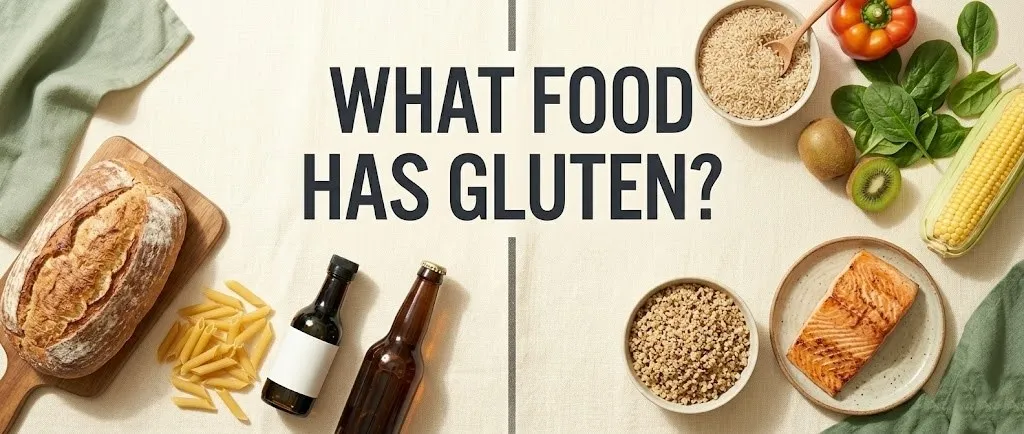
Wheat, barley, rye, and their derivatives are the primary foods that contain gluten, a family of storage proteins that gives dough its elasticity and structure. Any food made with flour, starch, or grain-based additives derived from these three grains must be assumed to contain gluten unless explicitly tested and certified. The list stretches far beyond bread and pasta into soups, sauces, condiments, processed meats, and even some candies.
The U.S. Food and Drug Administration (FDA) defines “gluten-free” as containing less than 20 parts per million (ppm) of gluten, a threshold established in the 2013 Gluten-Free Labeling Rule and still enforced in 2026. This rule gives people with celiac disease, a serious autoimmune condition affecting roughly 1 percent of the global population, a reliable standard for packaged foods. However, the rule only applies to labeled claims, not to the inherent properties of whole foods, which means you still need to know what contains gluten naturally.
This guide breaks down the obvious gluten sources, the concentrated forms that deliver the highest gluten doses, and the hidden places where wheat, barley, and rye hide in plain sight under ingredient names that do not sound like grain. You will leave knowing exactly which grains to avoid, which condiments to swap, and how to read a label for the sneaky derivatives that make a seemingly safe product unsafe.
what food has gluten
Gluten is present in all foods made from wheat (Triticum aestivum), barley (Hordeum vulgare), rye (Secale cereale), and their crossbred hybrids like triticale. The most common sources are breads, pastas, cereals, baked goods, and any product that uses these grains as a base ingredient. Any product that lists wheat flour, barley malt, or rye flour on the label contains gluten.
The protein complex known as gluten is actually two separate protein groups, gliadin and glutenin, that combine when flour is hydrated and kneaded. This reaction creates the viscoelastic network that traps gas during fermentation, giving bread its chewy texture. This same protein network is what triggers an autoimmune response in people with celiac disease. The immune system identifies gliadin as a threat, attacks it, and in the process damages the villi lining the small intestine.
The damage from gluten in a celiac patient is not an allergy. It is a T-cell mediated autoimmune reaction that can persist for days after a single exposure. Even a crumb of bread containing roughly 50 milligrams of gluten is enough to provoke intestinal inflammation in a sensitive individual. This explains why strict avoidance, not just reduction, is the medical standard of care. For the person with celiac disease, gluten is not a dietary preference. It is a toxic trigger that their body cannot process.
| Grain Source | Common Food Products |
|---|---|
| Wheat | Bread, pasta, couscous, crackers, pastry, batter, cereal |
| Barley | Beer, malt, malt vinegar, soups, stews, malted milk |
| Rye | Rye bread, pumpernickel, rye crackers, some whiskeys |
| Triticale | Specialty breads, some breakfast cereals |
what food has gluten in them
Foods that have gluten in them include the obvious grain-based products like bagels, pizza dough, and cookies, but also many processed items where wheat flour, barley malt, or hydrolyzed wheat protein serve as thickeners, flavorings, or binding agents. The phrase “in them” reflects the real-world experience of finding gluten where it does not belong, inside a can of tomato soup, a bottle of soy sauce, or a package of deli meat.
The most practical way to answer this question is to divide the food supply into three categories: inherently gluten-containing foods, foods that sometimes contain gluten, and naturally gluten-free foods. The first category includes all standard wheat-based breads and pastas. The second category, the “sometimes” category, is where most accidental gluten exposures happen. Soy sauce is traditionally brewed with roughly 50 percent wheat. Malt vinegar, derived from barley, is not gluten-free. Many brands of chocolate and candy use wheat flour or barley malt as a texturizer or flavoring agent.
The third category, naturally gluten-free foods, includes fresh fruits and vegetables, fresh meats, fish, eggs, dairy, legumes, nuts, and grains like rice, corn, and quinoa. The danger in this category is not the ingredient itself. It is cross-contamination during processing, packaging, or preparation. A container of plain nuts may be gluten-free by ingredient but processed on equipment that also handles wheat-based seasonings.
- Inherently contains gluten: wheat bread, pasta, cake, beer, seitan.
- Often contains gluten: soy sauce, gravies, soup mixes, salad dressings, processed deli meats.
- Naturally gluten-free: rice, corn, potatoes, quinoa, fruits, vegetables, fresh meat, fish, eggs.
Key Takeaway: The question is not just “what has gluten” but “what has gluten hidden inside it,” and the answer lives on the ingredient label, not the front of the package.
what foods contain gluten list
Foods that contain gluten can be sorted into grains, baked goods, pasta, breakfast items, sauces, beverages, and processed snacks. This section provides a comprehensive list of specific food items to avoid if you are following a strict gluten-free diet.
The grain and starch category includes all forms of wheat, including whole wheat, wheat bran, wheat germ, durum, semolina, farina, graham flour, and bulgur. It also includes barley in all forms, including malt, malt extract, malt syrup, and malt flavoring. Rye and triticale are less common in the standard American diet but appear in specialty breads and some European-style crackers. Couscous is often mistaken for a rice product but is actually tiny balls of wheat semolina.
Baked goods and pastries are the most concentrated source of gluten in most diets. This category includes bread, rolls, bagels, tortillas, pita, naan, croissants, muffins, doughnuts, cookies, cakes, pies, and pastries. Unless specifically labeled gluten-free, every item in a standard bakery case contains wheat flour. Pasta and noodle products made from wheat or semolina, including spaghetti, macaroni, ramen, udon, and egg noodles, are all off-limits. Asian rice noodles and 100 percent buckwheat soba noodles are the exceptions.
- Grains and Flours: Wheat, barley, rye, triticale, semolina, durum, farina, graham, bulgur, spelt.
- Breakfast: Wheat-based cereals, granola with wheat, malted corn flakes, pancakes, waffles, crepes.
- Beverages: Beer, ale, lager, malt beverages, some chocolate milk powders, some coffee substitutes.
- Snacks: Pretzels, crackers, cheese puffs with wheat, licorice, some protein bars.
gluten-containing grains
The gluten-containing grains are wheat, barley, rye, and the wheat-rye hybrid triticale. These three base grains and their hybrid are the source of all gluten in the human food supply. All other grains, including rice, corn, oats, sorghum, millet, teff, buckwheat, quinoa, and amaranth, are inherently gluten-free in their pure form.
Wheat is by far the most consumed gluten-containing grain globally, and it appears under dozens of names on ingredient labels. The most common wheat varieties used in food production are common wheat (Triticum aestivum), used for bread and all-purpose flour, and durum wheat (Triticum durum), used for semolina pasta and couscous. Spelt (Triticum spelta), kamut (Triticum turanicum), einkorn (Triticum monococcum), and emmer (Triticum dicoccum) are ancient wheat species that also contain gluten and are not safe for people with celiac disease.
Barley appears most often in the form of malt. Malt is simply barley that has been sprouted, dried, and sometimes roasted to develop sugars and flavor compounds. Malt extract, malt syrup, and malt flavoring are common in breakfast cereals, protein bars, and candy. Maltodextrin, despite its name, is usually made from corn in the United States and is considered gluten-free, though people with extreme sensitivity should verify the source.
| Grain | Scientific Name | Gluten Status | Common Forms in Food |
|---|---|---|---|
| Common Wheat | Triticum aestivum | Contains gluten | Bread flour, all-purpose flour, pasta |
| Durum Wheat | Triticum durum | Contains gluten | Semolina, couscous, bulgur |
| Barley | Hordeum vulgare | Contains gluten | Malt, malt extract, beer |
| Rye | Secale cereale | Contains gluten | Rye bread, pumpernickel, crispbread |
| Spelt | Triticum spelta | Contains gluten | Specialty breads, spelt flour |
| Oats | Avena sativa | Gluten-free (check purity) | Oatmeal, oat flour, granola |
what food has the highest amount of gluten
The food with the highest concentration of gluten is vital wheat gluten, a processed flour product that has been washed to remove most of the starch, leaving a concentrated protein powder that is roughly 75 to 80 percent gluten protein. This ingredient is used by bakeries to improve bread rise and chew, and by home cooks and commercial manufacturers to make seitan, a plant-based meat alternative.
To put this concentration in perspective, standard all-purpose flour contains approximately 10 to 12 percent protein, most of which is gluten. Bread flour contains 12 to 14 percent protein. Vital wheat gluten is essentially flour protein concentrated by a factor of six. A 100-gram serving of seitan made from vital wheat gluten delivers roughly 75 grams of protein, almost all of it gluten. For someone with celiac disease, a single bite of seitan delivers an immunological challenge far more intense than a slice of bread.
Seitan deserves special attention because it is often marketed as a health food. It is a vegetarian and vegan protein staple that appears in stir-fries, plant-based deli slices, and meatless sausages. Health-conscious consumers who do not have gluten issues can eat seitan safely and benefit from its protein density. For a celiac patient, it is the single most dangerous food on the planet. The gluten content is not trace contamination. It is the entire product.
| Food Product | Approximate Gluten Content (% protein) |
|---|---|
| Vital Wheat Gluten | 75 to 80 percent |
| Seitan | 65 to 75 percent |
| Bread Flour | 12 to 14 percent |
| All-Purpose Flour | 10 to 12 percent |
| Whole Wheat Bread | 8 to 12 percent |
| Soy Sauce (traditional) | 1 to 2 percent (wheat content) |
Key Takeaway: Vital wheat gluten and seitan are the most gluten-dense foods in existence, and they are catastrophically dangerous for anyone with celiac disease despite being healthy for everyone else.
what foods are high in gluten to avoid
Foods high in gluten that must be avoided on a strict gluten-free diet include traditional breads made from wheat flour, durum wheat pasta, wheat-based breakfast cereals, baked goods using standard flour, beer brewed from barley, and seitan. These foods deliver a large gluten load in a standard serving and leave no room for ambiguity about their safety.
Bread is the most common high-gluten food in Western diets. A single slice of whole wheat bread contains approximately 4 to 5 grams of gluten protein. A sandwich with two slices delivers roughly 10 grams of gluten, which is more than enough to trigger a severe autoimmune response in a celiac patient. Pasta made from durum semolina is similarly concentrated. A 2-ounce dry serving of wheat pasta contains roughly 7 to 8 grams of gluten.
Beer is the other high-gluten item that catches newly diagnosed patients off guard. Standard beer is brewed from malted barley, and the gluten proteins survive the brewing process largely intact. A 12-ounce beer contains roughly 3 to 5 grams of gluten, depending on the style. Wheat beers and heavier ales are at the high end. Gluten-removed beers, which use enzymes to break down gluten proteins, remain controversial in the celiac community because the resulting fragments may still provoke a reaction in some people.
- Seitan and vital wheat gluten products.
- Wheat bread, bagels, croissants, and pizza crust.
- Durum pasta, couscous, and wheat noodles.
- Wheat-based breakfast cereals and granola bars.
- Beer, ale, lager, and malt-based alcoholic beverages.
what are the worst foods for gluten
The worst foods for gluten exposure in a celiac patient are seitan, bread, pasta, beer, and soy sauce, because the first four deliver a massive gluten load and the fifth delivers a deceptive dose in a condiment most people use without thinking. The “worst” foods are defined not just by gluten content but by the likelihood of accidental consumption and the severity of the resulting reaction.
Soy sauce is the sleeper agent in this category. A tablespoon of standard fermented soy sauce contains roughly 0.5 to 1 gram of wheat. For someone dipping sushi or seasoning a stir-fry, the cumulative gluten dose can equal a slice of bread without the person ever realizing they ate wheat. The solution is tamari, a Japanese-style soy sauce brewed without wheat, or coconut aminos, which are naturally gluten-free. Both provide the same umami depth without the gluten.
Couscous and semolina deserve a specific warning because many people confuse them with gluten-free grains. Couscous looks like a small grain but is actually wheat semolina. It is pasta, not a grain, and it contains the same gluten as spaghetti. Similarly, bulgur wheat, cracked wheat, and wheat berries are all whole-kernel forms of wheat and are among the highest gluten foods. They frequently appear in tabbouleh, pilafs, and health food salads where a celiac patient might assume the base grain is quinoa or rice.
- Seitan: Highest concentration, strictly for gluten-tolerant individuals only.
- Soy sauce and teriyaki sauce: Hidden wheat in liquid form.
- Couscous and bulgur: Wheat products disguised as grains.
- Beer and malt drinks: Liquid barley, fully retained gluten.
what foods surprisingly contain gluten
Foods that surprisingly contain gluten include soy sauce, salad dressings, gravy mixes, processed deli meats, licorice candy, some potato chips, and certain brands of chocolate and ice cream. The surprise comes from the gap between what a food looks like and what the ingredient label actually says.
Soups and sauces are the most common surprising sources. Wheat flour is the standard thickener for gravies, cream soups, and many restaurant pan sauces. A bowl of clam chowder or a serving of country gravy is essentially flour and fat with flavoring. Unless the restaurant specifically advertises gluten-free soup options, assume the chowder and the gravy contain wheat. Bouillon cubes and soup bases often use hydrolyzed wheat protein or wheat starch as fillers and flavor enhancers.
Processed meats are a recurring trap for the newly diagnosed. Deli turkey, ham, and roast beef are often injected with a brining solution that may contain hydrolyzed wheat protein or wheat-based dextrin to improve texture and moisture retention. Sausages, hot dogs, and meatballs frequently use breadcrumbs or wheat flour as binders. The meat itself is naturally gluten-free, but the processing adds gluten back in.
- Soy sauce and teriyaki sauce: Brewed with wheat.
- Salad dressings: Thickened with wheat flour or malt vinegar.
- Gravy and cream soups: Roux base is equal parts wheat flour and fat.
- Licorice candy: Wheat flour is the primary structural ingredient in traditional licorice.
- Imitation crab (surimi): Wheat starch is used as a binder.
Key Takeaway: The most surprising gluten sources are the ones that look like protein, vegetables, or condiments but conceal wheat flour or barley malt in their ingredient list.
hidden sources of gluten
Hidden sources of gluten are ingredients derived from wheat, barley, or rye that appear on labels under names that do not obviously signal grain content, including maltodextrin from wheat, modified food starch from wheat, hydrolyzed vegetable protein, and natural flavoring derived from barley malt. The term “hidden” reflects the reality that celiac patients must become expert ingredient label readers to avoid these traps.
Modified food starch is one of the most confusing hidden sources. In the United States, modified food starch is typically made from corn unless the label specifies “modified wheat starch” or “modified food starch (wheat).” However, if the source is not disclosed, the safest approach is to contact the manufacturer or choose a product with clearly labeled corn or potato starch instead. The FDA requires wheat to be declared as an allergen, so if the product contains wheat-based modified starch, wheat must appear in the allergen statement.
Hydrolyzed vegetable protein (HVP) and hydrolyzed plant protein are flavor enhancers that can be derived from wheat, soy, or corn. When derived from wheat, they contain gluten fragments and must be labeled accordingly. Textured vegetable protein (TVP) is almost always made from soy but can occasionally contain wheat. Malt extract, malt syrup, and malt flavoring are almost always derived from barley and are not gluten-free. Maltodextrin, despite the name, is generally made from corn, potato, or rice in the U.S. and is considered safe, but European-sourced maltodextrin may be wheat-derived.
- Modified food starch (verify source).
- Hydrolyzed wheat protein.
- Malt extract, malt syrup, malt flavoring.
- Natural flavor (verify if barley-derived).
- Dextrin (verify source, wheat dextrin must be labeled as containing wheat).
gluten in condiments
Gluten appears in condiments most commonly through soy sauce, malt vinegar, and thickened dressings, but also in unexpected places like some mustards, ketchups, and relishes that use wheat-derived thickeners or malt-based flavorings. The condiment category is dangerous because a small squeeze or spoonful can deliver a concentrated dose of gluten to an otherwise safe meal.
Soy sauce is the most significant threat in the condiment aisle. Traditional brewing methods use roughly equal parts soybeans and wheat, fermented together to produce the characteristic umami flavor. A single tablespoon contains enough gluten to trigger symptoms in most celiac patients. The safe swap is tamari, a Japanese-style soy sauce brewed with little or no wheat, or coconut aminos, a soy-free alternative made from fermented coconut sap. Both deliver the salty, savory depth of soy sauce without the gluten.
Malt vinegar, made from barley malt, is another common condiment trap. It is the standard vinegar served with fish and chips and appears in some salad dressings and pickled products. Distilled white vinegar, apple cider vinegar, and wine vinegars are gluten-free. The distillation process removes gluten proteins, so distilled vinegars made from wheat are considered safe by the Celiac Disease Foundation, though some individuals prefer to avoid them for peace of mind.
| Condiment | Gluten Status | Safe Alternative |
|---|---|---|
| Soy Sauce | Contains gluten (wheat) | Tamari, coconut aminos |
| Malt Vinegar | Contains gluten (barley) | Apple cider vinegar, wine vinegar |
| Ketchup | Generally gluten-free | Check label for malt vinegar |
| Mustard | Usually gluten-free | Check label for wheat flour thickener |
| Mayonnaise | Generally gluten-free | Safe in standard recipes |
gluten in soups and sauces
Gluten in soups and sauces comes primarily from wheat flour used as a roux thickener, from barley malt added for flavor, and from wheat-based starches and proteins in commercial soup bases and bouillon cubes. A bowl of soup that looks like vegetables and broth can deliver a substantial gluten dose equivalent to a slice of bread.
The roux is the foundation of classical French cooking and consists of equal parts wheat flour and fat cooked together before liquid is added. This technique creates the creamy texture in bisques, chowders, gravies, and cheese sauces. Every standard cream soup at a restaurant, including cream of mushroom, cream of broccoli, and clam chowder, starts with a roux and contains gluten unless the kitchen specifically modifies the recipe. Clear broths and consommés may be safe, but the base stock often contains malt extract or hydrolyzed wheat protein.
Canned and packaged soups present a similar challenge. Even soups that do not seem creamy often contain wheat flour as a thickener or wheat starch as a stabilizer. The ingredient label on a can of tomato soup, for example, frequently lists wheat flour in the first five ingredients. Bouillon cubes and soup base pastes almost universally contain hydrolyzed wheat protein, malt extract, or wheat flour. Gluten-free soup bases made from concentrated vegetables and herbs are available but require label verification.
- Cream soups and bisques: Roux base contains wheat flour.
- Canned tomato soup: Often thickened with wheat flour.
- Gravy mixes and packets: Wheat flour is the primary ingredient.
- Bouillon cubes: Hydrolyzed wheat protein is common.
Key Takeaway: Assume every soup, sauce, and gravy contains gluten until you see the label or hear the words “gluten-free” from a knowledgeable source, because the roux is ubiquitous in Western cooking.
gluten in processed meat
Gluten appears in processed meats through breadcrumb fillers, wheat-based binders, hydrolyzed wheat protein in brines, and flour dusting on production lines. Fresh, unprocessed meat is naturally gluten-free. The processing is what introduces gluten into products like sausages, deli slices, meatballs, and chicken nuggets.
Deli meats are the most frequent source of hidden gluten in the meat category. Sliced turkey, chicken, ham, and roast beef are often injected with a solution of water, salt, sugar, and flavorings to improve moisture, texture, and shelf life. This injection solution can include hydrolyzed wheat protein or wheat-derived dextrin. The deli counter itself adds a cross-contamination risk because the same slicer is used for gluten-containing products like breaded ham or turkey with stuffing.
Sausages, hot dogs, and meatballs use breadcrumbs or wheat flour as an inexpensive filler and binder. A standard pork sausage may be gluten-free, but a cheaper version or a bulk-pack product may contain wheat. The same rule applies to pre-formed hamburger patties, meatloaf mixes, and frozen meat products. The binder that holds the meat together is often wheat-based. Processed chicken products, including nuggets, strips, and patties, are battered or breaded with wheat flour unless specifically labeled gluten-free.
- Deli turkey and ham: Brine may contain hydrolyzed wheat protein.
- Sausages and hot dogs: Breadcrumb fillers are common in cheaper brands.
- Meatballs and meatloaf: Standard recipes use breadcrumbs.
- Chicken nuggets and breaded strips: Wheat flour batter is the default.
ancient wheat varieties and gluten
Ancient wheat varieties including spelt, kamut, einkorn, and emmer all contain gluten and are not safe for people with celiac disease or gluten sensitivity, despite marketing claims that position them as gentler or easier to digest. The gluten protein structure differs slightly among wheat species, but the immunological response they provoke in celiac patients is the same.
Spelt (Triticum spelta) is the most commonly encountered ancient wheat in the modern food supply. It appears in artisanal breads, sourdough loaves, and alternative flours marketed as more digestible. Research published in the Journal of Agricultural and Food Chemistry has confirmed that spelt contains gluten proteins, including gliadin, and triggers the same T-cell response in celiac intestinal tissue as common wheat. The “ancient grain” label on spelt bread refers to the crop’s history, not its gluten status.
Kamut, the brand name for Khorasan wheat (Triticum turanicum), and einkorn (Triticum monococcum) are similarly unsafe for celiac patients. Some individuals with non-celiac gluten sensitivity report tolerating these ancient wheats better than modern bread wheat, possibly due to the different ratio of glutenin to gliadin or the lower overall gluten content. However, this is anecdotal and not supported by celiac disease research. For a diagnosed celiac patient, all members of the Triticum genus are off-limits.
| Ancient Wheat | Scientific Name | Gluten Status | Safe for Celiac? |
|---|---|---|---|
| Spelt | Triticum spelta | Contains gluten | No |
| Kamut | Triticum turanicum | Contains gluten | No |
| Einkorn | Triticum monococcum | Contains gluten | No |
| Emmer | Triticum dicoccum | Contains gluten | No |
| Buckwheat | Fagopyrum esculentum | Gluten-free | Yes (verify purity) |
| Sorghum | Sorghum bicolor | Gluten-free | Yes |
does rice have gluten
Rice does not contain gluten in its natural form. All varieties of rice, including white rice, brown rice, jasmine, basmati, arborio, and wild rice, are inherently gluten-free grains. Rice is a member of the Oryza genus, which is botanically distant from the wheat, barley, and rye genera that produce gluten. This makes rice one of the safest staple carbohydrates for people with celiac disease.
The safety of rice comes with an important processing caveat. Plain, unpackaged rice purchased in bulk bins or from a shared processing facility can be cross-contaminated with wheat, barley, or rye during harvesting, transport, or packaging. The safest rice for a celiac patient is packaged rice labeled gluten-free. This certification ensures the rice has been tested and meets the FDA standard of fewer than 20 ppm gluten.
Flavored rice mixes are a separate category requiring vigilance. Boxed rice pilafs, Spanish rice mixes, and instant rice dishes frequently contain wheat flour, hydrolyzed wheat protein, or barley malt as flavoring agents. The seasoning packet is the source of gluten, not the rice itself. Plain rice cooked at home with gluten-free broth and seasonings is entirely safe. A boxed rice mix is a label-reading exercise.
- Plain white, brown, basmati, jasmine, and wild rice: Naturally gluten-free.
- Boxed rice mixes: Check for wheat flour, malt, or hydrolyzed wheat protein in seasoning.
- Bulk bin rice: Risk of cross-contamination, buy packaged and labeled gluten-free.
Key Takeaway: Rice is a celiac-safe staple, but the seasoning packet in boxed rice mixes and the bulk bin scoop in the grocery store are the two places where gluten sneaks onto an otherwise safe grain.
do oats have gluten
Oats (Avena sativa) do not inherently contain the gluten proteins gliadin and glutenin, but they contain a related protein called avenin, which a small subset of celiac patients may react to. The larger issue with oats is cross-contamination. Most conventionally grown and processed oats are grown in rotation with wheat or processed on shared equipment, making them a high-risk food for celiac patients unless they are certified gluten-free.
The avenin question is immunologically complex. The prolamin storage protein in oats, avenin, has a different amino acid sequence from wheat gliadin. For roughly 95 percent of celiac patients, avenin does not trigger the autoimmune response. However, a small minority of celiac patients have T-cells that cross-react with avenin, producing the same intestinal damage as wheat gluten. The only way to know if you tolerate oats is to introduce gluten-free oats in a controlled way under medical supervision and monitor symptoms and antibody levels.
Purity protocol oats are the gold standard for celiac safety. These oats are grown on dedicated fields, harvested with dedicated equipment, and processed in facilities that handle only oats. They are tested to ensure gluten levels below 20 ppm and are labeled gluten-free. Regular grocery store oats, even organic ones, are not purity protocol unless labeled gluten-free. The mechanical sorting used in some commercial oat processing may not be sufficient to remove all wheat and barley grains.
- Gluten-free certified oats: Purity protocol, safe for most celiac patients.
- Regular rolled oats: High risk of wheat and barley cross-contamination.
- Oat milk: Verify gluten-free certification, cross-contamination possible.
cross-contamination risks
Cross-contamination occurs when a naturally gluten-free food comes into contact with gluten-containing grains or residues during growing, harvesting, transporting, processing, or preparation. For a celiac patient, cross-contamination is not a minor inconvenience. It is the most common cause of persistent symptoms and ongoing intestinal damage in people who believe they are following a strict gluten-free diet.
Shared kitchen equipment is the most frequent source of cross-contamination at home and in restaurants. A toaster that has been used for wheat bread will contaminate gluten-free bread placed in the same slots. A colander used to drain wheat pasta will leave gluten residue on gluten-free pasta. A cutting board with microscopic wheat flour residue from a previous meal will transfer gluten to vegetables chopped on the same surface. The solution is separate, dedicated equipment for gluten-free food preparation or rigorous cleaning protocols between uses.
Restaurant dining adds additional layers of risk. French fries cooked in a fryer shared with breaded onion rings or chicken tenders are contaminated. Salad croutons picked off a plate leave gluten crumbs behind on the lettuce. Sushi rice prepared with wheat-based vinegar or cut on a board that previously touched soy sauce is no longer safe. The Celiac Disease Foundation recommends that celiac patients ask specific questions about shared fryers, preparation surfaces, and ingredient sourcing when dining out.
- Shared toasters, colanders, and cutting boards at home.
- Shared deep fryers in restaurants.
- Bulk bins where scoops are shared between wheat and gluten-free products.
- Condiment jars where a knife used on wheat bread returns for more spread.
Key Takeaway: Cross-contamination turns a safe food into an unsafe one without changing the ingredient list, and it is the reason celiac patients must think in terms of systems, not just ingredients.
Frequently Asked Questions About Gluten
What are the first signs of being gluten intolerant?
The first signs of gluten intolerance typically include bloating, diarrhea or constipation, fatigue, and brain fog occurring within hours to a day after eating gluten.
Skin rashes, joint pain, and headaches are less common but well-documented symptoms of non-celiac gluten sensitivity.
A celiac patient may also experience unexplained weight loss, anemia, or nutrient deficiencies due to intestinal malabsorption.
Does gluten cause inflammation?
Gluten triggers a systemic inflammatory response in people with celiac disease through the activation of T-cells and the release of inflammatory cytokines in the small intestine.
In non-celiac gluten sensitivity, the inflammatory mechanism is less clear but is thought to involve innate immune activation rather than the adaptive T-cell response.
For people without celiac disease or sensitivity, gluten does not inherently cause inflammation, and whole wheat is part of a healthy dietary pattern.
Is sourdough bread safe for celiacs?
Standard sourdough bread made from wheat or rye flour is not safe for people with celiac disease.
The fermentation process partially breaks down gluten proteins but does not eliminate them to a level below 20 ppm that would be considered safe.
Sourdough made from gluten-free grains like rice or sorghum is safe, but only if prepared in a contamination-free environment.
Are french fries gluten-free?
French fries made from fresh potatoes and fried in a dedicated gluten-free fryer are gluten-free.
Fries cooked in a shared fryer with breaded chicken, onion rings, or other wheat-containing foods are cross-contaminated and unsafe for celiac patients.
Seasoned fries may also contain wheat flour in the coating, requiring label verification.
What is the difference between celiac disease and gluten sensitivity?
Celiac disease is an autoimmune disorder where gluten triggers the body to attack the lining of the small intestine, causing measurable intestinal damage and nutrient malabsorption.
Non-celiac gluten sensitivity (NCGS) causes similar digestive and neurological symptoms without the autoimmune response or intestinal villi damage.
A blood test and intestinal biopsy can diagnose celiac disease, while NCGS is a diagnosis of exclusion when celiac and wheat allergy are ruled out.
Living gluten-free starts with knowing that wheat, barley, and rye are the enemy, but it succeeds through the harder work of learning their aliases. Malt, modified food starch, hydrolyzed vegetable protein, and natural flavoring are the same grains wearing different names. The ingredient label, not the front of the package, tells you the truth every time.
Go through your pantry with this guide and read every label. Replace the soy sauce with tamari. Buy certified gluten-free oats or skip oats entirely for the first month while your body heals. Buy a new toaster if yours has ever seen wheat bread. The initial sweep is overwhelming, but once your kitchen is clean and your go-to products are established, eating safely becomes a habit rather than a research project.
The food supply in 2026 is more transparent than it has ever been for people who must avoid gluten. Use that transparency. Trust no ingredient you cannot verify. Your body will tell you, in unmistakable terms, whether you got it right.