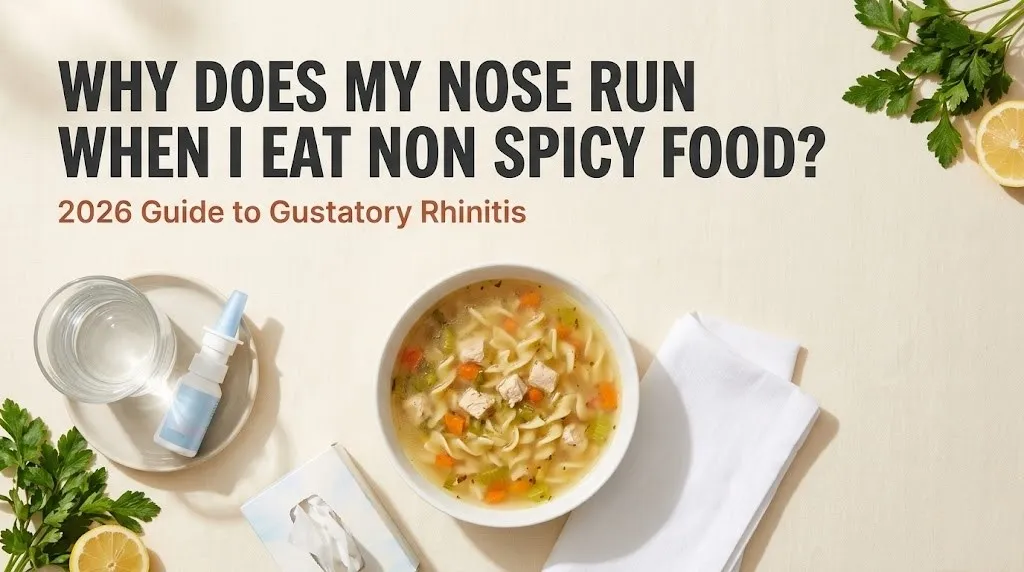
Your nose runs when you eat non-spicy food because of a harmless condition called gustatory rhinitis, in which the simple act of eating, especially warm or hot foods, triggers the parasympathetic nervous system to activate nasal glands, producing clear, watery discharge even without spicy ingredients.
Reaching for a napkin after the first few bites of soup is a familiar ritual for many people. The nose starts to drip. It is not spicy soup. There is no chili, no pepper, no horseradish. It is chicken noodle soup or a warm bowl of oatmeal. The nose runs anyway. This is not an allergy. It is not a cold. It is a neurological reflex that connects the act of eating to the nasal passages, and it is far more common than most people realize.
The Cleveland Clinic notes that gustatory rhinitis affects a significant portion of the population, particularly adults over 50, though it can appear at any age. Understanding why it happens, what triggers it, and how to manage it can turn an embarrassing dining annoyance into something you handle with a quick tissue and forget about for the rest of the meal.
What Is Gustatory Rhinitis and Why Does Eating Make Your Nose Run
Gustatory rhinitis is a non-allergic condition in which eating any food triggers a watery nasal discharge because the autonomic nervous system overreacts to the presence of food in the mouth, sending a mistaken signal to nasal glands to produce fluid as if flushing out an irritant.
The word “gustatory” refers to taste. “Rhinitis” means inflammation or irritation of the nasal passages. The name describes the condition accurately: a nasal reaction triggered by the act of eating. It is classified as a form of non-allergic rhinitis, meaning it has nothing to do with histamine, IgE antibodies, or immune system reactions to food proteins.
The mechanism involves the parasympathetic nervous system, the branch of the autonomic nervous system that controls rest, digestion, and bodily maintenance. When you eat, the parasympathetic system activates to stimulate saliva production, stomach acid secretion, and digestive enzyme release. In people with gustatory rhinitis, this signal is overly broad. It also stimulates the nasal mucosa, the mucous membranes inside the nose, to produce a clear, watery discharge.
Think of it like a crossed wire. The brain sends a signal that says “food is here, start digestive processes.” In most people, that signal goes to the salivary glands, stomach, and intestines. In people with gustatory rhinitis, the signal also reaches the nasal glands. The result is a runny nose every time food enters the mouth, regardless of what the food is.
The condition is benign. It does not damage the nose. It does not indicate an underlying disease. It is simply an overactive reflex. The American Academy of Otolaryngology classifies gustatory rhinitis as a type of vasomotor rhinitis, a category of nasal conditions caused by dysregulation of the nerves controlling nasal blood flow and secretion.
Key Takeaway: Gustatory rhinitis is a crossed neurological signal that turns on nasal glands when it should only be turning on digestive processes. It is harmless, common, and not an allergy.
Why Does My Nose Run When I Eat Non Spicy Food
Your nose runs when you eat non-spicy food because gustatory rhinitis can be triggered by the physical act of chewing, the warmth of the food, or the simple presence of any food in the mouth, not just by spicy chemical irritants like capsaicin.
This is the question that brings most people to search. Spicy food making your nose run makes intuitive sense. Chili peppers are irritants. The body flushes them out. But a turkey sandwich? A piece of toast? A bowl of plain rice? It feels like the body is overreacting to nothing.
The explanation is that the parasympathetic reflex behind gustatory rhinitis is not selective. Once the reflex arc is established, the trigger can be the mechanical stimulation of chewing, the temperature of the food, or even the anticipation of eating. For some people, the sight or smell of food is enough to start a mild nasal drip.
Research published in the Journal of Allergy and Clinical Immunology identifies several non-spicy triggers for gustatory rhinitis:
- Hot or warm foods (thermal stimulation of nasal passages via the palate)
- Cold foods (in some individuals, a temperature contrast reflex)
- Solid foods requiring vigorous chewing (mechanical stimulation of salivary and nasal glands)
- Alcohol (vasodilation in nasal blood vessels)
- Hot soups and broths (combined thermal and vapor stimulation)
The common thread is stimulation. Any strong sensory input to the mouth or throat can trigger the reflex if the parasympathetic system is wired to be overly responsive. This is why some people with gustatory rhinitis cannot identify a specific food trigger. The trigger is eating itself.
The condition tends to worsen with age. The autonomic nervous system becomes more reactive over time. A person who had no problems at 30 may develop noticeable gustatory rhinitis by 55. This does not mean something is going wrong. It means the nervous system is becoming less precise in its signaling, which is a normal part of aging.
Why Does My Nose Run When I Eat Hot or Warm Food
Hot and warm foods trigger a runny nose through a combination of thermal stimulation of the nasal mucosa via the soft palate, steam inhalation that condenses in the cooler nasal passages, and the generalized parasympathetic activation that accompanies the comfort of a warm meal.
The temperature effect is separate from the chemical effect of spicy foods. Capsaicin activates TRPV1 receptors on trigeminal nerve endings, which sense heat and pain. Hot food does not need capsaicin to warm the mouth. The heat itself stimulates nerve endings that connect to the same parasympathetic reflex arc.
When you take a spoonful of hot soup, several things happen simultaneously. The warmth transfers through the soft palate, the tissue at the back of the roof of the mouth, to the nasal passages above. This warmth directly stimulates blood flow and glandular secretion in the nasal mucosa. At the same time, steam rises from the soup into the nasal passages. The warm, moist air condenses on the cooler nasal tissues, adding liquid volume that mixes with the secretions the glands are already producing.
This is why hot soup is one of the most common gustatory rhinitis triggers. It combines warmth, steam, and the act of eating into a perfect nasal-drip trigger. Chicken soup, miso soup, pho, ramen broth, all of these are notorious for making noses run even when they contain zero chili heat.
Cold foods can also trigger the reflex in some people, though through a different mechanism. The sudden cold stimulates a rebound vasodilation, blood vessels in the nose first constrict from the cold and then rapidly dilate as they rewarm, triggering fluid release. Ice cream and cold beverages cause this response in a subset of people with gustatory rhinitis.
Dietary Sensitivity Note: If a runny nose after hot soup is accompanied by nasal congestion, sneezing, or persists for hours after eating, it may be a food sensitivity or allergy rather than simple gustatory rhinitis. The key distinction is that gustatory rhinitis produces clear, watery discharge that stops shortly after the meal ends.
Why Does My Nose Run When I Eat Spicy Food
Spicy food makes your nose run because capsaicin and related compounds directly stimulate TRPV1 and TRPA1 receptors on trigeminal nerve endings in the mouth and nose, triggering a protective flushing response that produces watery nasal discharge to clear the perceived irritant.
This is the mechanism most people intuitively understand. Spicy food is chemically irritating. The body treats capsaicin as a threat that needs to be flushed out. The runny nose is a defense mechanism that makes perfect evolutionary sense, even if it is annoying during dinner.
Capsaicin is the active compound in chili peppers (genus Capsicum). It binds to TRPV1 receptors, the same receptors that detect physical heat. The brain receives a signal that says “the mouth is burning.” The response is to produce fluid, saliva in the mouth and watery mucus in the nose, to dilute and wash away the irritant.
Allyl isothiocyanate is the volatile compound in horseradish, wasabi, and hot mustard. It activates TRPA1 receptors and produces a similar flushing response, often more intensely in the nasal passages than capsaicin. This is why a bite of wasabi can feel like it goes straight up the nose.
The spicy food response differs from the non-spicy gustatory rhinitis response in two ways. First, it is more intense. The chemical trigger produces a stronger glandular response than temperature or chewing alone. Second, it affects nearly everyone to some degree. Even people without gustatory rhinitis will experience a runny nose from very spicy food because the capsaicin response is a universal human reflex, not a quirk of a particular nervous system.
| Trigger | Active Compound | Receptor | Response Type |
|---|---|---|---|
| Chili peppers | Capsaicin | TRPV1 | Universal (everyone responds) |
| Horseradish, wasabi | Allyl isothiocyanate | TRPA1 | Universal (everyone responds) |
| Hot soup | Heat (thermal) | Thermal receptors | Individual (gustatory rhinitis) |
| Any food | Chewing stimulation | Mechanoreceptors | Individual (gustatory rhinitis) |
| Alcohol | Ethanol (vasodilation) | Vascular response | Individual (sensitivity varies) |
Key Takeaway: Spicy food makes everyone’s nose run through a chemical irritant response. Non-spicy food makes only some people’s noses run through an overactive parasympathetic reflex. The distinction matters for management strategies.
Why Does My Nose Run Whenever I Eat Any Food
A nose that runs with every meal regardless of what is eaten suggests a sensitive gustatory rhinitis reflex where the parasympathetic nervous system responds to the act of eating itself, including the mechanical stimulation of chewing and the presence of food in the mouth, rather than to any specific food trigger.
This is the most frustrating form of gustatory rhinitis. When the trigger is “food in general,” the management strategies that work for specific triggers, avoiding spicy food, letting hot food cool, do not apply. Every meal becomes a runny nose event.
The mechanism at this level of sensitivity involves the mechanical stimulation of chewing and salivary reflex cross-activation. The same parasympathetic signals that tell the salivary glands to produce saliva also reach the nasal glands in a person with highly reactive gustatory rhinitis. The harder or longer the chewing, the stronger the nasal response. This is why a salad or a chewy piece of bread can trigger a stronger response than a smooth soup.
The condition often coexists with other forms of non-allergic rhinitis. People who experience nasal congestion from weather changes, strong odors, or perfume may be more likely to also have gustatory rhinitis. The underlying mechanism is the same: a nasal mucosa that is hyperresponsive to stimuli that do not bother most people.
For people whose nose runs with every meal, the most effective management is often pre-treatment. Using an ipratropium bromide nasal spray 15 to 30 minutes before eating can prevent the reflex from activating. This medication, available by prescription in the United States, blocks acetylcholine receptors in the nasal passages, preventing the parasympathetic signal from reaching the nasal glands. It does not cross the blood-brain barrier and has minimal systemic effects.
Dietary Sensitivity Note: If every meal causes a runny nose accompanied by other symptoms like stomach pain, diarrhea, skin rashes, or fatigue, this pattern suggests a systemic food sensitivity or allergy rather than gustatory rhinitis. A pattern of symptoms across multiple body systems warrants evaluation by an allergist or gastroenterologist.
Gustatory Rhinitis vs Food Allergies
Gustatory rhinitis is a non-allergic, non-immune nervous system reflex that produces only clear, watery nasal discharge during or immediately after eating and stops when the meal ends, while food allergies involve the immune system, can produce multiple symptoms across body systems, and can be life-threatening.
Confusing gustatory rhinitis with food allergies is common and potentially dangerous. One is a benign neurological quirk. The other is an immune-mediated condition that can cause anaphylaxis. Knowing the difference matters.
Here is a direct comparison:
| Feature | Gustatory Rhinitis | Food Allergy |
|---|---|---|
| Mechanism | Parasympathetic nerve reflex | IgE-mediated immune response |
| Onset | Within seconds to minutes of eating | Minutes to 2 hours after eating |
| Nasal discharge | Clear, watery, thin | May be clear or thick |
| Other symptoms | None (nose only) | Hives, swelling, itching, breathing difficulty, GI distress |
| Duration | Stops when meal ends | Can persist for hours |
| Severity | Annoying but harmless | Can be life-threatening |
| Skin testing | Negative | Positive for specific allergens |
| Common triggers | Any food, especially hot foods | Specific foods (peanuts, shellfish, milk, eggs, etc.) |
Oral allergy syndrome adds another layer of confusion. This condition, also called pollen food allergy syndrome, causes itching and mild swelling of the mouth and throat when eating certain raw fruits and vegetables. It can include a runny nose. Unlike gustatory rhinitis, oral allergy syndrome is IgE-mediated and related to seasonal pollen allergies. The trigger foods are specific: apples, peaches, cherries, almonds, and other raw produce that cross-react with birch, ragweed, or grass pollen.
The American College of Allergy, Asthma and Immunology advises that any runny nose while eating that is accompanied by itching, hives, swelling of the lips or tongue, difficulty swallowing, shortness of breath, or gastrointestinal symptoms should be evaluated as a possible food allergy, not assumed to be gustatory rhinitis.
Dietary Sensitivity Note: If you are unsure whether your symptoms are gustatory rhinitis or a food allergy, keep a detailed food diary for two weeks. Record everything you eat, the timing of nasal symptoms, and any other symptoms. Share this diary with an allergist for proper evaluation.
Is It Normal for Your Nose to Run When You Eat
It is normal and common for your nose to run when you eat hot or spicy foods, and experiencing a mild clear nasal discharge during meals is not a sign of illness or allergy in most cases, though a nose that runs with every single meal warrants a conversation with a healthcare provider.
The Cleveland Clinic estimates that gustatory rhinitis affects a significant portion of adults, with prevalence increasing with age. Many people never mention it to a doctor because they assume it is just how their body works or they are embarrassed about it. The condition is underreported, not rare.
The spectrum of normal is wide. Some people’s noses never run when they eat. Some people’s noses run only with spicy food. Some people’s noses run with hot soup. Some people’s noses run with every meal. All of these can be within the range of normal parasympathetic variation if no other symptoms are present.
What separates normal from potentially concerning:
- Normal: Clear, watery nasal discharge during or immediately after eating that stops within minutes of finishing the meal. No other symptoms.
- Worth mentioning to a doctor: Runny nose with every meal that interferes with eating enjoyment. Your primary care provider can discuss management options.
- Worth seeing a specialist: Runny nose accompanied by congestion, thick or colored discharge, facial pain, or loss of smell. These suggest sinus issues rather than simple gustatory rhinitis.
- Needs evaluation: Runny nose with any other systemic symptoms (hives, swelling, breathing issues, GI symptoms). These suggest allergy.
The threshold for seeking medical advice is not whether the runny nose exists but whether it bothers you enough to want treatment. Ipratropium bromide nasal spray is effective and has few side effects. If you are tired of wiping your nose at every meal, you do not need to justify wanting treatment.
Key Takeaway: A clear runny nose during meals is usually a normal variation in autonomic nervous system function. It becomes a medical concern when it interferes with quality of life or is accompanied by other symptoms.
Why Does Soup and Hot Liquid Make Your Nose Run
Soup and hot liquids make your nose run through the combined effects of thermal stimulation of the nasal passages, steam condensing in the cooler nasal cavity, and the parasympathetic reflex triggered by the act of consuming warm food, making soup one of the strongest non-spicy triggers of gustatory rhinitis.
Soup is the perfect storm of gustatory rhinitis triggers. It is hot, producing thermal stimulation of the soft palate. It produces steam that rises directly into the nasal passages. It involves the mechanical act of eating. It often contains aromatic compounds from vegetables, herbs, and spices that stimulate nasal nerve endings even without capsaicin.
The steam effect is particularly strong because of basic physics. Warm, moist air from the soup rises and enters the nasal cavity, which is cooler. As the steam cools, it condenses from a gas back into liquid water. This condensed water mixes with the nasal secretions the parasympathetic reflex has already triggered. The result is more liquid volume than either mechanism would produce alone.
This is why chicken soup has a reputation for clearing nasal congestion during colds. The effect is real. The steam moistens dry nasal passages. The warmth increases blood flow. The combined steam and parasympathetic stimulation loosen mucus. For someone with gustatory rhinitis, this same mechanism activates with every bowl of soup, cold or no cold.
Broth-based soups tend to produce a stronger nasal response than cream-based soups at the same temperature. The reason is not fully understood but may relate to the volatile aromatic compounds in broth that are trapped in cream-based soups by the fat content. Miso soup, pho, ramen broth, and clear chicken soup are among the strongest non-spicy gustatory rhinitis triggers.
Quick Tip:
- If soup makes your nose run excessively, try letting it cool to a warm but not steaming temperature. Eating more slowly and blowing your nose once mid-meal rather than wiping constantly can also make the experience less disruptive.
Runny Nose When Eating Specific Non Spicy Foods
Certain non-spicy foods trigger a runny nose through specific mechanisms including histamine content in aged and fermented foods, sulfites in wine and dried fruit, thermal effects from temperature extremes, and mechanical chewing effects from crunchy or chewy textures.
While gustatory rhinitis is defined by its lack of specific triggers beyond eating itself, some people notice patterns with particular foods. These patterns often have explanations beyond the general parasympathetic reflex.
Aged and fermented foods naturally contain histamine. Aged cheeses, cured meats, fermented vegetables like sauerkraut and kimchi, wine, and beer all contain histamine produced by bacteria during the aging or fermentation process. In people sensitive to histamine, these foods can trigger nasal symptoms that look like gustatory rhinitis but are actually a histamine response. The distinction matters because antihistamines may help while they are ineffective for true gustatory rhinitis.
Sulfite sensitivity is another mimic. Sulfites are preservatives used in wine, dried fruit, and some processed foods. In sulfite-sensitive individuals, consumption triggers a range of symptoms including nasal congestion and runny nose. This is not an allergy but a chemical sensitivity.
Here is a breakdown of non-spicy food triggers and their mechanisms:
| Food Type | Examples | Mechanism |
|---|---|---|
| Hot foods | Soup, tea, hot cereal | Thermal stimulation and steam |
| Cold foods | Ice cream, iced drinks | Rebound vasodilation |
| Chewy foods | Bread, steak, raw vegetables | Mechanical chewing stimulation |
| Aged and fermented foods | Aged cheese, wine, sauerkraut | Histamine content |
| Sulfite-containing foods | Dried fruit, wine, processed foods | Chemical sensitivity |
| Alcohol | All types | Direct vasodilation of nasal blood vessels |
| Acidic foods | Citrus, vinegar-based dressings | Trigeminal nerve stimulation |
| Carbonated beverages | Soda, sparkling water | Carbonation stimulates nasal nerve endings |
If you notice a pattern with specific foods, a food diary can help identify which mechanism is at work. Foods that trigger symptoms hours after eating suggest an allergy or sensitivity rather than gustatory rhinitis, which begins within seconds to minutes of the first bite.
Key Takeaway: If your runny nose occurs only with specific foods rather than with all eating, consider histamine sensitivity, sulfite sensitivity, or food allergy as possible explanations rather than assuming gustatory rhinitis.
How to Stop Your Nose From Running When Eating
You can stop or reduce a runny nose while eating by using an ipratropium bromide nasal spray before meals, letting hot foods cool slightly, eating more slowly, blowing your nose once at the start of the meal, and avoiding alcohol with food if that is a trigger.
Management strategies fall into three categories: medical treatments, eating habit modifications, and food choice adjustments. Most people find that a combination of approaches works best.
Medical treatment options:
- Ipratropium bromide nasal spray (Atrovent): The most effective treatment. Applied 15 to 30 minutes before eating, it blocks the parasympathetic nerve signal to nasal glands. Available by prescription. A 2009 study in the Journal of Allergy and Clinical Immunology found it effective in over 90 percent of patients with gustatory rhinitis.
- Intranasal antihistamines (azelastine): May help for histamine-triggered symptoms but are less effective for true gustatory rhinitis because the mechanism is not histamine-mediated.
- Intranasal corticosteroids (fluticasone, mometasone): Not typically effective for gustatory rhinitis because the mechanism is neurologic, not inflammatory. May help if there is an underlying inflammatory component.
- Oral antihistamines: Generally ineffective for gustatory rhinitis for the same reason. If they help, the cause may be allergic or histamine-mediated rather than gustatory.
Eating habit modifications:
- Let hot foods cool to warm before eating. The thermal trigger is reduced at lower temperatures.
- Eat more slowly. Rapid eating produces a stronger parasympathetic response.
- Blow your nose once at the start of the meal to clear existing secretions.
- Take smaller bites. Less vigorous chewing means less mechanical stimulation.
- Sip water between bites. This can help modulate the temperature and mechanical triggers.
- Avoid alcohol with meals if it is a trigger.
Over-the-counter products to consider:
- Saline nasal spray: Used before meals, it can pre-moisten nasal passages and reduce the contrast that triggers the reflex.
- Oxymetazoline (Afrin): A decongestant spray effective at stopping a runny nose. Must not be used more than 3 days consecutively due to rebound congestion risk. Best reserved for occasional important social meals.
Quick Tip:
- The single most effective non-prescription strategy is letting hot food cool and eating more slowly. These two changes together can reduce gustatory rhinitis symptoms by 50 percent or more in many people.
Nasal Sprays and Medications for Gustatory Rhinitis
Ipratropium bromide nasal spray (Atrovent) is the most effective medication for gustatory rhinitis because it directly blocks the parasympathetic nerve signal to nasal glands, preventing the runny nose before it starts when applied 15 to 30 minutes before eating.
The pharmacological approach to gustatory rhinitis targets the specific mechanism: overactive parasympathetic signaling to nasal glands. Understanding why some medications work and others do not helps you avoid wasting time and money on ineffective treatments.
Medications that work:
| Medication | How It Works | Effectiveness | Notes |
|---|---|---|---|
| Ipratropium bromide (Atrovent) | Blocks acetylcholine at nasal glands | Very effective | Prescription; apply before meals |
| Intranasal antihistamines | Block local histamine receptors | Moderately effective | Works only if histamine is involved |
| Saline spray | Physical rinsing, pre-moistening | Mildly effective | Safe, no side effects |
Medications that are generally ineffective for gustatory rhinitis:
| Medication | Why It Does Not Work |
|---|---|
| Oral antihistamines | Gustatory rhinitis is not histamine-mediated |
| Intranasal corticosteroids | Mechanism is neurologic, not inflammatory |
| Decongestant pills (pseudoephedrine) | May reduce secretions but do not block the reflex |
| Leukotriene inhibitors (montelukast) | Not effective for non-allergic rhinitis |
Ipratropium bromide works by blocking muscarinic acetylcholine receptors on the nasal serous glands. When the parasympathetic nerve ending releases acetylcholine, the signal cannot reach the gland because the receptor is occupied by ipratropium. The gland does not receive the instruction to secrete. The nose stays dry.
The spray is applied as one or two sprays in each nostril 15 to 30 minutes before meals. It can also be used on a regular schedule of two sprays two to three times daily for people whose gustatory rhinitis is unpredictable or triggered by all eating. Side effects are minimal because the medication acts locally and is poorly absorbed into the bloodstream. Mild nasal dryness or irritation is the most common complaint.
Dietary Sensitivity Note: Ipratropium bromide is contraindicated in people with narrow-angle glaucoma or urinary retention. Discuss your full medical history with your prescribing provider. Pregnant and breastfeeding individuals should discuss risk and benefit with their obstetrician.
Food and Eating Habits That Reduce Meal-Time Runny Nose
Modifying how you eat, letting hot foods cool, taking smaller bites, eating more slowly, avoiding alcohol during meals, and blowing your nose once at the start of a meal rather than wiping throughout can meaningfully reduce gustatory rhinitis symptoms without medication.
These strategies work by reducing the intensity of the stimuli that trigger the parasympathetic reflex. They cost nothing and can be implemented at your very next meal.
Temperature management:
- Allow soups, teas, and hot entrees to cool for 3 to 5 minutes before eating
- Sip hot beverages rather than gulping them
- Alternate bites of warm food with sips of cool water
- Serve hot foods in wide, shallow bowls that dissipate heat faster
Eating pace and technique:
- Put the fork down between bites
- Chew with your mouth closed (reduces nasal exposure to food aromas and steam)
- Take smaller bites that require less vigorous chewing
- Start the meal with a glass of cool water
Meal structure:
- Begin with cooler foods first (salad, room temperature appetizer) before moving to hot foods
- Blow your nose once at the start of the meal to clear existing secretions
- Keep a tissue nearby and use it proactively rather than wiping constantly
- If alcohol is a trigger, save it for after the meal
Environmental modifications:
- Reduce ambient heat in the dining room; a cooler environment produces less thermal contrast
- Use a fan or open a window to move air, which reduces steam accumulation
- Avoid leaning directly over steaming food
These modifications work best in combination. Letting soup cool slightly while eating more slowly and starting with a cool beverage is more effective than any single change alone. For most people, these strategies reduce symptoms enough that medication is unnecessary for everyday meals.
Key Takeaway: Food temperature, eating speed, and bite size are the three modifiable factors that most directly influence gustatory rhinitis severity. Adjust them before trying medications.
When to See a Doctor for Runny Nose While Eating
See a doctor for a runny nose while eating if the discharge is thick, colored, or foul-smelling, if it is accompanied by facial pain, congestion, or other systemic symptoms, if it persists for hours after eating, or if it interferes with your quality of life and you want treatment.
Most gustatory rhinitis is a nuisance, not a medical problem. Certain signs distinguish harmless gustatory rhinitis from conditions that need evaluation.
See your primary care provider when:
- The runny nose is thick, yellow, green, or foul-smelling (suggests sinus infection)
- You also have facial pain or pressure, especially around the cheeks or between the eyes
- You have lost your sense of smell
- Symptoms persist for hours after eating
- You want to try prescription treatment like ipratropium bromide
See an allergist or otolaryngologist (ENT) when:
- The runny nose is accompanied by any other symptoms: hives, itching, swelling, breathing difficulty, stomach pain, diarrhea
- You suspect a specific food allergy
- You have seasonal or year-round nasal symptoms in addition to meal-related symptoms
- Management strategies and primary care treatment have not helped
- You need allergy testing to distinguish gustatory rhinitis from food allergies
See an allergist immediately or go to the emergency room if:
- Eating causes swelling of the lips, tongue, or throat
- You have difficulty breathing, wheezing, or throat tightness during or after eating
- You experience dizziness, rapid heartbeat, or a drop in blood pressure after eating
- You have had a reaction that required epinephrine in the past
These are signs of anaphylaxis, a life-threatening allergic reaction, not gustatory rhinitis.
What to bring to your appointment:
- A food diary covering at least two weeks of meals and symptoms
- A list of all medications and supplements you take
- Photos of nasal discharge if color or consistency changes
- A note of when symptoms started and whether they have changed over time
Dietary Sensitivity Note: Food allergies can develop at any age. A food you have eaten safely for years can become an allergen. Do not dismiss new or worsening eating-related symptoms simply because you have never had food allergies before.
Foods That Are Less Likely to Trigger Gustatory Rhinitis
Cooler, room-temperature foods with soft textures and low histamine content are less likely to trigger gustatory rhinitis, making salads, cold sandwiches, room-temperature grain bowls, and smoothies better choices for people with highly sensitive meal-triggered runny noses.
While true gustatory rhinitis can be triggered by any eating, the intensity of the response varies with the stimulus. Choosing foods that minimize the strongest triggers, heat, steam, vigorous chewing, histamine, and alcohol, can make meals more comfortable.
Foods generally well-tolerated:
- Room-temperature salads with mild dressings
- Cold or room-temperature sandwiches
- Smoothies and smoothie bowls (cold, minimal chewing)
- Yogurt and cottage cheese
- Cold pasta salads
- Sushi and poke bowls (cool, soft texture)
- Overnight oats
- Hummus with soft vegetables or pita
- Cold fruit and vegetable platters
Foods to approach with awareness:
- Hot soups and broths
- Steaming hot entrees
- Spicy foods containing chili peppers
- Horseradish, wasabi, and hot mustard
- Aged cheeses and cured meats
- Fermented foods like sauerkraut and kimchi
- Wine and beer
- Very chewy foods (tough meats, crusty bread)
- Carbonated beverages
The goal is not to eliminate all warm or interesting foods. It is to understand which triggers are strongest for you personally and make choices accordingly. If hot soup triggers a strong response but a warm grain bowl is fine, eat the grain bowl on workdays and save the soup for when you are at home with tissues nearby.
Dietary Sensitivity Note: These recommendations are for gustatory rhinitis, not food allergies. If you have diagnosed food allergies, follow the avoidance guidance from your allergist regardless of whether the food is on this list.
How to Manage Eating in Social Situations With a Runny Nose
Managing gustatory rhinitis in social eating situations involves pre-treatment with medication when available, choosing cooler menu items, excusing yourself to blow your nose once early in the meal, and keeping a tissue in your lap rather than on the table to handle symptoms discreetly.
The social dimension of gustatory rhinitis is real. Wiping your nose constantly during a business lunch or a dinner date feels embarrassing. The anxiety about the symptom can make the symptom worse because stress activates the sympathetic nervous system, which can produce a parasympathetic rebound when you start eating.
Practical social strategies:
- Use ipratropium bromide spray 15 to 30 minutes before the meal if you have a prescription. This is the most reliable prevention.
- Review the menu in advance and choose cooler options when possible. A composed salad or grain bowl will trigger less response than steaming soup.
- Excuse yourself to the restroom at the start of the meal to blow your nose thoroughly. One good nose blow early is better than constant dabbing.
- Keep a tissue in your lap, not on the table. Discreetly dab as needed.
- Position yourself so steam from hot dishes rises away from your face.
- Sip cool water throughout the meal. This reduces the thermal trigger and gives you a natural pause between bites.
- If someone comments on your runny nose, a brief “hot food always does this to me” is sufficient. Most people do not care as much as you think they do.
For important events, a business dinner, a wedding, a first date, using oxymetazoline (Afrin) before the meal will stop the runny nose effectively. This must be reserved for occasional use only. Using Afrin more than three days in a row causes rebound congestion that is worse than the original symptom.
The psychological reframe matters. Gustatory rhinitis is a quirk of your nervous system, not a personal failing. The people you are eating with have their own bodily quirks. Yours happens to involve a napkin. Treat it as a minor inconvenience rather than a source of shame, and it becomes one.
Key Takeaway: Pre-treatment, menu selection, proactive nose blowing, and discreet tissue use are the four pillars of managing gustatory rhinitis in social situations. For occasional important events, oxymetazoline provides temporary relief.
Frequently Asked Questions About Nose Running While Eating
Is gustatory rhinitis an allergy?
No, gustatory rhinitis is not an allergy. It is a non-allergic, non-immune nervous system reflex.
The runny nose is caused by overactive parasympathetic signaling to nasal glands, not by histamine or IgE antibodies.
This is why antihistamines do not work for true gustatory rhinitis and why the discharge is clear and watery rather than thick and congested.
How can I stop my nose from running while I eat?
The most effective way to stop your nose from running while eating is ipratropium bromide nasal spray applied 15 to 30 minutes before meals.
Non-medication strategies include letting hot foods cool, eating more slowly, taking smaller bites, and blowing your nose once at the start of the meal.
For occasional important events, oxymetazoline (Afrin) stops a runny nose effectively but must not be used more than 3 days in a row.
Why does hot soup make my nose run?
Hot soup makes your nose run through the combined effects of thermal stimulation of the nasal passages, steam condensing in the cooler nasal cavity, and parasympathetic reflex activation.
The heat and steam stimulate nasal blood flow and gland secretion simultaneously.
This is a universal reflex, but people with gustatory rhinitis experience a stronger response.
Can certain foods make your nose run without being spicy?
Yes, many non-spicy foods can trigger a runny nose including hot soups, warm beverages, aged cheeses, fermented foods, alcohol, carbonated drinks, and even chewy foods that require vigorous chewing.
The mechanisms include thermal stimulation, histamine content, sulfite sensitivity, mechanical chewing effects, and vasodilation.
Each mechanism is separate from the capsaicin-triggered spicy food response.
When should I worry about my nose running while eating?
You should see a doctor if the nasal discharge is thick, yellow, or green, if you have facial pain or pressure, if symptoms persist for hours after eating, or if you want prescription treatment.
Seek immediate medical attention if eating causes swelling of the lips or throat, difficulty breathing, wheezing, or dizziness, as these suggest a food allergy.
A clear, watery runny nose that stops when the meal ends is usually benign gustatory rhinitis.
Your nose runs when you eat non-spicy food because your nervous system is wired a little too enthusiastically. It is not an allergy. It is not a sign of illness. It is a reflex that over-delivers on the signal that tells your body to start digesting. Understanding this is half the solution. The other half is practical: let your soup cool, eat a little slower, and keep a tissue handy.
If the runny nose bothers you enough to want treatment, ipratropium bromide nasal spray exists and works. If it only bothers you during business lunches and dinner parties, a few habit changes and a discreet tissue in your lap will get you through. If the runny nose brings friends, hives, swelling, difficulty breathing, or stomach pain, that is a different conversation with an allergist.
Bodily quirks are part of being human. A nose that runs when soup arrives is one of the more benign ones. Manage it. Do not let it manage your enjoyment of food.