Glass noodles are a gluten-free, low-fat starch with almost zero protein, fiber, or micronutrients, meaning they are not a nutritional powerhouse but can be a perfectly healthy component of a balanced meal when treated as a neutral carbohydrate base paired with protein and vegetables. Calling them “healthy” in isolation is misleading. They are healthy in context.
Glass noodles, also known as cellophane noodles, bean thread vermicelli, dangmyeon in Korean, or harusame in Japanese, are made from the extracted starch of plants like mung beans, sweet potatoes, tapioca, or peas. The manufacturing process strips away the protein, fiber, and fat from the source ingredient, leaving behind a nearly pure, translucent noodle that is essentially a blank canvas for sauces and stir-fries. According to the USDA FoodData Central, a 1-cup serving of cooked mung bean glass noodles contains roughly 160 to 190 calories and 38 to 44 grams of carbohydrate, with less than 1 gram of both protein and fiber.
This article provides a complete nutritional breakdown, explores the critical differences between sweet potato and mung bean starch versions, assesses the glycemic index and diabetic suitability, and addresses specific safety concerns including aluminum-based additives and acrylamide formation. You will leave knowing exactly where glass noodles fit in a healthy dietary pattern and how to choose, prepare, and pair them smartly.
Are Glass Noodles Healthy
Glass noodles are healthy as an occasional, portion-controlled carbohydrate base within a meal that is rich in lean protein, vegetables, and healthy fats, but they are not a nutrient-dense food on their own. Their health value is entirely dependent on what you eat with them.
Think of glass noodles like a plain white dinner roll. The roll provides energy from starch. On its own, it is nutritionally hollow. Served alongside a piece of grilled salmon and a large salad, it is part of a complete, nutritious meal. Glass noodles function the same way. The issue is not that they contain something harmful. It is that they contain very little of anything at all. The Academy of Nutrition and Dietetics emphasizes that the healthfulness of a dietary pattern is determined by the whole plate, not by a single ingredient. Glass noodles pass this test only when the rest of the plate is pulling its weight.
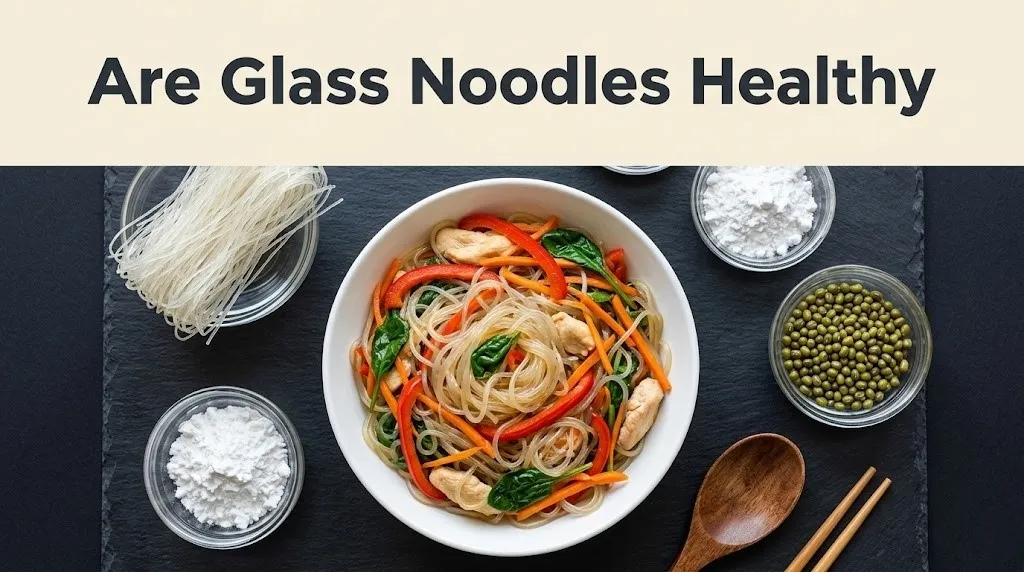
A common trap is ordering a glass noodle stir-fry and treating it as a “healthy” choice simply because the noodles are translucent and sound light. Restaurant versions of japchae or pad woon sen often include significant amounts of sesame oil and sugar-laden sauces. The vegetable-to-noodle ratio can be disappointingly low. The dish that sounds healthy can clock in at 600 to 800 calories with 15 grams of sugar and a heavy sodium load. The noodle itself is not to blame, but the halo effect of the noodle’s lightness can obscure a dish’s overall nutritional profile.
| Nutrient | 1 Cup Cooked Glass Noodles | 1 Cup Cooked Brown Rice | 1 Cup Cooked Whole Wheat Pasta |
|---|---|---|---|
| Calories | 160 to 190 | 218 | 174 |
| Protein | 0 to 1g | 5g | 7g |
| Fiber | 0 to 1g | 4g | 6g |
| Carbohydrates | 38 to 44g | 46g | 37g |
| Micronutrients | Negligible | Magnesium, B vitamins | B vitamins, iron |
Key Takeaway: Glass noodles are a starch vehicle. They are not inherently unhealthy, but they contribute almost nothing beyond energy, so the nutritional weight of the meal must be carried by the protein, vegetables, and cooking fat.
Is Glass Noodles Healthy
Glass noodles, treated as a singular food, are not especially healthy because they are a refined starch product that has been stripped of the fiber, protein, and micronutrients present in the original whole food. They are a processed ingredient, not a whole grain, and should be evaluated accordingly.
The processing starts with isolating the starch from a plant source. For mung bean starch noodles, mung beans are soaked, ground, and filtered to separate the starch granules from the protein and fiber. The pure starch slurry is then extruded into noodle strands and dried. The result is a shelf-stable, translucent noodle that is pure amylose and amylopectin, the two glucose polymers that make up starch. This is the same fundamental processing logic used to make cornstarch or tapioca starch. The noodle is essentially a reshaped, cooked version of a pantry thickener.
This does not make glass noodles dangerous or toxic. They are a refined carbohydrate, and refined carbohydrates can be part of a healthy diet when they are not the dominant feature of every meal. The Dietary Guidelines for Americans recommend that half of all grain intake be whole grains. Glass noodles do not count toward that whole grain goal. They fall into the other half, the refined grain category, and should be mentally accounted for as such. A person eating glass noodles at lunch should aim for whole grains at breakfast and dinner to balance their intake.
Glass Noodles Nutrition Facts
A 1-cup serving of cooked glass noodles made from mung bean starch contains approximately 160 to 190 calories, 0 to 1 gram of protein, 0 grams of fat, 38 to 44 grams of total carbohydrate, and 0 to 1 gram of dietary fiber. This nutritional profile is nearly identical to that of a soft drink or a handful of jellybeans in terms of macronutrient distribution, almost pure carbohydrate with no accompanying protein, fat, or fiber.
The carbohydrate in glass noodles is almost entirely starch, specifically a mix of amylose and amylopectin. The ratio varies by the source plant. Mung bean starch is higher in amylose, roughly 30 to 40 percent, compared to tapioca starch, which is roughly 15 to 18 percent amylose. Sweet potato starch falls somewhere in the middle. Higher amylose content is associated with a lower glycemic response and a greater tendency to form resistant starch when cooked and cooled, which is one of the few nutritional bright spots for glass noodles and is discussed in detail in the resistant starch section.
The micronutrient content is negligible. A serving of glass noodles provides less than 2 percent of the daily value for iron, calcium, or any B vitamin unless the product is specifically fortified. The original mung bean is a nutritional powerhouse, rich in folate, magnesium, and potassium. The processing into starch noodles discards virtually all of that nutrition. What you are left with is the energy without the package. For someone whose diet is otherwise abundant in vegetables, legumes, and lean proteins, this is not a concern. For someone who relies on noodles as a significant portion of their daily intake, the nutrient dilution effect is real.
- One cup cooked glass noodles provides roughly the same carbohydrate load as three slices of white bread.
- The protein content is functionally zero, making it unsuitable as a post-workout recovery food unless paired with a separate protein source.
- The fat content is zero, meaning fat-soluble vitamins from accompanying vegetables will not be well absorbed unless some fat is included in the meal.
Glass Noodles Carbs and Calories
The caloric load of glass noodles comes almost entirely from carbohydrates, with a 1-cup serving delivering 38 to 44 grams of total carbs and 160 to 190 calories. This is comparable to a cup of cooked white rice, which provides roughly 45 grams of carbs and 205 calories.
The slight calorie advantage of glass noodles over rice, about 15 to 30 fewer calories per cup, is often cited as a reason to choose them for weight management. This is a marginal difference that can be erased by a single extra tablespoon of stir-fry oil. Calorie comparisons between plain, unseasoned starches are less useful than comparing the complete meals in which they are served. A bowl of glass noodles drowning in a sweet, oily sauce will have more calories than a bowl of brown rice topped with steamed vegetables and a modest portion of grilled protein. The noodle is not the deciding factor. The sauce and the cooking fat are.
For carbohydrate counters, the 38 to 44 grams per cup is significant. The American Diabetes Association notes that a typical meal for someone managing diabetes should contain 45 to 60 grams of total carbohydrate. A single cup of glass noodles consumes nearly that entire budget before any sauce, vegetable, or beverage carbohydrates are added. Portion control is essential. A takeout container of glass noodles often contains two to three cups of noodles, delivering 80 to 130 grams of carbohydrates in a single sitting. This is not a judgment against the noodle. It is a warning about restaurant portion sizes.
| Noodle Type (1 cup cooked) | Calories | Total Carbs | Fiber | Protein |
|---|---|---|---|---|
| Mung Bean Glass Noodles | 160 to 190 | 38 to 44g | 0 to 1g | 0 to 1g |
| Sweet Potato Glass Noodles | 170 to 200 | 40 to 45g | 0.5 to 1.5g | 0 to 1g |
| White Rice Noodles | 192 | 44g | 0.5g | 2g |
| Whole Wheat Pasta | 174 | 37g | 6g | 7g |
Key Takeaway: Glass noodles and white rice are calorically comparable. The real nutritional difference between meals comes from the protein, vegetables, and cooking fat added to the noodle base.
Are Cellophane Noodles Healthy
Cellophane noodles are another name for glass noodles, and they are nutritionally identical, carrying the same profile of pure starch with negligible protein, fiber, and micronutrients. The name changes depending on the cuisine and the specific starch source, but the nutritional assessment does not change.
The term “cellophane” refers to the translucent, almost transparent appearance of the cooked noodle. This transparency is a result of the pure starch gelatinizing during cooking. There is no whole grain component to cloud the noodle. The clarity is a visual marker of the degree of processing. The more you can see through a noodle, the more thoroughly the starch has been isolated from its source plant. This is not necessarily bad, but it is honest. The noodle is telling you exactly what it is: a starch gel shaped into a strand.
The different regional names can create confusion. Japanese harusame is typically made from mung bean or potato starch. Korean dangmyeon is made from sweet potato starch. Chinese fensi or dong fen is often made from mung bean starch. Thai woon sen is typically mung bean starch. The starch source shifts the nutritional profile slightly. Sweet potato starch noodles have a marginally higher fiber content, roughly 1 to 1.5 grams per cup compared to 0 to 0.5 grams for mung bean. They also have a slightly different mineral profile, with traces of calcium and potassium from the sweet potato. These differences are real but small. They do not transform the noodle from a refined starch into a whole food.
- Harusame (Japan): typically mung bean or potato starch.
- Dangmyeon (Korea): sweet potato starch, slightly higher fiber.
- Fensi (China): mung bean starch, the most common type.
- Woon sen (Thailand): mung bean starch, used in soups and salads.
Glass Noodles Glycemic Index
The glycemic index of glass noodles varies by starch source but generally falls in the moderate to high range, with mung bean starch noodles registering a GI of roughly 55 to 65 and sweet potato starch noodles slightly higher at 60 to 70. These numbers place glass noodles in a range similar to white rice or white bread, not in the low-GI territory of legumes or intact whole grains.
The glycemic index is a measure of how quickly a fixed amount of carbohydrate from a food raises blood glucose compared to pure glucose. A GI of 55 or below is considered low, 56 to 69 is medium, and 70 or above is high. Mung bean glass noodles, at 55 to 65, sit right on the boundary between low and medium. Sweet potato starch noodles edge into the medium to high range. The variation depends on the specific amylose-to-amylopectin ratio of the starch. Higher amylose content slows enzymatic digestion, resulting in a lower glycemic response.
The practical implication is that glass noodles are not a free pass for blood sugar management. A person with insulin resistance or diabetes who swaps rice for glass noodles expecting a significantly gentler glucose curve may be disappointed. The noodle’s light, translucent appearance can create a false impression of glycemic safety. The body processes it as starch, and the blood sugar response reflects that. Pairing the noodles with protein, fat, and fiber significantly blunts the postprandial glucose spike, which is why the vegetable and protein components of a stir-fry are nutritionally essential, not optional.
Glass Noodles vs Rice Noodles Healthy
Glass noodles and rice noodles are nutritionally very similar, with both being refined starch products low in protein, fiber, and micronutrients. The choice between them should be based on culinary preference, allergen requirements, and the specific starch source of the glass noodle. Neither is a clear nutritional winner.
Rice noodles, made from white rice flour and water, are simply another form of refined carbohydrate. A 1-cup serving of cooked rice noodles provides roughly 192 calories, 44 grams of carbohydrate, 2 grams of protein, and 0.5 grams of fiber. Glass noodles provide 160 to 190 calories, 38 to 44 grams of carbohydrate, 0 to 1 gram of protein, and 0 to 1 gram of fiber. The numbers are nearly identical. The primary practical difference is that rice noodles contain a small amount of protein, about 2 grams per cup, and are slightly softer in texture, while glass noodles are chewier and more gelatinous.
For someone with celiac disease or a wheat allergy, both glass noodles and rice noodles are gluten-free options, but glass noodles made from mung bean or sweet potato starch are free from the concerns about arsenic accumulation that have been raised regarding rice products. The FDA has monitored arsenic levels in rice and rice-based foods due to the tendency of rice plants to absorb arsenic from soil and water. This is not a reason to avoid rice noodles entirely, but it is a factor that gives glass noodles a slight safety edge for someone who eats rice products frequently.
| Attribute | Glass Noodles (Mung Bean) | Rice Noodles (White) |
|---|---|---|
| Calories per cup | 160 to 190 | 192 |
| Protein | 0 to 1g | 2g |
| Fiber | 0 to 1g | 0.5g |
| Glycemic Index | 55 to 65 | 60 to 70 |
| Arsenic Concern | None | Present, monitor intake |
| Major Allergens | None | None (gluten-free) |
Key Takeaway: The glass noodle versus rice noodle debate is a nutritional tie. Choose based on taste, texture, and the rice-arsenic consideration if you eat rice products daily.
Glass Noodles Fiber Content
The fiber content of glass noodles is extremely low, ranging from 0 to 1.5 grams per cooked cup depending on the starch source. Mung bean starch noodles contain virtually zero fiber, while sweet potato starch noodles contain slightly more, up to 1.5 grams per cup, due to residual fiber from the sweet potato that survives the starch extraction process.
This near-zero fiber content is the direct result of the manufacturing process. Starch extraction separates the pure starch granules from the fiber-rich cell walls of the source plant. The fiber is discarded or sold as a separate product, often as animal feed or for industrial use. What remains is a purified starch that cooks into a smooth, gelatinous noodle with no fibrous texture. This is why glass noodles feel slippery on the tongue and slide down easily. There is nothing for the teeth to grab onto.
The lack of fiber matters for satiety and digestive health. Fiber slows gastric emptying, keeping you full longer after a meal. It also serves as a substrate for beneficial gut bacteria, which ferment soluble fiber into short-chain fatty acids that support colon health. A meal built around glass noodles without a substantial serving of fibrous vegetables will leave you hungry sooner than a meal built around a fiber-rich whole grain. The solution is not to avoid glass noodles. It is to add fiber to the plate in the form of stir-fried vegetables, a side of steamed greens, or a legume-based appetizer.
Glass Noodles for Diabetics
Glass noodles can be included in a diabetic eating plan, but they require strict portion control and must be paired with adequate protein, fat, and fiber to slow the absorption of their rapidly digestible starch. A person with diabetes should not treat glass noodles as a low-glycemic food simply because they look light.
The carbohydrate count, 38 to 44 grams per cup, is the number that matters most for insulin dosing and blood glucose management. This is the equivalent of roughly three carbohydrate exchanges in the American Diabetes Association exchange system. A meal that includes a cup of glass noodles, a serving of stir-fried chicken, and a cup of mixed vegetables will have a total carbohydrate load of roughly 50 to 55 grams, which is appropriate for many people when balanced with medication and activity. The same meal with two cups of noodles will have 85 to 95 grams of carbohydrate, which is likely to cause a postprandial glucose excursion in many individuals.
The resistant starch strategy discussed in the following section is particularly relevant for people with diabetes. Cooking and then cooling glass noodles increases their resistant starch content, which reduces the effective glycemic carbohydrate load. A person who meal preps japchae and eats it cold or reheated from the refrigerator the next day may experience a lower blood glucose response than someone who eats the same dish freshly cooked. This is a practical, zero-cost intervention that leverages food science to improve the metabolic handling of the starch.
- Measure the noodles. One cup cooked is a reasonable portion.
- Pair with at least 20 grams of protein and 5 grams of fiber from vegetables.
- Use the cook-and-cool method to increase resistant starch content.
- Monitor your individual blood glucose response with a glucometer.
Glass Noodles Resistant Starch
Cooked and cooled glass noodles contain more resistant starch type 3, a form of starch that resists digestion in the small intestine and ferments in the colon like fiber, than freshly cooked glass noodles. This is the single most important nutritional hack for improving the health profile of glass noodles.
Resistant starch type 3, also called retrograded starch, forms when cooked starch is cooled. The heat of cooking causes starch granules to absorb water and swell, a process called gelatinization, which makes the starch digestible. When the gelatinized starch cools, the amylose molecules realign into a crystalline structure that human digestive enzymes cannot break down. This retrograded starch bypasses the small intestine undigested and arrives in the colon, where it acts as a prebiotic fiber. It feeds beneficial gut bacteria and produces short-chain fatty acids like butyrate, which support colon health and may improve insulin sensitivity.
The amylose content of the starch source determines how much resistant starch forms upon cooling. Mung bean starch, with its high amylose content of 30 to 40 percent, is excellent at forming resistant starch. Sweet potato starch is slightly less efficient. A 2019 study in the journal Food Chemistry found that cooling cooked mung bean starch noodles for 12 hours at 4 degrees Celsius increased their resistant starch content by approximately 2 to 3 grams per cup. This is not a massive fiber load, but it is a meaningful improvement over the zero fiber of freshly cooked noodles. Reheating the cooled noodles does not destroy the resistant starch. The crystalline amylose structure is heat-stable once formed.
Quick Tip:
- Cook a batch of glass noodles, rinse in cold water, and refrigerate overnight before using.
- The noodles can be reheated in a stir-fry without losing the resistant starch benefit.
- This technique works for all high-amylose starches, including rice and potatoes.
Key Takeaway: The cook-and-cool method converts a portion of glass noodle starch into non-digestible resistant starch, functionally increasing the fiber content of the meal and reducing the glycemic impact.
Glass Noodles Protein
Glass noodles contain virtually no protein, with a 1-cup serving providing less than 1 gram. This is a critical consideration for meal planning because a meal centered on glass noodles will not contribute to daily protein needs or satiety unless an external protein source is added.
The near-total absence of protein is a result of the starch extraction manufacturing process. The original mung bean contains roughly 14 grams of protein per cup of cooked beans. Sweet potatoes contain about 2 grams of protein per cup. The starch isolation process removes essentially all of this protein. The resulting noodle is a pure carbohydrate food, which means it must be paired with a protein source to create a complete meal.
For a person following a plant-based diet, pairing glass noodles with tofu, tempeh, or edamame is essential to meet protein needs. A japchae made with glass noodles, stir-fried vegetables, and cubes of pan-seared tofu provides roughly 15 to 20 grams of protein per serving. Without the tofu, the same dish would provide only 3 to 5 grams of protein, mostly from the vegetables. For an omnivore, adding chicken, shrimp, beef, or a fried egg transforms the nutritional profile. The noodle is a carbohydrate base that must be built upon. It cannot stand alone as a meal.
- Glass noodles plus tofu or edamame create a complete plant-based meal with adequate protein.
- Adding a single fried egg to a bowl of glass noodles adds 6 grams of protein and healthy fats.
- Shrimp, chicken, or beef strips add 20 to 30 grams of protein per 3-ounce serving.
Sweet Potato Noodles vs Mung Bean Noodles
Sweet potato glass noodles, known as dangmyeon in Korean cuisine, and mung bean glass noodles, known as fensi or harusame, differ slightly in fiber content, mineral profile, and texture, with sweet potato noodles being marginally more nutritious due to their higher fiber and trace mineral content. The difference is real but modest.
Sweet potato starch noodles have a characteristic chewy, elastic texture that holds up well in stir-fries and braised dishes. This texture comes from the specific amylose-to-amylopectin ratio of sweet potato starch. The noodles are slightly greyish or brownish in their dry state and turn translucent when cooked, with a slightly darker tint than the crystal-clear mung bean noodles. Nutritionally, they provide roughly 170 to 200 calories per cup, 40 to 45 grams of carbohydrate, and 0.5 to 1.5 grams of fiber. They also contain trace amounts of calcium and potassium, remnants of the sweet potato that are absent in mung bean noodles.
Mung bean starch noodles are the classic “glass” noodle, turning almost perfectly clear when cooked. They have a more delicate texture and are more prone to breaking if overcooked. They are the traditional choice for Chinese spring rolls, Thai yum woon sen salads, and Japanese sukiyaki. They are slightly lower in calories and carbohydrates than sweet potato noodles and contain essentially zero fiber. For a person specifically seeking a marginal nutritional upgrade, sweet potato noodles are the better choice. For a person prioritizing authentic texture in a specific dish, mung bean noodles remain the standard.
| Attribute | Sweet Potato Glass Noodles | Mung Bean Glass Noodles |
|---|---|---|
| Fiber per cup | 0.5 to 1.5g | 0 to 0.5g |
| Texture | Chewy, elastic | Delicate, soft |
| Color (cooked) | Translucent with slight tint | Crystal clear |
| Trace Minerals | Small amounts of calcium, potassium | Negligible |
| Best Uses | Japchae, stir-fries, braises | Soups, spring rolls, salads |
Glass Noodles Aluminum Content and Safety
Some industrially produced glass noodles contain aluminum potassium sulfate, also known as alum, which is used as a firming agent to improve texture and prevent the noodles from sticking together. Chronic, high-level aluminum intake has been associated with neurotoxicity, making this a legitimate consumer concern, especially for people who eat glass noodles frequently.
Alum is a permitted food additive in many countries, including China and the United States, but its use is regulated. The problem is not the presence of alum in the noodle. It is the variability in residual aluminum levels and the lack of transparent labeling in some imported products. The FDA has issued import alerts for certain brands of glass noodles found to contain aluminum levels exceeding good manufacturing practice standards. A 2020 study in the journal Food Additives and Contaminants tested commercially available starch noodles and found that some products contained aluminum concentrations of 50 to 200 milligrams per kilogram, with a few outliers significantly higher.
The World Health Organization has set a provisional tolerable weekly intake for aluminum at 2 milligrams per kilogram of body weight. For a 150-pound adult, that is roughly 140 milligrams per week. Eating two to three servings of high-aluminum glass noodles per week could approach or exceed this limit, especially when combined with aluminum from other dietary sources like baking powder, tea, and certain antacids. The practical response is not to panic. It is to choose glass noodles labeled “aluminum-free” when available, to rinse noodles thoroughly before cooking, and to vary the types of noodles and starches in your diet rather than eating glass noodles daily.
- Look for “aluminum-free” on the packaging of imported glass noodles.
- Rinse dry noodles thoroughly before soaking or cooking to remove surface aluminum residues.
- Rotate noodle types throughout the week rather than eating glass noodles every day.
Key Takeaway: The aluminum additive issue is a real safety concern for daily consumers of non-certified glass noodles. Aluminum-free labeling and dietary variety are the practical safeguards.
Are Glass Noodles Gluten Free
Yes, pure glass noodles made from mung bean starch, sweet potato starch, tapioca starch, or pea starch are naturally gluten free and are safe for people with celiac disease or non-celiac gluten sensitivity, provided they are not processed in a facility that also handles wheat products without proper cleaning protocols.
The gluten-free status of glass noodles is one of the strongest arguments for their inclusion in a healthy diet. For the estimated 1 percent of the population with celiac disease and the larger population with gluten sensitivity, glass noodles provide a noodle option that does not rely on the often-disappointing texture of gluten-free wheat flour pasta. The starch-based noodle has a texture that is intentionally chewy and slippery, not a failed imitation of wheat pasta texture.
The caveat is cross-contamination. Glass noodles produced in facilities that also process wheat noodles or wheat starch may contain trace gluten. This is more common with products manufactured in large industrial facilities in China or Southeast Asia where multiple noodle types are made on shared equipment. If you have celiac disease, look for glass noodles that are certified gluten free by a third-party organization, such as the Gluten-Free Certification Organization. The certification means the product has been tested to contain fewer than 20 parts per million of gluten, the FDA threshold for the gluten-free label.
How to Cook Glass Noodles Healthily
Cooking glass noodles healthily means minimizing the amount of added oil and sugar while maximizing the vegetables and lean protein in the dish. The noodle itself requires very little cooking time and absorbs the flavors of its cooking liquid, which can be used to your advantage.
The standard cooking method is to soak dried glass noodles in warm water for 10 to 15 minutes until they are pliable, then drain and add them directly to the stir-fry or soup at the end of cooking. They need only 1 to 2 minutes of active cooking to heat through and absorb the sauce. Overcooking turns them mushy and causes them to break apart. The soaking water should be warm, not boiling, and the soak time should be monitored. Softened noodles can be snipped with kitchen shears into shorter lengths for easier eating.
A healthy preparation strategy is to use a flavored broth instead of plain water for the initial soak. Soaking glass noodles in a mixture of warm water, a splash of low-sodium soy sauce, and a drop of sesame oil pre-seasons them and reduces the amount of sauce needed later. For a cold salad application, such as yum woon sen, the cooked and cooled noodles should be tossed with a dressing made from lime juice, fish sauce, a small amount of sugar, and fresh herbs. The acid from the lime juice balances the starch and makes the dish feel lighter and brighter.
- Soak in warm water for 10 to 15 minutes, not boiling water, to avoid mushiness.
- Snip the soaked noodles with kitchen shears into shorter lengths for easier portioning and eating.
- Pre-season the soaking water with a splash of soy sauce or broth to add flavor before cooking.
Glass Noodles Ingredients Mung Bean Starch
The primary ingredient in traditional glass noodles is mung bean starch, extracted from the seeds of the mung bean plant, Vigna radiata. This starch is prized for its high amylose content, which gives the noodles their firm, springy texture and their ability to form resistant starch when cooled.
Mung beans are a legume native to South Asia, cultivated for thousands of years across Asia for their edible seeds. The whole mung bean is highly nutritious, rich in protein, folate, magnesium, and fiber. The starch extraction process, however, isolates only the carbohydrate component. The beans are soaked, ground, and strained through fine mesh to separate the starch slurry from the protein and fiber. The starch is allowed to settle, the water is decanted, and the purified starch is dried and milled into a fine powder. This powder is then mixed with water to form a dough, extruded through a die, and cooked briefly in boiling water or steam to gelatinize the starch before being dried into the brittle, translucent noodles sold in packages.
This process means that the nutritional label on a package of mung bean glass noodles bears almost no resemblance to the nutritional label on a package of whole mung beans. The transformation is a case study in how food processing can fundamentally alter the nutritional character of a raw ingredient. The noodle is a fragment of the bean, and it should be eaten with an awareness of what was removed.
Kelp Noodles vs Glass Noodles
Kelp noodles are a significantly healthier alternative to glass noodles for people seeking to reduce their calorie and carbohydrate intake, as kelp noodles provide roughly 6 to 10 calories and 1 to 2 grams of carbohydrate per cup, compared to 160 to 190 calories and 38 to 44 grams of carbohydrates for glass noodles. They are not interchangeable in flavor or texture, but the nutritional gap is enormous.
Kelp noodles are made from the inner gel of brown seaweed, specifically kombu, combined with sodium alginate extracted from the seaweed. They are translucent like glass noodles but have a crunchy, slightly crisp texture that softens slightly when soaked in an acidic liquid like lemon juice or vinegar. They are sold in the refrigerated section of health food stores, packed in water, and require no cooking. A quick rinse and a brief soak in whatever sauce or dressing the dish uses is sufficient.
Nutritionally, kelp noodles provide almost nothing but water, fiber, and trace minerals from the seaweed. They are effectively calorie-free and carbohydrate-free, which makes them appropriate for ketogenic and very low-carbohydrate dietary patterns. They contain a small amount of iodine from the seaweed, which supports thyroid function. The trade-off is entirely textural. Kelp noodles will never mimic the soft, springy chew of a starch noodle. They are a different food category altogether, and they work best in cold salads, raw dishes, or very lightly warmed broths where their crunch is an asset, not a liability.
| Attribute | Glass Noodles (1 cup) | Kelp Noodles (1 cup) |
|---|---|---|
| Calories | 160 to 190 | 6 to 10 |
| Carbohydrates | 38 to 44g | 1 to 2g |
| Fiber | 0 to 1g | 1 to 2g |
| Iodine | None | Present, amount varies |
| Texture | Soft, chewy, gelatinous | Crunchy, slightly crisp |
| Preparation | Soak and cook | Rinse and serve raw or lightly warmed |
Acrylamide in Glass Noodles
Acrylamide is a probable human carcinogen that forms in certain starchy foods cooked at high temperatures, and glass noodles, which are subjected to high-heat drying during manufacturing, have been identified in some studies as containing measurable levels of acrylamide. This is a food safety concern that is specific to industrially produced starch noodles.
Acrylamide forms through the Maillard reaction between the amino acid asparagine and reducing sugars at temperatures above 120 degrees Celsius, roughly 248 degrees Fahrenheit. Fried potato products, such as French fries and potato chips, and toasted grain products, such as breakfast cereals and crackers, are the most well-known dietary sources. Glass noodles, because they are made from pure starch with very little protein, were not traditionally considered a high-risk food. However, the high-temperature drying process used in some industrial noodle production can create acrylamide in the noodle itself, particularly when the starch source contains residual asparagine.
A 2019 study published in the journal Food Additives and Contaminants tested various Asian starch noodles and found that some commercial glass noodle samples contained acrylamide levels ranging from 30 to 200 micrograms per kilogram. These levels are lower than those typically found in French fries, which can contain 200 to 500 micrograms per kilogram, but they are not zero. The formation of acrylamide in glass noodles is preventable through modified drying techniques, specifically lower-temperature, longer-duration drying, but these methods are not universally adopted. The practical consumer response is to choose glass noodles from manufacturers that provide transparent quality testing data or to consume glass noodles in moderation as part of a varied diet that does not over-rely on any single processed starch product.
- Acrylamide is a probable human carcinogen formed during high-heat processing of starchy foods.
- Some industrially dried glass noodles have tested positive for acrylamide at levels between 30 and 200 micrograms per kilogram.
- Lower-temperature drying reduces acrylamide formation, but not all manufacturers use this method.
Key Takeaway: Acrylamide in glass noodles is an emerging food safety concern that reinforces the wisdom of dietary moderation and variety rather than daily consumption of a single processed starch.
Frequently Asked Questions About Glass Noodles Health
Are glass noodles better than rice noodles for weight loss?
Glass noodles have a trivial calorie advantage over rice noodles, roughly 15 to 30 fewer calories per cup, which can easily be erased by the cooking oil and sauce used.
Neither noodle is a weight loss food on its own, and weight management depends far more on the total meal composition and portion size than on the noodle choice.
For practical purposes, choose the noodle you enjoy more and focus on adding protein and vegetables while controlling the amount of oil.
Do glass noodles have any protein?
Glass noodles contain virtually no protein, with a 1-cup serving providing less than 1 gram.
This is because the starch extraction manufacturing process removes the protein from the original mung bean, sweet potato, or tapioca.
Any meal built around glass noodles must include a separate protein source such as tofu, chicken, shrimp, beef, or a fried egg.
Can I eat glass noodles on a low carb diet?
Glass noodles are not compatible with a strict low-carb or ketogenic diet because a single cup contains 38 to 44 grams of carbohydrate.
Kelp noodles or spiralized vegetable noodles are far better noodle alternatives for low-carb eating patterns.
For a moderate-carbohydrate diet, a small half-cup portion of glass noodles paired with generous protein and vegetables can fit within the daily carbohydrate budget.
Why are glass noodles so high in carbs?
Glass noodles are high in carbohydrates because they are made from nearly pure starch, which is a long chain of glucose molecules.
The manufacturing process strips away the protein, fiber, and fat from the source plant, leaving only the digestible carbohydrate.
The final product is essentially a reshaped, dried starch gel, which is why the carbohydrate density is so high.
Are sweet potato glass noodles healthier than regular glass noodles?
Sweet potato glass noodles are marginally healthier than mung bean glass noodles because they retain a small amount of fiber, roughly 1 to 1.5 grams per cup, and trace minerals like calcium and potassium.
The difference is modest and does not transform the noodle from a refined starch into a whole food.
Choose sweet potato glass noodles if you prefer the chewier texture and want the small nutritional upgrade, but do not expect a dramatic health difference.
Glass noodles are the translucent carbohydrate ghosts of the noodle world. They look light, which tricks the brain into thinking they are diet food. They are not. They are purified starch, stripped of the protein, fiber, and micronutrients that made their parent beans and tubers nutritious in the first place. This does not make them bad. It makes them honest. They are a neutral energy base waiting for you to build a complete meal around them.
The smartest way to eat glass noodles is the cook-and-cool method, which converts some of the starch into digestion-resistant fiber, paired with at least 20 grams of protein and a heap of vegetables. Choose aluminum-free sweet potato starch noodles if you can find them and eat them regularly. If you eat glass noodles daily, consider rotating in kelp noodles, whole grain pasta, or brown rice to vary your starch sources and reduce any cumulative exposure concerns.
Treat glass noodles like what they are: a chewy, satisfying, gluten-free starch that can anchor a healthy stir-fry when the other ingredients on the plate do their nutritional jobs. The noodle is not the star. It is the stage. Make sure the actors you put on it are good.