Orijen is a very good dog food by ingredient quality and nutritional density standards, but it is not the right food for every dog. The brand built its reputation on the Biologically Appropriate philosophy: high animal protein, fresh regional ingredients, and a WholePrey ratio of meat, organs, and cartilage designed to mimic what a wild canine would eat. The ingredient panels read beautifully. The protein content, 38 to 42 percent on a dry matter basis depending on the formula, leads the premium category. The first five to ten ingredients in every Orijen formula are named animal sources like free-run chicken, wild-caught salmon, and cage-free eggs.
The quality of the ingredients is not in dispute. The question of whether Orijen is a good dog food requires answering a second question: good for whom? Orijen is excellent for a healthy, active adult dog with no pre-existing health conditions and an owner who can afford a food that costs $4 to $6 per day for a medium-sized dog. Orijen is not the right choice for a dog with pancreatitis, a senior dog with reduced kidney function, a large breed puppy with specific calcium requirements, or a dog with a grain sensitivity that requires a grain-inclusive diet, though Orijen’s grain-inclusive formulas have expanded since 2023.
The American Veterinary Medical Association (AVMA) and the World Small Animal Veterinary Association (WSAVA) emphasize that the “best” dog food is the one that meets an individual dog’s nutritional needs, is formulated by qualified nutritionists, is manufactured with quality control, and is fed in appropriate portions. Orijen meets many of these criteria. Its parent company, Champion Petfoods, employs animal nutritionists. Its manufacturing facilities are company-owned. This guide evaluates Orijen against those standards and the questions dog owners are actually asking about grain-free diets, the 2018 to 2023 FDA DCM investigation, the 2023 Mars Petcare acquisition, and which dogs are the best candidates for this food.
Is Orijen a Good Dog Food
Orijen is a good dog food in 2026 for healthy, active dogs whose owners prioritize high animal protein, whole-food ingredients, and a grain-free or grain-inclusive formula from a brand with strong ingredient sourcing transparency. The food is formulated to exceed AAFCO nutrient profiles for adult maintenance and, in specific formulas, for growth and reproduction. The ingredient quality is among the highest in the commercial dog food market.
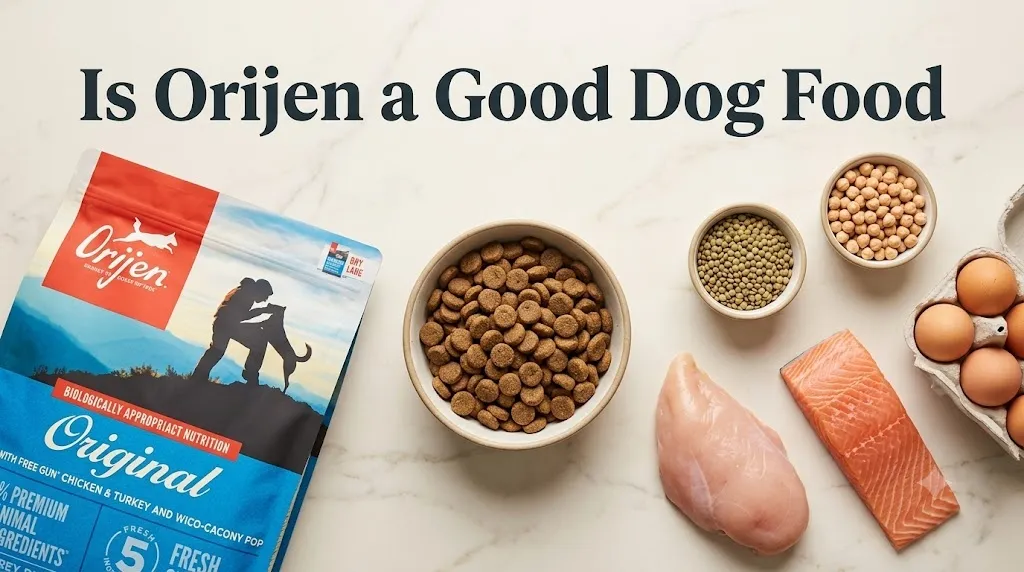
The definition of “good” in dog food depends on the standard you apply. If you apply the ingredient quality standard, Orijen ranks near the top. The animal protein sources are named, species-specific, and regionally sourced. The carbohydrate sources are low-glycemic vegetables and legumes, not corn, wheat, or soy. The fat sources are chicken fat, fish oil, and pollock oil, providing omega-3 fatty acids including docosahexaenoic acid (DHA) and eicosapentaenoic acid (EPA). The preservatives are natural mixed tocopherols, not synthetic BHA or BHT.
If you apply the WSAVA standard, which asks whether the brand employs a board-certified veterinary nutritionist, conducts feeding trials, and maintains rigorous quality control, Orijen partially meets the criteria. Champion Petfoods employs animal nutritionists and conducts nutritional analysis. The company owns its manufacturing facilities in Alberta, Canada, giving it control over ingredient sourcing and production quality. The gap is that Orijen has not historically published peer-reviewed feeding trials the way larger competitors like Royal Canin, Hill’s Science Diet, and Purina Pro Plan have. The nutritional philosophy is built on ancestral diet principles rather than controlled clinical feeding trials. That does not make the food bad. It makes its evidence base different from the prescription diet brands.
| Quality Standard | How Orijen Performs |
|---|---|
| Ingredient quality (named sources, whole foods) | Excellent |
| Protein content and biological value | Excellent (38 to 42% dry matter) |
| AAFCO nutrient profile compliance | Meets or exceeds for stated life stages |
| Board-certified veterinary nutritionist on staff | Not publicly confirmed as of 2026 |
| Published peer-reviewed feeding trials | Limited compared to Royal Canin, Hill’s, Purina |
| Manufacturing facility ownership | Yes, company-owned in Alberta, Canada |
| Recall history | No recalls since brand launch in 2006 |
Key Takeaway: Orijen is a good dog food by ingredient quality standards. It meets or exceeds AAFCO requirements. It is best suited for healthy, active dogs without medical conditions that require a therapeutic or prescription diet.
Is Orijen Dog Food Good
Orijen dog food is good for the dog it is designed for. The brand’s philosophy centers on the idea that dogs, as facultative carnivores, thrive on a diet dominated by animal protein with minimal carbohydrate from plant sources. The nutritional profile supports that philosophy. The Orijen Original formula, the brand’s flagship, contains 38 percent crude protein on a dry matter basis. The Regional Red and Six Fish formulas are similar. This protein density is higher than most premium competitors and significantly higher than grocery store brands that typically range from 18 to 26 percent protein.
The fat content of Orijen formulas is also high, typically 18 to 20 percent on a dry matter basis. The fat comes from animal sources (chicken fat, fish oil) rather than vegetable oils. For an active dog, this fat provides sustained energy and supports skin and coat health. For a sedentary dog, the same fat content can contribute to weight gain if portions are not controlled. The caloric density of Orijen, roughly 450 to 490 kilocalories per cup, is higher than many competitors. A dog that eats two cups of Orijen per day is consuming 900 to 980 calories. A dog that eats two cups of a lower-calorie food may be consuming 700 to 800 calories. The difference of 100 to 200 calories per day adds up to a pound of body weight gain every 3 to 5 weeks if the dog’s energy expenditure does not match the intake.
The ingredient digestibility is another quality marker. Named animal meals and fresh animal ingredients are more digestible than unnamed by-product meals and plant protein concentrates. The American College of Veterinary Nutrition (ACVN) notes that protein quality is determined by the amino acid profile and digestibility, not just the crude protein percentage. Orijen’s use of whole animal ingredients (muscle meat, organs, cartilage) provides a complete amino acid profile. The limited use of plant protein concentrates means the protein on the label comes primarily from animal sources, which have a more complete amino acid profile for dogs than plant proteins.
Quick Tip:
- If you are switching to Orijen from a lower-protein food, transition slowly over 7 to 10 days. The high protein and fat content can cause digestive upset in dogs not accustomed to it. Start with 25 percent Orijen and 75 percent old food, and adjust the ratio every 2 to 3 days.
Is Orijen Good Dog Food
The phrasing “is Orijen good dog food” is a variant of the main question. The answer is yes, with the same context: it is good for the right dog. The brand has maintained a strong reputation since its founding in 2006. It has not experienced a recall in its history, which is notable in a pet food industry where recalls occur regularly among major brands. The ingredient sourcing transparency, including the ability to trace ingredients back to regional suppliers, is a significant trust factor for owners who want to know what their dog is eating.
The protein sources in Orijen are predominantly fresh or raw animal ingredients, which are then freeze-dried or gently cooked during the extrusion process. This is distinct from foods that rely primarily on rendered meals. Fresh ingredients retain more of their natural nutritional profile, though the cooking process during extrusion does reduce some heat-sensitive nutrients. Orijen compensates for this by including freeze-dried liver and other organ meats as coatings on the kibble, which adds flavor and nutrients after the extrusion step.
The carbohydrate sources in Orijen, primarily lentils, chickpeas, peas, and other legumes and vegetables, are a distinguishing feature of the grain-free formulas. These ingredients provide fiber, vitamins, and minerals while keeping the glycemic load lower than grain-based foods. They are also the subject of the FDA’s investigation into grain-free diets and dilated cardiomyopathy (DCM), which is addressed in detail later in this guide. The grain-inclusive Orijen formulas, introduced since 2023, replace some legumes with oats, barley, and other grains for owners who prefer grain-inclusive nutrition.
| Orijen Quality Indicator | Assessment |
|---|---|
| First ingredient animal source | Yes, always a named meat or fish |
| Named protein sources | Yes, free-run chicken, wild-caught salmon, etc. |
| Meat meals vs. whole meats | Blend of fresh meats and meat meals |
| Artificial preservatives | None, mixed tocopherols used |
| Artificial colors or flavors | None |
| Ingredient sourcing transparency | High, regional suppliers identified |
| Recall history | None since 2006 |
Key Takeaway: Orijen uses named, whole-food animal ingredients with no artificial preservatives, colors, or flavors. The brand has no recall history. These are strong quality indicators. The food is best for healthy, active dogs.
Orijen Dog Food Review
The overall Orijen dog food review in 2026 is positive with important context. The brand delivers on its promise of high animal protein, whole-food ingredients, and transparent sourcing. The manufacturing quality, with company-owned facilities in Canada, is a significant trust factor. The absence of recalls across the brand’s nearly 20-year history is exceptional. The food is expensive. It costs $80 to $120 for a 25-pound bag and $4 to $6 per day for a medium-sized dog. That price places it in the top tier of the premium dog food market.
The nutritional philosophy of Orijen is based on the Biologically Appropriate concept. This concept asserts that dogs evolved to eat a diet rich in animal protein and fat with minimal carbohydrate. The WholePrey ratio incorporates meat, organs, and cartilage in ratios that approximate the nutritional composition of whole prey animals. This philosophy has face validity. Dogs are facultative carnivores with a digestive system adapted to a meat-based diet. The debate in veterinary nutrition is not about whether dogs can eat a high-meat diet. They can. The debate is about whether grain-free, legume-heavy formulations have unintended health consequences for some dogs, a debate triggered by the FDA’s investigation into DCM.
The practical experience of feeding Orijen is generally positive. Dogs tend to enjoy the taste. The high caloric density means smaller portion sizes, which reduces stool volume. The high fat content supports coat quality, and many owners report shinier coats and less shedding after switching to Orijen. The high protein content supports muscle maintenance in active dogs. The downsides reported by some owners include digestive upset during the transition, loose stools in dogs not accustomed to the fat content, and the high cost. Some dogs simply do not tolerate the high protein and fat levels, experiencing chronic loose stools or pancreatitis flares.
| Aspect | Rating | Notes |
|---|---|---|
| Ingredient Quality | 5/5 | Top-tier ingredients, named sources, whole foods |
| Nutritional Profile | 4/5 | Excellent protein, fat; DCM context applies |
| Manufacturing Quality | 5/5 | Company-owned facilities, no recalls |
| Price/Value | 3/5 | Expensive, $4 to $6/day for medium dog |
| Taste/Palatability | 5/5 | Most dogs find it highly palatable |
| Transparency | 4/5 | Good sourcing transparency, no feeding trials published |
Orijen Ingredients
Orijen ingredients are predominantly animal-sourced with a smaller proportion of vegetables, fruits, and botanicals. The ingredient panels are designed to reflect the WholePrey ratio: approximately 85 percent animal ingredients and 15 percent plant ingredients in the grain-free formulas. The first ingredient is always a named animal protein source. In Orijen Original, it is free-run chicken. In Regional Red, it is beef. In Six Fish, it is wild-caught salmon.
The animal ingredients in Orijen include fresh muscle meat, organ meats (liver, heart, kidney), cartilage, and bone. These ingredients are sourced from regional suppliers in Canada and the United States. The fresh meats are delivered to the manufacturing facility refrigerated, never frozen, according to Champion Petfoods. The fish ingredients are wild-caught and certified by third-party sustainability organizations. The eggs are from cage-free hens. The quality of the animal ingredients is the primary reason Orijen commands a premium price.
The plant ingredients include lentils, chickpeas, peas, pumpkin, butternut squash, apples, pears, and various botanicals like chicory root, turmeric, and milk thistle. These ingredients provide fiber, vitamins, minerals, and phytonutrients. The legumes (lentils, chickpeas, peas) are the primary carbohydrate source in the grain-free formulas and are the ingredient category most discussed in the DCM investigation context. The grain-inclusive formulas, launched since 2023, replace some legumes with oats, barley, and millet.
| Orijen Original Key Ingredients | Category | Purpose |
|---|---|---|
| Free-run chicken | Animal protein | Primary protein source |
| Free-run turkey | Animal protein | Additional protein source |
| Whole eggs (cage-free) | Animal protein | Complete amino acid profile |
| Chicken liver, turkey giblets | Organ meat | Vitamins, minerals, flavor |
| Whole mackerel, herring | Fish | Omega-3 fatty acids, protein |
| Chicken heart | Organ meat | Taurine, coenzyme Q10 |
| Lentils, chickpeas, peas | Legume | Carbohydrate, fiber, plant protein |
| Pumpkin, butternut squash | Vegetable | Fiber, beta-carotene |
People with dogs who have food allergies should note that Orijen formulas are multi-protein. A dog allergic to chicken cannot eat Orijen Original because it contains chicken as the primary protein and chicken organs throughout the ingredient list. The Six Fish formula avoids poultry but contains multiple fish species. The Regional Red formula contains beef, lamb, and pork. The multi-protein approach is a feature for dogs without allergies, providing amino acid variety. It is a limitation for dogs with known protein allergies who need a single novel protein source.
Key Takeaway: Orijen’s ingredient panels are dominated by named animal sources including muscle meat, organs, and cartilage. The legumes and vegetables provide fiber and nutrients. The multi-protein formulas are excellent for dogs without allergies but problematic for dogs with specific protein sensitivities.
Orijen Guaranteed Analysis
The guaranteed analysis of Orijen dog food reflects the brand’s high-protein, moderate-to-high-fat nutritional philosophy. The values below are for Orijen Original as of 2026, expressed on both an as-fed basis (what appears on the label) and a dry matter basis (what matters for nutritional comparison after removing moisture).
| Nutrient | As-Fed (Label) | Dry Matter Basis (Approx.) | AAFCO Adult Minimum |
|---|---|---|---|
| Crude Protein | 38.0% | 42.2% | 18.0% |
| Crude Fat | 18.0% | 20.0% | 5.5% |
| Crude Fiber | 4.0% | 4.4% | None |
| Moisture | 10.0% | N/A | N/A |
| Ash | 8.0% | 8.9% | None |
| Caloric Density | 460 kcal/cup | N/A | N/A |
The protein content exceeds the AAFCO adult maintenance minimum by more than double. This is a high-protein food by any standard. The fat content is similarly high, supporting energy for active dogs. The fiber content is moderate, appropriate for a food that does not rely on grain for stool formation. The ash content, which represents the mineral fraction including calcium and phosphorus, is typical for a high-meat food.
The calcium and phosphorus levels in Orijen are higher than in foods with less animal content because bone and cartilage are included in the WholePrey ratio. This is relevant for large breed puppies, who have narrower calcium requirements for safe skeletal development. Orijen’s large breed puppy formulas adjust the calcium and phosphorus levels to meet AAFCO guidelines for large breed growth. Feeding an adult formula to a large breed puppy is not recommended because the calcium to phosphorus ratio and absolute levels may not be appropriate for controlled bone growth.
The omega-3 fatty acid content, specifically DHA and EPA from fish oils and whole fish ingredients, is a nutritional highlight. DHA supports cognitive development in puppies and cognitive maintenance in senior dogs. EPA supports the inflammatory response system, potentially benefiting dogs with arthritis or skin conditions. The guaranteed analysis does not list DHA and EPA separately. Orijen publishes the typical analysis for these nutrients on its website and through customer service.
Orijen vs Acana
Orijen and Acana are sibling brands, both owned by Champion Petfoods under the Mars Petcare umbrella as of 2023. They share manufacturing facilities in Alberta, Canada, and a philosophy of Biologically Appropriate nutrition. Orijen is the higher-protein, higher-price flagship. Acana is the slightly more moderate, slightly more affordable alternative. The choice between them comes down to protein content, ingredient inclusion rate, and price.
The protein content is the primary differentiator. Orijen formulas contain 38 to 42 percent protein on a dry matter basis. Acana formulas contain 29 to 34 percent protein. The difference of approximately 8 to 10 percentage points is meaningful. Orijen uses approximately 85 percent animal ingredients. Acana uses approximately 60 to 70 percent animal ingredients. The remaining Acana ingredients include more vegetables, fruits, and grains in the grain-inclusive formulas than Orijen. The ingredient quality is comparable. Both brands use named, regional animal sources with no artificial preservatives.
The price difference is $15 to $25 per bag. Acana costs approximately $65 to $95 for a 25-pound bag. Orijen costs $80 to $120. The per-day cost difference for a medium dog is approximately $1 to $1.50. For a multi-dog household, the difference adds up quickly. The nutritional value proposition is that Orijen provides a higher density of animal protein and fat, which may mean smaller portion sizes and potentially longer satiety for the dog. Whether that justifies the price difference is an individual budget decision.
| Feature | Orijen | Acana |
|---|---|---|
| Protein (dry matter) | 38 to 42% | 29 to 34% |
| Animal ingredients | Approx. 85% | Approx. 60 to 70% |
| Price (25 lb bag) | $80 to $120 | $65 to $95 |
| Grain-free options | Yes | Yes |
| Grain-inclusive options | Yes (expanded since 2023) | Yes |
| Manufacturing | Alberta, Canada | Alberta, Canada |
| Parent company | Mars Petcare | Mars Petcare |
Key Takeaway: Orijen and Acana are sibling brands with the same manufacturing quality and ingredient philosophy. Orijen has significantly more animal protein and costs more. Acana is a moderate alternative for owners who want the Champion Petfoods quality at a lower price point.
Orijen vs Royal Canin
Orijen and Royal Canin represent opposite ends of the premium dog food philosophy spectrum. Orijen prioritizes ingredient quality, high animal protein, and ancestral diet principles. Royal Canin prioritizes scientific formulation, breed-specific nutrition, and therapeutic diets developed through controlled feeding trials. Neither brand is objectively better for every dog. They serve different purposes.
Royal Canin is the gold standard for evidence-based formulation. The company employs board-certified veterinary nutritionists. It conducts extensive feeding trials. Its formulas are designed for specific breeds, sizes, and health conditions with nutrient profiles that reflect the specific needs of a German Shepherd versus a Yorkshire Terrier versus a Labrador Retriever. The ingredient panels do not read as beautifully as Orijen’s. You will see chicken by-product meal, corn, and wheat in many Royal Canin formulas. These ingredients are nutritionally sound, highly digestible in the forms Royal Canin uses, and are included for specific nutritional purposes, not as cheap fillers.
Orijen’s ingredient panel reads more like a home-cooked meal. Royal Canin’s ingredient panel reads more like a scientific formulation. The ingredient quality of Orijen is higher by the standard of whole-food, named sources. The nutritional precision of Royal Canin is higher by the standard of controlled feeding trials and breed-specific research. A healthy, active dog with no medical conditions will likely thrive on Orijen. A dog with a medical condition, a breed-specific sensitivity, or a need for a therapeutic diet may require Royal Canin or a similar science-forward brand.
| Feature | Orijen | Royal Canin |
|---|---|---|
| Protein philosophy | High animal protein | Moderate, targeted protein |
| Ingredient quality (whole foods) | Higher | Adequate, formulation-focused |
| Feeding trials | Limited | Extensive |
| Veterinary nutritionist on staff | Not confirmed | Yes, board-certified |
| Breed-specific formulas | No | Yes |
| Therapeutic/prescription diets | No | Yes |
| Recall history | None | Limited, isolated incidents |
| Price | Premium ($80 to $120/bag) | Premium ($70 to $110/bag) |
People whose dogs have specific health conditions should discuss food choice with their veterinarian. A veterinary therapeutic diet from Royal Canin, Hill’s, or Purina Pro Plan may be medically indicated for conditions including kidney disease, urinary crystals, food allergies, and gastrointestinal disorders. Orijen does not offer therapeutic formulas. It is a maintenance food for healthy dogs.
Is Orijen the Best Dog Food
Orijen is one of the best dog foods by ingredient quality and protein content, but there is no single best dog food for all dogs. A board-certified veterinary nutritionist would not rank foods in a universal best-to-worst list. They would evaluate a food against the needs of a specific dog. Orijen is among the best choices for a healthy, active adult dog with no medical conditions and an owner who can afford it. Orijen is not the best choice for a dog with pancreatitis, kidney disease, a large breed puppy requiring strict calcium control, or a dog with a protein allergy who needs a single novel protein source.
The “best” claim also depends on the criteria you value most. If you value ingredient sourcing transparency, whole-food ingredients, and a high animal protein content, Orijen is among the best. If you value peer-reviewed feeding trials, breed-specific formulation, and a brand with board-certified veterinary nutritionists on staff, Royal Canin, Hill’s Science Diet, or Purina Pro Plan rank higher on those criteria. If you value price per day, Orijen is not the best value. Acana or a well-formulated mid-tier brand like Purina Pro Plan provides adequate nutrition at a lower cost.
The WSAVA guidelines for selecting pet food recommend choosing a brand that employs qualified nutritionists, conducts feeding trials, and maintains rigorous quality control. Orijen meets the quality control standard with company-owned facilities and no recalls. It does not publicly confirm employing a board-certified veterinary nutritionist. It does not publish peer-reviewed feeding trials. These gaps do not make Orijen a bad food. They are factors to weigh if the WSAVA criteria are important to you.
| “Best” Criterion | Top Performer |
|---|---|
| Whole-food ingredient quality | Orijen |
| Animal protein content | Orijen |
| Scientific/clinical evidence | Royal Canin, Hill’s, Purina Pro Plan |
| Breed-specific nutrition | Royal Canin |
| Therapeutic diet availability | Royal Canin, Hill’s |
| Value (nutrition per dollar) | Acana, Purina Pro Plan |
| No recall history | Orijen |
Key Takeaway: Orijen is among the best dog foods for ingredient quality and protein content. The designation “best” depends on the individual dog’s needs and the criteria the owner prioritizes. No single food is best for all dogs.
Orijen Grain Free DCM
The FDA investigation into grain-free diets and canine dilated cardiomyopathy (DCM) is the most significant controversy to affect Orijen and the premium pet food industry in the past decade. Between 2018 and 2023, the FDA Center for Veterinary Medicine investigated reports of DCM in dogs eating certain grain-free diets. The investigation identified a potential association between DCM and diets high in legumes (peas, lentils, chickpeas) and potatoes, which are common in grain-free formulas. Orijen was one of the brands named in the FDA’s reports.
The investigation did not establish causation. It identified an association. The mechanism, if one exists, is not fully understood. Hypotheses include reduced taurine bioavailability due to legume fiber binding bile acids, interference with taurine synthesis from certain plant compounds, or a genetic susceptibility in certain breeds that is unmasked by specific dietary patterns. The FDA stopped accepting new DCM reports in 2023 and shifted its focus to research collaborations rather than active investigation. As of 2026, the scientific consensus remains that more research is needed.
Orijen’s response to the DCM investigation included reformulating some products to increase taurine supplementation, expanding the grain-inclusive product line, and publishing nutritional analyses demonstrating that Orijen’s taurine and amino acid levels meet or exceed AAFCO requirements. The company has maintained that its foods are safe and that the DCM cases reported to the FDA represent a very small fraction of the millions of dogs eating grain-free diets.
A veterinarian, particularly a veterinary cardiologist, is the right person to discuss DCM risk for a specific dog. Breeds with known genetic DCM predisposition, including Doberman Pinschers, Boxers, Great Danes, and Cocker Spaniels, may warrant additional caution. Dogs with a family history of DCM may warrant echocardiographic screening regardless of diet. The decision to feed a grain-free diet, including Orijen’s grain-free formulas, should be made with awareness of the DCM context and, ideally, with veterinary input.
| DCM Context | What to Know |
|---|---|
| FDA investigation status | Active monitoring ended 2023, research ongoing |
| Orijen named in FDA reports | Yes, among 16 brands |
| Causation established? | No, association only |
| Orijen response | Increased taurine, expanded grain-inclusive line |
| Breeds at genetic risk | Doberman, Boxer, Great Dane, Cocker Spaniel |
| Veterinary recommendation | Discuss with vet, consider grain-inclusive option |
Quick Tip:
- If DCM concerns you, feed one of Orijen’s grain-inclusive formulas, which were introduced in 2023. These formulas include oats, barley, and millet alongside the animal protein sources. The protein content remains high. The legume content is reduced. This is a reasonable middle ground between the Biologically Appropriate philosophy and the DCM precaution.
Orijen Recall History
Orijen has no recall history. The brand has not issued a single voluntary or mandatory recall since its launch in 2006. This is an exceptional record in the pet food industry, where even premium brands typically experience occasional isolated recalls. The absence of recalls reflects the company’s control over its manufacturing facilities and its ingredient sourcing practices.
Champion Petfoods, Orijen’s parent company, owns and operates its manufacturing facilities in Alberta, Canada. The company does not outsource production to third-party co-packers, which is a common source of quality control failures in the pet food industry. The Alberta facility, called NorthStar, handles all Orijen and Acana production. The company controls the entire process from ingredient receipt through extrusion, drying, coating, and packaging.
The clean recall history does not mean Orijen is immune to future recalls. No food manufacturer is. It means the brand has maintained rigorous quality control for nearly two decades. The transition to Mars Petcare ownership in 2023 has not resulted in any reported quality issues or recalls as of mid-2026. The manufacturing facilities remain the same. The ingredient sourcing remains regional. The quality control protocols that produced the clean recall history have not been publicly altered.
| Recall Factor | Orijen Status |
|---|---|
| Total recalls (2006 to 2026) | 0 |
| Manufacturing ownership | Company-owned (Champion Petfoods) |
| Co-packer usage | None |
| Post-Mars acquisition recalls | None as of 2026 |
| FDA warning letters | None |
Orijen for Puppies
Orijen offers puppy-specific formulas including Orijen Puppy, Orijen Puppy Large Breed, and Orijen Amazing Grains Puppy. These formulas are designed to meet AAFCO nutrient profiles for growth and reproduction. They contain DHA from fish oil to support brain and eye development. The protein and fat levels are higher than adult formulas to support the energy demands of growth.
Orijen Puppy is suitable for small and medium breed puppies. The calcium and phosphorus levels are appropriate for controlled bone growth in breeds that do not have specific large breed skeletal concerns. Orijen Puppy Large Breed adjusts the calcium and phosphorus levels to meet the narrower requirements for large and giant breed puppies, whose rapid bone growth can lead to developmental orthopedic disease if calcium intake is excessive.
The feeding guide for Orijen puppies should be followed carefully. Overfeeding a large breed puppy can cause excessive growth rate, which stresses developing joints. The caloric density of Orijen means the portion sizes are smaller than lower-calorie foods. A 20-pound puppy might eat 1.5 to 2 cups of Orijen per day, split into three meals. A veterinarian should monitor the puppy’s body condition score and adjust portions to maintain a lean body condition throughout growth.
| Puppy Formula | Best For | Key Feature |
|---|---|---|
| Orijen Puppy | Small and medium breeds | High DHA, high protein |
| Orijen Puppy Large Breed | Large and giant breeds | Controlled calcium/phosphorus |
| Orijen Amazing Grains Puppy | All breeds, grain-inclusive | Oats, barley, millet for fiber |
A veterinarian should be consulted before feeding Orijen to a puppy of a breed with known skeletal development risks, including Great Danes, Mastiffs, and other giant breeds. The calcium and phosphorus levels, while within AAFCO guidelines, may not be optimal for every individual puppy. A board-certified veterinary nutritionist can provide individualized guidance for puppies with specific health concerns.
Key Takeaway: Orijen offers puppy formulas with DHA for development and a large breed option with controlled calcium. Feed according to the guide and monitor body condition with a veterinarian.
Orijen for Senior Dogs
Orijen does not offer a single senior-specific formula labeled “Senior.” The brand’s philosophy is that older dogs benefit from the same high-protein, moderate-fat nutrition that adult dogs receive. This position has scientific support. Research suggests that senior dogs benefit from higher protein intake to maintain muscle mass, not lower protein as was historically recommended. Orijen’s adult formulas are designed to be appropriate for healthy senior dogs.
The practical considerations for feeding Orijen to a senior dog include caloric management, kidney function, and dental health. Senior dogs are often less active and require fewer calories. The high caloric density of Orijen means portion sizes must be adjusted downward to prevent weight gain. A senior dog that previously ate 2 cups of Orijen may need 1.5 cups or less. A veterinarian should assess the dog’s body condition and recommend a target weight.
Senior dogs with reduced kidney function require a different nutritional approach. The International Renal Interest Society (IRIS) staging system guides dietary management for chronic kidney disease. Dogs in IRIS stage 2 or higher typically benefit from reduced phosphorus and moderate protein from high-quality sources. Orijen’s phosphorus levels are higher than therapeutic renal diets. A senior dog with diagnosed kidney disease should not eat Orijen without veterinary approval. The food is not formulated for renal support.
| Senior Dog Consideration | Orijen’s Suitability |
|---|---|
| Muscle maintenance | Excellent, high protein supports lean mass |
| Weight management | Requires careful portion control due to caloric density |
| Kidney disease | Not suitable, phosphorus levels are higher than renal diets |
| Dental health | Kibble texture appropriate for dogs with healthy teeth |
| Joint support | Omega-3s from fish oil support inflammatory response |
A veterinarian should evaluate any senior dog before transitioning to a new food. Blood work including a complete blood count, serum chemistry panel, and urinalysis can identify early kidney disease or other conditions that would affect food choice. A senior dog with normal blood work and good body condition can likely eat Orijen adult formulas without issue.
Orijen Mars Acquisition
In 2023, Mars Petcare, the world’s largest pet food company, acquired Champion Petfoods, the parent company of Orijen and Acana. The acquisition was valued at approximately $3 billion and represented Mars’s entry into the ultra-premium, biologically appropriate pet food segment. The question for Orijen customers is whether the acquisition has changed the product.
As of 2026, the evidence suggests minimal formulation changes. The manufacturing facilities in Alberta remain operational under Champion Petfoods. The ingredient sourcing remains regional. The Biologically Appropriate philosophy remains the brand’s positioning. Mars has a history of maintaining acquired brands’ identities. Royal Canin, acquired by Mars in 2001, continues to operate with its own philosophy, formulations, and manufacturing. The same pattern appears to apply to Champion Petfoods.
The changes that have occurred since the acquisition are primarily in distribution and marketing. Orijen is now available through Mars’s global distribution network, which has expanded the brand’s availability in markets where it was previously difficult to find. The grain-inclusive Amazing Grains line, launched in 2023, was in development before the acquisition but benefited from Mars’s research and development resources. The line represents an expansion of Orijen’s product range rather than a reformulation of existing products.
| Post-Acquisition Factor | Status as of 2026 |
|---|---|
| Manufacturing location | Alberta, Canada (unchanged) |
| Formulation changes | No major changes reported |
| Ingredient sourcing | Regional suppliers (unchanged) |
| Recalls | None since acquisition |
| New product launches | Amazing Grains grain-inclusive line |
| Distribution | Expanded globally via Mars network |
Key Takeaway: The Mars acquisition has not resulted in reported formulation changes or quality issues. The manufacturing facilities and ingredient sourcing remain the same. The grain-inclusive product line has expanded.
How Good Is Orijen Dog Food
Orijen is very good dog food. The ingredient quality is excellent. The protein content is high and sourced from named animal ingredients. The brand has no recall history. The manufacturing is company-owned. The Biologically Appropriate philosophy has face validity and nutritional logic. The food is expensive, and it is not the right food for every dog. A dog with pancreatitis, kidney disease, or a need for a therapeutic diet should eat a food formulated for that purpose, not Orijen. A dog with a specific protein allergy should eat a limited-ingredient food, not Orijen’s multi-protein formulas.
The DCM context requires acknowledgment and has been addressed here honestly. The association between grain-free diets and DCM is not fully understood. The FDA investigation has moved from active monitoring to research collaboration. Orijen has responded with increased taurine supplementation and expanded grain-inclusive options. Owners concerned about DCM can choose the Amazing Grains formulas. Owners comfortable with the grain-free formulas can continue feeding them with awareness of the context.
The Mars acquisition has not changed the product in ways that are apparent to consumers or documented by third-party testing as of 2026. The brand’s quality standards appear intact. The clean recall history has continued. The manufacturing remains in Alberta. The ingredient sourcing remains regional. The food Orijen is making in 2026 is, by all available evidence, the same food it was making before the acquisition.
A veterinarian is the right person to help you decide if Orijen is right for your individual dog. The factors to discuss include your dog’s breed, age, activity level, health status, and any pre-existing conditions. Bring the Orijen product information with you to the appointment. Your vet can evaluate the guaranteed analysis and ingredient panel against your dog’s specific needs. That conversation is more valuable than any general review.
Frequently Asked Questions About Orijen Dog Food
Is Orijen dog food worth the high price?
Orijen is worth the price for owners who prioritize whole-food animal ingredients, high protein content, and a brand with no recall history and transparent sourcing.
The cost is $4 to $6 per day for a medium dog, placing it in the top tier of premium dog foods.
If the budget allows and the dog is healthy and active, the ingredient quality justifies the premium.
Has Orijen ever been recalled?
No, Orijen has never been recalled since the brand launched in 2006.
Champion Petfoods manufactures Orijen in company-owned facilities in Alberta, Canada, maintaining quality control without reliance on third-party co-packers.
The clean recall history is exceptional in the pet food industry.
Is Orijen linked to heart disease in dogs?
Orijen was one of 16 brands named in the FDA’s investigation into a potential association between grain-free diets and dilated cardiomyopathy (DCM) in dogs.
The investigation did not establish causation, and the association remains not fully understood scientifically as of 2026.
Orijen responded by increasing taurine supplementation and launching grain-inclusive formulas. Owners should discuss DCM risk with their veterinarian.
Can I feed Orijen to my puppy?
Yes, Orijen offers puppy-specific formulas including Orijen Puppy and Orijen Puppy Large Breed that meet AAFCO nutrient profiles for growth.
The Large Breed formula has controlled calcium and phosphorus levels appropriate for breeds at risk of developmental orthopedic disease.
Feed according to the package guide and monitor your puppy’s body condition with a veterinarian.
What is the difference between Orijen and Acana?
Orijen and Acana are both made by Champion Petfoods (owned by Mars) in the same Alberta facility.
Orijen has higher protein at 38 to 42 percent and approximately 85 percent animal ingredients, while Acana has 29 to 34 percent protein and 60 to 70 percent animal ingredients.
Orijen is more expensive by $15 to $25 per bag. Choose Orijen for higher protein density. Choose Acana for a more moderate price while retaining ingredient quality.
Orijen is a dog food that takes its philosophy seriously. The Biologically Appropriate concept is not a marketing slogan slapped on a bag of corn and chicken by-product meal. It is a formulation principle visible in the ingredient panel, where free-run chicken, wild-caught fish, and cage-free eggs precede any plant ingredient. The food delivers what it promises: high animal protein, whole-food ingredients, and transparent sourcing from a company-owned facility with a two-decade clean safety record.
The DCM investigation and the Mars acquisition are real contexts that belong in any honest evaluation of this brand. They do not negate the quality of the food. They add dimensions to the decision that each owner must weigh against their dog’s individual health profile. If you choose Orijen, choose the formula that fits your dog’s life stage and your comfort with grain-free versus grain-inclusive nutrition. If you choose another brand, choose it for specific reasons related to your dog, not because Orijen is a bad food. It is not. It is a very good food that is not right for every dog, which is the honest answer to almost every question worth asking in pet nutrition.