Yes, ferrets can eat cat food in a pinch, but no, it shouldn’t be their everyday diet. Can ferrets eat cat food safely long term is a different question than whether they can survive on it for a night, and the answer changes depending on the brand, the ingredient list, and your ferret’s age and health.
This distinction matters because ferrets are obligate carnivores, or hypercarnivores, meaning their bodies are built to run almost entirely on animal protein and fat. Veterinary sources tracking ferret health, including clinics affiliated with the American Ferret Association, have linked poor-quality diets to chronic conditions like insulinoma and inflammatory bowel disease.
This guide walks through exactly what happens nutritionally when a ferret eats cat food, why certain grain-free formulas are genuinely dangerous, how to use cat food safely in an emergency, and how to transition your ferret back to a ferret-specific diet without a fight. You’ll also get a clear nutrient comparison table so you’re not guessing at percentages.
Can Ferrets Eat Cat Food
Ferrets can technically eat cat food without immediate harm, but most cat foods don’t meet a ferret’s higher protein and fat needs.
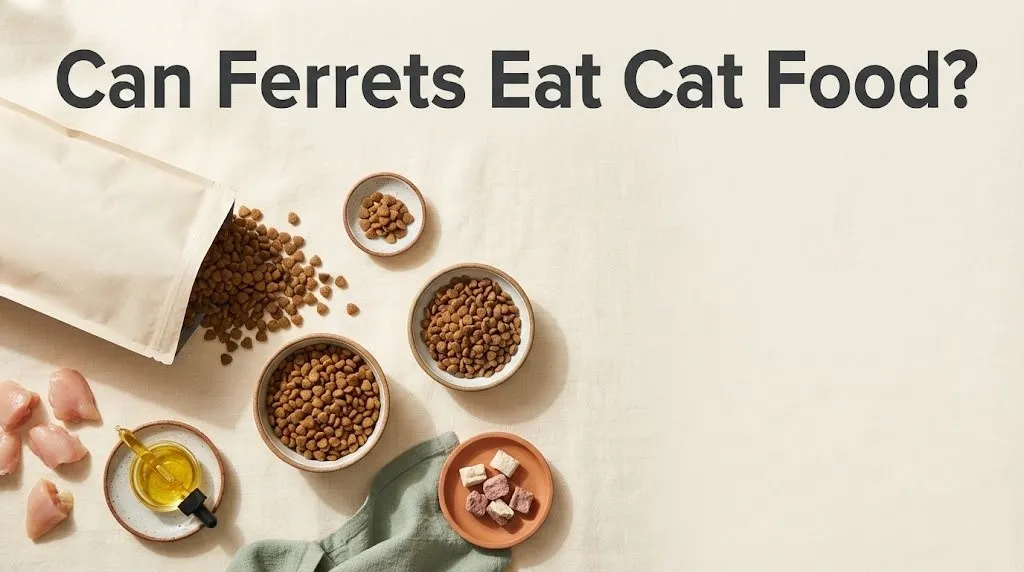
Cat food and ferret food look similar on a store shelf, and both are built around meat. That similarity is exactly why so many new owners assume they’re interchangeable.
The real difference sits in the nutrient math. A ferret’s metabolism runs faster and hotter than a cat’s, and it needs more concentrated protein and fat to keep up.
According to veterinary nutrition guidance summarized by Oxbow Animal Health, ferret diets should target a minimum of 35% crude protein, ideally above 40%, with at least 20% crude fat and under 5% fiber. Most standard adult cat foods fall short of that protein ceiling.
Quick Tip:
- A single meal of quality cat food won’t hurt a healthy adult ferret.
- Repeated meals over weeks can create real nutritional gaps.
- Always check the guaranteed analysis panel on the bag before feeding it, even once.
Ferrets with existing kidney concerns or a history of bladder stones should avoid cat food entirely, since even short-term ingredient shifts can aggravate those conditions.
Is Cat Food Safe for Ferrets Long Term
No, cat food is not considered safe as a long-term, everyday diet for ferrets.
Long-term feeding is where the nutrient gap actually shows up in a ferret’s body. Protein and fat that fall short of a ferret’s needs over months, not days, are what veterinarians tie to chronic disease patterns.
Clinics working with exotic pets note that ferrets fed diets too low in animal protein and too high in plant-based filler over time are more likely to develop insulinoma, a pancreatic tumor affecting blood sugar regulation, and digestive conditions grouped under inflammatory bowel disease.
| Feeding Duration | Risk Level | What Can Happen |
|---|---|---|
| One meal, emergency only | Low | Minimal impact on a healthy adult ferret |
| A few days | Moderate | Possible digestive upset, especially with unfamiliar formulas |
| Weeks to months | High | Protein and fat deficits, potential contribution to chronic illness |
| Years, primary diet | Very High | Documented link to insulinoma and IBD in veterinary literature |
Ferrets with diabetes-adjacent conditions, kits still developing, and seniors with reduced organ function should be kept off cat food entirely, even short term, without a veterinarian’s direct input.
Why Ferrets Need More Protein Than Cats
Ferrets need more protein than cats because their digestive tract is shorter and their metabolism processes food faster, leaving less time to extract nutrients.
Think of a ferret’s gut like an express train compared to a cat’s regional line. Food moves through a ferret in roughly three to four hours, compared to longer transit times in cats, which means every bite has to deliver more usable nutrition, faster.
This rapid transit is why ferrets need meals 6 to 8 times a day rather than one or two larger feedings, and why the concentration of protein and fat per bite matters more for them than it does for cats.
Cats are also obligate carnivores, but their formulated diets are allowed more flexibility with carbohydrate-based fillers like corn or rice, ingredients a ferret’s digestive system simply can’t process efficiently.
Key Fact: A ferret’s short gastrointestinal tract cannot break down plant fiber or complex carbohydrates the way a cat’s slightly longer tract can, which is the core biological reason cat food formulas underperform for ferrets.
Owners managing a ferret with any diagnosed digestive condition should treat this protein gap as a genuine medical variable, not a minor preference, and should confirm any diet change with a veterinarian familiar with exotic mammal nutrition.
Ferret Food vs Cat Food Nutrition Comparison
Ferret food is formulated with higher protein, higher fat, and lower fiber than standard cat food.
Reading a bag label side by side makes the gap concrete instead of abstract. Here’s how the two categories typically compare using guaranteed analysis figures.
| Nutrient | Ferret Food | Adult Cat Food | Kitten Food |
|---|---|---|---|
| Crude Protein | 34% to 40%+ | 26% to 32% | 30% to 40% |
| Crude Fat | 18% to 22% | 9% to 15% | 15% to 20% |
| Crude Fiber | Under 5% | 2% to 5% (higher in some grain-free) | 2% to 4% |
| Carbohydrate Load | Very low | Moderate to high | Moderate |
Kitten food consistently lands closer to a ferret’s actual requirements than adult cat food does, which is why it shows up so often as the recommended stopgap.
A ferret eating a diet from the adult cat food column for an extended period is functionally running on a fuel mix built for a slower metabolism, one with more filler and less concentrated energy per bite.
Owners managing multiple pets, including a household with both cats and ferrets, should never assume a shared bowl works for both animals long term, even if both species are labeled carnivores on the packaging.
Can Ferrets Eat Kitten Food Instead
Yes, kitten food is a better short-term substitute for ferrets than adult cat food, though it still isn’t a permanent replacement.
Kitten formulas are built for a growing animal with high energy demands, which happens to land closer to what an adult ferret needs day to day. That’s the entire reason this substitution shows up in veterinary advice as frequently as it does.
Chewy’s veterinary-reviewed feeding guidance specifically notes that dry kitten food can serve as a short-term substitute when ferret food runs out, while stressing a return to a species-specific diet as soon as possible.
Quick Tip:
- Choose a dry kitten kibble over wet kitten food when using it as a substitute, since dry kibble supports dental health better.
- Check the ingredient list for peas or pea protein before feeding, even in kitten formulas.
- Treat this as a bridge measure lasting days, not weeks.
Kits (baby ferrets) should not be fed kitten food as their long-term primary diet either, since their nutritional needs still diverge from a growing cat’s in fat ratio and specific amino acids like taurine and arachidonic acid.
Why Peas in Cat Food Are Dangerous for Ferrets
Peas and other legume ingredients in cat food are one of the most dangerous hidden risks for ferrets, because they’re strongly linked to bladder stone formation.
This is the single biggest gap in most online advice about ferrets and cat food. Grain-free formulas marketed as premium or natural often replace grains with pea starch, pea protein, or pea fiber, and ferrets process these plant proteins very differently than cats do.
Veterinary case reports and ferret-focused nutrition trackers have documented that even trace amounts of pea-based ingredients can contribute to struvite bladder stones in ferrets, a painful and sometimes fatal condition if untreated.
Key Finding: Ferret health trackers analyzing hundreds of commercial diets have found that even foods marketed as premium, including some award-winning cat food brands, score poorly for ferret safety specifically because of pea and legume content.
The danger isn’t always immediate. Symptoms can take weeks or even months to appear, which makes it easy for owners to miss the connection between a diet change and a later veterinary emergency.
Any ferret showing straining during litter box use, blood in urine, or repeated unsuccessful attempts to urinate needs same-day veterinary attention, since bladder stone blockages can become life-threatening within hours.
Key Takeaway: Cat food isn’t automatically safe just because it’s high in protein. Always check for peas, lentils, or other legumes on the ingredient list before feeding any cat food to a ferret, even once.
Grain-Free Cat Food and Ferret Bladder Stones
Grain-free cat food is often riskier for ferrets than grain-inclusive formulas, specifically because of the pea and legume substitutes used to replace grain.
This runs counter to what most pet owners assume. Grain-free sounds healthier by default, but for a ferret, the replacement ingredient is what actually determines the risk, not the absence of grain itself.
Ferret nutrition trackers have specifically flagged brands like certain Orijen, Acana, and Farmina formulas as high-risk for ferrets despite strong reputations in the cat food space, purely because of pea content in their recipes.
| Cat Food Type | Typical Ferret Risk | Why |
|---|---|---|
| Grain-inclusive, no legumes | Lower | Fewer plant-based bladder stone precursors |
| Grain-free with peas or lentils | Higher | Legume proteins linked to struvite stone formation |
| Raw or freeze-dried, meat-first | Generally lower | Minimal plant filler across most formulas |
Ferrets who have already had a bladder stone removed are at meaningfully elevated risk of recurrence, and should never be fed a legume-containing formula again without direct veterinary clearance.
Can Ferrets Eat Wet Cat Food
Yes, ferrets can eat small amounts of wet cat food occasionally, but it’s not ideal as a regular feeding option.
Wet food’s higher moisture content can actually help a dehydrated or recovering ferret in the short term, which is one legitimate use case worth knowing about.
The tradeoff shows up in dental health. Soft food doesn’t provide the abrasive chewing action that dry kibble does, and ferrets fed primarily soft diets tend to build up plaque and tartar faster, according to veterinary clinic guidance from sources like West Davis Veterinary Clinic.
Quick Tip:
- Use wet cat food sparingly, mainly for sick or recovering ferrets who need extra hydration.
- Avoid wet cat food as a daily staple due to dental health tradeoffs.
- Check the label for legumes just as carefully as you would with dry food.
Senior ferrets losing teeth or struggling to chew hard kibble are one legitimate group where occasional wet food, cat or ferret-specific, genuinely makes feeding easier and safer.
Best Emergency Substitute Foods for Ferrets
The best emergency substitutes for ferret food, in order of preference, are high-quality dry kitten food, cooked lean meat, and specific ferret supplement pastes.
Running out of food happens, and knowing the actual hierarchy of safe substitutes prevents a stressful late-night decision from turning into a bigger problem.
To handle a ferret food emergency:
- Check for dry kitten food first, since it’s closest nutritionally to a ferret’s needs.
- Confirm the kitten food label has no peas, lentils, or other legume ingredients listed in the first ten ingredients.
- If no kitten food is available, offer small pieces of cooked, unseasoned chicken, turkey, or plain cooked egg.
- Remove all bones, skin, and seasoning before offering meat, since seasoning and bone fragments can cause serious harm.
- Return to a ferret-specific diet within 24 to 48 hours once available, rather than continuing the substitute longer than needed.
Critical Care Carnivore, a veterinary-formulated supplement paste, is another option specifically recommended by veterinary sources for short-term feeding emergencies or for sick ferrets refusing solid food.
Never use dog food as a substitute under any circumstance, since its kibble size and carbohydrate load are both unsuitable and potentially harmful for a ferret’s mouth and digestive system.
How to Transition a Ferret Off Cat Food Safely
Transitioning a ferret off cat food requires a gradual mix-in process over one to several weeks, not an abrupt switch.
Ferrets imprint on the taste and texture of food they were raised on, a phenomenon veterinary nutrition sources call nutritional imprinting. This is exactly why an abrupt diet change often triggers a ferret to simply stop eating rather than adapt.
To switch a ferret from cat food back to a proper ferret diet:
- Mix roughly 25% new ferret food into the existing cat food for the first 4 to 5 days.
- Increase to a 50/50 blend over the next week if your ferret is eating normally.
- Move to 75% new food for another 4 to 5 days, watching for normal stool and appetite.
- Complete the switch to 100% ferret food once your ferret shows no resistance at the 75% stage.
- Extend any stage that causes reduced eating or loose stool by several more days before progressing.
A study framework referenced by veterinary exotic pet clinics notes that particularly stubborn ferrets may need six to eight weeks or longer for a full transition, and that patience outperforms forcing the switch.
Key Takeaway: The biggest transition mistake owners make is switching too fast. A slow blend protects both your ferret’s gut and its willingness to actually eat the new food.
Can Baby Ferrets or Kits Eat Cat Food
No, kits should not be fed adult cat food, and even kitten food should only be used briefly under close supervision.
Baby ferrets, called kits, nurse from their mother for roughly six weeks before transitioning to solid food, and their nutrient requirements during this window are even higher than an adult ferret’s.
Weaning kits are typically offered ferret kibble softened with warm water or broth starting around three weeks old, gradually reducing the added liquid until they’re eating solid pellets alongside nursing.
Kits fed an inadequate diet during this developmental window face a higher long-term risk of stunted growth and weaker immune development, since early nutrition has an outsized effect on a fast-growing hypercarnivore.
Anyone hand-raising or fostering orphaned kits should work directly with a veterinarian experienced in exotic mammal care rather than improvising a diet from cat food, given how narrow the acceptable nutrient window is at this life stage.
Can Senior Ferrets Eat Cat Food
Senior ferrets can sometimes tolerate small amounts of cat food better than younger ferrets, but underlying health conditions common in older ferrets often make this riskier, not safer.
Older, less active ferrets have historically been recommended dry cat food by some veterinary sources, including guidance from West Davis Veterinary Clinic, since their lower activity level slightly reduces protein demand.
That guidance predates the more recent, widespread awareness of pea and legume risks in modern grain-free formulas, which makes it outdated advice if applied without checking today’s ingredient lists.
Senior ferrets are also more likely to have adrenal disease, kidney changes, or a prior history of bladder stones, all of which make legume-containing cat food a meaningfully higher risk than it would be for a healthy young adult.
Quick Tip:
- Never use “senior ferret” as a reason to skip label-checking for peas or legumes.
- Ask your veterinarian to review your senior ferret’s current diet at least once a year, since organ function can shift diet needs quickly.
- Watch for changes in litter box habits as an early warning sign in older ferrets specifically.
Signs a Ferret Is Not Getting Enough Protein
The most common signs of insufficient protein in a ferret include dull or thinning fur, low energy, weight loss, and slower wound healing.
A ferret’s body prioritizes vital functions first when protein runs short, which means visible symptoms like coat quality often show up before more serious internal effects become obvious.
Things to watch for include:
- Fur that looks dull, thin, or is shedding more than usual
- Noticeably lower energy or reduced interest in normal play behavior
- Gradual weight loss despite normal or increased food intake
- Slower healing from small cuts or scrapes
- Softer, less formed stool over an extended period
A ferret displaying two or more of these signs after a diet change, particularly after weeks on cat food, should be evaluated by a veterinarian rather than assumed to simply be adjusting.
Owners of ferrets with diagnosed insulinoma should be especially alert to these signs, since low blood sugar symptoms can overlap with general protein deficiency symptoms and require different management.
Foods Ferrets Should Never Eat
Ferrets should never eat sugary foods, fruits, vegetables, dairy, chocolate, or dog food, regardless of how healthy those items are for humans or other pets.
This list matters here because owners reaching for cat food as a substitute sometimes also reach for other “close enough” human or pet foods, several of which are genuinely dangerous.
Foods to avoid entirely include:
- Chocolate, which is toxic to ferrets just as it is to dogs
- Grapes and raisins, both documented as toxic to ferrets
- Avocado, which contains compounds poisonous to ferrets
- Xylitol, a sugar substitute that’s toxic even in small amounts
- Dairy products, since most ferrets are lactose intolerant
- Dog food, due to kibble size and unsuitable carbohydrate levels
- Hard vegetables like carrots, which can cause digestive blockages
According to veterinary clinic guidance, sugar in any form has also been implicated in the development of insulinoma in ferrets over time, making sweet treats a genuine long-term health risk rather than a harmless indulgence.
Ferrets with any diagnosed pancreatic or blood sugar condition should have zero exposure to sugary foods, treats, or fruit, confirmed directly with their treating veterinarian.
How to Read a Cat Food Label for Ferret Safety
Reading a cat food label for ferret safety means checking the first five ingredients for animal sources and scanning the full list for peas, lentils, or other legumes.
Labels are ordered by weight, so the ingredients listed first make up the largest share of the food. A good rule of thumb from veterinary nutrition sources is that the first five ingredients should all be animal-based.
To check a bag before feeding it to a ferret:
- Look at the first five ingredients and confirm they’re meat, poultry, or fish-based, not grain or vegetable-based.
- Scan the entire ingredient list for peas, pea protein, pea starch, pea fiber, or lentils.
- Check the guaranteed analysis panel for crude protein above 30% and crude fat above 15% as a baseline.
- Confirm crude fiber sits under 5%, since higher fiber signals more plant filler.
- Avoid any formula listing corn, wheat, or rice as a top-three ingredient.
Quick Tip:
- A bag labeled “grain-free” is not automatically safer, so always check for legume substitutes.
- When unsure, a call to the manufacturer’s customer service line can confirm specific ingredient sourcing.
- Save this checklist for any emergency food run, not just planned purchases.
How Much Cat Food Can a Ferret Eat in an Emergency
A healthy adult ferret can safely eat a normal-sized single meal of quality cat food in a genuine emergency without meaningful harm.
The key word is single. One meal, even from an imperfect formula, is very different from establishing a new feeding pattern, and most healthy ferrets handle a one-off substitution without incident.
A reasonable emergency portion mirrors what the ferret would normally eat from its regular kibble, roughly enough to fill a standard heavy crock feeder for one feeding cycle, rather than an unusually large or small amount.
Ferrets with a documented history of digestive sensitivity, bladder stones, or endocrine disease are the clear exception, and even a single emergency meal should be confirmed acceptable with their veterinarian ahead of time if at all possible.
Key Takeaway: One emergency meal of quality, legume-free cat food is low-risk for a healthy adult ferret. Repeated meals, or any meal for a ferret with an existing health condition, is where the real risk begins.
Frequently Asked Questions About Can Ferrets Eat Cat Food
Can ferrets eat cat food every day?
No, ferrets should not eat cat food every day as a long-term diet.
Most cat foods fall short of the protein and fat levels ferrets need, which can contribute to chronic health problems over time.
A ferret-specific diet should always serve as the daily staple.
What happens if a ferret eats cat food?
A single meal of quality cat food typically causes no harm to a healthy adult ferret.
Extended feeding, however, can lead to protein and fat deficits linked to conditions like insulinoma and digestive disease.
Formulas containing peas or legumes also carry a specific bladder stone risk regardless of how often they’re fed.
Is kitten food better than cat food for ferrets?
Yes, kitten food is generally a better short-term substitute than adult cat food for ferrets.
Kitten formulas contain higher protein and fat levels that more closely match a ferret’s nutritional needs.
It still shouldn’t replace a ferret-specific diet as the long-term staple.
Can ferrets eat wet cat food in an emergency?
Yes, ferrets can eat small amounts of wet cat food occasionally, including in an emergency.
Wet food can help with hydration but lacks the dental benefits of dry kibble.
It should be checked for legume ingredients just as carefully as dry food.
Why is grain-free cat food bad for ferrets?
Grain-free cat food often replaces grain with peas or other legumes, which are linked to bladder stone formation in ferrets.
This risk exists regardless of how premium or expensive the brand is.
Checking the full ingredient list, not just the “grain-free” label, is the only reliable way to confirm safety.
The Bottom Line
If you’re standing in front of an empty ferret food bag right now, a single meal of quality kitten food or legume-free cat food will not hurt a healthy adult ferret. Just don’t make it a habit, and check that ingredient label before you pour the bowl.
The real work happens over the following days: grab actual ferret-specific food, start a slow transition blend if your ferret took to the substitute, and keep an eye on litter box habits for the next couple of weeks.
When in doubt, especially with a senior ferret, a kit, or one with any history of bladder stones, a quick call to a ferret-experienced veterinarian beats guessing every time.