Yes, Victor dog food is a high-quality, performance-oriented brand that provides dense, meat-based nutrition specifically formulated for active dogs, working breeds, and growing puppies. The brand is a good choice if your dog has the metabolic horsepower to burn the calories and process the protein load effectively.
The yellow bag has earned its place in the pantries of serious dog people. Hunters, agility competitors, and Bully breed enthusiasts gravitate toward Victor because the ingredient panel reads like a performance fuel spec sheet, not a grocery budget compromise. The AAFCO nutrient profiles are met through a combination of named meat meals, grain sorghum, and a specific VPRO blend of selenium yeast and prebiotics.
We will walk through the exact ingredients, address the 2023 recall with full transparency, compare the High Pro Plus formula against Purina Pro Plan Sport, and give you the precise transition protocol to avoid the digestive upset that often happens when a dog switches to this level of protein density. You will know exactly which Victor bag, if any, belongs in your feed bin.
Is Victor Dog Food Good
Victor is a good dog food for active, performance, and working dogs because it delivers high levels of animal-sourced protein and energy-dense calories from named meat meals, without the filler carbohydrates that dominate lower-tier grocery brands. The quality of the inputs and the consistency of the manufacturing, post-2023, place it in the upper tier of the feed-store market.
The brand’s philosophy is straightforward. Dogs are facultative carnivores. Their metabolic pathways are optimized for gluconeogenesis, the conversion of amino acids into glucose. Victor’s formulas lean into this biology. A bag of Victor High Pro Plus contains 30 percent crude protein on a guaranteed analysis basis, which translates to roughly 34 percent on a dry matter basis. That is a level typically seen in specialized performance diets, not standard maintenance kibbles.
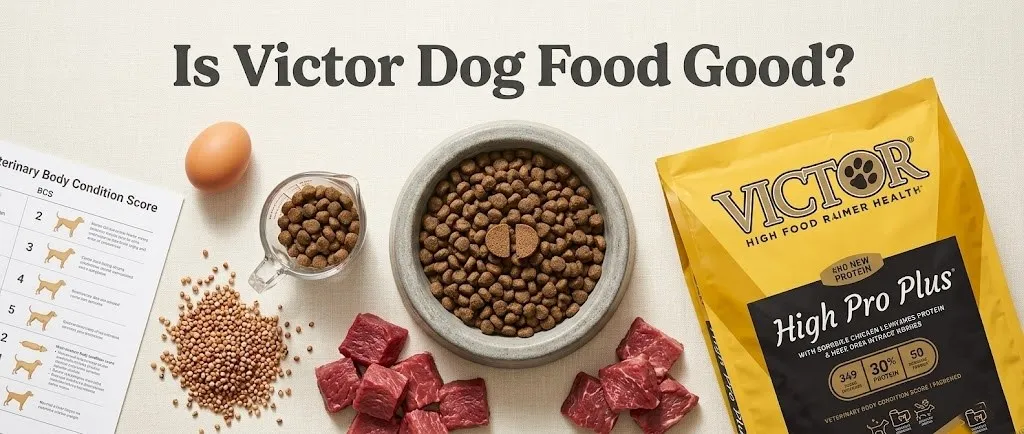
The quality of that protein matters. Victor uses beef meal and chicken meal as the primary protein sources. A meat meal is a rendered, dehydrated protein concentrate. The water and fat have been removed, leaving a dense powder that is roughly 65 percent protein by weight. In contrast, “deboned chicken” on an ingredient list is 70 percent water. A formula with a meal in the top slot is delivering significantly more amino acid payload per kibble than one that leads with a whole meat.
However, “good” is not a universal judgment. This food is calorie-dense. A cup of High Pro Plus packs 407 kilocalories. A sedentary 50-pound dog living in an apartment needs about 900 to 1,000 kilocalories a day. Two and a half cups of this food would maintain a healthy weight for that dog, but three cups, a small measuring error over a month, would push the dog into obesity. The food is a tool. It works brilliantly for the right application and causes problems in the wrong one.
Is Victor Dog Food High Quality
Yes, Victor dog food meets a high-quality standard through its use of specific named meat meals, the absence of ambiguous by-product meals, the inclusion of chelated minerals, and its adherence to AAFCO feeding trial standards. The ingredient deck reflects a deliberate nutritional strategy, not a commodity trading floor.
The protein sources are specific and traceable. You see beef meal, chicken meal, and pork meal on the label. You do not see “meat meal” or “poultry meal,” which are legal terms for an unspecified rendering vat mix. The specificity allows you to track a food sensitivity. If your dog has a chicken intolerance, you can avoid the Victor formulas that contain chicken meal and choose the beef-dominant lines.
The mineral package is a marker of quality. Victor uses chelated minerals, like zinc proteinate and manganese proteinate. These are mineral molecules wrapped in amino acid chains to increase their absorption across the intestinal wall. Cheap foods use oxide-based minerals, like zinc oxide, which have a significantly lower bioavailability. The dog consumes the mineral but absorbs a fraction of it. The chelation is an added cost that Victor absorbs, and it signals a commitment to nutrient delivery rather than just meeting a paper specification.
The carbohydrate sources are also intentional. Victor uses grain sorghum and millet as the primary carbohydrate binders. These are gluten-free grains with a lower glycemic index than corn or wheat. The starch digestibility is predictable, which matters when you are feeding a dog that needs steady blood glucose for sustained physical output. A hunting dog working a field for four hours needs a slow-release carb source, not a sugar spike and crash.
Is Victor Dog Food Recommended by Vets
Victor dog food is recommended by some general-practice veterinarians for specific high-energy, working breeds, but it is not universally recommended by the broader board-certified veterinary nutrition community in the way that brands meeting all WSAVA Global Nutrition Guidelines are. The recommendation is conditional, not blanket.
The WSAVA guidelines ask specific questions of pet food manufacturers. Does the company employ a full-time, board-certified veterinary nutritionist? Does it own its manufacturing facility? Does it publish peer-reviewed research? The brands that universally pass this vetting, like Purina, Hill’s, and Royal Canin, are the ones that veterinary nutritionists feel most comfortable recommending because the quality control infrastructure is visible and published.
Victor, owned by Mid America Pet Food, manufactures its food in its own facility in Texas. This is a positive for quality control because it eliminates the co-packing variables. The company employs a PhD-level animal nutritionist to formulate the diets. The gap, from a veterinary nutritionist’s perspective, is the relative lack of published, long-term feeding trial data compared to the multinational giants. The formulas meet AAFCO standards. The question is whether the company invests in the same level of ongoing, live-animal research.
A general-practice vet who sees a healthy, lean, active Labrador Retriever with a shiny coat and good muscle tone eating Victor High Pro Plus will likely tell the owner to keep doing what they are doing. The same vet, seeing a senior Golden Retriever with early-stage renal insufficiency, would likely recommend transitioning off the high-protein Victor formula and onto a phosphorus-restricted therapeutic diet. The “vet recommended” label is not a single stamp. It is a conversation about the specific dog standing on the exam table.
Victor Dog Food Ingredients
The ingredient panels of Victor’s core lines are built around a foundation of beef meal or chicken meal, followed by grain sorghum, millet, chicken fat, and the VPRO blend of probiotics, prebiotics, and selenium yeast. The first five ingredients define the nutritional architecture of the food.
The beef meal in the Victor Professional formula is the primary protein anchor. It is a concentrated, rendered product that brings the amino acid density up without the water weight of fresh beef. Grain sorghum is the primary carbohydrate. It is a small, round grain that is naturally high in fiber and digestible starch. It provides the structural integrity for the kibble extrusion process without spiking the glycemic load.
The VPRO blend is Victor’s functional ingredient signature. It combines selenium yeast, which is a more bioavailable form of the antioxidant mineral selenium than sodium selenite. It includes prebiotics that feed the beneficial bacterial colonies in the colon. It adds probiotics, specifically Enterococcus faecium, a live culture that survives the extrusion process through microencapsulation. This blend is a targeted gut-stability intervention. It is not a marketing sprinkle.
Chicken fat is the primary lipid source. It is a rendered fat preserved with mixed tocopherols, a vitamin E-based antioxidant system. The use of a named fat source rather than a generic “animal fat” is another quality signal. Chicken fat is high in linoleic acid, an omega-6 fatty acid that supports the skin barrier. The omega-6 to omega-3 ratio in Victor’s formulas leans toward the omega-6 side, which is standard for commercial kibbles. An owner wanting a lower inflammatory ratio might supplement with a fish oil capsule.
Victor High Pro Plus Review
Victor High Pro Plus is a 30 percent protein, 20 percent fat, 407 kilocalories per cup performance formula that serves as the brand’s flagship product, built for hard-working dogs, growing puppies, and underweight rescues that need to pack on lean body mass. It is a specialized fuel, not a maintenance chow.
The ingredient list speaks directly to the formula’s purpose. Beef meal is the first ingredient, providing a dense source of amino acids for muscle repair. Chicken meal follows, broadening the amino acid profile with a complementary protein source. The grain sorghum and chicken fat provide the slow-burn carbohydrate and the energy-dense lipid that a working dog depletes during sustained exercise.
The feeding experience is where the review gets practical. A dog transitioning to High Pro Plus from a standard maintenance kibble will often show visible changes within two weeks. The coat becomes glossier from the chicken fat’s linoleic acid. The epaxial muscles along the spine become more defined. The stool volume typically decreases because the food is more digestible, meaning less indigestible material passes through to the colon.
The downside is the calorie density. If you feed this to a dog that walks around the block twice a day and sleeps on the couch for 22 hours, the dog will gain weight. Rapidly. The feeding chart on the bag is a starting point. You must adjust based on the dog’s body condition score. The kibble pieces are also dense and hard. Small-breed dogs or dogs with dental issues may struggle to crunch through them.
| Nutrient | Victor High Pro Plus | Victor Professional | Purina Pro Plan Sport |
|---|---|---|---|
| Crude Protein | 30% | 26% | 30% |
| Crude Fat | 20% | 18% | 20% |
| Calories (kcal/cup) | 407 | 390 | 484 |
| Primary Protein | Beef Meal | Beef Meal | Chicken |
| Primary Grain | Grain Sorghum | Grain Sorghum | Corn, Wheat |
Victor Dog Food Recall 2023
In September 2023, Mid America Pet Food issued a voluntary recall of multiple Victor brand lots due to potential Salmonella contamination, an event that triggered a complete overhaul of the company’s manufacturing facility and safety protocols. The recall is the defining event of Victor’s recent history, and a 2026 evaluation of the brand must address it directly.
The recall encompassed a wide range of Victor, Eagle Mountain, and Wayne Feeds products. The contamination was detected through routine FDA environmental sampling of the facility, not from a confirmed illness in a consumer dog. The proactive recall was a standard regulatory response to a positive environmental swab. The specific serotype was Salmonella Kiambu, a strain capable of causing gastrointestinal illness in both dogs and humans handling the contaminated kibble.
The root cause analysis pointed to a breakdown in the post-extrusion environment. The kibble is cooked to a pathogen-killing temperature during extrusion. The contamination likely occurred in the cooling, coating, or packaging phases where the finished kibble can be exposed to environmental bacteria if strict sanitation protocols are not maintained. The facility was shut down, deep-cleaned, and retrofitted with enhanced environmental pathogen monitoring swabbing schedules.
Mid America Pet Food reopened the Texas facility in early 2024 under a consent decree with the FDA. The company implemented a “test and hold” protocol for finished products, meaning every lot is tested for pathogens before being released for sale. The 2026 reality is that Victor is likely safer than it was before the recall, because the regulatory scrutiny and the internal protocols have both intensified.
Key Takeaway: Victor is a high-quality performance fuel with a transparent ingredient panel and a post-recall safety overhaul that has likely made the 2026 product safer than the pre-2023 version. The quality is real, but the application must match the dog.
Is Victor Dog Food Good for Puppies
Victor dog food is good for puppies when you select a formula specifically rated for “All Life Stages” or a designated puppy recipe, because these formulas contain the elevated protein, fat, and DHA levels that support rapid growth while maintaining the correct calcium-to-phosphorus ratio. The standard adult formulas may be too calorie-dense for a large-breed puppy.
Puppy nutrition is a developmental engineering problem. Large-breed puppies, Great Danes, Mastiffs, Rottweilers, grow at an explosive rate. If the calcium-to-phosphorus ratio in the food exceeds 1.4 to 1, or if the absolute calcium intake is too high, the rapid bone growth can outpace the skeletal mineralization, leading to hypertrophic osteodystrophy or panosteitis. Victor’s Hi-Pro Plus for Puppies and the Multi-Pro formula balance this ratio within the safe zone.
The DHA content from the chicken fat and the included fish meal in some puppy formulas supports neural development. Docosahexaenoic acid integrates into the lipid bilayer of the retinal and cerebral cortical neurons. A puppy fed DHA-supplemented food has a measurable cognitive advantage in training responsiveness.
The feeding schedule matters. Small-breed puppies need three to four small meals a day to avoid hypoglycemic crashes. Large-breed puppies need controlled portions to prevent the rapid growth that stresses developing joints. A free-feeding bowl of Victor is a recipe for an overweight puppy with joint problems. Measure every meal. Adjust the portion weekly based on the puppy’s body condition score.
Victor Dog Food for Pitbulls
Victor is an exceptionally popular food in the American Bully, Pitbull, and Staffordshire Terrier communities because the high-protein, moderate-fat matrix supports the lean muscle mass and the glossy coat that these breeds are known for, without the excessive carbohydrates that can trigger skin issues and yeast overgrowth.
Pitbull-type dogs often have a genetic predisposition to atopic dermatitis and food sensitivities. The skin is a barrier organ, and it requires a steady supply of linoleic acid and zinc to maintain the cornified envelope. Victor’s formulas are rich in chicken fat, which is naturally high in linoleic acid, and they use chelated zinc for absorption. A Pitbull owner switching to Victor often reports a visible improvement in coat shine and a reduction in dandruff within two to three weeks.
The kibble density is a practical consideration. Pitbulls are powerful chewers, but they can also be enthusiastic, gulping eaters. The large, dense kibble pieces of the Victor Professional line force a Pitbull to actually crunch the food, slowing down the ingestion rate. This reduces the risk of bloat and regurgitation that can occur when a dog inhales a bowl of small, soft kibbles in 15 seconds.
The muscle-building effect is real but must be paired with exercise. Feeding a Pitbull Victor High Pro Plus without providing the physical work to convert the protein into muscle simply creates a fat Pitbull with a shiny coat. The breed needs the energy outlet. The food provides the raw material. The owner must provide the stimulus.
Victor vs Purina Pro Plan
Victor and Purina Pro Plan are both high-protein, performance-oriented brands, but Victor sources its protein primarily from beef and pork meals with gluten-free grains, while Purina Pro Plan leads with chicken and corn with a broader base of published peer-reviewed research and a larger veterinary nutrition budget. The choice between them is a matter of ingredient philosophy versus research infrastructure.
Purina Pro Plan Sport 30/20 is the direct competitor to Victor High Pro Plus. Both formulas deliver 30 percent protein and 20 percent fat. The Purina formula uses chicken and corn gluten meal as its protein anchors, with corn and wheat as the carbohydrate binders. These are perfectly safe, digestible ingredients that have been fed to generations of dogs and validated by decades of Purina feeding trials. The stigma against corn is cultural, not scientific.
Victor’s advantage is in the specific ingredient-sourcing narrative. The beef meal comes from Texas cattle. The grain sorghum is non-GMO. The ingredient deck feels more “boutique” to a consumer who distrusts multinational food conglomerates. The Purina advantage is in the sheer volume of research. Purina employs over 500 scientists, including board-certified veterinary nutritionists. The company publishes its feeding trial results in peer-reviewed journals. Victor’s research footprint is smaller.
The practical feeding decision often comes down to the individual dog’s stool. Some dogs produce firm, compact stools on Victor’s sorghum-millet fiber blend. Other dogs need the corn-wheat fiber blend in Purina to achieve the same stool quality. There is no universal winner. There is only the dog standing in your yard and the output you pick up with the bag.
Victor Dog Food Causing Diarrhea
Victor dog food can cause diarrhea when a dog is transitioned onto it too quickly, because the high protein and fat load overwhelms a gut microbiome that is accustomed to a lower-protein, higher-fiber kibble. The richness of the food is a feature for the working dog but a shock to the pet dog’s colonic bacteria.
The diarrhea is typically osmotic and microbiome-driven, not an allergic reaction. The pancreas may also be temporarily under-producing the lipase needed to digest the sudden 20 percent fat load. The undigested fat passes into the colon, drawing water with it and producing a loose, greasy stool. The fix is not to abandon the food but to slow the transition down dramatically.
A dog transitioning from a standard 21 percent protein, 12 percent fat kibble to Victor High Pro Plus needs a minimum 10-day transition, not the standard 7 days. The existing gut bacterial colony needs time to upregulate the proteolytic and lipolytic species that can handle the richer substrate. A probiotic supplement containing Lactobacillus and Bifidobacterium strains can support this shift.
If the diarrhea persists for more than three days on a 25 percent new food ratio, the dog may have a genuine intolerance to one of the protein sources. Beef is a common canine allergen. If the diarrhea started on a beef-based Victor formula, switching to a chicken-based or fish-based line within the Victor family, or moving to a different brand entirely, may be the necessary step. A veterinarian should rule out parasites before assuming a food intolerance.
Victor Dog Food Feeding Chart
The Victor feeding chart is a starting point based on the dog’s weight and activity level, but it must be adjusted based on the dog’s body condition score, because the caloric density of Victor’s formulas means the bag recommendations often overestimate the needs of a typical pet dog. The chart assumes a higher baseline metabolic rate than the average house dog actually has.
The High Pro Plus bag recommends roughly 2.5 cups per day for a 50-pound active dog. That is approximately 1,017 kilocalories. A 50-pound neutered male Labrador with a standard suburban activity level has a resting energy requirement of roughly 780 kilocalories. Feeding the bag recommendation would result in a weight gain of roughly 0.5 pounds per week. The dog would be overweight in two months.
The owner must learn the body condition score. A dog at a healthy weight has a visible waist when viewed from above. The ribs are palpable with a light touch but not visible. If the waist disappears and the ribs require probing, the portions are too high. The Victor chart is calibrated for an intact, working animal. A spayed female house pet may need 20 to 30 percent fewer calories than the chart states.
The feeding frequency matters for deep-chested breeds. Two meals a day, not one large meal, reduces the risk of gastric dilatation-volvulus. The dense kibble should be fed in a wide bowl to slow the ingestion rate. Adding warm water to the kibble 10 minutes before feeding softens it for dental-sensitive dogs and increases the volume, promoting satiety without adding calories.
How to Transition Dog to Victor Dog Food
Transitioning a dog to Victor dog food requires a 10-day protocol where the new food is introduced in slowly increasing ratios, starting at 25 percent new food and stair-stepping up every two to three days, to allow the gut microbiome time to adapt to the significant increase in protein and fat. The standard 7-day transition is too fast for this food’s richness.
The protocol begins with a baseline observation. Look at the dog’s current stool. It should be a firm, segmented log. On day one, you mix 25 percent Victor kibble with 75 percent of the current food. Feed this ratio for three days. Watch the stool. If it becomes soft but not liquid, hold this ratio for an additional two days before increasing.
On day four, if the stool is stable, move to a 50 percent Victor mix. Feed this for three days. This is the point where the colonic bacteria are being asked to upregulate their proteolytic enzyme production. A probiotic supplement given with the meal supports this shift. On day seven, move to a 75 percent Victor mix for two days.
On day ten, the dog is eating 100 percent Victor. The stool volume should be noticeably smaller and firmer than on the previous food. This is a positive sign of higher digestibility. If the stool is loose at any stage, drop back to the previous ratio and hold there for three additional days. Do not advance the protocol until the stool is firm. The dog’s colon sets the pace, not the calendar.
The 10-Day Victor Transition Protocol:
- Days 1 to 3: Feed 25 percent Victor, 75 percent old food. Watch stool closely.
- Days 4 to 6: If stool is firm, feed 50 percent Victor, 50 percent old food. Add a probiotic.
- Days 7 to 9: If stool is firm, feed 75 percent Victor, 25 percent old food.
- Day 10: Feed 100 percent Victor. Stool should be firm, dark, and low-volume.
- If Soft Stool: Hold the current ratio. Do not advance. Wait until stool firms up.
Key Takeaway: Victor is a high-performance, transparently sourced brand that excels when matched to a high-energy dog and transitioned slowly, but it can cause digestive upset and weight gain in a sedentary pet whose owner did not adjust the feeding chart to match the dog’s actual calorie burn.
Frequently Asked Questions About Victor Dog Food
Is Victor dog food safe now in 2026?
Yes, Victor dog food manufactured in 2024 and beyond is produced in a facility that underwent a complete FDA-mandated safety overhaul, with enhanced environmental pathogen testing.
The September 2023 recall was a Salmonella contamination event that triggered a facility shutdown, deep clean, and the implementation of a “test and hold” protocol for every production lot.
The 2026 product is likely safer than the pre-recall version due to the intensified regulatory scrutiny.
Why is Victor dog food so high in protein?
Victor is formulated with high protein levels to support the muscle repair and energy needs of working, performance, and hunting dogs.
Protein is the primary fuel for gluconeogenesis, the metabolic pathway that active dogs use to generate steady blood glucose during sustained exercise.
A sedentary house dog does not need this level of protein and can gain weight on the calorie-dense formulas.
Can I feed Victor to my senior dog?
You can feed Victor to a senior dog if the dog is active, lean, and has normal kidney function on recent bloodwork.
Senior dogs with undiagnosed or early-stage renal insufficiency should avoid high-phosphorus, high-protein diets because they accelerate the decline in glomerular filtration rate.
Ask your veterinarian to run a serum creatinine and BUN before placing a senior dog on a high-protein Victor formula.
Where is Victor dog food manufactured?
Victor dog food is manufactured by Mid America Pet Food in the company’s owned facility in Mount Pleasant, Texas.
The food is made in a single, company-owned plant, not co-packed in a shared facility.
The Texas facility underwent a complete safety overhaul in early 2024 following the 2023 recall.
Is Victor dog food good for weight gain?
Yes, Victor High Pro Plus and Professional are excellent foods for healthy weight gain in underweight or high-metabolism dogs.
The 400+ kilocalories per cup and the 20 percent fat content provide a calorie-dense, palatable matrix that packs on lean body mass efficiently.
The weight gain must be monitored so the dog transitions from underweight to ideal body condition without overshooting into obesity.
Victor is a tool built for a specific job. Feed it to a healthy, active dog, transition the dog onto it slowly, and measure the portions against the dog’s actual body condition, not the chart on the bag, and you will likely see a glossy coat, defined muscle, and small, firm stools.
Next time you pick up the yellow bag, think about your dog’s daily energy expenditure. If the dog works, hunts, or competes, the high-protein, high-fat matrix is exactly what those muscles are asking for. If the dog is a beloved couch companion, consider Victor’s lower-calorie Select line, or feed much less of the High Pro Plus than the chart recommends.
The 2023 recall was a serious event, but the regulatory response and the facility overhaul have created a safer manufacturing environment. The 2026 Victor bag is built to a higher safety standard than the bag that came before it. Your dog’s health depends on how carefully you apply the fuel.