You just came home from the pet store and realized you grabbed the wrong bag. You have a five-year-old Labrador and a 30-pound sack of puppy formula. Or maybe you have a new puppy and an older dog who keeps stealing from the puppy’s bowl. Either way, you are staring at the bag wondering the same thing: can adult dogs eat puppy food without getting sick.
The short answer is that a healthy adult dog can eat puppy food occasionally without immediate harm. A single meal or a day of puppy food will not hurt. But puppy food should not be an adult dog’s regular diet. The nutritional profile is wrong for a fully grown animal, and the long-term consequences include obesity, joint stress, and in some cases organ strain.
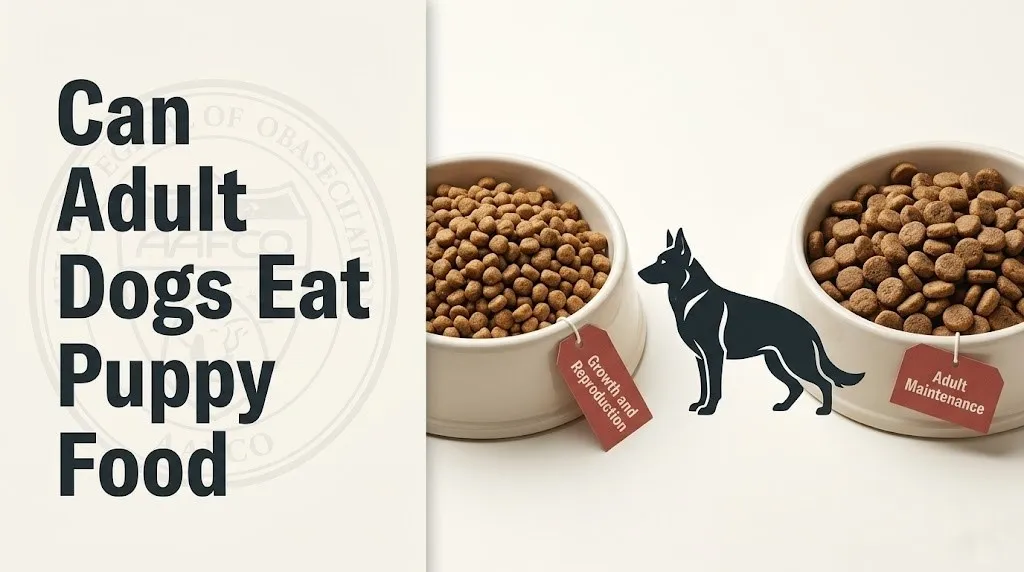
Most people do not realize that the phrase “complete and balanced” on a dog food label means different things for different life stages. The Association of American Feed Control Officials, known as AAFCO, sets two separate nutrient profiles. One is for growth and reproduction, meaning puppies and pregnant or nursing mothers. The other is for adult maintenance. These are legally distinct standards that produce nutritionally different foods.
The law treats puppy food and adult dog food as different products for a reason. A dog’s nutritional needs change dramatically between the rapid growth phase of puppyhood and the stable maintenance phase of adulthood. Feeding the wrong formula long-term is not just suboptimal. It can cause real health damage.
can adult dogs eat puppy food
Yes, adult dogs can eat puppy food in small amounts or for a short time without serious harm. A healthy adult dog that sneaks a bowl of puppy food or eats it for a day or two while you wait for the right bag to arrive will be fine. The problem is regular, long-term feeding. Puppy food is too calorie-dense, too high in protein and fat, and too rich in certain minerals for a dog whose growth plates have closed.
Puppy food is formulated to support rapid growth. A growing puppy needs roughly twice the calories per pound of body weight as an adult dog. The food reflects that. Puppy formulas are more energy-dense. They contain more protein to support muscle and organ development. They contain more fat for energy and brain development. They are calibrated with specific calcium and phosphorus ratios to support bone growth.
An adult dog eating that same food is consuming calories it does not need for growth. The excess energy is stored as fat. The excess protein is processed by the liver and kidneys and the nitrogen waste is excreted. The excess calcium, while not immediately toxic, accumulates in ways that can stress the body over time.
The immediate risk is digestive upset. Switching any dog’s food abruptly can cause vomiting or diarrhea. Puppy food is richer than what an adult dog’s digestive system is accustomed to, and the sudden change can trigger a few days of loose stool. That is usually the extent of the short-term harm for a healthy dog.
is puppy food bad for adult dogs
Yes, puppy food is bad for adult dogs when fed as a regular, long-term diet. The nutritional excess that makes puppy food ideal for a growing animal makes it harmful for an animal that has finished growing. The primary risks are obesity, pancreatitis, and joint problems from excessive weight gain.
Obesity is the most common and most damaging outcome. The Association for Pet Obesity Prevention reported in 2024 that roughly 59 percent of adult dogs in the United States are overweight or obese. Feeding a high-calorie puppy formula to an adult dog with a normal or sedentary activity level adds fuel to an already serious problem. Obese dogs have shorter lifespans. They develop arthritis earlier. They are at higher risk for diabetes, heart disease, and certain cancers.
The fat content of puppy food is a risk factor for pancreatitis. Pancreatitis is inflammation of the pancreas, often triggered by a high-fat meal. It can be acute and life-threatening or chronic and painful. Adult dogs fed a high-fat puppy food over time are at increased risk. Breeds with a genetic predisposition to pancreatitis, including Miniature Schnauzers, Yorkshire Terriers, and Cocker Spaniels, are particularly vulnerable.
The calcium and phosphorus levels in puppy food are calibrated for bone growth. An adult dog does not need that mineral load. Excess calcium in an adult dog’s diet has been linked to skeletal problems in large-breed dogs and may contribute to the formation of certain types of bladder stones. The risk is lower than the calorie and fat risk, but it is real.
Key Takeaway: Puppy food is not toxic to adult dogs. It is just nutritionally wrong for them. Think of it as feeding a fully grown human a diet designed for a rapidly growing teenager. The food is not poison. It is just not the right formulation for a body that is no longer building new tissue at a high rate.
can dogs eat puppy food
Dogs can eat puppy food in the sense that it is edible and not immediately poisonous. The word “can” is about physical possibility and acute safety. Puppy food meets all pet food safety standards for contaminants, pathogens, and toxins. The ingredients are food grade. The manufacturing process is regulated by the FDA and state feed control officials. It is safe to eat in the way that any properly manufactured commercial dog food is safe to eat.
The question behind the question is usually whether a multi-dog household can simplify feeding by giving all dogs the same food. The answer is that it depends on which food. A food labeled for “all life stages” is nutritionally adequate for both puppies and adults. A food labeled specifically for “growth and reproduction” or “puppy” is not appropriate for adult dogs as a sole diet.
The “all life stages” designation is a separate AAFCO nutrient profile category. It meets the more demanding growth and reproduction standards, which means it is essentially a puppy food that is also legal to feed to adults. Many high-quality dog foods carry this designation. If you want to feed all your dogs the same food, choose one labeled for all life stages, not one labeled exclusively for puppies.
The legal significance of this distinction is that pet food labels are not marketing copy. They are regulatory documents. The nutritional adequacy statement on the label, usually found in small print near the guaranteed analysis, tells you which AAFCO profile the food meets. That statement determines whether the food is legally appropriate for your adult dog.
can senior dogs eat puppy food
No, senior dogs should not eat puppy food as a regular diet. The nutritional needs of a senior dog are almost the opposite of a puppy’s needs. Senior dogs need fewer calories, moderate protein, lower fat, and often reduced phosphorus and sodium. Puppy food is high in all of those. Feeding puppy food to a senior dog can accelerate age-related health problems.
Senior dogs, generally defined as dogs in the last 25 percent of their expected lifespan, have slower metabolisms. They burn fewer calories at rest. Feeding a high-calorie puppy formula almost guarantees weight gain, which stresses aging joints and exacerbates arthritis. The protein in puppy food, while high quality, is more than a sedentary senior dog needs. Excess protein does not cause kidney disease in healthy dogs, but it does increase the workload on kidneys that may already have age-related decline.
The phosphorus concern is specific to senior dogs with kidney disease. Chronic kidney disease is common in older dogs. The kidneys lose the ability to filter phosphorus from the blood efficiently. Elevated blood phosphorus accelerates kidney damage. Puppy food is higher in phosphorus than adult maintenance food. A senior dog with undiagnosed early kidney disease could be harmed by the excess phosphorus in puppy food before anyone realizes the kidneys are compromised.
The sodium content of puppy food is also a concern for senior dogs with heart conditions. Congestive heart failure and other cardiac diseases are more common in older dogs. Excess sodium increases fluid retention and puts additional strain on the heart. Puppy food is not formulated with cardiac patients in mind.
Legal Bottom Line: AAFCO does not have a separate nutrient profile for senior dogs. The “adult maintenance” profile applies to all adult dogs, young and old. Foods marketed for seniors must meet the adult maintenance standards. They are not legally required to be lower in phosphorus, sodium, or calories unless the manufacturer chooses to formulate them that way.
can my adult dog eat puppy food
Your adult dog can eat puppy food once or twice without harm. If you ran out of adult food and the store is closed, a meal of puppy food will not cause a problem beyond possible mild digestive upset. If you are asking whether you can switch your adult dog to puppy food permanently to save money or because you bought the wrong bag, the answer is no.
The financial appeal of buying one food for all dogs in a multi-dog household is real. Puppy food is often more expensive per pound, but buying in bulk feels cheaper. The problem is that the long-term health costs of obesity, pancreatitis, and joint disease far exceed any short-term savings on food. A single emergency vet visit for pancreatitis costs more than a year of feeding the correct food.
If you accidentally bought a bag of puppy food and cannot return it, you have options. Use it as high-value training treats by portioning out small amounts. Donate the unopened bag to a shelter or rescue that has nursing mothers and puppies. Feed it to your adult dog for a week while mixing in increasing amounts of adult food until the puppy food is gone, which minimizes digestive upset and limits the duration of the nutritional mismatch.
The key variable is your individual dog’s health. A healthy, active, lean three-year-old dog can tolerate a few weeks of puppy food with no lasting harm. A seven-year-old Labrador with a tendency toward weight gain and borderline hip dysplasia should not eat puppy food at all. Know your dog’s health status before making this decision.
can i feed my adult dog puppy food
You can feed your adult dog puppy food for a very short period if you have no alternative. You should not feed puppy food as a long-term diet. The distinction between “can” and “should” is the entire answer. The food will not poison your dog. It will, over months and years, contribute to obesity and related diseases.
The practical scenario this question usually describes is a multi-dog household where the puppy food is already in the house and the adult dog is interested in it. The adult dog smells the higher fat content. It wants the puppy food because it is richer and more palatable. The owner wonders if it is easier to just let both dogs eat the same thing.
The practical solution is to feed the dogs separately and feed each the correct formula for its life stage. This is inconvenient. It means supervising meals, separating dogs during feeding time, and picking up bowls when meals are done. It is also the correct thing to do for the long-term health of both animals. Convenience is not a good reason to feed an adult dog a puppy formula.
If you absolutely must feed one food to all dogs in the household, choose a food labeled for “all life stages.” This designation means the food meets the more stringent growth and reproduction nutrient standards. It is nutritionally adequate for puppies and, unlike a puppy-specific formula, it is also legally adequate for adult dogs. It is still a richer food than an adult dog needs, but it is a better compromise than a puppy-only formula.
can adult dogs have puppy food
Adult dogs can have puppy food in the sense of small amounts, occasional access, or short-term use. The phrase “have” is looser than “eat as a diet.” A few pieces of puppy kibble as training treats, a meal stolen from the puppy’s bowl, or a day of puppy food while traveling is not a problem. The issue is regular, exclusive feeding.
The treat scenario is the most common situation where this question arises. An owner uses puppy kibble as training rewards because the pieces are small and the dog finds them highly motivating. This is fine. The quantity is tiny relative to the dog’s total caloric intake. The extra calories from a few pieces of puppy kibble are negligible.
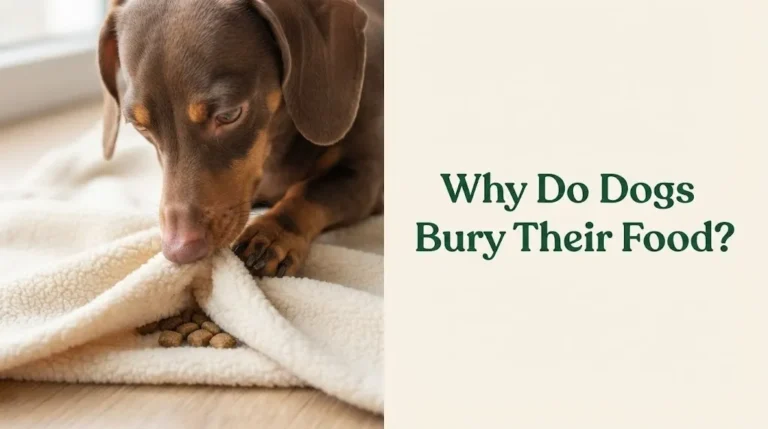
The stolen meal scenario is also common in multi-dog homes. An adult dog finishes its own food and then pushes the puppy away from the puppy’s bowl. A single stolen meal of puppy food will not hurt an adult dog. The risk is behavioral, not nutritional. The adult dog learns that pushing the puppy away is rewarding, and the puppy learns that meals are competitive. This dynamic can escalate into food aggression.
The solution is structured feeding. Feed each dog in a separate room or a crate. Pick up bowls after 15 minutes whether they are empty or not. Do not leave food down all day for either dog. Structured feeding solves the nutritional problem and the behavioral problem simultaneously.
can adult dog eat puppy food
Yes, an adult dog can eat puppy food without acute poisoning or immediate illness. The question is phrased without the plural “dogs,” suggesting a single-dog household where the owner is considering the switch or has made a purchasing error. The answer is the same. Occasional exposure is fine. Regular feeding is not.
The single-dog scenario is simpler than the multi-dog scenario. There is no competition to manage. If you bought the wrong bag and opened it, most retailers will not accept a return on opened pet food. Use the bag as training treats or donate it. Do not feed the entire 30-pound bag to your adult dog just to avoid wasting money.
The cost of the wrong bag of food is small compared to the cost of treating obesity-related illness. Canine obesity shortens lifespan by an average of two years according to a long-term study published in the Journal of Veterinary Internal Medicine. The financial cost of managing an obese dog, including joint supplements, pain medication, and eventual arthritis treatment, runs into thousands of dollars over the dog’s life. The $60 bag of puppy food is not worth that risk.
If you have already been feeding your adult dog puppy food for weeks or months, stop now. Switch to an adult maintenance formula appropriate for your dog’s breed size and activity level. Do it gradually over 7 to 10 days by mixing increasing proportions of the new food with the puppy food. Schedule a vet visit to check your dog’s weight, body condition, and bloodwork if the puppy food has been the primary diet for more than a couple of months.
is puppy food good for senior dogs
No, puppy food is not good for senior dogs. The nutritional profile that makes puppy food appropriate for growth makes it inappropriate for aging bodies. Senior dogs need fewer calories, less fat, moderate protein, and controlled minerals. Puppy food delivers the opposite.
The calorie difference is the most important variable. A typical puppy food contains 400 to 500 kilocalories per cup. A senior dog food contains 300 to 380 kilocalories per cup. A senior dog eating puppy food at the same volume will consume 20 to 30 percent more calories. That calorie surplus translates directly into weight gain, which accelerates joint degeneration and reduces mobility.
Some senior dogs lose weight due to muscle wasting, dental problems, or underlying disease. For those dogs, a higher-calorie food might seem logical. But puppy food is the wrong way to add calories. It adds them with fat, which does not rebuild muscle. A senior dog losing weight needs a calorie-dense senior or performance formula with high-quality protein, not puppy food. The vet should guide this choice.
The one exception is a senior dog that is also nursing puppies. A senior female dog that has given birth needs the growth and reproduction nutrient profile during lactation. This is an extremely rare scenario. Most senior dogs are spayed or neutered and will never lactate. For the typical senior dog, puppy food offers no benefit and several risks.
Key Takeaway: Senior dogs need fewer calories, not more. Puppy food is calorically dense and nutritionally mismatched to an aging dog’s needs. The right food for a senior dog is a high-quality adult maintenance formula or a senior-specific formula, not puppy food.
can older dogs eat puppy food
Older dogs can physically eat puppy food, but it is not appropriate for their nutritional needs. The term “older” is less precise than “senior,” but it generally describes a dog past middle age. The same concerns apply. Caloric density, fat content, and mineral levels in puppy food do not match what an aging dog’s body requires.
The digestive system of an older dog is less resilient than a young dog’s system. Switching abruptly to a rich puppy food can cause more severe and longer-lasting diarrhea in an older dog. The gut microbiome of an older dog has had years to adapt to a specific diet. Sudden changes disrupt it.
Older dogs also have a higher likelihood of subclinical health problems that the wrong diet can unmask. A dog with early kidney disease that has shown no symptoms may develop elevated kidney values on a high-phosphorus puppy food. A dog with borderline pancreatitis may have a full-blown episode triggered by a high-fat meal. The richer the food, the more likely it is to expose a hidden vulnerability.
If an older dog accidentally eats puppy food from a younger dog’s bowl, do not panic. One meal is not a crisis. But do not let it become a pattern. Feed older dogs and puppies separately, and make sure each dog eats the food formulated for its life stage.
can you give adult dogs puppy food
You can give adult dogs puppy food as an occasional treat or a temporary solution. You should not give it as a permanent diet. The phrasing “can you give” implies a deliberate choice by the owner. The answer is that this choice carries consequences that get worse the longer the puppy food is fed.
The deliberate feeding of puppy food to an adult dog is sometimes based on a misconception. Some owners believe that higher protein and fat must mean higher quality. They see puppy food as a premium product and adult food as a downgrade. This is a misunderstanding of nutritional formulation. Quality is about ingredient sourcing, digestibility, and manufacturing standards, not about protein percentage. A high-quality adult dog food is nutritionally superior for an adult dog than the best puppy food on the market.
Other owners feed puppy food to adult dogs because the dog is underweight and they want to add calories. The goal is reasonable. The method is wrong. An underweight adult dog needs a calorie-dense adult formula or a performance formula, not a growth formula. The vet can recommend an appropriate food and rule out medical causes of weight loss before the owner starts adding calories.
The deliberate feeding of puppy food to an adult dog because “the dog likes it better” is not a valid reason. Dogs like high-fat food. They also like garbage, dead animals, and cat feces. A dog’s preference is not a reliable guide to nutritional adequacy.
Legal Bottom Line: Under state feed laws adopted from the AAFCO model bill, pet food labels must include a nutritional adequacy statement. Feeding a food in a way that contradicts that statement, such as feeding a growth formula to an adult dog as its sole diet, is not illegal for the owner. It is, however, a use of the product that the manufacturer’s legal labeling does not support.
is puppy food good for adult dogs
No, puppy food is not good for adult dogs as a regular diet. It is nutritionally mismatched to the maintenance needs of a fully grown animal. The high calorie density, elevated fat, and growth-oriented mineral ratios are all wrong for a dog that has stopped growing.
The argument for puppy food being “good” for adult dogs usually rests on the higher protein content. Protein is satiating and supports lean muscle mass. An adult dog with high activity, such as a working Border Collie or a sled dog, may benefit from higher protein. But that protein should come from an adult performance formula, not a puppy formula. Performance formulas are calibrated for adult maintenance with elevated energy. Puppy formulas are calibrated for growth.
The vitamin and mineral balance is different in puppy food. Calcium, phosphorus, and vitamin D are all higher in growth formulas. These nutrients support bone mineralization in puppies. An adult dog does not need them at those levels. Chronic overconsumption of calcium in adult dogs has been linked to skeletal abnormalities in large breeds and may contribute to calcium oxalate bladder stones in susceptible individuals.
The calorie density alone makes puppy food a poor choice for the average adult pet dog. Most pet dogs are moderately active at best. They do not need the caloric load of a growth formula. The extra calories become fat. The fat leads to inflammation, joint disease, and metabolic problems.
can you give an adult dog puppy food
You can give an adult dog puppy food for a short time without serious consequences. You should not give it long-term. The question repeats a common phrasing pattern from dog owners who are looking for permission to simplify their multi-dog feeding routine. The answer remains consistent across all phrasings. Short-term is fine. Long-term is not.
The short-term scenario that makes this question urgent is usually running out of adult food late at night or on a weekend when the usual brand is not available. In that situation, feeding puppy food for a meal or a day is acceptable. Mix it with any remaining adult food to make the transition gentler on the digestive system.
If the adult dog has a medical condition, even short-term feeding of puppy food may be risky. A dog with chronic pancreatitis should not eat a high-fat meal of any kind. A dog with kidney disease should not eat a high-phosphorus meal. A dog with a history of calcium oxalate stones should not eat a high-calcium meal. For dogs with known health conditions, do not substitute puppy food without asking a veterinarian.
For healthy adult dogs without medical conditions, the one-time or very short-term use of puppy food is a non-issue. The dog may have slightly loose stool for a day. That is the extent of the consequence. The problem begins when short-term becomes long-term.
can you give puppy food to adult dogs
You can give puppy food to adult dogs temporarily. The phrasing “give puppy food to adult dogs” implies a transfer from one dog to another, which is the classic multi-dog household scenario. The adult dog finishes its own meal and then the owner offers the puppy’s leftovers to the adult rather than throwing them away.
This practice is common and, in small amounts, harmless. A few tablespoons of puppy kibble that would otherwise be thrown out will not hurt a healthy adult dog. The issue is portion creep. If the adult dog regularly gets puppy food leftovers on top of its own full meal, the extra calories add up. An extra 50 calories per day beyond maintenance needs translates to roughly 5 pounds of weight gain per year for a medium-sized dog.
The better practice is to pick up the puppy’s bowl when the puppy walks away. Do not leave food down for the adult dog to find. Measure the adult dog’s food precisely and do not supplement with puppy food except as an intentional training treat. Weight management starts with accurate portioning.
If the adult dog is at a healthy weight and the amount of puppy food is truly trivial, a few pieces per day, the practice is not harmful. But it is a slippery slope. Portion sizes creep. The dog gains weight. The owner does not notice until the vet says the dog needs to lose 8 pounds. Then the owner has to cut portions sharply, and the dog acts hungry all the time. It is easier to prevent the weight gain than to reverse it.
Key Takeaway: The occasional consumption of puppy food by an adult dog is not dangerous. The regular consumption of puppy food is. The line between occasional and regular is where the health risk lives.
how to keep older dog from eating puppy food
To keep an older dog from eating puppy food, feed the dogs separately in different rooms, use crates or baby gates to create physical separation, and pick up uneaten food immediately when each dog finishes. Structured feeding solves the problem more effectively than any training technique.
The physical separation method is the most reliable. Put the puppy in a bathroom or laundry room with the door closed for meals. Feed the older dog in the kitchen. When both dogs are done, open the door. No food is left down. No competition occurs. This method works regardless of the dogs’ relative sizes, ages, or temperaments.
Crate feeding is an alternative for dogs that are crate trained. Each dog eats in its crate. The crates are placed in different parts of the room. When the meal is over, the crates are opened and bowls are removed. This method reinforces positive crate associations and prevents food theft simultaneously.
For dogs that eat at different speeds, a third method is tethering. The slower eater is allowed to finish in peace while the faster eater is tethered to a heavy piece of furniture with a leash. The faster eater learns that rushing the other dog’s bowl does not work. This method requires supervision and training but can be effective for dogs that are already well behaved on leash.
The common mistake is leaving food down and hoping for the best. Free feeding, where food is available all day, guarantees that the adult dog will eat the puppy food. Even if you put the bowls on opposite sides of the kitchen, the adult dog will check both bowls and eat from both. Free feeding must stop if you have dogs on different diets.
is it ok for adult dogs to eat puppy food
It is ok for adult dogs to eat puppy food once or very occasionally. It is not ok for adult dogs to eat puppy food as their regular diet. The word “ok” is casual, but the health implications are serious when the exposure is chronic.
The casual tone of the question suggests the owner is looking for reassurance that a mistake is not catastrophic. The reassurance is genuine. A single exposure is fine. A weekend of puppy food while the owner is out of town and the pet sitter grabbed the wrong bag is fine. The dog will not be harmed.
What the owner should not do is decide that because a single exposure was fine, regular exposure is also fine. That logic is how dietary problems develop. A dog tolerates a food for a week with no visible problems. The owner concludes the food is safe long-term. Six months later, the dog is visibly overweight and the vet is recommending a weight management plan.
The nutritional excess in puppy food is a slow accumulation problem. It does not cause acute symptoms at the time of feeding. It causes gradual weight gain, gradually increasing stress on joints, and gradually increasing metabolic dysfunction. By the time the owner notices, damage has been done. This is why the answer to “is it ok” is a qualified yes followed by a firm no for regular use.
can a senior dog eat puppy food
A senior dog can eat puppy food without immediate toxicity. A senior dog should not eat puppy food regularly. The nutritional mismatch is more dangerous for a senior dog than for a young adult dog because the senior dog has less physiological reserve to handle the excess.
Senior dogs often have undiagnosed health conditions. A study published in the Journal of Veterinary Internal Medicine found that roughly 10 percent of apparently healthy senior dogs had clinically silent heart disease detectable only by echocardiogram. Another study in the Journal of Small Animal Practice found that 7 percent of senior dogs had early kidney disease with no visible symptoms. Feeding a high-sodium, high-phosphorus puppy food to a dog with silent heart or kidney disease can accelerate the disease before anyone knows it exists.
The cautious approach is to assume that a senior dog’s organs are aging and to feed accordingly. Adult maintenance food or senior-specific food is appropriate. Puppy food is not. The risk of exacerbating a hidden condition is higher in a senior dog than in a young adult dog with healthy organs.
If a senior dog accidentally eats a bowl of puppy food, do not panic. The single exposure is unlikely to cause harm even if the dog has undiagnosed disease. The concern is cumulative exposure over weeks and months. Keep senior dogs on an age-appropriate diet and separate them from puppies during meals.
can old dogs eat puppy food
Old dogs can physically eat puppy food. It is not toxic. It is not appropriate as a regular diet for the reasons that apply to all senior and older dogs. The term “old” is colloquial, but the nutritional principles are the same regardless of what word you use for an aging dog.
Old dogs are often less active than young adults. Their caloric needs are lower. Puppy food is calorie-dense. The mismatch between energy intake and energy expenditure leads to weight gain. Weight gain in old dogs is particularly damaging because it loads additional stress onto joints that are already arthritic.
Old dogs also have slower digestive transit times. Rich, high-fat food moves through the gut more slowly and can cause constipation or discomfort. The gut microbiome of an old dog is less adaptable than that of a young dog. Dietary changes should be made gradually, and the baseline diet should be consistent.
The one circumstance where a higher-calorie food might benefit an old dog is if the dog is losing weight due to muscle wasting, known as sarcopenia. This is a condition that affects some geriatric dogs. The solution is not puppy food. It is a calorie-dense senior formula or a therapeutic diet prescribed by a veterinarian. The vet can distinguish between healthy age-related weight loss and pathological weight loss that requires a different nutritional approach.
Legal Bottom Line: AAFCO does not have a separate nutrient profile for geriatric or old dogs. The adult maintenance standard applies. Foods marketed for old dogs must meet that standard. They are not legally required to be different from any other adult food. The owner must evaluate the specific product rather than relying on the marketing claim.
Common Questions About Adult Dogs and Puppy Food
What happens if my adult dog accidentally eats puppy food once?
Nothing serious will happen if a healthy adult dog eats puppy food once.
The dog may have slightly loose stool for a day due to the richer fat content.
There is no risk of poisoning or acute illness from a single meal of puppy food.
If the dog has a medical condition like pancreatitis, contact your veterinarian even for a single exposure.
Can I mix puppy food with adult dog food?
Yes, you can mix small amounts of puppy food with adult dog food to use up a bag or transition gradually.
Mixing dilutes the nutritional excess and spreads the puppy food over more meals.
This is a better strategy than feeding straight puppy food for a week and then switching abruptly.
Do not mix the two foods permanently as a long-term feeding strategy.
What is the difference between puppy food and adult dog food?
Puppy food contains more calories, protein, fat, calcium, and phosphorus per serving than adult dog food.
These nutrients support the rapid growth and bone development that puppies undergo.
Adult dog food is calibrated for maintenance of a fully grown body with stable nutritional needs.
The legal difference is that puppy food meets AAFCO’s growth and reproduction nutrient profile, while adult food meets the adult maintenance profile.
Is all life stages food safe for adult dogs?
Yes, all life stages food is safe for adult dogs.
This designation means the food meets the more demanding growth and reproduction nutrient standards.
It is nutritionally adequate for puppies, which means it exceeds the minimum requirements for adult dogs.
It is a richer food than a strict adult maintenance formula, but it is legally and nutritionally appropriate for adult dogs.
Can puppy food make an adult dog sick?
Puppy food can make an adult dog sick if the dog has a medical condition or if the food is eaten in large quantities over a long period.
Short-term effects include digestive upset, diarrhea, and vomiting from the sudden richness.
Long-term effects include obesity, pancreatitis from high fat intake, and joint disease from excess weight.
A single meal of puppy food will not make a healthy adult dog sick.
The single most important thing to remember is that puppy food is not poison for adult dogs. It is just the wrong nutritional formula for a body that has finished growing. One meal is fine. One bag is not.
Feed your dogs according to their life stage. Use AAFCO nutritional adequacy statements on the label to verify the food matches the dog. Separate dogs during meals if you have a puppy and an adult in the same house. Pick up bowls when meals are done.
Your adult dog will live a longer, healthier life on the right food. The puppy food belongs to the puppy.