Mexican food can absolutely be healthy, but the answer depends almost entirely on which version you’re eating and how it’s prepared. Traditional Mexican cuisine, built on beans, corn, vegetables, avocado, and chile peppers, is genuinely nutrient-dense. The Americanized fast-food version is a different story.
The distinction matters more than most food articles admit. According to the USDA Dietary Guidelines for Americans 2020-2025, legumes and whole grains should form a core part of a balanced diet, and traditional Mexican food delivers both. Yet restaurant portions and preparation methods can push sodium and saturated fat levels well beyond recommended daily limits.
This guide covers the full nutritional picture: key ingredients analyzed by actual nutrient content, dish-by-dish calorie and macronutrient comparisons, the difference between traditional Mexican and Tex-Mex, what to order when eating out, and which specific dishes work for weight management or blood sugar control.
Is Mexican Food Healthy?
Mexican food is healthy when it’s built around its traditional ingredients: corn tortillas, beans (Phaseolus vulgaris), chile peppers (Capsicum annuum), tomatoes (Solanum lycopersicum), and avocado (Persea americana). These are whole, minimally processed foods with strong nutritional profiles.
The problem isn’t the cuisine itself. It’s the layer of modifications that American restaurants and fast food chains have applied. Heavy use of sour cream, shredded cheese, flour tortillas, refried beans cooked in lard, and oversized portions shifts the nutritional profile dramatically toward high sodium, high saturated fat, and high calorie density.
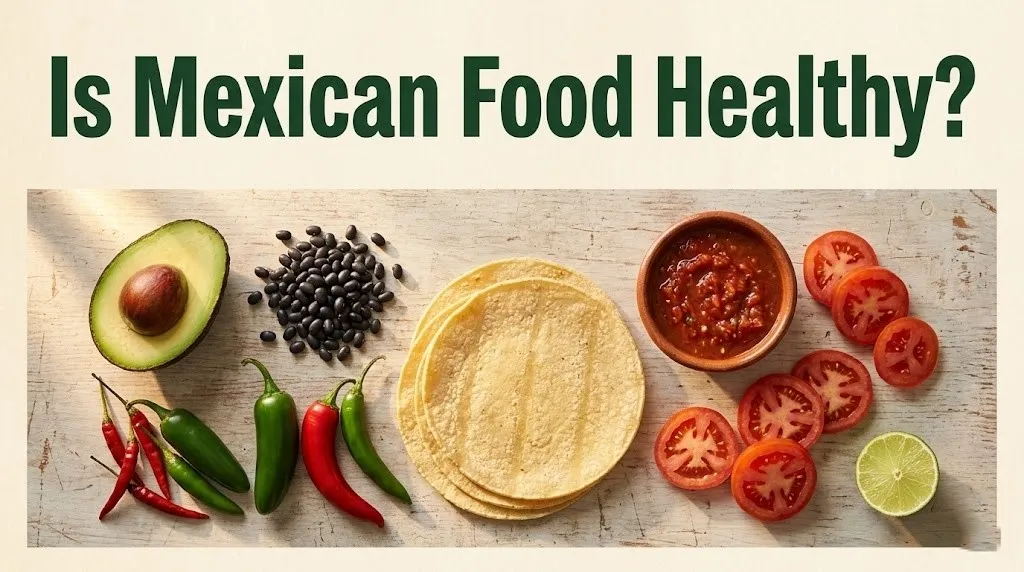
A traditional plate of two corn tacos with black beans, grilled chicken, fresh salsa, and sliced avocado sits comfortably within a balanced diet. A restaurant-sized burrito with rice, refried beans, cheese, sour cream, and a 12-inch flour tortilla can contain 1,000 to 1,300 calories in a single serving, according to nutritional data from major chain restaurants.
Context, preparation method, and portion size determine everything about whether your meal is a nutritional asset or a liability.
Key ingredients in traditional Mexican food and their primary nutrients:
- Corn tortilla (6-inch, 1 piece): 55 calories, 11g carbohydrates, 1.5g fiber, 1.4g protein, 0.5g fat; provides magnesium and folate after nixtamalization (the traditional alkaline processing of corn)
- Black beans (1 cup cooked): 227 calories, 41g carbohydrates, 15g fiber, 15g protein; high in folate, magnesium, and iron
- Avocado (one-third of a medium fruit): 80 calories, 7g monounsaturated fat, 3g fiber, potassium
- Fresh tomato salsa (2 tablespoons): 10 to 20 calories, high in lycopene, low in sodium if homemade
- Jalapeño chile pepper (1 medium): 4 calories, contains capsaicin and ascorbic acid (vitamin C)
How Healthy Is Mexican Food Compared to Other Cuisines?
Compared to many popular cuisines, traditional Mexican food ranks favorably for fiber, plant protein, and micronutrient density. Against American fast food, it often wins. Against Mediterranean-style eating, the comparison is closer.
The Mediterranean diet, consistently rated among the highest-quality dietary patterns by the Academy of Nutrition and Dietetics, emphasizes olive oil, legumes, vegetables, and whole grains. Traditional Mexican cuisine shares three of those four pillars. Legumes are central. Vegetables, especially tomatoes, onions, and peppers, feature in almost every dish. Corn, especially in nixtamalized form, provides B vitamins not available in unprocessed corn.
Where Mexican food can fall behind Mediterranean eating is in cooking fats. Traditional Mexican cooking uses lard (rendered pork fat) in certain preparations. Lard is high in saturated fat, though it also contains some monounsaturated fat. Modern home cooks and many restaurants have shifted to plant-based oils, which improves the fat profile considerably.
| Cuisine | Avg. Fiber Per Meal | Plant Protein? | Sodium Concern | Saturated Fat Risk |
|---|---|---|---|---|
| Traditional Mexican | High (beans, corn) | Yes (beans) | Moderate | Moderate (lard-based dishes) |
| American fast food | Low | No | High | High |
| Mediterranean | High | Yes (legumes, nuts) | Low to moderate | Low |
| Tex-Mex (restaurant) | Moderate | Partial | High | High |
| Chinese takeout | Low to moderate | Partial | High | Moderate |
Traditional Mexican Food Nutrition vs. Tex-Mex
Traditional Mexican food and Tex-Mex are two distinct culinary traditions with very different nutritional profiles. Conflating them is the most common mistake in any “is Mexican food healthy” discussion.
Traditional Mexican cuisine, as eaten in Mexico, centers on nixtamalized corn (masa), Phaseolus vulgaris beans, fresh chiles, tomatillos (Physalis philadelphica), epazote (Dysphania ambrosioides), and slow-cooked meats. Portion sizes are smaller. Cheese and sour cream appear occasionally, not as default additions to every dish.
Tex-Mex, which developed along the Texas-Mexico border and became the dominant version of “Mexican food” across the United States, uses flour tortillas, yellow cheese (often processed), sour cream, ground beef, and significantly heavier use of oil and sodium. A Tex-Mex combination plate can deliver 1,500 to 2,000 milligrams of sodium in a single sitting, approaching or exceeding the American Heart Association’s recommended daily limit of 2,300 milligrams (and their ideal target of 1,500 mg for people with cardiovascular risk).
This distinction explains why two people can say “I eat Mexican food all the time” and have completely different health outcomes. One is eating bean and corn-based traditional dishes. The other is eating cheese-heavy, large-portion Tex-Mex.
| Feature | Traditional Mexican | Tex-Mex |
|---|---|---|
| Primary tortilla type | Corn (nixtamalized Zea mays) | Flour (refined wheat) |
| Bean preparation | Whole beans, broth-cooked | Often refried in lard or oil |
| Cheese use | Occasional, fresh (queso fresco) | Heavy, melted yellow cheese |
| Sour cream | Occasional | Default topping |
| Sodium per meal estimate | 400-800 mg | 1,000-2,000+ mg |
| Saturated fat per meal | Low to moderate | Moderate to high |
Key Takeaway: Traditional Mexican cuisine and Tex-Mex are nutritionally different categories. If you’re eating the American restaurant version, you’re eating Tex-Mex, and the health picture is considerably more mixed.
Why Is Mexican Food Considered Unhealthy?
Mexican food developed a reputation for being unhealthy largely because of what American chain restaurants did to it, not because of what the cuisine actually is. The version most Americans eat is calorie-dense, sodium-heavy, and saturated fat-laden.
Several specific factors drive that reputation:
- Portion sizes at American Mexican restaurants are frequently two to three times the size of a traditional serving in Mexico
- Sodium in restaurant dishes runs consistently high: a standard restaurant burrito can contain 1,200 to 1,800 mg of sodium before any salsa or hot sauce is added
- Refined carbohydrates from large flour tortillas and white rice push the carbohydrate load of a single meal to 80 to 100 grams or more
- Calorie-dense toppings including full-fat sour cream, shredded cheese, and fried tortilla chips add 300 to 600 extra calories that don’t appear on most menus
- Fried preparations like chimichangas, taquitos, and hard-shell tacos add significant fat compared to their non-fried versions
- Lard in refried beans remains standard at many traditional and fast-casual Mexican restaurants, adding saturated fat to an otherwise protein-rich dish
The problem is structural, not cultural. The base ingredients of Mexican cooking are among the most nutritious available. The application of American-style portion sizes and high-fat toppings is where the trouble starts.
People with hypertension should be particularly cautious with restaurant Mexican food. Even “lighter” menu options at chain restaurants frequently contain 600 to 900 mg of sodium per serving, which adds up quickly when combined with the rest of the day’s eating.
Key Takeaway: The reputation for being unhealthy is tied to the American restaurant and fast food version of Mexican food, not the cuisine’s traditional ingredients, which are genuinely nutritious.
Mexican Food Calories and Macros by Dish
Calorie and macronutrient content in Mexican food varies enormously depending on the specific dish, preparation method, and portion size. Here’s a realistic breakdown of common dishes using standard restaurant serving sizes.
| Dish | Calories (approx.) | Protein (g) | Carbs (g) | Fat (g) | Sodium (mg) |
|---|---|---|---|---|---|
| 2 corn tacos with chicken, salsa, onion | 280-340 | 24 | 28 | 6 | 380-500 |
| Burrito (chicken, rice, beans, cheese, sour cream, flour tortilla) | 950-1,300 | 45-55 | 100-120 | 30-45 | 1,500-2,200 |
| Burrito bowl (no tortilla, chicken, black beans, salsa, guacamole) | 550-700 | 38-45 | 55-70 | 18-25 | 900-1,200 |
| Cheese quesadilla (large, flour tortilla) | 680-850 | 30-35 | 65-80 | 28-40 | 1,100-1,600 |
| Chips and guacamole (restaurant portion) | 450-700 | 5-8 | 55-75 | 20-35 | 400-700 |
| Fish tacos (2, grilled, corn tortilla) | 300-420 | 26-32 | 30-36 | 8-14 | 450-650 |
| Enchiladas (2, red sauce, cheese, beef) | 500-700 | 25-35 | 45-60 | 22-35 | 900-1,400 |
| Black bean soup (1 cup) | 180-220 | 12-14 | 30-35 | 2-4 | 500-800 |
These figures reflect typical restaurant servings. A registered dietitian reviewing these numbers would note that the taco and burrito bowl options offer the clearest path to a nutritionally balanced meal within reasonable calorie and sodium limits.
People tracking carbohydrates for blood sugar management should note that even the lowest-carb options (burrito bowl, fish tacos) still deliver 30 to 70 grams of carbohydrates per meal.
Are Corn Tortillas Healthy?
Corn tortillas are one of the healthiest elements of Mexican cuisine and a better nutritional choice than flour tortillas for most people. A standard 6-inch corn tortilla (made from nixtamalized Zea mays) contains approximately 55 to 65 calories, 11 to 13 grams of carbohydrates, 1.5 to 2 grams of fiber, and 1.4 grams of protein.
The nixtamalization process, where corn is soaked and cooked in an alkaline solution of calcium hydroxide (lime water), is nutritionally important. It increases the bioavailability of niacin (vitamin B3) and calcium, and it reduces certain anti-nutrients that would otherwise limit mineral absorption. This traditional processing method makes corn tortillas genuinely more nutritious than unprocessed corn products.
Corn tortillas are also naturally gluten-free, making them a safe option for people with celiac disease or non-celiac gluten sensitivity. Flour tortillas, by contrast, are made from refined wheat flour and contain gluten. A 10-inch flour tortilla typically contains 200 to 250 calories, more than three times the calorie count of a corn tortilla, with significantly less fiber.
The practical rule: two corn tortillas in a taco gives you roughly 110 to 130 calories of carbohydrate. Two flour tortillas in a large burrito may contribute 400 to 500 calories from the tortilla alone.
| Tortilla Type | Calories (per piece) | Carbs (g) | Fiber (g) | Gluten-Free? |
|---|---|---|---|---|
| Corn tortilla (6-inch) | 55-65 | 11-13 | 1.5-2 | Yes |
| Flour tortilla (6-inch) | 90-110 | 15-18 | 0.5-1 | No |
| Flour tortilla (10-inch, burrito size) | 200-250 | 36-42 | 1-2 | No |
| Whole wheat tortilla (10-inch) | 180-210 | 32-38 | 3-5 | No |
Are Refried Beans Healthy?
Refried beans are a genuinely nutritious food when prepared without lard, but preparation method changes the health profile considerably. The base ingredient, pinto beans (Phaseolus vulgaris), is one of the most fiber-rich, protein-dense, and micronutrient-complete foods in the Mexican pantry.
One cup of cooked pinto beans provides approximately 15 grams of protein, 15 grams of dietary fiber, and significant amounts of folate (74% of the daily recommended intake), magnesium, iron, and potassium. The Academy of Nutrition and Dietetics identifies legumes as among the most underconsumed food groups in the American diet, despite strong evidence supporting their role in cardiovascular health and blood sugar regulation.
The concern with refried beans at most restaurants is the cooking fat. Traditionally, pinto beans are fried (then re-fried) in lard (rendered pork fat), which adds saturated fat. A half-cup serving of lard-fried refried beans at a restaurant may contain 4 to 7 grams of saturated fat, compared to less than 1 gram for beans cooked in vegetable or canola oil.
At home, refried beans made with a small amount of olive oil or vegetable broth retain all the fiber and protein benefits with minimal added fat. Canned vegetarian refried beans are a reasonable option when checking the sodium content: choose varieties with under 350 mg of sodium per half-cup serving.
People following a vegan or vegetarian diet should verify that restaurant refried beans are not cooked in lard, as this is rarely labeled clearly on menus.
Key Takeaway: Corn tortillas beat flour tortillas on calories and fiber. Refried beans are protein-rich and fiber-dense but only when prepared without lard. Always ask about the cooking fat.
Is Guacamole Healthy?
Guacamole is nutritionally one of the strongest foods in Mexican cuisine, built almost entirely around avocado (Persea americana), which is dense in monounsaturated fat, fiber, and potassium. The issue isn’t whether guacamole is healthy. It’s calorie density.
Avocado provides oleic acid, the same monounsaturated fatty acid found in olive oil and associated with cardiovascular benefit in research published in the American Journal of Clinical Nutrition. A one-third serving of a medium avocado contains approximately 80 calories and 7 grams of fat, the vast majority of which is monounsaturated. It also provides 3 grams of fiber and about 250 milligrams of potassium.
A standard restaurant order of guacamole with chips typically involves two to four tablespoons of guacamole and a shared bowl of tortilla chips. The guacamole itself contributes 100 to 150 calories for that portion. The chips add 300 to 500 calories. That imbalance is where the problem starts for people managing calorie intake.
Guacamole as a condiment rather than a dip is nutritionally straightforward. Two tablespoons added to tacos or a burrito bowl adds healthy fat, fiber, and flavor for roughly 50 to 60 calories.
People managing kidney disease should note that avocado is high in potassium. A half-cup of avocado provides approximately 500 milligrams of potassium, which is relevant for anyone on a potassium-restricted diet under medical supervision.
Quick Tip:
- Order guacamole as a topping, not as a chip dip, to control portion size
- At home, a half avocado blended with lime juice, cilantro, and diced tomato has no added sodium
- If managing calorie intake, two tablespoons of guacamole plus salsa as a taco topping is one of the best caloric trades in Mexican cuisine
Is Salsa Healthy?
Fresh tomato salsa is one of the lowest-calorie, highest-nutrient condiments available in any cuisine. A standard 2-tablespoon serving of fresh salsa contains 10 to 20 calories, minimal fat, and meaningful amounts of lycopene from cooked or raw tomatoes (Solanum lycopersicum).
Lycopene is a carotenoid pigment with antioxidant properties. Research at the Harvard T.H. Chan School of Public Health has linked higher lycopene intake to reduced markers of cardiovascular disease risk. Tomatoes release more lycopene when heated, which is why cooked salsa (like salsa roja, simmered briefly before serving) has a slightly higher lycopene concentration than completely raw pico de gallo.
The sodium concern with salsa is real but mainly applies to jarred and commercial versions. A two-tablespoon serving of a popular jarred salsa brand can contain 150 to 230 milligrams of sodium. Restaurant-made fresh salsa varies but tends to be lower. Homemade salsa without added salt contains virtually no sodium.
Think of salsa like a free nutritional upgrade. It adds flavor, antioxidants, vitamin C from the peppers, and almost no calories, which is why swapping sour cream for extra salsa is one of the few truly impactful substitutions in Mexican food.
People with gastroesophageal reflux disease (GERD) should note that tomatoes are acidic and may trigger reflux symptoms. Substituting tomatillo salsa verde, which is slightly less acidic, can help in some cases.
Is Mexican Food Healthy for Weight Loss?
Mexican food can support weight loss when dishes are ordered thoughtfully, but most restaurant portions and calorie-dense toppings make it easy to significantly overshoot a daily calorie target in one sitting. The key variables are portion size, tortilla choice, and topping selection.
The most weight-loss-compatible versions of Mexican food share a few consistent features: high protein from chicken, fish, or beans; high fiber from legumes and vegetables; moderate fat from avocado or a small amount of olive oil; and minimal refined carbohydrates from white rice and large flour tortillas.
According to the NIH National Institute of Diabetes and Digestive and Kidney Diseases, dietary fiber and protein are the two macronutrients most consistently associated with satiety, which is the feeling of fullness that reduces overeating. A burrito bowl with grilled chicken, black beans, fajita vegetables, fresh salsa, and a small portion of guacamole delivers approximately 38 to 45 grams of protein and 12 to 18 grams of fiber. That combination supports satiety through both mechanisms at once.
What doesn’t support weight management is the traditional restaurant burrito. A full-size burrito with rice, beans, cheese, sour cream, and a large flour tortilla routinely delivers 950 to 1,300 calories in a single meal. For most adults following a moderate calorie reduction plan, that represents two-thirds to three-quarters of a full day’s target intake.
| Weight-Loss-Friendly Choice | Calories | Protein (g) | Fiber (g) |
|---|---|---|---|
| Burrito bowl (chicken, black beans, salsa, guac) | 550-700 | 38-45 | 14-18 |
| 2 grilled fish tacos (corn tortillas, salsa, cabbage) | 300-420 | 26-32 | 5-8 |
| Black bean soup + side salad | 280-380 | 15-20 | 12-16 |
| 2 chicken tacos (corn tortillas, salsa, avocado) | 300-380 | 26-30 | 6-10 |
| Full burrito (flour tortilla, rice, cheese, sour cream) | 950-1,300 | 45-55 | 10-14 |
Key Takeaway: Mexican food works well for weight management when centered on beans, grilled protein, corn tortillas, and salsa. The burrito in its full American restaurant form is a high-calorie meal that requires deliberate modification.
Is Mexican Food Healthy for Diabetics?
Mexican food contains several ingredients that are genuinely supportive for people managing type 2 diabetes, but it also contains common restaurant preparations that can sharply spike blood glucose. The difference lies in the glycemic load of specific ingredients and the overall composition of the meal.
Beans (Phaseolus vulgaris, both black and pinto) are one of the best foods available for blood sugar management. They contain resistant starch and high levels of soluble dietary fiber, both of which slow glucose absorption in the small intestine. Research published in the American Journal of Clinical Nutrition has found that replacing refined starches with legumes in a meal measurably reduces postprandial (after-meal) blood glucose response.
Corn tortillas have a lower glycemic impact than flour tortillas. The nixtamalization process and the fiber content of corn tortillas slow glucose absorption. White rice, on the other hand, is a rapidly digested refined carbohydrate that raises blood glucose quickly and should be eaten in small portions or skipped entirely by people with blood sugar management goals.
The high-risk elements in restaurant Mexican food for people with diabetes include:
- Large flour tortillas (high refined carbohydrate load)
- White rice in large portions
- Sweetened beverages commonly served alongside (horchata, aguas frescas with added sugar)
- Large portions of refried beans made with lard (high saturated fat, which can impair insulin sensitivity over time)
- Fried tortilla chips as a meal opener (high refined carbohydrate and fat combination)
Anyone managing diabetes should work with a registered dietitian or their treating physician to determine appropriate carbohydrate targets per meal and how to fit Mexican food into that plan.
What to Order at a Mexican Restaurant to Eat Healthy
The healthiest orders at a Mexican restaurant put beans and grilled protein at the center, use corn tortillas instead of flour, replace sour cream and extra cheese with salsa and a moderate portion of guacamole, and keep rice portions small or skip them.
This isn’t about eating less. It’s about choosing the version of the meal that delivers the most fiber, protein, and micronutrients per calorie.
At a traditional or sit-down Mexican restaurant:
- Best orders: Tacos on corn tortillas (grilled chicken, carnitas in moderate portions, or fish), burrito bowls without rice or with a small rice portion, black bean soup, ceviche (citrus-marinated fish or shrimp), grilled shrimp with vegetables, chicken or vegetable fajitas served without the sour cream default
- Approach with awareness: Enchiladas in red or green sauce (reasonable, but cheese and sauce add sodium and fat), tamales (moderate calorie density, see section below), guacamole as a topping rather than a chip dip
- High-calorie items to limit: Chimichangas (deep-fried burritos), chiles rellenos (battered and fried), large combo plates with rice, beans, and two or more protein items, and anything labeled “smothered” in cheese sauce
At Chipotle Mexican Grill:
A burrito bowl with chicken or sofritas (tofu-based protein), black or pinto beans, fajita vegetables, fresh tomato salsa, and guacamole is one of the most nutritionally balanced fast-casual meals available. This combination delivers roughly 550 to 650 calories, 35 to 45 grams of protein, and 14 to 18 grams of fiber. Adding brown rice brings carbohydrates up but keeps the fiber contribution intact. Note that Chipotle’s menu items and nutritional content vary by location and change periodically; always verify on their online nutrition calculator before ordering.
At Taco Bell:
The Fresco Style substitution option replaces cheese and creamy sauces with pico de gallo, cutting 30 to 100 calories per item. A Fresco-style black bean burrito is one of the lower-calorie, higher-fiber options on any fast-food menu.
Key Takeaway: Beans, grilled protein, corn tortillas, and fresh salsa form the nutritional core of a healthy Mexican restaurant meal. Sour cream, large flour tortillas, and chips are where the calorie and sodium counts climb fastest.
Healthy Mexican Food Swaps and Preparation Tips
Small, targeted swaps in Mexican cooking change the nutritional profile of a dish without gutting the flavor. Most of these work whether you’re cooking at home or customizing an order at a restaurant.
The highest-impact swaps:
| Original Ingredient | Healthier Swap | What Changes |
|---|---|---|
| Large flour tortilla (10-inch) | 2 corn tortillas (6-inch each) | Saves 120-160 calories; adds fiber; removes gluten |
| Sour cream (2 tbsp) | Fresh salsa or pico de gallo | Saves 50-60 calories; reduces saturated fat by 3-4g |
| Shredded yellow cheese (1/4 cup) | Crumbled queso fresco (2 tbsp) | Saves 40-60 calories; lower sodium and fat |
| Lard-fried refried beans | Whole beans or vegetarian refried beans in oil | Reduces saturated fat by 3-6g per half cup |
| Ground beef (80% lean) | Grilled chicken breast or black beans | Reduces saturated fat; increases fiber if beans |
| White rice (1 cup) | Cauliflower rice or half-portion brown rice | Reduces refined carbs by 35-40g per cup |
| Tortilla chips + guacamole as appetizer | Jicama slices + salsa | Cuts 300-450 calories from the starter course |
For home cooking, two technique changes make the biggest difference. First, cook beans from dried rather than canned when possible. Dried beans (Phaseolus vulgaris) cost less, contain no added sodium, and can be seasoned to taste. One pound of dried pinto beans, soaked overnight and simmered for 90 minutes, yields roughly six cups of cooked beans at near-zero sodium. Second, char your tomatoes, onions, and dried chiles directly over a gas flame or under a broiler before blending salsa. This adds depth of flavor without fat, salt, or calories.
People following a low-sodium diet (under 1,500 mg per day as recommended by the American Heart Association for people with hypertension) will find that cooking Mexican food at home is far more compatible with those targets than any restaurant version.
Are Tamales, Carnitas, and Mole Sauce Healthy?
These three traditional Mexican preparations are often labeled “unhealthy” by generalist food writing, but each deserves a specific, honest nutritional assessment rather than a blanket dismissal.
Tamales (made from masa, the nixtamalized corn dough, wrapped in corn husks and steamed) are a traditional preparation with a moderate calorie load. One tamale typically contains 150 to 250 calories, depending on filling and size. The masa itself provides magnesium and B vitamins from nixtamalized corn. The concern is fat: traditional masa is prepared with lard, which adds saturated fat. A single pork tamale contains approximately 8 to 12 grams of fat, with 3 to 5 grams of that being saturated. Tamales made with vegetable shortening or oil reduce saturated fat but introduce other processing considerations. Two tamales as part of a meal with salsa and a vegetable side is a reasonable, moderate choice.
Carnitas (slow-braised pork shoulder, Pork shoulder/Boston butt, then crisped at high heat or in fat) is often associated with excessive grease, but well-made carnitas is primarily braised, not deep-fried. A 3-ounce serving of carnitas contains approximately 215 to 250 calories, 22 to 26 grams of protein, and 12 to 16 grams of fat. The protein content makes it one of the more satiating taco proteins. The fat content is higher than grilled chicken or fish, so portion size matters. Two small corn tacos with carnitas, onion, cilantro, and salsa is a nutritionally sensible meal.
Mole sauce is genuinely complex to assess because there are many regional styles. Classic mole negro from Oaxaca contains dried chiles (Capsicum annuum, Capsicum mulato, Capsicum pasilla), dark chocolate, sesame seeds (Sesamum indicum), spices, and often turkey or chicken broth. A 2-tablespoon serving contains approximately 50 to 80 calories with small amounts of protein, fiber, and iron from the chile and seed base. The concern is sugar in some mole preparations, which can add 4 to 6 grams per serving. Over a standard restaurant portion (four to six tablespoons over an enchilada), that adds up.
| Dish | Calories per serving | Protein (g) | Fat (g) | Primary Concern |
|---|---|---|---|---|
| 1 pork tamale | 150-250 | 6-10 | 8-12 | Saturated fat from lard |
| 3 oz carnitas | 215-250 | 22-26 | 12-16 | Fat content, portion size |
| Mole sauce (2 tbsp) | 50-80 | 1-2 | 3-5 | Sugar in some recipes |
Frequently Asked Questions About Mexican Food and Health
Is Mexican food healthy to eat every day?
Eating Mexican food daily can be part of a healthy diet if the meals center on beans, corn tortillas, vegetables, and lean proteins.
The critical factor is preparation: daily meals built on beans and corn with fresh salsa are nutritionally well-supported, while daily restaurant burritos with cheese, sour cream, and large flour tortillas would deliver consistently excessive sodium and saturated fat.
Traditional Mexican eating patterns in rural Mexico, which are heavily bean, corn, and vegetable-based, are not associated with the chronic disease patterns seen with Western fast food diets.
What is the healthiest thing to order at a Mexican restaurant?
A burrito bowl with grilled chicken or black beans, fresh tomato salsa, fajita vegetables, and a small portion of guacamole is consistently the highest-protein, highest-fiber, lowest-sodium option at most Mexican restaurants.
Two grilled fish tacos on corn tortillas with shredded cabbage and salsa are a close second, with strong protein content and lower overall calories.
Either option keeps the meal under 650 calories while delivering 25 to 45 grams of protein and 10 to 18 grams of fiber, depending on the specific order.
Why does Mexican food make me feel heavy or bloated?
The bloating associated with Mexican food is almost always linked to beans (Phaseolus vulgaris), large portions of refined carbohydrates, or both.
Beans contain oligosaccharides, a type of carbohydrate that humans lack the enzymes to fully digest, which gut bacteria ferment and produce gas in the process.
Large flour tortillas, white rice, and oversized portions also cause the stomach to distend significantly, which creates the physical sensation of heaviness even before digestion fully begins.
Is Mexican food good for weight loss?
Mexican food can genuinely support weight loss when meals are built around beans, grilled proteins, corn tortillas, and salsa rather than large flour tortillas, rice, cheese, and sour cream.
The NIH and the Academy of Nutrition and Dietetics both support high-fiber, high-protein dietary patterns for satiety and weight management, and well-ordered Mexican food delivers both.
The full-size restaurant burrito with all toppings is a high-calorie item that requires significant modification to fit a calorie-reduced eating plan.
Is Chipotle actually healthy?
Chipotle Mexican Grill can genuinely be a healthy fast-casual option when you order deliberately. A burrito bowl with chicken or sofritas, black beans, fajita vegetables, and fresh salsa lands at roughly 550 to 650 calories with strong protein and fiber.
The pitfalls are cumulative additions: adding white rice, a full portion of cheese, sour cream, and chips with quacamole can push the same meal to 1,200 to 1,500 calories.
Chipotle publishes its nutritional data in an online calculator; checking your specific order before finalizing it is a practical step for anyone tracking intake.
The Bottom Line on Mexican Food and Health
Mexican food’s health profile is genuinely a matter of which version you’re eating and how much. The traditional cuisine, rooted in beans, nixtamalized corn, fresh vegetables, and chile peppers, is nutritionally strong on fiber, plant protein, and essential minerals. The American restaurant version, built around oversized flour tortillas, heavy cheese, and sour cream, is a different category.
The most useful frame is this: think of the base ingredients as the architecture and the restaurant preparation as the renovation. The foundation is solid. What’s been built on top of it varies enormously.
Order around beans, corn tortillas, grilled protein, and salsa. Keep sour cream and extra cheese as occasional additions rather than defaults. At home, cook beans from scratch and char your vegetables. That version of Mexican food earns a consistent place in a balanced diet.