After wisdom teeth removal, the food you can eat falls into one clear category: soft, cool or lukewarm, and easy to swallow without any chewing pressure on the extraction site. For the first 24 hours, think liquids and near-liquids. By days three to five, most people can move to soft solids.
This matters more than most people realize. Poor food choices in the first week are one of the leading causes of dry socket (alveolar osteitis), a painful complication where the blood clot protecting the extraction site is disrupted. The American Dental Association emphasizes that diet is one of the most controllable risk factors in the post-extraction healing period.
This guide covers what to eat hour by hour on day one, what works across the first two weeks, which foods genuinely support healing at the tissue level, and what to skip entirely. You’ll also find options for specific dietary needs, from dairy-free to diabetic-friendly.
Food You Can Eat After Wisdom Teeth Removal
The safest foods to eat after wisdom teeth removal are those that require no chewing and carry no risk of lodging in the extraction socket. That means liquids, pureed foods, and very soft semi-solids in the first 48 to 72 hours.
The healing socket is fragile. It contains a blood clot that must remain undisturbed for proper tissue regeneration. Any food with sharp edges, hard texture, or small particles (seeds, grains, crumbs) can dislodge that clot or get trapped in the socket cavity.
Temperature matters too. Hot foods and liquids increase blood flow to the area and can dissolve the clot. Stick to cool or room-temperature foods for at least the first 24 hours. After that, lukewarm is generally acceptable for most people, but confirm the specific timeline with your oral surgeon based on your individual case.
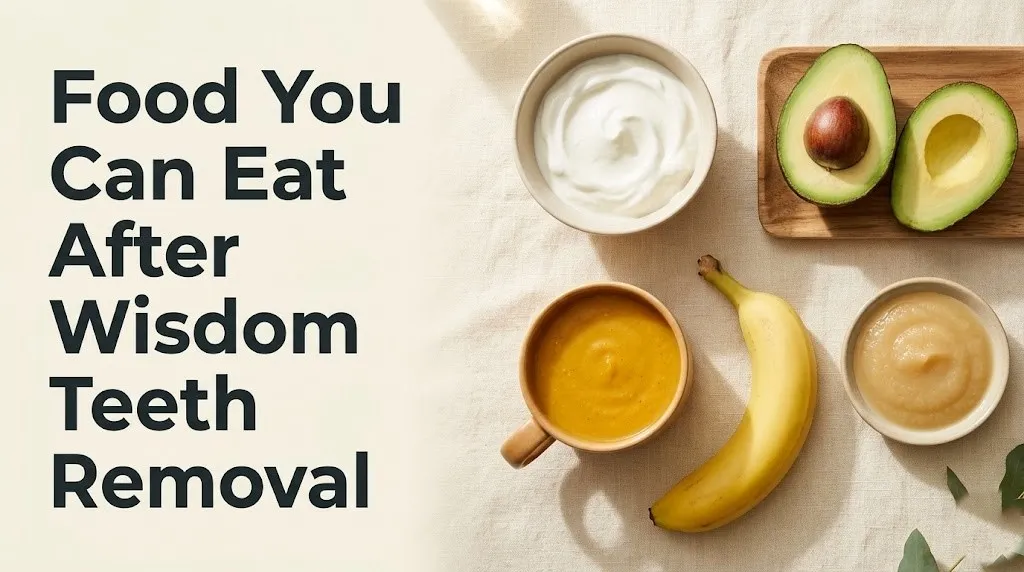
Safe foods across all stages of wisdom teeth recovery include:
- Plain applesauce (no seeds, no chunks)
- Greek yogurt (plain or mildly sweetened, no granola)
- Mashed potatoes (no skins, no hard bits)
- Scrambled eggs (soft, not overcooked)
- Smoothies (no seeds, no straws)
- Hummus (smooth, no whole chickpeas)
- Avocado (mashed or sliced very soft)
- Bone broth and low-sodium soups (broth-based, lukewarm)
- Cottage cheese (small curd)
- Oatmeal (well-cooked, not instant-style chewy)
- Gelatin (standard Jell-O or similar)
- Ice cream or frozen yogurt (no mix-ins, no cones)
- Blended banana or softened banana pieces
- Silken tofu (blended or very soft)
Key Takeaway: In the first 72 hours, texture is the only criterion that matters. If it requires chewing, skip it. If it’s hard, crunchy, seedy, or hot, skip it.
Best Food to Eat When Wisdom Teeth Are Removed
The best foods to eat right after wisdom teeth removal combine three qualities: minimal chewing, easy swallowing, and genuine nutritional value for tissue repair. Gelatin alone won’t rebuild a wound. Your body needs protein, vitamin C (ascorbic acid), and zinc to actually heal the extraction site.
Greek yogurt earns the top spot on most oral surgeons’ lists for a reason. A standard 170-gram serving delivers 15 to 17 grams of protein, roughly the same as two eggs, in a texture that slides down without any jaw engagement. It’s also a source of calcium and, in cultured varieties, contains Lactobacillus acidophilus, which may support immune resilience during recovery.
Scrambled eggs are another standout. At 12 grams of protein per two-egg serving, they provide lysine and methionine, two amino acids directly involved in collagen repair. According to USDA FoodData Central data, two large eggs also supply around 10% of the daily value for zinc, a mineral the NIH Office of Dietary Supplements identifies as essential for wound healing.
| Food | Protein per Serving | Key Healing Nutrient | Notes |
|---|---|---|---|
| Greek yogurt (170g) | 15 to 17g | Calcium, probiotics | Avoid granola or fruit chunks |
| Scrambled eggs (2 large) | 12g | Zinc, lysine | Cook soft; no crispy edges |
| Avocado (half) | 1.5g | Monounsaturated fat, potassium | Mash smooth for first 48 hours |
| Cottage cheese (113g) | 13g | Calcium, phosphorus | Use small curd or blend smooth |
| Smooth hummus (60g) | 5g | Iron, folate | No sesame allergy: check label |
| Bone broth (240ml) | 6 to 9g | Collagen peptides, sodium | Keep lukewarm; no solid bits |
| Silken tofu (100g) | 5g | Magnesium, iron | Dairy-free protein option |
People with dairy allergies should skip Greek yogurt and cottage cheese entirely and rely on silken tofu, plant-based yogurt with live cultures, and hummus for protein in the first few days.
What to Eat Day 1 After Wisdom Tooth Extraction
Day one is the most restricted period after wisdom tooth extraction. The extraction site is at peak vulnerability, and the blood clot is still forming and stabilizing.
For the first two to four hours, eat nothing at all. The gauze needs time to do its job. Swallowing around it or replacing it repeatedly with food residue delays clot formation.
Once the gauze is removed and bleeding has meaningfully slowed, your first foods should be fully liquid or fully pureed. No chewing at all. No straws either: the sucking motion creates negative pressure that can pull the clot free. The Journal of Oral and Maxillofacial Surgery has identified straw use as a documented risk factor for alveolar osteitis (dry socket).
Day 1 eating guide (hour by hour):
- Hours 1 to 4: Nothing by mouth except prescribed medications with a small sip of water
- Hours 4 to 8: Cold or room-temperature water, apple juice, coconut water. No carbonated beverages.
- Hours 8 to 12: Smooth applesauce, plain gelatin, soft ice cream (no mix-ins), cold broth
- Hours 12 to 24: Greek yogurt, mashed banana, cool mashed potato with no skin or butter chunks, blended avocado
Avoid anything hot on day one. Heat promotes vasodilation in the oral tissues, which increases bleeding risk and can disrupt the forming clot. The Cleveland Clinic recommends waiting at least 24 full hours before introducing any warm foods, and confirming this with your oral surgeon if your extraction was particularly complex or if you have any bleeding disorder or blood-thinning medication.
Quick Tip:
- Set a phone alarm for your first-food window: 4 to 6 hours post-gauze removal
- Pre-make foods before surgery so you’re not standing at the stove in discomfort
- Cold Greek yogurt or chilled smooth applesauce from the fridge is close to ideal for day one
Soft Foods After Wisdom Teeth Removal: The Complete List
A useful soft food list for wisdom teeth recovery organizes options by texture level, from fully liquid to soft-but-cuttable, because not all soft foods are safe on day one.
Think of texture like a traffic light. Day one is fully red: liquids and purees only. Days two to four are yellow: soft semi-solids requiring very minimal jaw movement. Days five onward move to green: soft solid foods that can be pressed with the tongue against the roof of the mouth without creating pressure at the socket.
| Texture Level | Safe From | Food Examples |
|---|---|---|
| Full liquid | Day 1 | Broth, apple juice, water, gelatin, protein shakes (no seeds) |
| Smooth puree | Day 1 | Applesauce, mashed banana, blended avocado, smooth hummus |
| Soft semi-solid | Day 2 to 3 | Scrambled eggs, Greek yogurt, cottage cheese, mashed potato, oatmeal |
| Soft solid | Day 5 to 7 | Soft-cooked pasta (overcooked rigatoni), tender cooked fish, tofu cubes, soft-boiled and chopped egg |
| Normal soft | Day 10 to 14 | Most foods except hard, crunchy, or sticky items |
Complete safe food list by category:
Dairy and eggs:
- Greek yogurt (plain or flavored without chunks)
- Cottage cheese
- Scrambled eggs (soft)
- Soft-boiled eggs (day 5 onward, chopped small)
- Ricotta cheese
- Cream cheese on very soft bread (day 7 onward)
Fruits and vegetables:
- Smooth applesauce
- Mashed banana
- Avocado (mashed or sliced very ripe)
- Pureed sweet potato
- Steamed and mashed zucchini or carrots
- Canned peaches in juice (no skins, very soft)
Proteins:
- Smooth hummus
- Silken tofu
- Well-cooked flaked fish (salmon, tilapia)
- Soft-cooked minced chicken (day 5 to 7, no tough bits)
- Bone broth
- Lentil soup (well-blended)
Grains and starches:
- Mashed potatoes (no skin, no lumps)
- Oatmeal (well-cooked)
- Overcooked pasta (plain or with smooth sauce)
- Soft white rice (well-cooked, days 5 to 7 with care)
- Cream of wheat or cream of rice cereal
Sweets and other:
- Plain ice cream or frozen yogurt (no nuts, no crunchy mix-ins)
- Gelatin
- Smooth nut butter (thin with a little water for days 1 to 3)
- Pudding
People with gluten sensitivity should choose certified gluten-free oatmeal and rice-based cereals. Potato, banana, and eggs are naturally gluten-free and safe for those with celiac disease throughout recovery.
Key Takeaway: The complete soft food list is longer and more nutritious than most people expect. You won’t be living on Jell-O alone: there are enough protein-rich, satisfying options to get through two weeks without dreading every meal.
What Food to Eat After Wisdom Teeth Removal on Days 2 to 7
By day two, the blood clot has generally stabilized and you can introduce a slightly wider range of soft semi-solid foods. The goal shifts from pure clot protection to maintaining adequate protein and calorie intake while healing progresses.
Most adults need at least 50 to 60 grams of protein per day even under normal circumstances, according to USDA Dietary Guidelines for Americans. During tissue repair, research published in the journal Nutrients suggests that protein needs can increase modestly, particularly in the first five to seven days post-procedure. Hitting your protein target on a liquid diet takes deliberate planning.
A practical day-by-day framework:
| Day | Texture | Sample Meals |
|---|---|---|
| Day 2 | Puree to soft semi-solid | Yogurt + banana smoothie; mashed potato; scrambled eggs; broth |
| Day 3 | Soft semi-solid | Oatmeal; hummus; cottage cheese; soft avocado toast on very soft bread |
| Day 4 | Soft semi-solid | Soft pasta with smooth tomato sauce; fish flaked into broth; blended soup |
| Day 5 to 6 | Soft solid | Tender baked fish; well-cooked lentils; soft tofu; overcooked pasta |
| Day 7 | Soft solid moving toward normal | Most above, plus very soft cooked vegetables and soft-cooked rice |
By day four to five, most people can handle room-temperature food without issue. If pain is still noticeable when chewing lightly, that is a signal to stay at the softer end of the texture spectrum. Any persistent or worsening pain after day three warrants a call to your oral surgeon; it may indicate dry socket or early infection.
Do not rush the texture progression. Pain is the most reliable individual guide for when to advance. The oral surgeon who performed your extraction can give you the most accurate personalized timeline based on how the procedure went, your age, and your general health.
When Can I Eat Solid Food After Wisdom Teeth Removal?
Most people can return to normal solid food roughly one to two weeks after wisdom teeth removal, with the exact timing depending on healing speed, the number of teeth extracted, and whether any complications arose.
The standard clinical guidance, as outlined by the American Dental Association, suggests soft foods for at least seven days after extraction. Some oral surgeons extend this recommendation to ten to fourteen days for patients who had impacted wisdom teeth removed, a more invasive procedure with a longer healing arc.
A practical way to gauge readiness: open your mouth fully without pain, press gently on the area with your tongue, and chew a soft piece of bread on the opposite side. If none of these triggers discomfort, your socket is likely far enough along in healing to handle cautious progression back to normal foods. Start with soft, easy foods first and avoid anything hard, crunchy, or sticky for another week.
Returning to solid food too early does not always cause disaster, but it meaningfully increases the risk of food particles entering the socket and disrupting the granulation tissue forming inside it. If you feel food packing into the socket area, rinse gently with a saline solution (quarter teaspoon of non-iodized salt dissolved in 8 ounces of lukewarm water) and contact your oral surgeon if discomfort follows.
Quick Tip:
- Keep a list of your extraction date and the surgeon’s specific instructions posted in your kitchen
- Advance texture one step at a time, not two steps at once
- Chewy bread and tough meat are typically the last foods to reintroduce safely
Smoothies After Wisdom Teeth Removal: What Works and What Doesn’t
Smoothies are one of the most popular choices after wisdom teeth removal because they pack protein and calories into a drinkable, no-chew format. They work well, with two non-negotiable rules.
Rule one: No straws. Ever. The suction force created by drinking through a straw is the fastest way to dislodge a blood clot. Drink directly from a glass or cup, sipping slowly without pursing your lips tightly.
Rule two: No seeds, berry skins, or fiber strings. Blueberries are fine if fully blended smooth. Strawberries should be hulled and strained if you are concerned about seeds. Chia seeds, flaxseeds, and hemp seeds should be skipped entirely in the first week because the small particles can lodge in the socket.
A well-constructed recovery smoothie for day one to three:
- 240ml (1 cup) of whole milk, oat milk, or coconut milk
- 170g (6oz) of plain Greek yogurt
- 1 ripe banana (frozen is fine for extra chill)
- 1 tablespoon of smooth almond butter or peanut butter
- Optional: 1 scoop of unflavored or vanilla protein powder
This combination delivers roughly 25 to 30 grams of protein, around 380 to 420 calories, and adequate potassium, calcium, and healthy fat to sustain energy during the first recovery days.
Smoothies to avoid:
- Any smoothie with whole berries not fully blended
- Mango with fibers
- Kale or spinach (tiny leaf fragments can irritate the socket unless very finely blended and strained)
- Any protein shake with a gritty, granular texture
- Anything containing caffeine on day one, as caffeine is a mild vasodilator
People with lactose intolerance can use lactose-free Greek yogurt or coconut-based yogurt with a similar protein content. Silken tofu blended into a smoothie adds 5 to 8 grams of protein per 100 grams with a neutral flavor.
Soup After Wisdom Teeth Removal: Best Options and Temperature Rules
Soup is a recovery staple, but the wrong kind of soup can set back healing. The key variables are temperature, texture, and whether particles can separate and migrate toward the extraction site.
Temperature is the deciding factor in the first 48 hours. Hot soup, including anything you would call “steaming,” poses real risk. Heat increases blood flow to oral tissues, which can break down the clot. The Cleveland Clinic’s post-extraction dietary guidance specifically advises against hot liquids for the first 24 hours. By day two, lukewarm soups are generally acceptable for most patients.
Texture is the second filter. Chunky soups, minestrone, ramen with noodle pieces, or any soup with hard vegetables, legumes with skins, or fibrous meat can introduce particles into the wound. Blended soups are the safest format for the first five days.
| Soup Type | Safe? | Notes |
|---|---|---|
| Smooth tomato soup | Yes (day 1+) | No chunks; keep lukewarm |
| Bone broth | Yes (day 1+) | High in collagen peptides; strain before serving |
| Blended butternut squash | Yes (day 1+) | Strain well; serve cool to lukewarm |
| Blended lentil soup | Yes (day 2+) | High protein; fully blended; no whole lentils |
| Chicken noodle (blended) | Yes (day 3+) | Blend out noodles and pieces; strain |
| Miso soup (dashi base) | Yes (day 3+) | Soft tofu cubes okay from day 3; skip firm tofu |
| Chunky vegetable soup | No | Particles risk socket contamination |
| French onion with bread | No | Chewy bread and fibrous onion: both problematic |
| Spicy ramen | No | Heat + spice + noodle texture: triple risk |
Bone broth deserves a specific mention. Beyond its comfort appeal, it provides collagen peptides (hydrolyzed collagen from simmered connective tissue), which some nutrition researchers have linked to improved wound healing. A 240ml serving typically delivers 6 to 9 grams of protein. Strain it through a fine-mesh sieve before serving to remove any fine particle matter.
Key Takeaway: Blended soups at lukewarm temperature are one of the most practical, protein-supporting, and socket-safe options across the full first week of wisdom teeth recovery.
Cold Foods After Wisdom Teeth Removal
Cold foods are particularly useful in the first 24 to 48 hours because low temperature naturally reduces swelling in the surrounding tissue, functioning like an internal cold pack at the extraction site.
The cold effect is modest but real. The same physiological principle that makes ice packs useful for swelling reduction (vasoconstriction, reduced local blood flow) also applies to cold foods consumed near the extraction site. Cold does not replace any prescribed anti-inflammatory medication, but it supports comfort without any added risk.
Best cold foods for days 1 to 2:
- Ice cream or frozen yogurt (no nuts, no cone, no mix-ins): soft, cold, calorie-dense
- Chilled Greek yogurt straight from the refrigerator
- Cold smooth applesauce
- Frozen banana slices that have thawed slightly to a very soft consistency
- Chilled protein shakes (ready-to-drink, no seeds, no particles)
- Cold bone broth (refrigerated overnight; consume at fridge temperature)
People commonly wonder whether ice cream is a genuine recommendation or just a happy rumor. It is legitimate. The American Academy of Oral and Maxillofacial Surgeons has included ice cream and similar cold soft foods in post-surgical dietary guidance because the texture, temperature, and lack of chewing requirement make it genuinely appropriate for the first 48 hours.
One caveat for people managing diabetes or blood sugar conditions: standard ice cream is high in added sugar and refined carbohydrates, which can complicate blood glucose management during recovery. Unsweetened frozen yogurt, chilled plain Greek yogurt, or cold silken tofu smoothies are better-controlled alternatives. Anyone managing blood sugar during a surgical recovery period should discuss their meal plan with both their oral surgeon and their endocrinologist or primary care provider to avoid glucose swings on top of post-surgical stress.
What to Eat After Wisdom Teeth Removal to Speed Healing
Healing after wisdom teeth removal is not passive. What you eat in the first ten days directly influences how quickly the extraction socket regenerates new tissue.
Three nutrients are central to post-extraction wound repair:
1. Protein and lysine: The socket begins rebuilding collagen within the first 24 to 48 hours. Collagen is a protein structure, and it requires adequate dietary protein (especially the amino acid lysine) as raw material. Falling short of daily protein needs during recovery slows this process measurably.
2. Ascorbic acid (vitamin C): The NIH Office of Dietary Supplements confirms that vitamin C is required for collagen synthesis. A deficiency in ascorbic acid directly impairs wound healing at the cellular level. Fortunately, smooth applesauce, mashed sweet potato, and pureed mango all provide ascorbic acid without any textural risk to the socket.
3. Zinc: According to NIH data, zinc plays a role in immune defense and cell proliferation during wound repair. Two scrambled eggs provide roughly 10% of the daily zinc requirement. Smooth hummus, Greek yogurt, and bone broth all contribute additional zinc in socket-safe forms.
| Nutrient | Role in Healing | Best Soft Food Sources |
|---|---|---|
| Protein (lysine-rich) | Collagen synthesis, tissue regeneration | Eggs, Greek yogurt, cottage cheese, bone broth |
| Ascorbic acid (vitamin C) | Collagen cross-linking, immune support | Applesauce, mashed sweet potato, pureed mango |
| Zinc | Cell proliferation, immune response | Eggs, Greek yogurt, hummus, bone broth |
| Omega-3 fatty acids (EPA, DHA) | Reduces post-operative inflammation | Canned salmon (well-flaked), flaxseed oil in smoothies |
| Potassium | Electrolyte balance, muscle function | Banana, avocado, sweet potato |
Omega-3 fatty acids deserve attention here. Eicosapentaenoic acid (EPA) and docosahexaenoic acid (DHA), found in fatty fish like salmon, have well-documented anti-inflammatory properties in peer-reviewed research including publications in the British Journal of Nutrition. Canned salmon, very well-flaked into smooth broth from day three onward, is one of the highest omega-3 soft food sources available during recovery.
Protein Foods After Wisdom Tooth Extraction
Getting enough protein after wisdom tooth extraction is harder than it sounds when your food options are this restricted. But it is achievable with deliberate choices.
The USDA Dietary Guidelines for Americans recommend 0.8 grams of protein per kilogram of body weight per day as a baseline for adults. For a 70-kilogram adult, that is 56 grams daily. During wound healing, some nutrition research suggests the target can move to 1.0 to 1.2 grams per kilogram, meaning upward of 70 to 84 grams for the same person.
Hitting that on soft foods requires stacking protein across multiple small meals throughout the day rather than trying to get it from one or two.
High-protein soft foods ranked by protein per serving:
- Greek yogurt (170g): 15 to 17g protein
- Cottage cheese (113g): 13g protein
- Scrambled eggs (2 large): 12g protein
- Canned salmon, well-flaked (85g): 17g protein
- Smooth hummus (100g): 8g protein
- Silken tofu (100g): 5g protein
- Bone broth (240ml): 6 to 9g protein
- Whole milk (240ml): 8g protein
- Blended lentil soup (240ml): 9g protein
- Smooth almond butter (2 tablespoons): 7g protein
A sample day hitting 65 to 70 grams of protein on a soft recovery diet:
- Breakfast: Greek yogurt (16g) + banana smoothie with almond butter (7g) = 23g
- Lunch: Blended lentil soup (9g) + cottage cheese (13g) = 22g
- Dinner: Canned salmon in broth (17g) = 17g
- Snack: Small portion Greek yogurt (8g) = 8g
- Daily total: approximately 70g
People who follow a vegan diet can replace salmon, yogurt, and eggs with silken tofu, blended lentil or split pea soup, smooth tahini (sesame-based; check for sesame allergy), and plant-based protein powder in smoothies. Hitting 65+ grams on a fully vegan soft diet takes careful stacking but is entirely achievable.
Key Takeaway: Protein is the single most important nutrient to track during wisdom teeth recovery because it directly fuels socket tissue repair. Plan your protein across four to five small meals rather than attempting it in two.
Foods to Avoid After Wisdom Teeth Removal
The list of foods to avoid after wisdom teeth removal is shorter than what you can eat, but the consequences of ignoring it are real. Dry socket (alveolar osteitis) affects an estimated 2 to 5% of standard extractions and up to 30% of impacted lower wisdom tooth extractions, according to data published in the Journal of Oral and Maxillofacial Surgery. Most preventable cases involve a dietary or lifestyle trigger.
Foods and substances to avoid, and why:
- Hard foods (nuts, chips, crackers, pretzels, hard candy): Sharp edges and chewing force can physically dislodge the clot or crack suture lines
- Crunchy foods (granola, toast, raw vegetables): Same mechanical risk as hard foods; small fragments also pack into the socket
- Chewy foods (gummy candy, tough steak, bagels, chewy bread): Jaw movement during chewing creates pressure on the extraction site
- Spicy foods: Capsaicin irritates soft tissue and increases blood flow; spicy food can reopen minor bleeding
- Hot foods and hot liquids: Vasodilation promotes bleeding and can dissolve the clot; avoid for at least 24 hours
- Carbonated beverages: The carbonic acid in soda and sparkling water can degrade the clot; carbonation also creates mild pressure in the oral cavity
- Alcohol: Thins the blood, interferes with prescribed pain medications or antibiotics, and dehydrates oral tissue
- Tobacco (smoked or chewed): Smoking’s sucking motion risks dry socket; the chemical composition of smoke also actively impairs wound healing; this is one of the strongest modifiable risk factors for alveolar osteitis
- Seeds and grains (sesame, poppy, sunflower): Too small to chew out of the socket once lodged; can cause infection
- Straws: The negative pressure from sucking physically pulls at the clot
If you accidentally eat something from this list and feel increased pain, unusual warmth, or notice a bad taste or odor from the socket area, contact your oral surgeon. These can be early signs of dry socket or infection and are much easier to treat when caught within the first 24 hours.
Can I Eat Pasta or Rice After Wisdom Teeth Removal?
Overcooked pasta and very soft rice can be eaten after wisdom teeth removal, but the timing, preparation method, and portion approach matter significantly.
Pasta: Standard al dente pasta is off the table entirely. It requires real chewing and creates sticky, doughy fragments that can pack into the socket. However, overcooked pasta (cooked for twice the package-recommended time until very soft) with a smooth sauce is generally acceptable from day five onward for most people. Short shapes like rigatoni or penne work better than long strands like spaghetti, which can wrap awkwardly around the jaw. Avoid heavy cream sauces with chunks; smooth tomato or oil-based sauces are safer.
Rice: White rice cooked until very soft and sticky is usually manageable from day five to seven. The risk with rice is that individual grains can separate, find their way into the socket, and sit there. Sticky rice (glutinous rice) is actually preferable to fluffy long-grain varieties because the grains bind together and are less likely to scatter. Rinse your mouth gently with saline solution after eating rice, especially in the first week.
Noodles: Soft ramen noodles, rice noodles, or udon noodles cooked until very tender can work from day five onward. Cut them into short segments before eating; long strands require slurping, which creates sucking pressure.
| Food | Safe From | Preparation Note |
|---|---|---|
| Rigatoni or penne pasta | Day 5 | Cook very soft; smooth sauce only |
| Spaghetti | Day 7 | Cut short; no al dente |
| White rice (sticky) | Day 5 to 6 | Rinse mouth after eating |
| Brown rice | Day 10+ | Firmer texture; hold off longer |
| Rice noodles | Day 5 | Cut short; keep broth lukewarm |
| Udon noodles | Day 5 | Very soft only; cut into pieces |
Anyone concerned about specific timing based on their extraction complexity should confirm the pasta and rice transition date with their oral surgeon.
What Food Can I Eat After Wisdom Teeth Removal With Dietary Restrictions?
Having a dietary restriction on top of wisdom teeth recovery is genuinely challenging. The standard go-to foods (Greek yogurt, scrambled eggs, cottage cheese) do not work for everyone, and finding protein-rich soft alternatives for specific needs requires real planning.
For vegans:
| Standard Option | Vegan Alternative | Protein |
|---|---|---|
| Greek yogurt | Coconut or soy yogurt with live cultures | 4 to 6g per 170g |
| Scrambled eggs | Silken tofu scramble (blended soft) | 5g per 100g |
| Cottage cheese | Smooth white bean puree | 5g per 60g |
| Bone broth | Vegetable broth with miso paste | 2 to 3g per 240ml |
| Canned salmon | Smooth almond butter in smoothies | 7g per 2 tablespoons |
For people with diabetes:
Avoid high-sugar soft foods including sweetened applesauce, flavored yogurt with added sugar, standard ice cream, sweetened smoothies, and flavored gelatin. Choose plain Greek yogurt, unsweetened applesauce, plain oatmeal, and blended lentil soup. Monitor blood glucose carefully because surgical stress can temporarily affect insulin sensitivity. A registered dietitian or your endocrinologist can help you build a specific recovery meal plan.
For people with dairy allergies:
Avoid all standard yogurt, cottage cheese, cream-based soup, and ice cream. Safe alternatives include coconut yogurt, silken tofu, hummus, smooth nut butters, blended lentil soup, and plant-based protein shakes (check for other allergens like soy if applicable).
For people following a halal or kosher diet:
Bone broth should be made from certified halal or kosher meat. Gelatin is animal-derived and may be non-halal depending on its source; look for certified halal or plant-based (agar-based) gelatin substitutes. All plant-based soft food options (hummus, avocado, mashed sweet potato, oatmeal, smoothies) are universally appropriate.
People with complex medical dietary needs who are also recovering from oral surgery should coordinate their post-extraction meal plan with their oral surgeon and their usual dietitian or specialist together, not separately, to avoid conflicts between surgical recovery guidance and existing dietary protocols.
Wisdom Teeth Removal Recovery Diet: The Full Picture
The wisdom teeth removal recovery diet is not a punishment. It is a two-week window with a clear internal logic: protect the clot, supply the nutrients needed for tissue repair, and gradually restore normal eating as the socket closes.
Think of the two-week recovery like a graduated return-to-exercise program after an injury. Day one is complete rest: liquid only. Days two to four introduce gentle movement: soft semi-solids. Days five to seven test tolerance with easy, low-impact soft solids. Week two re-introduces the full range, excluding anything that still poses impact risk. By day fourteen, most people are back to eating everything except the hardest, crunchiest, or stickiest items.
The biggest mistake most people make is viewing this as a calorie-deficit period. That instinct is understandable. Eating is harder, food is blander, and the temptation to just skip meals is real. But under-eating during wound healing slows tissue repair and extends recovery time. Aim for your normal calorie intake distributed across four to five smaller, softer meals throughout the day.
Full two-week recovery diet at a glance:
| Phase | Days | Texture | Primary Foods |
|---|---|---|---|
| Phase 1 | 1 to 2 | Liquid + smooth puree | Broth, yogurt, applesauce, banana, ice cream |
| Phase 2 | 3 to 4 | Soft semi-solid | Oatmeal, eggs, cottage cheese, hummus, mashed potato |
| Phase 3 | 5 to 7 | Soft solid | Soft pasta, flaked fish, tofu, lentil soup, soft rice |
| Phase 4 | 8 to 14 | Normal soft | Most foods; avoid hard, crunchy, sticky |
| Post-recovery | 14+ | Normal | All foods; check with surgeon if socket still tender |
One final, practical note. Some people heal faster and some heal slower. Age, immune health, whether the teeth were impacted, and the complexity of the extraction all influence the timeline. The framework above reflects standard clinical guidance from the American Dental Association and typical oral surgery protocols. Your oral surgeon’s specific post-operative instructions for your case take precedence over any general guideline, including this one. If you have questions about when to advance your diet, a quick call to the surgical office is always worth it.
Frequently Asked Questions About Food After Wisdom Teeth Removal
How long after wisdom teeth removal can I eat normally?
Most people can return to normal eating around ten to fourteen days after wisdom teeth removal.
The timeline depends on extraction complexity: impacted teeth take longer than simple erupted extractions.
Your oral surgeon’s specific instructions for your case determine the exact timeline and should be followed over any general guideline.
Can I eat yogurt right after wisdom teeth removal?
Yes. Plain Greek yogurt is one of the safest and most protein-rich foods to eat after wisdom teeth removal.
Eat it at refrigerator temperature on day one: cold, smooth, and free of granola, fruit chunks, or any mix-ins.
Choose plain or mildly flavored varieties; avoid anything with seeds, whole fruit pieces, or a crunch component.
Is it okay to drink a smoothie after wisdom tooth extraction?
Smoothies are a good choice after wisdom tooth extraction as long as you drink from a glass, never a straw.
The suction force from a straw can dislodge the blood clot protecting the socket and trigger dry socket.
Choose smooth, seed-free ingredients: blended banana, Greek yogurt, nut butter, and milk or plant milk work well.
What happens if I eat solid food too soon after wisdom teeth removal?
Eating solid food too soon risks dislodging the blood clot in the extraction socket, which can lead to dry socket.
Dry socket (alveolar osteitis) is a painful complication where the bone and nerve inside the socket are exposed to air and food particles.
Hard food particles can also pack into the socket and create a pathway for infection; if this happens, rinse gently with saline and contact your oral surgeon.
What soft foods have the most protein after wisdom teeth removal?
The highest-protein soft foods for wisdom teeth recovery include Greek yogurt (15 to 17g per 170g serving), canned salmon well-flaked into broth (17g per 85g), and cottage cheese (13g per 113g).
Scrambled eggs provide 12 grams per two-egg serving and are suitable from day two onward.
For vegan or dairy-free recovery diets, blended lentil soup and silken tofu are reliable lower-protein alternatives that can be stacked across multiple meals.
The Recovery Diet Comes Down to Two Weeks and One Rule
Two weeks of careful eating protects months of healing. Keep things soft, cool or lukewarm, and free of anything that requires real chewing through the first week. Advance the texture gradually in week two. Track your protein deliberately because healing tissue needs it.
Stock your fridge before surgery, not after. Chilled Greek yogurt, smooth applesauce, ripe avocados, canned salmon, bone broth, and smooth hummus will get you through the first five days with both comfort and adequate nutrition.
If something feels wrong, if pain increases after day three, if you notice an unusual smell or taste near the socket, call your oral surgeon’s office. A short conversation can save a long complication.