Nutrish is a decent mid-range dog food that meets basic AAFCO nutritional standards, but it is not among the top-tier options when measured against protein quality, digestibility, and ingredient transparency. Whether Nutrish is a good dog food for your specific dog depends on their age, size, health status, and how the formula you choose stacks up against their actual nutritional needs.
The dog food industry is enormous, and many owners rely on brand recognition to make purchasing decisions. According to the American Pet Products Association, Americans spend over $60 billion annually on pet food, yet most buyers never check the AAFCO nutritional adequacy statement on the bag, which is the single most reliable quality indicator available at the shelf level.
This article covers Nutrish ingredient quality, protein and fat content, AAFCO compliance, recall history, manufacturing location, and how the brand performs for puppies, seniors, and large breeds. It also compares the top Nutrish formulas against major competitors so you can make an informed decision for your dog.
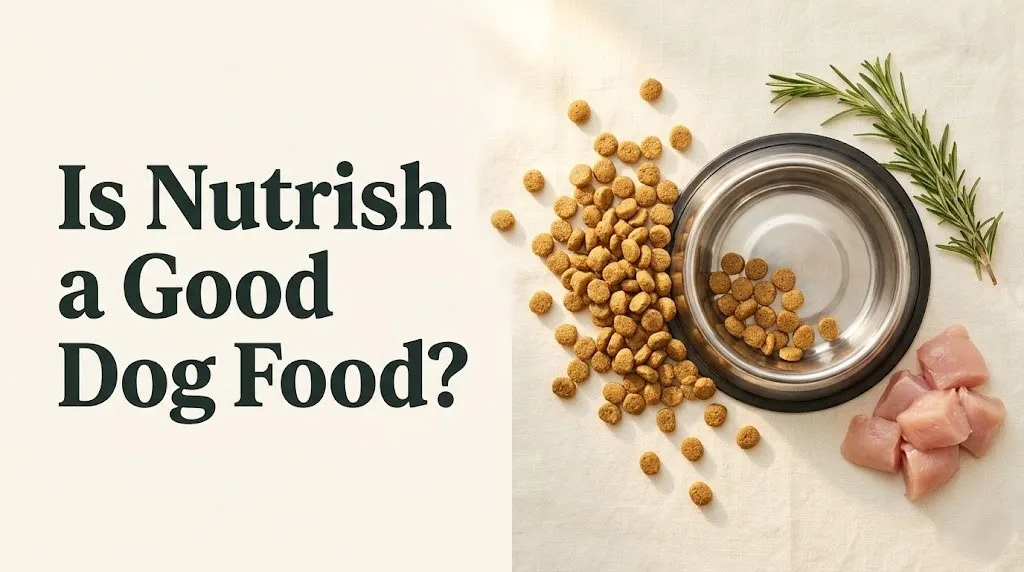
Is Nutrish a Good Dog Food?
Nutrish is a nutritionally adequate, mid-market dog food that performs acceptably for healthy adult dogs but shows notable weaknesses in protein density and ingredient quality compared to premium brands. It is manufactured by Ainsworth Pet Nutrition, now owned by The J.M. Smucker Company, and was originally developed in partnership with celebrity chef Rachael Ray.
Most Nutrish dry formulas list deboned chicken or deboned salmon as the first ingredient, which is a positive sign. The issue arises further down the ingredient list, where corn, soy, pea protein, and dried beet pulp appear as significant filler and protein contributors.
Think of the ingredient list like a restaurant menu where the first dish listed gets all the attention. But if the kitchen uses inexpensive fillers for 60 percent of the plate, that top-billing protein doesn’t carry the whole nutritional story.
For a healthy adult dog on a budget, Nutrish can be a reasonable choice. For dogs with allergies, chronic conditions, or breed-specific nutritional needs, a veterinarian-recommended food will almost always be the better call.
| Factor | Nutrish Assessment |
|---|---|
| First ingredient | Real meat (chicken or salmon) in most formulas |
| Protein source quality | Moderate; includes some plant-based protein |
| Carbohydrate load | Moderate to high in standard formulas |
| Price point | Budget to mid-range |
| AAFCO compliance | Yes, for adult maintenance and some life stages |
| Recall history | Multiple recalls on record |
What Are Nutrish Dog Food Ingredients?
Nutrish dog food ingredients vary by product line, but the core dry formula typically includes deboned chicken, chicken meal, ground rice, corn, soy grits, pea protein, dried beet pulp, chicken fat, and a vitamin and mineral premix. These are the building blocks of the standard Chicken and Veggies recipe.
Chicken meal deserves a specific note. Unlike deboned chicken, chicken meal is a concentrated rendered product. It contains roughly four times more protein by weight than fresh chicken because most of the moisture has been removed. Having chicken meal as a secondary ingredient is actually a positive signal for protein concentration.
Corn and soy grit are common carbohydrate sources in budget-to-mid-range foods. Both are digestible energy sources, but neither contributes high-quality complete protein for dogs the way animal-sourced ingredients do.
According to the Association of American Feed Control Officials (AAFCO), dogs require a minimum of 18% crude protein for adult maintenance on a dry matter basis. Most Nutrish standard formulas exceed this floor, but they sit below the 30% or higher protein levels found in performance or veterinary-grade foods.
Key ingredients to look for on any Nutrish label:
- Deboned chicken or salmon: Good quality primary protein
- Chicken meal: Concentrated animal protein; a positive addition
- Ground rice: Digestible carbohydrate; less concerning than corn for sensitive dogs
- Pea protein: Plant-based protein booster; watch for high quantities
- Chicken fat: Quality fat source preserved with mixed tocopherols (vitamin E)
- Dried beet pulp: Fermentable fiber; supports digestive motility
Dogs with chicken protein sensitivities should note that nearly all Nutrish formulas use chicken as a primary ingredient. A veterinarian can help identify whether a single-protein or limited-ingredient diet would be more appropriate.
What Is Nutrish’s Protein Content and Nutritional Profile?
Nutrish dry dog food delivers a minimum 26% crude protein and 14% crude fat in its standard adult formulas, based on the guaranteed analysis printed on packaging. These figures represent the minimum guaranteed amounts, not the actual as-fed percentages.
Understanding “as-fed” versus “dry matter basis” matters here. Kibble contains roughly 10% moisture, so converting to dry matter basis means dividing the guaranteed analysis figures by 0.90 to get a more accurate comparison with wet food or other kibble brands.
| Nutrient | Guaranteed Analysis (As-Fed) | Dry Matter Basis (Approx.) |
|---|---|---|
| Crude Protein | Min. 26% | ~28.9% |
| Crude Fat | Min. 14% | ~15.6% |
| Crude Fiber | Max. 4% | ~4.4% |
| Moisture | Max. 10% | N/A |
| Calcium | Min. 1.0% | ~1.1% |
| Phosphorus | Min. 0.7% | ~0.8% |
The omega-6 to omega-3 fatty acid ratio in Nutrish is not always disclosed on packaging, which is a transparency gap. Tufts University Cummings Veterinary Medical Center notes that fatty acid balance matters for skin, coat, and inflammatory response in dogs. Better brands publish this ratio openly.
Taurine is not always supplemented in Nutrish formulas. This matters in the context of ongoing FDA research linking certain grain-free diets to dilated cardiomyopathy (DCM) in dogs. The connection to taurine levels in legume-heavy foods is still under investigation as of 2026, and a veterinarian’s input is worthwhile if you are feeding a grain-free formula long-term.
Key Takeaway: Nutrish meets basic AAFCO protein minimums for adult dogs, but its protein quality is mixed because plant sources like pea protein contribute to the total percentage without providing the same amino acid completeness as animal-sourced protein.
Does Nutrish Meet AAFCO Nutritional Standards?
Most Nutrish formulas carry an AAFCO nutritional adequacy statement, meaning they meet the Association of American Feed Control Officials nutrient profiles for the life stage indicated on the packaging. This is the baseline quality threshold every commercially sold dog food in the United States must meet.
There are two ways a food can earn an AAFCO statement. The first is by formulation, meaning the recipe is calculated to contain the required nutrients on paper. The second is by passing actual feeding trials, which involves real dogs eating the food over a defined period while their health is monitored. Feeding trial-tested foods are generally considered more reliable.
Nutrish’s AAFCO statements are typically formulation-based, not feeding trial-based. This does not make the food unsafe, but it means the adequacy is calculated rather than directly observed in animals.
To verify a specific Nutrish formula:
- Turn the bag over and locate the nutritional adequacy statement near the feeding guidelines.
- Check whether it says “formulated to meet” or “animal feeding tests using AAFCO procedures.”
- Confirm the life stage listed matches your dog’s actual stage: growth (puppy), adult maintenance, all life stages, or senior.
- If your dog has a medical condition, “meets AAFCO minimum standards” is a floor, not a recommendation. A board-certified veterinary nutritionist can advise on whether the formula meets your dog’s specific requirements.
The AAFCO statement is the most important label verification a dog owner can make before purchasing. Most of the competing review sites covering Nutrish do not explain this distinction, which leaves buyers relying on marketing claims rather than the regulatory language on the bag itself.
What Is Nutrish’s Recall History?
Nutrish has had multiple product recalls, which is a factual consideration any buyer should weigh. Recalls are documented in the FDA’s Recalls and Safety Alerts database, and the record for this brand includes instances related to potential Salmonella contamination and elevated thyroid hormone levels in certain dog food products.
One of the more consequential recalls involved elevated levels of thyroid hormone (T3 and T4) detected in several dog food products across multiple brands in 2017 and 2018, including Nutrish-adjacent products. The FDA investigation traced the issue to contaminated beef gullet meat used as an ingredient. Affected dogs showed symptoms including weight loss, increased thirst, and elevated heart rate.
The FDA’s recommendation at the time was to discontinue the affected products immediately and consult a veterinarian if the dog had consumed the food and showed symptoms.
Key points on Nutrish recalls:
- Multiple recalls are documented in the FDA database through 2026
- Primary recall reasons: Salmonella contamination risk, elevated thyroid hormone levels
- Ainsworth/Smucker’s has issued voluntary recalls when issues were identified
- No recalls are an indicator of quality; a history of recalls warrants continued monitoring
No dog food brand is immune to recall risk. The practical response is to register your dog’s food lot number with the manufacturer or through the FDA’s pet food recall notification system, which sends alerts when new safety issues are reported. A veterinarian should be contacted promptly if your dog shows behavioral changes, digestive distress, or physical symptoms after a food change or after any recall notification.
Where Is Nutrish Dog Food Made?
Nutrish dog food is manufactured in the United States, which the brand prominently markets on its packaging. As of 2026, production facilities are operated by The J.M. Smucker Company following its acquisition of Ainsworth Pet Nutrition in 2018.
“Made in the USA” means the food is manufactured domestically, but it does not specify where all ingredients are sourced. The brand states that its ingredients are sourced from trusted suppliers, but it does not publish a comprehensive, farm-level ingredient sourcing disclosure.
This is a meaningful transparency gap. Some premium dog food brands, including Honest Kitchen and Orijen, publish detailed sourcing by ingredient and region. Nutrish does not reach that level of transparency, which matters for owners who want full traceability.
Quick Tip:
- Look for “made in the USA” on the label for domestic manufacturing confirmation
- Contact Nutrish customer service directly to ask about sourcing for specific ingredients
- For dogs with known sensitivities, knowing the origin of individual proteins and grains can matter
Key Takeaway: Nutrish is made in the USA, which is a genuine positive for manufacturing oversight, but its ingredient sourcing transparency is limited compared to higher-end brands.
Is Nutrish Good for Puppies?
Nutrish makes a reasonable puppy food, provided you choose a formula specifically labeled for growth or all life stages with an AAFCO nutritional adequacy statement confirming puppy suitability. Adult formulas are not appropriate for puppies, as they do not contain sufficient calcium, phosphorus, and DHA for healthy skeletal and neurological development.
The standard Nutrish Puppy Real Chicken and Veggies formula lists deboned chicken as the first ingredient and carries an AAFCO statement for growth. It contains DHA from salmon oil, which supports early brain development according to research published in the Journal of Animal Science.
Puppyhood is nutritionally dense in terms of requirements per kilogram of body weight. A puppy needs roughly twice the energy per kilogram compared to an adult dog of the same breed, according to the National Research Council’s Nutrient Requirements of Dogs.
| Nutrient | Puppy Requirement (AAFCO Minimum) | Adult Requirement (AAFCO Minimum) |
|---|---|---|
| Crude Protein | 22.5% dry matter | 18.0% dry matter |
| Calcium | 1.2% dry matter | 0.5% dry matter |
| Phosphorus | 1.0% dry matter | 0.4% dry matter |
| Fat | 8.5% dry matter | 5.5% dry matter |
For large breed puppies specifically, the calcium-to-phosphorus ratio is a critical parameter. Excess calcium during rapid growth phases can disrupt skeletal development in breeds like Labrador Retrievers, German Shepherds, and Great Danes. A veterinarian familiar with your puppy’s breed should confirm whether a standard Nutrish puppy formula or a large breed puppy formula is the right choice.
Is Nutrish Good for Senior Dogs?
Nutrish does not currently offer a dedicated senior-specific formula, which is a genuine product gap. Instead, the brand positions some formulas for “all life stages,” which technically covers senior dogs but may not address their actual changing requirements.
Senior dogs generally need fewer calories to avoid weight gain as metabolism slows, higher protein to counteract age-related muscle loss (sarcopenia), and lower phosphorus if kidney function has declined. The American College of Veterinary Nutrition (ACVN) notes that there is no single standardized nutrient profile defining “senior” dog food, which means the term on packaging can be loosely applied.
For an older dog on Nutrish, the most practical approach is:
- Choose a formula with real meat as the first two or three ingredients
- Check that crude protein is at 28% dry matter basis or higher to support muscle retention
- Confirm phosphorus levels are within a reasonable range if your vet has flagged kidney concerns
- Monitor body condition score regularly; senior dogs can lose muscle while gaining fat, masking weight issues
Dogs over 7 years old, and especially giant breeds over 5, benefit from a veterinary checkup to assess whether their current food still matches their metabolic and organ health needs. This is not a generic recommendation: bloodwork panels can reveal kidney function, thyroid status, and other markers that directly affect appropriate protein and mineral intake.
Key Takeaway: Nutrish puppy formulas meet basic AAFCO growth requirements, but senior dog owners should consult a veterinarian about whether a standard Nutrish formula adequately addresses the specific metabolic changes of aging dogs.
Is Nutrish Good for Large Breed Dogs?
Nutrish offers a Large Breed adult formula specifically designed for dogs over 50 pounds. It features controlled caloric density to support healthy weight management and adjusted calcium and phosphorus levels suited to larger skeletal frames.
Large breed adult dogs face particular risks from obesity, which stresses joints and accelerates conditions like hip dysplasia and osteoarthritis. The Nutrish Large Breed formula has a slightly lower fat content than the standard adult recipe, which supports caloric control without sacrificing protein intake.
For large breed adult dogs, the key nutritional markers to evaluate:
- Protein: minimum 26% on a dry matter basis
- Fat: 12 to 16% dry matter range (lower end helps with weight management)
- Calcium: 0.6 to 1.0% dry matter (too much calcium in large adults can stress kidneys over time)
- Glucosamine and chondroitin: some premium large breed formulas add these for joint support; Nutrish Large Breed does not consistently include them at meaningful levels
| Feature | Nutrish Large Breed | What to Look For |
|---|---|---|
| Protein source | Deboned chicken + chicken meal | Animal protein in top 2-3 ingredients |
| Caloric density | Moderate (~340 kcal/cup) | 300-370 kcal/cup for large adult maintenance |
| Joint support additives | Not consistently listed | Glucosamine 400+ mg/kg, chondroitin 300+ mg/kg |
| Fat content | ~13% dry matter | 12-16% for weight management |
Large breed dogs with known orthopedic conditions or a genetic predisposition to joint disease may benefit from a veterinary-recommended food with higher therapeutic levels of joint-support compounds. Nutrish Large Breed is a reasonable maintenance option for a healthy large dog but should not be treated as a therapeutic diet without veterinary guidance.
What Are the Best Nutrish Dog Food Formulas?
The best Nutrish formulas by nutritional quality are the Just 6 line and the Zero Grain line, both of which offer higher protein density and simpler ingredient profiles compared to the standard “Chicken and Veggies” base formula.
The Just 6 recipes limit ingredients to six named items, which benefits dogs with food sensitivities by reducing the number of potential allergen sources. The Zero Grain line removes corn, wheat, and soy from the formula and increases the proportion of animal-sourced protein.
| Formula | Primary Protein | Crude Protein | Grain-Free | Best For |
|---|---|---|---|---|
| Chicken and Veggies (Standard) | Deboned chicken | ~26% | No | Budget-conscious healthy adult dogs |
| Just 6 Chicken | Deboned chicken | ~28% | No | Dogs with food sensitivities |
| Zero Grain Chicken | Chicken + lentils | ~30% | Yes | Owners avoiding grains (see DCM note) |
| Large Breed | Deboned chicken | ~26% | No | Dogs over 50 lbs |
| Puppy | Deboned chicken | ~28% | No | Puppies up to 12 months |
| Bright Life Salmon | Deboned salmon | ~27% | No | Dogs needing omega-3 variety |
The standard Chicken and Veggies formula is the most widely available and the most affordable. It works for a healthy adult dog without specific dietary restrictions. The Just 6 formula is the better choice if your dog has shown any signs of digestive upset or skin irritation, as fewer ingredients make identifying potential triggers easier.
Nutrish Zero Grain Dog Food Review
Nutrish Zero Grain is a grain-free dog food that replaces traditional carbohydrate sources like corn and rice with peas, lentils, and dried chickpeas as its primary carbohydrate and partial protein contributors. The formula delivers approximately 30% crude protein and 14% crude fat on a dry matter basis, making it one of the higher-protein options in the Nutrish range.
The grain-free category carries a specific safety consideration that cannot be overlooked. Since 2018, the FDA has been investigating a potential link between grain-free, legume-heavy dog diets and dilated cardiomyopathy (DCM), a serious heart condition in dogs. As of 2026, the investigation remains ongoing and a definitive causal mechanism has not been established. However, Tufts University Cummings Veterinary Medical Center has advised caution with grain-free diets that use peas, lentils, and legumes as primary ingredients, particularly for breeds with higher DCM predisposition such as Golden Retrievers, Doberman Pinschers, and Irish Wolfhounds.
This does not mean Nutrish Zero Grain is definitively dangerous. It means owners should:
- Discuss grain-free feeding with a veterinarian before committing long-term
- Watch for symptoms of DCM: exercise intolerance, coughing, labored breathing, and weakness
- Consider whether their dog’s breed carries elevated DCM risk
- Revisit the FDA’s ongoing reporting for updates as the investigation continues
Key Takeaway: Nutrish Zero Grain has good protein numbers but sits in a product category under ongoing FDA scrutiny. Dogs with a breed predisposition to heart disease should have a veterinarian’s input before feeding grain-free long-term.
Nutrish Wet Dog Food vs Dry Dog Food
Nutrish wet dog food and dry dog food serve different nutritional roles and are not direct substitutes for each other. Wet food delivers significantly higher moisture content (roughly 75 to 82% moisture) compared to dry kibble’s 10% moisture, making it valuable for dogs who don’t drink enough water or who need urinary tract support.
The trade-off is caloric density. Because wet food is largely water, a dog needs to consume a greater volume to get the same calories as from dry food. This can be beneficial for dogs on a weight-loss plan who need to feel full on fewer calories. It can be a challenge for working dogs or large breeds with high energy requirements, who would need a very large quantity of wet food to meet their needs.
| Factor | Nutrish Dry Kibble | Nutrish Wet Food |
|---|---|---|
| Moisture content | ~10% | ~75-82% |
| Calories per serving | ~330-350 kcal/cup | ~90-110 kcal per 3.5 oz container |
| Cost per daily serving | Lower | Higher |
| Dental benefit | Mild abrasive cleaning effect | Minimal to none |
| Palatability | Good | Generally higher |
| Hydration contribution | Minimal | Substantial |
Many veterinary nutritionists suggest a mixed feeding approach: dry kibble as the base diet with wet food added in small amounts for hydration, palatability, and variety. If you use both, the combined caloric contribution of both foods must be calculated against your dog’s daily energy requirement to avoid overfeeding.
Dogs with dental disease benefit from wet food because chewing dry kibble can be uncomfortable. However, wet food does not clean teeth and should be paired with regular dental hygiene practices.
How Does Nutrish Compare to Blue Buffalo and Purina Pro Plan?
Compared to Blue Buffalo and Purina Pro Plan, Nutrish sits at a lower nutritional quality tier despite a similar or slightly lower price point. This comparison matters because all three brands are widely available in grocery and pet stores, and many owners assume they perform equivalently.
Purina Pro Plan is arguably the most research-backed mainstream dog food brand available to general consumers. It is formulated in collaboration with veterinary nutritionists and uses feeding trial data across multiple formulas. Its protein content typically runs 28 to 34% dry matter depending on the formula, with a higher proportion coming from named animal sources.
Blue Buffalo markets itself as a premium natural alternative. Its Life Protection Formula uses deboned chicken as the primary ingredient and adds LifeSource Bits, a vitamin and antioxidant blend. However, Blue Buffalo was involved in a 2019 class action settlement related to misleading marketing claims about by-product content, which complicates its “premium natural” positioning.
| Brand | Starting Price (per lb, approx.) | Avg. Protein % DM | Feeding Trial Verified | AAFCO Statement |
|---|---|---|---|---|
| Nutrish Standard | ~$1.50-$2.00 | ~28-29% | Formulation only | Adult/All life stages |
| Blue Buffalo Life Protection | ~$2.50-$3.00 | ~29-31% | Formulation only | Adult/All life stages |
| Purina Pro Plan | ~$2.50-$3.50 | ~30-34% | Feeding trial verified | Multiple life stages |
The practical takeaway: if budget is the primary constraint, Nutrish is acceptable for a healthy adult dog. If your budget allows for Pro Plan, the feeding-trial verification and veterinary nutritionist involvement represent a meaningful quality upgrade. Blue Buffalo sits in between but has a murkier quality history.
Key Takeaway: Purina Pro Plan consistently outperforms Nutrish and Blue Buffalo on protein quality and feeding-trial verification. For owners who can spend slightly more per month, Pro Plan represents a meaningfully better nutritional investment.
How Much Nutrish Should I Feed My Dog?
Nutrish feeding guidelines printed on the bag provide a starting point based on body weight, but these guidelines are calibrated for an average activity level and must be adjusted for your dog’s individual energy needs. Overfeeding is one of the most common dietary mistakes in dogs; the Association for Pet Obesity Prevention estimated that over 56% of U.S. dogs were overweight or obese as of recent survey data.
The standard dry feeding guide on most Nutrish adult formulas recommends:
| Dog Weight | Daily Amount (Dry Kibble) |
|---|---|
| 5-10 lbs | 1/2 to 1 cup |
| 10-20 lbs | 1 to 1 3/4 cups |
| 20-50 lbs | 1 3/4 to 3 1/4 cups |
| 50-80 lbs | 3 1/4 to 4 1/2 cups |
| 80-100+ lbs | 4 1/2 to 5 cups |
These are divided across two meals per day for adult dogs. Puppies typically eat three times daily until six months of age.
To calibrate more precisely:
- Assess your dog’s body condition score (BCS) on a 1-to-9 scale. A score of 4 to 5 is ideal.
- If your dog’s ribs are easily felt but not visible and they have a visible waist from above, they’re at a healthy weight.
- Reduce the feeding amount by 10 to 15% if the BCS is 6 or higher.
- Add high-value treats to the daily calorie count; even small treats can add 50 to 150 extra calories per day.
Dogs with health conditions affecting metabolism, including hypothyroidism, Cushing’s disease, or diabetes, should have feeding amounts set in consultation with a veterinarian rather than relying solely on the bag guidelines.
Frequently Asked Questions About Nutrish Dog Food
Is Rachael Ray Nutrish a good brand of dog food?
Nutrish is a nutritionally adequate mid-range brand that meets AAFCO standards for adult maintenance.
It is not among the top-tier options in protein density or ingredient transparency, but it is a reasonable choice for healthy adult dogs without special dietary needs.
For dogs with allergies, health conditions, or breed-specific risks, a veterinarian’s recommendation will typically point to a more targeted formula.
Has Nutrish dog food ever been recalled?
Yes, Nutrish has had multiple recalls documented in the FDA’s official database.
Recall reasons have included potential Salmonella contamination and elevated thyroid hormone levels in certain product batches.
Owners can monitor the FDA pet food recall alerts page and register their product’s lot number to receive notifications.
Is Nutrish zero grain safe for dogs?
Nutrish Zero Grain is not definitively unsafe, but the FDA has been investigating a link between grain-free, legume-heavy dog diets and dilated cardiomyopathy (DCM) since 2018.
The investigation remains ongoing as of 2026, and Tufts University Cummings Veterinary Medical Center advises caution, particularly for breeds with higher heart disease predisposition.
Discuss long-term grain-free feeding with your veterinarian before committing to this formula.
What is the best Nutrish formula for adult dogs?
The Just 6 formula offers the best balance of simplicity, protein quality, and reduced allergen exposure within the Nutrish product line.
It uses deboned chicken as the primary protein and limits the total ingredient list to six named items.
For dogs without sensitivities, the standard Chicken and Veggies formula is a cost-effective choice that meets basic adult maintenance requirements.
How does Nutrish compare to Purina Pro Plan?
Purina Pro Plan consistently outperforms Nutrish in protein content, ingredient quality, and quality assurance methodology.
Pro Plan formulas are developed with veterinary nutritionists and are verified through AAFCO feeding trials, while Nutrish relies primarily on formulation-based compliance.
The price difference between the two brands is modest per month, making Pro Plan the stronger value when total nutritional quality is factored in.
The Bottom Line on Nutrish
Nutrish earns its place as an accessible, budget-friendly option for healthy adult dogs with no special dietary requirements. It clears the AAFCO baseline, uses real meat as its primary ingredient, and is manufactured domestically under FDA oversight.
Where it falls short is in protein density, ingredient transparency, and the depth of veterinary research backing its formulas. If your dog is healthy and you’re watching costs, Nutrish works. If your dog is a puppy, a senior, a large breed with joint concerns, or has a history of sensitivities or health issues, work with your veterinarian to identify a formula specifically matched to their needs.
Food is the single variable in your dog’s life you control entirely every day. Getting it right is worth the extra few minutes of label reading.