That matters more than it might sound. According to the American Veterinary Medical Association (AVMA), domestic cats are obligate carnivores, meaning they require nutrients found only in animal tissue and cannot synthesize certain amino acids the way dogs or humans can. Most budget cat foods are not formulated with that biology in mind.
This guide covers everything a cat owner needs to evaluate Tiki Cat honestly: the ingredient quality, protein and moisture numbers, which product lines suit which cats, how it compares to other brands, what recalls have occurred, and whether the price is actually justified.
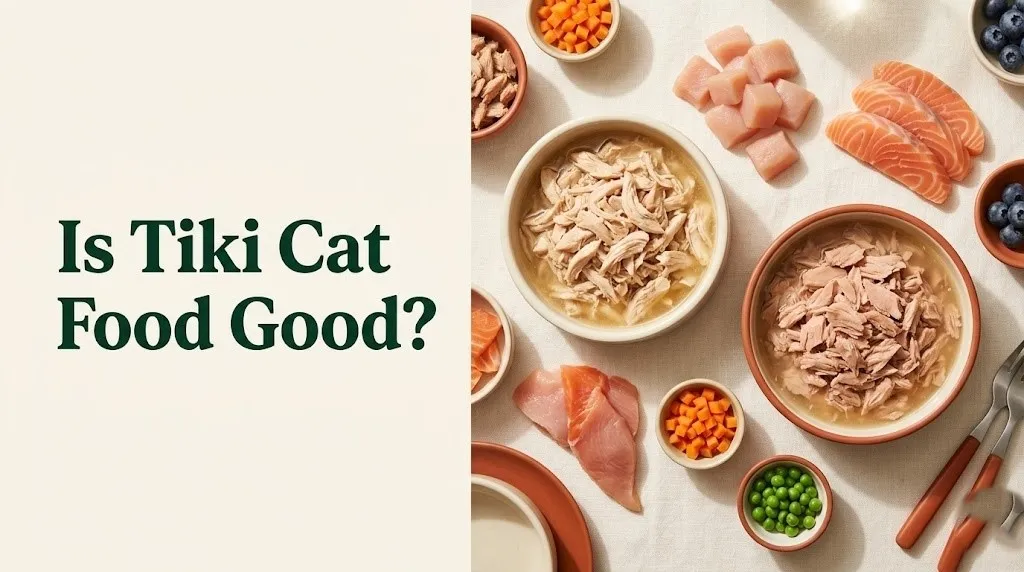
Is Tiki Cat Food Good?
Tiki Cat food is a high-quality wet cat food brand that earns its premium reputation through real-meat ingredients, high moisture content, and low carbohydrate formulas. It consistently ranks among the better-formulated options in the premium cat food category.
The brand is made by Tiki Pets, a Hawaii-based pet food company that built its product line around the idea that cats thrive on a diet close to what they’d eat in the wild: protein-dense, moisture-rich, and low in starchy fillers.
Most of Tiki Cat’s wet food products carry an AAFCO (Association of American Feed Control Officials) nutritional adequacy statement, which means they meet the established minimum nutritional standards for a complete and balanced feline diet. That’s the baseline every responsible cat owner should check on any food label.
What separates Tiki Cat from many mid-range brands isn’t just that it passes the AAFCO threshold. It’s that the formulas are built well above that floor.
| Quality Metric | Tiki Cat (typical wet food) | Average Grocery Store Wet Food |
|---|---|---|
| Moisture content | 78 to 82% | 70 to 75% |
| Named protein source | First ingredient | Often 3rd or 4th |
| Carbohydrate content | Under 5% (dry matter) | 15 to 30% (dry matter) |
| AAFCO statement | Complete and balanced | Complete and balanced |
| Fillers (grains, peas, potatoes) | Minimal to none in core lines | Frequently present |
The short version: if you’re looking for a wet cat food that prioritizes what cats actually need nutritionally, Tiki Cat is one of the better-supported choices on the market.
Is Tiki Cat Food Healthy?
Tiki Cat food is healthy for most cats when fed appropriately for their life stage and body weight, with wet food lines that deliver high animal protein and hydration in every serving. The ingredient quality is noticeably better than most mass-market brands.
“Healthy” in cat food isn’t just about what’s included. It’s also about what’s left out. Tiki Cat’s core wet food lines do not contain artificial colors, artificial preservatives, or added sugars. Many formulas use mixed tocopherols (vitamin E) as a natural preservative rather than synthetic alternatives like BHA or BHT.
The health picture isn’t perfect for every cat, though. Some Tiki Cat formulas contain carrageenan, a seaweed-derived thickener that has drawn attention in veterinary nutrition discussions. The research on carrageenan in cat food is not conclusive, but cat owners with cats prone to gastrointestinal sensitivity may want to choose carrageenan-free formulas within the Tiki Cat lineup, several of which exist.
Cats with specific health conditions, including hyperthyroidism, food allergies, or inflammatory bowel disease, should have any new food evaluated by a licensed veterinarian before switching. Healthy cats in otherwise good condition are the primary audience for a straightforward “yes, this is a healthy food” answer.
Key factors supporting Tiki Cat’s health profile:
- High named-protein ingredients as the first and primary component
- Moisture levels that actively support feline kidney and urinary health
- Low carbohydrate content aligned with obligate carnivore metabolism
- No corn, wheat, soy, or artificial additives in most formulas
- Taurine included, which cats cannot produce in sufficient quantities on their own
Tiki Cat Food Ingredients: What’s Actually in It?
Tiki Cat food ingredients are primarily named animal proteins (such as chicken, tuna, salmon, or white fish), water or broth, and small amounts of vitamins and minerals. There are no mystery meat ingredients or unnamed by-products in the core product lines.
The first ingredient in most Tiki Cat wet food products is a named meat source. That’s not a trivial point. Many affordable cat foods list “chicken by-product meal” or “meat and bone meal” as primary ingredients. Tiki Cat’s standard is a recognizable animal protein: chicken breast, skipjack tuna, wild salmon, or similar.
A typical ingredient list for a Tiki Cat Hanalei Luau variety looks like this:
- Chicken, chicken broth, sunflower seed oil, tricalcium phosphate, guar gum, choline chloride, vitamins (vitamin E supplement, thiamine mononitrate, niacin supplement, d-calcium pantothenate, vitamin A supplement, pyridoxine hydrochloride, riboflavin supplement, vitamin D3 supplement, folic acid, biotin, vitamin B12 supplement), taurine, minerals (zinc sulfate, ferrous sulfate, manganese sulfate, copper sulfate, potassium iodide, sodium selenite)
That’s a short, legible list. A cat owner can identify every item on it.
One important note for cat owners who avoid carrageenan: check individual SKUs. Not every Tiki Cat formula is carrageenan-free. The Tiki Cat Born Carnivore dry food line uses a different ingredient structure than the wet food lines and should be evaluated separately if you’re mixing wet and dry.
Tiki Cat Food Protein Content: How Much Does It Deliver?
Tiki Cat wet food typically delivers 10 to 14 grams of crude protein per 3-ounce (85g) serving, placing it among the highest-protein wet cat foods in the mainstream premium segment. On a dry matter basis, protein often exceeds 50%, which is well above the AAFCO minimum of 26% for adult cats.
That distinction between “as fed” and “dry matter basis” is worth understanding. Because wet food contains so much water (78 to 82%), comparing raw protein percentages to dry food percentages is misleading. Think of it like comparing a waterlogged sponge to a dry one: the water content changes the ratio dramatically without changing the actual protein content per calorie.
On a dry matter basis, Tiki Cat wet food typically outperforms most supermarket wet cat foods by a wide margin.
| Brand | Protein (As Fed) | Protein (Dry Matter Basis) |
|---|---|---|
| Tiki Cat (wet, typical) | 12 to 14% | 50 to 60% |
| Fancy Feast Classic Pate | 10 to 11% | 42 to 48% |
| Friskies (wet) | 8 to 9% | 32 to 38% |
| Hill’s Science Diet (wet) | 9 to 10% | 38 to 44% |
The amino acid taurine is present in all Tiki Cat formulas as a listed ingredient, which is non-negotiable for feline heart and retinal health. According to the Journal of Feline Medicine and Surgery, taurine deficiency in cats can lead to dilated cardiomyopathy (a serious heart condition) and progressive retinal atrophy. Any complete cat food should include it.
Cats prone to weight gain should have portion sizes monitored carefully even with high-protein foods. Higher protein does not automatically mean lower calories per serving; fat content affects the caloric density significantly.
Tiki Cat Food Moisture Content: Why It Matters for Cats
Tiki Cat wet food contains 78 to 82% moisture per serving, which actively supports feline hydration in a species that evolved to obtain most of its water through prey rather than from a water bowl. That biological trait makes moisture content one of the most important criteria in cat food selection.
Cats have a notoriously low thirst drive compared to dogs. Research published in the Journal of Feline Medicine and Surgery has linked chronic low water intake in cats to increased risk of feline lower urinary tract disease (FLUTD) and the development of urinary crystals. Feeding a wet food with high moisture content is one of the most evidence-supported strategies for improving a cat’s overall daily fluid intake.
By comparison, dry cat food contains roughly 8 to 10% moisture. A cat eating only dry food needs to compensate by drinking substantially more water from a bowl, which many cats simply don’t do consistently.
Think of it this way: a cat eating a typical portion of Tiki Cat wet food gets roughly the same moisture as drinking one and a half ounces of water per serving. For a cat who turns its nose up at a water fountain, that adds up to a real difference over weeks and months.
| Food Type | Approximate Moisture % | Water Contribution per 3 oz serving |
|---|---|---|
| Tiki Cat wet food | 78 to 82% | ~2.3 oz water |
| Average canned wet food | 70 to 75% | ~2.0 oz water |
| Semi-moist treats | 25 to 35% | ~0.8 oz water |
| Dry kibble | 8 to 10% | ~0.25 oz water |
Cats with a history of urinary blockages, bladder stones, or chronic urinary tract infections benefit most from a high-moisture wet food diet. A board-certified veterinary nutritionist through the American College of Veterinary Nutrition (ACVN) can help tailor the approach if your cat has a history of these conditions.
Key Takeaway: Tiki Cat food earns its premium status through real named-protein ingredients, high moisture content well above industry average, and a short, readable ingredient list free of artificial additives. For most healthy adult cats, it genuinely delivers on its quality claims.
Is Tiki Cat Food Good for Cats? The Feline Biology Angle
Tiki Cat food is well-suited for cats because its nutritional profile aligns directly with the biological needs of an obligate carnivore: high protein from animal sources, high moisture, and minimal carbohydrates. That’s the technical reason the brand’s reputation among feline-focused pet owners is strong.
Unlike dogs, cats cannot synthesize several essential amino acids and fatty acids from plant precursors. They need arachidonic acid (an omega-6 fatty acid) directly from animal tissue. They need taurine preformed in their diet. They have a limited ability to regulate protein oxidation, meaning they use amino acids for energy even when carbohydrates are available. High-carbohydrate diets can interfere with blood glucose regulation in ways that are particularly problematic for cats.
The Cornell University College of Veterinary Medicine notes that domestic cats evolved in arid environments and have metabolic adaptations that make wet food preferable to dry for long-term organ health. Tiki Cat’s formulas, particularly the broth-based and pate wet food lines, are built around this biological reality.
What Tiki Cat food does well for cats:
- Provides preformed taurine to support cardiac function and vision
- Delivers arachidonic acid from animal-based fat sources
- Supplies high protein to support lean muscle maintenance
- Offers moisture to support kidney filtration and urinary tract health
- Keeps phosphorus levels in a range suitable for most healthy adult cats
Cats with specific enzyme deficiencies, food protein sensitivities, or diagnosed metabolic conditions are a different consideration. For those cats, a veterinarian’s assessment of any food’s nutritional profile is more valuable than any review.
Tiki Cat Food for Urinary Health
Tiki Cat wet food supports feline urinary health primarily through its high moisture content, which promotes urine dilution and reduces the concentration of mineral compounds that can form crystals or stones. This is one of the most clinically relevant advantages of the brand for cats with a history of urinary issues.
Feline lower urinary tract disease (FLUTD) is one of the most common reasons cats visit a veterinarian. It encompasses a range of conditions including urinary crystals, bladder inflammation, urethral blockages, and idiopathic cystitis. According to research published in the Journal of Nutritional Science, increasing dietary moisture intake can reduce the risk of struvite and calcium oxalate crystal formation in cats.
Tiki Cat’s wet food formulas are particularly appropriate in this context because they are also low in magnesium, a mineral associated with struvite crystal development when present in high concentrations in urine. Always verify the guaranteed analysis on any specific Tiki Cat SKU for magnesium content if your cat has a history of struvite crystals.
This is one area where getting a veterinarian involved is genuinely warranted rather than optional. Cats that have had a urinary blockage, especially male cats who are anatomically more vulnerable to urethral obstruction, need a diet plan reviewed by their treating veterinarian. Tiki Cat wet food may be part of that plan, but it shouldn’t be chosen in isolation.
Quick Tip:
- Choose Tiki Cat formulas with broth or water as a listed ingredient for maximum moisture
- Avoid formulas with gravy thickeners as the primary liquid for cats on urinary management plans
- Ask your veterinarian to compare the magnesium and phosphorus content on the guaranteed analysis panel to any prescription urinary diet your cat has been prescribed
Tiki Cat Food Carbohydrate Content
Tiki Cat wet food is extremely low in carbohydrates, typically containing less than 5% on a dry matter basis, which is one of its strongest nutritional attributes for cats. Most cats have no dietary requirement for carbohydrates at all.
Cats lack the enzyme salivary amylase, which begins starch digestion in humans and dogs. Their pancreatic amylase activity is also lower than in omnivores, and their intestinal capacity to digest starches is limited. Feeding a cat a high-carbohydrate diet is not the same as feeding a human one; the metabolic consequences are different and potentially more damaging over time.
High-carbohydrate dry foods have been discussed in veterinary nutrition literature as a contributing factor to the rising rates of feline diabetes (formally, feline diabetes mellitus type 2, which resembles human type 2 diabetes in its relationship to chronic blood glucose dysregulation). This is still an area of active research, but the direction of the evidence is consistent.
Think of carbohydrates in a cat’s diet the way you’d think of a fuel tank that was never designed to run on a certain type of gas. The engine might keep running for a while, but it’s not operating efficiently.
| Nutrient | Tiki Cat Wet Food (dry matter) | Average Dry Kibble (dry matter) |
|---|---|---|
| Protein | 50 to 60% | 28 to 36% |
| Fat | 20 to 30% | 12 to 18% |
| Carbohydrates | 2 to 5% | 30 to 50% |
| Fiber | Under 2% | 3 to 6% |
Cats that have been diagnosed with feline diabetes are particularly dependent on low-carbohydrate diets. According to the American College of Veterinary Internal Medicine, dietary carbohydrate restriction is a core component of glycemic management in diabetic cats. A veterinarian managing a diabetic cat’s diet should review any food transition, including a switch to Tiki Cat.
Key Takeaway: Tiki Cat’s genuinely low carbohydrate content makes it one of the better wet food choices for cats with blood glucose regulation concerns, and it aligns with the carbohydrate-limited metabolism that all cats share as obligate carnivores.
Tiki Cat Food Product Lines Explained
Tiki Cat offers several distinct product lines, each with a different texture, protein source, and intended use case, so choosing the right one depends on your cat’s preferences, health status, and life stage. Not every Tiki Cat product is interchangeable.
The main product lines available as of 2026:
- Tiki Cat Hanalei Luau: Shredded chicken or fish in a natural broth. High moisture. One of the most popular lines. Available in multiple protein flavors. AAFCO complete and balanced for adult maintenance.
- Tiki Cat After Dark: Pate-style format using whole prey proteins (chicken hearts, duck, rabbit). Higher fat content than broth-based lines. Well-suited for cats who prefer pate texture or need calorie density.
- Tiki Cat Velvet Mousse: Ultra-smooth mousse texture. Good option for senior cats or cats with dental discomfort. Chicken and seafood varieties available.
- Tiki Cat Born Carnivore: Air-dried kibble format. Grain-free. Higher protein than most dry foods, but lower moisture than any wet food. Not a direct substitute for the wet food lines nutritionally.
- Tiki Cat Stix: Soft treat tubes in various protein flavors. Not a complete food. Intended as a supplement or treat.
- Tiki Kitten and Senior lines: Life-stage-specific formulas meeting AAFCO requirements for growth/reproduction (kittens) or senior maintenance.
| Product Line | Format | Best For | AAFCO Statement |
|---|---|---|---|
| Hanalei Luau | Shredded in broth | Hydration, variety, general adult use | Adult maintenance |
| After Dark | Pate | Calorie density, whole prey proteins | Adult maintenance |
| Velvet Mousse | Mousse | Dental issues, seniors, picky eaters | Adult maintenance |
| Born Carnivore | Dry kibble | Mixed feeding supplement | All life stages (varies) |
| Stix | Treat tubes | Training, enrichment | Not a complete food |
Is Tiki Cat Food Grain Free?
Most Tiki Cat wet food formulas are grain-free, meaning they do not contain wheat, corn, rice, oats, or barley, which is the standard for the brand’s core wet food lines. The Born Carnivore dry food line is also grain-free, though it uses alternative carbohydrate sources.
The grain-free label requires careful interpretation. As of 2026, the FDA has not established a definitive causal link between grain-free diets and dilated cardiomyopathy (DCM) in cats. The FDA investigation that generated headlines in 2018 and 2019 was focused primarily on dogs, and the data in cats was far less conclusive. Veterinary cardiologists continue to study the question.
What matters more than the grain-free label is the source of carbohydrates in the formula. Some grain-free foods replace grain with large amounts of peas, lentils, or chickpeas. Tiki Cat’s wet food lines avoid this substitution by building formulas around meat and broth, keeping total carbohydrate content genuinely low rather than simply swapping one starch for another.
For cats with confirmed grain sensitivities or diagnosed food allergies, grain-free wet food is often part of the dietary management plan. True grain allergies in cats do exist, though food allergies in cats are more commonly triggered by specific proteins (chicken, fish, beef) than by grains. A food elimination trial overseen by a veterinarian remains the gold standard for diagnosing feline food allergies.
Is Tiki Cat Food Good for Kittens?
Tiki Cat food is good for kittens when you specifically choose formulas labeled for “growth and reproduction” or “all life stages,” because kittens have higher protein, fat, calcium, and phosphorus requirements than adult cats. Feeding an adult-only formula to a growing kitten long-term would not meet those elevated needs.
The AAFCO nutrient profiles for kittens require higher minimums for several key nutrients. Protein minimum is 30% on a dry matter basis for growth, compared to 26% for adult maintenance. Calcium and phosphorus ratios also differ significantly because skeletal development requires precise mineral balance during the first year of life.
Tiki Cat does offer products formulated for kittens, and the Hanalei Luau Kitten variety and several “all life stages” formulas are appropriate starting points. Always check the AAFCO nutritional adequacy statement on the can or pouch rather than relying on the product name alone. The statement will specify whether the food is appropriate for “growth and reproduction.”
For kittens under 8 weeks, wet food should be introduced carefully and may need to be slightly moistened further if transitioning from mother’s milk. Kittens 8 to 12 weeks old generally accept wet food well without modification.
Quick Tip:
- Kittens typically need 3 to 4 small meals per day rather than 1 to 2 adult-style feedings
- Choose Tiki Cat formulas explicitly labeled “all life stages” or “growth and reproduction” for kittens under 12 months
- A veterinarian can confirm when to transition to an adult formula, which is usually around 12 months for most breeds
Key Takeaway: Tiki Cat works well for kittens when you select the right life-stage formula; the protein and moisture levels are appropriate for growth, but always confirm the AAFCO adequacy statement matches the kitten’s developmental stage.
Is Tiki Cat Food Good for Senior Cats?
Tiki Cat food is a strong option for senior cats because the high moisture content and soft textures support aging kidneys, reduce the risk of dehydration, and are easier to chew for cats with dental wear or tooth loss. Senior cats generally benefit from wet food over dry food for multiple reasons.
Cats are typically considered senior at age 11 and older, according to the American Association of Feline Practitioners (AAFP). Aging cats face increased risks of chronic kidney disease (CKD), hyperthyroidism, diabetes, arthritis, and cognitive decline. Many of these conditions are influenced by diet in ways that make food selection more consequential in the senior years than at any other life stage.
Kidney disease is the most common serious health condition in senior cats. CKD management often involves dietary phosphorus restriction, because damaged kidneys struggle to filter and excrete excess phosphorus. Some standard Tiki Cat formulas may be too high in phosphorus for a cat already diagnosed with CKD. A veterinarian should review the guaranteed analysis and compare it against the phosphorus target established for that cat’s specific kidney disease stage.
The Tiki Cat Velvet Mousse line is particularly useful for senior cats with dental issues. The smooth, soft texture requires no significant chewing effort and has been well-accepted by cats with tooth extractions or severe gingivitis.
| Senior Cat Need | Tiki Cat Feature That Addresses It |
|---|---|
| Hydration support | 78 to 82% moisture in wet food lines |
| Easier chewing | Velvet Mousse line for soft texture |
| Lean muscle maintenance | High protein on dry matter basis |
| Palatability (reduced appetite) | Strong natural fish and meat aromas |
| Kidney health monitoring | Check phosphorus levels on guaranteed analysis |
Tiki Cat Food for Cats With Kidney Disease
Tiki Cat food can be appropriate for cats with early-stage chronic kidney disease (CKD), but cats in later stages of kidney disease require careful veterinary guidance on phosphorus and protein levels before any food choice is finalized. This is not a decision to make based on a brand’s general reputation.
Feline CKD is staged by the International Renal Interest Society (IRIS) from Stage 1 (mild) through Stage 4 (severe). Dietary recommendations differ significantly across stages. The key dietary factors in CKD management include phosphorus restriction, adequate hydration, controlled protein intake at specific disease stages, and potassium support for cats with hypokalemia.
Tiki Cat’s high moisture content is genuinely beneficial for cats with CKD because keeping a CKD cat well-hydrated reduces the workload on the kidneys and slows disease progression, according to guidance from the Cornell University College of Veterinary Medicine. The hydration benefit is real and meaningful.
Protein management in CKD is more nuanced. Early-stage CKD does not necessarily require protein restriction. The IRIS guidelines note that severe protein restriction in CKD cats can cause muscle wasting and malnutrition, which carry their own serious risks. Later-stage CKD may warrant some protein moderation, but the threshold is individualized.
Phosphorus is the more immediate concern. Tiki Cat’s standard wet food formulas are not designed as phosphorus-restricted veterinary diets. Owners of CKD cats should request a phosphorus content figure from the manufacturer for specific formulas and compare it with their veterinarian’s target for that cat’s disease stage.
One practical approach that works for some CKD cats at earlier stages: consult with a veterinarian about using a Tiki Cat high-moisture formula as the base of the diet, with possible phosphorus binders added if phosphorus restriction is indicated. This is a medically supervised strategy, not a self-managed one.
Tiki Cat Food vs. Fancy Feast
Tiki Cat food is a higher-protein, higher-moisture, and ingredient-cleaner option than most Fancy Feast varieties, but Fancy Feast costs significantly less per serving and remains nutritionally complete by AAFCO standards. The right choice depends on your cat’s health needs and your budget.
Both brands make AAFCO-compliant wet cat food. Both are widely available. The differences lie in ingredient quality, protein source specificity, and moisture levels.
| Comparison Factor | Tiki Cat | Fancy Feast (Classic Pate) |
|---|---|---|
| First ingredient | Named protein (e.g., chicken breast) | Often poultry by-products or fish |
| Moisture content | 78 to 82% | 70 to 75% |
| Protein (dry matter) | 50 to 60% | 42 to 50% |
| Carbohydrates (dry matter) | Under 5% | 5 to 15% (varies by line) |
| Artificial additives | None in core lines | Some flavors contain added colors |
| Cost per 3 oz serving | Approximately $1.00 to $2.00 | Approximately $0.30 to $0.60 |
| AAFCO compliance | Yes | Yes |
Fancy Feast’s Classic Pate line is often cited positively by veterinary professionals as a better-formulated option within the brand’s lineup: it’s lower in carbohydrates than many Fancy Feast varieties and has a decent protein profile. But its moisture and ingredient transparency still fall short of what Tiki Cat delivers.
For budget-conscious cat owners, Fancy Feast Classic is a far better option than dry-food-only feeding. For owners specifically managing a cat’s urinary health, weight, or hydration, Tiki Cat’s higher moisture content offers a measurable advantage. A mixed feeding approach (Tiki Cat as a primary wet food alongside a smaller portion of a more affordable wet food) is a practical middle ground some cat owners use.
Key Takeaway: Tiki Cat outperforms Fancy Feast in protein density, moisture content, and ingredient transparency, but both are AAFCO-compliant. Budget and the specific cat’s health needs are the deciding factors.
Tiki Cat Food Recall History and Safety
Tiki Cat food has a limited recall history as of 2026, with no widespread FDA Class I recalls in recent years, which reflects positively on the brand’s manufacturing consistency. However, all cat food brands carry some historical risk, and it’s worth knowing what has happened.
As of the publication of this article, the FDA’s pet food recall database does not list any active or recent Class I (health-hazard) recalls for Tiki Cat. There was a limited voluntary recall in 2015 related to inadequate vitamin and mineral levels in specific kitten food lots, which the company addressed and resolved. No contamination or safety-related recalls have been recorded since.
That said, a clean recent recall record doesn’t mean a brand should be purchased without any due diligence. Pet food recalls happen across all price points and brand tiers. Cat owners can monitor the FDA Recalls, Market Withdrawals, and Safety Alerts page for real-time updates on any pet food brand.
For cat owners who want additional confidence in manufacturing standards, looking for pet food brands that conduct regular third-party testing is worthwhile. Tiki Pets has stated publicly that it performs quality control testing on its products, though the details of third-party audit frequency are not always publicly disclosed in the level of detail some pet owners want.
Safety checklist for any cat food purchase:
- Check the AAFCO nutritional adequacy statement on every can or pouch
- Verify the FDA recall database before purchasing a new brand or formula
- Look for a lot number and best-by date on packaging and register the product with the manufacturer if that option is offered
- Store opened wet food in the refrigerator and discard any unused portion after 24 hours
- Discard any cans with visible rust, dents at seams, or swollen lids before opening
Frequently Asked Questions About Tiki Cat Food
Is Tiki Cat food vet recommended?
Many veterinarians consider Tiki Cat a strong wet food option due to its high moisture content, named protein sources, and low carbohydrate profile.
It is not a prescription diet, but it aligns with broad veterinary nutrition recommendations for cats as obligate carnivores who benefit from wet, protein-rich food.
Cats with specific diagnoses should have any food, including Tiki Cat, reviewed by their treating veterinarian before a major diet change.
How much Tiki Cat food should I feed my cat per day?
The general feeding guideline for an average adult cat (8 to 10 pounds) is approximately two 3-ounce cans of wet food per day, though individual caloric needs vary by activity level, age, and health status.
Tiki Cat’s packaging includes a feeding chart based on body weight, which is a reasonable starting point.
Monitoring your cat’s body condition score (the ability to feel but not see the ribs, with a visible waist from above) is a more reliable long-term guide than a fixed daily amount.
Is Tiki Cat food good for cats with kidney disease?
Tiki Cat’s high moisture content is beneficial for cats with chronic kidney disease (CKD) because hydration reduces strain on damaged kidneys and slows disease progression.
However, phosphorus content in standard Tiki Cat formulas may not meet the restriction targets for cats in intermediate or advanced CKD stages.
A veterinarian familiar with the cat’s specific CKD stage and bloodwork results should approve any food before introducing it into a CKD management plan.
Does Tiki Cat food have any recalls?
Tiki Cat had a limited voluntary recall in 2015 involving inadequate nutrient levels in specific kitten food lots, which was resolved without reported health incidents.
As of 2026, no active or recent Class I (health-hazard) FDA recalls are listed for the brand.
Cat owners can check the FDA pet food recalls page directly for the most current information on any brand.
Is Tiki Cat food worth the price?
Tiki Cat costs more per serving than most supermarket cat food brands, typically $1.00 to $2.00 per 3-ounce serving compared to $0.30 to $0.60 for brands like Fancy Feast.
For cats with urinary health concerns, low appetite for water, or a documented benefit from high-protein wet food, the nutritional difference justifies the higher cost for many owners.
Budget-focused cat owners may find that using Tiki Cat as a primary wet food while supplementing with a lower-cost AAFCO-compliant wet food provides a practical balance between quality and cost.
Tiki Cat food is one of the more honestly formulated premium cat foods available in 2026. The moisture levels are genuinely high, the protein sources are named and traceable, and the carbohydrate content is genuinely low rather than just grain-free on a technicality.
The areas that require thought are cost, life-stage matching, and health condition nuance. Not every Tiki Cat formula suits every cat. Senior cats with kidney disease, kittens in growth phases, and cats with diagnosed food sensitivities all need label-specific attention rather than a blanket brand recommendation.
Start with the wet food lines, check the AAFCO statement on the specific can, and if your cat has any active health condition, run the formula’s guaranteed analysis by your veterinarian before committing to it.