Dogs can physically eat cat food and a few bites will not harm them, but cat food is not formulated for canine nutritional needs and should never be fed as a regular meal or treat because its high protein, fat, and calorie content can cause digestive upset, pancreatitis, and long-term health problems.
The scene is familiar in millions of homes. The dog hovers near the cat’s feeding station. The cat walks away from a half-finished bowl. In the time it takes to grab a paper towel, the dog has licked the bowl clean. Now you are standing there wondering whether you need to call the veterinarian or just keep a closer eye on the cat’s dinner.
The American Veterinary Medical Association confirms that cat food is not toxic to dogs in the sense that chocolate or grapes are toxic. The danger is nutritional. Cat food is built for a cat’s metabolism, which is fundamentally different from a dog’s. Feeding it intentionally or allowing regular access puts a dog at risk for obesity, gastrointestinal distress, and pancreatitis. This article explains the nutritional differences, the specific risks, what to do after an accidental ingestion, and how to manage a multi-pet household so the cat’s food stays in the cat’s bowl.
Can Dogs Have Cat Food
Dogs should not have cat food as a regular part of their diet because cat food is formulated to meet the nutritional requirements of obligate carnivores, not omnivores, and contains levels of protein, fat, and specific nutrients that exceed what is appropriate for canine health.
A few bites of cat food stolen from the cat’s bowl will not poison your dog. A dog who eats an entire bowl of cat food will likely experience digestive upset but will probably recover without medical intervention. A dog fed cat food as their primary diet for weeks or months is at risk for serious health problems.
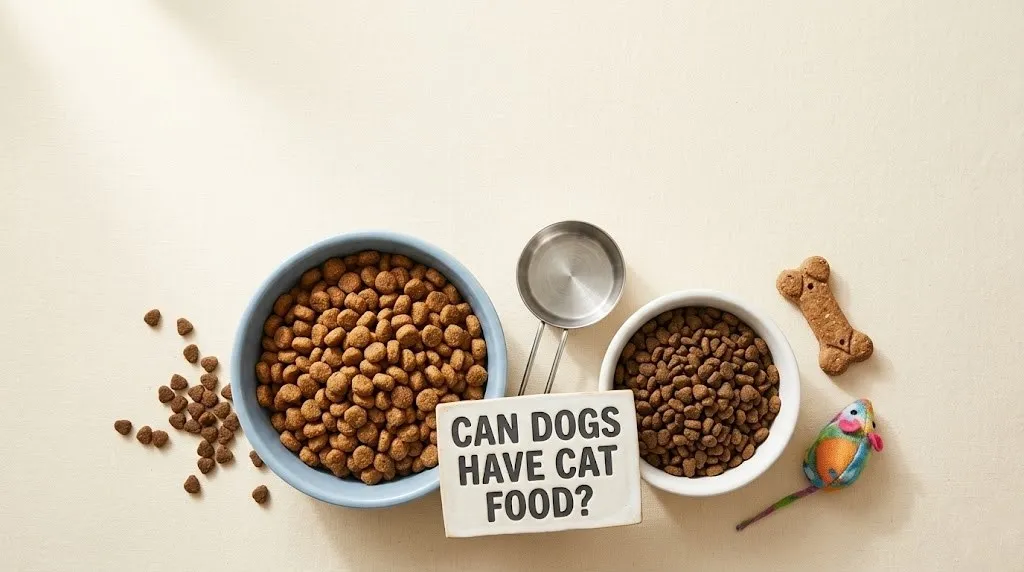
The safety spectrum for dogs eating cat food looks like this:
| Amount | Risk Level | Likely Outcome |
|---|---|---|
| A few kibbles or licks | Minimal | No symptoms |
| A small handful | Low | Possible mild GI upset |
| A full cat bowl | Moderate | Likely vomiting or diarrhea within 12-24 hours |
| Daily access over weeks | High | Obesity, pancreatitis risk, nutrient imbalances |
| Primary diet for months | Severe | Malnutrition, pancreatitis, organ stress |
The distinction between “not immediately toxic” and “not safe” matters. Cat food will not cause acute poisoning the way chocolate or xylitol will. But it is not safe as a dietary staple. The nutritional mismatch between species is too large.
Dietary Sensitivity Note: A dog’s size, age, and health status change the risk calculation. A 90-pound Labrador who eats a few cat kibbles will have no symptoms. A 5-pound Yorkie who eats a full bowl of rich wet cat food may develop pancreatitis. Individual variation matters, and a veterinarian should evaluate any dog showing symptoms after eating cat food.
Key Takeaway: Cat food is not acutely toxic to dogs, but it is not safe as a regular food source. The risk increases with the amount eaten, the frequency of access, and the size and health status of the dog.
Nutritional Differences Between Dog Food and Cat Food
Dog food and cat food differ fundamentally because dogs are omnivores that can synthesize certain nutrients from plant sources while cats are obligate carnivores that require preformed animal-source nutrients including taurine, arachidonic acid, and preformed vitamin A in their diet.
These biological differences are not preferences. They are evolutionary facts encoded in each species’ metabolism. A cat cannot produce taurine from plant amino acids. A dog can. A cat cannot convert beta-carotene from carrots into vitamin A. A dog can. These metabolic pathways determine what each species needs from its food.
Here is the nutritional comparison based on AAFCO nutrient profiles for adult maintenance:
| Nutrient | Dog Food (Adult Maintenance) | Cat Food (Adult Maintenance) |
|---|---|---|
| Crude Protein (minimum) | 18-25% | 26-30% |
| Crude Fat (minimum) | 5-15% | 9-20% |
| Taurine | Not required (dogs synthesize it) | Required (cats cannot synthesize) |
| Arachidonic Acid | Not required | Required (essential fatty acid for cats) |
| Preformed Vitamin A | Not required (convert from beta-carotene) | Required (cannot convert from plants) |
| Niacin (B3) | Can synthesize from tryptophan | Must be preformed in diet |
| Calorie Density | 350-400 kcal/cup (dry) | 400-500 kcal/cup (dry) |
The protein difference is the most obvious. Cat food contains roughly 26 to 30 percent protein on a dry matter basis. Dog food contains 18 to 25 percent. The extra protein taxes a dog’s kidneys and liver over time, though healthy dogs can handle occasional high-protein meals.
The fat difference is the more immediate concern. Cat food is 9 to 20 percent fat. The higher end, common in wet cat foods, can be 50 to 100 percent higher in fat than typical dog food. A high-fat meal is the primary trigger for acute pancreatitis in dogs, a painful and potentially life-threatening condition.
The calorie difference matters for weight management. Cat food is more calorie-dense than dog food. A dog who regularly snacks on cat food will gain weight. A 2023 study in the Journal of Veterinary Internal Medicine found that multi-pet households where dogs had access to cat food had higher rates of canine obesity.
Dietary Sensitivity Note: The nutritional profiles described are for commercial pet foods meeting AAFCO standards. Homemade and raw cat foods may have even higher protein and fat levels and additional risks from bacterial contamination.
Why Is Cat Food Bad for Dogs
Cat food is bad for dogs because its high fat content can trigger acute pancreatitis, its high protein and calorie density leads to obesity, and it lacks the balanced nutrient profile dogs need for long-term health, including appropriate fiber levels for canine digestion.
The health problems from cat food fall into two categories: acute problems from a single large ingestion and chronic problems from regular access.
Acute problems from eating cat food:
- Vomiting and diarrhea: A dog’s digestive system is not accustomed to the high fat content of cat food. Within 6 to 24 hours, the dog may develop loose stools or vomiting as the pancreas and gallbladder struggle to process the fat load.
- Acute pancreatitis: The most serious short-term risk. A high-fat meal triggers the pancreas to release digestive enzymes. In some dogs, these enzymes activate inside the pancreas itself, causing inflammation, pain, and systemic illness. Small breeds and dogs with a history of pancreatitis are at highest risk.
Chronic problems from regular cat food consumption:
- Obesity: Cat food is calorie-dense. Regular access leads to weight gain.
- Nutrient imbalances: Cat food provides nutrients dogs need in wrong proportions and lacks others dogs require.
- Organ stress: Long-term high protein intake stresses the kidneys, particularly in senior dogs or those with early kidney disease.
The Association of American Feed Control Officials (AAFCO) sets separate nutrient profiles for dogs and cats for a reason. These are not marketing categories. They reflect the biological requirements of different species. Feeding a dog cat food is like fueling a gasoline engine with diesel. It might run for a while, but damage accumulates.
Dietary Sensitivity Note: Dogs with pre-existing health conditions face higher risks from cat food. The section on health conditions below addresses these specific risks in detail.
What Happens If a Dog Eats Cat Food
A dog who eats cat food will typically experience mild to moderate gastrointestinal symptoms including vomiting, diarrhea, gas, and decreased appetite within 6 to 24 hours, with most cases resolving within 24 to 48 hours without veterinary intervention.
The timeline of symptoms after a dog eats cat food is fairly predictable:
| Time After Ingestion | What Typically Happens |
|---|---|
| 0-6 hours | Dog may seem normal; fat is being processed |
| 6-12 hours | Possible onset of nausea, lip licking, restlessness |
| 12-24 hours | Vomiting or diarrhea may begin; loose, greasy stools |
| 24-48 hours | Symptoms peak and begin resolving |
| 48-plus hours | Most dogs return to normal; persistent symptoms need a vet |
The volume of cat food eaten determines severity. A few kibbles will cause no symptoms. A full bowl of wet cat food can cause significant vomiting and diarrhea. A dog who breaks into a bag of dry cat food and eats a large volume may require veterinary care.
Symptoms that warrant an immediate veterinary visit:
- Repeated vomiting (more than 3 episodes in a few hours)
- Vomiting with blood
- Severe lethargy or collapse
- Abdominal pain (dog cries when picked up, hunched posture, praying position)
- Diarrhea with blood
- Vomiting and inability to keep water down for more than 12 hours
These symptoms suggest pancreatitis or severe gastroenteritis rather than simple dietary indiscretion.
Quick Tip:
- Do not induce vomiting at home without explicit veterinary instruction. Hydrogen peroxide can cause additional stomach irritation and aspiration pneumonia if done incorrectly. Call your veterinarian or a pet poison control hotline for guidance.
Is Cat Food Safe for Dogs as a Treat
Cat food is not safe or appropriate as a regular treat for dogs because even small amounts regularly consumed add excess calories, fat, and protein that contribute to weight gain and can trigger pancreatitis in susceptible dogs over time.
Many dog owners wonder whether cat food can serve as a high-value training treat. The logic seems reasonable: dogs love the taste, the pieces are small, and it is already in the house. The problem is that treats should make up no more than 10 percent of a dog’s daily calorie intake, and cat food is too calorie-dense to fit that framework.
A few pieces of cat kibble as a rare, accidental treat will not harm a healthy adult dog. But intentionally using cat food as a regular treat creates the same nutritional problems as regular cat food consumption, just on a smaller scale. The fat and calorie load accumulates over weeks and months.
Better high-value treat alternatives:
- Freeze-dried liver treats (single ingredient, low calorie)
- Small pieces of boiled chicken breast
- Commercial training treats under 3 calories per piece
- Baby carrots or green beans for dogs who enjoy them
- Freeze-dried salmon treats (high value, species-appropriate)
If your dog is highly food-motivated and you need a high-value reward, use dog-appropriate treats that are highly palatable rather than reaching for the cat’s bowl.
Dietary Sensitivity Note: Dogs with food allergies or on prescription diets should never receive cat food or any treat not approved by their veterinarian.
Key Takeaway: Cat food is too calorie-dense and nutritionally inappropriate to use as a regular dog treat. Occasional accidental bites are harmless. Intentional feeding as treats is not recommended.
Can Dogs Eat Cat Food Once
A healthy adult dog can eat cat food once in a small to moderate amount and will most likely experience mild digestive upset or no symptoms at all, but a single large ingestion can cause acute pancreatitis, especially in small breeds or predisposed dogs.
The “once” question comes up in two common scenarios. The dog jumped onto the counter and ate the cat’s dinner. The owner ran out of dog food and considered using cat food for a single meal. The risks differ between these scenarios.
Accidental single ingestion: Most healthy dogs will be fine. Monitor for vomiting, diarrhea, and lethargy for 24 to 48 hours. Withhold food for 12 hours if gastrointestinal symptoms develop, then offer a bland diet (boiled chicken and white rice) in small amounts. Provide plenty of water.
Intentional single meal: If you are out of dog food and considering using cat food for one meal, the risk is moderate. A single meal of cat food will not cause long-term harm to a healthy dog. Feed a smaller portion than you normally would because cat food is more calorie-dense. Return to dog food at the next meal.
Do not intentionally feed cat food to:
- Small or miniature breed dogs (higher pancreatitis risk)
- Dogs with a history of pancreatitis
- Dogs with kidney disease
- Puppies under 6 months
- Senior dogs over 10 years
- Dogs with diabetes or other metabolic conditions
For these dogs, a missed meal or a quick trip to the store for dog food is safer than a meal of cat food.
Dietary Sensitivity Note: If you run out of dog food, plain boiled chicken and rice is a safer single-meal substitute than cat food. It is bland, digestible, and species-appropriate for dogs.
Do Dogs Like Cat Food More Than Dog Food
Dogs are attracted to cat food because it is higher in protein and fat than dog food, making it smell richer and more intense, and this preference is a matter of palatability driven by the biological appeal of high-energy foods, not an indication that cat food is better for them.
Cat food smells more strongly than dog food. The higher fat content carries aromatic compounds that dogs find irresistible. The higher protein content contributes to the savory umami flavor that dogs are wired to seek out. In the wild, a high-fat, high-protein meal represents a valuable energy source.
This preference makes evolutionary sense. It does not make cat food healthy for dogs. The same biological drive that makes dogs raid the cat’s bowl is the drive that makes humans crave cake. The appeal is real. The nutritional value for the species is not.
Cats, for their part, are generally less interested in dog food. Dog food is lower in protein and fat and does not smell as appealing to a cat’s senses. This is why multi-pet households more commonly have problems with dogs eating cat food than the reverse.
Understanding the attraction helps with prevention. Dogs are not misbehaving when they eat cat food. They are following a deeply programmed instinct to seek out calorie-dense food. Management, not punishment, is the solution.
Quick Tip:
- If your dog is obsessed with cat food, increase the palatability of their own food. A small amount of wet dog food mixed with kibble, a sprinkle of freeze-dried meat topper, or slightly warming the food can make dog food more appealing.
Health Risks of Dogs Eating Cat Food Regularly
Dogs who eat cat food regularly face increased risks of obesity, acute and chronic pancreatitis, nutrient imbalances, and gastrointestinal problems including chronic diarrhea and flatulence, with small breeds and dogs with pre-existing conditions facing the highest risk of serious complications.
The risks of regular cat food consumption are cumulative. A dog who sneaks a few cat kibbles daily for months will gradually gain weight. A dog who finishes the cat’s wet food every evening may eventually trigger a pancreatitis episode. The damage is not dramatic until it is.
| Health Risk | Mechanism | Signs to Watch For |
|---|---|---|
| Obesity | Excess calorie intake from calorie-dense cat food | Weight gain, difficulty feeling ribs, lethargy |
| Pancreatitis | High dietary fat triggers pancreatic enzyme activation | Vomiting, abdominal pain, hunched posture, anorexia |
| Gastrointestinal upset | Dietary fat not digestible for canine system | Chronic loose stools, gas, intermittent vomiting |
| Nutrient imbalance | Cat food lacks appropriate canine nutrient ratios | Dull coat, low energy, poor skin condition over time |
| Kidney stress | Sustained high protein intake taxes kidneys | Increased thirst and urination (senior dogs especially) |
Pancreatitis is the most serious acute risk. The pancreas produces enzymes that digest fat. A high-fat meal, especially a sudden one in a dog not accustomed to it, can trigger these enzymes to activate within the pancreas rather than in the small intestine. The result is inflammation, pain, and systemic illness. A 2021 study in the Journal of Veterinary Emergency and Critical Care found that dietary indiscretion, including eating high-fat foods not intended for dogs, was the most common identifiable trigger for acute pancreatitis.
Obesity is the most common chronic risk. Cat food is approximately 20 to 30 percent more calorie-dense than dog food. A small dog who eats a tablespoon of cat food daily above their regular diet can gain a pound in a month. For a 10-pound dog, that is a 10 percent body weight increase.
Key Takeaway: The risks of regular cat food consumption are real and cumulative. Obesity, pancreatitis, and chronic gastrointestinal problems are the most common consequences.
Can Cat Food Cause Pancreatitis in Dogs
Yes, cat food can trigger acute pancreatitis in dogs because its high fat content, especially in wet cat food, can overwhelm the pancreas and cause the premature activation of digestive enzymes within the organ, leading to inflammation, pain, and potentially life-threatening systemic illness.
Pancreatitis is the reason veterinarians are most concerned about dogs eating cat food. The condition is painful, expensive to treat, and can be fatal in severe cases. Certain dogs are at much higher risk.
High-risk dogs for cat-food-induced pancreatitis:
- Miniature Schnauzers (genetic predisposition to hyperlipidemia)
- Yorkshire Terriers and other small terriers
- Miniature Poodles
- Dachshunds
- Dogs with a previous pancreatitis episode
- Overweight dogs
- Dogs with hypothyroidism or diabetes
The signs of pancreatitis include:
- Repeated vomiting, often yellow or foamy
- Severe abdominal pain (hunched posture, crying when touched)
- Refusal to eat or drink
- Lethargy and depression
- Diarrhea (sometimes)
- Fever or low body temperature
Pancreatitis requires veterinary treatment. Mild cases may be managed with anti-nausea medication, pain relief, and fluid therapy. Severe cases require hospitalization, intravenous fluids, and intensive monitoring. Treatment costs can range from 500 to several thousand dollars depending on severity.
The mechanism is dose-dependent. A small amount of cat food is unlikely to cause pancreatitis in a dog with no risk factors. A large volume of high-fat wet cat food eaten by a predisposed dog is a recipe for an emergency. This is why prevention is so important.
Dietary Sensitivity Note: Dogs who have recovered from pancreatitis should be fed a low-fat prescription diet and should never have access to cat food or any high-fat treat. A single high-fat meal can trigger a recurrence.
What to Do If Your Dog Ate Cat Food
If your dog ate cat food, determine how much was eaten, remove access to any remaining food, monitor for symptoms for 24 to 48 hours, withhold the next meal if gastrointestinal signs develop, and call your veterinarian immediately if the dog is a high-risk breed, has a history of pancreatitis, or develops severe symptoms.
This step-by-step action plan walks you through the first 24 hours after discovering your dog has eaten cat food.
Step 1: Assess the situation. How much cat food was eaten? A few kibbles? A full bowl? An entire bag? Was it wet or dry food? How large is your dog? A Great Dane who eats a few kibbles faces negligible risk. A Chihuahua who eats a full bowl of wet food faces significant risk.
Step 2: Remove any remaining cat food. Put the cat’s bowl out of reach. If the dog broke into a bag, seal it and store it securely.
Step 3: Do not induce vomiting unless instructed by a veterinarian. Hydrogen peroxide can cause additional stomach irritation and aspiration if inhaled.
Step 4: Monitor your dog closely for the next 24 hours. Watch for vomiting, diarrhea, lethargy, restlessness, lip licking (sign of nausea), and abdominal pain.
Step 5: If the dog seems fine after 6 hours, offer water. If water stays down, offer a small amount of bland food (boiled chicken and white rice) at the next normal meal time.
Step 6: If mild vomiting or diarrhea develops, withhold food for 12 hours. Offer small amounts of water. If symptoms resolve, reintroduce a bland diet in small portions.
Step 7: Call your veterinarian or an emergency vet immediately if:
- Vomiting is repeated (more than 3 times in a few hours)
- Vomit contains blood
- Dog is severely lethargic or seems painful
- Dog cannot keep water down
- You have a high-risk breed (Schnauzer, Yorkie, Dachshund)
- Your dog has a history of pancreatitis
Dietary Sensitivity Note: If your regular veterinarian is closed, know the location and phone number of the nearest 24-hour emergency veterinary hospital before an incident occurs. Save it in your phone.
How Much Cat Food Is Harmful to Dogs
There is no single toxic dose of cat food for dogs, but as a general guideline, more than 1 to 2 tablespoons for a small dog or more than 1/2 cup for a large dog can cause gastrointestinal upset, and any amount can trigger pancreatitis in predisposed dogs.
The harmful amount depends on the dog’s size, the cat food’s fat content, and the dog’s individual sensitivity. A few guidelines:
| Dog Size | Cat Food Amount | Expected Effect |
|---|---|---|
| Small (under 15 lbs) | 1-2 tbsp | Mild GI upset possible |
| Small | 1/4 cup or more | Vomiting/diarrhea likely; pancreatitis risk |
| Medium (15-40 lbs) | 2-4 tbsp | Mild GI upset possible |
| Medium | 1/2 cup or more | Vomiting/diarrhea likely |
| Large (40-80 lbs) | 1/4 cup | Likely no symptoms |
| Large | 1 cup or more | GI upset possible |
| Giant (over 80 lbs) | 1/2 cup | Likely no symptoms |
| Giant | 2 cups or more | GI upset possible |
Wet cat food is more likely to cause problems than dry kibble at the same volume because it is higher in fat and moisture. A single can of wet cat food can contain 15 to 25 grams of fat. For a small dog, this is an enormous fat load.
Dogs with a history of pancreatitis, hyperlipidemia, or gastrointestinal sensitivity can react to much smaller amounts. For these dogs, there is no safe amount of cat food.
Quick Tip:
- If your dog ate cat food and you are unsure whether the amount is concerning, call your veterinarian with the dog’s weight, the type of cat food (wet or dry), and your best estimate of the amount eaten. They can give specific guidance.
Can Puppies Eat Cat Food Safely
Puppies should not eat cat food because their developing digestive and immune systems are more sensitive to dietary changes, and the high fat and protein content of cat food can cause more severe gastrointestinal distress in puppies than in adult dogs.
Puppies have higher protein and calorie needs than adult dogs because they are growing. This might make cat food seem like a logical fit. It is not. Puppy food is specifically formulated with the right balance of protein, fat, calcium, and phosphorus for skeletal development. Cat food is formulated for kittens, which have different calcium and phosphorus requirements.
The risks of cat food for puppies:
- Gastrointestinal sensitivity: A puppy’s digestive system is less resilient. Vomiting and diarrhea from cat food can lead to dehydration faster in a puppy than in an adult dog.
- Developmental concerns: Improper calcium-to-phosphorus ratios affect bone development. Large-breed puppies are particularly sensitive.
- Pancreatitis: Though less common in puppies than adult dogs, it is possible.
- Behavioral conditioning: A puppy who learns that cat food is available may develop a lifelong habit of seeking it out.
What to do if a puppy eats cat food: The monitoring protocol is the same as for adult dogs, but the threshold for veterinary contact is lower. Puppies dehydrate faster and decline more quickly than adults. If a puppy vomits more than once or seems lethargic, call a veterinarian.
Dietary Sensitivity Note: Puppies under 4 months should see a veterinarian for any vomiting lasting more than 6 hours or any combination of vomiting and lethargy, regardless of the cause.
Dogs With Health Conditions and Cat Food Risks
Dogs with pancreatitis history, kidney disease, diabetes, food allergies, or obesity face significantly higher risks from cat food, and a single exposure can trigger serious health events that require emergency veterinary care.
The general guidance that cat food is “not acutely toxic” does not apply to dogs with pre-existing conditions. For these dogs, cat food can trigger a medical crisis.
| Health Condition | Risk from Cat Food | Why |
|---|---|---|
| History of pancreatitis | Very high | High fat triggers recurrence |
| Chronic kidney disease | High | Excess protein and phosphorus tax kidneys |
| Diabetes mellitus | High | High fat and calorie content disrupts glucose control |
| Obesity | Moderate to high | Cat food is calorie-dense |
| Food allergies | High | Cat food contains common allergens (chicken, fish, beef) |
| Hyperlipidemia | Very high | High fat exacerbates lipid levels |
| Hepatic disease | High | High protein stresses liver function |
| Small intestinal disease | High | High fat is poorly tolerated |
Dogs with pancreatitis history deserve special attention. A single high-fat meal can trigger a recurrence that may be more severe than the initial episode. For these dogs, even a few bites of cat food can be dangerous.
Dogs with kidney disease need controlled protein and phosphorus intake. Cat food’s high protein and phosphorus content can accelerate kidney damage. The International Renal Interest Society (IRIS) guidelines emphasize dietary phosphorus restriction as a key strategy for slowing kidney disease progression.
Dietary Sensitivity Note: If your dog has any of these conditions and eats cat food, call your veterinarian immediately rather than waiting for symptoms to develop. Early intervention may prevent a health crisis.
Key Takeaway: For dogs with pre-existing health conditions, cat food is not just inappropriate. It is dangerous. A zero-tolerance policy and strict household management are necessary.
How to Stop Your Dog From Eating the Cat’s Food
Stop your dog from eating the cat’s food by feeding the cat in a separate room with a closed door, on an elevated surface the dog cannot reach, or using a microchip-activated feeder that only opens for the cat, and by picking up any uneaten food immediately after the cat finishes eating.
Management is the only reliable solution. Training a dog to ignore cat food is possible in theory but unreliable in practice because the food reward of eating the cat’s dinner outweighs most training.
Effective prevention strategies ranked by effectiveness:
- Feed the cat in a closed room. This is the gold standard. The cat eats behind a door the dog cannot open. After 20 to 30 minutes, let the cat out and pick up any remaining food.
- Use elevated feeding stations. Place the cat’s food on a counter, cat tree, or shelf that the cat can reach but the dog cannot. This works for cats who are agile and dogs who are not counter-surfers.
- Use a microchip-activated feeder. These feeders open only when the cat’s microchip or collar tag is detected. The dog has no access. They are expensive but effective.
- Feed cats and dogs on opposite schedules. Feed the dog in one room while the cat eats in another. Supervise and remove cat food when the cat walks away.
- Use a baby gate or pet gate. A gate with a small cat door allows the cat through while blocking the dog. This works for cats comfortable with the gate and dogs too large to fit through the opening.
- Train a “leave it” cue. This is a backup, not a primary strategy. Train the dog to leave the cat food on command, but do not rely on this alone.
Free-feeding cats, leaving a bowl of kibble out all day, is the hardest situation to manage. Converting the cat to meal feeding is the first step. Once the cat eats on a schedule, all the other strategies become possible.
Quick Tip:
- If your cat is a grazer who refuses scheduled meals, use a microchip feeder that stays closed until the cat approaches. This is the only reliable solution for a free-fed cat in a home with a food-motivated dog.
What to Feed a Dog Who Accidentally Ate Cat Food
After a dog eats cat food and any gastrointestinal symptoms have resolved, feed a bland diet of boiled skinless chicken breast and plain white rice in small, frequent portions for 24 hours before gradually transitioning back to regular dog food.
The goal of the post-cat-food diet is to rest the digestive system while providing easily digestible calories and hydration.
The bland diet protocol:
- Withhold food for 12 hours after the last vomiting episode to let the stomach settle. Continue offering water.
- Prepare boiled chicken breast (no skin, no bones, no seasoning) and plain white rice. Shred the chicken finely. Cook the rice until very soft.
- Feed a small amount, about 1 tablespoon for a small dog or 1/4 cup for a large dog, and wait 2 hours.
- If the dog keeps the food down, offer another small portion.
- Continue small, frequent meals of the bland diet for 24 hours.
- After 24 hours with no vomiting or diarrhea, begin mixing regular dog food back in. Start with 25 percent regular food, 75 percent bland diet. Over the next 2 days, gradually increase to 100 percent regular food.
- If vomiting or diarrhea returns at any point, go back to the bland diet and contact your veterinarian.
A commercially available bland prescription diet from your veterinarian is an alternative to homemade chicken and rice. These diets are nutritionally balanced for short-term feeding.
Do not add pumpkin, probiotics, or any supplements to the bland diet without veterinary guidance. Keep it simple. The goal is rest, not supplementation.
Dietary Sensitivity Note: If the dog has a known chicken allergy, substitute boiled lean ground turkey or a veterinary-prescribed hydrolyzed protein diet for the chicken. Do not use beef, which is higher in fat and harder to digest.
Key Takeaway: A bland diet of chicken and rice for 24 hours after gastrointestinal symptoms resolve helps the digestive system recover. Return to regular food gradually over 2 to 3 days.
Frequently Asked Questions About Dogs and Cat Food
What should I do if my dog ate a whole bowl of cat food?
Remove any remaining cat food and monitor your dog closely for the next 24 to 48 hours.
Watch for vomiting, diarrhea, lethargy, and signs of abdominal pain.
If your dog is a small breed, has a history of pancreatitis, or develops repeated vomiting, call your veterinarian immediately.
Can cat food kill a dog?
Cat food is not acutely toxic like chocolate or antifreeze, but it can indirectly be fatal by triggering severe acute pancreatitis.
Dogs with a history of pancreatitis, small breeds with genetic predisposition, and dogs who eat very large amounts of high-fat cat food are at the highest risk of life-threatening pancreatitis.
Any dog with severe symptoms after eating cat food needs emergency veterinary care.
Is wet cat food worse for dogs than dry cat food?
Yes, wet cat food is generally worse for dogs because it is higher in fat and more calorie-dense per serving.
A single can of wet cat food can contain 15 to 25 grams of fat, which is a significant load for a dog’s pancreas.
Dry cat food is less risky per piece but still has higher protein and fat than dog food and can cause GI upset in large amounts.
How can I stop my dog from eating the cat’s food?
Feed the cat in a separate room with a closed door, on an elevated surface the dog cannot reach, or use a microchip-activated feeder that only opens for the cat.
Remove any uneaten cat food immediately after the cat finishes eating.
Do not rely on training alone. Management of access is the only reliable solution.
Can dogs eat cat food if they are starving?
In a true emergency where no dog food is available and the dog must eat, cat food can be a temporary one-meal substitute.
Feed a smaller portion than normal because cat food is more calorie-dense.
This should be a true last resort. Boiled plain chicken and rice is a safer substitute if available.
Cat food is not poison for dogs. It is also not appropriate food for dogs. The high fat and protein content, the missing nutrients, and the calorie density make it a health risk that scales from mild digestive upset to life-threatening pancreatitis depending on the amount, the dog, and the circumstances.
A few stolen kibbles are not a crisis. A dog who habitually cleans the cat’s bowl will eventually pay a price in weight gain, gastrointestinal problems, or worse. The solution is management. Feed the cat behind a door, up high, or with a microchip feeder. Pick up uneaten food. Do not rely on your dog’s willpower.
If your dog has already eaten the cat’s food, monitor, wait, and know the signs that mean it is time to call the vet. Most dogs will be fine. A few will need help. You now know how to tell the difference.