Healthy shrimp pasta recipes exist at the intersection of lean protein, smart carbohydrate choices, and a sauce built on olive oil instead of heavy cream. A properly constructed bowl delivers 30 to 35 grams of protein, a solid dose of fiber, and the kind of garlicky, lemony satisfaction that makes you forget you are eating something that fits your macros.
Restaurant shrimp scampi or Alfredo is a calorie bomb. A typical plate from a chain Italian restaurant easily pushes past 1,200 calories with 50 grams of saturated fat. The American Heart Association recommends limiting saturated fat to less than 6 percent of daily calories and eating seafood at least twice a week. The healthy homemade version of this dish fulfills the seafood recommendation without blowing the fat budget.
We will give you the exact recipe, explain why al dente pasta is nutritionally different from soft pasta, and show you the sauce swap matrix that transforms a heavy cream sauce into a silky, protein-packed emulsion. You will also learn the shrimp-cooking technique that prevents the rubbery, curled-up disappointment that ruins so many home pasta nights.
Healthy Shrimp Pasta Recipes
Healthy shrimp pasta recipes are built on four structural pillars: lean shrimp protein, a high-fiber pasta or vegetable noodle, a sauce based on monounsaturated fat, and a generous volume of vegetables that dilute the calorie density of the pasta. The health of the dish is not determined by a single ingredient. It is the ratio of protein to refined carbohydrate and the type of fat used in the sauce.
The standard restaurant shrimp pasta fails because it inverts this ratio. The plate is 70 percent refined white pasta, 20 percent butter-and-cream sauce, and 10 percent shrimp. The healthy version flips the equation. The plate becomes 40 percent vegetables, 30 percent lean shrimp, 20 percent whole-grain or legume-based pasta, and 10 percent olive-oil-based sauce. The volume is the same, but the macronutrient distribution is unrecognizable.
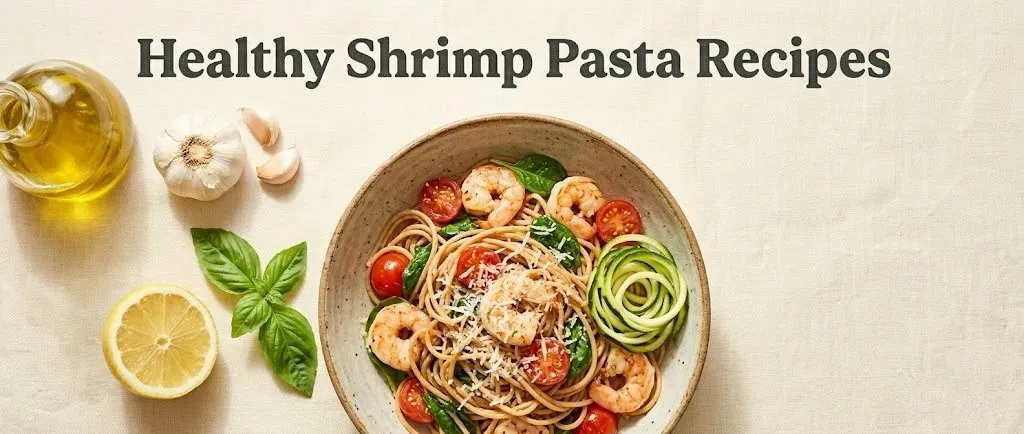
Shrimp is the ideal protein for this application. A 4-ounce serving of shrimp contains 24 grams of protein, 1 gram of fat, and zero carbohydrates, all for roughly 100 calories. It cooks in under three minutes. It absorbs the flavors of garlic, lemon, and chili flake without requiring a marinade. According to the USDA FoodData Central, shrimp also provides a meaningful dose of selenium, a trace mineral integrated into antioxidant selenoproteins that protect cells from oxidative damage.
The pasta choice is the second lever. Whole-wheat pasta adds 6 to 7 grams of fiber per 2-ounce dry serving, compared to 2 to 3 grams in white pasta. That fiber blunts the post-meal glucose spike and feeds the colonic bacteria that produce short-chain fatty acids. The pasta is not the enemy. The quantity and the refinement level are the variables you control.
Healthy Shrimp Pasta Recipes for Weight Loss
Healthy shrimp pasta recipes for weight loss manipulate the calorie-density equation by maximizing the physical volume of the bowl with low-calorie vegetables and lean protein, while shrinking the pasta portion and eliminating heavy cream entirely. The goal is a bowl that fills the stomach and triggers stretch receptors for under 450 calories.
The weight-loss version of shrimp pasta uses a specific plate geometry. The base of the bowl is two cups of sautéed or steamed vegetables. Zucchini, bell peppers, cherry tomatoes, and spinach are all water-rich, fiber-containing, low-calorie bulking agents. The shrimp and the pasta sit on top of the vegetable bed, not the other way around. The fork picks up a bite of pasta, a piece of shrimp, and a tangle of vegetables simultaneously.
The pasta portion is measured. Two ounces of dry pasta, roughly the size of a quarter in diameter when bunched together, is a standard 200-calorie serving. For weight loss, you can cut that to 1.5 ounces and bulk the rest with spiralized zucchini or palmini noodles. The vegetable noodles are not pretending to be pasta. They are adding physical volume and mouthfeel variety to a dish that has less wheat than your brain expects.
The sauce is a simple emulsion of olive oil, lemon juice, and starchy pasta water. A tablespoon of olive oil per serving adds 120 calories of monounsaturated fat that carries the garlic and herb flavors and provides the satiety signal that prevents the post-meal snack search. The fat is functional, not gratuitous.
Healthy Shrimp Scampi Pasta
A healthy shrimp scampi pasta replaces the traditional stick of butter with a measured tablespoon of olive oil and a splash of dry white wine, leaning on the starchy pasta water to create a glossy, emulsified sauce that clings to the noodles without the heavy fat load. The soul of scampi remains. The saturated fat evaporates.
The classic scampi preparation at a restaurant uses a half-stick of butter for a single serving. That is 400 calories and 30 grams of saturated fat before the shrimp even hits the pan. The healthy version uses 1 tablespoon of olive oil and 1 tablespoon of butter for the entire four-serving recipe. The olive oil provides the monounsaturated fat base. The small amount of butter provides the distinct dairy flavor that makes scampi recognizable. The combination delivers the taste with a fraction of the saturated fat.
The garlic is the other flavor engine. Allicin, the organosulfur compound formed when raw garlic is crushed or minced, provides the pungent, savory backbone of the dish. You sauté the garlic in the olive oil for exactly 30 seconds, just until fragrant, then deglaze with a splash of dry white wine or seafood stock. The alcohol boils off, leaving behind the fruity acidity that balances the richness of the shrimp.
The pasta water is the hidden ingredient that makes the healthy version work. The starchy, salted water from cooking the pasta acts as an emulsifier. When you toss the hot pasta with the olive oil and lemon juice, the starch molecules bind the fat and the water into a creamy, stable sauce that coats every strand. You do not need cream to get creaminess. You need starch and aggressive tossing.
Healthy Shrimp Alfredo Pasta
A healthy shrimp Alfredo pasta replaces the heavy cream and butter roux with a silky emulsion of blended low-fat cottage cheese or plain Greek yogurt, Parmesan cheese, and starchy pasta water, creating a high-protein, low-fat sauce that mimics the texture of Alfredo for a quarter of the calories. The Alfredo craving is real. The solution is dairy science.
Traditional Alfredo sauce is heavy cream, butter, and Parmesan. A single cup of heavy cream contains 800 calories and 80 grams of fat. The healthy version blends 1 cup of low-fat cottage cheese with 1/4 cup of grated Parmesan, a clove of garlic, and a splash of milk. The cottage cheese is a curd-based cheese that, when blended, becomes a perfectly smooth, creamy liquid. When heated gently and tossed with pasta, it coats the noodles with a texture that is shockingly close to the original.
The protein boost is substantial. The cottage cheese Alfredo delivers roughly 20 grams of protein in the sauce alone, compared to 2 grams in a cream-based sauce. The shrimp adds another 24 grams. The bowl becomes a 45-gram protein powerhouse that supports muscle repair and satiety for a fraction of the saturated fat of the original.
The key technique is temperature control. Cottage cheese and Greek yogurt will separate and curdle if they are boiled. You must toss the sauce with the hot pasta off the heat. The residual heat from the pasta warms the sauce through without breaking the emulsion. If the sauce is too thick, a splash of the reserved pasta water loosens it to the perfect clinging consistency.
Low Calorie Shrimp Pasta Recipe
A low-calorie shrimp pasta recipe pushes the serving down to 350 calories by using zucchini noodles or shirataki noodles for half the pasta volume, doubling the shrimp portion, and dressing the bowl with a no-fat lemon-herb vinaigrette instead of an oil-based sauce. This is the aggressive fat-loss version.
The noodle swap is the calorie lever. Two ounces of dry pasta is 200 calories. One ounce of dry pasta plus one large spiralized zucchini is 120 calories. The plate volume is the same. The calorie count drops by 80. The zucchini noodles are sauteed for exactly 60 seconds in a dry nonstick pan to warm them and remove the raw crunch, but they are not cooked to mush. They retain a slight bite that contrasts with the soft pasta.
The shrimp portion increases. A standard serving is 4 ounces. The low-calorie version uses 6 ounces. The extra 50 calories of pure protein adds physical bulk to the bowl and increases the thermic effect of the meal. Protein digestion burns 20 to 30 percent of the calories consumed, so the net energy gain from the extra shrimp is even lower than the label states.
The sauce shifts entirely. A no-fat vinaigrette made from lemon juice, Dijon mustard, minced garlic, and a pinch of red pepper flake provides the acid and the heat without any oil. The mustard acts as the emulsifier, holding the lemon juice in suspension. The flavor is bright, clean, and sharp, and it cuts through the natural sweetness of the shrimp.
The 2026 Low-Calorie Shrimp Scampi (350 kcal per serving):
- Salt a pot of water and bring to a boil. Cook 1 oz whole-wheat spaghetti until al dente. Reserve 1 cup pasta water, then drain.
- While pasta cooks, spiralize 1 large zucchini into noodles. Set aside.
- In a nonstick skillet, sear 6 oz large shrimp, seasoned with salt and pepper, for 90 seconds per side. Remove shrimp.
- In the same pan, saute 2 cloves minced garlic for 30 seconds. Deglaze with 2 tbsp lemon juice.
- Add zucchini noodles to the pan and toss for 60 seconds. Add the cooked pasta, shrimp, and a splash of pasta water. Toss to combine.
- Serve immediately with fresh parsley and red pepper flake.
Healthy Shrimp Pasta with Vegetables
A healthy shrimp pasta with vegetables uses the produce section as a volume-extender, matching the pasta portion gram-for-gram with sautéed greens, roasted cherry tomatoes, and bell pepper strips, so the bowl is physically large and visually abundant without a corresponding calorie load. The vegetable-to-pasta ratio should be at least 1 to 1 by volume.
The vegetables are not an afterthought garnish. They are a structural component of the dish. Cherry tomatoes roasted at 400 degrees Fahrenheit for 15 minutes concentrate their lycopene and develop a jammy sweetness that bursts in the mouth. Baby spinach wilted into the hot pasta adds iron, vitamin K, and a silky texture that coats the noodles. Bell pepper strips sautéed with the garlic add crunch and vitamin C.
The specific micronutrient synergy is worth noting. The vitamin C in the bell peppers enhances the absorption of the non-heme iron in the spinach and the whole-wheat pasta. The lycopene in the cooked tomatoes is fat-soluble and is absorbed more efficiently because of the olive oil in the sauce. These are not just colorful additions. They are biochemical amplifiers.
The vegetable volume also slows the eating process. A bowl of pure pasta can be consumed in minutes. A bowl where every forkful includes a piece of broccoli rabe or a halved cherry tomato requires more chewing. The oral processing time gives the gut hormones, specifically cholecystokinin, time to signal the brain that food has arrived. You feel fuller on the same number of calories.
| Vegetable Addition | Volume Added | Calorie Cost | Key Nutrient |
|---|---|---|---|
| 2 cups baby spinach | High | 15 kcal | Iron, Vitamin K |
| 1 cup cherry tomatoes | Moderate | 30 kcal | Lycopene, Vitamin C |
| 1 bell pepper | High | 35 kcal | Vitamin C (150% DV) |
| 1 cup broccoli rabe | High | 25 kcal | Calcium, Vitamin K |
| 1 spiralized zucchini | Very High | 30 kcal | Potassium, Hydration |
Shrimp Pasta with Olive Oil and Garlic Healthy
Shrimp pasta with olive oil and garlic, the classic aglio e olio variation, is inherently one of the healthiest pasta preparations because it uses monounsaturated fat as the sauce base, requires no cream or butter, and relies entirely on the aromatic punch of allicin and the brightness of fresh lemon for flavor. The simplicity is the health feature.
The olive oil is not a compromise. Extra-virgin olive oil is roughly 73 percent oleic acid, a monounsaturated fat that is a cornerstone of the Mediterranean diet. A 2018 study in the New England Journal of Medicine found that a Mediterranean diet supplemented with extra-virgin olive oil reduced the incidence of major cardiovascular events by 31 percent compared to a control diet. The oil is a functional health ingredient, not just a cooking medium.
The garlic is prepared correctly. The cloves are sliced thinly, not minced, to increase the surface area exposed to the hot oil. The garlic slices are sautéed over medium-low heat until they are golden and crisp at the edges but not burnt. Burnt garlic is acrid and bitter and ruins the dish. The gentle sauté extracts the allicin into the oil, flavoring the entire fat base.
The red pepper flake is the third pillar. Capsaicin, the compound that gives chili flakes their heat, binds to TRPV1 receptors on the tongue and triggers a mild endorphin release. The heat sensation makes the dish feel richer and more satisfying without any added fat. A pinch of red pepper flake is a zero-calorie flavor amplifier.
Healthy Shrimp Pasta No Cream
A healthy shrimp pasta with no cream achieves its luscious, clingy texture through the starch-and-acid emulsion method, using reserved pasta water, lemon juice, and a final toss with finely grated Parmesan cheese to create a sauce that coats every strand without a drop of dairy fat. The starch is the cream replacement.
The starch molecules, primarily amylose, that leach out of the pasta into the cooking water are natural emulsifiers. When you toss the hot pasta with a small amount of olive oil and a splash of that starchy water, the starch binds the water and the oil into a stable, creamy suspension. The sauce clings to the pasta instead of pooling at the bottom of the bowl.
The Parmesan finish is the final touch. Finely grated Parmigiano-Reggiano, tossed into the pasta off the heat, melts into the starchy emulsion and adds a savory, umami depth that mimics the richness of a cream sauce. A quarter-cup of Parmesan across four servings adds roughly 50 calories and 3 grams of fat per person, a fraction of what a cream sauce would add.
The sauce technique is the most important skill in this article. You do not drain the pasta completely. You lift it directly from the pot into the pan with the shrimp and garlic, bringing the clinging pasta water with it. You toss aggressively. You add a splash more pasta water if the sauce is too tight. The tossing motion incorporates air and emulsifies the sauce. The result is a glossy, restaurant-quality coating that required zero cream and zero butter.
Best Pasta for Shrimp Healthy
The best pasta for a healthy shrimp dish is whole-wheat spaghetti for its high fiber and protein content, chickpea or lentil pasta for a significant protein and fiber boost, or zucchini noodles for a near-zero-calorie, low-carb option that lets the shrimp be the star. The choice depends on the specific health goal.
Whole-wheat spaghetti is the standard swap. It contains 6 to 7 grams of fiber per 2-ounce serving, compared to 2 to 3 grams in white pasta. The fiber slows the digestion of the starch, reducing the glycemic response. A study from the Harvard T.H. Chan School of Public Health has repeatedly linked higher intake of whole grains to a reduced risk of type 2 diabetes and cardiovascular disease.
Chickpea pasta, such as Banza, is a legume-based alternative that packs 13 grams of protein and 8 grams of fiber per serving. The protein and fiber combination is uniquely satiating. The pasta has a slightly nutty, earthy flavor that pairs beautifully with shrimp, lemon, and parsley. The cooking time is shorter than wheat pasta, usually 7 to 9 minutes, and it goes from al dente to mush very quickly.
Zucchini noodles are the aggressive weight-loss option. A whole spiralized zucchini contains roughly 30 calories. The plate becomes a massive pile of vegetables with shrimp and a light sauce. The mouthfeel is entirely different from wheat pasta, but when tossed with garlic, olive oil, and chili flake, it satisfies the same flavor craving. A 50/50 mix of whole-wheat pasta and zucchini noodles is the most satisfying middle ground for the palate.
| Pasta Type (2 oz dry) | Calories | Protein (g) | Fiber (g) | Net Carbs (g) |
|---|---|---|---|---|
| White Spaghetti | 200 | 7 | 2 | 40 |
| Whole-Wheat Spaghetti | 200 | 8 | 7 | 35 |
| Chickpea Pasta | 190 | 13 | 8 | 24 |
| Zucchini Noodles | 30 | 2 | 2 | 4 |
How to Cook Shrimp for Pasta
To cook shrimp for pasta, you must sear them over high heat in a single layer for 90 seconds per side, until they form a pink, opaque “C” shape, and then immediately remove them from the pan to prevent the carryover cooking that turns them into rubbery, tight “O” rings. The shrimp cook in the time it takes to boil the pasta water.
The shrimp must be dry before they hit the pan. Pat them thoroughly with paper towels. Surface moisture creates steam, and steam prevents the Maillard reaction that creates the golden-brown crust on the shrimp. A dry shrimp sears. A wet shrimp steams.
The pan must be hot. Use a heavy-bottomed skillet, preferably cast iron or stainless steel, heated over medium-high heat until a drop of water dances and evaporates on contact. Add a teaspoon of olive oil. Lay the shrimp in a single layer with space between them. Do not crowd the pan. If the shrimp are touching, the pan temperature drops and they steam instead of searing.
The timing is absolute. 90 seconds on the first side. Flip each shrimp individually. 90 seconds on the second side. The shrimp will form a loose “C” shape. This is the visual cue for perfect doneness. If the shrimp curls into a tight “O” shape, it is overcooked and will be tough. Remove the shrimp to a plate immediately. They will finish cooking from residual heat while you build the sauce.
Key Takeaway: The health of a shrimp pasta dish is controlled by the pasta-to-vegetable ratio, the sauce fat source, and the shrimp cooking time. Olive oil, al dente whole-wheat pasta, and 90-second-per-side seared shrimp are the non-negotiable pillars.
Healthy Shrimp Pasta Sauce Swaps
A healthy shrimp pasta sauce swap replaces heavy cream with blended cottage cheese, butter with extra-virgin olive oil, and jarred Alfredo with a homemade Parmesan-starch emulsion, cutting the saturated fat by 70 to 90 percent while preserving the creamy mouthfeel. The sauce is where the health profile lives or dies.
The cottage cheese Alfredo is the most transformative swap. One cup of heavy cream is 800 calories and 80 grams of fat. One cup of blended low-fat cottage cheese is 180 calories and 5 grams of fat. The cottage cheese, when blended with garlic, Parmesan, and a splash of milk, becomes a smooth, pourable sauce that mimics Alfredo’s texture. Heat it gently over low heat and toss with the pasta off the burner to prevent curdling.
The pesto swap is the runner-up. Traditional basil pesto is olive oil, basil, pine nuts, and Parmesan. It is healthy in a caloric sense but it is dense. A lighter version uses half the oil and replaces the other half with a splash of pasta water and lemon juice. The pesto becomes a brighter, looser sauce that coats the shrimp and noodles without the oily pooling at the bottom of the bowl.
The no-cook fresh tomato sauce is the third option. Halved cherry tomatoes, minced garlic, fresh basil, a splash of balsamic vinegar, and a pinch of salt sit together in a bowl for 15 minutes while the pasta cooks. The salt draws the juice out of the tomatoes, creating a raw sauce. The hot pasta and shrimp are tossed directly into the bowl. The heat warms the tomatoes without cooking them, preserving the fresh, bright flavor.
Shrimp Pasta Meal Prep Healthy
To meal prep healthy shrimp pasta without ending up with rubbery shrimp and mushy pasta, you must store the components separately and assemble them the morning of or the night before, treating the shrimp, pasta, and vegetables as distinct components that marry in the container but cook individually. Shrimp does not reheat beautifully. The strategy is to minimize the reheat damage.
The shrimp should be cooked fresh if possible. If meal prepping, cook the shrimp to just underdone, roughly 60 seconds per side instead of 90. They will finish cooking in the microwave. Pack the shrimp in a separate small container or a corner of the meal prep container, not mixed into the pasta. The pasta and vegetables can be tossed together with the sauce.
The pasta should be cooked to a true al dente, one minute less than the package instructions. Undercooked pasta holds its texture better through the refrigeration and reheating cycle. Toss the hot, drained pasta with a small amount of olive oil to prevent it from sticking into a solid block.
The vegetables should be slightly undercooked as well. Sautéed zucchini or bell peppers should still have a slight firmness. They will soften further when reheated. Fresh greens like spinach should be added raw to the container. They will wilt from the heat of the other ingredients during reheating.
Meal Prep Container Blueprint:
- Shrimp: Packed separately or in a corner, seasoned, not sauced.
- Pasta and Veg: Tossed together with the olive oil and lemon sauce.
- Fresh Garnish: A lemon wedge and fresh parsley packed in a small bag for adding after reheating.
- Reheat: Microwave at 70 percent power for 90 seconds to warm through without overcooking the shrimp.
Key Takeaway: Shrimp pasta becomes a health food when you flip the plate ratio to vegetables-first, swap the fat source to olive oil, and cook the shrimp to a loose “C” shape. The sauce is an emulsion of pasta water and Parmesan, not a heavy cream reduction.
Frequently Asked Questions About Healthy Shrimp Pasta
Is shrimp pasta good for weight loss?
Yes, shrimp pasta is excellent for weight loss when the portion of whole-wheat pasta is kept to 1.5 to 2 ounces dry and the plate is filled with vegetables and lean shrimp.
A properly constructed bowl delivers 35 grams of protein and 10 grams of fiber for under 450 calories.
The key is measuring the pasta and avoiding cream-based sauces.
Is shrimp scampi healthy or unhealthy?
Restaurant shrimp scampi is generally unhealthy due to the massive amount of butter used, often a half-stick per serving.
Homemade healthy shrimp scampi, made with a tablespoon of olive oil, lemon juice, and pasta water, is a heart-healthy Mediterranean meal.
The saturated fat drops from 30 grams to 3 grams per serving.
How many calories are in a bowl of shrimp pasta?
A restaurant bowl of shrimp pasta often contains 900 to 1,200 calories.
A homemade healthy shrimp pasta bowl, built with whole-wheat pasta, olive oil, and a high vegetable ratio, contains 380 to 460 calories.
The calorie difference is driven by the cooking fat, the cream, and the portion size.
Can I use frozen shrimp for healthy shrimp pasta?
Yes, frozen shrimp works perfectly and is often fresher than “fresh” shrimp at the counter because it is flash-frozen on the boat.
Thaw the shrimp overnight in the refrigerator or under cold running water for 15 minutes.
Pat the thawed shrimp completely dry before searing to achieve a proper crust.
Why is my shrimp rubbery in pasta?
Your shrimp is rubbery because it was overcooked, spending more than 3 total minutes over high heat.
Properly cooked shrimp forms a loose “C” shape and is opaque pink and white.
A tight “O” shape indicates the muscle fibers have contracted excessively and squeezed out moisture, leaving a tough texture.
Shrimp pasta does not need to be a guilty pleasure. It is a legitimate health food when you run the numbers and execute the technique correctly.
Next time the craving hits, pull out the whole-wheat spaghetti, spiralize a zucchini, and pat those shrimp dry. Sear them for 90 seconds a side. Toss the garlic in olive oil. Deglaze with lemon juice. Splash in the pasta water and toss until the sauce is glossy and clinging.
You will sit down to a bowl that delivers 35 grams of protein, a pile of vegetables, and the exact garlicky, lemony satisfaction you wanted, all for roughly the same calories as a dry chicken breast and steamed broccoli. That is the promise of a healthy shrimp pasta recipe, not deprivation, just a smarter construction of the same dish you already love.