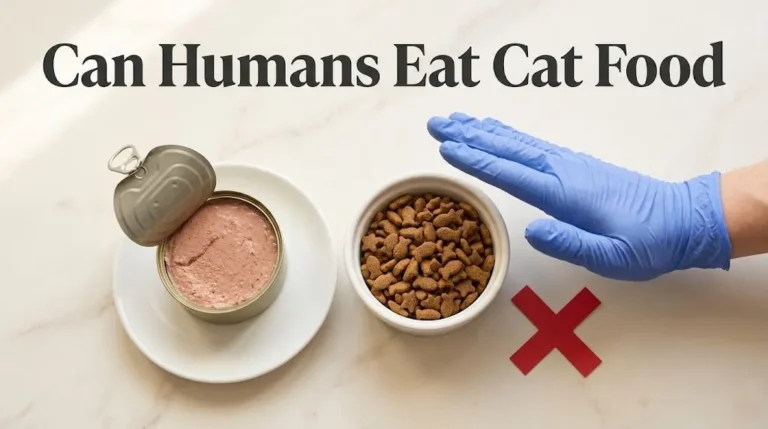
Plain, thoroughly cooked animal proteins are the best human foods for cats because cats are obligate carnivores whose digestive systems are designed to extract nutrition from meat, not plants. Cooked chicken, turkey, salmon, tuna in water, eggs, and shrimp are all safe and beneficial when prepared without salt, oil, butter, garlic, or onion and given in small portions as an occasional treat. A few plant-based foods, such as plain pumpkin puree, cooked carrots, and blueberries, are safe in very small amounts but provide fiber and phytonutrients rather than the protein and amino acids that cats actually need.
A cat’s nutritional requirements are fundamentally different from a human’s. Cats cannot synthesize taurine, an amino acid critical for heart and eye health. They cannot convert beta-carotene from plants into preformed vitamin A, which they must obtain directly from animal liver and other organ meats. They require arginine from animal protein to maintain their urea cycle and arachidonic acid, an omega-6 fatty acid found only in animal fats. These nutrients are non-negotiable. A cat fed a plant-based diet, even one supplemented with synthetic taurine, is at risk for serious deficiency diseases. The Academy of Veterinary Nutritionists emphasizes that a complete and balanced AAFCO-formulated commercial cat food must provide at least 90 percent of a cat’s daily calories. Human food is a treat, not a meal.
This article walks through the specific human foods that are safe for cats, the ones that will send you to an emergency veterinarian, and the exact portion sizes that keep treats from becoming a source of weight gain. You will learn why a small piece of unseasoned chicken breast is fine but a rotisserie chicken from the grocery store is not, why canned tuna is a sometimes food not a daily food, and why garlic and onions in any form, raw, cooked, or powdered, can cause life-threatening anemia in a cat.
What human food can I give my cat?
You can give your cat plain, thoroughly cooked animal proteins such as chicken, turkey, lean beef, salmon, and eggs, along with small amounts of plain pumpkin puree for digestive fiber. The universal rule for any human food given to a cat is that it must be cooked without salt, oil, butter, garlic, onion, or any seasoning, and it must be cut into small, bite-sized pieces to prevent choking.
The foods that are safe for most healthy adult cats fall into two categories. The first is cooked animal protein, which aligns with a cat’s nutritional biology. Chicken breast, turkey breast, lean ground beef, salmon fillet, tuna canned in water, shrimp, and scrambled eggs are all appropriate when prepared plainly. These foods provide the animal-based amino acids, fatty acids, and micronutrients that cats are designed to digest. They do not provide a complete and balanced nutrient profile on their own, which is why they are treats, not meals.
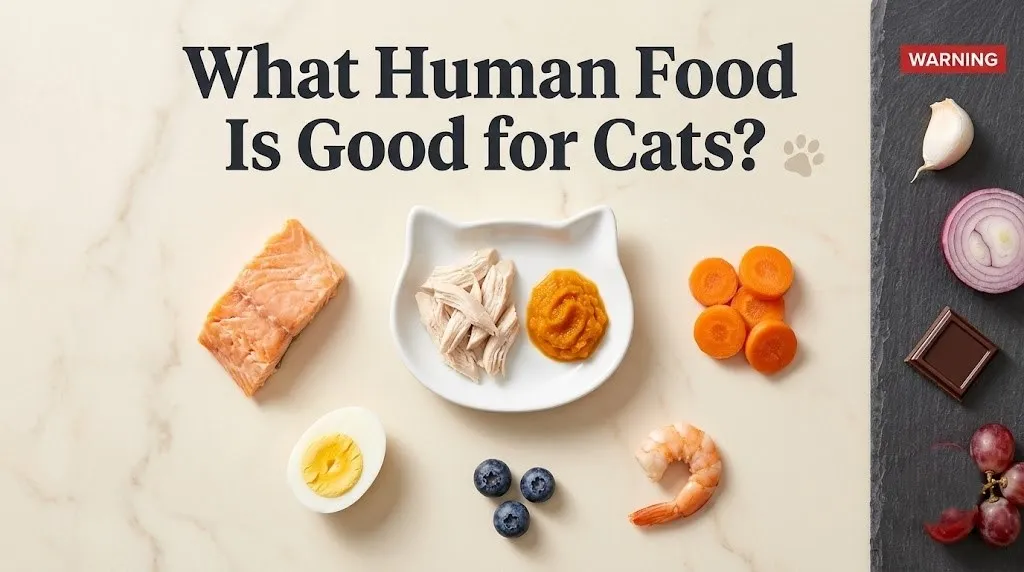
The second category is select plant foods that are safe in small quantities. Pumpkin puree, the plain canned version with no added sugar or spice, is the most useful plant-based food for cats because its soluble fiber can help with both constipation and mild diarrhea. Cooked carrots, green beans, and peas are safe but provide negligible nutrition for a carnivore. Blueberries are safe but most cats are indifferent to them. The plant foods on this list are safe, not necessary. A cat has no biological requirement for fruits or vegetables.
The foods that are not safe in any amount include garlic, onions, shallots, leeks, chives, chocolate, grapes, raisins, alcohol, caffeine, xylitol, raw dough, raw meat, raw fish, raw eggs, and most dairy products including milk and cream. These are covered in detail in the toxic foods section.
Can cats eat any human food?
Cats can eat a limited subset of human foods safely, but most human food is either nutritionally inappropriate for an obligate carnivore or actively toxic. The category of human food that is safe for cats is much smaller than the category that is safe for dogs, and several foods that are perfectly healthy for humans, garlic, onions, grapes, chocolate, are life-threatening to cats even in small amounts.
The biological reason for this restriction is that cats evolved as hypercarnivores. Their wild ancestors, the African wildcat Felis lybica, ate a diet of roughly 90 percent animal tissue, primarily small mammals, birds, and reptiles. The domesticated cat’s digestive tract is nearly identical. Cats have a shorter digestive tract than omnivores, lower activity of salivary amylase, and limited ability to metabolize plant compounds that humans and dogs process easily. A cat’s liver lacks certain glucuronidation pathways, which means it cannot efficiently break down the compounds in garlic, onion, essential oils, and many medications that are harmless to humans.
Human food should be framed as an occasional treat, not a meal component. The ASPCA Animal Poison Control Center receives thousands of calls annually related to cats ingesting toxic human foods, and the most common culprits are onions, garlic, and chocolate. A cat that eats a small amount of onion powder from a seasoned piece of meat may show no immediate symptoms but can develop Heinz body anemia over the following days. The damage is cumulative. Every exposure matters.
The safe approach is to keep a short mental list of the specific human foods you are allowed to share with your cat and to treat everything else as off-limits until you have confirmed its safety. When a cat shows interest in a food you are eating, the correct response is to check the list, not to assume that a small taste is harmless.
Can cats eat chicken?
Yes, cats can eat plain, thoroughly cooked chicken breast or thigh meat with no skin, bones, salt, oil, butter, garlic, onion, or seasoning. Chicken is one of the safest and most biologically appropriate human foods for a cat because it is a lean animal protein that closely matches the macronutrient profile of a cat’s natural prey.
The chicken must be cooked to an internal temperature of 165 degrees Fahrenheit to eliminate the risk of Salmonella, Campylobacter, and other bacterial pathogens that are present on raw poultry. Cats are not immune to foodborne illness from raw chicken, despite the popular belief that their short digestive tracts make them resistant. A cat with salmonellosis can develop vomiting, diarrhea, fever, and dehydration, and can shed the bacteria in its stool, posing a zoonotic risk to the humans in the household.
The preparation method matters. Boiled, poached, or baked chicken breast with nothing added is the gold standard. Rotisserie chicken from a grocery store is not safe because the skin is seasoned with salt, garlic powder, onion powder, and often paprika and other spices. The salt content alone can exceed a cat’s safe daily sodium intake. A cat with undiagnosed heart or kidney disease can be pushed into crisis by a single high-sodium meal. Plain home-cooked chicken is safe. Seasoned, processed, or fried chicken is not.
Chicken bones are a choking hazard and can cause esophageal or intestinal perforation. Cooked chicken bones splinter into sharp shards. The chicken should be deboned completely before offering it to a cat. Skin should be removed because it is high in fat and can trigger pancreatitis in susceptible cats, particularly those who are not accustomed to rich foods.
Can cats eat salmon?
Yes, cats can eat plain, thoroughly cooked salmon with no salt, oil, butter, or seasoning. Salmon provides high-quality animal protein and omega-3 fatty acids, specifically eicosapentaenoic acid (EPA) and docosahexaenoic acid (DHA) , which support skin health, coat condition, joint function, and cognitive health in aging cats.
The salmon must be cooked to an internal temperature of 145 degrees Fahrenheit to kill potential parasites and bacteria. Raw salmon poses several risks. It can carry a parasite called Nanophyetus salmincola that is itself infected with a rickettsial organism, Neorickettsia helminthoeca, which causes a severe and often fatal illness in dogs called salmon poisoning disease. Cats are more resistant to this specific condition than dogs, but raw salmon also carries the risk of bacterial infection and the presence of thiaminase, an enzyme that destroys thiamine (vitamin B1). A cat that eats raw fish regularly can develop thiamine deficiency, which causes neurological symptoms including seizures and can be fatal.
Canned salmon is a convenient alternative to fresh, but it must be packed in water, not oil or brine. Salmon packed in oil adds unnecessary fat and calories. Salmon packed in brine adds a dangerous amount of sodium. Canned salmon labeled “no salt added” and packed in water is safe in small amounts.
Smoked salmon, lox, and gravlax are not safe. The cold-smoking process does not reach a temperature high enough to kill pathogens, and these products are heavily salted and often seasoned with garlic, onion, and other spices. A tiny taste of lox from a bagel is not worth the risk of sodium overload, pancreatitis, or allium toxicity.
Can cats eat tuna?
Yes, cats can eat canned tuna packed in water with no added salt as an occasional treat, but tuna should not be a regular part of a cat’s diet. The risks of heavy metal accumulation, specifically mercury, and the nutritional imbalances caused by feeding tuna as a meal replacement make it a “sometimes” food, not a staple.
The mercury concern with tuna is real and cumulative. Tuna is a large, long-lived predatory fish that accumulates mercury in its muscle tissue over its lifespan. Albacore tuna contains higher mercury levels than light tuna. A cat that eats a small amount of tuna once a week is unlikely to develop mercury toxicity. A cat that eats tuna daily, particularly albacore, is consuming a mercury dose that builds up in its tissues over time. The FDA’s mercury guidelines are written for humans, not cats, but the same bioaccumulation principle applies. A prudent approach is to limit tuna treats to once or twice a week and to choose light tuna over albacore.
Tuna packed in oil adds unnecessary fat and calories. Tuna packed in brine adds a dangerous amount of sodium. Tuna packed in water with no added salt is the only safe option. The water should be drained before offering the tuna to the cat.
Tuna addiction is a real behavioral phenomenon in cats. Some cats become so fixated on the strong smell and flavor of tuna that they refuse other foods. A cat that will only eat tuna is at risk of nutritional deficiencies because tuna alone does not provide the complete balance of amino acids, vitamins, and minerals that a cat requires. Keeping tuna as an occasional treat rather than a daily food prevents both the nutritional and the behavioral problems.
Key Takeaway: Chicken, salmon, and tuna are all safe for cats when cooked plainly and fed in small amounts, but chicken is the best choice for regular treats because it is lean, widely tolerated, and free of the mercury and thiaminase concerns that come with fish.
Can cats eat eggs?
Yes, cats can eat plain, thoroughly cooked eggs with no salt, butter, oil, or seasoning. A small piece of scrambled or hard-boiled egg is a high-quality protein treat that provides all essential amino acids in a highly digestible form. The egg white is almost pure protein. The yolk provides fat, choline, and fat-soluble vitamins.
Eggs must be cooked to an internal temperature of 160 degrees Fahrenheit for scrambled eggs and until both the white and yolk are firm for boiled eggs. Raw eggs pose two distinct risks. The first is Salmonella and other bacterial pathogens that are present on eggshells and can contaminate the egg interior during cracking. The second is avidin, a protein in raw egg white that binds to biotin (vitamin B7) and prevents its absorption. A cat that eats raw egg whites regularly can develop biotin deficiency, which causes skin lesions, hair loss, and neurological symptoms. Cooking denatures avidin and eliminates the risk.
The portion size for an egg treat is tiny. A whole large egg contains roughly 70 to 80 calories, which is approximately one-third of the daily caloric requirement for an average 10-pound cat. Giving a cat an entire egg as a treat is like giving a human an extra meal on top of their regular food. A teaspoon or two of scrambled egg, about the size of a cat’s paw, is an appropriate treat portion.
Eggs are a common allergen for some cats. A cat that has never eaten egg before should receive a very small amount the first time, and the owner should monitor for signs of gastrointestinal upset, itching, or skin irritation over the following 24 hours. Cats with known food allergies to chicken should note that egg and chicken meat are different proteins and a cat allergic to one may tolerate the other, but introduction should still be cautious.
Can cats eat pumpkin?
Yes, cats can eat plain, canned pumpkin puree with no added sugar, salt, spices, or pie filling. Pumpkin is the most useful plant-based human food for cats because its soluble fiber content can help regulate bowel movements in both directions, easing mild constipation by adding bulk and moisture, and firming up mild diarrhea by absorbing excess water in the colon.
The pumpkin must be 100 percent pure pumpkin puree, not pumpkin pie filling. Pumpkin pie filling contains sugar, spices including cinnamon, nutmeg, and clove, and often onion or garlic powder. These additives range from gastrointestinal irritants to outright toxins. The ingredient list on the can should read exactly one word: pumpkin. If it lists anything else, it is not safe.
The portion size for pumpkin is small. A cat needs roughly one to two teaspoons of pumpkin puree mixed into its regular food once or twice daily for digestive support. More is not better. Too much fiber can cause gas, bloating, and diarrhea, defeating the purpose of using it. Pumpkin is a temporary digestive aid, not a daily supplement. A cat with chronic constipation or diarrhea needs a veterinary workup, not a long-term pumpkin regimen.
Pumpkin provides fiber and beta-carotene but no protein, taurine, or other nutrients essential to cats. It is a functional plant food, not a nutritional staple. A cat with normal bowel movements does not need pumpkin in its diet. A cat with a known gastrointestinal condition should not receive pumpkin without veterinary approval, because the underlying condition, inflammatory bowel disease, food allergy, or intestinal lymphoma, requires specific treatment that fiber alone will not address.
Foods toxic to cats
The foods that are toxic to cats include every member of the allium family (garlic, onions, shallots, leeks, chives), chocolate, grapes and raisins, caffeine, alcohol, xylitol, raw dough, and raw meat and fish. These foods cause damage ranging from gastroenteritis to organ failure to death, and they must never be given to a cat in any amount.
Garlic and onions are the most dangerous common foods because they appear in so many prepared human dishes. Allium species contain thiosulfates, sulfur-containing compounds that cause oxidative damage to feline red blood cells, leading to Heinz body formation and hemolytic anemia. The toxic effect is not dose-dependent in the way most toxins are. A single large exposure can cause acute anemia. Small, repeated exposures over days or weeks can cause cumulative anemia that is harder to diagnose. Garlic powder and onion powder, which are concentrated forms, are more toxic by weight than fresh garlic and onion. A cat that eats a piece of chicken cooked with garlic powder is getting a concentrated dose. Symptoms of allium toxicity include lethargy, pale gums, weakness, rapid breathing, and dark or reddish urine. These symptoms may not appear for 24 to 72 hours after ingestion.
Chocolate contains methylxanthines, primarily theobromine and caffeine, which cats metabolize very slowly. Methylxanthines cause vomiting, diarrhea, hyperactivity, tremors, seizures, and cardiac arrhythmias. Dark chocolate and baking chocolate are more toxic than milk chocolate because they contain higher concentrations of methylxanthines. A cat that eats a small piece of dark chocolate is at higher risk than a cat that eats a small piece of milk chocolate. White chocolate contains negligible methylxanthines but is high in fat and can cause pancreatitis.
Grapes and raisins cause acute kidney injury in some cats, although the mechanism is not fully understood and the susceptibility varies by individual animal. A cat that eats a single grape may show no effect. A cat that eats several grapes may develop kidney failure within 24 to 72 hours. There is no way to predict which cat is vulnerable, so the safest approach is to treat all grapes and raisins as toxic and seek immediate veterinary care if a cat ingests them.
| Toxic Food | Toxic Compound | Primary Effect | Onset |
|---|---|---|---|
| Garlic, onion, leeks, chives | Thiosulfates | Heinz body anemia | 24-72 hours (delayed) |
| Chocolate | Methylxanthines | Neurological, cardiac | 2-12 hours |
| Grapes, raisins | Unknown | Acute kidney injury | 24-72 hours |
| Caffeine | Methylxanthines | Neurological, cardiac | 1-4 hours |
| Alcohol | Ethanol | CNS depression, acidosis | 30-60 minutes |
| Xylitol | Sugar alcohol | Hypoglycemia, liver failure | 30-60 minutes |
| Raw dough | Ethanol from fermentation | Alcohol toxicity, GI obstruction | 1-4 hours |
Key Takeaway: Garlic, onion, chocolate, and grapes are the four most dangerous foods in a typical kitchen for a cat, and every member of the household must know that these foods cannot be shared with the cat in any amount, including in seasoned sauces and broths.
Can cats eat cheese?
Cats can eat a very small amount of hard cheese as an occasional treat, but most cats are lactose intolerant and cheese provides more fat and calories than a cat’s diet needs. A piece of cheddar the size of a pea is safe for a cat with no dairy sensitivity. A larger piece or a soft, high-lactose cheese like ricotta or cottage cheese is likely to cause digestive upset.
The lactose intolerance develops after kittenhood. Kittens produce lactase, the enzyme that digests lactose in their mother’s milk. As they wean and transition to solid food, lactase production declines. Most adult cats have low lactase activity and cannot digest significant amounts of lactose. When undigested lactose reaches the colon, gut bacteria ferment it, producing gas and drawing water into the bowel. The result is bloating, cramping, and diarrhea, typically within 8 to 12 hours of ingestion.
Hard, aged cheeses like cheddar, parmesan, and Swiss are lower in lactose than soft cheeses and are better tolerated. A cat that has never eaten cheese before should receive a piece no larger than a pencil eraser, and the owner should monitor for gastrointestinal symptoms. Cats with diagnosed pancreatitis, inflammatory bowel disease, or a history of gastrointestinal sensitivity should not receive cheese at all.
Cheese is not a nutritionally valuable food for cats. The protein in cheese is casein, which is less bioavailable to cats than animal muscle protein. The fat content is high. The sodium content of most cheese is high relative to a cat’s needs. Cheese is a high-calorie, low-nutrition treat that should be given rarely, if ever, and only to cats with no known dairy sensitivity.
What human food can kittens have?
Kittens can have the same plain, cooked animal proteins as adult cats, but their higher caloric needs and more sensitive digestive systems require even stricter attention to food safety and portion control. A kitten’s primary nutrition must come from a kitten-formula commercial food that meets AAFCO growth and reproduction standards. Human food treats for kittens are a tiny supplement, not a meal component.
Kittens need roughly two to three times more calories per pound of body weight than adult cats because they are actively growing. A 2-pound kitten at 8 weeks of age needs roughly 200 to 250 calories per day. A treat of human food should not exceed 5 to 10 calories, roughly a teaspoon of shredded chicken or a small flake of salmon. Larger treats displace the nutritionally complete kitten food that the kitten’s developing brain, bones, and organs depend on.
The safest human foods for kittens are plain boiled chicken, plain cooked salmon, and a small amount of scrambled egg. These are unlikely to trigger digestive upset. Tuna should be avoided in kittens because their smaller body mass makes them more vulnerable to mercury accumulation, and because developing a tuna fixation during kittenhood can create a picky eater for life. Pumpkin is safe for kittens but rarely necessary, as kitten stool is naturally softer than adult cat stool.
Kittens are more vulnerable to foodborne illness than healthy adult cats because their immune systems are still developing. All human food given to a kitten must be cooked thoroughly and served fresh. Leftover chicken that has been in the refrigerator for three days is safe for a human to reheat but should not be given to a kitten, whose smaller body is more susceptible to bacterial toxins.
Can cats eat carrots?
Yes, cats can eat plain, cooked carrots with no salt, butter, oil, or seasoning. Cooked carrots are soft enough to be safely chewed and swallowed. Raw carrots are a choking hazard and are too hard for a cat’s teeth and jaw structure to manage safely.
Carrots provide beta-carotene, which humans convert to vitamin A, but cats lack the enzyme required for this conversion and must obtain preformed vitamin A from animal tissue. The beta-carotene in carrots provides no essential nutrition for a cat. The fiber in carrots adds bulk to the digestive tract, which can be helpful for a cat prone to constipation. The flavor is mild enough that some cats will accept a small piece mixed into their food.
The portion for a carrot treat is tiny. A cat needs no more than one or two small pieces of cooked carrot, roughly the size of a pea each. The carrot should be boiled or steamed until completely soft, with no crunch remaining. A carrot cooked in a soup or stew with onion, garlic, salt, or broth is not safe. The carrot must be cooked separately in plain water.
Carrots are a safe but nutritionally unnecessary treat. A cat that enjoys the texture and flavor can have them occasionally. A cat that ignores them is missing nothing of nutritional value. The primary benefit of a vegetable treat for a cat is enrichment and variety, not nutrient delivery.
Can cats eat shrimp?
Yes, cats can eat plain, thoroughly cooked shrimp with no salt, butter, oil, garlic, or seasoning. Shrimp is a lean, high-protein seafood that many cats find highly palatable. A single small shrimp or a piece of a larger shrimp, cut into bite-sized portions, is a safe occasional treat.
The shrimp must be cooked to an internal temperature of 145 degrees Fahrenheit. Raw shrimp carries the same bacterial and parasitic risks as raw fish. The shell must be removed entirely. Shrimp shells are a choking hazard and are indigestible. The tail and digestive tract must also be removed. Shrimp prepared with cocktail sauce, garlic butter, or any seasoning is not safe.
Shrimp is higher in cholesterol than chicken or fish. A single medium shrimp contains roughly 7 to 10 calories and a small amount of cholesterol. For a cat, this is not a concern in a treat-sized portion given occasionally. A cat that eats shrimp daily could accumulate dietary cholesterol in a way that is not well-studied in felines. Limiting shrimp to once or twice a week is a reasonable precaution.
Shrimp is a relatively common allergen for cats. A cat that has never eaten shrimp should receive a small piece the first time and be monitored for vomiting, diarrhea, or skin irritation over the following 24 hours. Cats with known seafood allergies should avoid shrimp entirely.
How much human food to give a cat
Human food should make up no more than 10 percent of a cat’s daily caloric intake, and the remaining 90 percent must come from a complete and balanced AAFCO-formulated commercial cat food. For a typical 10-pound adult cat requiring roughly 200 to 250 calories per day, the treat budget is 20 to 25 calories. This is a very small amount of food.
Visualizing 25 calories in human food terms makes the portion limitation concrete. A 25-calorie treat is roughly one tablespoon of shredded chicken breast, half of a large cooked shrimp, one small flake of canned salmon, a teaspoon and a half of scrambled egg, or two teaspoons of canned tuna. These portions are smaller than most owners intuitively serve. A full slice of deli turkey, which can be 30 to 40 calories plus a significant amount of sodium, exceeds the entire daily treat budget.
The cumulative effect of small treats across a day is easy to underestimate. A cat that gets a piece of chicken from the dinner prep, a lick of yogurt from the breakfast bowl, and a few commercial cat treats during the day can easily double its treat calorie allowance. Over time, 10 to 20 extra calories per day translates to one to two pounds of weight gain per year in a 10-pound cat. That is 10 to 20 percent of body weight gained from “just a taste.”
Measuring treats with a measuring spoon rather than estimating by eye is the most effective way to stay within the calorie limit. A dedicated treat spoon in the kitchen that holds exactly one teaspoon makes it easy to serve a consistent, safe portion.
Key Takeaway: Treats, including all human food, must stay under 10 percent of daily calories, which for most cats is roughly 20 to 25 calories, an amount that fits in a teaspoon and is far smaller than most owners realize.
Cat treat calories
Understanding cat treat calories in the context of a cat’s total daily energy requirement is the foundation of responsible treat feeding. A cat’s body is small, and the margin between maintenance calories and weight-gain calories is narrow. An extra 30 calories per day over maintenance needs leads to roughly three pounds of weight gain over a year in a 10-pound cat.
The resting energy requirement for an average adult cat is approximately 20 to 25 calories per pound of body weight per day, adjusted for activity level, age, and neuter status. A sedentary, neutered indoor cat may need closer to 18 calories per pound. An active, intact cat may need closer to 25. A 10-pound indoor neutered cat with low activity needs roughly 180 to 200 calories per day to maintain a healthy body condition. The treat budget at 10 percent is 18 to 20 calories.
Commercial cat treats provide a useful reference point. A single Temptations treat contains roughly 2 calories. A Greenies dental treat contains roughly 1.5 to 2 calories depending on size. A tablespoon of canned cat food, often used as a topper, is roughly 20 to 30 calories depending on the brand. A human food treat should be assessed in the same calorie framework. A tablespoon of shredded chicken is roughly 15 to 20 calories. A whole sardine packed in water is roughly 25 to 35 calories.
- 1 tablespoon cooked chicken breast: 15-20 calories
- 1 teaspoon canned tuna in water: 10-15 calories
- 1/2 large cooked shrimp: 5-7 calories
- 1 teaspoon scrambled egg: 10-12 calories
- 1 tablespoon canned salmon: 15-20 calories
- 1 teaspoon plain pumpkin puree: 5 calories
- 1 Temptations treat (for reference): 2 calories
Can cats eat blueberries?
Yes, cats can eat a single blueberry as an occasional curiosity treat. Blueberries are safe and non-toxic, but they provide no essential nutrition for a cat and most cats are indifferent to them. A blueberry is a ball of water, fiber, sugar, and antioxidant phytonutrients. The cat’s digestive system is not designed to extract meaningful nutrition from it.
The safety concern with blueberries is their size and shape. A whole blueberry is roughly the diameter of a cat’s trachea and could become lodged if a cat tried to swallow it whole. Cutting the blueberry in half or mashing it slightly eliminates the choking risk. A cat should receive no more than one or two blueberries at a time, and they should be washed thoroughly to remove pesticide residue.
Blueberries are sometimes marketed in pet food as an antioxidant ingredient, and in that context, they contribute phytonutrients including anthocyanins, which have anti-inflammatory properties in laboratory studies. The amount in a single blueberry treat is negligible. A cat eating a complete commercial diet with antioxidant fortification does not need supplemental blueberries. The treat value of a blueberry is enrichment and novelty, not nutrition.
Cats with diabetes or obesity should not receive fruit treats, including blueberries, because the sugar content, while modest, is unnecessary and contributes to the daily carbohydrate and calorie load.
Can cats eat beef?
Yes, cats can eat plain, thoroughly cooked lean beef with no salt, oil, butter, garlic, onion, or seasoning. Lean ground beef, beef sirloin, and beef tenderloin are all safe when cooked plainly and cut into small pieces. Beef provides high-quality animal protein, iron, zinc, and B vitamins that align with a cat’s nutritional requirements.
The beef must be cooked to an internal temperature of 160 degrees Fahrenheit for ground beef and 145 degrees Fahrenheit for whole cuts with a three-minute rest time. Raw beef carries the risk of Salmonella, E. coli, and other bacterial pathogens that can sicken cats and transmit to humans. The “raw diet” trend for cats is not endorsed by the American Veterinary Medical Association or the American College of Veterinary Nutrition due to documented risks of pathogen transmission and nutritional imbalance.
The leanest cuts of beef are the best choices. Beef with visible marbling, prime rib, and fatty ground beef add saturated fat and calories without providing additional protein. A cat with a history of pancreatitis should not receive beef or any fatty food. A cat with diagnosed chronic kidney disease may need to limit phosphorus intake, and beef is a moderate-phosphorus food.
Beef is a relatively common food allergen for cats. A cat that has never eaten beef should receive a small amount the first time and be monitored for gastrointestinal or skin symptoms over 24 hours. Cats that are allergic to chicken may tolerate beef as a novel protein, and vice versa, but introduction should always be gradual.
Can cats eat dairy?
Most adult cats should not consume dairy products. The iconic image of a cat drinking a saucer of milk is physiologically inaccurate for the vast majority of cats. After weaning, cats produce less lactase, the enzyme required to digest lactose, the sugar in milk. When an adult cat drinks milk, the undigested lactose ferments in the colon, causing gas, bloating, and diarrhea.
Small amounts of hard cheese or plain yogurt are tolerated by some cats because the fermentation or aging process reduces the lactose content. A pea-sized piece of cheddar cheese is low enough in lactose that many cats will show no symptoms. A tablespoon of whole milk contains enough lactose to cause digestive upset in most adult cats. Cream and half-and-half are higher in fat than milk but still contain lactose and will cause the same problems.
Lactose-free milk formulated for cats is available as a commercial treat product. It is milk with the lactose enzymatically broken down into simple sugars that are digestible. It is a treat, not a nutritional necessity, and it provides calories that must be accounted for in the treat budget.
Kittens should not receive cow’s milk. A kitten’s digestive system is adapted for feline milk, which differs substantially from bovine milk in protein, fat, and lactose composition. Cow’s milk can cause diarrhea in kittens, and diarrhea in a young kitten can rapidly lead to dehydration and require veterinary intervention.
Key Takeaway: Dairy is not a safe category for cats; small amounts of hard cheese or lactose-free cat milk are the only exceptions, and even those are treats, not dietary staples.
Frequently Asked Questions About Human Food for Cats
What human foods are toxic to cats?
Garlic, onions, leeks, chives, chocolate, grapes, raisins, caffeine, alcohol, xylitol, raw dough, and raw meat and fish are the most common human foods toxic to cats.
Garlic and onion, in all forms including powdered, are the most dangerous because they appear in seasoned meats, broths, and sauces that owners might not think of as toxic.
Any ingestion of these foods warrants a call to the ASPCA Animal Poison Control Center or an immediate veterinary visit.
How much human food can I give my cat per day?
Human food should make up no more than 10 percent of a cat’s daily calories, which is roughly 20 to 25 calories for an average 10-pound cat.
That is about one tablespoon of shredded chicken, one small shrimp, or one teaspoon of scrambled egg.
Exceeding this amount regularly can cause weight gain and nutritional imbalances over time.
Can cats eat raw meat?
No, raw meat should not be fed to cats due to the risk of bacterial pathogens including Salmonella, E. coli, and Listeria that can sicken the cat and transmit to humans in the household.
The American Veterinary Medical Association and the American College of Veterinary Nutrition do not endorse raw feeding for cats.
Cooking meat to safe internal temperatures eliminates the pathogen risk while preserving the animal protein that cats need.
Why can’t cats eat garlic and onions?
Garlic and onions contain thiosulfates that cause oxidative damage to feline red blood cells, leading to Heinz body anemia.
The damage is cumulative, and even small repeated exposures from seasoned foods can cause life-threatening anemia over time.
Garlic powder and onion powder are more concentrated and more toxic by weight than fresh garlic and onion.
What human food is safe for kittens?
Kittens can have very small amounts of plain cooked chicken, turkey, or a tiny flake of cooked salmon as an occasional treat.
A kitten’s primary nutrition must come from a kitten-formula commercial food that meets AAFCO growth standards.
Kittens should not receive tuna, dairy, or any seasoned food, and human food treats should not exceed 5 to 10 calories per serving.
Your cat does not need human food to be happy or healthy. A complete and balanced commercial cat food provides every nutrient a cat requires. Human food is for you. It is a bonding ritual, a way to include your cat in your meal, and a source of novelty and enrichment. That is a fine reason to share food with your cat as long as you share the right foods in the right amounts.
Keep a mental list of safe foods: plain cooked chicken, turkey, salmon, eggs, pumpkin, and the occasional shrimp or blueberry. Keep a mental list of toxic foods and treat them like household poisons when your cat is nearby: garlic, onions, chocolate, grapes. And keep your treat portions small enough to fit in a teaspoon. A treat that fits in a teaspoon twice a week will not make your cat fat or sick. A treat the size of your thumb every night will.