Pho is a Vietnamese noodle soup consisting of a clear, aromatic beef or chicken broth, flat rice noodles, thinly sliced meat, and a plate of fresh herbs and garnishes. It is served in a large, deep bowl and eaten with chopsticks and a spoon.
The USDA FoodData Central database estimates a standard 24-ounce bowl of beef pho contains roughly 350 to 450 calories, 30 grams of protein, 45 grams of carbohydrates, and 5 grams of fat. The protein is high, the fat is low, and the sodium is the variable to watch.
We will cover the exact components, the origin story, the nutritional profile compared to ramen, the 2026 healthy variations, and the step-by-step guide to eating it correctly.
What Is Pho Food
Pho is a Vietnamese soup built on a foundation of bone broth simmered for hours with charred onion, ginger, and a bouquet of warm spices including star anise, clove, cinnamon, coriander seed, and fennel seed. The broth is the soul of the dish.
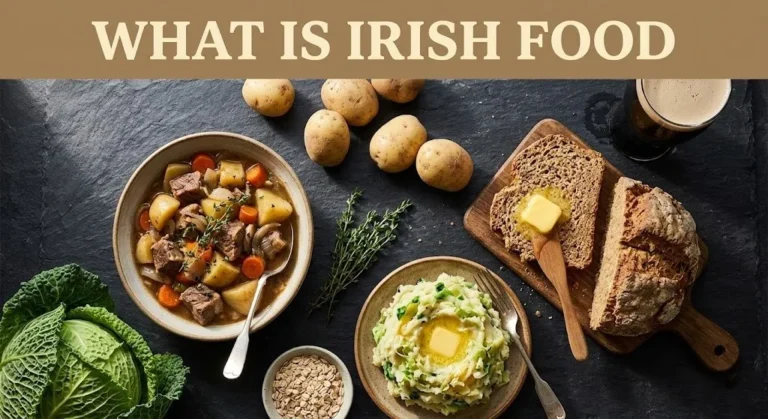
Flat rice noodles, called bánh phở, are the starch. They are soft, slippery, and made from rice flour and water. Thinly sliced raw beef, typically eye of round, is placed on top of the noodles and cooked by the heat of the boiling broth as it is ladled into the bowl.
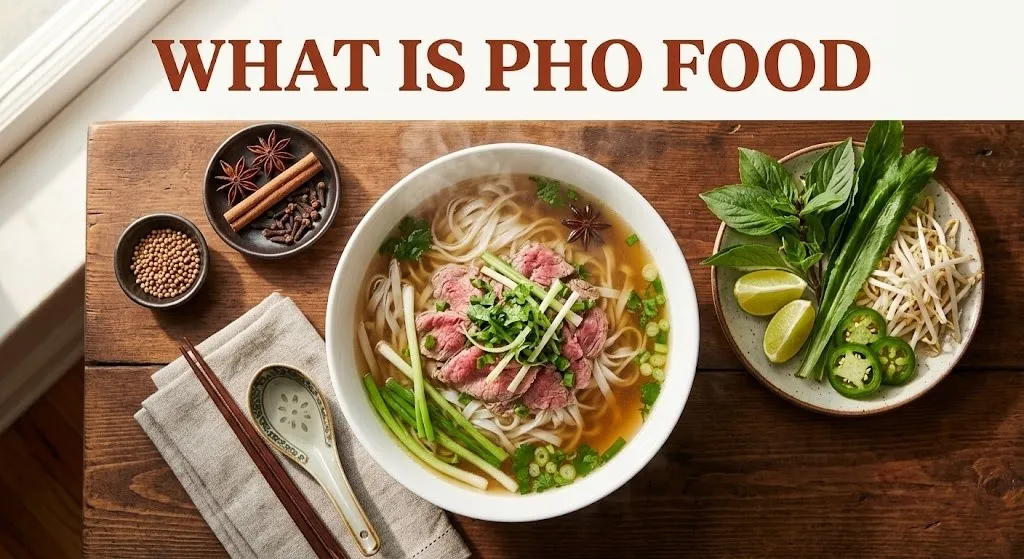
A plate of garnishes accompanies every bowl: Thai basil, culantro, bean sprouts, lime wedges, and sliced jalapeno. The diner adds these fresh herbs and vegetables to taste. Hoisin sauce and sriracha are the standard condiments on the table.
What Type of Food Is Pho
Pho is a noodle soup that functions as a complete meal in a single bowl. It contains protein from the meat, carbohydrates from the rice noodles, micronutrients from the herbs and sprouts, and hydration from the broth.
Pho is classified as a breakfast, lunch, or dinner food in Vietnam. It is eaten at all hours, though it is most traditionally a morning meal sold by street vendors who begin serving before sunrise. The Western adaptation has shifted pho toward lunch and dinner.
Pho is comfort food and functional food simultaneously. The warm broth soothes a sore throat. The ginger and spices have anti-inflammatory properties. The collagen from the bone broth supports joint health. It is a food that tastes healing because it is.
Key Takeaway: Pho is a complete-meal noodle soup that serves as breakfast, lunch, or dinner, and is simultaneously comfort food and functional food.
Where Is Pho Food From
Pho is from Vietnam. It originated in the northern regions around Hanoi in the early 20th century, likely as a fusion of Vietnamese ingredients and French colonial influences, particularly the French demand for beef, which led to the availability of beef bones for broth.
The dish spread south to Saigon in the 1950s after the partition of Vietnam. Southern pho developed a sweeter, bolder broth with more garnishes, bean sprouts, basil, hoisin, and sriracha, compared to the austere, purist northern style.
Pho arrived in the United States with Vietnamese refugees after the fall of Saigon in 1975. The first pho restaurants opened in Little Saigon communities in California, Texas, and Louisiana. By 2026, pho is a globally recognized dish with thousands of restaurants worldwide.
Is Pho Thai Food or Vietnamese
Pho is Vietnamese food, not Thai. The confusion arises because both cuisines feature rice noodles, fresh herbs, and aromatic broths, and because many Thai restaurants in the West serve dishes from across Southeast Asia.
Thailand has its own noodle soups, notably boat noodles, khao soi, and tom yum noodle soup. These dishes are distinct from pho. Boat noodles use a darker, richer broth with star anise and cinnamon but add blood for depth and are served in small portions. Khao soi is a coconut curry noodle soup.
Pho does not contain coconut milk, lemongrass, or galangal, which are hallmarks of Thai cuisine. The Vietnamese spice profile is cinnamon, star anise, and coriander. The Thai spice profile is lemongrass, galangal, and kaffir lime leaf.
What Is Pho Made Of
Pho is made of five components. The broth is the first and most important. Beef bones, typically oxtail, knuckle, and marrow bones, are simmered for 6 to 12 hours. Charred onion and ginger are added for sweetness and depth. Star anise, clove, cinnamon, coriander seed, and fennel seed are toasted and tied in a cheesecloth sachet.
The noodles are the second component. Bánh phở are flat, linguine-width rice noodles made from rice flour and water. They are blanched briefly in boiling water before being placed in the bowl.
The meat is the third component. Eye of round, sliced paper-thin, is the classic. Brisket, flank, tendon, tripe, and meatballs are common additions. The raw beef is placed on top of the noodles and cooked by the heat of the broth.
The garnishes are the fourth component. Thai basil, culantro, bean sprouts, lime, and jalapeno arrive on a separate plate. The condiments are the fifth. Hoisin sauce and sriracha are the standard duo.
Pho Nutrition Facts
A standard 24-ounce bowl of beef pho contains 350 to 450 calories, 30 to 35 grams of protein, 45 to 50 grams of carbohydrate, 5 to 8 grams of fat, 2 to 3 grams of saturated fat, 3 to 4 grams of fiber, and 800 to 1,500 milligrams of sodium.
The protein is high-quality and complete from the beef and the collagenous broth. The carbohydrate is from the rice noodles. The fat is low unless the bowl includes fatty brisket or tendon.
The sodium is the nutritional wildcard. A restaurant bowl can deliver 1,500 milligrams of sodium, two-thirds of the daily recommended limit. The sodium comes from the fish sauce in the broth and the condiments added at the table.
| Soup (1 large bowl) | Calories | Protein | Carbs | Fat | Sodium |
|---|---|---|---|---|---|
| Pho (Beef) | 400 | 30g | 45g | 5g | 1,200mg |
| Ramen (Tonkotsu) | 700 | 30g | 70g | 30g | 2,000mg |
| Chicken Noodle | 350 | 20g | 35g | 10g | 1,500mg |
| Wonton Soup | 450 | 25g | 40g | 15g | 1,800mg |
Is Pho Healthy
Pho is a healthy meal choice relative to other restaurant soups. It is high in protein, low in saturated fat, and contains no added sugar. The broth provides hydration and collagen-derived amino acids like glycine and proline.
The spices are functional foods. Star anise contains shikimic acid, the precursor compound for the antiviral drug oseltamivir. Ginger contains gingerol, an anti-inflammatory compound studied for its effect on muscle soreness and nausea. Cinnamon contains cinnamaldehyde, which has antimicrobial properties.
The healthfulness depends on the choices made at the table. A bowl of pho with lean eye of round, extra bean sprouts, and moderate hoisin is a balanced, nutrient-dense meal. A bowl with fatty brisket, extra noodles, and a river of hoisin and sriracha is a high-sodium, high-sugar meal.
Pho vs Ramen Nutrition
Pho is healthier than ramen on every nutritional metric. A bowl of beef pho contains 400 calories, 5 grams of fat, and 1,200 milligrams of sodium. A bowl of tonkotsu ramen contains 700 calories, 30 grams of fat, and 2,000 milligrams of sodium.
The broth is the primary difference. Pho broth is a clear, defatted beef or chicken broth. Ramen broth, particularly tonkotsu, is an emulsified pork bone broth with a high fat content. The creamy white color of tonkotsu is emulsified pork fat.
Pho has less sodium on average, though both soups can be high. Pho uses fish sauce for salt. Ramen uses soy sauce and miso. The sodium load from both is high, but ramen consistently delivers more.
What Is Pho Broth Made Of
Pho broth is made from beef bones, charred onion, charred ginger, and a spice sachet of star anise, clove, cinnamon, coriander seed, fennel seed, and sometimes black cardamom. The bones are blanched first to remove impurities, then simmered for 6 to 12 hours.
The charring of the onion and ginger is a non-negotiable technique. The direct flame or high-heat roasting caramelizes the natural sugars and creates a deep, smoky sweetness that defines the pho flavor. Uncharred onion and ginger produce a pale, flat broth.
The clearness of the broth is a marker of quality. The bones are blanched and rinsed. The broth is simmered, never boiled. Boiling emulsifies fat and impurities into the liquid, creating a cloudy broth. A clear broth is a carefully tended broth.
How to Eat Pho
To eat pho, hold the chopsticks in your dominant hand and the soup spoon in the other. Use the chopsticks to lift a portion of noodles and meat. Place the noodles in the spoon. Dip the spoon into the broth. Eat the spoonful.
Add the garnishes gradually. Tear the Thai basil and culantro leaves by hand and drop them into the bowl. Add a handful of bean sprouts. Squeeze the lime wedge over the broth. Add sliced jalapeno to taste.
Use hoisin and sriracha sparingly. The broth is the star. Taste the broth before adding any condiments. A well-made pho broth needs nothing. Dip the meat into a small side dish of hoisin and sriracha mixed together rather than pouring the sauces directly into the bowl.
Key Takeaway: Eat pho with chopsticks in one hand and a spoon in the other; taste the broth before adding condiments; dip the meat, do not pour the sauce.
Healthy Pho Recipe 2026
To make a healthy homemade pho with controlled sodium and fat:
- Char 2 large onions and a 4-inch piece of ginger under a broiler or over a gas flame until blackened in spots.
- Blanch 3 pounds of beef knuckle and marrow bones in boiling water for 5 minutes. Drain and rinse.
- Place the bones in a large stockpot with 6 quarts of water. Add the charred onion, ginger, and a spice sachet of 5 star anise, 1 cinnamon stick, 1 tablespoon coriander seed, 1 teaspoon fennel seed, and 4 cloves.
- Simmer, never boil, for 6 hours. Skim any foam that rises to the surface.
- Strain the broth. Season with 1 tablespoon of fish sauce and salt to taste. Serve over blanched rice noodles with thinly sliced eye of round, bean sprouts, herbs, and lime.
Use low-sodium fish sauce and limit the added salt to keep the sodium under 600 milligrams per serving.
What Is the Healthiest Pho Option
The healthiest pho option is a bowl of pho ga, chicken pho, with extra vegetables, no added sugar condiments, and light on the noodles. Chicken pho is made with a lighter, clearer broth and leaner protein than beef pho.
Request zucchini noodles or extra bean sprouts in place of some of the rice noodles to reduce the carbohydrate load and increase the fiber. A bowl of pho with half rice noodles and half bean sprouts cuts the carbohydrate by 30 percent.
Ask for the sauce on the side. The hoisin and sriracha bottles on the table are the sodium and sugar bombs. Dip the meat into a small dish of sauce rather than pouring it into the bowl.
Vegan Pho Healthy
Vegan pho uses a vegetable broth infused with the same spices. The umami depth comes from charred onion, ginger, mushrooms, and a small amount of soy sauce or tamari instead of fish sauce.
The protein comes from tofu, edamame, or seitan. Pan-seared or fried tofu cubes absorb the broth and provide a chewy, satisfying texture. Edamame adds protein and a bright green color.
The broth lacks the gelatinous body of bone broth. A small amount of arrowroot starch or cornstarch can add a slight viscosity that mimics the mouthfeel of collagen. The flavor is remarkably close to traditional pho.
Zucchini Noodle Pho Healthy
Zucchini noodle pho replaces the rice noodles with spiralized zucchini. The carbohydrate drops from 45 grams to under 10 grams per bowl. The calorie count drops by 100 to 150 calories.
The zucchini noodles are added raw to the bowl. The boiling broth cooks them just enough to soften. They remain slightly crisp, a different texture from the soft, slippery rice noodles. The experience is a low-carb adaptation, not a replica.
This version is suitable for a ketogenic or low-carb diet. The protein and fat remain from the beef and broth. The carbohydrate is minimized. The flavor remains authentic because the broth and spices are unchanged.
Low Sodium Pho Healthy
A low sodium pho uses a homemade or restaurant-requested low-salt broth. The sodium target is 600 milligrams or fewer per bowl, compared to 1,200 to 1,500 milligrams in a standard bowl.
At a restaurant, request the pho with no added fish sauce and sauce on the side. The broth may already contain fish sauce, but the table-side addition can be controlled. Add fresh herbs, lime, and bean sprouts for flavor instead of hoisin and sriracha.
At home, use low-sodium fish sauce and salt the broth lightly. The spices, ginger, and charred onion provide the flavor. The sodium is the seasoning, not the foundation. A low-sodium pho is still deeply aromatic and satisfying.
Key Takeaway: A bowl of pho can be a low-sodium, high-protein meal when you control the fish sauce and skip the sugary condiments on the table.
Frequently Asked Questions About Pho
Is pho healthy for weight loss?
Yes, pho is a low-fat, high-protein soup that supports satiety on roughly 400 calories.
The broth fills the stomach. The protein satisfies. The rice noodles provide energy.
Request extra vegetables and moderate the noodle portion to reduce the calorie density.
How many calories are in a bowl of pho?
A standard 24-ounce bowl of beef pho contains 350 to 450 calories.
The exact count depends on the meat choices and the noodle portion.
A bowl with fatty brisket and tendon can reach 600 calories.
What is the difference between pho and ramen?
Pho is a Vietnamese rice noodle soup with a clear, low-fat broth.
Ramen is a Japanese wheat noodle soup with an emulsified, high-fat broth.
Pho is lower in calories, fat, and sodium than most ramen.
Is pho gluten free?
The rice noodles in pho are naturally gluten free.
The fish sauce and hoisin sauce may contain wheat. The broth is typically gluten free.
Confirm with the restaurant if you have celiac disease.
Can you eat pho every day?
You can eat pho every day if you control the sodium and rotate the protein.
A bowl of chicken pho with extra vegetables is a balanced daily meal.
The sodium is the limiting factor. Request low-sodium broth if eating it frequently.
Pho is a masterpiece of culinary engineering. A clear, spiced broth simmered for half a day. A tangle of soft rice noodles. Paper-thin beef that cooks in the bowl. A mountain of fresh herbs that you add yourself. It is soup as a participatory experience.
It is also the healthiest major noodle soup on the global menu. Lower in fat than ramen. Higher in protein than chicken noodle. Built on a broth that delivers collagen, spices that deliver anti-inflammatory compounds, and a garnish plate that delivers fresh vegetables.
Eat it for breakfast the way they do in Hanoi. Eat it for lunch on a cold day. The bowl is deep. The broth is clear. The lime wedge, the basil, the bean sprouts are waiting for you.