Freeze-dried dog food can be a nutrient-dense, highly palatable diet that closely mimics a dog’s ancestral eating pattern, but it carries a genuine bacterial contamination risk that requires meticulous handling and may be unsuitable for households with immunocompromised individuals or dogs with certain health conditions. The freeze-drying process removes roughly 98 percent of the moisture from raw ingredients without using heat, preserving vitamins, enzymes, and the structural integrity of the meat proteins in a shelf-stable format. What it does not reliably do is kill pathogenic bacteria.
The American Animal Hospital Association (AAHA) updated its nutritional assessment guidelines in 2024 to recommend against feeding raw protein diets, including freeze-dried raw, to dogs living in homes with immunocompromised people, infants, or elderly individuals. The pathogens of concern, primarily Salmonella and Listeria monocytogenes, enter a suspended state during freeze-drying and can reactivate when the food is rehydrated in your kitchen. This is not a fringe concern. The FDA Center for Veterinary Medicine has documented multiple cases of human illness linked to handling contaminated raw pet food.
This guide explains exactly how freeze-drying works, why the pathogen risk is real, how the nutritional profile compares to kibble, and which specific brands meet the highest safety standards in 2026. Your veterinarian is the only person qualified to determine whether a freeze-dried diet is appropriate for your individual dog’s breed, age, and health status.
what is freeze dried dog food
Freeze-dried dog food is a raw or gently cooked pet food that has been processed through lyophilization, a three-stage procedure where the food is frozen at extreme temperatures, placed under a vacuum, and then slowly warmed to allow the frozen water to sublimate directly from solid ice to vapor without passing through a liquid phase. This process removes the water while leaving the structure and nutrients of the raw ingredients largely intact. The result is a dry, lightweight, shelf-stable product that resembles the original raw food when rehydrated.
The science of lyophilization is distinct from dehydration. Dehydration uses heat, typically between 125°F and 160°F, to evaporate water. This heat denatures some proteins, degrades heat-sensitive vitamins like thiamine and vitamin C, and alters the texture of the food. Freeze-drying uses no heat during the primary drying phase. The food remains frozen while the water sublimates. This preserves the native structure of the proteins, which many raw-feeding proponents believe is closer to what a dog’s digestive system evolved to process.
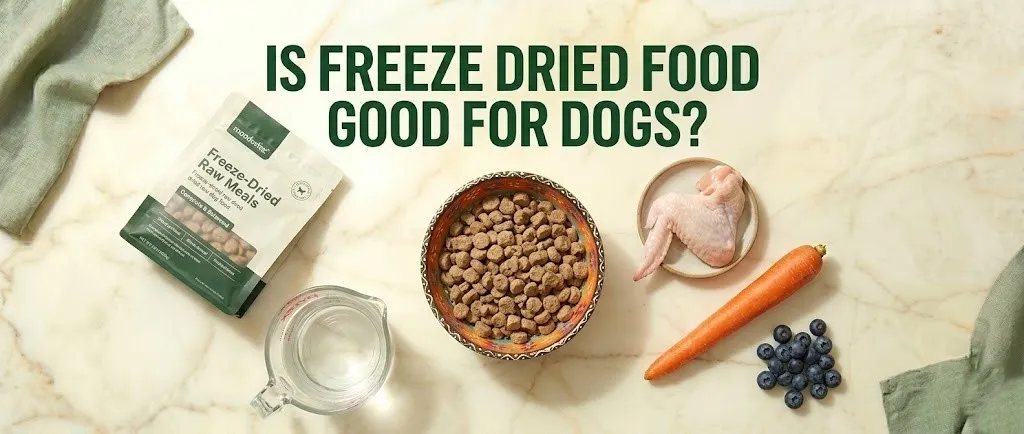
The final moisture content of freeze-dried dog food is typically 2 to 5 percent, compared to roughly 10 percent for kibble and 70 to 80 percent for wet food. This extremely low water activity is what makes the food shelf-stable. Bacteria require water to reproduce. A water activity level below 0.6 inhibits all bacterial growth. Freeze-dried food achieves this. However, inhibiting growth is not the same as killing the bacteria that were already present in the raw ingredients.
- Freeze-drying: Sublimation, no heat, preserves protein structure.
- Dehydration: Evaporation, uses heat, denatures some nutrients.
- Kibble: Extrusion, high heat and pressure, significant processing.
- Wet food: Canning, high heat, retains moisture.
is freeze dried food good for dogs
Freeze-dried food is good for dogs in terms of providing a high-protein, low-carbohydrate, minimally processed diet that many dogs find extremely palatable, but the nutritional benefits must be weighed against the pathogen risk and the high cost. For a healthy adult dog in a household without vulnerable individuals, a freeze-dried diet from a reputable manufacturer that uses high-pressure processing (HPP) or other pathogen mitigation steps can be an excellent nutritional choice.
The nutritional profile of freeze-dried raw food typically exceeds that of standard kibble in several measurable ways. The protein content is higher, often 35 to 50 percent on a dry matter basis, compared to 25 to 30 percent for standard kibble. The fat content is also higher. The carbohydrate content is dramatically lower because freeze-dried food does not require starch to bind the kibble pieces together. A dog’s digestive system has no biological requirement for carbohydrates. The lower carb load can be beneficial for dogs with diabetes, obesity, or inflammatory conditions.
The digestibility of freeze-dried protein is generally superior to extruded kibble protein. The gentle processing preserves the native structure of the amino acids, which digestive enzymes can break down efficiently. A 2023 study in the Journal of Animal Science found that freeze-dried beef had a protein digestibility of roughly 92 percent, compared to 82 percent for the same beef processed through high-temperature extrusion. More of the protein in freeze-dried food ends up as usable amino acids in the dog’s bloodstream.
| Attribute | Freeze-Dried Raw | Standard Kibble |
|---|---|---|
| Protein (dry matter) | 35 to 50 percent | 25 to 30 percent |
| Carbohydrate | 5 to 15 percent | 30 to 50 percent |
| Moisture | 2 to 5 percent | 8 to 10 percent |
| Processing temperature | Below freezing | 250 to 350°F |
| Pathogen risk | Present (raw) | Low (cooked) |
Key Takeaway: Freeze-dried food delivers excellent protein quality and a species-appropriate macronutrient profile, but these benefits come with a handling risk that does not exist with cooked commercial diets.
is freeze dried dog food healthy
Freeze-dried dog food is healthy for most dogs because it contains high levels of animal protein, natural fats, and intact micronutrients without the fillers, artificial preservatives, and highly processed starches that characterize many commercial kibble formulas. The term “healthy” in this context refers to the nutritional density and biological appropriateness of the ingredients.
The micronutrient advantage of freeze-dried food is a direct result of the processing method. Vitamins A, D, E, and the B-complex are sensitive to heat, oxidation, and processing. Kibble manufacturers must spray these vitamins onto the kibble after extrusion because the high heat of the extrusion process destroys them. This is why kibble ingredient lists often include a long list of synthetic vitamin supplements. Freeze-dried food retains much of the original vitamin content because the food is never heated. The natural vitamins in the liver, muscle meat, and vegetables remain intact.
The omega-3 fatty acid content is another area where freeze-dried food excels. The delicate long-chain fatty acids EPA and DHA found in fish oils and grass-finished meats are highly susceptible to oxidation. Exposure to heat and oxygen during the kibble extrusion process can oxidize these fats, reducing their nutritional value and creating rancid compounds. Freeze-drying occurs in a vacuum with minimal oxygen exposure, preserving the integrity of these anti-inflammatory fats.
- Vitamins: Naturally retained, not sprayed on after processing.
- Omega-3s: Preserved by low-temperature, oxygen-free processing.
- Enzymes: Naturally occurring enzymes remain intact.
- No fillers: Zero corn, wheat, or soy in most freeze-dried formulas.
is freeze dried raw food good for dogs
Freeze-dried raw food is good for dogs from a nutritional standpoint because it closely mirrors the evolutionary diet of the canine species, which evolved on raw meat, organs, and bones, but the “raw” status introduces the pathogen risk that requires careful handling and a risk assessment by the owner. The term “raw” means the meat, organs, and bones have not been heated to a temperature that kills bacteria.
The evolutionary argument for raw feeding is grounded in comparative anatomy. Dogs share roughly 99.9 percent of their DNA with wolves, and their digestive tracts remain structurally identical to their wild ancestors. They have a short, highly acidic stomach with a pH that can drop to 1 to 2 during digestion, an environment designed to neutralize bacteria in raw meat. However, domestication has altered the microbiome and immune system of modern dogs, and they are not wolves. They are scavengers that have lived alongside humans for over 15,000 years, and their tolerance for pathogenic bacteria varies by individual.
The “raw” advantage that freeze-drying preserves is the native amino acid structure. Heat denatures proteins, changing their three-dimensional shape. Some raw-feeding proponents argue that denatured proteins are less bioavailable and can trigger food sensitivities. The limited research available suggests that dogs with inflammatory bowel disease or food allergies sometimes improve on raw diets, though the mechanism is not clearly established.
- Ancestral argument: Canine digestive anatomy is designed for raw meat.
- Denaturation: Freeze-drying avoids heat, preserving native protein structure.
- Anecdotal benefits: Shinier coat, smaller stools, improved energy.
- Risk: Raw pathogens are preserved alongside the nutrients.
is freeze dried dog food good for dogs
Freeze dried dog food is good for dogs that thrive on high-protein, low-carb diets, but it is not appropriate for dogs with kidney disease, pancreatitis, or compromised immune systems. The suitability of freeze-dried food is highly individual and must account for the dog’s age, breed, and preexisting health conditions. The plural “is freeze dried dog food good for dogs” phrasing reflects the general question about the entire category.
The protein content that makes freeze-dried food excellent for most dogs is precisely what makes it inappropriate for dogs with advanced kidney disease. A dog with significant renal impairment requires a prescription diet with reduced phosphorus and controlled protein levels to reduce the workload on the failing kidneys. Feeding a high-protein freeze-dried raw diet to a dog with kidney disease can accelerate the progression of the condition.
Large-breed puppies have specific calcium and phosphorus requirements to prevent developmental orthopedic diseases like hip dysplasia. The calcium-to-phosphorus ratio must be tightly controlled, ideally between 1.2:1 and 1.4:1. Some freeze-dried raw formulas, particularly those containing ground bone, can have inconsistent calcium levels across batches. A board-certified veterinary nutritionist can help determine whether a specific freeze-dried formula meets the requirements for a large-breed puppy.
- Suitable for: Healthy adult dogs, active dogs, dogs with food sensitivities.
- Use caution: Large-breed puppies (calcium-phosphorus ratio).
- Avoid if: Kidney disease, pancreatitis, immunocompromised.
- Avoid if: Household contains immunocompromised human members.
Key Takeaway: The healthiest diet for a dog is the one that matches its specific physiological condition. Freeze-dried food is a powerful nutritional tool, not a universal solution.
is raw freeze dried food good for dogs
Raw freeze dried food is good for dogs when the manufacturer has implemented a validated pathogen kill step, such as high-pressure processing (HPP), and the owner follows strict kitchen hygiene protocols. The “raw” designation is the source of both the nutritional advantage and the safety concern.
High-pressure processing, or HPP, is a post-freeze-drying treatment that subjects the sealed packages to extreme pressures, typically 87,000 pounds per square inch, in a cold water chamber. This pressure ruptures the cell membranes of bacteria like Salmonella and Listeria, effectively killing them without using heat. HPP is the most common pathogen mitigation strategy used by premium freeze-dried raw brands in 2026. It is not universal. Some brands choose not to use HPP, citing a desire to preserve every native enzyme, and instead rely on supplier auditing and product testing.
The kitchen hygiene protocol for handling raw freeze-dried food is non-negotiable. The food should be rehydrated in a dedicated bowl. Your hands should be washed with soap and water for 20 seconds after handling the food. The rehydration bowl and any utensils should be washed separately from human dishes in hot, soapy water. Surfaces that came into contact with the food should be disinfected. These are the same precautions you would take when handling raw chicken for your own dinner. The risk is manageable, but it requires consistent attention.
- HPP: Kills bacteria without heat, used by many premium brands.
- No HPP: Relies on supplier testing and clean sourcing.
- Kitchen hygiene: Dedicated bowls, hand washing, surface disinfection.
- Vulnerable individuals: Immunocompromised people should avoid handling.
is freeze-dried dog food healthy
Freeze-dried dog food is healthy when it is formulated to meet the AAFCO Dog Food Nutrient Profiles for the appropriate life stage, meaning it contains the minimum required levels of every essential amino acid, fatty acid, vitamin, and mineral. The hyphenated “freeze-dried” is a grammatical variant asking the same question about health status.
The AAFCO statement is the single most important piece of text on a bag of dog food. It tells you whether the food is “complete and balanced” and for which life stage. A food labeled “for adult maintenance” meets the nutrient requirements for adult dogs but not for puppies or pregnant females. A food labeled “for all life stages” meets the higher requirements for growth and reproduction. A food labeled “for intermittent or supplemental feeding only” is not nutritionally complete and must be fed alongside other foods.
The AAFCO statement also reveals how the company validated the nutritional adequacy. The gold standard is “animal feeding tests using AAFCO procedures,” which means the food was actually fed to dogs in a controlled trial. The more common and less rigorous standard is “formulated to meet the nutritional levels established by the AAFCO Dog Food Nutrient Profiles,” which means the food was calculated on paper to meet the requirements but was not tested on live animals. Freeze-dried raw brands tend to rely on paper formulations more often than kibble companies.
- “Complete and balanced”: Meets all nutritional requirements for the stated life stage.
- “Intermittent or supplemental”: Not a complete diet. Do not feed as the sole food.
- “Animal feeding tests”: Gold standard, tested on live dogs.
- “Formulated to meet”: Paper calculation, less rigorous validation.
is freeze dried dog food better than kibble
Freeze-dried dog food is generally better than kibble in terms of ingredient quality, protein bioavailability, and minimal processing, but it is significantly more expensive and requires more careful handling. The comparison is not a simple hierarchy. Kibble has advantages in convenience, cost, and proven safety.
The processing comparison explains most of the nutritional difference. Kibble is made through extrusion, a process that pushes a wet dough of ingredients through a machine at high temperature and pressure. The starch in the dough gelatinizes and expands, creating the puffed, crunchy structure. This process requires a minimum starch content, usually 25 to 35 percent, to achieve the right texture. The starch comes from grains, legumes, or potatoes. The heat destroys natural vitamins, which must then be sprayed back onto the kibble as synthetic supplements. The final product is a shelf-stable, convenient, and nutritionally adequate food that is also highly processed.
Freeze-dried food bypasses extrusion entirely. The ingredients are mixed, shaped, and freeze-dried. No starch binder is required. The carbohydrate content is naturally lower. The protein structure is preserved. The vitamins remain intact. The trade-off is cost. Freeze-dried food typically costs two to three times more per calorie than premium kibble. For a large-breed dog eating four cups of food per day, switching to exclusively freeze-dried can increase the monthly food budget by several hundred dollars.
| Feature | Freeze-Dried | Kibble |
|---|---|---|
| Processing | Lyophilization (cold) | Extrusion (hot) |
| Starch Requirement | None | 25 to 35 percent |
| Protein Quality | Native, high digestibility | Denatured, variable digestibility |
| Cost per Day | $4 to $10 | $1 to $3 |
| Pathogen Risk | Present | None (cooked) |
| Shelf Life | 12 to 24 months | 12 to 18 months |
Key Takeaway: Freeze-dried food is a nutritional upgrade over kibble, but it costs significantly more and requires handling raw meat precautions that kibble does not.
freeze dried dog food pros and cons
The pros of freeze-dried dog food include high protein, natural micronutrients, superior palatability, and minimal processing. The cons include bacterial pathogen risk, extreme cost, potential for unbalanced homemade formulations, and the inconvenience of rehydration and hygiene protocols.
The protein advantage is the most frequently cited benefit. Dogs are facultative carnivores with a digestive system optimized for animal protein and fat. A diet that delivers 40 percent protein on a dry matter basis from named muscle meats and organs aligns closely with this biological reality. The palatability of freeze-dried food is universally acknowledged. Even picky dogs who turn their noses up at kibble will often eat freeze-dried food with enthusiasm.
The cost is the barrier that prevents most dog owners from using freeze-dried food as a sole diet. A 30-pound dog eating roughly 1.5 cups of rehydrated freeze-dried food per day will consume approximately $150 to $250 per month in food costs. The same dog on a premium kibble will cost $40 to $70 per month. The freeze-dried food is nutritionally superior, but the superior nutrition costs roughly three times as much. Many owners choose a middle ground, using freeze-dried food as a topper or mixer with a high-quality kibble.
- Pro: High protein, species-appropriate macronutrient profile.
- Pro: Minimal processing, natural vitamin retention.
- Pro: Highly palatable, even for picky dogs.
- Con: Pathogen risk requires strict handling protocols.
- Con: Two to three times the cost of premium kibble.
- Con: Not appropriate for immunocompromised dogs or households.
can freeze dried dog food make dogs sick
Freeze-dried dog food can make dogs sick if it is contaminated with pathogenic bacteria like Salmonella, Listeria monocytogenes, or E. coli. These bacteria can survive the freeze-drying process in a dormant state and reactivate when the food is rehydrated. A dog consuming contaminated freeze-dried food can develop acute gastroenteritis, with symptoms including vomiting, diarrhea, fever, and lethargy.
The mechanism of bacterial survival is called the viable-but-non-culturable (VBNC) state. When bacteria are subjected to the extreme cold and dehydration of lyophilization, many of them do not die. They enter a dormant state where their metabolic activity shuts down. Standard lab culture tests may fail to detect them because they do not grow on the culture media. When the food is rehydrated, the bacteria reactivate, multiply, and cause infection. This is why a package that tests negative for Salmonella can still contain viable organisms that cause illness.
The risk to the dog is real but generally manageable for a healthy adult animal. A dog’s acidic stomach provides a natural defense against ingested bacteria. However, young puppies, senior dogs, and dogs with compromised immune systems from conditions like cancer or immunosuppressive medications are at higher risk of severe illness. The risk to humans in the household is equally important. The owner handling the food can become infected through cross-contamination.
- VBNC state: Dormant bacteria survive freeze-drying and reactivate when rehydrated.
- Dog risk: Acute gastroenteritis, higher risk for puppies and seniors.
- Human risk: Salmonella and Listeria can transfer to surfaces and hands.
- Prevention: HPP-treated food, strict kitchen hygiene.
how to rehydrate freeze dried dog food
Rehydrate freeze-dried dog food by adding warm, not boiling, water at a ratio of roughly 1 part water to 1 part food by volume, letting it sit for 2 to 3 minutes, and serving immediately. Discard any uneaten food after 30 minutes to prevent bacterial growth. The rehydration step is required for raw freeze-dried food because consuming the dry, porous nuggets without water can draw fluid into the stomach and cause bloating.
The water temperature is important. Boiling water will cook the raw proteins, defeating the purpose of the raw diet. Cold water will slow the rehydration process and produce an unappetizing, chilly meal. Warm water, around 100°F to 110°F, rehydrates the food quickly without cooking it. The food should soften to the texture of a fresh raw patty, not a soup. If there is standing water after the food has absorbed what it can, you have added too much.
The rehydration time varies by brand and nugget size. Small pellets may fully rehydrate in 1 to 2 minutes. Large patties or bars may require 5 to 7 minutes and benefit from being broken apart with a fork. Always refer to the specific brand’s instructions. Some brands formulate their food to be fed dry as a crunchy treat or topper. If the bag says “feed dry,” do not rehydrate. The “raw” risk is still present, but the dry format reduces the immediate bacterial reactivation.
- Measure the recommended serving size into a clean, dedicated dog bowl.
- Add an equal volume of warm water (100°F to 110°F).
- Let sit for 2 to 3 minutes. Stir gently to break up clumps.
- Serve immediately. Discard any uneaten portion after 30 minutes.
Key Takeaway: Rehydration is a food safety step as much as a texture step. The warm water reactivates dormant bacteria, which is why uneaten food must be discarded promptly.
best freeze dried dog food brands 2026
The best freeze-dried dog food brands in 2026 are Stella & Chewy’s, Primal Pet Foods, Instinct Raw, Open Farm, and Orijen, each of which uses high-pressure processing (HPP) or rigorous end-product testing to mitigate pathogen risk. These brands were selected based on ingredient sourcing transparency, AAFCO compliance, and the availability of feeding trial data.
Stella & Chewy’s is the market leader for a reason. Their freeze-dried raw dinner patties are made from grass-fed, cage-free, and wild-caught proteins. They use HPP on all raw products. Their ingredient lists are short, typically five to ten items, and they are formulated to meet AAFCO nutrient profiles for all life stages. Primal Pet Foods offers a similar quality level with an emphasis on organic produce and grass-fed beef. Their nuggets rehydrate well and are highly palatable.
Instinct Raw is the most accessible brand, available in major pet retailers nationwide. They use HPP and have the most extensive supply chain quality controls of any freeze-dried brand. Open Farm stands out for transparency, providing a lot code on every bag that allows the owner to trace every ingredient back to its source. Orijen freeze-dried treats and foods emphasize whole prey ratios, including organs, bone, and cartilage in proportions that mirror the natural prey of wild canids.
| Brand | HPP? | AAFCO | Notable Feature |
|---|---|---|---|
| Stella & Chewy’s | Yes | All life stages | Grass-fed, wild-caught proteins |
| Primal Pet Foods | Yes | All life stages | Organic produce, human-grade |
| Instinct Raw | Yes | All life stages | Widely available, strong quality controls |
| Open Farm | Yes | All life stages | Lot-code traceability to source |
| Orijen | Testing | All life stages | Whole prey ratios, minimal processing |
Frequently Asked Questions About Freeze-Dried Dog Food
Does freeze-dried dog food need to be refrigerated?
Unopened freeze-dried dog food does not need refrigeration and is shelf-stable for 12 to 24 months.
Once rehydrated, it must be treated like raw meat and consumed within 30 minutes.
Opened bags should be sealed tightly and stored in a cool, dry place.
Can puppies eat freeze-dried dog food?
Puppies can eat freeze-dried food that is specifically labeled for “all life stages” or “growth and reproduction” per AAFCO guidelines.
Large-breed puppies require careful attention to the calcium-to-phosphorus ratio to prevent developmental bone disease.
Consult your veterinarian before starting a puppy on a raw diet.
How long does freeze-dried dog food last after opening?
An opened bag of freeze-dried dog food lasts for 30 to 60 days if the bag is resealed tightly after each use.
Exposure to humidity causes the food to absorb moisture and spoil.
Do not leave the bag open for extended periods during serving.
Is freeze-dried dog food easier to digest?
Freeze-dried dog food is generally easier to digest than kibble because the proteins have not been denatured by high heat.
The digestibility of freeze-dried beef is roughly 92 percent compared to 82 percent for extruded kibble.
This improved digestibility often produces smaller, firmer stools.
Why is freeze-dried dog food so expensive?
Freeze-dried dog food is expensive because the lyophilization process requires specialized equipment, takes 24 to 48 hours per batch, and the raw ingredients are typically higher quality than those used in kibble.
The freeze-drying machines are expensive to operate and maintain.
The ingredients are often human-grade, grass-fed, or wild-caught, which costs more than commodity feed-grade ingredients.
Freeze-dried dog food represents the most nutritionally intact, minimally processed commercial diet available to dog owners in 2026. It preserves the protein structure, the natural vitamins, and the ancestral macronutrient profile that aligns with canine digestive physiology. It also preserves the bacteria that live on raw meat, and that reality demands respect.
If you choose to feed freeze-dried raw, buy from a brand that uses HPP or validated pathogen mitigation. Rehydrate in a dedicated bowl. Wash your hands. Do not feed it to a dog with kidney disease or pancreatitis. Do not handle it if you or someone in your home is immunocompromised.
The choice between freeze-dried, kibble, and fresh-cooked food is not a moral test of your devotion as an owner. It is a practical decision based on your dog’s health, your budget, and your tolerance for handling raw meat products. Make the choice with clear eyes, and your dog will thrive on whichever high-quality diet you provide.