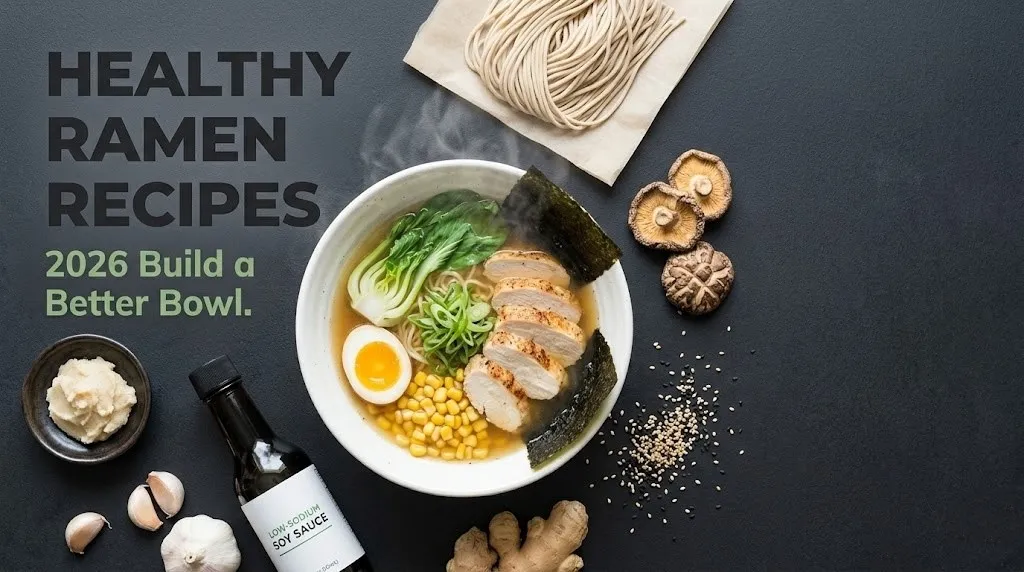
Healthy ramen recipes replace the fried noodles, sodium-packed seasoning packet, and dehydrated vegetables of instant ramen with fresh or properly cooked noodles, a real broth made from whole ingredients, lean protein, and a generous amount of fresh vegetables, transforming a 1,500-milligram sodium bomb into a balanced, nourishing meal around 400 to 500 calories.
Instant ramen is a triumph of convenience and a low point of nutrition. One package of standard instant ramen contains roughly 1,500 to 2,000 milligrams of sodium, nearly the entire American Heart Association daily limit of 2,300 milligrams, along with fried noodles, a seasoning packet of salt and MSG, and a scattering of dehydrated corn and carrots the size of confetti. It is a hot meal for a quarter. It is also a nutritional void.
Real ramen, the kind served at Japanese ramen shops, is a different food entirely. It is built on broth simmered for hours, fresh noodles, marinated eggs, and carefully prepared toppings. Making it at home lets you control every variable: the sodium, the fat, the vegetables, and the protein. This article covers the problems with instant ramen, the principles of building a healthier bowl, four master recipes, and every dietary adaptation you need.
What Makes Instant Ramen Unhealthy
Instant ramen is unhealthy because it combines fried refined noodles with a seasoning packet containing extreme amounts of sodium, saturated fat from palm oil, and additives like TBHQ, while providing almost no protein, fiber, or vegetables to offset the caloric and sodium load.
The nutritional profile of one package of standard instant ramen tells the story:
| Nutrient | Instant Ramen (1 package) |
|---|---|
| Calories | 370-400 |
| Total Fat | 14-16g |
| Saturated Fat | 6-7g |
| Sodium | 1,500-2,000mg |
| Carbohydrates | 50-55g |
| Dietary Fiber | 1-2g |
| Protein | 8-10g |
| Added Sugars | 0-2g |
The noodles are fried in palm oil during manufacturing to dehydrate them for shelf stability. This process adds saturated fat and calories. The seasoning packet is predominantly salt, MSG, and hydrolyzed vegetable protein with artificial flavorings. The vegetable packet, if included, is a tablespoon of dehydrated corn, carrot, and onion that rehydrates to almost nothing.
TBHQ (tertiary butylhydroquinone) is a preservative used in many instant noodle brands to prevent oxidation of the frying oil. The FDA considers it safe at regulated levels. It is also a marker of industrial food processing that has no place in a whole-food meal.
The sodium content is the most immediate health concern. At 1,500 to 2,000 milligrams per package, a single bowl of instant ramen uses 65 to 87 percent of the American Heart Association’s daily sodium limit. For someone eating three meals a day plus snacks, instant ramen makes it nearly impossible to stay within sodium recommendations.
The lack of protein and vegetables means the meal is not satiating. You will be hungry again within two hours. The calorie-to-satiety ratio is poor. A 400-calorie meal with 35 grams of protein and 8 grams of fiber keeps you full for hours. Instant ramen with 10 grams of protein and 2 grams of fiber does not.
Key Takeaway: Instant ramen is a sodium bomb built on fried noodles and industrial seasonings with negligible nutritional value beyond calories. Understanding these flaws is the first step to building a healthier bowl.
Can Ramen Be Healthy
Ramen can be healthy when made with a real bone or vegetable broth, fresh or properly sourced noodles, lean protein, a generous amount of vegetables, and controlled sodium from natural seasonings like miso, soy sauce, and salt added to taste rather than pre-packaged in a foil envelope.
The difference between instant ramen and a healthy homemade bowl is the difference between a frozen microwave dinner and a home-cooked meal. They share a name. They do not share nutritional profiles.
A healthy homemade ramen bowl delivers:
| Nutrient | Healthy Homemade Ramen (2 cups) |
|---|---|
| Calories | 380-450 |
| Protein | 25-35g |
| Total Fat | 10-15g |
| Saturated Fat | 3-5g |
| Sodium | 600-900mg |
| Carbohydrates | 40-50g |
| Dietary Fiber | 5-8g |
The protein content triples. The fiber triples or quadruples. The sodium is cut by half or more. The saturated fat drops by half. The calorie count is similar, but the nutritional value is transformed.
Real ramen broth provides collagen and gelatin from simmered bones, which some research suggests may support joint and skin health. The vegetables provide fiber, vitamins, and phytonutrients absent from instant versions. The soft-boiled egg adds protein, vitamin D, and choline. Nori seaweed adds iodine and trace minerals.
The USDA Dietary Guidelines recommend that meals include vegetables, lean protein, and whole grains within a reasonable sodium framework. A homemade ramen bowl meets those criteria. The key is controlling what goes into the pot.
Dietary Sensitivity Note: Traditional ramen broth is not vegetarian and often contains pork, chicken, or fish (bonito). Vegetable and miso-based broths provide vegan alternatives. Soy sauce and miso contain soy and wheat. Gluten-free tamari and chickpea miso provide alternatives.
How to Make Ramen Healthier
Make ramen healthier by starting with a real broth rather than a seasoning packet, adding four to six ounces of lean protein per serving, filling at least a third of the bowl with fresh vegetables, using noodles as a component rather than the base, and seasoning with soy sauce, miso, or salt added to taste rather than pre-measured.
This is the master framework that transforms ramen from a nutritional liability into a balanced meal. Apply these principles to any ramen recipe.
Broth first. The broth is the foundation. Instant ramen broth comes from a foil packet of salt and artificial flavor. A healthy broth starts with chicken bones, pork bones, kombu (dried kelp), bonito flakes, dried shiitake mushrooms, or simmered vegetables. Even a quick 30-minute broth made by simmering garlic, ginger, and dried mushrooms in low-sodium chicken stock is leagues ahead of a seasoning packet.
Protein second. Four to six ounces of lean protein per bowl transforms ramen into a satiating meal. Chicken breast, chicken thigh, pork tenderloin, shrimp, tofu, or a soft-boiled egg all work. The protein provides the amino acids that trigger satiety hormones and support muscle maintenance.
Vegetables third. At least a third of the bowl by volume should be vegetables. Bok choy, spinach, bean sprouts, shredded carrots, corn, shiitake mushrooms, and green onions are traditional and nutritious. The vegetables add fiber, volume, and micronutrients for minimal calories.
Noodles fourth. Noodles should be a component, not the base. Use 4 to 6 ounces of cooked noodles per bowl rather than the entire brick. The noodles provide the satisfying chew that makes ramen ramen, but they should not dominate the bowl.
Seasoning last. Season the broth at the end with low-sodium soy sauce, miso paste, or salt. This gives you complete control over the sodium content. A tablespoon of miso adds approximately 600 to 700 milligrams of sodium. A tablespoon of soy sauce adds about 900 milligrams. Use measured amounts rather than free pouring.
Quick Tip:
- The single most impactful change is swapping the seasoning packet for real broth. The sodium reduction alone transforms the health profile. Even if you change nothing else, make this swap.
Healthy Ramen Broth Bases
A healthy ramen broth starts with a foundation of simmered aromatics and either bone broth for richness, dashi for umami depth, or vegetable stock for lightness, seasoned with measured amounts of miso, soy sauce, or salt at the end.
The broth is what makes ramen worth eating. A good broth tastes like time and care. A healthy broth can be made in 30 minutes or 4 hours depending on how much depth you want.
Quick 30-minute miso broth: Simmer 6 cups low-sodium chicken or vegetable stock with 4 smashed garlic cloves, a 2-inch piece of ginger sliced thin, 2 dried shiitake mushrooms, and 1 tablespoon soy sauce for 20 minutes. Remove from heat. Whisk in 3 tablespoons white miso paste. Strain or leave aromatics in for more intense flavor. Makes 4 servings. Approximately 50 calories and 500 milligrams sodium per serving.
Chicken bone broth (2 to 4 hours): Simmer 3 pounds chicken wings, backs, or feet with 10 cups water, 1 onion halved, 4 garlic cloves, a 3-inch piece of ginger sliced, and 1 tablespoon rice vinegar (helps extract minerals from bones) for 2 to 4 hours. Skim foam. Strain. Season with salt and soy sauce to taste. Makes 6 to 8 cups. Rich in collagen and gelatin.
Vegetable dashi broth (vegan, 30 minutes): Soak a 4-inch piece of kombu (dried kelp) in 6 cups cold water for 15 minutes. Heat slowly. Just before boiling, remove the kombu. Add 4 dried shiitake mushrooms, 2 smashed garlic cloves, and a 1-inch piece of ginger. Simmer 15 minutes. Strain. Season with 2 tablespoons soy sauce or tamari and 1 tablespoon miso. Makes 4 servings.
Here is how the broth bases compare:
| Broth Type | Time | Calories per Cup | Protein | Best For |
|---|---|---|---|---|
| Quick miso broth | 30 min | 50 | 3g | Weeknight speed |
| Chicken bone broth | 2-4 hrs | 80 | 10g | Richness, collagen |
| Vegetable dashi | 30 min | 25 | 1g | Vegan, light bowls |
| Tonkotsu (pork bone) | 6-12 hrs | 150 | 12g | Indulgent occasional |
Dietary Sensitivity Note: Bone broths are not vegetarian or vegan. Dashi made with kombu and shiitake is vegan. Dashi made with bonito flakes is pescatarian. Miso is typically soy-based and may contain wheat. Chickpea miso is soy-free and gluten-free.
Best Noodles for Healthy Ramen
The healthiest ramen noodles are fresh or dried alkaline wheat noodles used in moderation, or alternatives like soba (buckwheat), rice noodles (gluten-free), shirataki noodles (low-carb), or whole wheat noodles (higher fiber) depending on dietary needs.
Traditional ramen noodles are made from wheat flour, water, salt, and kansui, an alkaline mineral water that gives the noodles their characteristic yellow color, springy texture, and ability to hold up in hot broth. They are not inherently unhealthy. They are refined wheat noodles. Their health impact depends on portion size and what accompanies them.
Here is a comparison of ramen noodle options:
| Noodle Type | Calories (4 oz cooked) | Protein | Fiber | Best For |
|---|---|---|---|---|
| Fresh ramen noodles | 220 | 7g | 1g | Traditional texture |
| Dried ramen noodles | 200 | 6g | 1g | Pantry convenience |
| Soba (buckwheat) | 200 | 8g | 2g | Whole grain, nutty flavor |
| Rice noodles | 210 | 2g | 0.5g | Gluten free |
| Whole wheat noodles | 190 | 9g | 4g | Higher fiber |
| Shirataki noodles | 10-20 | 0g | 3-4g | Low carb, keto |
| Zucchini noodles | 30 | 2g | 2g | Lowest calorie |
Shirataki noodles are made from konjac yam fiber. They contain almost no calories and no digestible carbohydrates. They have a distinct chewy texture that some people love and others find rubbery. Rinse them thoroughly and dry-toast them in a hot pan for 2 to 3 minutes before adding to broth. This improves the texture.
Soba noodles are made from buckwheat flour and wheat flour. Pure buckwheat soba (juwari soba) is gluten-free, but most commercial soba contains some wheat. Soba provides more protein and fiber than wheat ramen noodles and has a nutty flavor that pairs well with miso and soy-based broths.
The portion is as important as the type. A restaurant ramen bowl may contain 8 to 10 ounces of noodles. A healthier home bowl uses 4 to 6 ounces. Measure the noodles. Do not free-pour from the bag.
Dietary Sensitivity Note: Traditional ramen noodles contain wheat and are not gluten-free. Rice noodles and pure buckwheat soba are gluten-free. Shirataki noodles are naturally gluten-free and grain-free. Verify packaging for cross-contamination if celiac.
Key Takeaway: The healthiest noodle is the one that fits your dietary needs in a 4 to 6-ounce portion. Traditional ramen noodles are fine in moderation. Shirataki and zucchini noodles are best for low-carb.
Healthy Chicken Ramen Recipe
This healthy chicken ramen recipe uses a quick ginger-garlic chicken broth, sliced chicken breast, fresh bok choy, a soft-boiled egg, and a controlled amount of soy sauce and sesame oil to deliver a deeply satisfying bowl at approximately 420 calories and 35 grams of protein per serving.
This is the master chicken ramen recipe. It makes 4 servings in about 40 minutes.
Ingredients for the broth:
- 8 cups low-sodium chicken stock
- 4 garlic cloves, smashed
- 2-inch piece fresh ginger, sliced thin
- 2 tablespoons low-sodium soy sauce
- 1 tablespoon mirin (Japanese sweet cooking wine)
- 1 teaspoon sesame oil
For the bowls:
- 1 pound boneless, skinless chicken breasts
- Salt and pepper
- 1 tablespoon vegetable oil
- 4 cups baby bok choy, halved lengthwise
- 4 soft-boiled eggs (7 minutes in boiling water, then ice bath)
- 12 ounces fresh or dried ramen noodles, cooked according to package
- 2 green onions, sliced thin
- 1 cup bean sprouts
- 2 sheets nori (dried seaweed), halved
- Chili oil or sesame seeds for garnish (optional)
Instructions:
- Combine chicken stock, garlic, ginger, soy sauce, and mirin in a large pot. Bring to a simmer and cook for 20 minutes. Strain out the aromatics or leave them in. Stir in the sesame oil.
- While the broth simmers, season the chicken breasts with salt and pepper. Heat vegetable oil in a skillet over medium-high heat. Cook the chicken for 6 to 7 minutes per side until the internal temperature reaches 165 degrees Fahrenheit. Let rest for 5 minutes, then slice thinly against the grain.
- Bring a pot of water to a boil for the noodles. Cook according to package directions, subtracting 1 minute. Drain and rinse briefly.
- Blanch the bok choy in the boiling water or steam for 2 minutes until bright green and tender-crisp.
- To assemble each bowl: place a portion of noodles in the bottom. Ladle hot broth over the noodles. Arrange sliced chicken, bok choy, a halved soft-boiled egg, bean sprouts, and green onions on top. Tuck a half sheet of nori into the side of the bowl. Drizzle with chili oil if desired.
Nutrition per serving: Approximately 420 calories, 35g protein, 12g fat, 42g carbohydrates, 4g fiber, 750mg sodium.
Dietary Sensitivity Note: This recipe contains wheat (noodles, soy sauce), eggs, and soy. For gluten-free, use rice noodles and gluten-free tamari. For egg-free, omit the soft-boiled egg. For soy-free, use coconut aminos instead of soy sauce.
Healthy Miso Ramen Recipe
Healthy miso ramen uses a quick miso-based broth with tofu or chicken, shiitake mushrooms, spinach, corn, and fresh ramen noodles, delivering a deeply savory, probiotic-rich bowl at approximately 380 calories and 22 grams of protein per serving.
Miso ramen is the heartiest of the Japanese ramen styles. The fermented soybean paste adds depth, umami, and beneficial probiotics when not boiled. The key technique is adding the miso off the heat to preserve the live cultures.
Ingredients for the broth:
- 6 cups low-sodium chicken or vegetable stock
- 4 garlic cloves, smashed
- 2-inch piece fresh ginger, sliced
- 2 dried shiitake mushrooms
- 3 tablespoons white or red miso paste
- 1 tablespoon low-sodium soy sauce
- 1 teaspoon sesame oil
For the bowls:
- 14 ounces firm tofu, pressed and cubed, or 1 pound sliced chicken breast
- 1 tablespoon vegetable oil
- 2 cups fresh shiitake mushrooms, sliced
- 4 cups fresh spinach
- 1 cup corn kernels (fresh or frozen)
- 12 ounces fresh ramen noodles, cooked
- 2 green onions, sliced
- 2 teaspoons toasted sesame seeds
Instructions:
- Simmer the stock, garlic, ginger, and dried shiitake for 20 minutes. Remove the dried mushrooms, slice them, and return to the pot. Remove the garlic and ginger.
- If using tofu, press, cube, and pan-fry in vegetable oil over medium-high heat until golden on all sides. If using chicken, cook to 165 degrees Fahrenheit and slice.
- Remove the broth from heat. Ladle a small amount of hot broth into a bowl with the miso paste and whisk until smooth. Pour the miso mixture back into the pot. Do not boil the miso. Boiling kills the live cultures.
- Stir in the soy sauce and sesame oil.
- Sauté the fresh shiitake mushrooms in the same pan used for the tofu or chicken until golden.
- Blanch the spinach by pouring hot broth over it in the serving bowls.
- Assemble bowls: noodles, hot miso broth, tofu or chicken, shiitake mushrooms, spinach, corn, green onions, sesame seeds.
Nutrition per serving (with tofu): Approximately 380 calories, 22g protein, 14g fat, 44g carbohydrates, 6g fiber, 700mg sodium.
Dietary Sensitivity Note: Miso is typically made from soybeans and may include wheat or barley. Use chickpea miso for soy-free. Use rice miso or verify wheat-free for gluten-free. This recipe is vegan when made with vegetable stock and tofu.
Healthy Vegetarian and Vegan Ramen Recipes
A healthy vegan ramen bowl built on kombu and shiitake dashi, miso, fresh vegetables, and tofu delivers complete plant-based protein and rich umami flavor at approximately 350 calories and 20 grams of protein per serving.
Vegetarian and vegan ramen sacrifices none of the depth that makes ramen satisfying. The key is building umami through plant-based sources: kombu, dried shiitake mushrooms, miso, soy sauce, and roasted vegetables.
Master vegan ramen recipe (serves 4):
For the vegan dashi broth:
- 6 cups cold water
- 1 piece kombu (dried kelp), about 4 inches square
- 4 dried shiitake mushrooms
- 2 garlic cloves, smashed
- 1-inch piece ginger, sliced
- 3 tablespoons red or white miso paste
- 2 tablespoons low-sodium tamari or soy sauce
- 1 tablespoon mirin
- 1 teaspoon sesame oil
For the bowls:
- 14 ounces extra-firm tofu, pressed and cubed
- 1 tablespoon vegetable oil
- 2 tablespoons soy sauce
- 2 cups sliced shiitake mushrooms
- 2 cups baby bok choy, halved
- 1 cup corn kernels
- 1 cup bean sprouts
- 12 ounces ramen noodles (egg-free for vegan)
- 2 green onions, sliced
- Nori sheets
- Chili oil (optional)
Instructions:
- Soak the kombu in 6 cups cold water for 15 minutes. Heat slowly. Just before boiling, remove the kombu (it becomes bitter if boiled). Add the dried shiitake, garlic, and ginger. Simmer 20 minutes. Remove the shiitake, slice, and return to the pot.
- While the broth simmers, press the tofu between paper towels for 15 minutes. Cube and pan-fry in vegetable oil over medium-high heat until golden. Add 1 tablespoon soy sauce in the last minute of cooking for flavor.
- Remove broth from heat. Whisk miso paste with a small amount of hot broth until smooth, then stir into the pot. Add tamari, mirin, and sesame oil.
- Sauté the fresh shiitake mushrooms until golden. Blanch the bok choy.
- Assemble bowls: noodles, hot broth, tofu, mushrooms, bok choy, corn, bean sprouts, green onions, nori.
Nutrition per serving: Approximately 350 calories, 20g protein, 12g fat, 42g carbohydrates, 7g fiber, 650mg sodium.
Dietary Sensitivity Note: This recipe is vegan when using egg-free ramen noodles. Most fresh ramen noodles contain egg. Look for “vegan ramen noodles” or use rice noodles. The recipe is soy-based (tofu, miso, soy sauce). For soy-free vegan ramen, use chickpea miso, coconut aminos, and replace tofu with additional vegetables and mushrooms.
Key Takeaway: Vegan ramen builds umami from kombu, dried mushrooms, and fermented miso rather than meat. The resulting broth is deeply satisfying and entirely plant-based.
Low Sodium Healthy Ramen Strategies
Reduce sodium in ramen by using homemade low-sodium or unsalted stock, adding miso and soy sauce in measured amounts rather than free-pouring, boosting flavor with aromatics like garlic and ginger, and relying on toppings like fresh herbs and citrus to add brightness without salt.
Sodium is the single biggest nutritional challenge in ramen. A restaurant bowl can contain 2,000 to 4,000 milligrams. A healthy homemade bowl targets 600 to 900 milligrams. Here are the specific strategies.
Low-sodium broth building:
- Start with unsalted or low-sodium stock
- Build flavor with aromatics (garlic, ginger, lemongrass, dried mushrooms) rather than salt
- Add umami through kombu, shiitake, and tomato paste rather than soy sauce
- Use coconut aminos (90mg sodium per teaspoon) instead of soy sauce (290mg per teaspoon)
Measured seasoning:
- Measure soy sauce and miso by the teaspoon. Do not pour from the bottle.
- One tablespoon of soy sauce adds approximately 900 milligrams of sodium. One tablespoon of miso adds approximately 600 to 700 milligrams.
- A target of 600 to 900 milligrams per bowl means one tablespoon of soy sauce plus low-sodium stock, or one tablespoon miso plus a small amount of soy sauce.
Here is how sodium-reduction strategies compare:
| Strategy | Sodium Reduction | Flavor Impact |
|---|---|---|
| Use unsalted stock | Minus 400-800mg per cup | Requires more aromatics |
| Coconut aminos instead of soy sauce | Minus 200mg per teaspoon | Slightly sweeter, less salty |
| Half the soy sauce, add lime juice | Minus 300-400mg per bowl | Brighter, more acidic finish |
| Miso instead of soy sauce as primary seasoning | Minus 100-300mg per bowl | Deeper umami, less sharp salt |
| Increase aromatics (garlic, ginger, chili) | No sodium change | More complex, spicier |
The flavor does not need to suffer. Aromatics like garlic, ginger, and chili add complexity without sodium. Acid from lime juice or rice vinegar brightens the broth and makes salt taste more present. Fresh herbs like cilantro and green onion add freshness.
Dietary Sensitivity Note: People with hypertension or on sodium-restricted diets should target the lower end of the sodium range (600mg per bowl) by using unsalted stock, reducing soy sauce by half, and adding lime juice for brightness.
Low Carb and Keto Healthy Ramen Options
Low carb and keto ramen replaces traditional wheat noodles with shirataki noodles or zucchini noodles, builds the bowl around protein and vegetables, and uses a rich, fatty broth to satisfy the craving for a steaming bowl of ramen at 10 to 20 grams of net carbohydrates per serving.
Traditional ramen is a high-carb meal. A bowl with 6 ounces of wheat noodles contains 40 to 50 grams of carbohydrates. For someone on a ketogenic diet targeting under 30 grams per day, that is an entire day’s allowance. Low-carb ramen solves this by changing the noodle.
Shirataki ramen bowl (serves 2):
For the broth:
- 4 cups rich bone broth or unsalted chicken stock
- 2 garlic cloves, smashed
- 1-inch piece ginger, sliced
- 1 tablespoon soy sauce or coconut aminos
- 1 teaspoon sesame oil
- 1 teaspoon chili oil (optional)
For the bowls:
- 2 packages shirataki noodles (konjac noodles), rinsed thoroughly
- 8 ounces sliced pork belly, chicken thigh, or firm tofu
- 2 soft-boiled eggs
- 2 cups baby bok choy
- 1 cup sliced shiitake mushrooms
- 2 green onions, sliced
- Nori sheets
Instructions:
- Drain and rinse the shirataki noodles thoroughly under cold water for 1 minute. Place in a dry, hot skillet over medium heat. Toast for 2 to 3 minutes, stirring, until the noodles squeak when stirred. This removes excess water and improves the texture.
- Simmer broth with garlic and ginger for 15 minutes. Remove aromatics. Add soy sauce, sesame oil, and chili oil.
- Cook the protein. Pan-fry pork belly or chicken thigh until crisp and cooked through.
- Blanch bok choy and sauté mushrooms.
- Assemble bowls: shirataki noodles, hot broth, protein, egg, vegetables, nori.
Nutrition per serving: Approximately 380 calories, 28g protein, 26g fat, 10g net carbohydrates, 5g fiber.
Zucchini noodle version: Replace shirataki with 2 medium zucchini spiralized and lightly sautéed for 1 minute. Do not boil. The noodles will release water into the broth, so slightly reduce the broth volume. Approximately 12g net carbs per serving.
Dietary Sensitivity Note: Shirataki noodles are made from konjac yam fiber and are naturally gluten-free, grain-free, and very low calorie. Some people experience digestive discomfort from konjac fiber. Start with half a package to test tolerance.
Gluten Free Healthy Ramen Recipes
Gluten free ramen uses rice noodles, 100 percent buckwheat soba, or shirataki noodles paired with tamari instead of soy sauce, and a broth built from scratch to avoid hidden gluten in commercial stocks and seasoning packets.
Traditional ramen is a gluten minefield. The noodles are wheat. Soy sauce contains wheat. Miso often contains barley or wheat. Commercial stocks may contain wheat-derived thickeners. Building a gluten-free bowl requires attention to every component.
Gluten-free ramen component guide:
| Component | Gluten-Free Option | Avoid |
|---|---|---|
| Noodles | Rice noodles, 100% buckwheat soba, shirataki | Wheat ramen noodles, most dried ramen |
| Seasoning | Tamari, coconut aminos | Soy sauce (contains wheat) |
| Miso | Rice miso, chickpea miso | Barley miso, most commercial miso |
| Broth | Homemade from scratch | Commercial stocks (may contain wheat) |
| Toppings | All fresh vegetables, eggs, meat, tofu | Fried shallots (often dusted in flour) |
Gluten-free chicken ramen (serves 4): Use the chicken ramen recipe from earlier in this article with these modifications. Replace ramen noodles with wide rice noodles. Replace soy sauce with gluten-free tamari. Verify that the miso is rice-based. Use homemade or verified gluten-free chicken stock. Confirm that chili oil contains no soy sauce or wheat-derived ingredients.
The Academy of Nutrition and Dietetics advises people with celiac disease to verify all packaged ingredients, including spices and condiments, for hidden gluten. Soy sauce is the most common hidden source. Tamari is a Japanese soy sauce made without wheat, but some brands still include small amounts. Look for “gluten-free” on the label.
Dietary Sensitivity Note: Even naturally gluten-free ingredients can be cross-contaminated during manufacturing. Oats in oat-based noodles, buckwheat in soba, and rice noodles can all contain traces of wheat. Look for certified gluten-free labels if celiac.
High Protein Healthy Ramen Additions
Boost the protein in ramen to 35 to 45 grams per bowl by adding 5 to 6 ounces of lean meat or tofu, a soft-boiled egg, and a tablespoon of collagen peptides or unflavored protein powder dissolved into the broth, transforming ramen into a muscle-supporting, highly satiating meal.
Standard ramen is moderate in protein. A healthy bowl with 4 ounces of chicken and an egg provides about 30 grams. For athletes, people in a calorie deficit, or anyone wanting more protein, these additions push the total higher.
High-protein ramen additions:
| Addition | Protein Added | Best For |
|---|---|---|
| 6 oz chicken breast | 40g | Lean, neutral flavor |
| 2 soft-boiled eggs | 12g | Traditional, rich |
| 5 oz firm tofu | 12g | Vegan, absorbs broth |
| 1 scoop collagen peptides | 10g | Dissolves invisibly in broth |
| 4 oz shrimp | 24g | Quick-cooking, lean |
| 1/2 cup edamame | 9g | Vegan, adds texture |
| 1 scoop unflavored whey or plant protein | 20-25g | Highest protein boost |
Collagen peptides dissolve completely in hot broth with no change in flavor or texture. They add approximately 10 grams of protein per scoop. Collagen is not a complete protein, it lacks tryptophan, but it supports skin, joint, and connective tissue health. For a complete protein boost, combine collagen with a whole protein source like chicken, egg, or tofu.
Protein powder can be whisked into hot broth if dissolved first in a small amount of cool water. Adding protein powder directly to hot broth causes it to clump. Make a slurry with 2 tablespoons of cool water, whisk until smooth, then stir into the hot broth.
Dietary Sensitivity Note: Whey protein contains dairy. Plant protein blends (pea, rice) are dairy-free. Collagen peptides are bovine or marine-derived and not vegetarian or vegan.
Key Takeaway: A ramen bowl with 6 ounces of chicken, a soft-boiled egg, and a scoop of collagen provides approximately 60 grams of protein, making it one of the most protein-dense meals you can eat from a bowl.
Healthy Ramen Toppings and Vegetable Additions
The healthiest ramen toppings add fiber, vitamins, and antioxidants without significant calories, including bok choy, spinach, bean sprouts, shredded carrots, corn, mushrooms, nori, green onions, and fresh herbs, which together can double the vegetable content of a bowl for about 50 to 80 calories.
Vegetables are what separate a healthy ramen bowl from a noodle-heavy restaurant bowl. They add volume, fiber, and nutrients. They displace some of the noodles, reducing the carbohydrate density of the meal.
Vegetable additions ranked by nutritional value:
| Vegetable | Calories (1 cup) | Key Nutrients | How to Add |
|---|---|---|---|
| Baby bok choy | 20 | Vitamin A, C, calcium | Blanch or add raw to hot broth |
| Spinach | 7 | Iron, vitamin K, folate | Add raw to bowl; hot broth wilts it |
| Bean sprouts | 30 | Vitamin C, folate | Raw on top for crunch |
| Shredded carrots | 45 | Vitamin A (beta-carotene) | Raw or quick-pickled |
| Shiitake mushrooms | 40 | B vitamins, selenium | Sautéed or simmered in broth |
| Corn kernels | 130 | Fiber, B vitamins | Blanched or raw |
| Nori seaweed | 10 (1 sheet) | Iodine, trace minerals | Tucked into bowl edge |
| Green onions | 10 (2 stalks) | Vitamin K | Sliced raw on top |
Non-vegetable healthy toppings that add nutrition:
- Soft-boiled egg: Protein, vitamin D, choline
- Sesame seeds: Calcium, healthy fats, crunch
- Chili oil: Capsaicin, flavor (use measured amount)
- Fresh lime juice: Vitamin C, brightness (reduces need for salt)
- Pickled ginger: Digestive aid, flavor contrast
- Fresh herbs: Cilantro, Thai basil, mint add antioxidants
The goal is to fill at least a third of the bowl by volume with vegetables. This naturally reduces the noodle-to-vegetable ratio and increases the fiber and nutrient content without adding meaningful calories.
Quick Tip:
- Prepare vegetable toppings while the broth simmers. Blanching takes 1 to 2 minutes. Most can be added raw to the hot bowl. The broth will wilt spinach and warm corn and carrots in seconds.
How to Build a Healthy Ramen Bowl
Build a healthy ramen bowl by following the balanced plate formula: fill the bowl with one-third noodles, one-third vegetables, and one-third protein by volume, with broth as the liquid foundation and toppings as the flavor and texture accents.
This framework lets you construct a healthy ramen bowl from whatever ingredients you have, without a recipe. It is the principle that makes ramen a lifelong healthy eating tool rather than a one-time recipe.
The four-component framework:
Broth (the foundation): Choose your base. Quick miso broth for weeknights. Bone broth for richness. Vegetable dashi for vegan. Season with measured soy sauce, miso, or salt. Keep sodium around 600 to 900 milligrams per bowl.
Noodles (one-third of the bowl): 4 to 6 ounces cooked. Traditional ramen noodles, soba, rice noodles, or shirataki depending on dietary needs. Cook slightly underdone. The hot broth finishes cooking them.
Protein (one-third of the bowl): 4 to 6 ounces. Chicken, pork, shrimp, tofu, or a combination. Include a soft-boiled egg for additional protein and richness.
Vegetables (one-third of the bowl): 1.5 to 2 cups. A mix of leafy greens (bok choy, spinach), crunchy vegetables (bean sprouts, corn), and aromatics (green onions, fresh herbs). At least three different vegetables.
Toppings and accents (finishing touches): Nori, sesame seeds, chili oil, lime wedge, pickled ginger. Use measured amounts. These add flavor and satisfaction without overwhelming the nutritional profile.
Assembly order:
- Place cooked noodles in the bottom of a wide, deep bowl
- Ladle hot broth over the noodles
- Arrange protein on one side
- Pile vegetables on the other side
- Place egg halves in the center
- Add nori, herbs, and seeds on top
- Drizzle with chili oil or sesame oil if using
- Serve immediately with chopsticks and a soup spoon
Dietary Sensitivity Note: This framework accommodates every dietary pattern. Swap noodles, protein, and broth base to meet gluten-free, vegan, low-carb, or other needs while keeping the same structure.
Key Takeaway: A healthy ramen bowl is one-third noodles, one-third vegetables, one-third protein, built on a real broth and finished with fresh toppings. This formula produces a balanced, satisfying meal every time.
Healthy Ramen Meal Prep and Storage
Healthy ramen components can be prepped in advance and stored separately, with broth lasting 5 days refrigerated or 3 months frozen, cooked noodles stored separately from broth to prevent sogginess, and fresh toppings prepared the day of serving for maximum quality.
Ramen is not a last-minute meal. The broth takes time. Meal prepping the components means a healthy, from-scratch ramen bowl is 10 minutes away on a weeknight.
Component prep and storage guide:
| Component | Prep | Storage | Reheating |
|---|---|---|---|
| Broth | Make large batch | Refrigerate 5 days; freeze 3 months | Reheat gently in pot |
| Cooked protein | Cook, slice, or cube | Refrigerate 3 days in separate container | Add to hot broth; do not recook |
| Soft-boiled eggs | Boil, peel, marinate if desired | Refrigerate up to 4 days in soy-mirin marinade | Add cold to hot bowl |
| Noodles | Cook slightly underdone | Refrigerate 2 to 3 days in airtight container | Dip in boiling water 30 seconds to reheat |
| Raw vegetables | Wash, chop, slice | Refrigerate in separate containers 3 to 5 days | Add raw to hot bowl |
| Toppings | Nori, sesame seeds, chili oil | Pantry or refrigerator | Add directly to bowl |
The broth is the most important prep component. Make a double or triple batch on Sunday. Freeze in 2-cup portions (individual servings) in freezer bags laid flat. Thaw overnight in the refrigerator or in a pot over low heat.
Do not store assembled ramen bowls. The noodles absorb broth and become mushy. The vegetables wilt. The egg overcooks. Assemble each bowl fresh at serving time. The components are prepped. The assembly takes 5 minutes.
For meal prep containers, use a divided system. Broth in one container. Noodles in another. Protein and vegetables together or separate. Egg whole. Toppings in a small bag or compartment.
Dietary Sensitivity Note: Cooked rice and wheat noodles should be refrigerated within 2 hours of cooking and consumed within 3 days. The USDA recommends reheating all leftovers to 165 degrees Fahrenheit. Freshly assembled ramen bowls should not sit at room temperature for more than 2 hours.
Frequently Asked Questions About Healthy Ramen
Is homemade ramen healthier than instant ramen?
Yes, homemade ramen is significantly healthier than instant ramen because you control the sodium, use real broth instead of a salt packet, and add protein and vegetables that instant ramen lacks.
A homemade bowl typically contains 600 to 900 milligrams of sodium compared to 1,500 to 2,000 milligrams in instant ramen.
Homemade ramen also provides 25 to 35 grams of protein and 5 to 8 grams of fiber compared to 8 to 10 grams of protein and 1 to 2 grams of fiber in instant.
Can I make healthy ramen with instant noodles?
You can make a healthier bowl with instant noodles by discarding the seasoning packet and using your own low-sodium broth with protein and vegetables.
The noodles are still fried and contain saturated fat from palm oil, but eliminating the seasoning packet removes most of the sodium.
Fresh or dried non-fried ramen noodles are a better choice, but using only the instant noodle block with homemade broth is an improvement over the full package.
What is the healthiest noodle for ramen?
The healthiest noodle depends on your dietary needs.
Traditional fresh ramen noodles are fine in moderation for people without gluten sensitivity.
Soba provides more fiber and protein. Shirataki noodles are best for low-carb. Rice noodles are best for gluten-free.
How do I reduce sodium in ramen?
Reduce sodium by using unsalted or low-sodium stock, measuring soy sauce and miso by the spoonful rather than free-pouring, and boosting flavor with aromatics like garlic, ginger, and chili.
Replace soy sauce with coconut aminos for a lower-sodium alternative.
Add a squeeze of lime juice or a splash of rice vinegar at the end. The acid brightens the broth and makes salt taste more present.
Is miso ramen healthy?
Yes, miso ramen is healthy when made with a real broth, lean protein, vegetables, and measured miso paste.
Miso is a fermented food that contains beneficial probiotics when not boiled.
A tablespoon of miso adds approximately 600 to 700 milligrams of sodium, so measure it rather than adding free-form amounts.
Ramen is one of the most satisfying foods on earth. A steaming bowl of noodles, broth, and toppings feels like a meal that cares about you. The instant version does not care about you. It cares about shelf stability and profit margins. The homemade version, built on a real broth with protein, vegetables, and controlled sodium, is a different food wearing the same name.
Make broth on Sunday. Prep your toppings. When you want ramen on a weeknight, assemble a bowl in five minutes. Measure your soy sauce. Pile on the vegetables. Add an egg. Eat it while it is hot. That is healthy ramen. It tastes like the real thing because it is the real thing, just made with ingredients that support your health instead of working against it.