Fresh food can be better for dogs than highly processed kibble, but the answer depends entirely on the specific formulation, the dog’s individual health status, and how the food is handled. There is no universal “yes” that applies to every fresh product on the market. A complete and balanced fresh diet formulated by a board-certified veterinary nutritionist offers measurable advantages in digestibility and palatability for many dogs.
The conversation around fresh dog food matters because canine nutrition directly affects longevity, disease risk, and quality of life. According to the Tufts University Cummings School of Veterinary Medicine Clinical Nutrition Service, the most important variable in any dog food is not whether it is fresh or dry. It is whether the diet is complete and balanced for the dog’s specific life stage. A fresh food that skips this requirement can cause serious harm, while a kibble that meets AAFCO standards provides adequate nutrition for most healthy dogs.
This article breaks down what the research actually says about fresh dog food in 2026. You will learn how fresh and dry foods compare nutritionally, what benefits and risks are real versus marketing-driven, whether Freshpet and similar brands deliver on their health claims, how to transition your dog safely, and what the cost difference looks like over a year. Every section is built on published veterinary research and guidance from board-certified veterinary nutritionists.
Is fresh food better for dogs
Fresh food is better for some dogs and unnecessary for others, depending on the dog’s health, age, breed size, and the specific product being considered. No single food format works optimally for every canine patient. A 2023 review in the Journal of Animal Science concluded that fresh, gently cooked diets can improve nutrient digestibility compared to extruded kibble, but the magnitude of benefit varies significantly by formulation. The real question is not whether fresh food is universally better. The question is whether a specific fresh food is better for your specific dog.
The nutritional advantage of fresh food lies primarily in ingredient quality and processing temperature. Fresh diets typically use whole muscle meats, whole vegetables, and whole grains that have not undergone the high-heat, high-pressure extrusion process that produces kibble. Extrusion can damage heat-sensitive nutrients like thiamine and certain amino acids, though manufacturers compensate by adding synthetic supplements post-processing. Fresh food retains more of its original nutrient structure and moisture, which may improve digestion and hydration in dogs that do not drink enough water.
Dogs with certain medical conditions may benefit more from fresh food than others. Dogs with chronic kidney disease often benefit from the higher moisture content that reduces the kidney’s workload. Dogs with food sensitivities sometimes improve on fresh diets with limited, identifiable ingredients. However, dogs with pancreatitis or specific nutrient intolerances may worsen on fresh diets that are higher in fat than their system can handle. A board-certified veterinary nutritionist can determine whether your dog belongs to the group that genuinely benefits from fresh food or the group that does perfectly well on a high-quality kibble.
Key Takeaway: Fresh food offers real nutritional advantages for some dogs but is not automatically better than well-formulated kibble for every dog.
Is real food better for dogs
Real food, meaning whole ingredients prepared without industrial processing, can provide dogs with nutrients in their most bioavailable forms. A gently cooked chicken breast supplies complete protein with an amino acid profile that matches canine biological needs more closely than rendered chicken meal that has been extruded at high temperatures. The same applies to whole brown rice versus processed grain fragments, whole blueberries versus synthetic antioxidant preservatives. Whole food ingredients deliver nutrients in the complex matrices that digestive systems evolved to process.
However, the term “real food” creates a false dichotomy when applied to dog nutrition. Kibble is made from real food ingredients that have been processed. Chicken meal begins as real chicken. The processing changes the nutrient profile but does not render the ingredients fake or nutritionally empty. The World Small Animal Veterinary Association (WSAVA) guidelines emphasize that ingredient sourcing matters less than the final nutrient profile of the complete diet. A kibble made from processed real food ingredients that meets AAFCO standards provides adequate nutrition.
The risk of homemade “real food” diets deserves honest acknowledgment here. A 2013 study published in the Journal of the American Veterinary Medical Association evaluated 200 homemade dog food recipes and found that 95% were deficient in at least one essential nutrient. Calcium, zinc, and vitamin E were the most common shortfalls. Dog owners with good intentions who throw together chicken, rice, and carrots without precise formulation can create severe nutritional deficiencies over time. Real food is only better when it is correctly balanced. Real food that is incomplete causes more harm than any commercial kibble.
Key Takeaway: Real food ingredients offer superior bioavailability, but homemade real food diets fail dogs when they are not precisely balanced for nutritional completeness.
Is fresh dog food better than kibble
Fresh dog food is better than kibble in specific, measurable ways for specific dogs, but kibble remains a nutritionally complete option that has sustained generations of healthy dogs. The comparison requires separating three distinct factors: nutrient content on paper, nutrient bioavailability after digestion, and real-world health outcomes over years of feeding. These factors do not always align. A fresh food might look superior on an ingredient panel but produce identical health outcomes to a premium kibble in a long-term feeding trial.
The digestibility advantage of fresh food is the most consistently documented difference in veterinary research. A 2021 study in the Journal of Animal Science compared gently cooked fresh diets to extruded kibble and found that fresh diets had protein digestibility scores 8% to 12% higher than kibble made from similar ingredients. Higher digestibility means less fecal volume, better stool quality, and more efficient nutrient absorption. For dogs with sensitive digestion or malabsorption issues, this difference can be clinically meaningful. For a healthy young dog with a robust digestive system, the difference may be nutritionally irrelevant.
Shelf stability and convenience remain kibble’s strongest advantages. Kibble can sit in a bowl all day without spoiling. It requires no refrigeration, no thawing, and no food safety handling protocols. It costs substantially less per feeding than most commercial fresh foods. For multi-dog households, large breed dogs that eat significant volumes, and owners with limited refrigerator space, kibble remains the practical choice. Fresh food is better nutritionally in controlled studies. Kibble is better practically in many real-world households.
| Factor | Fresh Dog Food | Dry Kibble |
|---|---|---|
| Moisture content | 65% to 80% | 6% to 10% |
| Protein digestibility | Higher | Moderate |
| Shelf stability | Requires refrigeration | Shelf-stable for months |
| Cost per day (50 lb dog) | $6 to $15 | $1 to $4 |
| Palatability | Generally higher | Variable by brand |
Key Takeaway: Fresh food edges out kibble in digestibility and palatability research, but kibble wins on cost, convenience, and proven long-term safety records.
Fresh dog food vs dry food nutrition
Fresh dog food and dry kibble differ most dramatically in moisture content, processing method, and nutrient retention, even when their guaranteed analyses look similar on paper. A fresh food with 70% moisture and a kibble with 8% moisture cannot be compared directly using the label numbers. The moisture must be mathematically removed to calculate nutrient values on a dry matter basis. When this conversion is done, fresh and dry foods with similar ingredient quality often show comparable protein and fat levels.
The processing method creates nutritional differences that guaranteed analysis does not capture. Kibble is made through extrusion, a process that forces ingredient slurry through a high-pressure, high-temperature machine that cooks and shapes the food in seconds. Extrusion improves starch digestibility but can degrade heat-sensitive vitamins like thiamine and reduce the biological value of certain proteins through the Maillard reaction. Fresh food is cooked at lower temperatures for longer periods or processed through high-pressure processing (HPP) for raw formulations. These gentler methods preserve more of the original nutrient structure.
The carbohydrate content of fresh food tends to be lower than kibble by necessity. Dry food requires a minimum starch content, usually 30% to 50% of the formula, for the extrusion process to work and for the kibble to hold its shape. Fresh food has no such mechanical requirement and typically contains fewer carbohydrates and more animal protein and fat. The American College of Veterinary Nutrition (ACVN) notes that dogs have no dietary requirement for carbohydrates, but they digest and utilize them efficiently. Lower carbohydrate content in fresh food may benefit dogs with diabetes or obesity, though the evidence comes from clinical observation rather than large controlled trials.
Key Takeaway: Fresh and dry foods must be compared on a dry matter basis, and fresh food’s lower carbohydrate content and gentler processing are its main nutritional distinctions.
Benefits of fresh dog food
The benefits of fresh dog food that have research support include improved stool quality, increased palatability for picky eaters, better hydration, and shinier coat condition attributed to higher omega fatty acid retention. A 2022 study in the Journal of Veterinary Internal Medicine tracked dogs switched from kibble to a gently cooked fresh diet and documented reduced fecal output by volume, improved stool consistency scores, and owner-reported improvements in coat softness and shine within four weeks. These changes are noticeable and matter to dog owners.
Hydration is an underappreciated benefit of fresh food. Dogs descended from wolves that obtained most of their water from prey animals, not from standing water sources. The canine thirst drive is weaker than the human thirst drive, and many dogs live in a state of mild chronic dehydration on dry food diets. Fresh food with 70% moisture delivers water in a form the dog’s body expects. For dogs prone to urinary crystals, bladder stones, or constipation, the additional moisture from fresh food can be therapeutic. Veterinarians at the University of California Davis Veterinary Medical Teaching Hospital report that increased dietary moisture is a first-line recommendation for managing feline lower urinary tract disease, and the same principle applies to dogs with similar conditions.
Weight management can improve on fresh food simply because fresh food is less calorie-dense by volume. A cup of kibble may contain 400 to 500 calories. A cup of fresh food with 70% moisture contains 120 to 180 calories. The dog eats a larger volume of food for fewer calories, which increases satiety without increasing calorie intake. For dogs that act constantly hungry, this volume difference can make weight loss protocols more tolerable. The key factor here is feeding the correct portions. Overfeeding fresh food negates this benefit completely.
Key Takeaway: Research supports improvements in stool quality, hydration, and coat condition when dogs switch from kibble to a properly formulated fresh diet.
Risks of fresh dog food
The risks of fresh dog food include bacterial contamination, nutritional imbalances in poorly formulated products, and rapid spoilage that can cause gastrointestinal illness. Raw fresh food carries the highest pathogen risk. The FDA Center for Veterinary Medicine has documented Salmonella, Listeria monocytogenes, and E. coli contamination in commercial raw dog food products at rates that pose risk both to dogs and to the humans handling the food. The FDA issued guidance in 2023 recommending that households with immunocompromised individuals, elderly adults, or children under five avoid raw pet food entirely.
Nutritional imbalance risk applies primarily to homemade fresh diets and to smaller commercial fresh food companies that may not employ a board-certified veterinary nutritionist or conduct AAFCO feeding trials. The WSAVA recommends choosing pet food from companies that employ full-time qualified nutritionists and that own their manufacturing facilities for quality control. Many fresh food startups outsource production to third-party facilities and do not publish nutritional adequacy testing results. A responsible fresh food company makes their AAFCO nutritional adequacy statement easily available and can tell you the credentials of the nutritionist who formulated the diet.
Gently cooked fresh food has a better safety profile than raw but still requires careful handling. Cooked fresh food must be refrigerated at or below 40°F and used within the timeframe printed on the package, typically three to five days after opening. Leaving fresh food in the bowl for more than two hours at room temperature allows bacterial growth to reach unsafe levels. Dog owners who pre-portion and freeze fresh food reduce waste and spoilage risk. The investment in proper storage containers and freezer space is part of the hidden cost of feeding fresh food safely.
Key Takeaway: Bacterial contamination and nutritional imbalance are the two primary risks of fresh dog food, with raw food carrying the highest pathogen danger.
Is pet fresh a good dog food
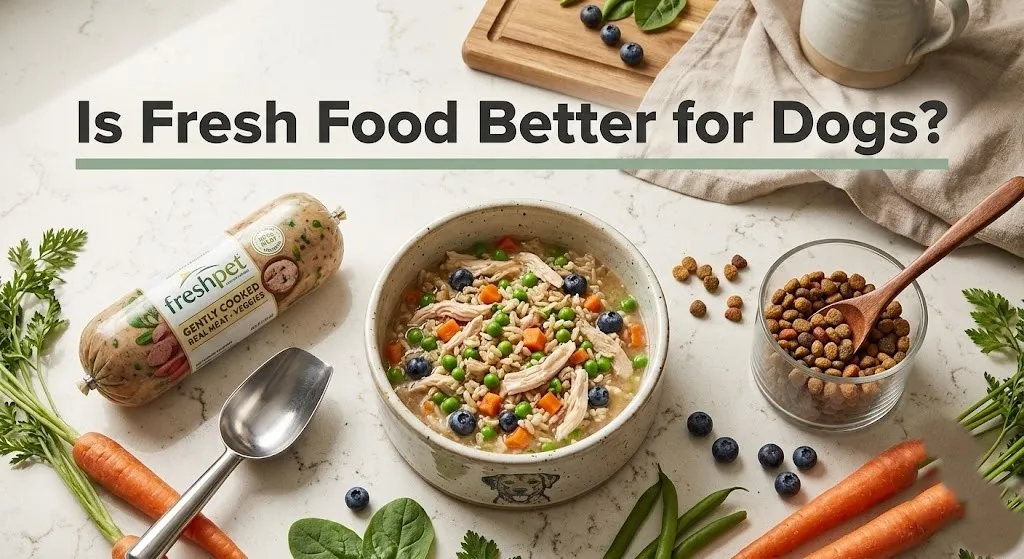
Pet Fresh is a brand name sometimes confused with Freshpet, and clarity on the brand identity matters before evaluation. Assuming the searcher means Freshpet, the largest mass-market fresh refrigerated dog food brand in North America, the product line includes both complete and balanced recipes and treat or topper products that are not nutritionally complete. The core Freshpet rolls and bagged fresh foods that carry an AAFCO nutritional adequacy statement for adult maintenance or all life stages are nutritionally adequate for healthy adult dogs.
Freshpet’s manufacturing process uses gentle steam cooking rather than extrusion, which preserves more moisture and original nutrient structure than kibble processing. The ingredient panels feature named meats like chicken, beef, and salmon as first ingredients, with whole vegetables and grains in supporting roles. Freshpet products do not contain artificial preservatives, relying instead on refrigeration and natural preservatives like vitamin E (mixed tocopherols) and vitamin C (ascorbic acid) to maintain freshness. The nutritional philosophy aligns with the fresh food category’s emphasis on recognizable whole-food ingredients.
The limitations of Freshpet include a narrower product line than some competitors, with fewer options for dogs with specific medical conditions like kidney disease, liver disease, or severe food allergies. Freshpet does not currently offer a prescription line formulated for disease management, unlike some veterinary-exclusive brands. For dogs with complex health problems, a fresh food formulated by a board-certified veterinary nutritionist through a company like JustFoodForDogs or a custom formulation service may be more appropriate. For a healthy adult dog without special dietary needs, Freshpet provides a nutritionally complete fresh option that is more accessible and affordable than direct-to-consumer fresh food subscriptions.
Key Takeaway: Freshpet is a nutritionally complete fresh food option for healthy adult dogs, though dogs with specific medical conditions may need a prescription fresh diet.
Is Freshpet dog food good
Freshpet dog food is good by the standards that matter most in canine nutrition: it meets AAFCO nutritional adequacy requirements, uses named whole-food ingredients, and employs gentle cooking methods that preserve nutrient integrity. The brand is manufactured in company-owned U.S. facilities, which allows for direct quality control oversight rather than reliance on third-party copackers. This manufacturing control addresses one of the WSAVA’s key recommendations for selecting a pet food manufacturer.
The ingredient quality in Freshpet products is transparent and recognizable. A typical Freshpet chicken recipe lists chicken, chicken liver, eggs, peas, carrots, brown rice, and spinach as primary ingredients, supplemented with a vitamin and mineral premix to ensure nutritional completeness. There are no rendered meals, no artificial colors, and no chemical preservatives. The ingredient splitting technique used by some kibble brands to make grains appear lower on the label than animal protein is not present. This transparency gives dog owners confidence that they understand what they are feeding.
Taste and palatability are Freshpet’s strongest selling points in consumer reviews. Dogs that have become bored with kibble or that have developed finicky eating habits often respond to Freshpet’s soft texture and meat-forward aroma. The moisture content makes the food easier to chew for senior dogs with dental issues. However, palatability is a double-edged characteristic. Dogs that become accustomed to fresh food’s taste and texture may refuse to return to kibble if the owner’s budget or circumstances change. This is a practical consideration worth weighing before starting a fresh food program.
Key Takeaway: Freshpet delivers AAFCO-complete nutrition with transparent ingredients and strong palatability, manufactured in company-owned facilities.
Is Freshpet food good for your dog
Freshpet food is good for your dog if your dog is a healthy adult with no specific medical dietary restrictions and you can afford to feed it consistently at the correct portions. The food provides complete nutrition in a format that many dogs digest more comfortably than dry kibble. Owners frequently report smaller, firmer stools and less gas within the first two weeks of switching. These digestive improvements reflect the higher digestibility of gently cooked protein and the increased moisture content.
For dogs with specific health profiles, the answer requires more nuance. Freshpet is not formulated for large breed puppy growth. The calcium and phosphorus levels are not controlled to the precise ratio required to prevent developmental orthopedic disease in breeds like Great Danes, Labrador Retrievers, and German Shepherds. Feeding Freshpet to a large breed puppy risks creating nutritional imbalances during the critical growth window. Freshpet is also not formulated for dogs with chronic kidney disease, which require tightly controlled phosphorus and protein levels that differ from maintenance formulas. A veterinary nutrition consultation is the right step for dogs with diagnosed health conditions rather than self-selecting an over-the-counter product.
Dogs with a history of pancreatitis or fat intolerance need a careful review of the guaranteed analysis before starting any fresh food. Freshpet’s fat content on a dry matter basis ranges from 25% to 40% depending on the recipe. This is appropriate for most adult dogs but may exceed what a pancreatitis-prone dog can tolerate. The clinical signs of fat intolerance, including vomiting, diarrhea, and abdominal pain, typically appear within 24 to 48 hours of dietary change. Starting with a small portion and monitoring closely for two days can identify tolerance issues before committing to a full dietary switch.
Key Takeaway: Freshpet works well for healthy adult dogs but is not formulated for large breed puppies or dogs with kidney disease, pancreatitis, or other medical dietary restrictions.
Is Freshpet dog food healthy
Freshpet dog food is healthy for dogs when fed according to label directions, in appropriate portions, and when the dog’s individual health status matches the product’s intended use. The health value of any dog food depends on whether it meets the dog’s nutritional requirements, not on whether it fits a human definition of “healthy” based on ingredient purity or processing avoidance. Freshpet meets the established nutritional standards for adult canine maintenance, making it a health-supporting food for the population it is designed to feed.
The moisture content of Freshpet supports urinary tract health in ways that dry food cannot. Dogs on high-moisture diets produce more dilute urine, which reduces the concentration of crystal-forming minerals in the bladder. The American College of Veterinary Internal Medicine recognizes increased water intake and dietary moisture as protective factors against struvite and calcium oxalate urolithiasis. This does not mean Freshpet prevents bladder stones. It means the hydration profile reduces one risk factor. Dogs with a history of stone formation still need veterinary monitoring and possibly a prescription diet regardless of moisture content.
The absence of artificial preservatives in Freshpet is a health characteristic that matters more to some owners than it does to the dog’s physiology. Dogs metabolize synthetic antioxidants like BHA and BHT differently than humans do, and the FDA has reviewed these compounds as generally recognized as safe for animal feed at regulated levels. Avoiding artificial preservatives does not make Freshpet healthier than kibble that contains them. It makes Freshpet aligned with consumer preferences for recognizable, minimally processed ingredients. That preference is valid. It is not the same as a measurable health outcome difference.
Key Takeaway: Freshpet is a health-supporting food for its target population, with hydration benefits that may reduce urinary crystal risk in susceptible dogs.
Gently cooked vs raw dog food
Gently cooked and raw dog foods belong to different safety categories despite both being marketed as fresh alternatives to kibble. Gently cooked food is heated to temperatures that kill pathogenic bacteria, typically 165°F to 180°F internal temperature, and then rapidly chilled for packaging. Raw food skips the heat kill step and relies on high-pressure processing, freezing, or nothing at all to control pathogens. The safety gap between these categories is large enough that the American Veterinary Medical Association has issued a formal policy statement advising against feeding raw animal-source protein to dogs in households with immunocompromised humans.
The nutritional argument for raw feeding rests on the claim that cooking destroys enzymes and denatures proteins in ways that reduce nutritional value. This claim has limited scientific support. Dogs produce their own digestive enzymes and do not rely on food-sourced enzymes for digestion. Cooking does denature proteins, which means the proteins unwind from their original three-dimensional structure. Denatured proteins are not damaged proteins. They are more accessible to digestive enzymes and are absorbed with equal or greater efficiency than raw proteins. The Journal of Animal Science published a 2022 digestibility study showing that gently cooked chicken protein had higher ileal digestibility in dogs than raw chicken protein from the same batch.
Gently cooked food offers the ingredient quality and moisture advantages of fresh food without the pathogen risk that makes raw feeding controversial. High-pressure processing reduces but does not eliminate pathogens in raw food. HPP-treated raw diets have been recalled for Salmonella and Listeria contamination. Cooking to safe internal temperatures provides a kill step that HPP does not guarantee. For dog owners who want the benefits of fresh food without the risk of raw, gently cooked commercial diets are the evidence-based middle ground.
Key Takeaway: Gently cooked fresh food provides the benefits of fresh feeding with pathogen safety that raw food cannot match.
AAFCO fresh dog food standards
AAFCO fresh dog food standards require that any food labeled as complete and balanced meet the same nutritional adequacy profiles as dry or canned foods, regardless of processing method. The AAFCO Dog Food Nutrient Profiles establish minimum and, for some nutrients, maximum concentrations for protein, fat, vitamins, and minerals across two life stages: adult maintenance and growth/reproduction. A fresh food that carries an AAFCO statement of nutritional adequacy has been formulated to meet these profiles or has passed a feeding trial.
The “complete and balanced” claim on fresh food packaging can be satisfied in two ways. The first is formulation, where a nutritionist calculates that the recipe meets AAFCO profiles using nutrient databases and laboratory analysis. The second is feeding trial, where the food is actually fed to dogs for 26 weeks while monitoring body weight, blood work, and health parameters. Feeding trials are more expensive and time-consuming but provide real-world validation that formulation alone cannot. The AAFCO statement on the label must specify which method was used and for which life stage the food is appropriate.
Fresh food marketed as a “mixer,” “topper,” or “complementary food” is not required to meet complete and balanced standards. These products are designed to be fed alongside a complete diet and can be nutritionally unbalanced if fed as the sole food source. The label distinction between complete meals and complementary products is the most important piece of text on any fresh food package. Feeding a complementary product as a meal for more than a few days can create nutrient deficiencies that take months to develop visible symptoms.
Quick Tip:
- Look for the exact phrase “complete and balanced” on fresh food labels.
- Check whether the AAFCO statement specifies “adult maintenance” or “all life stages” and match it to your dog’s current life stage.
Key Takeaway: AAFCO certification applies to fresh food just as it does to kibble, and the “complete and balanced” statement is non-negotiable for any food used as a primary diet.
How to read fresh dog food labels
Reading fresh dog food labels requires understanding the guaranteed analysis in the context of high moisture content and converting nutrient values to a dry matter basis for comparison with kibble. The guaranteed analysis on fresh food lists minimum crude protein and crude fat percentages and maximum crude fiber and moisture percentages. Because fresh food is 65% to 80% water, the protein and fat numbers appear lower than they would for dry food. A fresh food with 11% protein as-fed may be 35% protein on a dry matter basis.
To convert as-fed percentages to dry matter basis, subtract the moisture percentage from 100, then divide the nutrient percentage by the result. If a fresh food has 75% moisture and 10% protein as-fed, the calculation is 100 minus 75 equals 25% dry matter. Then 10 divided by 25 equals 40% protein on a dry matter basis. This 40% number can be compared meaningfully to a kibble’s protein percentage. Without this conversion, fresh food appears to contain much less protein than it actually delivers.
The ingredient list on fresh food follows the same descending weight order as all pet food labels. The first five ingredients represent the bulk of the formula. In fresh food, the first ingredient is often a whole meat like chicken or beef, which includes the water weight of the raw ingredient. This water weight pushes the meat to the top of the list. The next ingredients should include a carbohydrate source, vegetables, and a vitamin-mineral premix. The premix is not an “artificial” addition. It is the carefully calculated supplement blend that ensures the food meets AAFCO standards for all essential nutrients.
Key Takeaway: Convert fresh food guaranteed analysis to dry matter basis for accurate comparison, and check the first five ingredients plus the AAFCO statement.
Fresh dog food storage and safety
Fresh dog food storage and safety protocols are food safety protocols, identical in principle to the handling requirements for raw chicken or ground beef in a human kitchen. Commercially prepared fresh dog food must be kept refrigerated at 40°F or below at all times before serving. Frozen fresh food should be stored at 0°F or below and thawed in the refrigerator, not on the countertop. Once thawed, it should be used within the timeframe specified on the packaging, typically three to five days.
Cross-contamination prevention matters because dogs eat from bowls, and humans handle those bowls. The FDA recommends washing dog food bowls, serving utensils, and food prep surfaces with hot soapy water after each use. Hands should be washed for 20 seconds with soap and water after handling fresh dog food, particularly raw formulations. The dog’s feeding area should be cleaned and sanitized regularly. These precautions protect the humans in the household, especially children, elderly family members, and immunocompromised individuals.
Uneaten fresh food should not sit in the bowl for more than two hours at room temperature. Bacteria that survived the cooking process or were introduced during packaging multiply rapidly in the temperature danger zone between 40°F and 140°F. If your dog does not finish a portion, cover and refrigerate it immediately. Discard any fresh food that has been left out beyond the two-hour mark. Pre-portioning meals into daily containers reduces the number of times you open the main package and limits exposure to airborne bacteria and kitchen cross-contamination.
Key Takeaway: Treat fresh dog food with the same food safety rigor you apply to raw meat in your own kitchen, including refrigeration, hand washing, and timed disposal of uneaten portions.
How to transition dog to fresh food
Transitioning a dog to fresh food requires a gradual replacement of the old diet with the new diet over seven to ten days to allow the gut microbiome time to adapt. The digestive enzymes and bacterial populations that break down kibble differ from those needed for fresh food. An abrupt switch can cause diarrhea, vomiting, and food refusal that owners misinterpret as an allergy or intolerance to the new food. A slow transition gives the digestive system time to adjust.
To transition your dog to fresh food safely, follow this measured schedule:
- Days 1 through 3: Feed 25% fresh food mixed thoroughly with 75% current food at each meal. Watch for soft stools or decreased appetite.
- Days 4 through 6: Increase to 50% fresh food and 50% current food. Stool consistency may loosen temporarily. This is normal and should firm up by day 7.
- Days 7 through 9: Move to 75% fresh food and 25% current food. By now, the digestive system should be handling the fresh food comfortably.
- Day 10 and onward: Feed 100% fresh food at the portion size recommended on the package for your dog’s ideal body weight.
- Monitor body condition score weekly for the first month and adjust portions if unintended weight gain or loss occurs.
Dogs with sensitive stomachs or a history of pancreatitis may need a longer transition period of two to three weeks. Adding a canine probiotic supplement during the transition can support the gut microbiome shift, though the evidence for probiotics in healthy dogs is still emerging. The stool is your feedback mechanism. If diarrhea persists beyond three days at any transition stage, slow the process down and consult your veterinarian to rule out unrelated gastrointestinal issues that might coincide with the food change.
Key Takeaway: A slow seven to ten day measured transition prevents the digestive upset that dogs often experience when switched too quickly to fresh food.
Can puppies eat fresh food
Puppies can eat fresh food if the food carries an AAFCO nutritional adequacy statement for growth or all life stages. Formulations labeled for adult maintenance only lack the additional protein, fat, calcium, phosphorus, and calorie density that developing puppies require. Feeding an adult maintenance fresh food to a growing puppy can cause permanent developmental damage, particularly to the skeletal system. The all life stages designation confirms the food meets growth requirements.
Large breed puppies, defined as dogs expected to reach an adult weight over 70 pounds, have an additional nutritional requirement that general puppy food does not address. The calcium-to-phosphorus ratio must fall between 1.1:1 and 1.4:1, and total calcium should not exceed 1.2% to 1.5% on a dry matter basis. Excess calcium during rapid growth causes developmental orthopedic diseases like hip dysplasia, elbow dysplasia, and hypertrophic osteodystrophy. The Association of American Feed Control Officials has not yet established a separate large breed puppy nutrient profile, which means the consumer must look for brands that voluntarily formulate to these tighter ratios.
Feeding frequency for puppies on fresh food follows the same schedule as kibble: three to four meals daily for puppies under four months, three meals daily from four to six months, and two meals daily from six months onward. Fresh food’s higher moisture and lower calorie density mean the portion volume will be larger than a kibble portion providing the same calories. This can make it challenging to feed enough calories to rapidly growing large breed puppies without exceeding stomach capacity. Splitting the daily ration into an extra meal during peak growth periods solves this logistical issue.
Key Takeaway: Puppies can thrive on fresh food formulated for growth, but large breed puppies require specifically controlled calcium levels that not all fresh puppy foods provide.
Fresh dog food for senior dogs
Senior dogs often experience some of the most visible improvements on fresh food because the higher moisture content, softer texture, and increased palatability address several age-related challenges simultaneously. Older dogs with diminished thirst drive drink more water through their food, supporting kidney function and reducing constipation risk. Dogs with dental disease or missing teeth find soft fresh food easier to chew than hard kibble. Dogs whose sense of smell has declined respond to the stronger aroma of fresh meat-based diets.
The protein debate in senior dog nutrition has shifted in recent years. Older veterinary guidance recommended reducing protein for senior dogs to protect kidney function. Current research from the Tufts University Clinical Nutrition Service indicates that healthy senior dogs do not benefit from protein restriction and may need higher protein intake to maintain muscle mass during aging. Fresh food with higher animal protein content supports lean body condition in senior dogs. The exception is senior dogs with diagnosed chronic kidney disease, for whom veterinary therapeutic diets with controlled phosphorus and protein remain the standard of care.
Portion control matters more for senior dogs than for young adults because metabolism slows with age and activity levels decline. The feeding guidelines on fresh food packages are starting points, not fixed rules. A senior dog that is less active may need 10% to 20% fewer calories than the package recommends for its weight. Weekly body condition checks using the standard nine-point scale allow portion adjustments before weight gain becomes a health problem. The goal for senior dogs is to maintain a body condition score of 4 to 5 out of 9, with ribs easily felt but not visually prominent.
Key Takeaway: Fresh food addresses senior dog challenges including hydration, chewing difficulty, and muscle maintenance, but portion control must be monitored closely as metabolism slows.
Is fresh dog food worth the cost
Fresh dog food costs more than kibble, and whether that cost is worth it depends on your dog’s health circumstances, your household budget, and what you value as a pet owner. Feeding a 50-pound dog a commercial fresh diet costs between $6 and $15 per day, compared to $1 to $4 per day for premium kibble. Over a year, the difference ranges from $1,800 to over $4,000 in additional food expense. This is the financial reality that drives many purchase decisions.
The cost equation changes for dogs with specific health conditions that improve on fresh food. If a dog with chronic skin issues stops needing allergy medications after switching to a limited-ingredient fresh diet, the food cost is partially offset by reduced veterinary and pharmacy spending. If a dog with recurrent urinary crystals avoids a $3,000 cystotomy surgery because the higher moisture fresh food keeps urine dilute, the food premium paid for itself years before the surgery would have been needed. These scenarios are not guaranteed outcomes, but they represent the cost-benefit calculus that makes fresh food financially rational for some dogs.
For healthy dogs with no special needs, the cost is harder to justify on health grounds alone. A premium kibble that meets WSAVA guidelines provides adequate nutrition for a fraction of the price. Dog owners who choose fresh food for a healthy dog are making a values-based decision about ingredient quality and processing method, not a medically necessary expenditure. That decision is valid as long as the budget is sustainable. Starting a fresh food program and then switching back to kibble six months later because the cost became burdensome causes more digestive disruption than never switching at all.
Key Takeaway: Fresh dog food costs three to four times more than premium kibble, and the health return on that investment is highest for dogs with medical conditions that respond to dietary moisture and ingredient quality.
Frequently Asked Questions About Fresh Dog Food
Is fresh dog food really better than kibble?
Fresh dog food is better than kibble in measured digestibility and moisture content, but kibble remains a nutritionally complete and safe option for most healthy dogs.
The benefit you see depends on your individual dog’s health, age, and digestive sensitivity.
For dogs with specific medical conditions, fresh food can provide therapeutic advantages that kibble does not.
Can I make fresh dog food at home?
You can make fresh dog food at home only if you work with a board-certified veterinary nutritionist to formulate a complete and balanced recipe.
Homemade dog food recipes found online are nutritionally incomplete 95% of the time, according to a study in the Journal of the American Veterinary Medical Association.
Feeding homemade food without professional formulation risks creating serious nutrient deficiencies that take months to become visible.
Is Freshpet a healthy choice for my dog?
Freshpet is a healthy choice for healthy adult dogs without specific medical dietary restrictions.
The food meets AAFCO nutritional adequacy standards and uses gently cooked whole-food ingredients with no artificial preservatives.
Dogs with kidney disease, pancreatitis, or large breed puppies need specialty formulations that Freshpet’s current product line does not include.
How do I safely store fresh dog food?
Store fresh dog food in the refrigerator at 40°F or below and use opened packages within the timeframe printed on the label, typically three to five days.
Freeze portions you will not use within that window and thaw them in the refrigerator, not on the counter.
Treat fresh dog food with the same food safety protocols you use for raw meat, including hand washing and surface sanitization after handling.
Can I feed fresh food to a puppy?
You can feed fresh food to a puppy if the product carries an AAFCO statement for growth or all life stages.
Adult maintenance formulations lack the nutrients developing puppies require for proper skeletal growth.
Large breed puppies need specifically controlled calcium-to-phosphorus ratios that not all puppy fresh foods provide, so verify the formulation meets large breed growth standards.
Switching your dog to fresh food is not a simple yes or no decision. It is a conversation between your dog’s specific health needs, your household budget, your kitchen storage capacity, and the nutritional quality of the product you are considering. The research supports fresh food’s digestibility and palatability advantages. It does not support claims that kibble is inherently unhealthy or that any fresh food is automatically better.
Start by checking the AAFCO statement on your current food and on any fresh food you are considering. If both say complete and balanced, both provide adequate nutrition. The difference is in degrees of quality, not in safe versus dangerous. From there, talk with your veterinarian about your specific dog’s health profile. If your dog has a condition that fresh food can help manage, the extra cost may make medical sense.
If your dog is healthy and thriving on a premium kibble, you are not failing as a dog owner by staying with what works. Fresh food is an option. For some dogs, it is a better option. It is not a nutritional mandate.